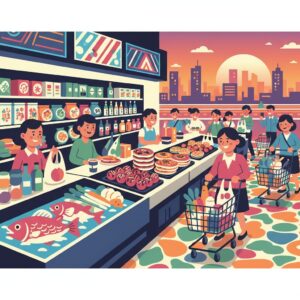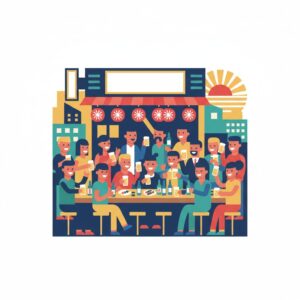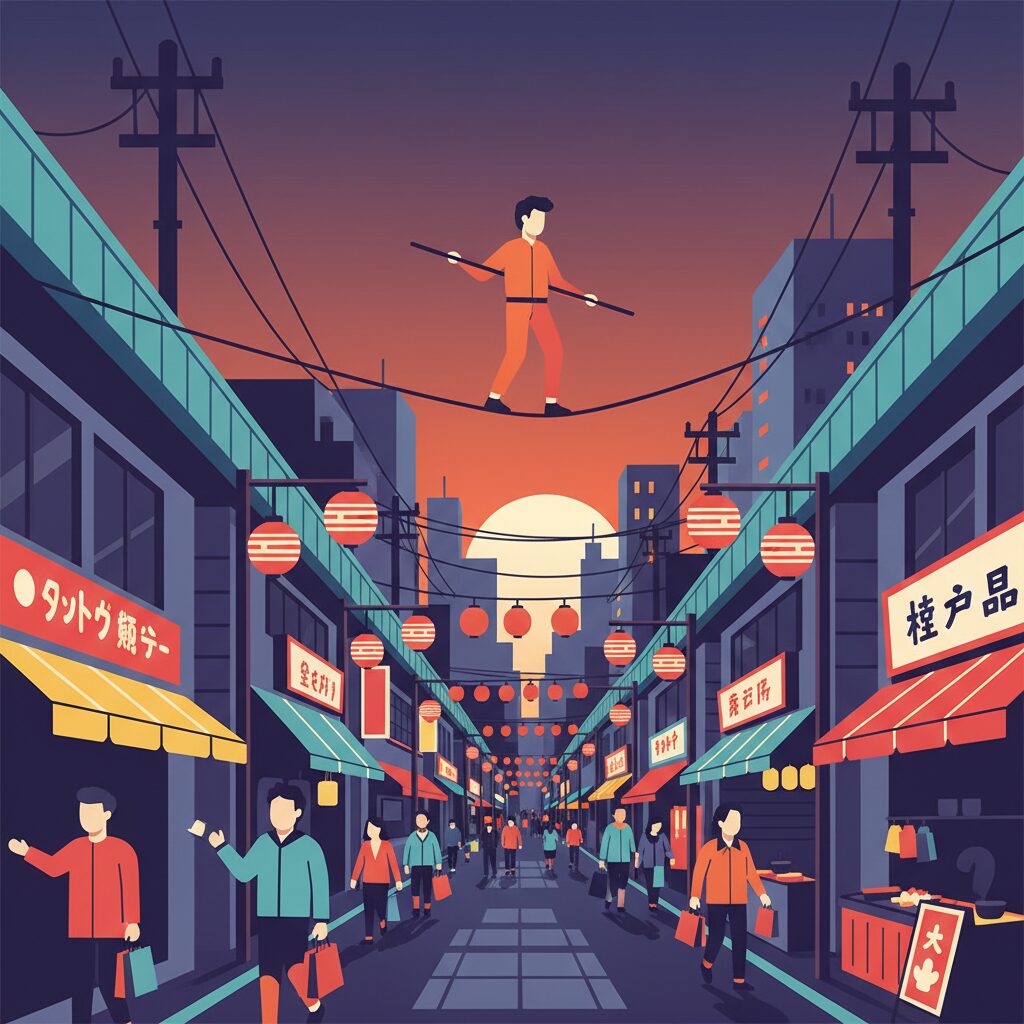
You see it every day. That long, covered arcade, the shotengai, humming with a chaotic energy that feels worlds away from the sterile aisles of a Life supermarket. Banners with faded calligraphy hang from the rafters. The smell of grilled eel, fresh tempura, and sweet red bean paste hangs thick in the air. You watch the shopkeepers—a wrinkled woman with impossibly fast hands wrapping croquettes in wax paper, a boisterous fishmonger with a booming voice holding court with a circle of laughing housewives. They know each other. They know each other’s kids, each other’s troubles, and probably what each other had for dinner last night. You, the foreigner, walk through this river of life as an observer, a ghost at the feast. You might buy a few things, exchange polite but brief pleasantries, and move on. But a question lingers: What would it be like to cross that invisible line? What happens when you stop being a random customer and become a jōren—a regular?
This isn’t just about getting a discount or a friendly nod. In Osaka, becoming a regular at your local shotengai is like signing an unwritten social contract. It’s an entry ticket into the beating heart of a neighborhood, a chance to experience a level of community that has all but vanished in many modern cities. But that ticket comes with a price. It demands a piece of your privacy, a slice of your autonomy, and a commitment to a web of social obligations that can feel as comforting as a warm blanket one day and as constricting as a straitjacket the next. This is the central paradox of daily life in Osaka. The very thing that makes the city so famously warm and human—its deep-seated culture of personal connection—is also the thing that can make it feel intensely demanding. Before you dive in, you need to understand both sides of the coin. It’s the difference between truly living in Osaka and just residing here.
This intricate dance of social connection finds another fascinating facet in Osaka’s obachan traditions, which further illuminates the city’s unique cultural tapestry.
The Upside: The Warm Embrace of the Jōren
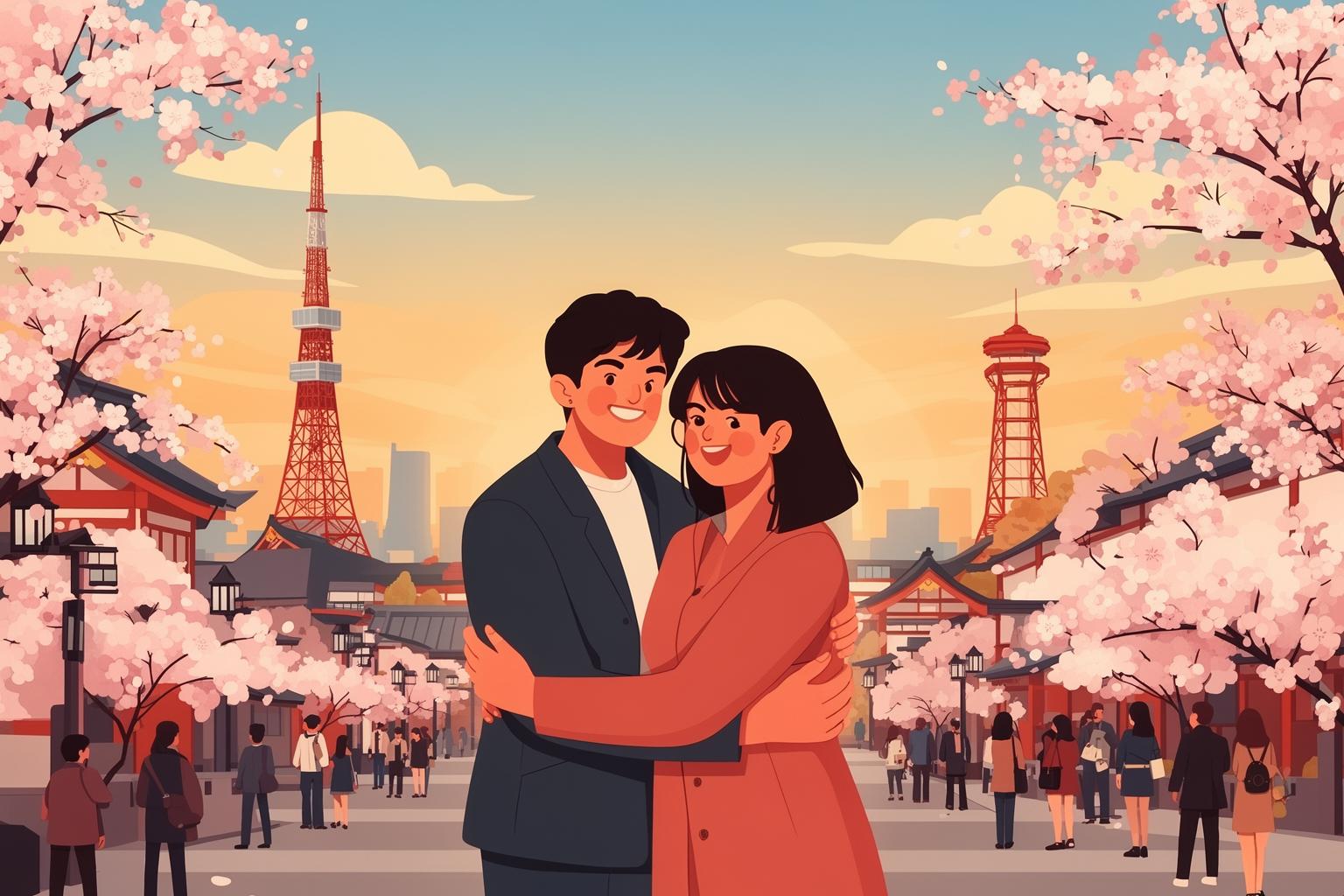
At first, the advantages of becoming a regular customer seem purely transactional, but you soon realize they go much deeper. It begins subtly. You make a habit of purchasing your vegetables from the same cheerful woman every other day. You discover her name is Sato-san. During the first week, everything follows the usual routine. By the second week, she starts greeting you with a loud, “Maido!” (Osaka’s iconic “Thanks for your business!”). By the third week, she’s reserving the best-looking daikon radish for you because she remembers you mentioned you were making oden. This is where the magic starts. It’s not just about securing better produce; it’s about being acknowledged. In a city of millions, you are no longer anonymous. You have a vegetable lady.
Personalized Service Beyond Mere Transactions
The most immediate benefit is experiencing a level of personalized service that feels like a throwback to a bygone era. This isn’t the scripted, manual-driven politeness common in Tokyo department stores. This is genuine, intuitive, and profoundly human. Approach the butcher you frequent, and before you even speak, he might say, “Running late today, huh? Got some thinly sliced pork ready for you. Perfect for a quick stir-fry.” He knows your schedule. He knows your cooking preferences. This close familiarity brings real advantages. The fishmonger will discreetly tell you which squid is best for sashimi today and which is more suited for grilling. The tofu maker will hand you a block of the silkiest kinugoshi tofu, still warm from the morning’s batch, because he knows you favor it over the firmer momen variety.
Then comes the delightful culture of omake, the little extra something. It isn’t a discount—it’s a gift, a gesture that says, “I see you, I appreciate you.” It might be a handful of green onions tossed into your bag, an extra croquette from the fryer, or a piece of seasonal fruit to sample. An omake is never guaranteed and should never be requested. It’s a spontaneous reward for your loyalty, a physical symbol of the relationship you’re nurturing. This system operates on an emotional economy, not merely a financial one. You’re not just a customer; you’re a patron, a supporter of their livelihood, and they, in turn, become a cornerstone of your daily routine.
The Community as a Reliable Safety Net
Beyond the shopping perks, becoming a jōren connects you to a powerful, hyper-local social network. The shotengai functions as the neighborhood’s central nervous system. Information flows freely, support is mobilized, and people watch out for one another. If an elderly regular doesn’t show up for her daily walk and chat, someone notices. A phone call is made. A visit is paid. It’s an organic, informal safety net that often surpasses official municipal programs.
For a foreigner, this can be an invaluable asset. When navigating the complex Japanese bureaucracy, trying to figure out the right day to put out burnable trash, or urgently searching for an honest plumber, the shopkeepers become your oracles. They hold practical, local knowledge. The lady at the dry cleaners will know the best pediatrician nearby. The rice shop owner might have a cousin who can fix your air conditioner. They become your surrogate family, your advisors, and your protectors. In the isolating anonymity of a big city, especially abroad, this feeling of being cared for can be deeply reassuring. It’s the sense that if something went wrong, someone would notice. Someone would care. This sharply contrasts with the Tokyo experience, where neighborhood ties are often polite but distant. In Tokyo, you might live next to someone for a decade without learning their name. In an Osaka shotengai community, the fruit stand vendor knows you’re battling a cold because you bought extra ginger and lemons yesterday.
Unlocking the Osaka Code
Perhaps the greatest reward is cultural. There is no quicker or more authentic way to grasp the Osaka mindset than by immersing yourself in a shotengai. This is where you hear the genuine, unfiltered Osaka-ben, rich with its distinctive rhythms and playful abbreviations. You’ll learn the art of the comeback, the gentle teasing known as ijiri, a key part of Osaka communication. A shopkeeper might joke about your questionable fashion sense or your still-clumsy but improving Japanese. This isn’t an insult; it’s a sign of affection and acceptance. They’re treating you like one of their own.
You become a privileged audience to the daily theater of Osaka life: the haggling that’s more about performance than price, the endless gossip (sekenbanashi) that weaves the community together, the boisterous laughter erupting over the smallest things. You’ll come to understand that in Osaka, communication isn’t just about exchanging information; it’s about forging connections, often through humor and shared feeling. You’ll realize that the reputation of Osakans as “friendly” isn’t about a superficial smile; it’s about a readiness to engage, to banter, and to treat a stranger as a potential neighbor. The shotengai is your language school, your cultural classroom, and your backstage pass to the real Osaka—all in one.
The Downside: The Price of Belonging
Despite its warmth and sense of security, the embrace of the shotengai community can sometimes start to feel constricting. The very intimacy that makes it so wonderful also weaves a web of expectations and a surprising lack of privacy. The social contract you’ve entered into has fine print you only discover after you’re already committed. The freedom you once enjoyed as an anonymous consumer begins to vanish, replaced by a new set of social obligations you never consciously agreed to.
The Unspoken Social Obligation (Giri)
The greatest challenge lies in navigating the subtle yet powerful sense of social obligation, or giri. This isn’t the dramatic, life-or-death giri found in samurai films; rather, it’s the everyday version that governs ordinary relationships. Because Sato-san, the vegetable seller, always reserves the best daikon for you, you now feel intense pressure to buy all your vegetables from her. Walking past her stall carrying groceries from the supermarket feels like a betrayal. You might find yourself slipping down side streets to avoid being seen, your cheap, corporate-farmed carrots feeling like contraband.
Your choices are no longer entirely your own—they’re tied to the relationships you’ve built. You can’t simply grab a quick, inexpensive lunch at Yoshinoya because the elderly couple at the local udon shop will notice you walking by and wonder why you didn’t stop. You feel obliged to purchase the costly seasonal gift baskets for New Year’s from the fruit shop owner who always gives you an extra mikan. This sense of duty can be both financially and mentally draining. What used to be a straightforward commercial exchange is now laden with social significance, eroding your freedom to choose based on price, convenience, or whim. This can feel especially jarring for those from Western cultures, where consumerism is closely linked to ideals of personal choice and freedom.
The Neighborhood Grapevine: Zero Privacy
The other side of the community safety net is its community surveillance system. The shotengai’s information network is incredibly efficient. To be known is to be exposed. Your life becomes an open book, read and annotated by the entire neighborhood. Shopkeepers are key nodes in this network—and they talk. They really talk. It’s rarely malicious; it’s simply the currency of community life. Yet the result is a total loss of privacy.
If you bring a date to the local yakitori restaurant, the man at the liquor store will inquire about it the next morning. If a large package arrives at your apartment, the dry cleaner will ask what new gadget you bought. They’ll notice if you come home later than usual and wonder if you’re having problems with your boss. They comment on your weight, your haircut, and your laundry. For anyone who values personal space and a clear boundary between public and private life, this can feel suffocating and deeply intrusive. The line between caring and prying is thin—and in Osaka, it’s often erased altogether. You must accept that your private affairs have become, to some degree, community property.
Navigating the Gossip
This constant flow of chatter and observation inevitably brings unsolicited advice and opinions. Your life choices become topics for public discussion. The baker might insist it’s time you got married. The fishmonger will criticize your decision to take a weekend trip to Tokyo (“Why go there? Everything you need is right here in Osaka!”). The butcher will lecture you on your cooking methods. Though often presented as well-meaning counsel from elders, it can feel like an unrelenting barrage of judgment.
This reflects a fundamental difference in communication styles. In many Western cultures, and even in Tokyo, offering unsolicited personal advice is considered rude. But in Osaka’s tight-knit communities, it’s a way of showing care—a sign that you belong and that your well-being matters. Understanding this intellectually doesn’t always make it easier to accept, though. It requires developing a thick skin and learning not to take every comment to heart. Resisting or taking offense can make you seem cold or distant, further complicating your social standing.
The Osaka Mindset: Business is Personal
To grasp the dynamics of the shotengai, you need to understand the philosophy of shōbai (business) in Osaka. For centuries, Osaka has been Japan’s merchant capital, and this legacy has shaped a distinctive mindset in the city’s identity. Unlike Tokyo, where business often emphasizes polished professionalism, efficiency, and maintaining respectful distance, Osaka shōbai centers fundamentally on relationships. A transaction is not viewed as the conclusion of an interaction but as the beginning of a connection.
Osaka merchants thrive on the concept of kao no mieru kankei—a relationship where you can see the other person’s face. They want to know who you are, not just what you intend to buy. This is why conversation is as important as the sale itself. The aim is to build a foundation of trust, familiarity, and mutual loyalty. They believe that if they care for you on a personal level, you will reciprocate by bringing them your business. It’s a deeply symbiotic, almost feudal, perspective on commerce. You’re not merely purchasing a product; you’re investing in a person and, by extension, the wellbeing of your local community.
This explains why chain stores and impersonal supermarkets have often struggled to establish the same presence in Osaka’s older neighborhoods. Osakans tend to be deeply wary of faceless corporations. They prefer to buy from someone they know, someone they can banter with, someone whose family they’ve seen grow up. This mindset is often misunderstood by outsiders, including Tokyoites and foreigners. The personal questions and teasing that might feel intrusive are, from the Osaka merchant’s point of view, essential parts of relationship-building. They aren’t being nosy; they are doing their job well. They treat you not as a data point in a sales report but as a human being, a member of their community. The price of that humanity is a loss of some anonymity.
To Be a Regular or Not to Be: A Practical Guide
So, what’s the conclusion? Do you plunge fully into the shotengai ecosystem or keep a safe, anonymous distance? The truth is, it’s not an either-or situation. The secret to happily living in Osaka is finding a balance that suits you. You don’t need to become a jōren at every single shop. You can thoughtfully curate your own community experience.
Finding Your Balance
Choose your spots wisely. Pick one or two places where you want to develop a connection. Maybe it’s the cozy kissaten (old-fashioned coffee shop) with the friendly owner who brews the perfect pour-over. Maybe it’s the family-run bakery whose bread you genuinely enjoy. Make these your regular haunts. Learn the owners’ names. Engage in conversation. Become a loyal customer. For everything else—your bulk groceries, toiletries, and random household items—allow yourself to use the anonymous, efficient, and judgment-free supermarket or drugstore. This hybrid approach offers the best of both worlds. You gain the warmth and connection of a community on your terms, without feeling trapped by obligation at every turn. You can relish being a regular at the coffee shop without feeling bad for grabbing your milk at 7-Eleven.
Setting Boundaries with Osaka-Style Humor
What about the gossip and nosy questions? Trying to shut them down with Western-style bluntness or the cold shoulder will backfire. It will brand you as unfriendly and out of touch. The most effective way to set boundaries in Osaka is the one locals use: humor. You need to learn to deflect, parry, and joke. It’s a conversational martial art.
When the butcher asks when you’re going to find a nice Japanese girl and settle down, don’t get defensive. Laugh it off. A classic Osaka comeback would be, “Maa, omiai demo shōkai shite kuremasu ka?” (“Well, are you going to introduce me for an arranged marriage?”) with a big smile. This does two things: it shows you’re not offended and sends the joke right back. You’re playing their game, by their rules. When the vegetable lady remarks that you look tired, instead of saying, “I’m fine,” try a more exaggerated, “Meccha tsukaretemasu nen! Nanka genki deru mon arimasu?” (“I’m super exhausted! Got anything to boost my energy?”). This turns an intrusive comment into a playful, transactional exchange. Mastering this light-hearted, self-deprecating humor is key to navigating Osaka’s social pressures. It lets you keep your personal boundaries without building walls.
Final Thoughts: More Than Just a Shopping Trip
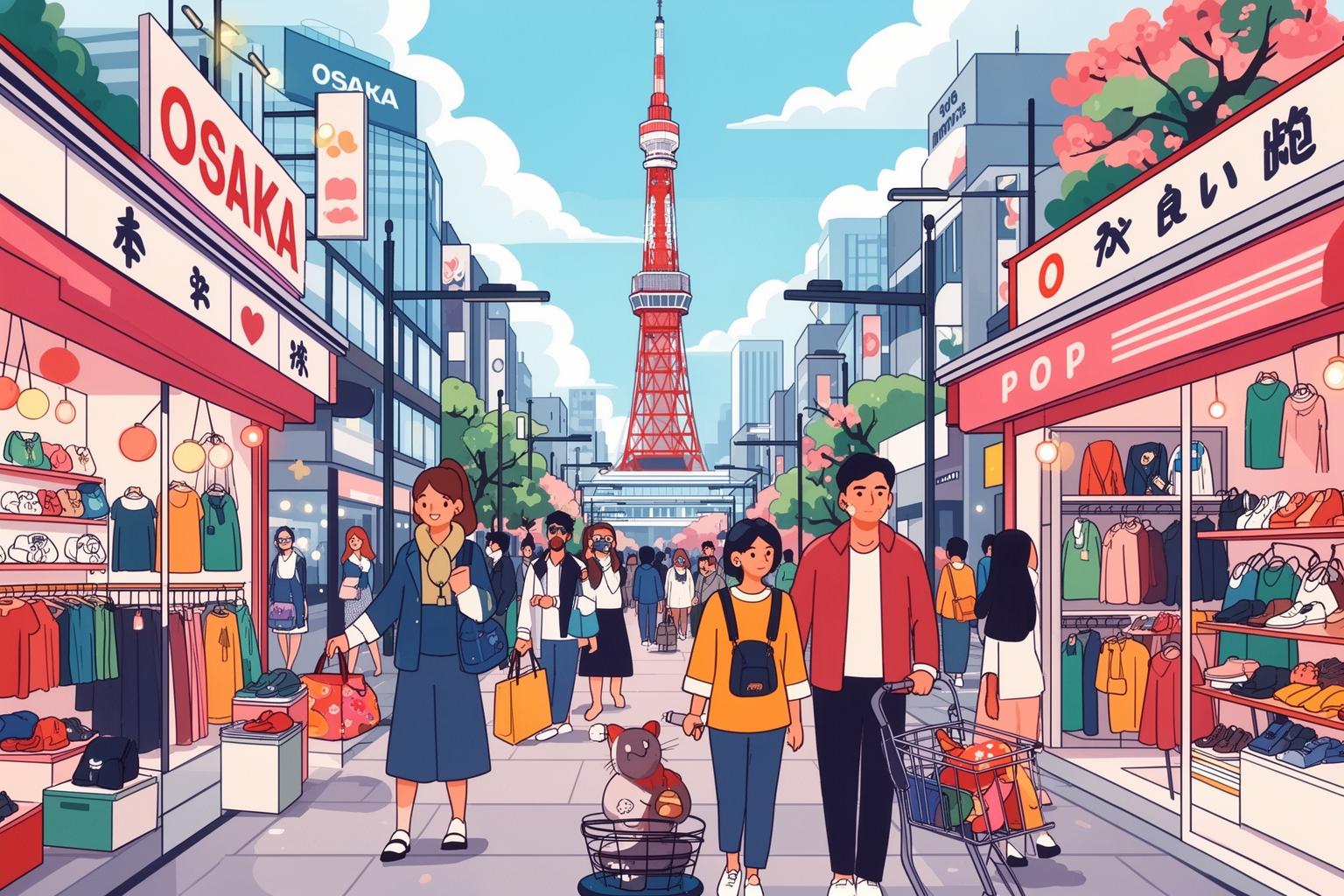
Deciding how deeply to engage with your local shotengai is, in many ways, a metaphor for choosing how you want to live in Osaka. It’s a constant balancing act between the desire for connection and the need for personal space. There is no right answer, and your preference may shift over time. Some days, the thought of a warm greeting and a free onion from Sato-san will brighten your day. On other days, you’ll long for the freedom to buy your groceries quietly beneath the supermarket’s fluorescent lights, accountable to no one.
What Osaka and its shotengai culture offer is a choice that’s becoming increasingly rare in the developed world: the option to join a messy, complicated, yet deeply human community. It demands more than a simple monetary transaction. It calls for your patience, your humor, and a willingness to share a small part of your life. In return, it provides a sense of belonging that can make a foreign city feel unexpectedly like home. For anyone considering life in Osaka, the shotengai isn’t just a place to shop; it’s a litmus test. Walk through its noisy, vibrant corridors and ask yourself: Do you want to be an observer on the outside, looking in? Or are you ready to step onto the tightrope, risking complications for a chance at genuine connection? In Osaka, the invitation is always there, lingering in the air with the scent of grilled fish and the sound of laughter.