The digital nomad dream, the remote work revolution—whatever you call it, it landed in Japan with the force of a quiet, polite earthquake. Suddenly, the search was on for the “third place,” that mythical spot between the cramped apartment and the occasionally-too-formal office. We flocked to Starbucks, we colonized Tully’s, we paid by the hour at sleek, minimalist co-working spaces that felt more like tech startups than places for deep thought. We were connected, caffeinated, and just a little bit sterile. In Tokyo, this felt like the only way. The city’s relentless forward momentum demands efficiency, clean lines, and the latest single-origin pour-over. You find your spot, you get your work done, you leave. It’s a transaction. But here in Osaka, there’s another path. It’s a path that leads down a dimly lit staircase, behind a frosted glass door in a forgotten corner of a shotengai, into a pocket of time that smells of dark-roast coffee, buttered toast, and the faintest hint of yesterday’s cigarettes. This is the world of the kissa-ten, the traditional Japanese coffee house, and for those willing to understand its rhythm, it is the ultimate remote work sanctuary.
These are not cafes. A cafe is a modern concept, a place of bright lights and quick turnover. A kissa-ten is a salon, a study, a neighborhood living room. It’s a relic from the Showa Era (1926-1989), a period of booming post-war growth and cultural confidence, and in Osaka, these places have survived not as retro theme parks, but as living, breathing institutions. Foreigners often walk past them, perhaps intimidated by the heavy wooden doors or the Japanese-only menus displayed in faded plastic glory. They might peek inside, see the dark interior and the elderly patrons, and assume it’s a private club or simply a place where they wouldn’t belong. That’s the first misunderstanding. The kissa-ten isn’t exclusive; it’s just… specific. It operates on a different set of rules, a different understanding of time and space. And to work from one is to tap into a current of Osaka life that runs deeper than the neon glow of Dotonbori. It’s a lesson in the city’s stubborn pragmatism, its quiet sense of community, and its deep, abiding love for a good deal that goes far beyond the price tag. This isn’t about finding a place with the fastest Wi-Fi. It’s about finding a place to truly settle in, to think, and to understand why Osaka feels so fundamentally different from the rest of Japan.
This quiet sense of community is a cornerstone of Osaka life, much like the unspoken bonds formed in the city’s traditional neighborhood bathhouses.
The Anatomy of a Kissa-ten: More Than Just a Coffee Shop
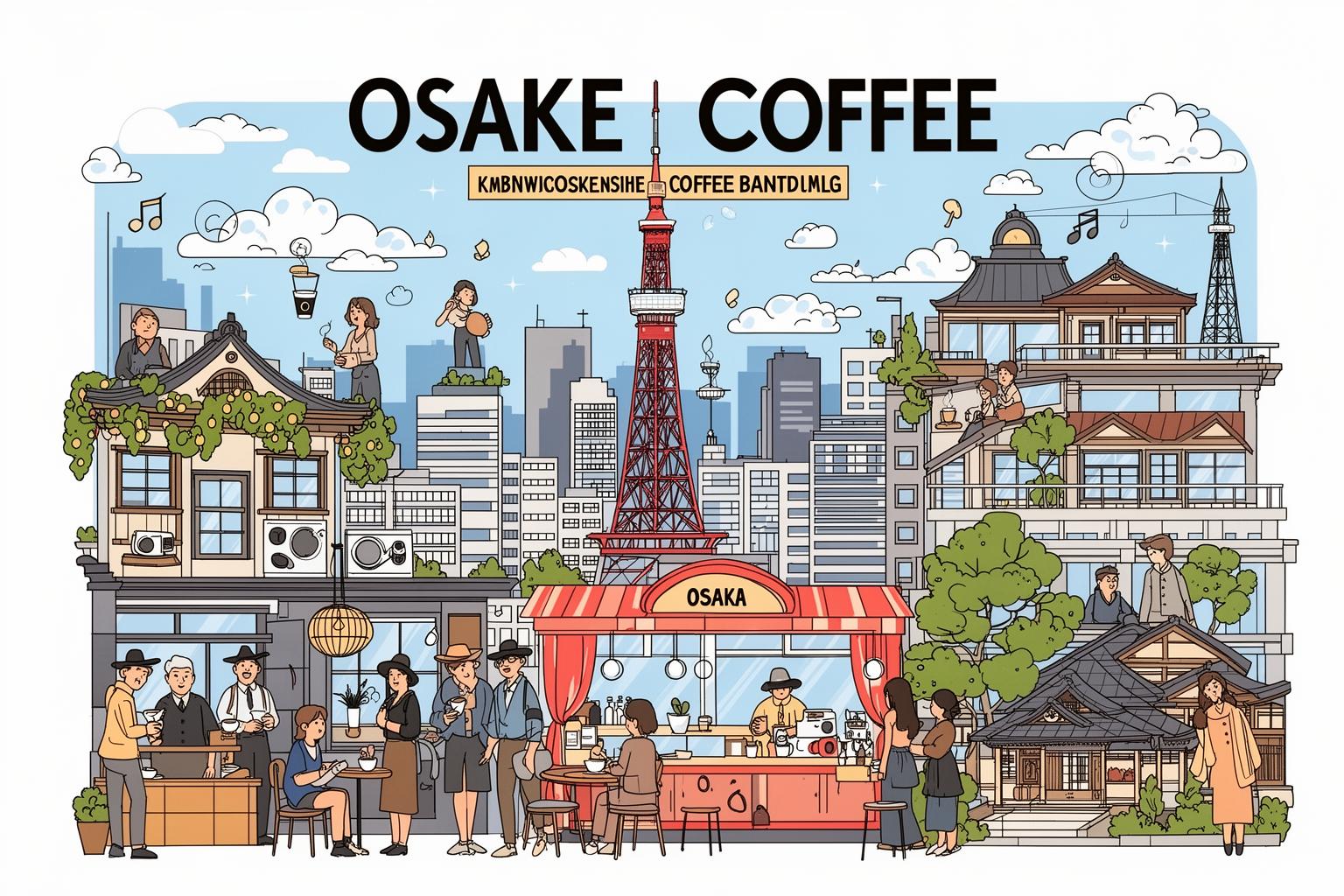
To step into an authentic Osaka kissa-ten is to awaken all your senses simultaneously. It’s an immersive journey into a bygone era and a distinct philosophy of public space. This experience is shaped not by a branding team in a Tokyo high-rise, but by a solitary individual—the owner—who has probably been polishing the same countertop for three or four decades. Grasping the key elements—the air, the guardian, the menu—is the initial step to unlocking this unique world.
The Air You Breathe: Smoke, Siphon Coffee, and Showa Nostalgia
The first thing that strikes you is the scent. It’s a complex, layered aroma that modern cafes have long erased. There’s the base note of deeply roasted coffee beans—not the light, acidic aroma of third-wave coffee, but the rich, almost chocolate-like scent of a traditional dark roast. This mingles with the warm, inviting smell of thick-cut Japanese toast, known as shokupan, browning to perfection and slathered with butter. Yet, there’s another note—the one that can challenge newcomers: stale cigarette smoke. It’s a ghostly presence, absorbed into the velvet upholstery of the booths, the dark wood paneling, and the lace curtains yellowed with age. Despite recent smoking regulations, many classic kissa-ten proudly remain, either grandfathered in or providing a final haven for the city’s smokers. Non-smokers may find this difficult, but for loyal patrons, it’s part of the authentic atmosphere, a sensory signal that this place is genuine and unchanged.
The visual ambiance is equally dense. The lighting is predictably dim, emanating from ornate, occasionally gaudy chandeliers or stained-glass lamps casting a warm, golden hue. The furniture is sturdy, built for longevity. Booths are upholstered in cracked red or green vinyl, or plush velvet worn smooth by countless visitors. Tables are often dark, lacquered wood, some featuring silent, long-unused tabletop arcade games from the ’80s. There is no empty space. Walls are adorned with paintings of uncertain provenance, framed vintage movie posters, or displays of porcelain cups in glass cabinets. A grandfather clock might tick methodically in a corner. This is not a minimalist scene crafted for Instagram. It’s a maximalist treasure trove accumulated over a lifetime, a natural collection of objects and memories. It contrasts sharply with the Tokyo ideal of clean, elegant simplicity (wabi-sabi). This is Osaka’s lived-in, slightly cluttered, and deeply inviting reality. It demands no admiration; it simply invites you to sit down.
The “Master”: Guardian of the Gate
Behind the counter, you won’t find a team of cheerful young staff eager to write your name on a cup. Instead, there is one person—usually an older man—dressed in a crisp shirt, often wearing a waistcoat or apron. This is the “Master” (masutaa). He is not merely a barista; he is the owner, the conductor, the heart of the place. His demeanor can puzzle foreigners used to Japan’s high-energy service culture. He won’t greet you with a loud, enthusiastic “Irasshaimase!” Instead, you might receive a quiet nod, a soft acknowledgment, or a subtle gesture to an empty seat. He is not being rude; he is being professional.
His attention is on his craft. Watch him work. His movements are economical, precise, shaped by decades of practice. He might be handling an intricate siphon coffee maker—a glass apparatus with alcohol burners and balanced levers that resembles scientific equipment. The brewing process is a quiet, meditative ritual. He measures the beans, grinds them fresh, heats the water, and watches carefully as vacuum and vapor pressure brew the coffee. There is no hurry. This stands in stark contrast to pod machines. His role is to maintain the calm, steady rhythm of the space. He is the guardian of the atmosphere. He knows his regulars not by name but by their usual order and preferred seat. A relationship with the Master isn’t built on small talk; it’s founded on consistency and mutual, unspoken respect. Visit often, be quiet and courteous, and one day you might be offered a small plate of complimentary arare (rice crackers) with your coffee. This is no marketing tactic; it’s a mark of acceptance. You have become part of the scenery—and in the kissa-ten world, that is the highest praise.
The Menu: A Time Capsule of Taste
The kissa-ten menu is no place for innovation. It’s a record of culinary history, a tribute to Western-influenced Japanese dishes (yoshoku) perfected and frozen in time. The coffee is the centerpiece—strong, dark, smooth, served in heavy, ornate porcelain cups likely used since the shop’s opening. Don’t ask for a flat white or a cortado. You can order “hot coffee” (hotto kōhī) or “ice coffee” (aisu kōhī), the latter often pre-mixed with gum syrup and cream unless you specify otherwise.
The highlight, especially for remote workers settling in, is the “Morning Set” (mōningu setto or simply mōningu). This quintessential kissa-ten offering embodies the Osaka mentality. Available until about 11 a.m., it’s a set: a cup of coffee, a thick slice of buttered toast, and a hard-boiled egg, all for a price often only slightly more than the coffee alone. In Tokyo, a similar meal might be presented artfully and priced at a premium. In Osaka, it’s straightforward and practically brutal: fuel, value, and permission to occupy your seat for a good part of the morning. It’s a social contract served on a small plate. Some cafes offer variations—toast with red bean paste (ogura) or a small salad—but the classic trio remains the standard.
Beyond morning, the menu broadens to other classics. There’s the vivid, almost cartoonishly green Melon Soda Float, with a scoop of vanilla ice cream bobbing in fizzy green syrup. There’s the Mixed Juice (mikkusu jūsu), an Osaka creation: a thick, frothy blend of whatever fruit the Master has—usually banana, orange, and canned peaches—mixed with milk. This sweet, nostalgic drink harks back to the city’s history as a bustling port where fruit was once a luxury. For a heartier meal, you might find Napolitan spaghetti—a comforting ketchup-based pasta with onions, peppers, and sausage—or a Curry Rice simmered for hours. These dishes aren’t gourmet; they’re the Japanese equivalent of diner fare: reliable, unpretentious, and deeply satisfying. Ordering them signals you’re settling in for the long haul, moving from a coffee break to a full work session.
The Unspoken Contract: How to Work from a Kissa-ten Without Getting the Stink Eye
Unlike a modern chain café, where the business model focuses on quickly moving customers in and out, the kissa-ten follows a different logic. Its economics rely on loyalty, routine, and a mutual understanding between the Master and the patron. To outsiders, the rules may seem obscure, but they rest on a straightforward principle: respect the space, and your right to be there is earned rather than assumed. Violating this unspoken agreement is the fastest way to become unwelcome.
This Ain’t Starbucks: The Pace of Time
The most fundamental difference lies in the concept of time. At a chain café, staying too long over a single drink can feel like loitering. The staff might start wiping your table with a bit too much enthusiasm, a subtle signal to move on. In a kissa-ten, time expands and flexes. A single 500-yen coffee is not just a drink; it serves as your entrance fee—rent for the table, the chair, the quiet ambiance, and the Master’s discreet service. This fee typically grants you at least an hour, often two or three, of uninterrupted tranquility. The expectation is that you will sit back, relax, and linger.
This stands in stark contrast to the efficiency-driven culture prevalent in modern life, especially in Japan. Tokyo runs like clockwork; every moment is scheduled and optimized. The kissa-ten is Osaka’s quiet defiance against this relentless timetable. It is a place where doing nothing is perfectly acceptable—to simply sit and watch people go by, read for hours, or drift off in thought. For remote workers, this is invaluable. It eases the low-level stress of overstaying your welcome. So long as you remain quiet and respectful, you are a legitimate part of the community. The unspoken etiquette is simple: if you plan to stay beyond two or three hours, it’s courteous to order a second item—another coffee, a slice of cake, or a melon soda. This isn’t a rule posted on a sign; it’s a matter of respect. This small gesture acknowledges your use of the space and affirms its value. It renews your agreement and allows you to continue working peacefully.
The Sound of Silence (and Siphons)
Though a kissa-ten is not a library, it maintains a distinct and carefully crafted soundscape. The loudest noises often come from the hiss of the siphon brewer or the gentle clink of a ceramic cup on a saucer. There’s no booming bass or Top 40 playlist. If music is present, it is typically instrumental, low-volume background—soft jazz, unobtrusive classical music, or perhaps the melancholic notes of French chanson. More often, the soundtrack is simply the ambient noise of the room: the rustling of a newspaper, the quiet murmur of a nearby conversation, the gentle ticking of a clock.
This atmosphere fosters concentration. Your work isn’t competing with a pop star or a loud discussion about last night’s party. This brings us to the most important rule for remote workers: do not disturb the soundscape. Taking phone calls is completely unacceptable. If your phone rings, silence it immediately and either ignore the call or step outside. Similarly, Zoom meetings or any voice chats are strictly off-limits. Your laptop should be a tool for silent work. Keep keyboard noises minimal and mute all notifications. You are a guest in a shared sanctuary of quiet. Other patrons come precisely because it’s not a noisy, chaotic environment. By preserving this quiet, you show respect to them, the Master, and the very spirit of the kissa-ten. It’s a simple rule but the one most often broken by foreigners who mistake the space for a typical café. Here, your silence is your currency.
The Regulars’ Rhythm: Finding Your Place
Spend enough time in a kissa-ten, and you start to notice the patterns—the daily ebb and flow of its clientele. These are the regulars, the heart of the place, and observing them offers a masterclass in proper behavior. In the morning, elderly men—“uncles” (ojisan)—arrive at the same hour each day. They don’t need to look at a menu. The Master sees them come in and prepares their usual mōningu setto. They read the newspaper cover to cover, smoke a cigarette or two, and exchange a few quiet words with the Master before leaving for the day.
Midday brings local business owners or salespeople (sararīman) for quiet meetings. They use the neutral, comfortable environment to discuss deals over coffee, their conversation a low, serious murmur. Afternoons might feature groups of well-dressed older women, “aunties” (obasan), catching up on neighborhood gossip over cake and tea. Their laughter remains soft, contained within the cozy booth. Students hunch over their textbooks, writers fill notebooks, and lovers steal quiet moments together. What you rarely see are transient tourists. This is a local’s haven.
Becoming a regular yourself is a gradual, natural process. It means choosing a spot and consistently using it. You visit the same kissa-ten several times a week, often sitting at the same table. You order from the Master with a simple, polite nod. You work quietly, pay, and leave with a small bow and a soft “gochisousama deshita” (a polite phrase expressing gratitude for your meal or drink). After a few weeks, the Master begins to recognize you. A nod of acknowledgment turns into a faint smile. He might start preparing your coffee as you settle in. You cease to be an anonymous customer; you become part of the daily rhythm. This is how community often forms in Osaka. It’s not about effusive greetings or forced friendliness. It’s about shared space, routine, and a quiet recognition of mutual presence. Finding your place and being accepted into this rhythm is a small yet meaningful milestone in making the city feel like home.
Why Osaka? The Kissa-ten as a Reflection of the City’s Soul
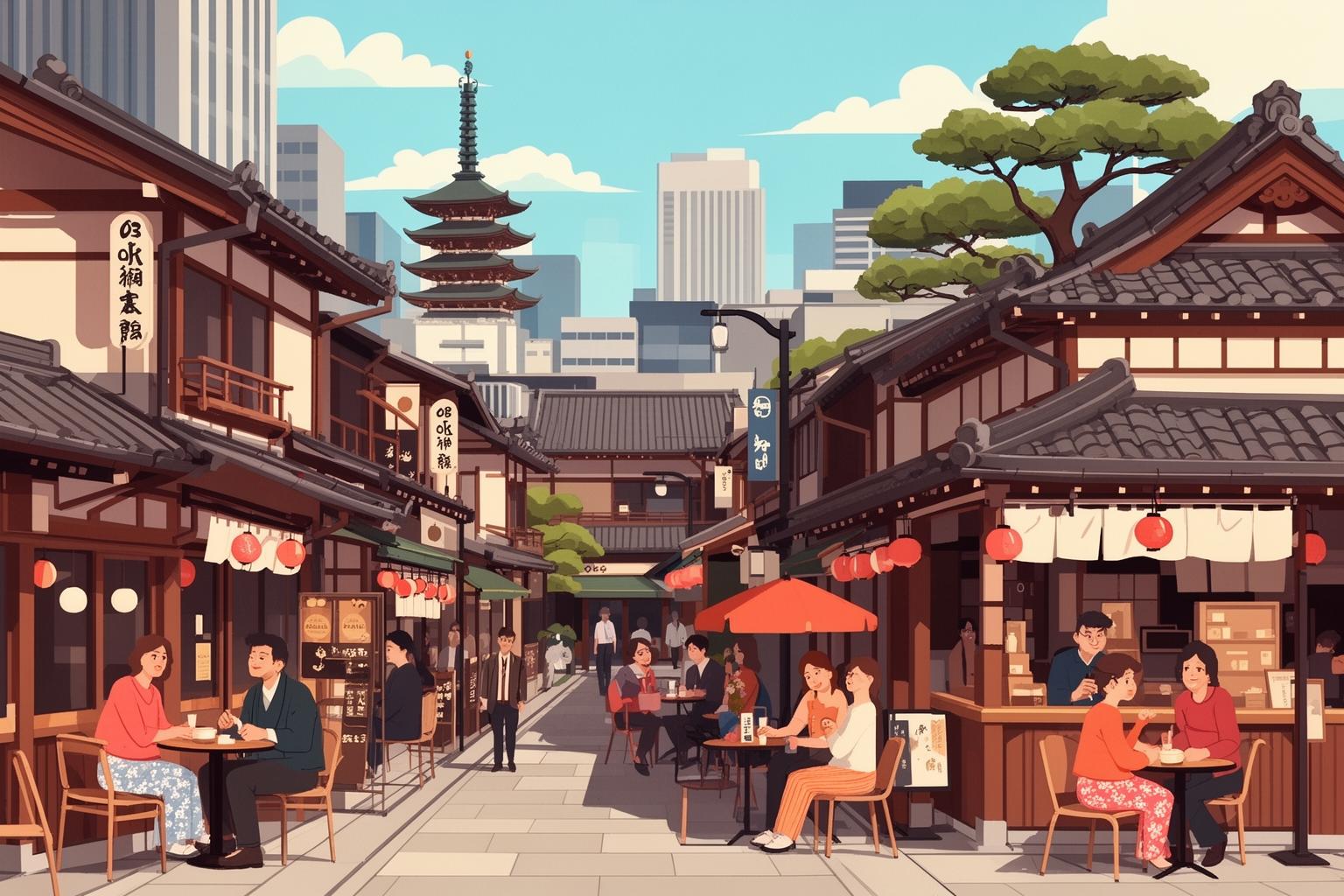
These pockets of Showa-era calm are not exclusive to Osaka, but their concentration and persistent survival feel especially strong here. In Tokyo, real estate is fiercely competitive. An old, inefficiently used space like a kissa-ten is constantly at risk of being demolished to make way for a new condo tower or a sleek glass-front boutique. The fact that many have endured in the heart of Japan’s second-largest metropolitan area reveals something profound about the city’s character, its values, and its quiet resistance to the homogenizing forces of modernity.
Pragmatism over Polish: The Osaka Mindset
A core pragmatism runs through Osaka’s veins. This is a city shaped by merchants, not samurai. The key questions are not “Is it beautiful?” or “Is it trendy?” but “Does it work?” and “Is it a good deal?” The kissa-ten perfectly embodies this mindset. It may not be polished or new, its decor may feel dated, but it fulfills its purpose flawlessly. It delivers excellent, consistent coffee, provides a comfortable place to sit for hours, and often serves a small meal—all at a reasonable price. It works. The business model, based on low overheads (often with the property owned outright by the Master’s family) and a loyal clientele, is sustainable. There is no need to chase trends, renovate every five years, or install minimalist furniture and Edison bulbs.
This sharply contrasts with Tokyo’s mentality, which often fixates on image, the latest trends, and brand presence. A Tokyo cafe competes on aesthetics, its story, and social media appeal. An Osaka kissa-ten competes on consistency and value. Outsiders often misunderstand this as Osaka being unrefined or cheap. It’s not about being cheap (kechi); it’s about being shrewd (kashikoi). Osakans have an innate sense for value, recognizing that paying 500 yen for a great cup of coffee and two hours of peaceful comfort is a fantastic bargain. The worn velvet and smoky air are not imperfections; they are part of the patina of a place proven over decades. Why tear it down for something new and untested? This practical, no-nonsense approach underpins Osaka culture, and the kissa-ten stands as its cathedral.
A Haven from the Hustle: Escaping the Merchant City’s Mania
To appreciate the appeal of the kissa-ten, you must grasp the relentless energy outside its doors. Osaka is a whirlwind. It’s the controlled chaos of Umeda Station, one of the world’s busiest transport hubs. It’s the boisterous vendors of Kuromon Market. It’s the sensory overload of Dotonbori’s flashing lights and giant mechanical crabs. It is a city of commerce (akinai no machi), marked by nonstop motion, noise, and negotiation. Life moves faster, louder, and more directly here than in many other parts of Japan.
The kissa-ten provides an essential counterbalance to this frenzy. It is the city’s decompression chamber. Stepping inside is like hitting a mute button on urban chaos. The street noise fades, replaced by the gentle clink of porcelain. The hectic sidewalk pace gives way to the Master’s deliberate, unhurried movements. It is a space designed for rest. For the salaryman, it’s a refuge from office pressures. For the shopper, a place to rest tired feet and escape the shotengai crowds. For the remote worker, it’s a spot to focus amid the city’s endless distractions.
This role as a haven is vital to daily life’s rhythm here. Osakans work hard and play hard, needing places to recharge. The kissa-ten isn’t a luxury; it is essential—part of the urban infrastructure, as fundamental as a train station or park. It acknowledges that even in this commerce-driven city, people need a space free from transactional pressure, where they can simply be without feeling compelled to perform, buy, or move on. This deep need for balance is central to the Osaka psyche, a key to thriving amid its vibrant energy.
The Stubbornness of Authenticity: Resisting the Tokyo Wave
A friendly but fierce rivalry exists between Osaka and Tokyo, and the fate of the kissa-ten is one of its battlegrounds. Tokyo often sets national trends, and for the past two decades, it has leaned toward bright, airy, chain-operated cafes. Starbucks, Doutor, and their competitors are ubiquitous in both cities. But in Tokyo, they feel like the norm, while old kissa-ten seem endangered. In Osaka, the balance is different. The old ways maintain a stronger foothold. Part of this is economic, but cultural factors loom larger.
Osaka has long viewed itself as an independent power center, with a distinct culture from the eastern political capital. There is a stubborn pride in doing things the “Osaka way.” Preserving a kissa-ten, operated by the same family for generations, is a quiet act of defiance against the relentless corporate standardization wave flowing from Tokyo. It declares, “We have our own way of doing things, and it’s just as valid.” This isn’t mere nostalgia—it’s an assertion of identity. These establishments form part of their communities’ fabric. The Master knows the local shopkeepers. Regulars have frequented the place since youth. The kissa-ten holds local history and social ties.
By choosing to work in a kissa-ten, you participate, in a small way, in this cultural preservation. You cast your yen in favor of a business model valuing human connection over corporate synergy, consistency over novelty, and authenticity over branding. You support a form of urban life growing rarer in major global cities. It speaks to Osaka’s character that these places not only survive but often thrive, offering a window into a past still very much alive in the city’s present.
A Practical Guide to Your First Kissa-ten Remote Workday
Convinced that a Showa-era sanctuary is just what you need? The good news is these spots are everywhere, often hiding in plain sight. However, your first visits might feel daunting. Knowing what to look for, how to interpret the signs, and understanding the basic economics can be the difference between frustration and finding your new favorite workspace.
Finding Your Spot: From Shotengai Alleys to Basement Treasures
Forget relying on Google Maps to find the “best cafes for remote work.” Your greatest asset is your own two feet. The richest hunting grounds are the city’s endless shotengai—covered shopping arcades that serve as the lifeblood of neighborhoods. Wander down Tenjinbashisuji Shotengai, Japan’s longest, or explore the smaller arcades in areas like Tenma or Kyobashi. Watch for clues: a faded plastic food menu in the window, an old-fashioned swirling script on a sign, a heavy wooden door, or a modest sign simply saying “Coffee” (珈琲, kōhī). These cafés are often tucked between a greengrocer and a dry cleaner, their entrances subtly understated.
Another ideal spot is in the basements or second floors of older office buildings, especially near business districts like Umeda, Yodoyabashi, and Hommachi. These classic “salaryman” kissa-ten were designed as retreats from the office grind. Look for a simple A-frame sign on the sidewalk directing you down a staircase. These basement cafés often boast the richest atmosphere, true time capsules insulated from the modern world above. Retro neighborhoods like Nakazakicho also abound with these, though some lean into a “retro-chic” vibe to attract a younger crowd. The most authentic are those staying true to their original spirit. Don’t hesitate to push open a door that seems a bit intimidating. At worst, it’s not your scene; at best, you’ve just discovered your new office.
Reading the Room: To Smoke or Not to Smoke
Let’s be clear about the biggest challenge for many: smoking. The Showa Era was notoriously smoky, and many kissa-ten still uphold that tradition. Before entering, check the door—many now feature stickers indicating their smoking policies. Some have become completely non-smoking (kin’en), others have separate, often poorly ventilated smoking sections (bun’en), and some remain full smoking establishments (zen-seki kitsuen). If you see an ashtray on every table upon entry, that answers the question.
For some, this is a dealbreaker—and that’s totally okay. There are plenty of non-smoking or well-separated options if you seek them out. But if you can tolerate some ambient smoke, it opens up a broader world of classic spots. Consider it part of the authentic experience. It’s a practical matter you need to be honest about. Sitting for hours in a smoky room if you dislike cigarette smells will sabotage both your productivity and enjoyment. Choose your spot wisely based on your tolerance. There’s no point forcing an experience that will only make you uncomfortable. This practical self-awareness is, fittingly, very much an Osaka mindset.
The Financials: Understanding the “Seat Charge” Mentality
When your bill arrives, you might notice your single cup of coffee costs 500, 600, or even 700 yen. Your first thought might be that’s pricier than the 350-yen cups at chains, but that’s the wrong way to see it. You aren’t just paying for coffee—you’re paying for the space, the service, and the time. Think of that 600 yen as a two-hour rental fee for a quiet, comfortable desk with a Master acting as your unobtrusive office manager, plus a free cup of high-quality coffee.
Framed this way, the value becomes clear. A day pass at a coworking space can cost a few thousand yen, but here you can enjoy a focused four-hour work session for the price of two coffees—around 1,200 yen. It’s an incredibly cost-effective choice for short to medium bursts of productivity. It’s not meant for eight hours every day, but for a change of scenery or dedicated deep work, it’s unbeatable. This captures the essence of Osaka’s value proposition: not about the absolute cheapest option, but the one offering the greatest benefit—comfort, atmosphere, focus, and great coffee—at a fair, reasonable price. When you settle your bill, you’re not just completing a transaction; you’re honoring a contract that represents one of the best deals in town.
Beyond the Laptop: What the Kissa-ten Teaches You About Osaka
After weeks and months of settling into these Showa-era havens, you begin to realize that you’ve gained more than just knowledge of where to find a great cup of coffee. Your laptop fades into the background as the experience takes precedence. The kissa-ten shifts from being a simple workspace to a classroom where you learn the subtle, unspoken rhythms of life in Osaka. It teaches you a new way to view the city and your role within it, reshaping your expectations about community, work, and the flow of time.
You come to understand that community in Osaka isn’t always marked by loud laughter and boisterous camaraderie, as tourists commonly assume. It can be quieter and more profound—a shared silence among strangers respecting a collective peace. It’s a slow-building connection with the Master, formed through nods and routine rather than conversation. You realize that being a regular, a familiar face in a small local spot, represents a deeper sense of belonging than any number of transient social exchanges. It’s the comfort of having a place where you belong, where your presence is noticed and welcomed.
You also learn to value the beauty found in things that are not new, polished, or perfect. You appreciate the worn velvet of the seats, the faint scratches on the wooden tables, and the slightly outdated decor. This serves as a powerful counterpoint to the disposable culture of the 21st century. These places have lasted because they were crafted with character and quality, fulfilling a timeless human need for comfort and refuge. This appreciation for the enduring and sturdy over the flashy and fleeting lies at the heart of the Osaka spirit—a city that honors its elders, whether people or places.
Most importantly, working from a kissa-ten teaches you to slow down. In a world that demands constant connectivity and productivity, it offers a space where disconnecting, reflecting, and simply being are not only accepted but encouraged. The slow ritual of siphon coffee, the Master’s deliberate movements, and the ticking clock all work together to pull you away from the frantic pace of modern life. You find that your best ideas arise not during frantic typing but in the quiet pauses between sips, as you gaze out at a rain-streaked window overlooking a sleepy side street. Discovering “your” kissa-ten is more than just a clever approach to remote work; it signifies that you’ve begun to tune into Osaka’s unique rhythm. It’s the moment when you stop merely living in the city and start truly understanding it.