Life in Osaka is a full-contact sport for the senses. It’s a city that grabs you by the collar and yells in your ear, not with malice, but with an irrepressible, chaotic glee. It’s the clatter of a thousand pachinko balls cascading behind smoky glass, the sizzle of oil hitting a hot takoyaki griddle, the rhythmic chant of a street vendor selling fruit from a tiny truck, and the low, constant rumble of the Midosuji line pulsing beneath your feet like a mechanical heartbeat. You learn to love this noise. You learn to thrive in it. It’s the soundtrack of a city that is unapologetically, viscerally alive. But sometimes, the volume gets too high. The symphony turns into a cacophony, and you find yourself standing on a crowded platform at Umeda Station, feeling the press of a million people on all sides, and thinking, “I need silence. Real silence.”
This isn’t a rejection of Osaka. You don’t fall out of love with its beautiful, messy, human energy. It’s more like a relationship that needs a little space to breathe. In Tokyo, the escape might be a meticulously planned trip to a designer onsen in Hakone, a retreat that feels as curated and precise as the city itself. In Osaka, the solution feels more ancient, more elemental. You look south, towards the misty peaks of the Kii Peninsula, and you hear the call of the mountain. You hear the call of Koyasan. For people living in the Kansai region, Koyasan isn’t just a UNESCO World Heritage site or a tourist destination. It’s a spiritual pressure-release valve, a place to recalibrate the soul after it’s been battered and bruised by the glorious friction of urban life. It’s the sacred counterpoint to Osaka’s profane, wonderful energy. Planning a trip there, a shukubo or temple stay, is more than just a weekend getaway. It’s a lesson in the hidden duality of the Osaka mindset, a journey from the city of kuidaore—eating till you drop—to the mountain of quiet contemplation.
This journey from the city’s vibrant energy to the mountain’s quiet contemplation is a perfect example of the hidden duality of the Osaka mindset, moving from the philosophy of kuidaore to a place of serene reflection.
The Osaka Itch: Why You Need to Escape the City You Love
The Sound and the Fury of the Naniwa Loop
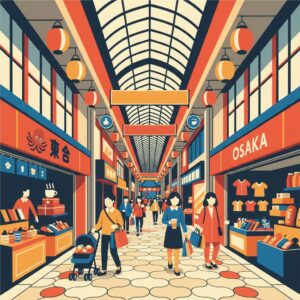
To grasp the deep, almost primal need for a place like Koyasan, you first have to experience the daily sensory overload of Osaka. It’s a city that never whispers. Stroll through the Shinsaibashi-suji shopping arcade on a Saturday, and you’ll be hit by a dozen competing J-pop anthems blaring from storefronts. Venture into Shinsekai, and the kushikatsu restaurant barkers practically pull you off the street, their voices rough with practiced urgency. Even in a quiet residential area, you catch the rhythmic clang of the railroad crossing, the high-pitched jingle of the sweet potato vendor’s truck, and neighbors chatting over their balconies. There’s no silence in Osaka. The city is overflowing with sound, with life, with genki.
This genki—that vibrant, sometimes overwhelming energy—is what defines the city. It’s what sharply distinguishes Osaka from Tokyo. Tokyo feels like a vast, complex machine, humming steadily with powerful but controlled efficiency. Its energy is contained, channeled, and polite. You sense its immense scale, but rarely its heartbeat. Osaka, by contrast, is a living, breathing organism. It’s messy, unpredictable, and loud. Its energy bursts onto the streets. It’s in the way people laugh—a full-throated roar, not a delicate giggle. It’s in their stride, purposeful with a hint of swagger. This extroverted energy is the source of Osaka’s famous friendliness; it draws you in whether you’re prepared or not. But living in the heart of that energy day after day can be draining. It energizes you but also wears you out. The constant stimulation frays your patience. The charming chaos sometimes just feels chaotic. That’s the Osaka itch—a psychic fatigue no amount of rest can heal. It’s a craving for negative space, for a moment when the world hushes.
“Chotto Koyasan de…” – The Casual Spiritual Quest
What’s intriguing is how Osakans respond to this. You might be at work, and the loudest person in the room will sigh, saying, “Aaah, shuumatsu, chotto Koyasan de yukkuri shiyokana.” (“Ahh, maybe I’ll take it easy in Koyasan this weekend.”) The wording is important. It’s casual, offhand. It’s not declared as a grand pilgrimage or life-changing spiritual journey. It’s mentioned with the same ease as a supermarket run or a visit to a favorite café. This speaks volumes about the Osaka attitude toward spirituality: practical, approachable, and completely free of pretense.
This city was built by merchants, with a mindset of jitsuri-shugi, or pragmatism. Everything serves a purpose. If something breaks, you fix it. This applies to business, household goods, and the soul. If your spirit feels worn and frayed, you don’t dwell on it—you take it where they specialize in repairs. Koyasan is that place. There’s no performance or sanctimoniousness involved. It’s a straightforward exchange: you hand over your exhaustion, and the mountain returns your peace. This sharply contrasts with the common foreign misconception that all Japanese spirituality is wrapped in layers of obscure rituals and formality. In Osaka, it’s much simpler. You see a problem; you find a solution. My spirit is noisy, the mountain is quiet, so I go to the mountain. It’s the ultimate pragmatic pilgrimage. This directness is often mistaken for superficiality, but it’s quite the opposite. It’s a deep faith so ingrained it doesn’t need embellishment or pomp. It just is, a tool for maintaining balance in life.
Planning the Unplannable: The Osaka Approach to a Spiritual Retreat
Nankai Namba Station: Your Portal to Another Realm
Every journey to Koyasan begins in the vibrant, chaotic core of southern Osaka: Nankai Namba Station. It’s an entirely fitting starting point. Unlike the sleek, futuristic expanse of Tokyo Station or the impeccably efficient Shinjuku, Nankai Namba resembles an old, crowded attic. It’s a labyrinth of shopping arcades, tiny eateries, and winding corridors that seem to have grown without any master plan. It’s packed, a little gritty, and pulsing with raw, undiluted Osaka energy. It perfectly captures the world you’re about to leave behind.
Your first practical step is to purchase the Koyasan World Heritage Ticket at the Nankai ticket office. Here, you get your initial introduction to Osaka’s unique approach to economics. The ticket is a bundled deal: round-trip train fare, the cable car, unlimited bus rides on the mountain, and discounts at selected shops and temples. It’s undoubtedly a great value. When you buy it, the station attendant won’t just hand it over; they’ll often explain it with a certain pride and a knowing wink that says, “You’re getting a fantastic deal, my friend.” This is the celebrated Osaka appreciation for value, often misunderstood as mere cheapness or kechi. It’s not about spending the least; it’s about maximizing what you get for your money. It’s about being sharp, shrewd, and not letting anyone fool you. In Tokyo, the transaction would be flawlessly polite but entirely impersonal. In Osaka, you walk away feeling as if you and the ticket agent have just pulled off a clever financial move together. It’s a small exchange, but pure Osaka: a blend of commerce, community, and shared satisfaction in a bargain well made.
Selecting Your Shukubo: A Lesson in Osaka Priorities
Planning a temple stay means choosing a shukubo, a temple that offers lodging to pilgrims and visitors. Koyasan boasts over fifty, from rustic and simple to remarkably luxurious. How you choose reveals your priorities. A non-Osakan might scrutinize review sites, cross-checking ratings for zen garden appeal and futon thread counts. The Osaka approach, which you quickly absorb by osmosis, is more pragmatic.
Experience matters, of course, but the questions you hear reveal much. “How’s the food?” always tops the list. This is the city of kuidaore, after all. Even on a spiritual retreat, the quality of the meal takes precedence. This leads to the central paradox of the trip: embracing shojin ryori, traditional Buddhist vegetarian cuisine. For a palate used to the rich, fatty, salty, and umami flavors of okonomiyaki, takoyaki, and ramen, shojin ryori is a different world entirely. It’s subtle, clean, and refined, centered on tofu, seasonal vegetables, and mountain herbs. The choice to spend a weekend eating this way is a conscious act of sensory restraint—a deliberate fast from the city’s culinary indulgences. This reveals a fascinating facet of Osaka character: the capacity to go all-in. They can be the country’s most indulgent food lovers, but when they opt for simplicity, they do so with equal dedication. They respect mastery in all its forms, whether it’s a perfectly fried meat skewer in Shinsekai or a flawlessly steamed piece of taro on the mountain. Other practical factors in choosing a shukubo matter as well: Is the head monk a good speaker? Are the baths pleasant? Is it near the Okunoin cemetery? The decision-making process is grounded in tangible benefits, not abstract ideals. The aim is a top-quality, high-value spiritual experience, and they aren’t shy about shopping around to find it.
The Journey Up the Mountain: Leaving the Lowlands Behind
From Urban Sprawl to Cedar Forests
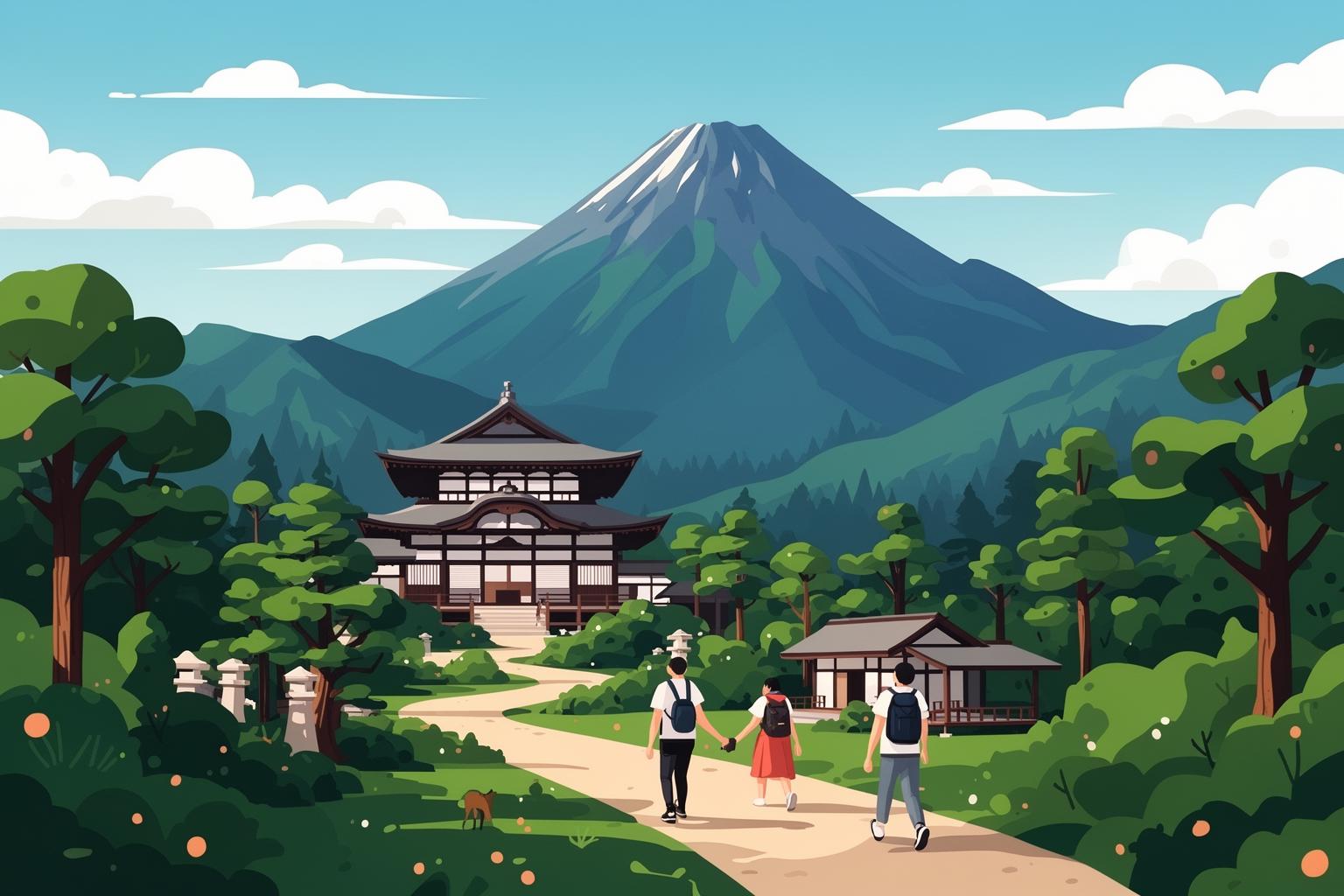
The true transformation begins the moment the Nankai Koya Line train departs from Namba Station. For the first twenty minutes, you rattle through the dense, low-rise sprawl of southern Osaka—a landscape of tangled power lines, weathered apartment buildings, and small factories. The train is alive with the familiar sounds of the city: high school students laughing loudly, salarymen speaking on their phones, and automated station announcements. It’s business as usual.
But then, gradually, things start to shift. Buildings become more spaced out, replaced by patches of greenery, followed by neat rows of suburban homes, and eventually, rice paddies and vegetable fields. The train begins to climb. The rhythmic gatan-goton of the wheels slows down as the incline steepens. Fewer people board and disembark. The chatter inside the carriage fades to a gentle murmur. Passengers who were absorbed in their smartphones begin to lift their heads and gaze out the windows. The urban scene gives way to a more primal one. The train winds through valleys and tunnels, with towering, dark green mountains rising on both sides. You pass through tiny, sleepy stations that seem frozen in time. This slow, gradual ascent acts as a compelling psychological device. You are not abruptly transported; instead, you are gently eased out of your urban frame of mind. Physically and mentally, you climb away from the noise, the rush, and the pressure. With each kilometer and every meter gained in elevation, the city’s hold on your psyche loosens.
The Cable Car Ascent: A Vertical Shift in Perspective
At Gokurakubashi Station, the journey’s end, you transfer to the final stage: the cable car. Here, the transition becomes strikingly dramatic. The cable car is a small, utilitarian vehicle that ascends the mountain at a steep angle, nearly 30 degrees. As you’re pulled upward, the forest floor falls away below you. Everyone in the car—families with excited children, groups of elderly hikers, or solo travelers like yourself—instinctively grips the handrails and gazes out the windows. Conversation ceases.
During this five-minute ride, a shared sense of awe takes hold. The usual social distinctions of the city—age, occupation, status—dissolve. Everyone is reduced to the same simple condition: a small human ascending a vast mountain. It’s a humbling, perspective-shifting experience. You see the world from an entirely new angle. The valleys and ridges of the Kii mountains stretch out below, a vast, silent, and ancient landscape. This moment of collective stillness starkly contrasts with the noisy, individualistic energy of Osaka street life. In the city, the aim is often to stand out, to have the wittiest joke, or to strike the smartest deal. Here, on this vertical climb, the instinct is to remain silent, to observe, and to become a small part of the immense surroundings. It’s a potent reminder that the loud Osaka persona is a role people adopt—a social strategy suited to a specific environment. When the environment changes, so do the people.
Life Inside the Temple Walls: Trading Neon for Candlelight
The Rules of the House: Discipline and the Osaka Spirit
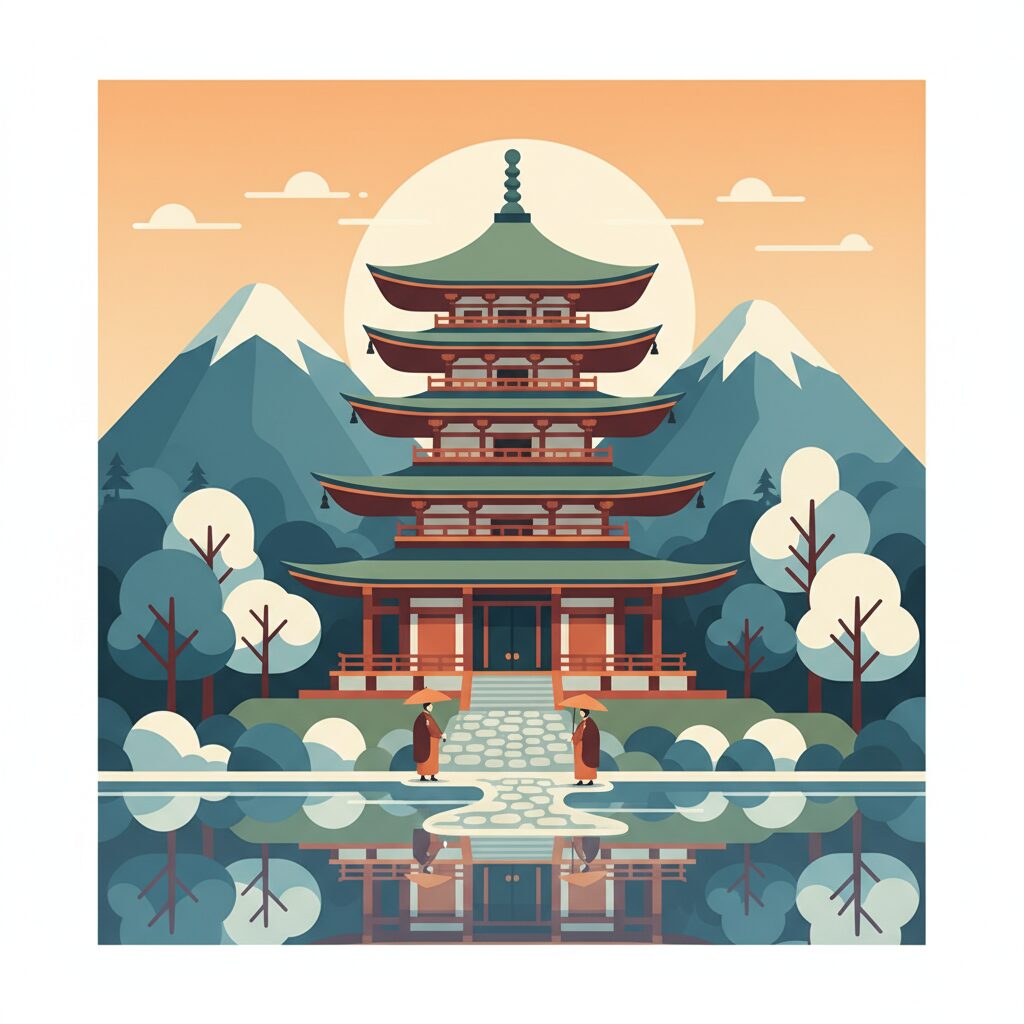
Arriving at your shukubo jolts you out of the everyday. You slide open the heavy wooden doors and step from the bustling outside world into a bubble of deep silence. The air is cool, carrying the scent of aged wood and a faint, sweet whiff of incense. The only sounds are the soft shuffle of a monk’s feet on polished wooden floors and a lone crow’s distant caw. After the relentless sensory overload of Osaka, this silence feels almost tangible—so complete it becomes almost deafening.
You are led to your room, a simple space with tatami mat floors, a low table, and sliding paper screens that overlook a carefully raked zen garden. Then, you are gently briefed on the rules. Dinner is at 6 PM. The temple gates close at 9 PM. The morning prayer service begins at 6 AM, and attendance is expected. Conditioned by the image of Osakans as charming rebels who resist authority, you might anticipate some pushback or grumbling. But you see none. Everyone—from the young couple from Kobe to the family from Sakai—accepts the rules without complaint. This offers a crucial insight into local character. Osakans don’t dislike rules; they dislike pointless rules. They question authority that seems arbitrary or inefficient. But the temple’s rules have a clear, evident purpose: to foster mindfulness, discipline, and peace. Because the purpose is understood and valued, they embrace the rules wholeheartedly. It’s that familiar pragmatism. They’ve paid for a spiritual experience, and they’re determined to get their money’s worth by following the instructions. They approach this disciplined life with the same enthusiasm they would bring to conquering an all-you-can-eat buffet. It’s not rebellion that defines them, but a wholehearted dedication to whatever they decide is meaningful.
Shojin Ryori: A Feast for the Soul, a Challenge for the Osaka Palate
At exactly 6 PM, a young monk brings dinner to your room. It is a stunning presentation of shojin ryori. A lacquered tray holds a dozen small bowls and plates, each containing a tiny, perfect portion of food. There is creamy sesame tofu (goma-dofu), a clear soup with a single delicate vegetable, simmered mountain potatoes, various pickles, a piece of fried gluten that mimics the texture of meat (fu), and a bowl of rice. There is no fish, no meat, and no pungent spices like garlic or onion. The colors are muted, the arrangement minimalist, and the flavors exceedingly subtle.
For someone used to Osaka’s rich brown sauces, deep-fried dishes, and bowls of fatty pork ramen, this meal is both a revelation and a challenge. Your first bite is almost disorienting. You search for the familiar umami burst, the salty punch, the satisfying grease. It’s not there. Instead, you are compelled to focus, to discern the inherent sweetness of a carrot, the earthy bitterness of a wild green, the nutty complexity of sesame. It urges you to eat slowly, to reflect on each bite. This meal is the opposite of kuidaore. It’s not about eating until you’re stuffed; it’s about nourishing your body with just enough and, in doing so, clarifying your mind. It’s a form of meditation in itself. Watching the other Japanese guests, you see them savor each small dish with quiet appreciation. They understand this isn’t a lack of flavor but a different kind of flavor. It reveals a hidden aesthetic sensibility within the Kansai character—the ability to appreciate subtlety and restraint often overshadowed by the city’s reputation for bold, loud tastes. They can love the greasy indulgence of okonomiyaki and the sublime simplicity of goma-dofu with equal sincerity.
The Monk’s Explanation
Later, a monk may come to your room to clear away the tray and chat. These are often not the ethereal, otherworldly figures you might expect. They are frequently down-to-earth men with a sense of humor and, often, a distinctive Kansai accent. If you ask about the food, the explanation you receive will likely be refreshingly practical. “We avoid strong flavors because they distract the mind,” one might say. “When the food is simple, your mind can be simple. It helps with meditation.” There’s no mystical jargon, no esoteric philosophy. It’s a straightforward, cause-and-effect explanation that a merchant from Osaka would understand and appreciate. This is another key difference from the sometimes more academic and formal atmosphere of temples in the Kanto region. The Buddhism of Koyasan, as expressed by the local monks, feels approachable and practical. It’s a tool for better living, explained in plain terms. They connect ancient traditions to the very modern issue of a cluttered mind, and it resonates deeply. It demystifies the experience, making it feel less like a religious ritual and more like a form of mental and spiritual upkeep.
The Heart of Koyasan: Okunoin and the Morning Gongyo
Walking Through Okunoin at Night: A Dialogue with History
The most profound experience in Koyasan is strolling through Okunoin cemetery after dark. This is no ordinary cemetery; it is Japan’s largest, a two-kilometer walkway leading to the mausoleum of Kobo Daishi, the founder of Shingon Buddhism. The path is bordered by thousands of graves and monuments, some more than a thousand years old, belonging to feudal lords, samurai, poets, and everyday people. They rest beneath towering cedar trees so immense they appear to uphold the night sky itself. During daylight, it is a beautiful and historic place. At night, illuminated only by stone lanterns, it transforms into something entirely different.
Many temples offer guided night tours led by a monk. As you follow the ancient stone path, the monk highlights notable tombs and shares stories, his voice a soft whisper in the profound silence. The air is cold and crisp. The only sounds are your footsteps on gravel and the occasional rustle of some unseen creature in the forest. It is not frightening; rather, it is deeply, profoundly peaceful. You experience a powerful sense of connection to the centuries of history resting beneath the moss. This experience offers important context for Osaka. Osaka is a city that lives aggressively in the present, constantly tearing down the old to make way for the new. Its history is often buried beneath layers of concrete and neon. Yet here, just a couple of hours away, lies this deep, powerful, and immaculately preserved link to the past. It suggests that Osakans do not lack reverence for history; they simply do not feel the need to live inside a museum. They can be forward-looking innovators in daily life because they know this place, this anchor to the past, is always here. In a way, they have outsourced their historical preservation to the mountain, freeing the city to be a dynamic engine of the present.
The 6 AM Gongyo: A Collective Moment of Stillness
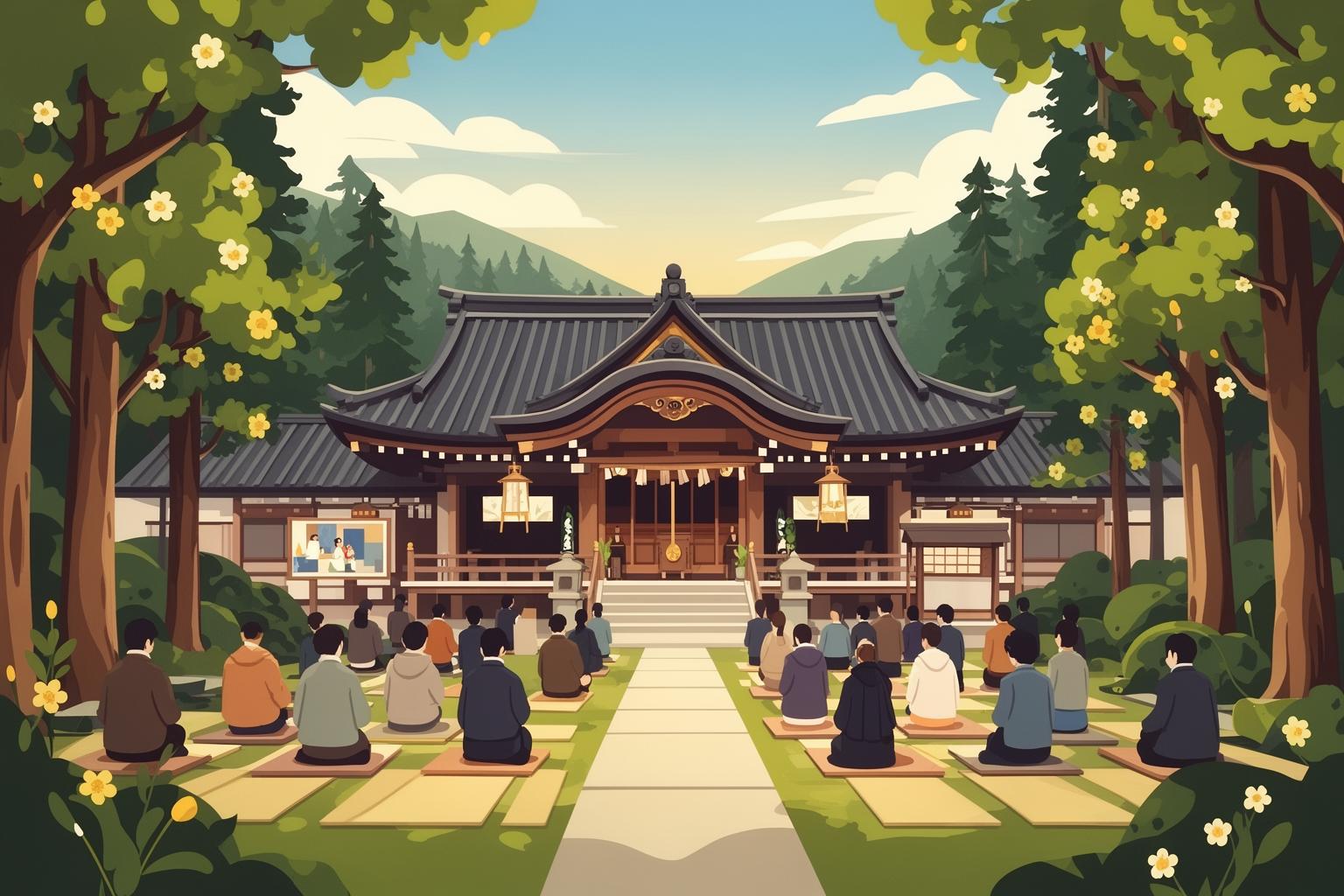
The following morning, you are awakened before dawn by the distant toll of a bell. You dress quietly in the cold, dark room and make your way to the temple’s main hall for gongyo, the morning prayer service. You kneel on a tatami mat alongside the other guests, facing the ornate altar. The head monk and several younger monks enter and begin chanting. Their voices create a low, resonant drone that seems to vibrate through your very bones. The air is heavy with incense smoke. Then, the goma fire ritual begins. The monk chants sutras while feeding cedar sticks into a blazing fire, sending sparks flying up into the rafters of the dim hall. The fire’s warmth touches your face.
In this moment, all sense of self starts to dissolve. You are not a foreigner, not from the UK, not living in Osaka. You are simply a body in a room, a consciousness absorbed into a collective sound and shared ritual. You glance at the other guests, their faces glowing in the flickering firelight, their eyes closed in focus or contemplation. Here, the famed Osaka individualism disappears entirely. The urge to joke, to connect through banter, to stand out is replaced by a wish to blend in, to become one with the moment. It is the ultimate antidote to the ego-driven energy of the city. The service lasts about an hour, and when it ends, you step out into the pale dawn light feeling cleansed from within. This experience uncovers the hidden capacity for quiet, communal introspection that lies beneath Osaka’s outwardly gregarious exterior. They know how to be part of a crowd, but they also know how to be part of a congregation.
The Descent: Returning to the Real World with a New Perspective
The Train Ride Back: Processing the Silence
The journey back down the mountain mirrors the ascent, yet the sensation is completely different. As the cable car descends and you board the train at Gokurakubashi, a quiet reflection settles among the passengers. People gaze out the window, not merely observing the scenery but seemingly absorbing the experience, carrying the mountain’s silence within them. Conversation is sparse, and when it happens, it is in hushed tones.
As the train continues its descent, leaving the mountains behind and re-entering the Kansai plains, the world gradually reasserts itself. Familiar suburban houses, power lines, and advertisements on buildings come into view. At each station, more passengers board, and the volume inside the train subtly rises. The familiar, melodic cadence of the Kansai dialect returns. A group of teenagers boards, laughing over something on their phones. It feels like re-entering Earth’s atmosphere after a brief space journey. You sense the city’s gravitational pull strengthening, slowly drawing you back to its reality. The mountain’s calm remains inside you, now encased within the returning energy of the urban world.
Stepping out into Namba: The Reverse Culture Shock
The journey’s final and most intense moment is stepping out of Nankai Namba Station onto the streets of Osaka. The sensory onslaught is overwhelming—almost like a physical blow. The noise of traffic, the throngs moving in every direction, the flashing lights of pachinko parlors, and the aroma of grilled meat from a nearby yakiniku restaurant—all hit at once. For a few minutes, it feels alien, nearly unbearable.
After 36 hours of near-total silence and stillness, the city makes itself known as impossibly loud, fast, and chaotic. You notice things long tuned out: the overwhelming density of signage vying for attention, overlapping announcements and music from different stores, and the incredible speed and agility with which people navigate crowded sidewalks. It is true reverse culture shock. But as the initial shock fades, your perception shifts. The chaos no longer feels stressful—you sense energy instead. The noise is no longer an irritation but a symphony of life lived fully. The mountain’s silence has cleansed your palate, allowing you to savor the city’s unique flavor with renewed appreciation.
An Osaka Welcome Home
Walking toward the subway, a takoyaki vendor on the corner yells his greeting to the crowd. “Irasshaimase! Oishii tako-chan yakedo, dou ya!” (“Welcome! Delicious octopus balls, how about some!”). You watch him expertly flip the batter balls with a metal pick, his movements a blur of practiced skill. A young couple buys a boat of takoyaki, laughing as they attempt to eat the scorching morsels. The scene is so ordinary, so quintessentially Osaka, yet you perceive it anew—you see the joy, the craft, the simple, unpretentious pleasure of sharing hot food on a busy street. Koyasan didn’t teach you to dislike Osaka’s energy; it taught you how to truly see it. It gave you the quiet backdrop against which the city’s vibrant colors finally come alive.
A weekend temple stay in Koyasan is not an escape from Osaka. It is an essential part of living in Osaka—the necessary pause that makes the city’s relentless rhythm enjoyable and the silence that makes its music comprehensible. Mountain and city are two sides of the same coin—a perfect balance of sacred and profane, ancient and modern, still and kinetic. To live here is to learn to walk the path between them. You descend from the mountain, leave behind chanting monks and silent forests, and step back into neon-lit, beautiful chaos. You take a deep breath, smile, and dive into the wonderful, noisy, human river of Osaka, feeling refreshed, recalibrated, and finally, truly at home.