Walk into any supermarket in Tokyo, and you’ll likely find a certain kind of Japan. It’s a world of quiet efficiency, of perfectly spaced products lining immaculate shelves. Soft, unobtrusive music plays. Staff bow and offer polite greetings. Fruits are individually wrapped, gleaming like jewels under soft lighting. It’s an experience designed to be seamless, calm, and reassuring. It’s the Japan you see in guidebooks. Then, there’s Super Tamade. And Super Tamade is Osaka. It’s a flashing, screaming, neon-yellow monument to a different philosophy entirely. To the uninitiated, a trip to Tamade isn’t just grocery shopping; it’s a full-contact cultural immersion, a sensory overload that can leave you bewildered, slightly deafened, but clutching a bag of groceries that cost less than your train fare. This isn’t just a store; it’s a living, breathing expression of the Osaka mindset. It’s loud, it’s practical, it’s unapologetically gaudy, and it’s obsessed with giving you the best possible deal, even if it shaves off every last frill to do it. Forget the serene tea ceremony; this is the loud, chaotic, and deeply human heart of the city’s daily life. To understand Tamade is to begin to understand why Osaka feels so fundamentally different from the rest of Japan. It’s your crash course in the art of the deal, the importance of pragmatism, and the sheer joy of a life lived without pretense.
Delve deeper into Osaka’s distinctive charm by exploring the rich tradition of osekkai that both challenges and endears visitors to the city’s unabashed local spirit.
An Assault on the Senses: Your First Five Minutes in Tamade
Your Tamade experience starts long before you even pass through the automatic doors. You’ll notice it from a block away. It’s impossible to overlook. It stands as a beacon, a landmark, a structure that seems to defy every notion of subtle Japanese aesthetics. While most Japanese buildings aim to harmonize with their surroundings, Tamade aims to dominate them with overwhelming visual impact.
The Light and the Fury
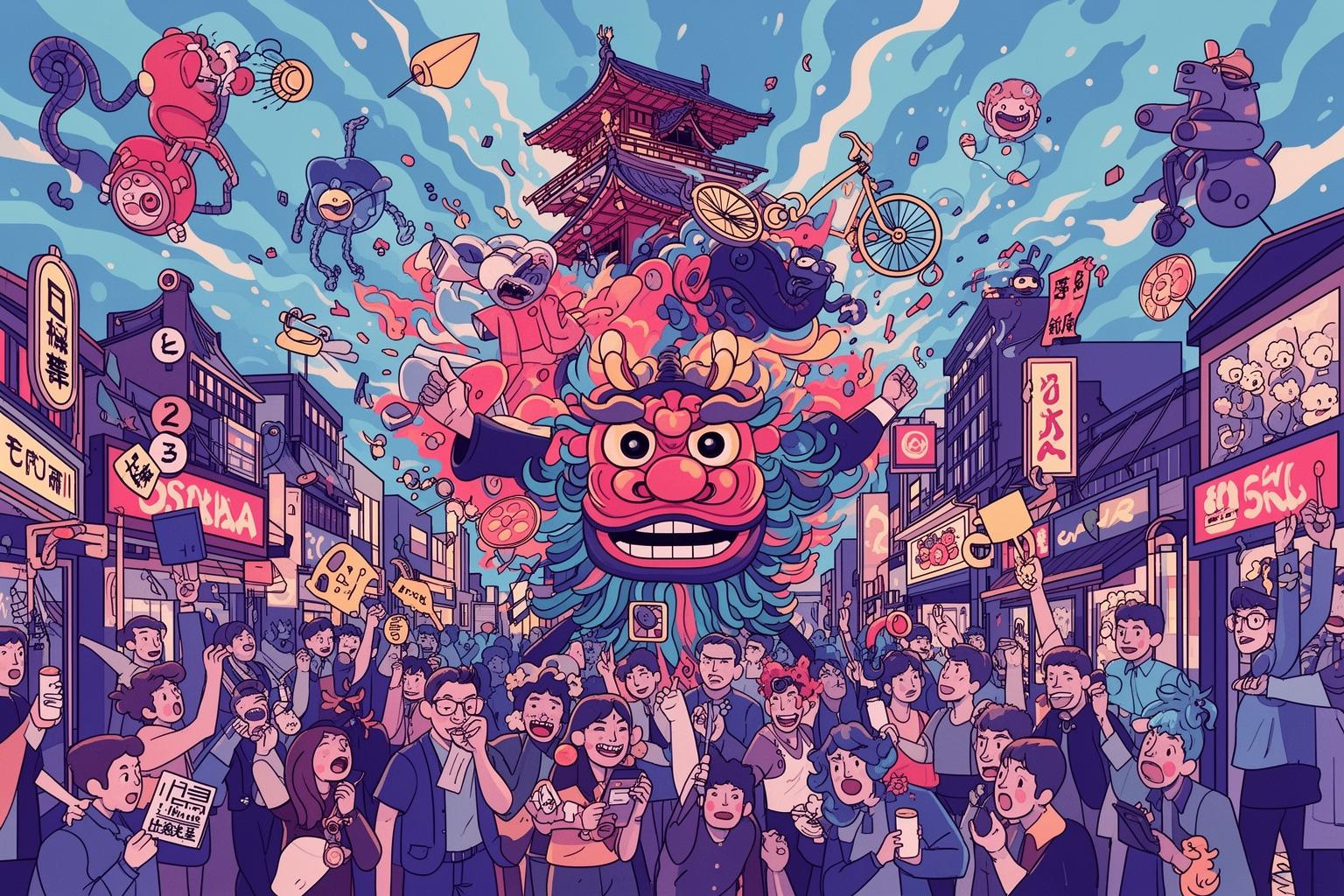
The first thing that strikes you is the color. The buildings are painted a yellow so bright and aggressive, it feels less like a color choice and more like a bold declaration against subtlety. Then there’s the light. Super Tamade is decked out with a dizzying array of neon lights, LED displays, and flashing bulbs, more reminiscent of a pachinko parlor or a 1980s Las Vegas casino than a place to buy milk and eggs. These lights aren’t just decorative; they’re central to the store’s identity. They flash, chase, and blink with relentless energy, day and night. While other stores might turn off their signs after closing, Tamade’s neon glow often pierces the darkest night, a 24-hour promise of bargains. The signs themselves are masterpieces of chaotic design, featuring the store’s smiling Buddha-like mascot, giant images of shrimp, and slogans promising unmatched cheapness. It’s a visual cacophony serving a clear purpose: shouting, “LOOK AT ME! I AM CHEAP!” In a city fueled by commerce, this is the most effective advertising there is.
The Sound of Savings
As the doors slide open, the second wave of the sensory onslaught begins: the sound. You’re immediately greeted by the store’s infamous theme song. It’s not the soft classical music or gentle jazz you might expect in an upscale supermarket. It’s a high-energy, relentlessly upbeat, maddeningly catchy jingle that loops endlessly. The lyrics are simple, celebrating the joy of shopping at Tamade. The tune burrows into your subconscious and will have you humming it days later. This constant, fast-paced music is punctuated by loud, rapid-fire announcements over a crackling PA system, with staff shouting the latest limited-time deals: “Ima dake! Konbini yori yasui yo!” (“Only now! Cheaper than the convenience store!”). The clatter of shopping carts, chatter of customers, and beeping of cash registers all merge into an overwhelming wall of sound. The atmosphere isn’t calm or relaxing; it’s pure, unfiltered commercial energy, designed to pump your adrenaline and fuel the urgency of the bargain hunt.
The Visual Language of “Gekiyasu”
Inside, the visual chaos continues unabated. There are no clean, minimalist lines here. Every surface is plastered with signage. These aren’t polished, corporate-approved posters but large, handwritten signs, often on fluorescent paper, with prices scrawled in thick black or red marker. The calligraphy is bold and dynamic. The character for “cheap,” 安 (yasu), is often oversized, dominating the signs. You’ll see 激安 (gekiyasu), meaning “dirt cheap,” everywhere. You’ll see 特売 (tokubai), meaning “special sale.” And most notably, you’ll see signs for the legendary 1円 (ichi en) sale. These signs form a language of their own—not just informing but persuading, shouting, creating a frantic sense of opportunity. This isn’t about crafting a polished brand image; it’s about moving product quickly. It’s a direct, unfiltered communication of value, embodying the heart of the Osaka merchant spirit.
The Gospel of Cost Performance: Deconstructing the Tamade Deal
To an outsider, Tamade might simply seem cheap. However, to an Osakan, it embodies the ultimate コスパ (kosupa), or cost performance. This goes beyond just being thrifty; it’s about the excitement of being a savvy shopper who squeezes every bit of value from each yen spent. Tamade has transformed this quest into a game, turning an ordinary task into a strategic challenge.
The Legendary 1-Yen Sale
Central to the Tamade experience is the 1-Yen Sale. The rules are straightforward yet ingenious. Spend over 1,000 yen in the store, and you qualify to buy a specific, designated item for the astonishing price of one yen. One day it might be a carton of eggs, the next a block of tofu, bag of bean sprouts, or a can of coffee. This promotion completely changes the way you shop. You don’t just pick up a few items casually; you plan your entire trip to reach that 1,000 yen mark. It encourages you to stock up, possibly buying things you hadn’t intended, all for the joy of that one-coin win. Claiming your one-yen item at checkout feels less like a discount and more like outsmarting the system. It’s a small daily victory that reinforces your identity as a clever, resourceful shopper. This psychological trick taps perfectly into the Osakan passion for a clever bargain.
Price Over Presentation
Consider the produce section in a Tokyo department store. You might find a single melon, elegantly presented on a silk cushion inside a wooden box, priced at over 10,000 yen. It will be perfectly round, with flawless skin. Now, look at Tamade’s produce section. You’ll see piles of apples, some with minor bruises, carrots that are twisted and knobby, cabbages with a few outer leaves wilting. This isn’t an oversight; it’s a philosophy. Tamade prioritizes function over form. A bruised apple tastes just as good as a perfect one but sells for much less. A crooked carrot is equally nutritious. This practical approach is deeply ingrained in Osaka’s culture. While Tokyo, the historic samurai capital and current center of global finance, often emphasizes appearance, status, and perfection, Osaka, a city rooted in commerce, values utility and substance. Why pay for beauty? This mindset pervades the whole store. Packaging is simple, displays are utilitarian, and everything focuses on its essential role: providing nourishment at the lowest price.
The Time-Sensitive Discount Game
Another aspect of the Tamade strategy emerges in the evening, especially in the prepared foods, or 惣菜 (souzai), section. As closing time nears, staff circulate with sticker guns, marking down items that need to be sold that day. Though common in Japanese supermarkets, at Tamade, this becomes an art. Discounts begin at 10% or 20%, then increase with time—30%, 50%, and sometimes in the final hour items are marked 半額 (hangaku – half price), with yet another sticker layered on top. Regulars know the timing perfectly. They linger, watch, and wait, tracking the sticker gun like hawks, ready to pounce as soon as prices hit their target. It’s a silent, tense standoff—a battle of wills. Do you grab the bento at 30% off, or gamble on waiting for 50% off and risk missing out? This nightly ritual is yet another way Tamade makes shopping an active, strategic game rather than just a routine errand.
The Social Ecosystem of a Tamade Aisle

A supermarket reflects its community, and Tamade perfectly mirrors the raw, diverse, and fast-paced character of Osaka. Here, social interaction follows different rules, driven by a common goal: grab the deals and move on.
A Genuine Cross-Section of Osaka
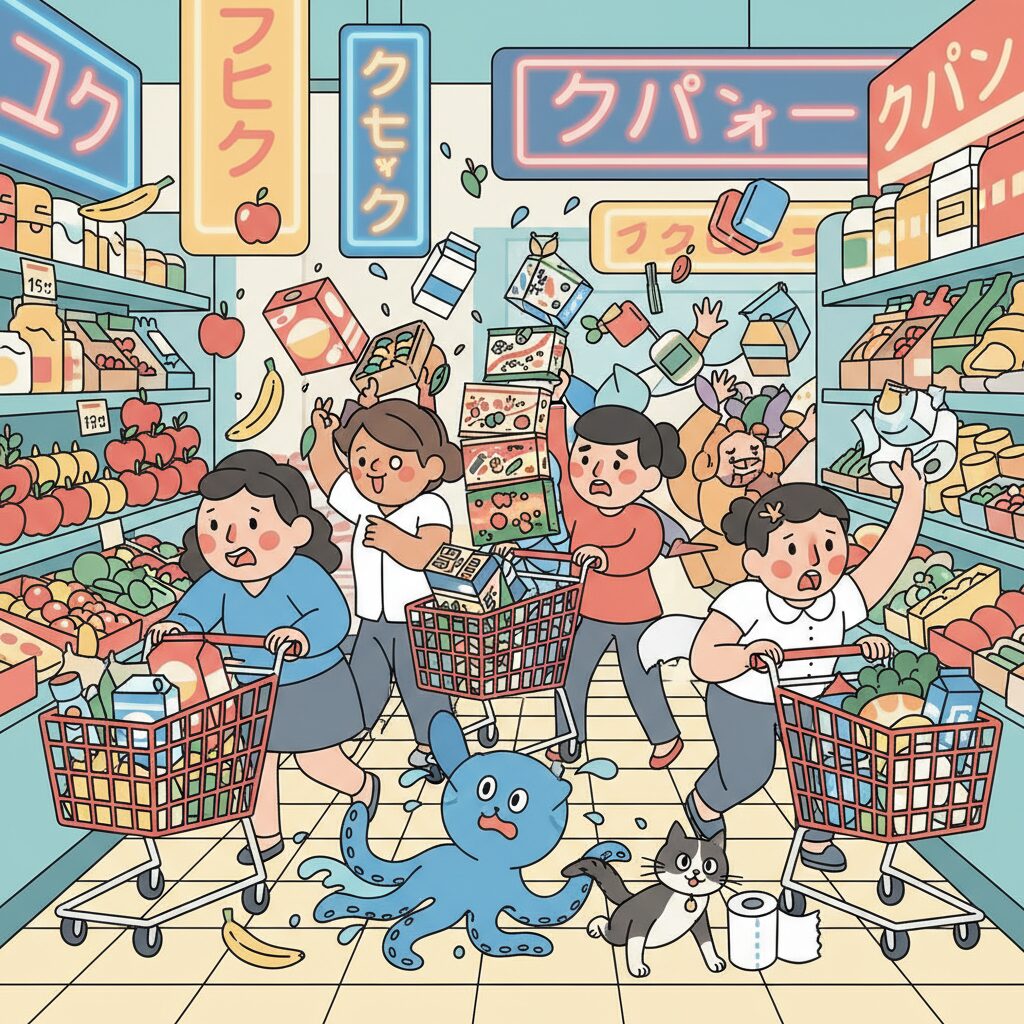
Spend ten minutes in a Tamade aisle, and you’ll witness the full range of Osaka life. You’ll encounter the veteran おばちゃん (obachan), formidable older women who reign supreme as bargain hunters. They glide through crowded aisles with their carts, displaying a purposeful grace, their eyes sharp from decades of experience. You’ll see university students in tracksuits, their baskets heaped with instant ramen, cheap bread, and discounted meat, stretching their budgets to support their studies. Salarymen in suits stop by after work for a 250-yen bento and a can of chu-hai, their faces marked by the weariness of a long day. Young families, mothers with children in tow, calculate the weekly budget right there in the aisle. At Tamade, class distinctions vanish. The pursuit of bargains is the great equalizer, bringing everyone together with a shared purpose that creates a unique, if chaotic, sense of community.
The Unspoken Rules of Engagement
Across much of Japan, social exchanges are guided by complex rules of politeness, respect, and avoiding conflict. On a crowded Tokyo train, people apologize profusely for the slightest touch. At Tamade, the etiquette is much more straightforward. The aisles are narrow and cluttered with displays, and the store is packed. The main rule is: keep moving. It’s understood that everyone is on a mission. If someone blocks the item you want, you don’t wait politely for them to notice you. You reach around. You might offer a quick, rough “suman” (an informal “sorry”), and that’s it. Shopping carts serve as both transportation and battering rams. This isn’t due to rudeness but a collective push for efficiency. It reflects the direct, no-nonsense communication style of Osaka. People say what they mean and focus on their goal. At Tamade, that goal is cheap groceries, and social formalities that impede the process come second.
The Checkout Conveyor Belt
The ultimate test of your Tamade skills comes at the checkout. The cashiers are paragons of speed and efficiency. They don’t engage in small talk nor use elaborate honorifics. Their role is to scan items as quickly as possible. The constant beeping is your only soundtrack. Often, they start pushing items into the bagging area before you’ve even pulled out your wallet. The expectation is simple: pay and bag your groceries quickly. While dedicated bagging counters exist, many regulars perform the entire task at the register itself—a whirlwind of flying plastic bags and items. Hesitation is unwelcome. Struggling with change or packing slowly can earn you an impatient sigh from the cashier and a tangible wave of pressure from the long line of seasoned shoppers behind you. This brisk, unsentimental step caps off a transaction focused on one thing: efficiency.
A Culinary Adventure: What to Actually Buy
Navigating the shelves of Tamade takes some local know-how. It’s like a treasure hunt, where certain treasures hold more value than others. Knowing what to pick up and what to examine more carefully is essential to mastering the store and getting the best value for your yen.
The Safe Bets and Sure Deals
Certain product categories at Tamade are virtually foolproof. The beverage aisle is the most obvious example. Canned coffee, bottled teas, sodas, and juices are priced incredibly low, often even cheaper than wholesale prices. This classic loss-leader tactic draws customers in with unbelievably cheap drinks, encouraging them to buy other items. Other reliable picks include snacks, sweets, and pantry essentials such as soy sauce, vinegar, and cooking oil. Eggs consistently offer great value, as do blocks of tofu and bags of udon or soba noodles. The bakery section provides simple breads and pastries at prices that make convenience stores seem expensive. These are the items you can confidently fill your cart with, knowing you’re getting some of the best deals in the city.
The Meat and Fish Challenge
This is where the “survivor’s guide” really comes into play. The meat and fish sections at Tamade feature amazing prices but demand a careful eye. This is not the place for grabbing packages on a whim. You need to engage with what you’re buying: assess the color of the meat, check the “best before” date—which is often the same day—and gently press the fish. This doesn’t imply poor quality; rather, Tamade runs on a high-volume, quick turnover model. They buy inexpensive, available items and price them to sell fast. For cooks who can recognize fresh ingredients and plan to prepare them that night, this section is a treasure trove. For beginners, it can feel intimidating. Tamade trusts customers to be discerning. It doesn’t guide you step-by-step. It presents the deal and leaves the choice to you, an empowering yet slightly daunting approach.
The Souzai Section: A Rite of Passage
The prepared foods section is the heart of Super Tamade. It’s a vast offering of bento boxes, sushi packs, fried cutlets, tempura, salads, and many other dishes at rock-bottom prices. The 250-yen bento is a local icon, delivering a full meal for the price of a cup of coffee. Mountains of golden, fried items—from croquettes (korokke) to pork cutlets (tonkatsu)—are greasy, satisfying comfort food. Then there’s the sushi. Tamade’s sushi is famous mainly for its affordability, with full packs sometimes available for less than 400 yen. Is it the most exquisite sushi you’ll ever eat? Definitely not. But is it a decent, filling, and incredibly cheap meal? Absolutely. Trying Tamade’s sushi is a rite of passage for budget-conscious Osaka residents. The souzai section is more than just inexpensive food; it’s a vital part of the city’s fabric. It nourishes students, single workers, and families too tired or busy to cook. It acts as a social safety net, ensuring that no matter how tight your budget, a warm meal is always accessible.
Beyond the Checkout: What Tamade Reveals About the Osaka Soul
Super Tamade is much more than just a supermarket. It’s a cultural symbol. If you know how to interpret it, you can grasp the essential values that drive Osaka. It sharply contrasts with the polished, formal image of Japan and reveals a side of the country that is more pragmatic, louder, and refreshingly straightforward.
Merchants, Not Samurai
To grasp the difference between Osaka and Tokyo, you must understand their histories. Tokyo, formerly Edo, was the shoguns’ capital—a city of samurai, bureaucrats, and aristocrats. Its culture emphasized hierarchy, formality, and appearances. Osaka, on the other hand, was a city of merchants. Its culture centered on trade, negotiation, and profit. A traditional Osaka greeting, “Mokari makka?” means roughly “Are you making a profit?” This commercial mindset is embedded in the city’s DNA, and Super Tamade is its purest modern manifestation. Everything in the store is designed for value and efficiency. No money is spent on elegant interiors, refined service, or fancy packaging. What counts is offering the best price. This merchant philosophy prioritizes substance over style—a clear rejection of the formality often found in Tokyo.
The Beauty of “Acchagawa” (The Other Side)
Japanese culture is often framed by omote (the outward, public face) and ura (the hidden, private side). Omotenashi, the famed Japanese hospitality, represents omote—an immaculate, polished performance for guests. Tamade, in contrast, is gloriously, unapologetically ura. It is the messy, chaotic reality behind the scenes. It doesn’t pretend or put on a show. Its bright lights reveal everything: the slightly bruised fruit, the hectic pace, the no-nonsense staff. Many Osakans take great pride in this absence of pretense, seeing it as a form of honesty and authenticity. In a country sometimes marked by suffocating politeness, the raw, unfiltered energy of Tamade is a refreshing change. It’s genuine.
A Celebration of Not Taking Yourself Too Seriously
Finally, consider the flashing lights, the gaudy yellow building, and that endlessly looping, ridiculous theme song. There’s an unmistakable humor to it all. It’s theatrical, campy, and fun. Super Tamade doesn’t aim to be a refined, aspirational brand. It fully embraces what it is: loud, cheap, and chaotic—a grocery store with attitude. This reflects Osaka’s sense of humor, which is often loud, self-deprecating, and delighted by mocking pretension. The city doesn’t take itself seriously, and neither does its most iconic supermarket. It recognizes that life can be a grind, but picking up daily essentials needn’t be dull. It can be lively, noisy, and entertaining. Visiting Super Tamade serves as a reminder that in Osaka, value is paramount, practicality is prized, and there’s always room for a bit of fun amidst the chaos.