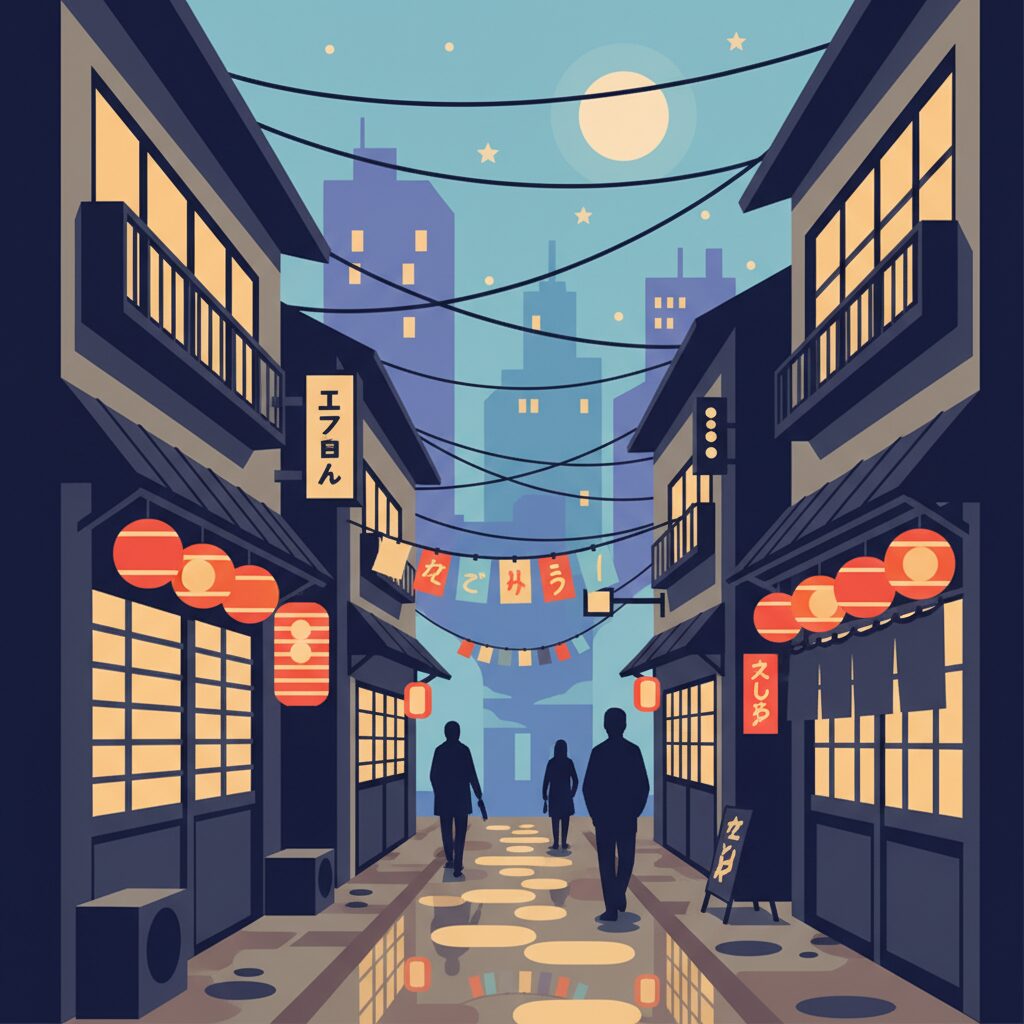
The first thing that hits you isn’t a sight, but a sound. It’s a wave, a living thing, a roar composed of a thousand smaller noises. It’s the sharp clatter of beer mugs meeting, the sizzle of fatty meat hitting a hot grill, the percussive laughter of a salaryman who’s shed his tie and his Tokyo-level inhibitions. Then comes the smell, a dense cloud of grilled eel, savory dashi broth, and the faint, sweet aroma of spilled sake soaking into old wood. You turn a corner just past Tenma Station, leaving the orderly world of the train platforms behind, and you’re plunged into a labyrinth of red lanterns and glowing neon signs. This is Tenma, and it’s less a dining district and more of a social experiment, played out nightly in its tangled web of izakaya alleys.
For anyone who’s spent time in other parts of Japan, especially the meticulously composed capital, the scene can be a shock. People aren’t just near each other; they’re on top of each other. Stools from a tiny yakitori joint spill out into the narrow lane, forcing passersby to turn sideways. Inside a standing bar, or tachinomi, elbows are practically linked, conversations bleed into one another, and the concept of personal space seems to have been cheerfully abandoned at the door. It raises a fundamental question for any foreign resident trying to decode this city: Why do Osaka people choose this? In a country famed for its order and reserve, why does this chaotic, clamorous, and cramped style of socializing thrive? The answer reveals something essential about the soul of Osaka. Tenma isn’t just a place to get cheap drinks and amazing food; it’s a living classroom for understanding the city’s unwritten social rules, rules that prioritize connection over comfort and shared energy over private moments. It’s where you learn that in Osaka, being friendly isn’t a passive state; it’s an active, participatory sport. But be warned: it’s a full-contact one.
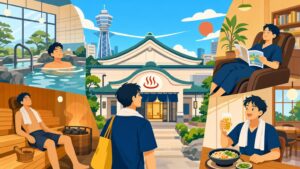
The vibrant energy of Tenma even spills over into Osaka’s after-work drinks, where the spontaneous spirit of the night continues to nurture lively social connections.
The Art of “Aimai”: Embracing Ambiguity and Shared Space

In standard Japanese, the word aimai often bears a slightly negative nuance, implying vagueness or a lack of clarity. However, in Osaka, particularly within the alleys of Tenma, aimai assumes a different, more positive significance. It represents the intentional blurring of boundaries—between inside and outside, between your group and the next, between stranger and temporary friend. This mindset is embedded in the very architecture of the area. Many izakayas here are little more than a counter with a grill, shielded from the weather by a flimsy vinyl curtain. There’s no formal door, no host stand, nor a clear line marking where the establishment ends and the public alleyway begins. You find yourself simultaneously inside and outside, part of the restaurant and part of the street scene.
This physical ambiguity fosters a social one. You might be seated at a tiny counter where your shoulder lightly touches that of a complete stranger. In Tokyo, the unspoken rule would be to establish an invisible barrier. You’d focus intently on your phone, your food, or your companion, creating a small bubble of privacy in the crowded space. In Tenma, that bubble is meant to be burst. The closeness isn’t an unfortunate byproduct of limited space; it’s the main attraction. That stranger beside you isn’t a barrier to be avoided but a potential companion in your evening. For many newcomers, the defining moment comes when their neighbor turns and asks, “Sore, oishii?” (“Is that good?”), gesturing toward their plate. This is more than small talk. It’s an invitation. It opens the door to sharing an experience, offering a piece of your grilled squid, or getting a recommendation for your next drink. The space, the food, the conversation—it all becomes part of a fluid, shared territory. This is often misunderstood by foreigners, who see the close quarters as a lack of courtesy, when in Osaka, it forms the foundation of community. Ignoring others and retreating into your phone is considered much ruder than a stranger asking what you’re eating.
“Nori”: Riding the Wave of Social Energy
If you ask someone from Osaka what makes a party or gathering enjoyable, they won’t simply say “good food” or “good company.” They’ll use the word nori (ノリ). There’s no exact English equivalent. It’s the vibe, the flow, the collective rhythm of a group. To have “good nori” (nori ga ii) means being able to pick up on the room’s mood and contribute to it, riding the wave of social energy. Having “bad nori” means being a wet blanket, resisting the flow. Tenma is an entire ecosystem built around the concept of nori.
You don’t come to Tenma for a quiet, reflective night. You come to be swept away by its powerful current. The soundscape plays a vital role. It’s not just background noise; it’s the symphony. The master griller shouting an order, the burst of laughter from a group celebrating a promotion, the collective groan when a beloved Hanshin Tigers player strikes out on the bar’s tiny TV—it’s all part of the nori. Joining in is part of the experience. The interaction is fundamentally participatory. A classic example is seeing a group at one end of the bar start a playful chant or an ongoing joke with the staff. Within minutes, the joke spreads down the counter. Strangers moments before are now united in a brief, absurd moment of shared fun. Trying to have a serious, private conversation here is like trying to whisper at a rock concert. You’re missing the point.
This can be unsettling for those used to more orderly social settings. It might seem chaotic, loud, and even obnoxious. But it’s a form of collective release. Osaka is a city of merchants and makers, proud of its hardworking nature. Tenma is where that pressure lets go. The loud, boisterous energy isn’t just drunkenness; it’s a deliberate, communal shedding of the day’s formalities. It’s a shared understanding that for a few hours, everyone is on equal footing, part of the same messy, joyful, human experience. To understand Osaka, you have to grasp that its people don’t just seek fun; they create it, collectively and spontaneously. And Tenma is their power plant.
The “Tsukkomi” Culture: Where Conversation is a Sport
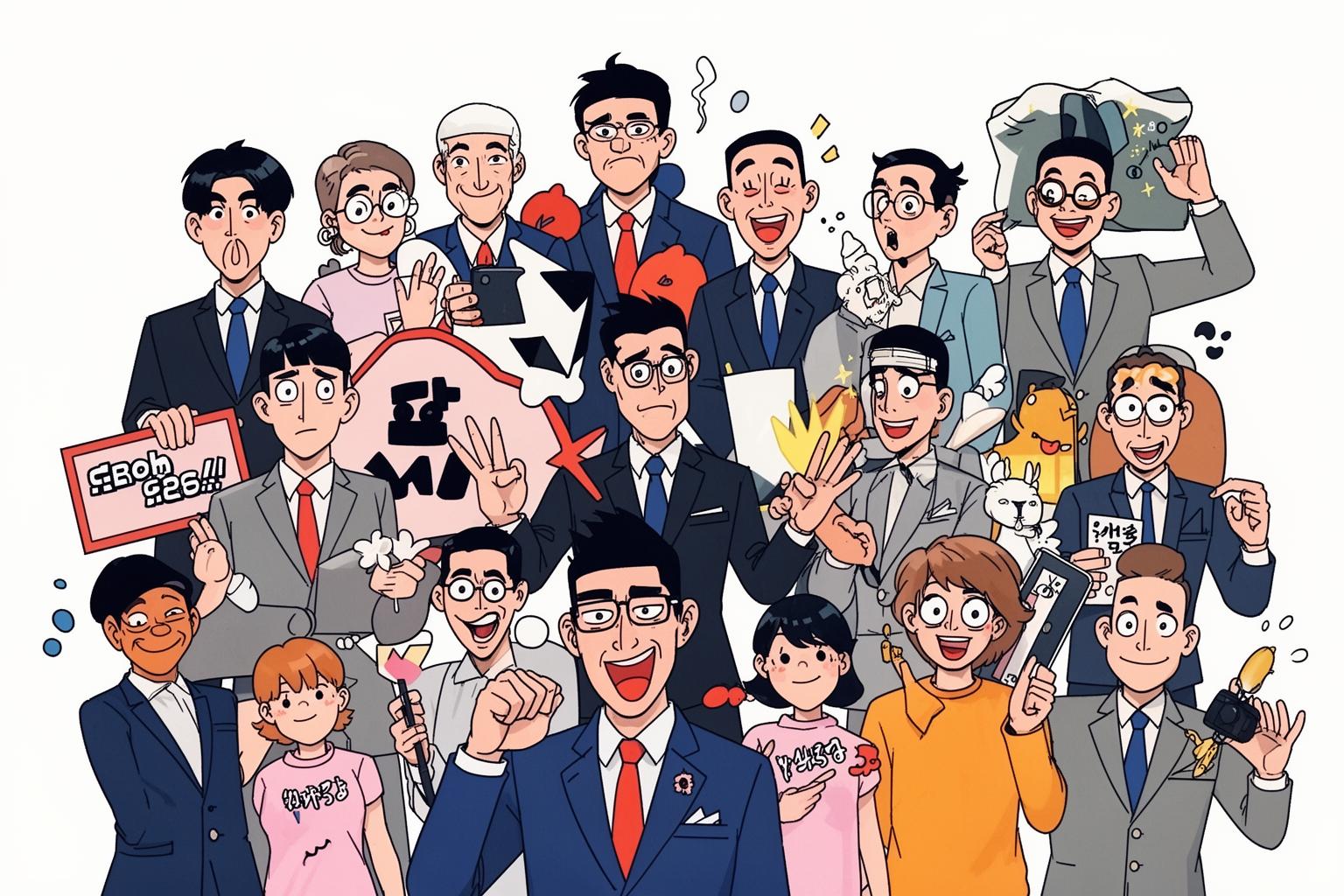
At the heart of Tenma’s lively nori is a conversational style that is distinctly Osaka: the rapid exchange between boke and tsukkomi. These terms originate from manzai, the traditional stand-up comedy unique to Osaka much like Broadway is to New York. The boke plays the fool, the airhead who makes absurd statements, while the tsukkomi acts as the straight man, quickly correcting with sharp, witty remarks (sometimes accompanied by a playful slap). In Osaka, this dynamic goes beyond the stage; it forms the basic rhythm of daily interaction.
With its tight-knit spaces and uninhibited vibe, Tenma serves as the perfect arena for this conversational game. Listen closely, and you’ll hear it all around. The owner of a small oden stand might see a customer hesitating and say, “You gonna stand there all night or are you gonna order? The radish is getting cold waiting for you!” This is the boke: a slight exaggeration, a light jab. A seasoned local might immediately reply, “Your radish should be so lucky to be chosen by me! Give me that and the tofu.” This is the tsukkomi. It’s a verbal back-and-forth, a playful exchange. A stranger overhearing might laugh and throw in their own remark, joining the fun. To outsiders, this can sound almost confrontational. It’s direct, personal, and quick. But in Osaka, it signals closeness and engagement. A flat, polite “I’ll have the radish, please” may be practical, but it doesn’t create a bond. The teasing and witty retort show that you’re present, listening, and willing to engage.
This is often the biggest challenge for foreigners and even for Japanese from other regions. Here, teasing is a form of affection. If the chef jokes about how you hold your chopsticks or your sake selection, it’s not a slight—it’s an invitation. He’s treating you like a regular. The worst response is to take offense or fall into embarrassed silence. The best is to laugh along. You don’t need a clever comeback. A simple smile and laugh show you understand the joke, appreciate the nori, and aren’t just a customer but a temporary member of the lively Tenma family. Silence creates distance; banter fosters belonging.
Practical Realities: Navigating Tenma Like a Local
Grasping the cultural theory is one thing, but truly experiencing Tenma demands some practical know-how. It’s a world governed by its own logic, and trying to apply conventional restaurant etiquette can lead to frustration. To fully enjoy it, you need to shift your mindset.
It’s Not All About the Food
This may sound like heresy, since the food in Tenma is often incredible and surprisingly affordable. You’ll find perfectly grilled skewers, exceptionally fresh sushi, and comforting simmered dishes. Yet, the food is rarely the main reason people come. You’re buying a ticket to the nightly show of Osaka’s social life. The meal serves as the vehicle for the experience. That’s why you’ll see people happily eating exquisite sashimi squeezed into a space the size of a closet. They aren’t there for fine dining centered on the plate. They come to soak in the atmosphere, chat with the owner, and be part of the crowd. The quality of the food is a point of pride, but the quality of the nori is the true hallmark of a great spot.
The “Standing Bar” Concept
Many of Tenma’s most cherished spots are tachinomi, or standing bars. For those unfamiliar, the idea of paying to stand while eating and drinking might seem odd. But it’s fundamental to Tenma’s philosophy of movement and flow. Standing encourages a livelier social atmosphere. You’re not tied to a single table for the entire night. It supports hashigo-zake, the art of bar hopping. A typical night in Tenma isn’t about one long meal; it’s a series of brief, delicious encounters. You grab a couple of skewers and a beer at one spot, then move on to a sake bar for a quick tasting, finishing with a bowl of oden at a stall down the alley. Standing keeps the energy up and the commitment low, letting you sample not just various foods but also different vibes, chasing the best nori as the evening unfolds.
A Note of Caution for Newcomers
Let’s be frank: Tenma isn’t for everyone or every occasion. If you want a quiet, intimate conversation, this isn’t the place. If you’re on a romantic first date hoping to gaze deeply into your partner’s eyes, you’ll likely be interrupted by a boisterous salaryman asking to share your soy sauce. The alleys are often thick with cigarette smoke. Noise levels are consistently high. It’s a full sensory onslaught. This isn’t a drawback; it’s a defining feature. If you expect a calm, orderly meal, you’ll be sorely disappointed. The key is managing expectations. Don’t resist the chaos. Don’t try to find a peaceful corner. Either embrace the vibrant noise and humanity or pick another neighborhood for the night. There’s no shame in deciding it’s not for you—but it’s a mistake to criticize it for not being something it never claimed to be.
Why Tenma is Pure Osaka

Ultimately, Tenma is more than just a network of streets filled with eateries and bars. It embodies the spirit of Osaka itself. It contrasts sharply with the polished, reserved image often associated with Japan. While Tokyo grows upwards, constructing vertical spaces for private consumption, Osaka spreads outwards, forming horizontal networks for public interaction. Tenma is the city’s vibrant heart—noisy, a bit chaotic, and unmistakably human.
The alleys reveal why people from Osaka are often described as “friendly” and “open.” Their warmth isn’t the polite, deferential service typical elsewhere. It’s an active, engaging, and sometimes intrusive friendliness that invites participation. This attitude stems from a merchant culture where quickly building rapport was crucial for business, and it thrives in places like Tenma. Here, you realize that community isn’t something you inherit; it’s something you create, night after night, over shared dishes and clinking glasses, with both friends and strangers.
Living in Osaka without experiencing Tenma is like reading a book but skipping its most thrilling chapter. You don’t have to fall for the noise or the crowds. But to understand why your Osaka neighbor might strike up a conversation in an elevator when a Tokyoite wouldn’t, or why the local supermarket cashier jokes while handing you your change, you need to grasp the cultural forces shaping them. You need to understand why a city would create and cherish a place like Tenma. It is the city’s soul, served on a skewer—loud, unfiltered, and inviting you to take a bite and join the conversation.