Ask anyone, a tourist or a long-term resident, to describe Osaka in a few words. You’ll get a familiar collage of sensory explosions. Dotonbori’s neon chaos, a river of light and relentless energy. The savory smoke of takoyaki stands, a scent that clings to the air in Namba. The wall of sound in a Shinsaibashi shopping arcade, a mix of J-pop, frantic announcements, and the clatter of a thousand footsteps. And the people—oh, the people. Loud, direct, funny, a whirlwind of expressive gestures and a dialect that tumbles out like a percussion solo. It’s a city that grabs you by the collar, looks you straight in the eye, and demands your full attention. It’s intoxicating. It’s thrilling. And if you live here, it can also be profoundly exhausting.
This is the paradox that many foreigners living in Osaka grapple with. You fall in love with the city’s raw, unapologetic vitality, a stark contrast to the polished reserve of Tokyo. But then you hit a wall. A point where the constant stimulation feels less like a party and more like a pressure cooker. The question inevitably arises: Where do you go to breathe? When the urban grind of your daily commute from Tennoji to Umeda becomes a blur of gray concrete and packed train cars, where is the off-switch? What does an Osakan do when they truly need to unplug and reset?
The answer, for many, is not a meticulously planned, high-cost excursion to a famous hot spring resort. It’s something far closer, more practical, and deeply characteristic of the local mindset. The answer lies just an hour’s drive north, past the sprawling suburbs and into the rolling, cedar-covered hills. It lies in a place that is technically still within Osaka Prefecture but feels a world away. The answer is Nose Town.
This isn’t your postcard-perfect vision of rural Japan. Nose is not a theme park of tradition; it is a working landscape, a quiet agricultural community that offers something the city cannot: a dose of unvarnished reality. A trip here is not about escaping life; it’s about reconnecting with a different, more fundamental part of it. This guide isn’t about the top ten things to see. It’s about understanding what a place like Nose reveals about the true, multifaceted soul of Osaka—a soul that is as much about the quiet dignity of a rice paddy as it is about the boisterous laughter in a standing bar. It’s about discovering the rhythm of life that hums just beneath the city’s roar.
For a different kind of Osakan reset that still captures the city’s unique character, consider exploring the quiet camaraderie of a local kissaten.
The Osaka Definition of ‘Getting Away’
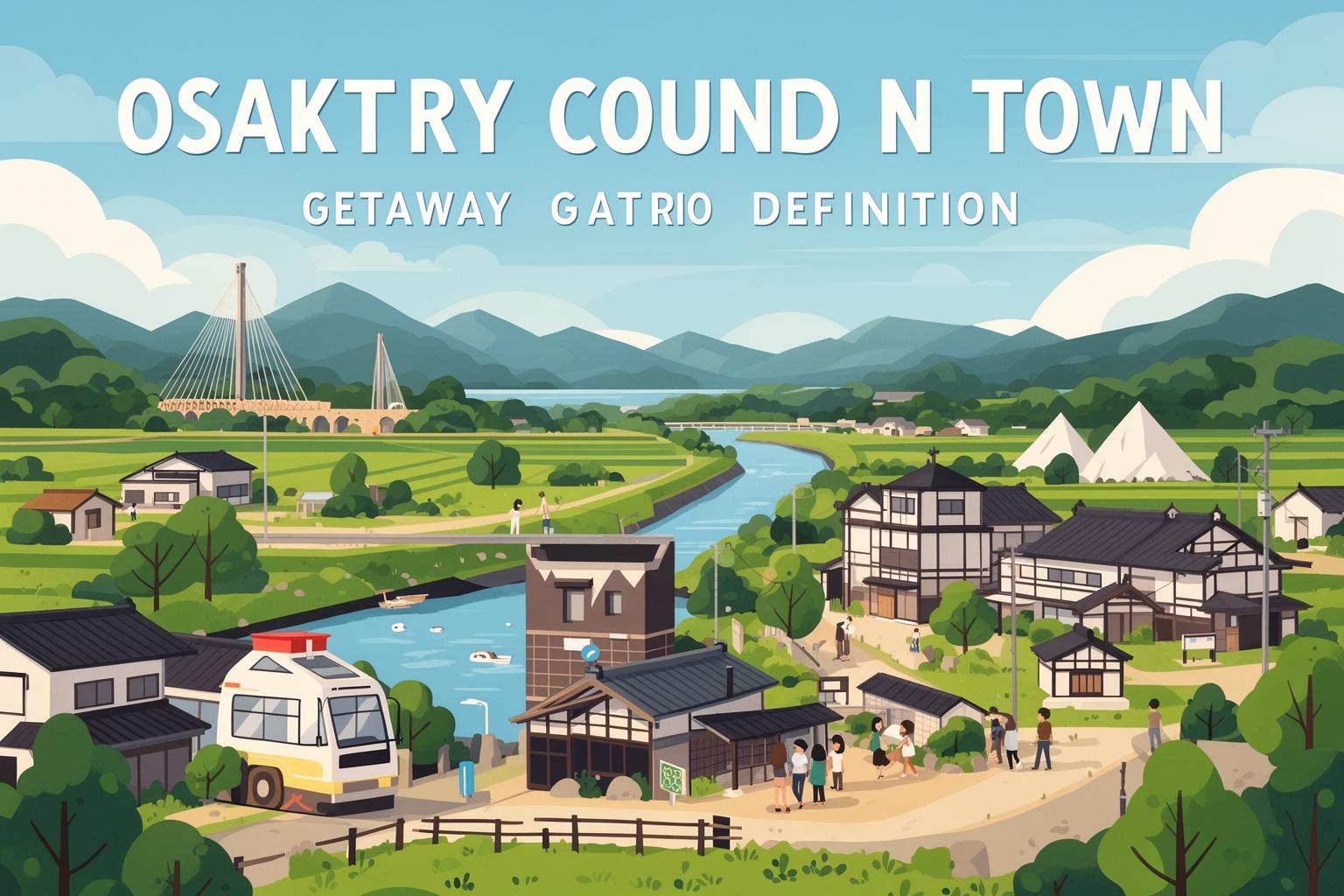
To grasp why a place like Nose is the quintessential Osaka retreat, you first need to break down the local interpretation of a “getaway.” It’s a concept viewed through the practical lenses of pragmatism, value, and a healthy skepticism toward anything that feels overly fancy or performative. While a Tokyoite might plan a weekend in Karuizawa months in advance, booking a stylish boutique hotel and researching Michelin-starred restaurants, the Osakan approach tends to be more spontaneous, more grounded, and much less focused on aesthetics.
It’s Not About Escaping, It’s About Grounding
In many cultures, a vacation is framed as an escape—an escape from work, routine, and daily pressures. The Osaka mindset, however, takes a different view. Life isn’t something to be escaped but something to be managed. If burnout stems from overstimulation and disconnection from the physical world, then the solution isn’t fleeing to an artificial paradise. The answer lies in finding an antidote—getting grounded.
This is where Osaka’s famous pragmatism shines. Osakans, being merchants and artisans by heritage, understand tangible value. They appreciate what can be seen, touched, and tasted. A trendy “glamping” experience, with designer tents and curated campfire playlists, might be met with a wry comment like, “Nande sonna takai nen? Appa de ne-reba ee yan.” (Why is that so expensive? You might as well just sleep outside.) The criticism isn’t about comfort; it’s about the perceived lack of authentic value. You’re paying a premium for a manufactured rustic experience when the real thing is right there, accessible for a fraction of the cost.
A farm stay in Nose delivers this genuine value abundantly. The aim isn’t to be served or pampered but to participate. The reward isn’t a fluffy bathrobe; it’s the deep satisfaction of eating a tomato you picked yourself, its sweetness exploding in a way no supermarket tomato could match. This is not an abstract idea of “wellness.” It’s a direct, physical experience that resets the senses. For an Osakan, whose daily life revolves around concrete realities—sales targets, train schedules, cabbage prices—this kind of grounding is the most logical and effective therapy. It just makes sense. And in Osaka, things that make sense are highly valued.
This stands in stark contrast to the social dynamics often seen in Tokyo. There, a weekend trip can sometimes feel like an extension of the city’s social competition—visiting the right spots, being seen at the right cafes, and capturing the perfect photo for social media. The experience can turn into a performance. In Osaka, there’s far less pressure to perform leisure. The question after a weekend away is less likely to be “Where did you go?” and more likely to be “Oishii mon tabeta ka?” (Did you eat good food?). The emphasis is on personal, sensory enjoyment, not social capital.
Proximity as a Virtue: The One-Hour Reset Button
Nose’s location is key to its charm. That it lies within Osaka Prefecture is not a minor detail—it’s the whole point. The journey from urban Umeda to the quiet forests of Nose can take less than an hour by car. This isn’t a grand adventure; it’s a simple, low-effort exchange of time for tranquility.
This reflects another core Osaka trait: impatience with inefficiency. Why endure a three-hour Shinkansen ride and multiple transfers when a better form of relaxation is right in your backyard? The time and money saved aren’t just perks—they are essential parts of the value. An Osakan might proudly say, “I was stressed at noon, and by two o’clock, I was standing in a river. You can’t beat that.” This pride is rooted in efficiency and smart resource management.
To appreciate this, you have to understand the rhythm of the Osaka work week. Although the city projects a laid-back, fun-loving image, the work environment can be as intense, if not more so, than Tokyo’s. The difference is in style: Tokyo’s corporate culture often feels controlled by rigid hierarchies and unspoken rules, while Osaka’s business scene is more direct, personality-driven, and brutally fast-paced. Deals are made quickly, decisions expected instantly, and the pressure is high. An accessible escape isn’t a luxury; it’s essential for survival.
Nose serves as that ideal release valve. The shift is swift and tangible. Driving north on the Hanshin Expressway, surrounded by a dense network of highways and packed buildings, you pass the Expo ’70 Commemorative Park with its iconic Tower of the Sun, a relic of Osaka’s futuristic ambitions. Then suddenly, the scene changes. Concrete gives way to green. The road narrows and winds upward into the Hokusetsu Mountains. The air coming through the window loses urban humidity and takes on the cool, damp scent of earth and pine. The city’s sounds—the sirens, train crossings, constant hum—are replaced by insects buzzing and the rustling of bamboo groves. This rapid sensory shift marks the beginning of the reset—a physical unwinding of urban tensions—and it happens with an efficiency any Osakan can appreciate.
Nose Town: An Unfiltered Slice of Rural Osaka
When you arrive in Nose, your initial impression may be one of understated normalcy. There are no grand torii gates welcoming you to a tourist area, nor rows of souvenir shops selling branded trinkets. The main street is a straightforward, practical mix of local businesses: a post office, a small agricultural co-op, and a gas station. This unpolished quality is not a shortcoming; it is the town’s most defining and distinctly Osakan trait.
What You See is What You Get
In standard Japanese, the word “arigatai” means “grateful,” but in the Osaka dialect, “arigato” can sometimes imply something a little excessive, almost suspiciously so. There is a deeply rooted cultural preference for things that are unrefined and straightforward. Osakans often distrust overly polished appearances, suspecting they may conceal something beneath the surface. This attitude applies to people, business dealings, and places alike. Nose embodies this principle geographically; it is unapologetically itself.
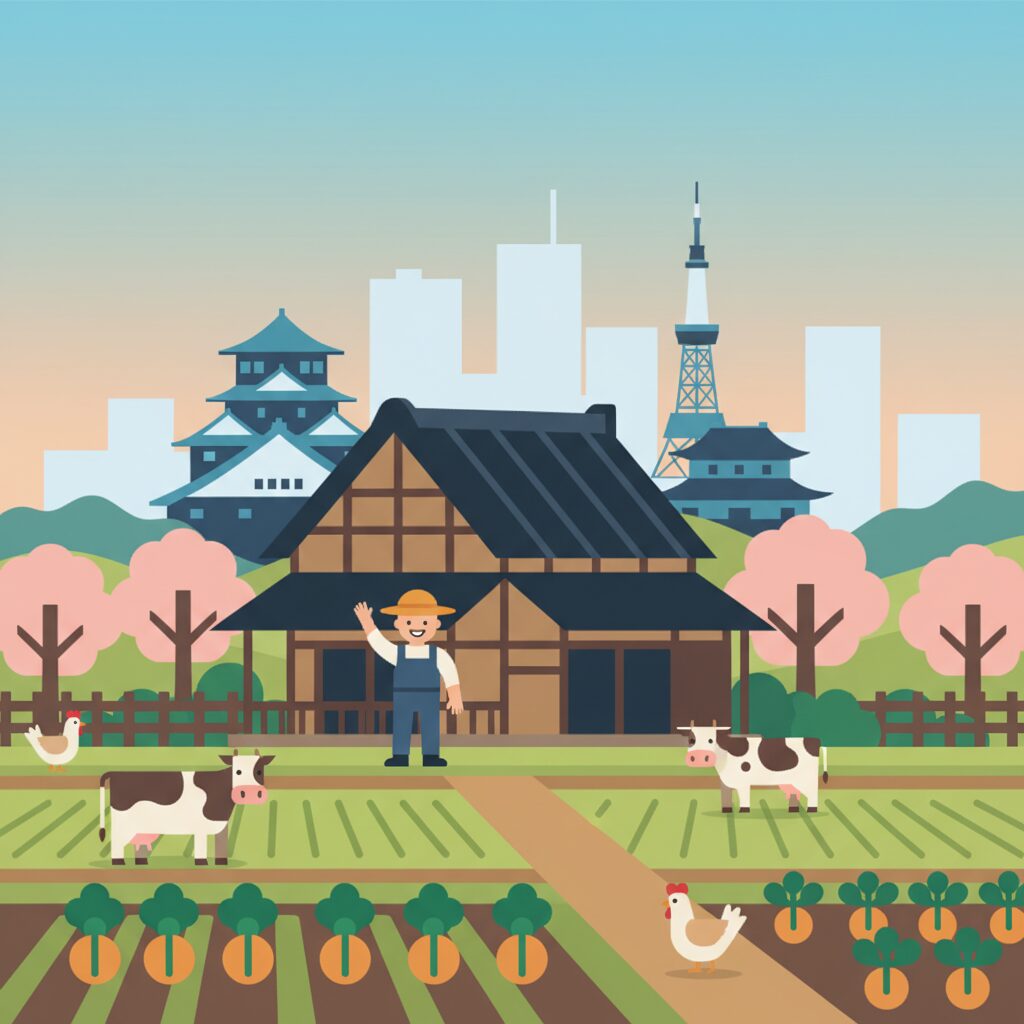
The farmhouses are not preserved as antiques; they are lived-in homes where families work and live, with muddy boots left by the door and laundry hanging out to dry. The fields are not meticulously groomed for photo shoots; they are productive plots of land, worked with a practical emphasis on yield and quality. Everywhere you’ll see small, rugged Kei trucks—the essential work vehicles of rural Japan. This is a place rooted in utility, not aesthetics.
This contrasts with many other well-known rural spots in the Kansai region. The countryside around Kyoto, for instance, often feels curated. Places like Arashiyama or Ohara are breathtakingly beautiful, but they also carry the weight of being historical treasures, maintained as much for tourists as for locals. There is a certain performative nature to them. Nose, by contrast, feels completely unselfconscious. It doesn’t seem to be putting on a show. It simply exists, inviting you to be a part of its everyday rhythm. For foreigners weary of Japan’s subtle social pressures and aesthetic expectations, this honesty is deeply refreshing. There is no pretense—just freedom to be yourself.
The People of Nose: A Different Kind of Osaka Directness
One common misconception foreigners have about Osaka is associating the local character only with the loud, comedic style of a Namba entertainer. While humor is a key part of the city’s communication, the essential trait is not loudness—it’s directness. It reflects a preference to bypass formalities and get straight to the point. In the city, this takes the form of quick-witted banter and no-nonsense negotiations. In Nose’s countryside, that same directness is quieter and more grounded.
When you speak with a farmer or guesthouse owner here, you won’t be greeted with the elaborate, high-pitched “Irasshaimase!” common in city department stores. The welcome is calmer and more measured. They will meet your eyes. Their questions will be straightforward and practical: “Where did you come from? Are you hungry?” The conversation is not a display of hospitality; it’s a sincere, human-to-human exchange.
I remember staying at a small farm where the elderly owner, Tanaka-san, offered me a slice of daikon radish he had just pulled from the earth. He didn’t give a long speech about organic farming or the spiritual beauty of nature. Instead, he simply washed the radish under an outdoor faucet, cut a piece with his pocket knife, and handed it to me. He watched my face as I bit into it. It was crisp, peppery, and remarkably sweet. I told him it was delicious. He just grunted, a small, satisfied smile on his lips. “Soやろ,” he said. (That’s right / Of course it is.)
That was all. The communication was complete. His pride lay not in telling a story, but in the tangible quality of what he had made. The compliment was accepted not with bows or formal humility, but with a simple, confident acknowledgment of a shared truth. This style of communication may initially seem blunt or unfriendly, especially to those used to Tokyo’s layered politeness. But over time, it reveals itself as a form of respect. Tanaka-san wasn’t treating me as a guest to entertain; he treated me as an equal, someone capable of appreciating the simple, honest quality of his work. This direct, reality-based connection forms the foundation of social interaction in Osaka, from corporate boardrooms to rural farm fields.
The Experience: Farm Stays and Forest Bathing
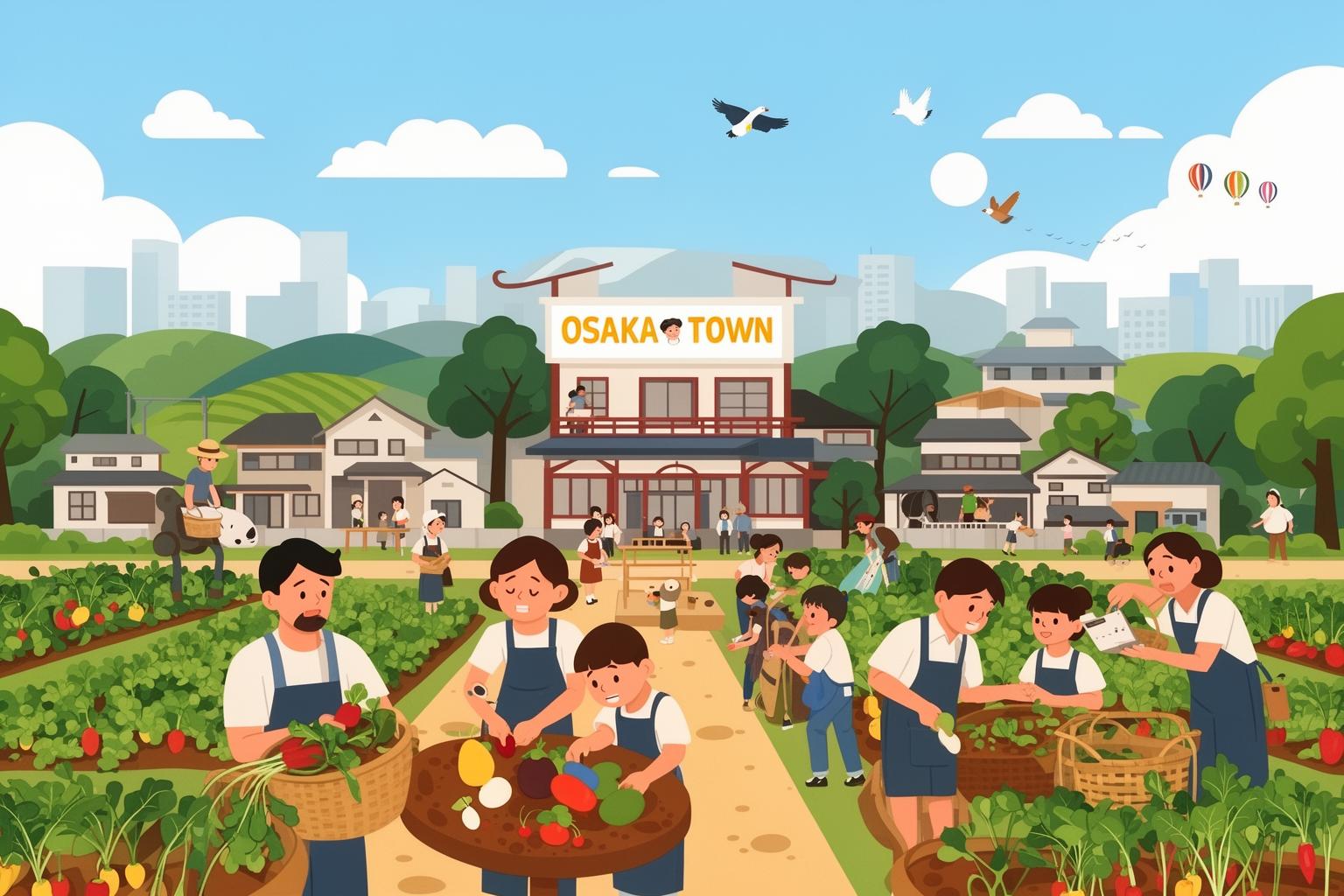
So, what does a weekend in Nose truly look and feel like? It’s an experience grounded in simple, sensory elements. It involves swapping the artificial stimuli of the city for the natural rhythms of the countryside. It’s less about ticking off a list of activities and more about embracing a process of immersion.
Getting Your Hands Dirty: The Logic of a Farm Stay (Noka Minpaku)
A noka minpaku, or farm stay, represents the quintessential Nose experience. Setting your expectations appropriately is crucial. This is not a boutique hotel with a rustic decor. Typically, you will stay in a room within a family’s actual home. The house will be a traditional Japanese farmhouse, elegant in its functional simplicity, featuring tatami mat floors, sliding paper screens, and a deep wooden bathtub. It will also be old. Floorboards might creak, insulation may be imperfect, and wifi could be spotty.
Focusing on these minor inconveniences misses the essence entirely. The luxury of a farm stay lies not in the amenities but in the access it provides. You’re invited not just into a building, but into a way of life. The value proposition, critical to the Osaka mindset, is extraordinary. For a modest price, you gain a comfortable bed, incredible home-cooked meals, and a fully immersive cultural experience.
Most hosts will encourage you to join in their daily work. Depending on the season, this might involve planting rice seedlings in a flooded paddy, your calves sinking into the cool, dark mud. Or it could mean harvesting shiitake mushrooms from logs in a shaded, damp forest grove. It might include picking eggplants and cucumbers for that evening’s dinner and learning to identify the perfectly ripe ones. This is not token work staged for tourists; it is honest, necessary labor, and your efforts, however small, are genuinely appreciated. Participating in this way is transformative. It breaks down the divide between consumer and producer. For a brief time, you cease to be a passive guest and become part of the farm’s ecosystem. The food you eat that evening tastes different, richer, because of your personal connection to it. You understand the care and effort behind its creation.
The Rhythm of the Land
The most profound impact of a farm stay is the resetting of your internal clock. In the city, life is governed by artificial deadlines and the unyielding march of time. In Nose, the pace is set by the sun, the weather, and the seasons. You wake early, not because of a blaring alarm, but because morning light filters through the paper screens and birds begin their song. The day’s tasks depend on the conditions. If it rains, indoor activities like pickling vegetables are suited to the day. If it’s sunny, you work outdoors until the afternoon heat grows intense.
Meals are central to the day. They are not hurried bites eaten at a desk or on a train. They are communal moments shared with the host family around a low table. The food is simple yet exceptional: rice from their own paddies, miso soup made with homemade paste, a variety of small vegetable dishes showcasing seasonal flavors, and a piece of grilled river fish. Conversation flows naturally and easily. You might compare your home country with Japan or discuss the best way to cook bamboo shoots. It is through these simple shared moments that genuine connections form, transcending language barriers.
For a foreigner living in Japan, this experience can be a powerful remedy to the occasional sense of isolation, even in a welcoming city like Osaka. You gain a feeling of belonging and are welcomed into the intimate heart of a Japanese home. You also glimpse a side of Japanese society often invisible in urban settings: self-reliance, a deep bond with the land, and the quiet endurance of rural communities.
Forest Bathing (Shinrin-yoku): An Un-Commodified Cure
Beyond the farms, Nose offers its magnificent forests. The practice of shinrin-yoku, or forest bathing, has become a global wellness trend, often commercialized as pricey retreats and guided tours. But in its birthplace, Japan, it remains a simple, accessible, and deeply rooted cultural practice. Nose is among the best spots in Kansai to experience it in its purest form.
The town has several designated “Forest Therapy Roads,” trails scientifically studied and recognized for their psychological and physiological benefits. Yet, the genuine Osaka approach to forest bathing is delightfully practical. You don’t need a special guide or certification. All you need is to walk in the woods.
What distinguishes Nose’s forests is their immersive nature. These are not manicured parks with paved paths. They are ancient, old-growth forests dominated by towering Japanese cedar (sugi) and cypress (hinoki). The canopy is dense enough that on sunny days, light filters through in dappled, shifting patterns. The air is rich with the scent of phytoncides—aromatic compounds from trees shown to reduce stress hormones and boost immunity. The only sounds are your footsteps on leaf litter, a hidden stream’s murmur, and the distant call of a bird.
Forest bathing’s purpose isn’t hiking for exercise, nor reaching a destination. It’s about slowing down and engaging all five senses. You are encouraged to walk slowly, stop often, touch the rough bark, feel the cool, damp air, listen to the silences between sounds, and observe the infinite shades of green covering a mossy stone lantern. It is a form of active meditation, calming the relentless noise of the conscious mind by focusing on the sensory details of the present moment.
For someone accustomed to the visual and auditory overload of Osaka, this experience is deeply restorative. It’s like lowering the volume on the world. You return from the forest feeling calmer, clearer, and more centered. And true to Osaka’s spirit, this powerful therapeutic benefit comes at the cost of a bus ticket or a bit of gas—high value at low cost, perfectly aligned with the local culture. It’s a practical remedy for the very real stresses of modern urban life.
What Nose Teaches You About Living in Osaka
A weekend in Nose does more than simply recharge your batteries. It offers an essential lesson in understanding the city you live in by providing the context and contrast needed to look beyond stereotypes and truly appreciate Osaka’s complex character. It helps you build a more sustainable and fulfilling life here.
The Myth of the 24/7 Party City
The most common stereotype of Osaka is that of a city that never sleeps, a place of nonstop fun and celebration. Foreigners arrive expecting a constant party, and for a while, the city delivers. The nightlife is lively, the food exceptional, and the people endlessly entertaining. But trying to live at that pace indefinitely leads to burnout. Living in Osaka is not the same as vacationing there.
Nose reveals the other side of this dynamic. It shows how the city’s high-energy output is supported by a deep-rooted need for genuine rest and recovery. People in Osaka know how to work hard and play hard, but they also understand intuitively the importance of balance. A trip to the countryside isn’t a sign of weakness; it’s a smart, strategic move to maintain wellbeing—a cultural equivalent of scheduled maintenance.
Grasping this rhythm is crucial for long-term happiness in Osaka. You learn to embrace the city’s energy when necessary and seek the quiet of nature when you need to recharge. You realize that the “real” Osaka isn’t just the Dotonbori-Shinsaibashi corridor. It’s also the quiet farmhouses of Nose, the peaceful trails of Minoo Park, and the windswept beaches of the south. The city is your base, but the entire prefecture is your home—a diverse landscape offering whatever you need at any moment.
True ‘Friendliness’ is Practical Help, Not Performative Politeness
The cliché that “Osaka people are friendly” can be confusing for newcomers. If you expect the carefully choreographed politeness of a Tokyo department store, you might be caught off guard by the blunt, direct style you encounter. A shopkeeper might ask personal questions. A stranger on the train could start a conversation. A boss might give brutally honest feedback. This can feel intrusive or rude if you’re unaccustomed to it.
A visit to a place like Nose helps you decode this behavior. Osaka’s “friendliness” isn’t about formal social rituals; it’s based on a fundamental belief in shared humanity and a willingness to engage directly and practically. It’s a form of connection that values substance over style.
In Nose, if your car gets stuck in the mud on a narrow country road, someone will stop to help. They probably won’t begin with deep bows and formal greetings. Instead, they’ll hop out of their truck, check your wheel, and say something like, “Akan na. Chotto mattete.” (This is no good. Wait a minute.) They’ll then offer practical advice and physical assistance, likely while teasing you good-naturedly. They won’t expect anything in return. Once the problem’s fixed, they’ll wave goodbye and be on their way. This is Osaka friendliness at its purest—it’s not about being “nice,” but about being helpful. It’s about seeing a problem and becoming part of the solution. Understanding this makes the city’s directness easier to accept; it’s not aggression, but an effort to skip the fluff and have genuine, useful interaction.
Beyond the Concrete Jungle: Finding Your Own Balance
For any foreigner making a life in Osaka, the biggest takeaway from Nose is the importance of broadening your map of the city. It’s easy to get trapped in the convenient bubble of the Osaka Loop Line, believing everything you need lies within the urban core. But to truly thrive here, you need to find your own personal “Nose.”
This means being adventurous: renting a car for a weekend or navigating local bus routes beyond the main train stations. It means exploring different parts of the prefecture. Maybe your reset button isn’t a farm but a long walk along Misaki’s coast. Perhaps it’s a challenging hike up Mount Kongo on the Nara border. Or maybe it’s simply discovering a quiet temple in a forgotten suburban neighborhood where you can sit and reflect.
The point is that Osaka offers these escapes in abundance. Unlike Tokyo’s vast, all-encompassing metropolis, Osaka feels more porous. The boundary between urban and natural is closer and easier to cross. Locals move between these worlds fluidly as part of their lifestyle. A salaryman might spend his week in a high-rise office in Honmachi and his weekend tending a small vegetable plot on the city’s outskirts. This blending of city and country is central to the region’s character and provides an exceptional quality of life for those willing to seek it.
Ultimately, a trip to Nose isn’t just a break from the city—it’s a deeper immersion into it. It recalibrates your understanding of what Osaka is and what it means to live here. You return to the noise and energy of Umeda with a fresh perspective, seeing that the city’s relentless drive is balanced by a deep, quiet anchor in the land. You realize that the brash, funny, direct nature of its people stems from a culture that values what is real, practical, and genuinely helpful.
The neon lights of Dotonbori still dazzle, but now you know they don’t tell the whole story. Just an hour away, beneath a vast, star-filled sky, another side of Osaka’s soul quietly tends its fields, breathes the clean mountain air, and prepares for a new day. Knowing this, you feel more at home here than ever before.