You hear it before you even see it. A different rhythm, a faster cadence, a certain bluntness in the air. You’ve just come from Tokyo, where business meetings feel like carefully choreographed kabuki theater, full of polite bows and unspoken rules. Here in Osaka, you hop on a Zoom call, and the first question isn’t about the weather, it’s a cheerful, challenging, “So, what’s the bottom line?” Welcome to the city of the akindo, the merchants. For centuries, this has been Japan’s kitchen, its commercial engine room, and that history has baked a unique operating system into the minds of its people. It’s a mindset that’s less about rigid process and more about pragmatic results. Less about saving face, and more about making a deal that works for everyone. Foreigners often mistake this directness for coarseness, this focus on profit for greed. They miss the point. The akindo spirit, forged in the bustling markets of a feudal port town, is proving to be an unexpectedly powerful asset in the 21st-century world of remote work and digital networking. It’s an approach that cuts through the noise, builds connections that matter, and, frankly, just gets things done. To live and work here is to learn a new language of commerce and community, one where efficiency, humor, and mutual benefit reign supreme.
This pragmatic, deal-focused mindset is perfectly embodied in the city’s vibrant commercial culture, which you can explore further by learning about Osaka’s unique supermarket scene.
Deconstructing the Akindo Mindset: More Than Just Money
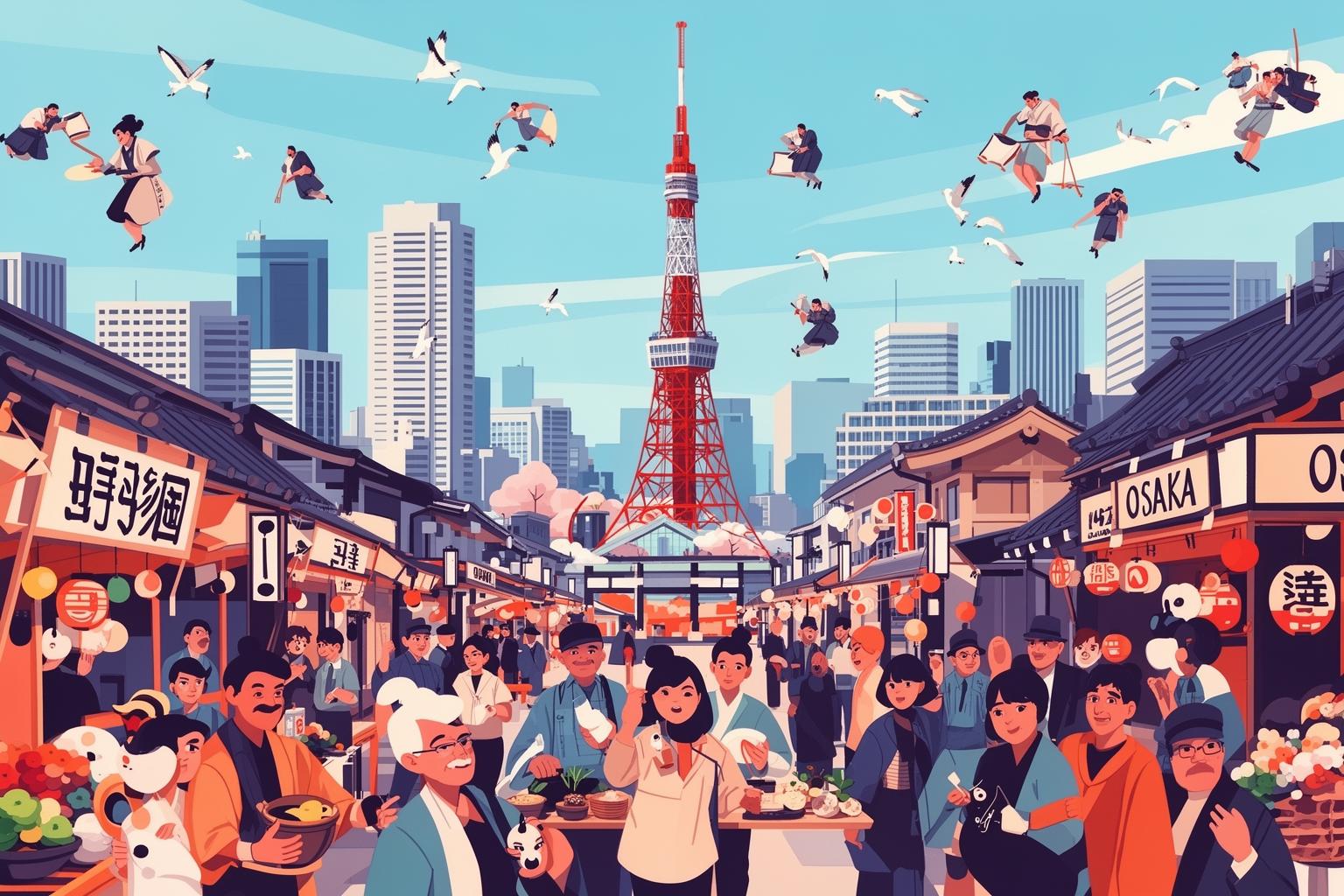
To understand how Osaka operates, you first need to decode the software running behind the scenes. The akindo DNA is a complex code shaped by centuries of trade, negotiation, and survival in a competitive marketplace. It’s not a philosophy found in textbooks; you discover it in casual greetings, quick exchanges at a standing bar, and the way a project proposal is scrutinized. It’s a worldview that values tangible results and genuine relationships over formal hierarchies and superficial politeness. This can be a culture shock if you come from a more reserved environment, but once you grasp the core principles, you’ll realize it’s a remarkably efficient and human-centered way of working—especially when adapted to the digital interactions of remote work.
‘Mokkari makka?’ – The Philosophy of Mutual Benefit
That iconic Osaka greeting, “Mokkari makka?”—literally meaning “Are you making a profit?”—is perhaps the most misunderstood phrase in the Japanese language. Outsiders often hear it and think it’s a fixation on money. But they miss the nuance. It’s a shorthand rooted in a merchant culture where your neighbor’s success was linked to your own. A thriving marketplace depends on thriving merchants. The real question is, “Are things going well? Is this venture beneficial for you? Are you gaining value?” It’s an inquiry into shared prosperity, not selfish greed. In the context of remote work, this philosophy is a powerful antidote to corporate fluff. An Osaka-based team doesn’t want to sit through an hour-long Zoom call just to hear a five-minute point. They want to know the mokkari makka of the meeting itself. Is this a productive use of our shared time? Will it lead to a clear, positive outcome? There is constant pressure to justify the investment—of time, energy, and attention. This creates a culture of clarity and purpose. Agendas stay tight, discussions stay focused, and decisions get made. The aim is not to fill the calendar but to generate value—a principle that greatly boosts remote work efficiency.
‘Honma ka?’ – The Drive for Authenticity and Directness
Across much of Japan, communication is a subtle art of inference. You navigate the delicate balance between tatemae (the public façade) and honne (one’s true feelings), trying to read between the lines. Osaka, however, largely discards that playbook. The local dialect is filled with phrases like “Honma ka?” (“Really? Is that true?”) and “Chau chau” (“No, no, that’s not it”). This isn’t rudeness; it reflects a strong desire for clarity and honesty. The akindo mentality has no patience for ambiguity that could cause a bad deal or a failed project. They want the unvarnished truth because that’s the solid foundation on which to build business relationships. For remote workers, this is a godsend. Instead of vague, overly polite feedback that leaves you guessing, you’re more likely to receive a straightforward email: “This part isn’t working. The data is weak. We need to rethink it.” It may sting briefly, but it saves days or even weeks of wasted effort down the wrong path. This commitment to honne streamlines communication, reduces misunderstandings, and speeds up project timelines in a refreshingly effective way.
‘Eenen!’ – The Flexibility of Pragmatism
Walk into a negotiation in Tokyo, and you might feel the weight of strict rules and procedures. In Osaka, however, you’re more likely to hear a cheerful “Eenen!” roughly meaning “It’s fine!” or “Don’t worry about it!” This is not carelessness; it’s pragmatism in action. The akindo spirit is fundamentally agile. It focuses on the end goal, not the rigid process to get there. If a rule is inefficient or a process slows things down, the Osaka instinct is to find a workaround. “Eenen, let’s just do it this way, it’s faster.” This mindset is perfectly suited for the fast-paced nature of remote work. When collaborating across time zones and digital platforms, things rarely go as planned. Servers crash, files get corrupted, deadlines shift unexpectedly. A culture tied down by strict protocols can grind to a halt. An akindo-driven culture adapts. It empowers individuals to make practical decisions on the spot, pivot without endless approval meetings, and concentrate on solving the problem rather than sticking to an outdated plan. This flexibility cultivates resilience and innovation, turning potential obstacles into mere bumps in the road.
The Akindo Approach to Remote Work Efficiency
When your professional life is reduced to a stream of emails, Slack messages, and video calls, the core cultural philosophy of your team becomes more apparent. In Osaka, the merchant’s focus on value and efficiency isn’t merely a historical anecdote; it actively influences every digital interaction. The unseen guidance of the akindo shapes time management, performance metrics, and even problem-solving methods. For remote workers used to the appearance of productivity—looking busy and always being available—the Osaka approach represents a shift toward greater autonomy and a results-driven environment. It’s a system based on the premise that you are a professional capable of managing your own time to achieve the best possible outcome.
Time is Money: The Battle Against Wasted Meetings
The old saying “time is money” is upheld with near-religious dedication in Osaka. An akindo sees their time as the most valuable asset and resists letting it be squandered. This leads to a strong skepticism toward meetings held without clear purpose. A thirty-minute calendar slot is thirty minutes that could be spent making a sale, refining a product, or engaging with a customer. Consequently, every meeting must earn its place. Remote meetings with Osaka-based companies are models of efficiency: a clear agenda is shared beforehand, the first couple of minutes are for brief, friendly hellos, and then it’s immediately down to business. The discussion centers on one main question: what decisions need to be made right now? There is little tolerance for aimless talks or corporate posturing. This isn’t about lacking warmth; it’s about valuing everyone’s time. Socializing happens later, perhaps over drinks. The meeting is dedicated to work. This sharp focus on maximizing ROI for time spent is ideal for remote workers, freeing up large blocks for deep, focused effort rather than an endless string of pointless calls.
Results Over Face-Time: The Freedom of ‘Jibun Shidai’
In many traditional Japanese workplaces, especially in Tokyo, there is an unspoken pressure toward ‘presenteeism’—the need to be physically seen at your desk, often late, regardless of actual productivity. This mindset clashes with remote work, often leading to micromanagement and stress over online status. Osaka’s akindo culture presents a refreshing alternative. Its mantra, ‘Jibun shidai,’ or “It’s up to you,” places the emphasis squarely on results—the deliverable and the outcome. How you achieve those results is your choice. So long as the work is high-quality and delivered on time, no one monitors your hours or questions why you were offline for part of the day. This cultivates a strong sense of autonomy and trust. You are regarded as a skilled artisan hired to complete a task, not a child needing constant oversight. This results-focused approach lays the foundation for effective remote work. It empowers you to arrange your day in whichever way best enhances your productivity, whether that means working early, taking a long midday break, or coding late into the night. What counts is the quality of the finished product, not the hours logged.
The Art of the ‘Ne-giri’: Digital Negotiation and Problem-Solving
‘Ne-giri,’ or price negotiation, is a hallmark of Osaka culture, evident in any covered shopping arcade. However, it’s a mistake to view it as mere haggling. At its heart, ‘ne-giri’ is a fast, collaborative exchange aimed at reaching mutual agreement. It’s a dialogue that uncovers true value. This pragmatic spirit of negotiation permeates professional interactions, particularly when solving problems. When a project encounters difficulties, the response isn’t to assign blame or hide behind rigid procedures. Instead, it’s to enter into a digital ‘ne-giri.’ Whether on a call or in a Slack thread, the conversation flows back and forth: “The deadline is too tight for this feature set. What if we reduce feature X but enhance feature Y? Would that work for you?” It is a creative, solution-focused exchange. This stands in stark contrast to hierarchical environments where adjusting scope triggers mountains of paperwork and approvals. The akindo approach favors quick calls, open discussion, and compromises that keep the project moving forward. It involves standing firm on goals while remaining flexible on details—a vital skill for navigating the unpredictable waters of remote project management.
Networking, the Osaka Way: Building Relationships that Count

Networking in a new city can be intimidating, especially for foreigners. In a remote work setting, it can feel almost impossible. The impersonal nature of LinkedIn connections and virtual coffee chats often falls short of fostering genuine relationships that lead to meaningful opportunities. Once again, Osaka’s akindo DNA offers a distinct, more effective approach. Networking here isn’t a formal, transactional process; it’s a deeply social and relational practice grounded in mutual support, proactive helpfulness, and a touch of good-natured meddling. It’s about weaving a web of ‘tsunagari’—authentic, lasting connections—that serves as a powerful, informal support network for all involved.
From Tachinomi to Zoom: The Value of ‘Tsunagari’
The classic image of networking in Osaka involves salarymen gathered in a ‘tachinomi’ (standing bar), sharing drinks and stories after work. While that tradition continues, the core value—building genuine rapport—translates to any platform. The aim isn’t to accumulate business cards but to discover common ground and form a human connection. An online networking event hosted by an Osaka group feels distinctly different. Ice-breakers come quicker and are more amusing. People readily share personal stories. Conversations speedily shift from polite introductions to real discussions: “What are you working on? What challenges do you face? How can I help?” Everyone there is assumed to both give and receive. This emphasis on creating real ‘tsunagari’ means a single meaningful Zoom conversation can outweigh numerous shallow exchanges at a formal conference. People remember you not by your title, but by the connection you forged.
‘Osekkai’ as a Networking Strength
‘Osekkai’ is a term difficult to translate. It can mean being nosy, meddlesome, or a busybody, often seen negatively. Yet, in Osaka networking, ‘osekkai’ is a superpower. It reflects a proactive, almost compulsive urge to help and connect people. If you say you’re searching for a freelance graphic designer, an ‘osekkai’ Osakan won’t just wish you luck. Their mind immediately scans their entire network. Before long, they say, “Ah, my friend’s cousin does that! She’s excellent. Let me send you her contact info. I’ll message her now to let her know you’ll be in touch!” This instinctive connector role is the lifeblood of the city’s professional ecosystem. For remote workers or newcomers, this is a tremendous advantage. You’re not an isolated node; you’re just one introduction away from solving nearly any problem. Accessing this means being open about what you need. Don’t hesitate—share your requests, and the ‘osekkai’ network will often spring into action for you.
The Principle of Reciprocity: ‘Otagai-sama’
This network of connections is not one-sided. It runs on the powerful principle of ‘otagai-sama,’ which means “we’re in this together” or “we help each other out.” The ‘osekkai’ act of connecting you with a graphic designer isn’t purely selfless; it carries an unspoken social contract. You’re now part of the network. In return, you’ll be expected to pay it forward someday. When someone else needs a contact, advice, or a recommendation you can provide, you’re called to step up. This creates a resilient, self-sustaining system of mutual support—a dynamic exchange of favors, information, and opportunities flowing freely among members. To succeed professionally in Osaka, you must actively participate in this system. Be generous with your time and contacts. Make introductions. Offer guidance. The more you contribute, the more you’ll receive. This is the akindo principle of mutual benefit, expressed on a community-wide scale.
Common Misunderstandings and How to Adapt
Navigating Osaka’s distinctive cultural landscape can be challenging. The very qualities that make the akindo mindset so effective—its straightforwardness, humor, and focus on results—can easily be misunderstood by those used to a more formal and indirect business style. Viewing these behaviors as flaws is the quickest way to isolate yourself. Grasping the intention behind these actions is essential for adapting and thriving in this practical and dynamic environment. The aim is to learn the rhythm, appreciate the frankness, and recognize the efficiency beneath the seemingly blunt exterior.
Misunderstanding: “They’re just talking about money and being pushy.”
It’s easy to interpret the frequent discussions about value, cost, and profit as signs of a crude or greedy culture. However, this is only a surface-level perception. The akindo’s emphasis on the bottom line is not about amassing wealth; it’s about sustainability and fairness. A deal that isn’t beneficial for both parties isn’t a good deal and won’t foster a long-term relationship. When someone seems “pushy,” they are often trying to speed up the search for that mutually advantageous point. They are cutting through unnecessary formalities to get to the heart of the matter, respecting your time by being direct. To adapt, be ready to discuss specifics. Know your numbers. Clearly communicate the value you provide and what you expect in return. This clarity and preparation will earn their respect, marking you as a serious partner in a valuable endeavor.
Misunderstanding: “Their humor is unprofessional.”
Humor is a key element in Osaka’s communication style. A well-timed joke can break the ice, ease tension during difficult negotiations, or quickly build rapport. For those from cultures where business is treated solemnly, this might feel surprising or unprofessional. You could be in a serious conversation about a project’s scope when your Osaka counterpart suddenly makes a self-deprecating joke. This does not indicate a lack of seriousness. On the contrary, it often reflects comfort and trust. They use humor to level the playing field, shifting the interaction from a formal, rigid exchange to a more human, collaborative one. The best way to adapt is to relax. You don’t need to become a comedian, but appreciating the humor and allowing yourself to smile or laugh will go a long way. It shows you are approachable and ready to collaborate as individuals, not just as corporate roles.
How to Thrive: Embrace Pragmatism
To succeed in Osaka’s professional culture, you must align with its core value: pragmatism. This means being direct and transparent in your communication. Clearly state your intentions. If you have a question, ask it. If you disagree, express it politely but firmly, and be prepared to explain your reasoning. Focus on concrete outcomes in every exchange. Before sending an email or scheduling a meeting, ask yourself: “What specific result do I want to achieve here?” Finally, invest in cultivating genuine relationships. Look beyond the immediate transaction. Remember people’s names, inquire about their work, offer help without waiting to be asked, and engage in the reciprocal nature of the ‘otagai-sama’ network. By embracing this practical, results-driven, and deeply human approach, you won’t just survive in Osaka; you’ll tap into a powerful flow that can elevate your career in unexpected ways.
The Akindo Mindset as a Modern Asset
The world of the Osaka akindo may appear to be a relic from a past era, like a black-and-white photo capturing bustling market streets and fast-talking merchants. However, the principles they refined over centuries—pragmatism, directness, efficiency, flexibility, and the nurturing of strong, reciprocal relationships—are far from outdated. In today’s remote work environment, where digital noise often obscures clear signals and physical distance can lead to social and professional isolation, the akindo mindset stands out as a surprisingly powerful and relevant guide to success. It offers a roadmap for cutting through corporate red tape, fostering genuine trust in a virtual setting, and building a resilient professional community that supports its members.
This is the hidden advantage of living and working in Osaka. You’re immersed in a culture that has mastered the art of getting things done while always keeping sight of the human connection that forms the foundation of all successful endeavors. It encourages you to communicate more clearly, focus your efforts more sharply, and be more generous with your network. For any foreigner seeking to understand what drives this city, or for any remote worker looking for a more effective and fulfilling way to operate, the answer isn’t found in a business textbook or a productivity app. It lies in the vibrant, straightforward, and ultimately deeply practical spirit of the Osaka merchant. Their playbook has stood the test of time and is perfectly suited for the future.