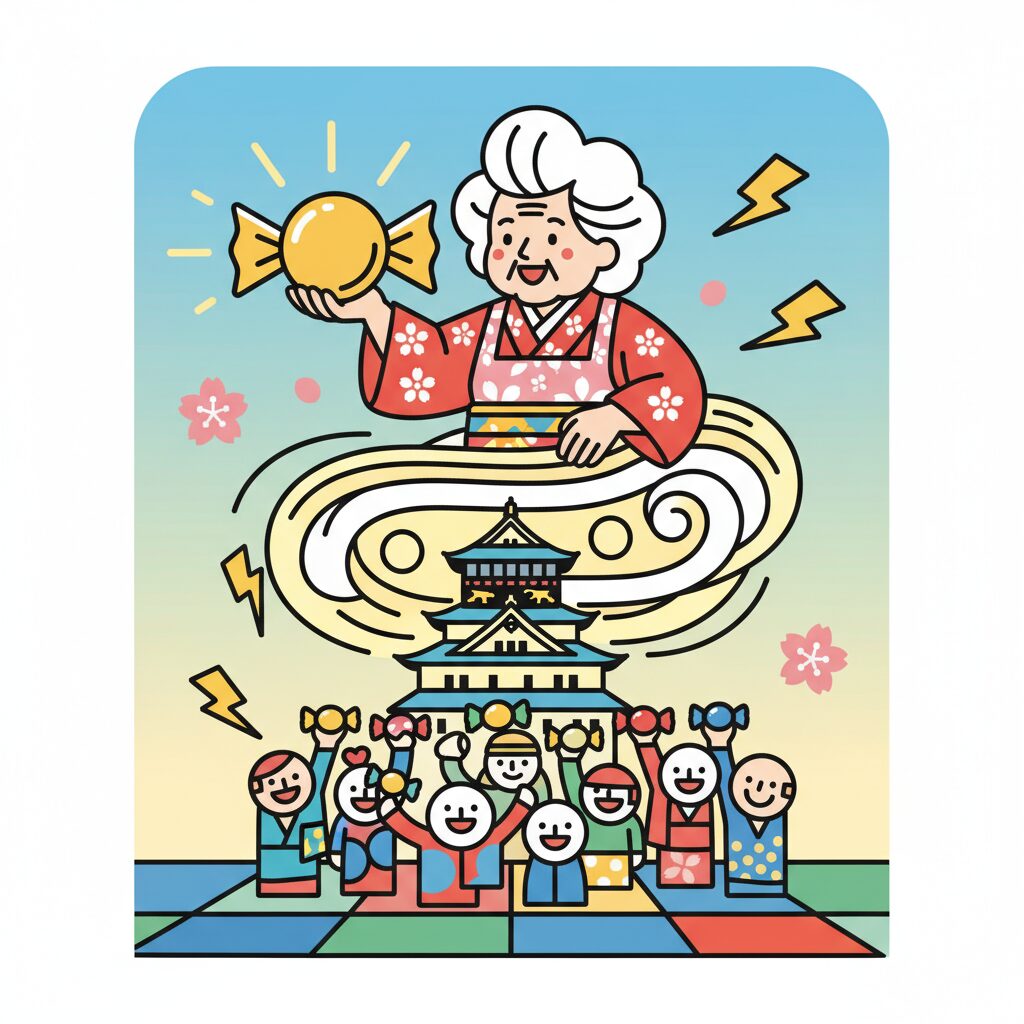
The first time it happens, it feels like a glitch in the social matrix of Japan. You’re standing on a crowded train platform at Umeda Station, minding your own business, maybe fumbling with your phone. A woman in her sixties, clad in something vaguely leopard-printed, catches your eye. She rummages in a cavernous handbag, produces a small, brightly wrapped object, and with a quick nod and a mumbled, “Douzo,” pushes a piece of candy into your hand. You blink. You look at the candy. You look back at her, but she’s already turned away, the transaction complete, the social contract fulfilled. You’re left holding a pineapple-flavored hard candy, feeling a strange mix of confusion and warmth. Welcome to Osaka. You’ve just been initiated into the culture of ‘ame-chan.’ This isn’t just about candy. In Osaka, this tiny, sugary offering is a social tool, a conversation starter, an apology, and a thank you, all wrapped in a crinkly piece of plastic. It’s a fundamental piece of the city’s operating system, a gesture that says more about the people here than a thousand travel brochures ever could. It’s the key to understanding the deep-seated pragmatism and casual intimacy that makes Osaka so fundamentally different from the reserved polish of Tokyo. This isn’t just a quirky habit; it’s a worldview you can hold in the palm of your hand.
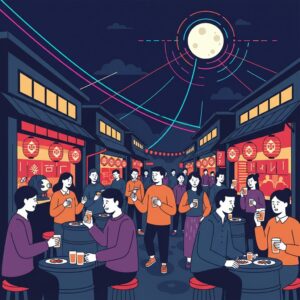
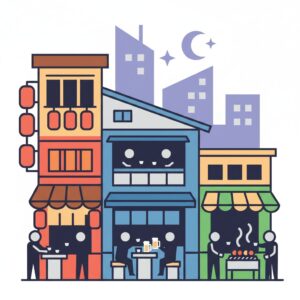
For those seeking to immerse themselves further in Osaka’s vibrant social fabric, exploring local drinking rituals in tachinomi bars reveals another spirited dimension of the city’s unique charm.
More Than Just a Sweet Treat: Decoding the ‘Ame-chan’
Let’s first break down the language. ‘Ame’ (飴) is the Japanese term for candy, specifically the hard-boiled kind. The suffix ‘chan’ (ちゃん) is a diminutive, a term of endearment often used for children, pets, or close friends. Adding it to ‘ame’ instantly turns a generic noun into something personal, cute, and familiar. ‘Ame-chan’ isn’t just ‘candy’; it’s ‘a little piece of candy,’ given with affection. This linguistic nuance is your first hint that you’re dealing with more than a simple sugar treat. The candy itself is usually quite ordinary. We’re not referring to artisanal sweets. The typical ame-chan collection includes individually wrapped, mass-produced hard candies commonly found in any supermarket. Think fruit drops, milk candies, butterscotch balls, and the classic Osaka favorite, Kuro-ame, a rich, dark candy made from brown sugar. The wrapper is crucial; it must be hygienic and portable, ready to be offered at any moment.
Who carries them? The stereotype—which is a strong one—is the ‘Osaka Obachan’—the middle-aged or elderly woman. Her handbag is legendary, a Mary Poppins-like bag containing not only her wallet and keys but an apparently endless, multi-flavored supply of ame-chan for any social situation. While the obachan is the undisputed champion of the ame-chan exchange, the tradition isn’t exclusive to her. You might receive one from a taxi driver as a thank you for a smooth ride, a shopkeeper to sweeten a transaction, or even from a gruff-looking man trying to quiet his grandson on the Midosuji subway line. The act crosses gender and age boundaries, even if its most famous practitioners are the city’s matriarchs. The point is the gesture, not the demographic. It’s a shared cultural language that everyone born and raised in this part of Japan instinctively understands. The presence of ame-chan in someone’s bag signals a readiness to engage with the world around them, smoothing over the small frictions of daily urban life through a simple act of generosity.
The Unspoken Rules of the Ame-chan Exchange
Like any ritual, the ame-chan exchange follows an unspoken etiquette, a rhythm that Osakans navigate with effortless grace. For a newcomer, it may seem arbitrary, but there is a clear logic behind it. This isn’t random candy giving; it’s a targeted social lubricant applied with precision. One of its most common uses is as an icebreaker. The silence between two people waiting for a bus can feel thick and awkward in many cities. In Osaka, it becomes an opportunity. An older woman might turn to you and say, “Atsui ne? Ame-chan taberu?” (“It’s hot, isn’t it? Want a candy?”). Suddenly, the impersonal public space becomes a shared experience. The candy offers an excuse to connect, a low-stakes opening to a brief moment of camaraderie.
It’s also a powerful way to express gratitude. If you hold a door open for someone, help them with a heavy bag, or give up your seat on the train, you might receive an ame-chan in return. It’s a micro-thank-you, a gesture that says, “I see you, I appreciate what you did,” without the formality of a deep bow or elaborate words. It’s quicker, warmer, and more personal. Similarly, it serves as a gentle apology. If a mother’s child is making noise in a quiet clinic waiting room, she might begin handing out ame-chan to those nearby. The candy is a silent request for patience, an acknowledgment of the disruption that eases tension far more effectively than a flustered “sumimasen” (sorry). Sometimes, it’s simply an act of empathy. Seeing someone looking down? A student stressed before an exam? A child who just took a tumble? An ame-chan might appear, a small offering of comfort from a stranger.
How do you respond? This is crucial. You always, always accept it. To refuse an ame-chan is like refusing a handshake. It’s not a rejection of the candy but a dismissal of the social offer of connection. It creates an awkwardness the gesture is meant to prevent. A simple smile and a clear “Arigatou gozaimasu” (Thank you very much) is the proper response. You don’t need to eat it immediately. Just tuck it into your pocket or bag. The transaction is about accepting the gesture. By taking the candy, you acknowledge the other person and validate the social norm, maintaining the intricate, invisible web of Osaka’s community spirit. You’ve completed the circuit. You’ve shown that you understand.
Ame-chan vs. Tokyo: A Tale of Two Social Climates
To truly understand the significance of ame-chan, you must first appreciate its absence. Spend a week in Tokyo, and you will likely never witness this. Offering candy to a stranger on the Yamanote Line would, at best, be met with a confused but polite refusal, and at worst, with outright suspicion. It would violate the unspoken social contract that prioritizes privacy, distance, and the preservation of one’s personal space above all else. In Tokyo, public spaces are meant for transit, not social interaction. The default mode is cool, efficient anonymity. People exist in close proximity but maintain a purposeful social distance.
This marks the major divide between Japan’s two biggest cities. Osaka’s culture is grounded in what can be called pragmatic intimacy. Osakans tend to see the city as a shared living room rather than a sterile hallway. The boundaries between public and private are more fluid. A stranger is not viewed as a potential threat but as a potential neighbor, someone you might share a brief laugh with while waiting at a crosswalk. The ame-chan embodies this mindset. It serves as a tool to actively shape the shared social atmosphere, turning a group of anonymous individuals into a temporary, functioning community. Where a Tokyoite might handle a noisy child with noise-canceling headphones and a detached glance, an Osakan is more likely to respond with a piece of candy and a kind word to the parent. One approach is passive and individualistic; the other is active and communal.
This difference goes beyond candy. It explains why shopkeepers in the Shinsaibashi shopping arcade will chat with you about the weather, why the person next to you at a ramen counter might comment on your order, and why laughter seems to arise more easily in public spaces here. Life in Osaka is simply more interactive. There is a performative aspect to daily interactions, a genuine desire to engage and elicit a reaction. The ame-chan culture is not an isolated quirk; it reflects a broader social philosophy that values direct, warm, and effective human connection. It’s a city that prefers to talk things through—often loudly and with humor—and sometimes, the simplest way to start that conversation is with a piece of fruit candy.
The ‘Osaka Obachan’ and Her Candy Arsenal
It’s impossible to talk about ame-chan without acknowledging its most iconic advocate: the Osaka Obachan. She is a legendary local figure, frequently portrayed in media with a perm, bright and clashing patterns (especially leopard print), a loud, gravelly voice, and a bicycle she rides with alarming speed. And in her bag, always, is the candy. While this image is somewhat exaggerated, it is based on a familiar reality. Older women in Osaka often serve as the social backbone of their communities. They are practical, unsentimental, and deeply committed to ensuring the smooth operation of their immediate surroundings.
The ame-chan isn’t just a symbol of their friendliness; it stands as proof of their practicality. For an obachan, a purse without ame-chan is like a toolbox without a wrench. It’s an indispensable tool for navigating daily life. Why endure uncomfortable silences or rising tensions when a 5-yen candy can resolve the issue immediately? It can soothe a grandchild, thank a bus driver for waiting, build a connection with a new foreign neighbor, or simply sweeten a long wait at the post office. It serves as social currency in its purest form, generously spent to create goodwill and preserve social harmony. Their generosity isn’t wasteful; it is deliberate. They are the matriarchs, the caretakers of the community’s emotional climate.
Watching an obachan in her natural environment is a masterclass in social efficiency. See her at the supermarket: she’ll offer an ame-chan to the cashier who helps pack her bags. On the train, she’ll give one to a young mother whose baby begins to fuss. She’s not just being “nice”; she is deliberately managing her environment, using her small, sugary tool to ease tension and encourage a sense of shared responsibility. This is far from the stereotype of the demure, reserved Japanese woman. The Osaka Obachan is assertive, resourceful, and unapologetically visible. Her ame-chan is an extension of her personality—slightly sweet, somewhat bold, and remarkably effective.
What Foreigners Often Get Wrong
For many non-Japanese residents, the initial encounters with ame-chan can be confusing. The gesture doesn’t easily fit into the usual categories of social interaction they are familiar with, resulting in a few common misunderstandings. The first is suspicion. In many Western cultures, receiving a gift from a stranger, even a small one, often prompts the question, “What do they want from me?” This transactional way of thinking does not apply here. An ame-chan is a gift given without any expectations. It is a one-time act of goodwill. The giver simply wants to complete the social ritual and move on. They are not trying to sell something, start a lengthy conversation, or trap you. It is a moment of genuine, uncomplicated connection.
Another misunderstanding is dismissing the gesture as insignificant. “It’s just a piece of candy, what does it matter?” This completely misses the point. The candy is the vehicle, not the message. The message is, “We share this space together, and I choose to make our shared moment a pleasant one.” It is a small affirmation of community amidst an often-anonymous urban environment. Treating it as merely a piece of sugar overlooks the rich cultural context. It’s like viewing a bow as just a nod of the head—you miss the deeper respect and formality it represents. The ame-chan is a symbol, and appreciating its symbolic significance is essential to understanding the local culture.
Finally, there is a misconception that everyone in Osaka is constantly handing out candy. While the spirit of ame-chan is widespread, the actual practice is more common among certain groups, especially older generations. Younger people and men are less likely to carry a supply specifically for this purpose. However, the culture of receiving ake-chan is universal. Everyone in Osaka knows the gesture and how to respond. So, even if a 20-year-old university student doesn’t offer you candy, they will fully understand when their grandmother does. For residents, the important thing isn’t necessarily to become a giver of ame-chan, but rather a gracious receiver who understands the meaning behind the gesture and participates in the ritual with the respect it deserves.
Living with Ame-chan: A Sweet Part of Daily Life
So how do you bring this sweet tradition into your life in Osaka? The first and most crucial step is simply to relax and embrace it. When a hand offers you a small, wrapped candy, don’t overthink it. Smile, say thank you, and accept it. That’s all. You’ve just taken part in one of the city’s most charming daily rituals. You’ve welcomed a bit of Osaka into your day. It’s a small yet meaningful moment that reminds you you’re more than just a face in the crowd. You belong, even briefly, to a community that values small acts of kindness.
Should you carry your own candy stash? It’s definitely not mandatory. No one will judge you for not having a pocket full of sweets. But if you want to immerse yourself further in local culture, it’s a rewarding experience. Picking up a bag of individually wrapped candies—you can find large mixed bags at any supermarket or Don Quijote—and offering one at the right moment is a strong way to show you understand and appreciate the local customs. Handing an ame-chan to a child on the train or an elderly person who helps you find your way is a gesture that will be met with surprise and genuine warmth. It’s a small way to give back to the community and demonstrate that you’re not just a passive onlooker, but an active participant.
In the end, the ame-chan culture perfectly captures life in Osaka. It’s a bit loud, somewhat casual, and deeply human. It values genuine connection over formal distance. It may feel surprising, even a little shocking at first, but it comes from sincere warmth. In a world that often seems increasingly disconnected, this small, sweet ritual serves as a powerful reminder that community can form anywhere—even between two strangers on a train platform, one piece of candy at a time. It’s one of the many little things that makes life here feel less like living in a huge city and more like living in a very, very large neighborhood.