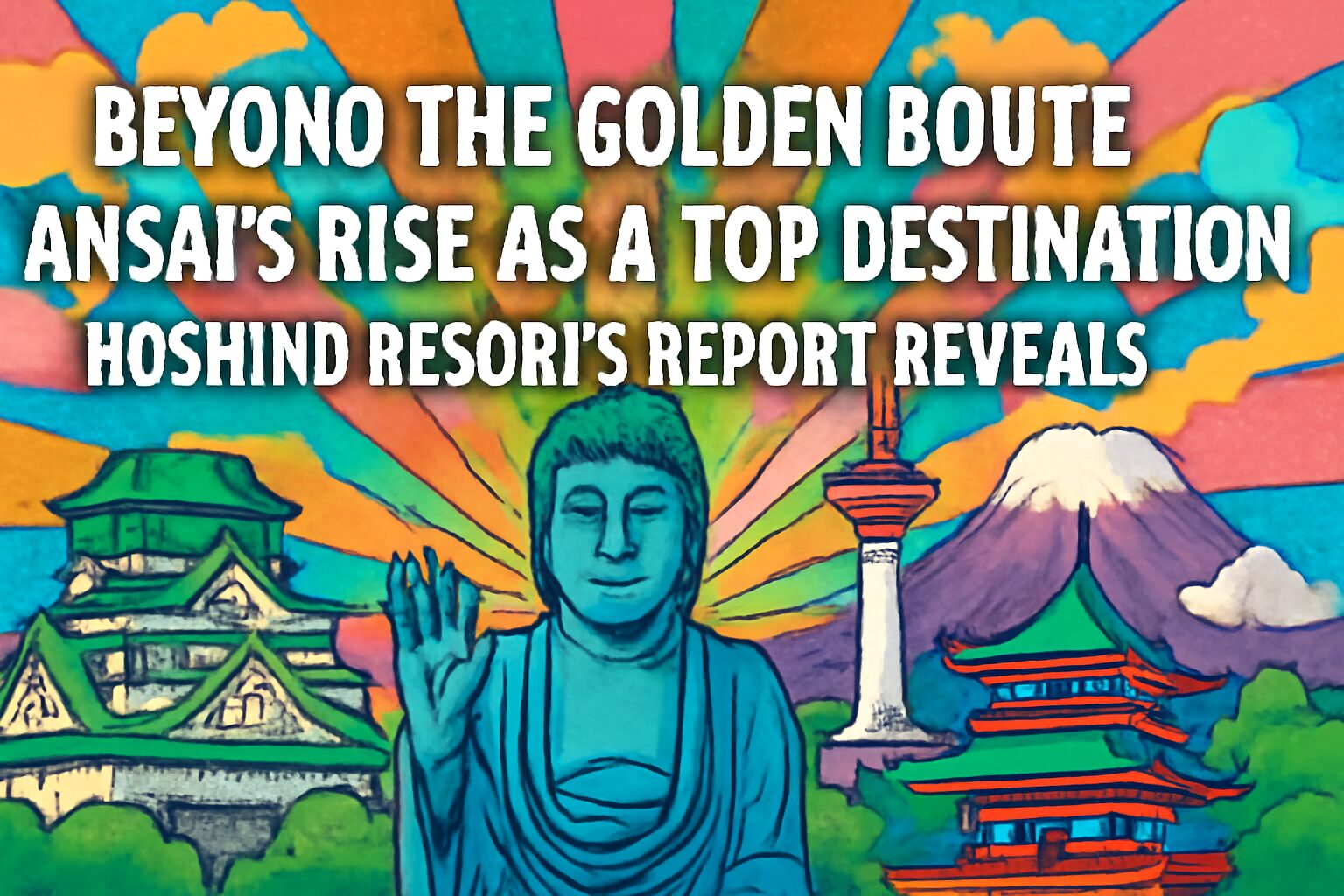
A groundbreaking report from Hoshino Resorts, released on April 1, 2026, confirms a significant evolution in Japan’s tourism landscape. International travelers are increasingly venturing beyond the well-trodden ‘Golden Route’ of Tokyo, Kyoto, and Osaka, paving the way for the Kansai region to emerge as a premier destination for deeper, more authentic cultural experiences.
A New Era for Kansai Tourism
The report, which synthesizes data from nearly 70 of Hoshino Resorts’ properties across Japan, highlights a clear trend: tourists are no longer content with a whirlwind tour of major cities. Instead, they are seeking longer stays and more immersive, localized adventures.
This shift has been particularly beneficial for the Kansai region. The data reveals that visitor numbers to Kansai experienced notable growth throughout 2025. This surge was partly fueled by the global anticipation surrounding Expo 2025 Osaka, which has successfully cast an international spotlight on the region’s diverse attractions, extending far beyond Osaka’s city limits.
Background: Moving Past the ‘Golden Route’
For decades, the “Golden Route” has been the standard itinerary for first-time visitors to Japan. While efficient, this model has contributed to issues of over-tourism in cities like Kyoto, leading to crowded attractions and a strained infrastructure. The trend identified in the Hoshino Resorts report signals a welcome and natural dispersal of tourists. This move towards regional exploration allows visitors to discover the hidden gems of Kansai—from the spiritual mountains of Wakayama to the coastal beauty of Hyogo—while alleviating pressure on the main urban centers.
Peak Season Redefined: A Shift in Travel Calendar
Perhaps one of the most surprising findings is the change in peak travel seasons. The report indicates that for the first time, the year-end holiday period has surpassed the iconic cherry blossom season in terms of visitor numbers.
This development presents a massive opportunity for Kansai’s tourism industry. It suggests that travelers are recognizing the region’s year-round appeal. The crisp air of autumn in Nara, the serene snow-covered temples in northern Kyoto Prefecture, and the vibrant winter culinary scene in Osaka are now becoming primary draws. This shift allows for a more sustainable tourism model, enabling local businesses to thrive outside the traditionally busy spring months.
Future Outlook: What This Means for Travelers and the Region
The diversification of travel patterns is more than a fleeting trend; it represents the future of tourism in Japan.
For Travelers
This change means a richer, more personalized travel experience. By stepping off the beaten path, visitors can engage more meaningfully with local communities, traditions, and cuisines. The focus is shifting from simply seeing Japan to truly experiencing it.
For the Kansai Region
This is a pivotal moment. The challenge now is to build on the momentum generated by Expo 2025 and ensure sustainable growth. Key implications include:
- Infrastructure Development: Enhancing transportation links to rural and less-visited areas will be crucial to accommodate the growing interest.
- Diversified Offerings: There is a clear demand for unique experiences. Local authorities and businesses have an opportunity to develop and promote new attractions, from eco-tours and agricultural stays to specialized craft workshops.
- Managing Visitor Flow: By promoting off-season travel and regional destinations, Kansai can create a more balanced and resilient tourism economy, ensuring its cultural and natural assets are preserved for generations to come.
In conclusion, the Hoshino Resorts report confirms that Kansai is not just a stop on the Golden Route anymore—it is a destination in its own right, offering the depth and diversity that modern travelers crave. As the world looks towards a post-Expo era, the region is perfectly positioned to lead Japan into a new, more sustainable and rewarding age of travel.