Osaka. The name itself crackles with energy. It’s a city of soaring skyscrapers in Umeda, of dazzling, neon-soaked canals in Dotonbori, of endless shopping arcades buzzing with a million conversations. It’s a place where you can feel the pulse of Japan’s vibrant, modern heart. But for those of us who choose to build a life here, beyond the whirlwind of tourism and the daily grind, a question sometimes surfaces in the quiet moments: Where do you find your people? In a metropolis of millions, how do you find your small corner, your community, your home? The answer, I’ve discovered, often lies not in the shiny new developments or trendy cafes, but in the humble, unassuming buildings tucked away in every neighborhood: the local Kōminkan, or community centers. These are the unsung heroes of neighborhood life in Osaka, the social hubs where residents of all ages connect, learn, and weave the true fabric of the city. Forget what you think you know about community centers back home. The Kōminkan is a uniquely Japanese institution, a place that’s part classroom, part social club, part library, and all heart. It’s where you can learn the ancient art of calligraphy from a neighborhood master one day and practice your Japanese with a group of friendly grandmothers the next. It’s a gateway to the real, everyday culture of Osaka, a place where barriers dissolve and friendships are forged over shared hobbies and a simple cup of tea. For any foreigner looking to truly connect with this incredible city, the local Kōminkan is your open invitation.
For those looking to extend their stay and immerse themselves in the community, understanding the current trends in Kansai hotel prices is a crucial first step.
What Exactly Is a Kōminkan? Unpacking the Heart of the Neighborhood
So, what exactly is this place with a somewhat formal-sounding name? Let’s break it down. The kanji for Kōminkan are 公民館. ‘Kō’ (公) means public, ‘Min’ (民) means citizen, and ‘Kan’ (館) means hall or building. Literally, it translates to “Public Citizen’s Hall.” This name directly reflects its purpose and history. Kōminkan were established throughout Japan in the post-war era as part of a nationwide effort to promote social education, culture, and democratic participation at the grassroots level. They were intended to be accessible, inclusive spaces where anyone—regardless of age, background, or income—could engage in lifelong learning and contribute to their local community. In a society that can sometimes feel hierarchical, the Kōminkan represents a profoundly egalitarian space. It’s not a private school with costly tuition, nor a commercial enterprise. It’s a public service, much like a library or a park, funded by the city and often supported by dedicated local volunteers. This foundational philosophy is what makes the Kōminkan so unique. It operates on the belief that learning is a lifelong journey and that strong communities are built when people have a place to gather, share skills, and simply be together. Think of it as the city’s living room—a comfortable, welcoming space focused not on consumption, but on connection and personal growth. You’ll find them in every ward of Osaka, from the bustling city center to quiet residential suburbs. They might be housed in older, retro-style buildings with a charming, nostalgic atmosphere, or in more modern complexes combined with a library or ward office. But regardless of their appearance, their mission remains the same: to serve the citizens of their neighborhood.
The Vibe Check: Stepping Inside for the First Time
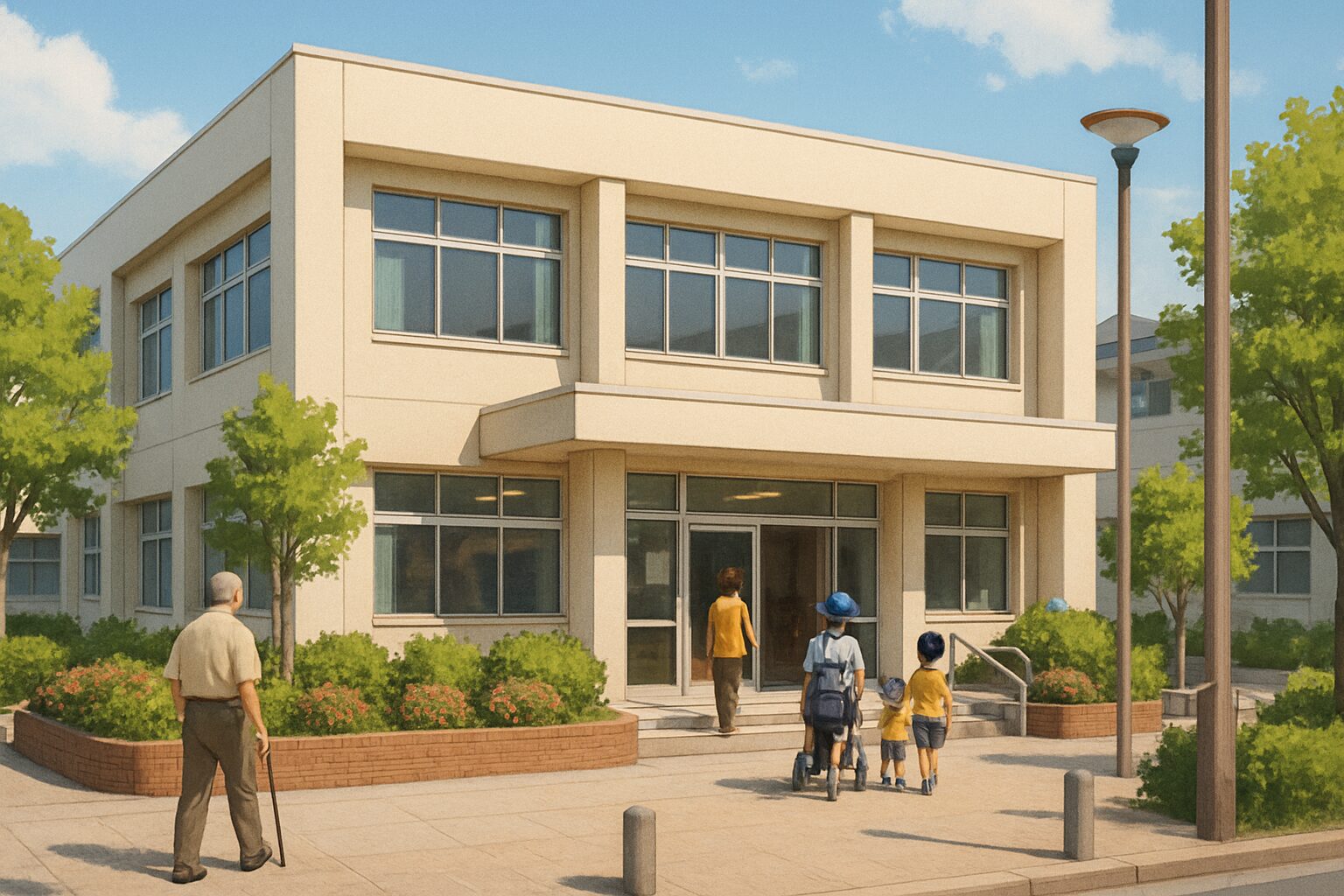
Stepping into an Osaka Kōminkan for the first time is a sensory journey that immediately whisks you away from the city’s hectic pace. The initial impression is one of serenity and genuine warmth. The atmosphere is filled with a distinct soundscape: the gentle murmur of voices from a reading lounge, the soft, melodic notes of a piano drifting from a music room, and the steady click-clack of Shogi (Japanese chess) pieces signaling a silent, strategic match among a few elderly gentlemen in a corner. The air carries a unique mix of aromas—the clean, slightly dusty scent of old books from the library, the subtle, earthy fragrance of sumi ink from a calligraphy class, and perhaps the savory aroma of dashi broth from a community cooking workshop. Visually, the space is just as inviting. At the center of every Kōminkan stands its main bulletin board, a vibrant, chaotic tapestry of community news. It’s plastered with a collage of handwritten notices in elegant, flowing script on colorful paper. You’ll find posters advertising Ikebana (flower arranging) classes, announcements for upcoming neighborhood festivals, children’s artwork displayed with pride, and flyers for local volunteer initiatives. It’s an analog snapshot capturing the pulse of the community. The people here represent a genuine cross-section of Osaka life. Young mothers gather with toddlers for parenting groups, lively seniors—often called ‘genki’ seniors—come for their weekly ballroom dancing or folk singing sessions, and students quietly study in a corner. The atmosphere feels authentic, well-used, and welcoming. There’s no pressure to buy anything, no rush, no affectation. This is a sharp contrast to the polished, consumer-focused spaces that dominate much of modern urban life. The Kōminkan is a refuge of simplicity and community, a place that reminds you that the strongest bonds often grow in the humblest settings.
A Universe of Classes: What Can You Actually Do?

The remarkable variety of activities available at a typical Osaka Kōminkan is truly impressive. It offers a rich array of learning opportunities that cater to nearly every interest and skill level. The schedules are generally aligned with the Japanese academic and civic calendars, with major enrollment periods in spring (beginning in April) and autumn (starting around October). Although the specific programs differ from one center to another, they typically fit into several main categories, each presenting a distinct glimpse into Japanese culture and community life.
Traditional Japanese Arts & Crafts
This is where the Kōminkan excels as a steward of cultural heritage. These classes provide a rare chance to learn timeless Japanese arts from dedicated local instructors, often at a fraction of the cost charged by private studios. Picture yourself attending a Shodō (calligraphy) workshop. The room is serene, imbued with a meditative atmosphere. Your sensei, an elegant elderly woman with decades of experience, demonstrates how to hold the brush properly, load it with deep black ink, and coordinate your breathing with each stroke. You focus your mind, directing your energy through the brush onto the delicate rice paper. It’s more than writing characters; it’s a form of active meditation, a discipline for both mind and body. Or perhaps you’re attracted to Ikebana, the art of flower arranging. Here, you discover it’s about much more than simply placing flowers in a vase; it embraces a philosophy that values nature, asymmetry, and the beauty of empty space. You learn to select seasonal branches and blooms, recognize lines and forms, and create a living sculpture that captures a transient moment of natural elegance. For those intrigued by the pinnacle of Japanese aesthetics, introductory courses in Sado, the Way of Tea, are often available. Tea ceremony classes guide you through intricate rituals and the profound philosophy behind this art. You practice the precise, deliberate movements of purifying tea utensils, whisking matcha, and serving guests. It’s a deep immersion in the principles of harmony, respect, purity, and tranquility central to Japanese culture. Beyond these major arts, you can find classes in Origami that extend well beyond childhood paper cranes into complex, beautiful folded creations, or Kirie, the delicate art of paper cutting. Some centers even offer practical lessons on how to wear a kimono or yukata properly, an invaluable skill for fully participating in Japan’s numerous festivals.
Modern Hobbies and Practical Skills
The Kōminkan isn’t solely focused on traditional arts. It also serves as a lively hub for contemporary hobbies and essential life skills, making it highly relevant to the everyday lives of Osaka residents. One of the most valuable opportunities for foreigners is the language exchange circle. These informal, friendly gatherings bring together Japanese locals wanting to practice English, Chinese, or other languages with foreign residents eager to improve their Japanese. The environment is relaxed and welcoming. It’s not a formal class but a conversational club where participants can make mistakes, ask questions, share laughs, and learn about each other’s cultures naturally. These circles are fantastic for making local friends and overcoming language barriers. Cooking classes are another major attraction. Here, you can master the secrets of authentic Japanese home cooking, or washoku, taught by local experts. You might spend a morning learning how to prepare perfect dashi (soup stock), roll your own maki sushi, or cook seasonal dishes rarely found in restaurants. The best part comes at the end, when everyone sits down to enjoy the meal they’ve prepared together, sharing stories and building camaraderie. The Kōminkan also plays an important role in advancing digital literacy. Flyers advertise classes on basic PC skills, smartphone usage, and social media for beginners, often targeting senior citizens. Watching a group of grandparents patiently learn how to video call their grandchildren is a heartwarming testament to the center’s dedication to inclusiveness. Additionally, there are many health and wellness activities available. Yoga, Pilates, aerobics, and ballroom dancing classes are very popular, attracting energetic participants across all age groups. These classes are an excellent way to stay fit, relieve stress, and connect with others who share a passion for movement.
For the Mind and Soul
Beyond practical skills, Kōminkan foster intellectual and reflective pursuits. Many centers host history lectures led by passionate local historians who share captivating stories about the neighborhood that you wouldn’t find in any guidebook. You might learn about the origins of a local shrine, the history behind the shopping street you pass daily, or the life of a notable figure who once lived nearby. These lectures deepen your connection to the place you call home. For those who love literature, there are book clubs that discuss works by classic Japanese authors such as Natsume Soseki as well as contemporary writers like Haruki Murakami. These conversations provide rich insights into Japanese culture and literary traditions. You’ll also find clubs focused on strategic board games like Go and Shogi. Entering one of these gatherings is like stepping into a realm of concentrated silence. The players, a mix of seasoned veterans and curious beginners, are fully absorbed in their matches. Even if you don’t play, observing is fascinating, and members are usually eager to teach newcomers the rules. These activities highlight the Kōminkan’s role as a genuine center for lifelong learning—a place where curiosity is nurtured and the mind remains sharp and engaged throughout life.
The Social Fabric: More Than Just a Classroom
While the classes are the main attraction, the true magic of the Kōminkan lies in the connections formed between them. The classroom is merely the pretext; the real goal is fostering community. These centers act as powerful engines of social cohesion, weaving together strands of the community that might otherwise never intersect. Consider this: you join a pottery class, struggling to center the clay on the wheel, when the friendly grandmother beside you, a seasoned participant, offers a gentle tip. You begin chatting and discover she has lived in the neighborhood her whole life. After a few weeks, she invites you and some classmates for tea at a local café. Suddenly, you’re not just a resident; you have a connection, a friend, a story. This is how community is built—one small, sincere interaction at a time. The Kōminkan is one of the rare places in modern society where intergenerational mingling happens naturally and joyfully. In one room, a group of retired men may be carefully building model ships. Next door, young mothers might be participating in a childcare support group. Down the hall, teenagers practice for a dance competition. They all share the same space, pass one another in the corridors, and gather at the annual Kōminkan festival. This casual, organic blending of ages cultivates a sense of shared identity and mutual respect that benefits the neighborhood immensely. Much of this welcoming atmosphere originates from volunteers. Many instructors and event organizers are not paid professionals but enthusiastic locals eager to share their passion for a hobby. This volunteer spirit fills the Kōminkan with an authenticity and warmth money cannot buy. The person teaching you to make soba noodles isn’t doing it for a paycheck; they do it out of pride in their skill and a desire to pass it on. This creates a dynamic of mutual appreciation and generosity that helps everyone feel like a valued member of the community.
Your Practical Guide to Joining the Fun
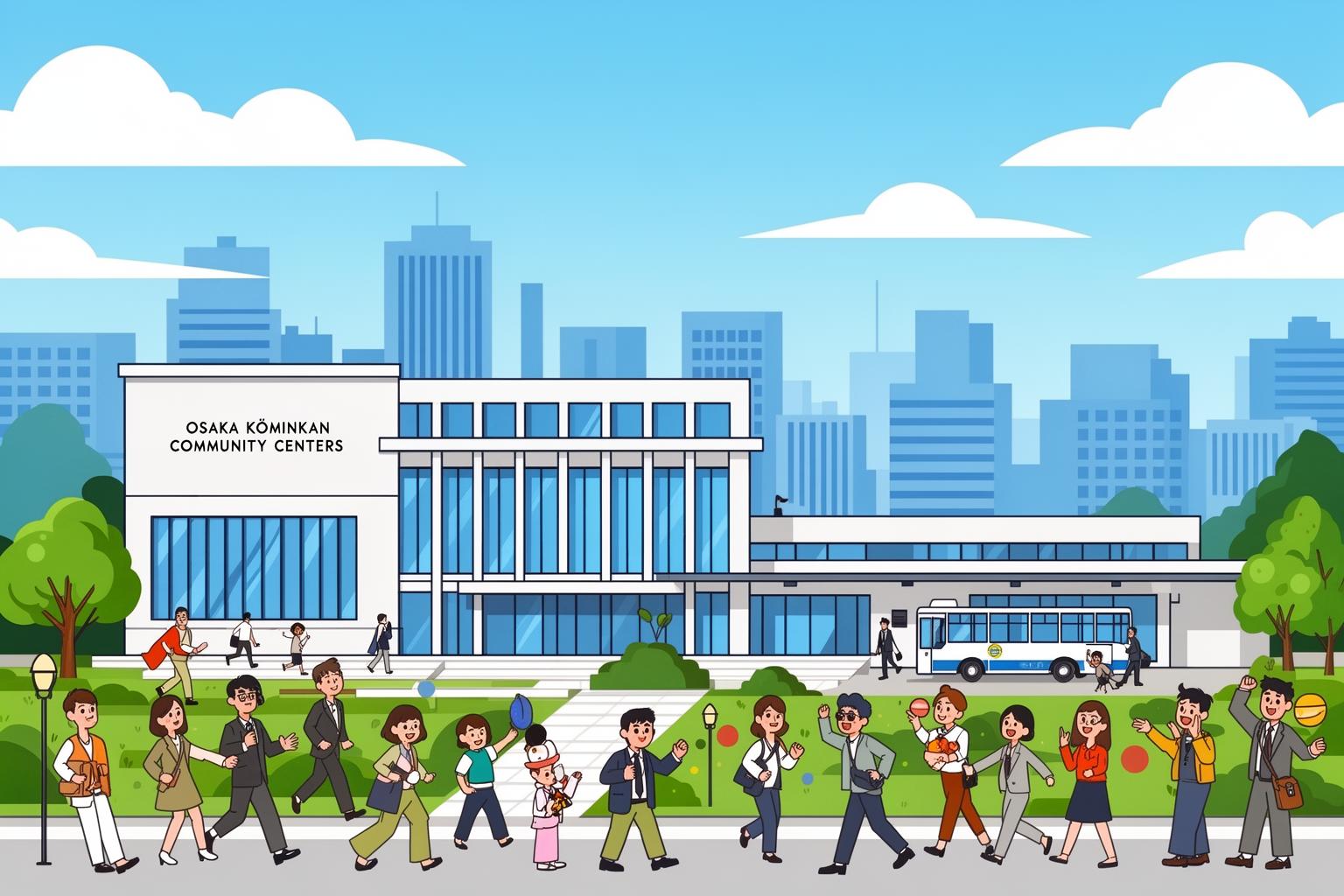
Joining a local class can seem intimidating, especially if there’s a language barrier, but the process is usually much easier and more welcoming than you might expect. Here’s a step-by-step guide to help you begin your Kōminkan journey in Osaka.
Finding Your Local Kōminkan
Your first task is to find community centers nearby. The easiest way is to do a simple online search. Use your preferred search engine and enter the name of your ward followed by “公民館” (Kōminkan). For example, if you live in Chuo Ward, search for “中央区 公民館” (Chūō-ku Kōminkan). You’ll likely see several results. It’s also helpful to search for “生涯学習センター” (Shōgai Gakushū Sentā), meaning “Lifelong Learning Center.” These tend to be larger, more modern facilities serving the same purpose as a traditional Kōminkan. Your local ward office (区役所, Kuyakusho) is another valuable resource—they often have pamphlets and information on public facilities and can point you in the right direction. Often, the simplest approach works best: take a stroll through your neighborhood. You’ll probably spot the building, which usually has a public bulletin board outside. Popping in to pick up some flyers is a perfect, low-pressure first step.
Decoding the Class Schedule
After finding your center, the next step is understanding what classes are available. The best source of information is the lively, sometimes hectic bulletin board, where you’ll find the latest posters for upcoming courses or ‘講座’ (kōza). These posters provide essential details. Watch for key terms: ‘募集’ (boshū) means ‘recruiting’ or ‘now accepting applications’; ‘日時’ (nichiji) indicates the dates and times; ‘場所’ (basho) specifies the location, usually a particular room in the center; ‘参加費’ (sankahi) refers to the participation fee, which is often very affordable—sometimes just a few thousand yen covering materials for a course spanning several weeks; ‘申込’ (mōshikomi) means ‘application,’ with details on how and when to apply. Many Kōminkan and Lifelong Learning Centers in Osaka also publish their schedules in quarterly or biannual booklets or on the city’s official website. The website can be tricky to navigate but is worth exploring—look for sections related to ‘culture’ (文化, bunka) or ‘lifelong learning’ (生涯学習, shōgai gakushū). Don’t be discouraged if it’s entirely in Japanese; your browser’s auto-translate function can be a great help.
The Application Process: Step-by-Step
Once you’ve found a class you want to join, how do you register? The process is typically simple. For most classes, you’ll need to fill out a basic application form, which you can get at the Kōminkan’s front desk. The form usually asks for your name, address, and phone number. It’s a good idea to bring your Residence Card (Zairyu Card) just in case. After completing the form, submit it at the reception desk. For particularly popular classes, such as some cooking or pottery courses, there may be more applicants than spots available. In these cases, a lottery, or ‘抽選’ (chūsen), is used to select participants. The center will notify you by mail (usually a postcard) or phone about your status. If you’re accepted, you typically pay the participation fee on the first day of class. This straightforward and fair system ensures everyone has an equal opportunity to join.
A Tip for Non-Japanese Speakers
Let’s be honest: walking into a local government building and navigating the process in Japanese can be intimidating. But don’t let that hold you back. Kōminkan staff are experienced in assisting a wide variety of people and are usually very patient and helpful. Your best tools are a positive attitude and modern technology. Approach the staff with a smile and have the Google Translate app ready on your phone. You can simply point to the poster for the class you want and say, ‘sankashitai desu’ (I want to join). The staff will understand and guide you through the steps. Showing that you’re trying to communicate goes a long way and is always met with kindness. If you have a Japanese-speaking friend to assist, great—but it’s definitely possible to manage on your own. Your courage will be rewarded.
Beyond the Classes: Kōminkan as a Community Anchor
The Kōminkan’s role in the community goes far beyond its scheduled classes. It serves as a genuine multi-purpose hub for neighborhood life. Many centers organize annual community festivals, known as ‘bunkasai’ (culture festivals). These events are wonderful opportunities for various classes and clubs to showcase their work. You can enjoy exhibitions of beautiful calligraphy and ikebana, watch performances by the hula dancing group, and listen to the community choir sing. It’s a celebration of the skills and talents of local residents, with a lively, festive atmosphere featuring food stalls and games for children. The Kōminkan also provides a free and quiet public space. Most have a small library or reading corner where you can browse newspapers and magazines or simply relax with a book. For students or remote workers, it offers a valuable ‘third place’ to study or work without the need to buy a coffee. These centers are crucial hubs for families, offering story time for toddlers, after-school activities for elementary school children, and parenting support groups that create an essential network for new mothers. Demonstrating their deep connection to civic life in Japan, Kōminkan often function as local election polling stations, affirming their role as a central and trusted institution within every community.
A Personal Reflection: Finding My Place in Osaka
When I first moved to Osaka, I was caught up in the excitement of everything. I visited the castles, indulged in takoyaki, and was amazed by the vastness of the city. But after a few months, a quiet feeling of isolation began to set in. I had work colleagues and casual acquaintances, but I hadn’t truly connected with the area on a deeper, neighborhood level. I felt like I was merely skimming the surface of this enormous urban sea. One day, on a whim, after passing by it countless times, I decided to enter my local Kōminkan. The bulletin board was bursting with color and kanji, but one poster stood out: a beginner’s Japanese cooking class focused on simple, everyday dishes. Though nervous, I filled out the form. A week later, a postcard arrived—I was accepted. The first class was intimidating. I was the only foreigner, and my Japanese was awkward at best. However, the instructor, a cheerful woman in her sixties named Tanaka-sensei, and my classmates were incredibly welcoming. They patiently corrected my knife techniques, laughed with me when I fumbled my first rolled omelet, and shared advice on where to buy the best local produce. Gradually, over bowls of miso soup and perfectly cooked rice, we became friends. I learned about their families, their favorite Hanshin Tigers players, and their lives. They, in turn, were endlessly curious about my life in the States. That simple cooking class became my anchor. It provided me with a routine, a sense of purpose, and most importantly, a community. It transformed my neighborhood from a mere collection of streets and buildings into a place filled with familiar faces and genuine connections. The Kōminkan became my home.
Your First Step into a Bigger World
In a city as vibrant and occasionally overwhelming as Osaka, the Kōminkan serves as a reminder of the strength found in small-scale, human connections. It exemplifies the idea that a community is not merely a place where you live, but something you actively create and engage in. These centers are more than mere buildings; they are the living, breathing heart of Osaka’s neighborhoods, reservoirs of local culture, knowledge, and, most importantly, kindness. They provide a unique chance to step away from the usual tourist routes and experience the genuine, everyday life of the city. My advice to anyone living in Osaka, whether for a week or a decade, is this: find your local Kōminkan. Take that first step inside. You don’t need a grand plan—just check out the bulletin board. See what piques your interest. Perhaps it’s a haiku poetry class, a ukulele group, or a simple yoga session. Taking that small step, enrolling in a simple class, could mark the beginning of a much richer, more connected life in this remarkable city. It’s your invitation to move beyond simply being a resident and to start truly belonging.