So you’ve landed in Osaka. You’ve mastered the train lines, you can order takoyaki with the right amount of sauce and mayo without batting an eye, and you’ve even picked up a few phrases in that beautiful, musical Osaka-ben. You feel like you’re getting the hang of this city. But then a question starts to bubble up, maybe late at night as you watch the Glico Man’s neon glow reflect in the Dotonbori canal. Where does everyone go? I don’t mean the tourists, or the after-work salarymen crowding the standing bars. I mean the grandmas, the teenagers, the stay-at-home parents, the retirees. Where is the actual, everyday, living-and-breathing social life of this city hiding? It’s a valid question. The image of Osaka sold to the world is one of vibrant, chaotic, commercial energy. It’s loud, it’s delicious, and it’s always on. But a city of millions can’t run on high-octane energy 24/7. There’s a deeper, quieter, and far more intricate social rhythm beating beneath the surface, and its pulse point isn’t in a flashy skyscraper or a trendy cafe. It’s in the humble, unassuming, and utterly essential Komin-kan.
Komin-kan, the local community centers, are the unsung heroes of neighborhood life in Osaka. They are everywhere, yet they are functionally invisible to the casual observer. They don’t have flashy signs or slick marketing campaigns. Their architecture is often a testament to the brutalist or functionalist styles of the 1970s and 80s. But to ignore them is to miss the very engine of community here. This isn’t a guide to finding a cheap yoga class, though you certainly can. This is an invitation to understand the cultural software of Osaka by looking at the hardware it runs on. It’s in these buildings that the city’s famous friendliness isn’t just a vague concept; it’s a practiced, daily reality. It’s where you can see the unwritten rules of Osaka society play out in real time, and where you, the non-Japanese resident, can move from being an observer of the city to a true participant in its life. Forget the guidebooks for a moment. The real map to understanding this place is scribbled on a bulletin board in the lobby of your local Komin-kan. Let’s take a look inside.
If you’re looking for another quiet, community-focused space to work or reflect, consider exploring Osaka’s traditional kissaten.
What is a Komin-kan, Anyway?
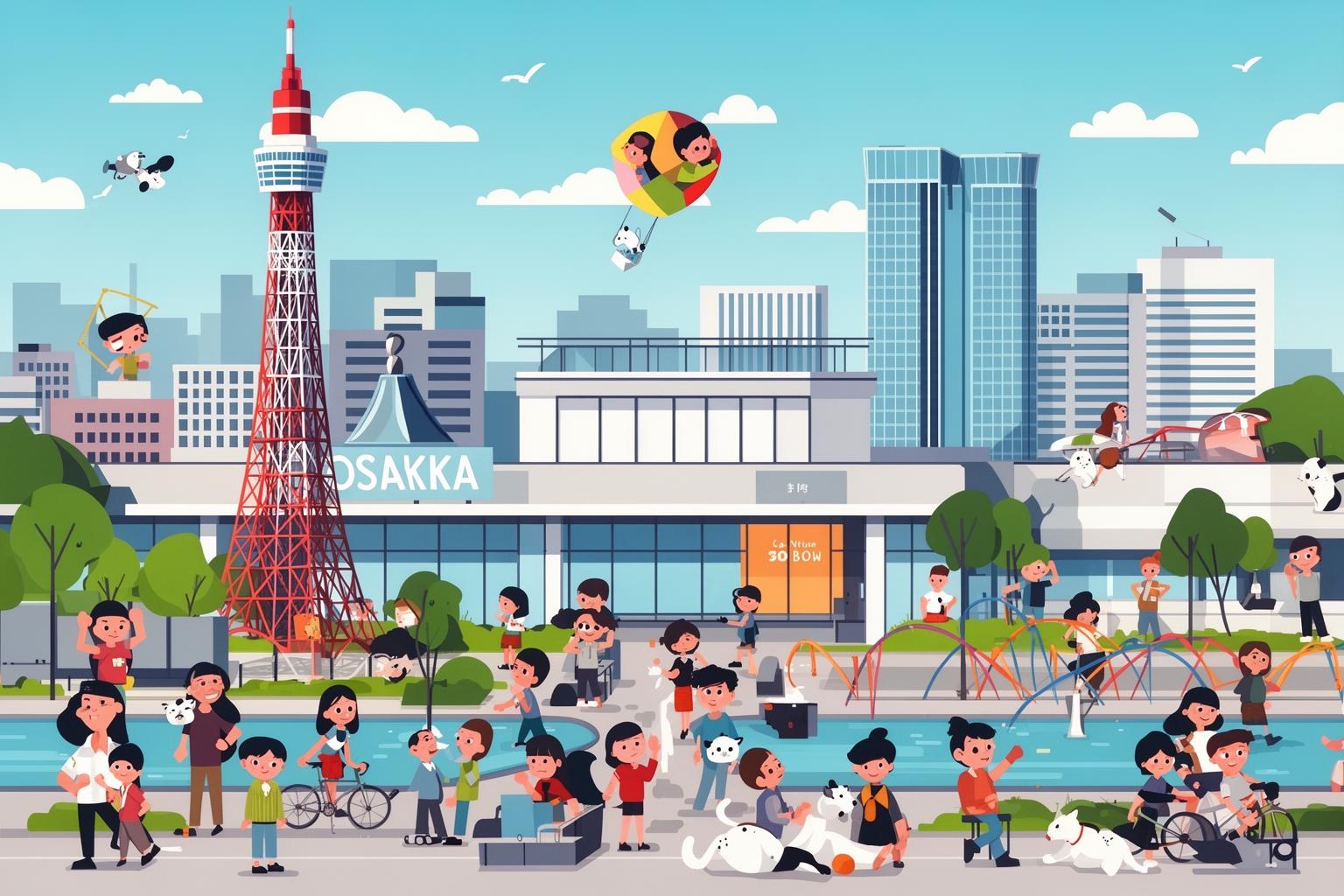
Before we explore the social dynamics, let’s first establish a clear understanding of what we’re discussing. The term Komin-kan (公民館) literally means “public citizens’ hall.” It is a concept originating from the post-war period, a government initiative designed to promote community, democracy, and lifelong learning among the general population. These centers are operated by the municipality, meaning they belong to the city and, by extension, to its residents. This distinction is vital. A Komin-kan is not a private enterprise aiming to sell you something; it exists solely to serve the surrounding community.
Not Your Typical Community Center
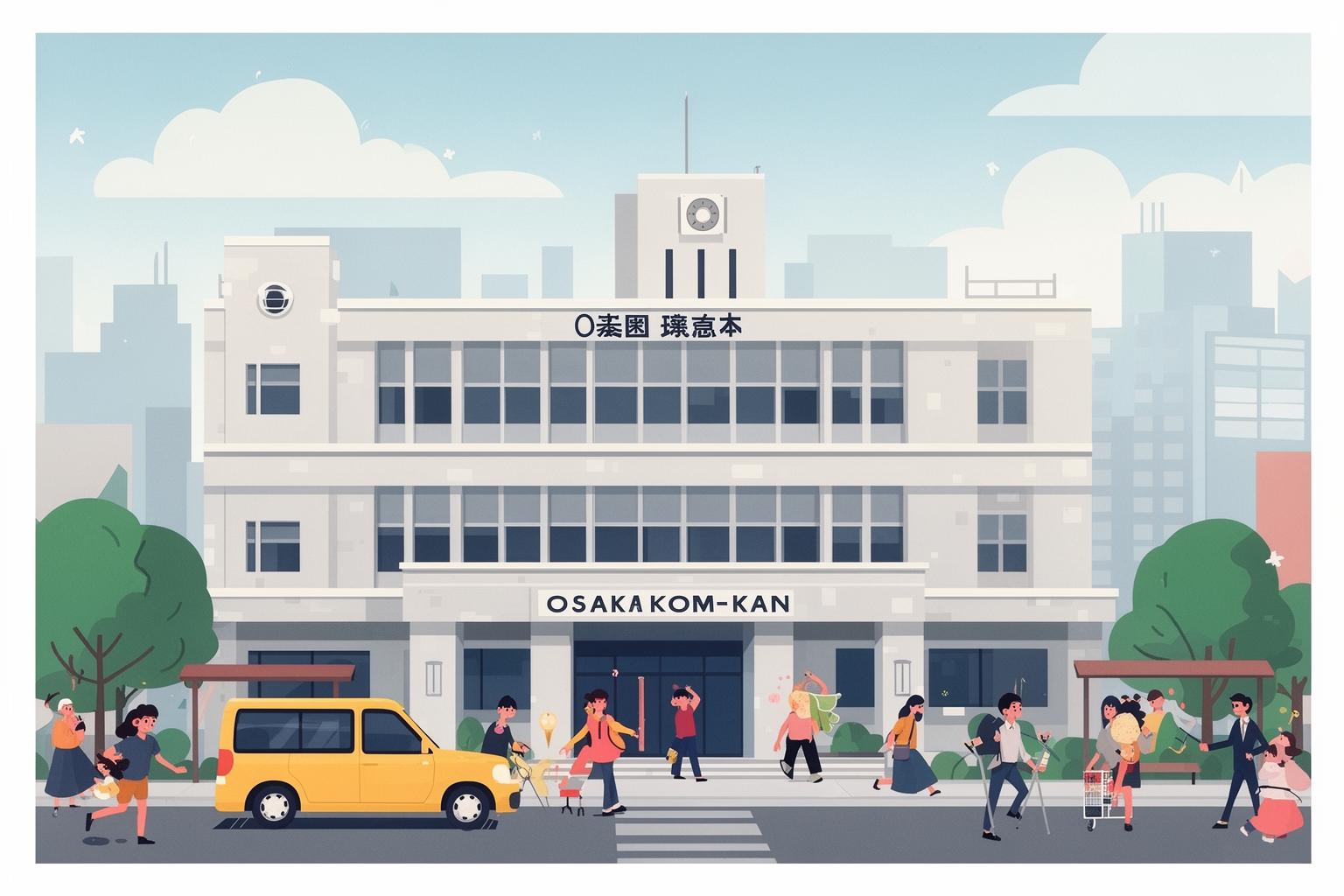
If you picture a community center as a place with flashy branding, juice bars, and the latest gym equipment, you’ll need to adjust your expectations. The Komin-kan is quite different. It is steadfastly practical. You’ll typically find one within walking or biking distance of your home, often resembling a school building left untouched by time. It functions as a public utility, similar to a library or post office, but with an emphasis on active participation rather than quiet use or simple transactions. Its mission is threefold: to provide a physical space for local residents to gather, to offer affordable educational and recreational activities, and to serve as a hub for neighborhood associations and disaster preparedness. It’s the civic core of the neighborhood, energizing the community through a continuous schedule of classes, meetings, and events.
The Atmosphere
Step into any Komin-kan in Osaka, and you will encounter a familiar, comforting environment. The first thing you notice is the bulletin board—a vibrant collage of paper. It’s an explosion of information: flyers for upcoming events, handwritten notes recruiting members for a table tennis club, neatly printed schedules for calligraphy lessons, and public health notices from the city ward office. All in Japanese, it might seem like an impenetrable wall of text, but it serves as the Rosetta Stone of local life. Beyond the entrance, the air carries a mild scent of floor wax and old books. You’ll hear a mix of sounds: the distant plink of a piano from a practice room, the rhythmic ping-pong ball bouncing in the gymnasium, the lively chatter of seniors gathered for their weekly tea ceremony class, and the squeak of sneakers on polished floors. Hallways are lined with glass display cases showcasing projects from pottery and flower-arranging classes—imperfect but charming bowls sit beside elegant ikebana arrangements. It’s not glamorous, but it’s authentic. It’s a place of doing, experimenting, learning, and connecting.
The Guiding Philosophy
At its core is the concept of shogai gakushu, or “lifelong learning.” The Komin-kan is founded on the idea that education and personal development don’t end when formal schooling does. It offers the resources and space for anyone—a young parent, a mid-career worker, a retiree—to learn new skills, pursue hobbies, or simply remain active and involved in their community. This is especially significant in Japan, where work can be all-consuming and social circles often narrow. The Komin-kan provides a “third place,” a neutral zone free from the pressures of home and the hierarchy of the workplace. It is a place where individuals can engage as learners, players, creators—connecting with others on equal terms through shared interests. This foundational philosophy is what cultivates the unique social fabric of Osaka.
The Komin-kan as a Microcosm of Osaka Society
If you want a quick deep dive into the Osaka mindset, spend a Tuesday afternoon at your local Komin-kan. Everything is there, unfolding through the interactions among people. It’s a living laboratory of the city’s cultural DNA, highlighting a sharp contrast to the social norms you might encounter in Tokyo or other parts of Japan.
The “Gochamaze” (Hodgepodge) Culture
One of Osaka’s most defining traits is its affection for gochamaze, a charming word meaning a jumble, a mix, or a hodgepodge. Osaka culture thrives on blending things and people together. You see it in the food, like okonomiyaki, where cabbage, meat, seafood, and batter are all combined on a griddle. You see it in the architecture, where a tiny, ancient shrine can be squeezed between a pachinko parlor and a modern office building. And you see it most vividly in the Komin-kan. In one room, a group of elderly men might be deeply focused on their next move in a Shogi game (Japanese chess). In the room next door, a group of young mothers lead their toddlers in a sing-along. Down the hall, teenagers blast music and rehearse a hip-hop dance routine for the local festival. In the gymnasium, a badminton club composed of various ages and skill levels is engaged in a series of friendly yet competitive matches. There is no rigid separation by age or social status. Everyone shares the same space, hallways, and vending machines. This casual, unpretentious blending is quintessentially Osaka. It reflects the city’s history as a merchant town, where shopkeepers, craftsmen, and a lord’s accountant all had to interact in the marketplace. Status mattered less than the ability to get along and get things done. That spirit still thrives in the Komin-kan.
Contrast with Tokyo
Social life in Tokyo often feels more curated and segmented. You might attend a high-end yoga studio in Omotesando catering to a particular demographic. You might enroll in a specialized cooking class in Daikanyama led by a famous chef. Hobbies are usually pursued in private, purpose-built spaces with participants of similar backgrounds or income levels. The Komin-kan’s gochamaze atmosphere is the exact opposite. It’s messy, unpredictable, and encourages interactions between people who might otherwise never meet. This marks a fundamental difference in the social fabric of the two cities. Tokyo life can provide comfortable anonymity, whereas Osaka life, especially through places like the Komin-kan, pushes you toward casual community engagement.
The Unspoken Rule of “Chotto Osekkai” (A Little Meddlesome)
This may be the most crucial concept to grasp if you want to understand Osaka’s style of friendliness. Foreigners often say, “Osaka people are so friendly!” but can’t quite explain why. It’s not just about smiles and greetings. It’s a proactive, sometimes borderline-intrusive form of engagement called chotto osekkai, meaning being a little nosy or meddlesome—but in a kind and well-meaning way. The Komin-kan is the training ground for this art.
Real-Life Examples
Picture yourself in a pottery class. You’re a complete beginner, struggling to center the clay on the wheel. In a Tokyo class, the instructor might offer polite advice only when it’s your turn, and others would likely keep to themselves, respecting your personal space. In an Osaka Komin-kan class, the 70-year-old woman at the wheel next to you has probably been watching from the corner of her eye. Before the teacher even minds, she’ll be at your side saying, “Ah, you’re pushing too hard with your thumbs. Here, like this!” and might even place her hands over yours to guide you. She’ll ask where you’re from, what you do, if you’re eating well. Another student across the room might add, “Don’t worry, everyone struggles at first! My first bowl looked like a melted ashtray!” Within ten minutes, you’re no longer an anonymous student; you’re part of a conversation, actively welcomed into the group. This is chotto osekkai. It’s the community’s immune system kicking in, spotting a newcomer and immediately working to include them.
Why it’s Not Rude
From a Western or even Tokyo perspective, where polite distance is the norm, this can feel overwhelming. But in Osaka, it’s a sign of care. It’s a way of saying, “I see you, and you’re one of us now.” It breaks down barriers remarkably quickly. The assumption is that we’re all in this together, so if I have advice or help to offer, why wouldn’t I share it? This attitude is the foundation of community life here. It values connection over privacy and shared experience over individual space. Learning to accept and even appreciate this chotto osekkai is your key to genuine relationships in Osaka. It’s the city’s way of giving you a hug, even if it feels a bit tight at first.
What Actually Happens Inside? A Peek into the Schedule

So, what exactly are all these people doing? The variety of activities offered at a Komin-kan directly reflects the needs and interests of the surrounding neighborhood. While the specifics differ, they generally fall into several key categories, all provided at very low cost, embodying Osaka’s renowned practicality and aversion to unnecessary spending.
For the Body: Movement and Health
Physical well-being is a major focus. You won’t find intense CrossFit workouts, but there are plenty of classes designed to promote health and mobility in an enjoyable, social atmosphere. Yoga and Pilates are common, often modified for older participants with emphasis on stretching and balance. Table tennis is extremely popular, especially among seniors. The gymnasium hosts spirited but friendly tournaments, showcasing the competitive yet good-natured spirit of Osakans. You’ll also find gentle aerobics classes, often accompanied by nostalgic Japanese pop tunes, and various dance styles. These might include ballroom dancing, hula, or local folk dances like the Kawachi Ondo, a dance and music style native to Osaka. Joining a Kawachi Ondo class is a wonderful way to connect with the local culture, as it is a staple at every summer festival. The charm of these classes lies in their accessibility—a session might cost only a few hundred yen, a mere fraction of a private gym membership. This reflects the Osaka mindset: why pay a fortune when you can achieve the same health and community benefits for a reasonable price?
For the Mind: Arts, Crafts, and Lifelong Learning
This area represents the core of the Komin-kan’s educational mission. The cultural programs provide a direct connection to traditional Japanese arts. Shodo (calligraphy) classes teach the meditative brush-and-ink technique. Ikebana (flower arranging) introduces the principles of Japanese aesthetics through nature. Other groups might focus on Sumi-e (ink wash painting) or composing Haiku. These are relaxed environments not aiming to create professional artists, but to appreciate the process and share cultural heritage. In addition to traditional arts, many Komin-kan offer practical courses. Conversational language groups are common—you might be surprised as a foreigner to find an English conversation circle eager for native speakers to join. Conversely, some Komin-kan offer Japanese classes for foreign residents, fostering a wonderful exchange. Digital literacy sessions help seniors master smartphones and computers, and cooking classes are often prized. They typically focus on katei ryori (home-style cooking) and Osaka specialties, taught by local experts who share the secrets of perfect okonomiyaki or a comforting bowl of kasu jiru (sake lees soup).
The “Sensei” (Teacher)
A notable aspect of these classes is that the sensei, or teacher, is often a community member rather than a certified professional from a prestigious institution. It might be a retired chef sharing family recipes, a woman practicing tea ceremony for decades, or a skilled amateur calligrapher. This emphasizes the community-driven, grassroots nature of the Komin-kan. Knowledge is viewed as a communal resource to be shared and passed down within the neighborhood, making the experience feel less like a formal class and more like learning from a neighbor.
For the Soul: Music and Performance
Creativity and expression are essential. Most Komin-kan have soundproof music rooms available for a nominal fee. These spaces host local high school bands’ rehearsals, ukulele ensembles of retirees, and aspiring singers practicing karaoke without disturbing others. Chorus groups perform everything from traditional Japanese folk songs to Beethoven. You’ll find classes for traditional instruments such as the Koto (a long Japanese zither) and the Shamisen (a three-stringed, banjo-like instrument). The highlight of these activities is the annual Bunka-sai, or Culture Festival. At this event, the Komin-kan opens its doors wide, allowing every group to showcase their year’s efforts. Hallways transform into art galleries, the auditorium features back-to-back performances by dance troupes, choirs, and musical ensembles, and outside, volunteers grill yakisoba and serve tea. The atmosphere is lively—a bit chaotic, wonderfully wholesome, and filled with a strong sense of community pride. It powerfully demonstrates what all those quiet weekly classes build toward: a vibrant, connected, and creative neighborhood.
How to Get Involved: A Practical Guide for the Foreign Resident
Everything sounds promising, but how do you actually get started? The operations of a Komin-kan can appear obscure from the outside, especially with the language barrier. However, with some knowledge and a spirit of adventure, it’s easier than you might expect.
Decoding the Bulletin Board and the “Koho-shi”
Your initial destination is the crowded bulletin board. Take a picture of it with your phone and use a translation app to understand the main points. Watch for key kanji such as 講座 (kouza), meaning course or lecture; 募集 (boshuu), meaning recruiting or seeking members; and 参加費 (sankahi), the participation fee. This will help you figure out what’s available. Another essential resource is the 広報誌 (koho-shi)—the city ward’s official newsletter, a slim magazine delivered monthly to your mailbox. Many foreigners mistakenly discard it as junk mail, which is a big error! The koho-shi is packed with valuable information, featuring a dedicated section listing all new classes and events at the local Komin-kan and other public venues for the coming month. Often, this is the most reliable and comprehensive source of updates.
The Language Barrier is a Challenge, But…
Let’s be realistic: application forms, notifications, and most instructions will be in Japanese, which can be intimidating. Yet, the friendly Osaka spirit is your best ally. People are generally patient and willing to assist. Approach the front desk with a translation app on your phone and a respectful attitude. A simple phrase like, “Sumimasen, kore ni sanka shitai desu” (“Excuse me, I want to join this”), while pointing to a flyer, can work wonders. Staff and local residents will likely be delighted that a foreigner is interested in their community activities, and they’ll go out of their way to help you through the process. Your effort to communicate, no matter how imperfect, will be appreciated far more than you realize. A good approach is to start with a class that relies less on complicated language—pottery, painting, dance, or sports like table tennis are ideal. Physical activities are universal, allowing you to learn through observation and practice, picking up vocabulary as you go.
Applying to Participate
Forget about online registration or credit card payments. The Komin-kan system is refreshingly analog. Usually, you must visit the front desk in person during the application period. You’ll receive a simple form to complete, typically asking for your name, address, and phone number. Having a Japanese friend assist you the first time can be invaluable, or you can carefully complete it with your translation app. Payment will almost always be required in cash on-site. For popular classes with more applicants than available spots, a lottery (抽選 – chusen) may be held. The process is somewhat old-fashioned but intentional. It encourages you to make a physical effort to visit the center, interact with staff, and engage with the community right from the start. It filters for those who are genuinely interested and willing to participate, serving as the first small test of your commitment to joining in.
Komin-kan Events: The Pulse of the Neighborhood
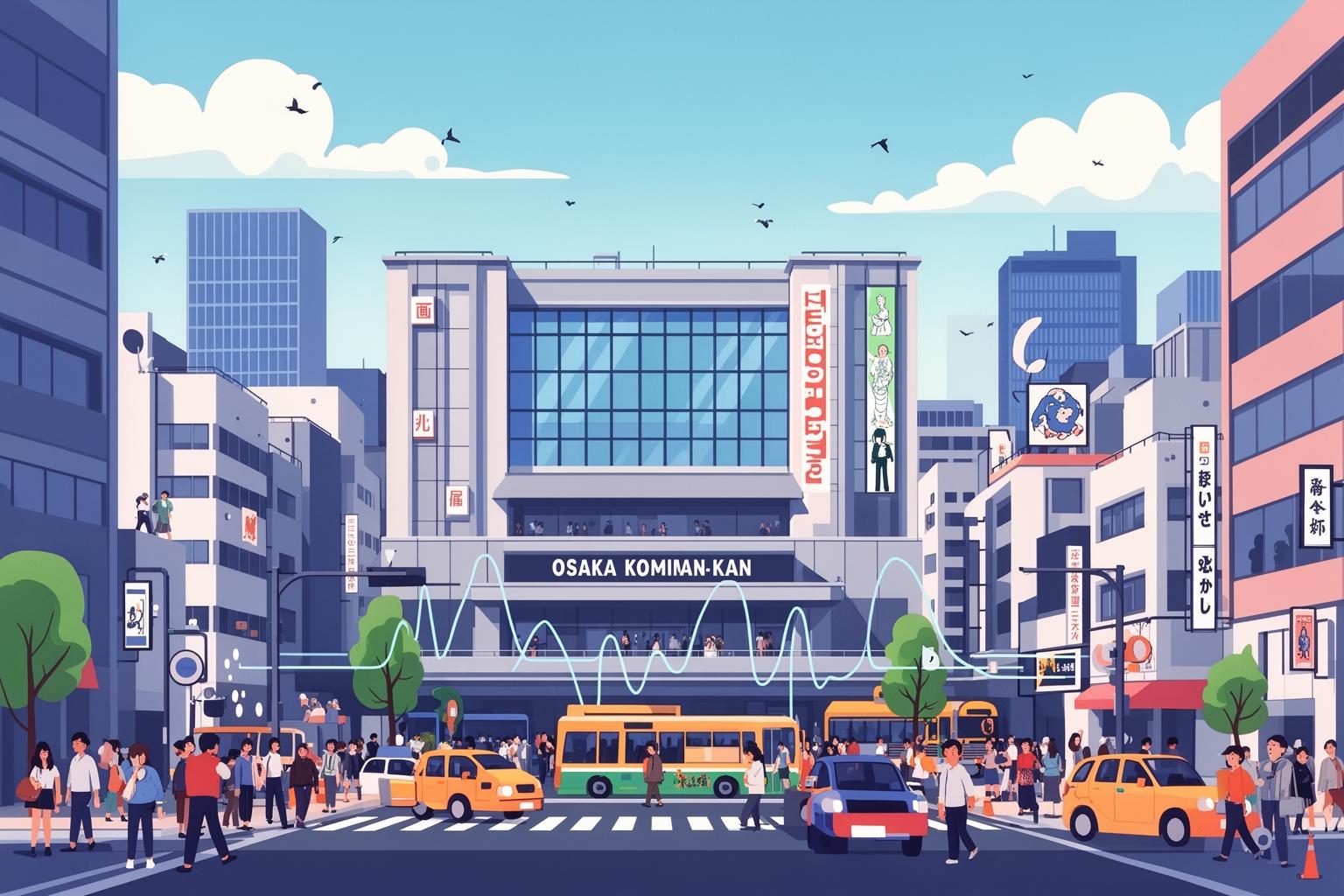
The role of the Komin-kan goes well beyond its weekly class schedule. It serves as the operational center for the rhythm of neighborhood life, the place where the community comes together to celebrate, prepare, and govern.
Beyond Classes: Seasonal and Community Gatherings
The Komin-kan acts as the backbone of the Jichikai or Chonaikai (the local neighborhood association), a group of residents responsible for organizing community events, maintaining local cleanliness, and managing emergency preparedness. Their meetings take place at the Komin-kan. Planning the local Natsu Matsuri (Summer Festival)? That happens here. Organizing the annual Mochitsuki (rice cake pounding) event for New Year’s? The equipment is stored here, and the event is held in its courtyard. The center also serves an important civic function. It is often designated as an evacuation point in the event of an earthquake or typhoon, and it hosts disaster preparedness drills where residents learn how to use fire extinguishers and respond in emergencies. During elections, the gymnasium transforms into a local polling station. The Komin-kan is woven into every facet of civic life, from the festive to the everyday to the vital.
Understanding the Osaka “Matsuri” (Festival) Mindset
This offers an important cultural insight. In many places, a festival is something you attend as a spectator—simply a consumer of the experience. In Osaka, however, many locals see the festival as a project to actively participate in. The real enjoyment isn’t just showing up to eat takoyaki and watch the parade; it lies in being part of the team that built the floats, practiced the dances, and ran the food stalls. The Komin-kan serves as the organizational hub that makes this participation possible. It’s where you sign up to volunteer, where dance practices are held, and where planning meetings take place. This reflects the collaborative, all-hands-on-deck spirit of a merchant city. Success is a collective effort, and everyone has a role to play. Getting involved in the local festival through your Komin-kan is one of the most meaningful and rewarding ways to become part of your Osaka neighborhood. You’ll build bonds through shared work and celebration that are far deeper than those formed through casual conversation.
What Foreigners Often Misunderstand
Navigating the world of the Komin-kan requires a slight adjustment of expectations. Newcomers can easily misread the signals and overlook the value that is clearly present.
“It looks old and boring.”
This is a common initial reaction. The buildings rarely stand out as architectural wonders. The furniture may be outdated, and the color scheme might heavily feature beige and linoleum. If you measure it by sleek, modern aesthetics, the Komin-kan will always fall short. But this misses the point completely. The value of the Komin-kan lies not in its appearance, but in its purpose and its community. Osakans are known for their practicality and disregard for superficial looks. It’s a city that prioritizes substance over style, function over form. The Komin-kan perfectly reflects this ethos. It performs its role excellently without needing elaborate decoration. Its beauty comes from the vibrant community life it nurtures, not from the walls themselves.
“Is it only for old people?”
It’s true that many seniors frequent any Komin-kan on a weekday morning, since retirees have the most free time to enjoy its offerings. This can create the mistaken impression that it’s just a glorified senior center. But that’s only part of the story. Check the schedule for evenings and weekends, and you’ll find working adults and children. There are karate and ballet classes for kids, parenting support groups for young mothers, and band rehearsals for teenagers. More importantly, intergenerational interaction is a feature, not a flaw. Where else can a young foreign resident learn calligraphy from an 80-year-old expert for just a few hundred yen? Where else can you practice your Japanese with a group of friendly, talkative grandmothers? This blending of generations is a core strength of the community, a means of passing on knowledge and fostering social bonds that are often missing in more age-segregated societies.
“Why is everyone so nosy?”
This brings us back to the idea of chotto osekkai. A foreign resident might join a class and feel overwhelmed by questions like: “Where are you from? Are you married? Can you use chopsticks? Are you lonely here?” It can feel like an interrogation. This is a key cultural misunderstanding. These questions aren’t meant to invade your privacy—they’re meant to connect. They’re efforts to find common ground and understand your situation so they can offer support. The question “Are you lonely?” isn’t intrusive; it’s an invitation to say, “If you’re free next week, some of us are going out for lunch. You should join!” They are actively trying to integrate you into the social network. In a culture that values the group over the individual, being left alone can feel like neglect. This friendly, constant meddling is the community’s way of making sure no one feels isolated. Embracing it, responding warmly, and asking questions back is the quickest path to acceptance and genuine friendships.
So, we come back to that feeling, standing by the Dotonbori canal, wondering where the real Osaka is. The answer is that it’s not under the bright lights. The real, beating heart of this city is far more modest. It’s in the slightly faded community centers, in the sound of a chorus practicing in a stuffy room, in the shared laugh over a misshapen piece of pottery, in the unsolicited advice from a grandmother on how to properly hold your calligraphy brush. The Komin-kan is a physical manifestation of Osaka’s most cherished values: pragmatism, community, a disdain for pretension, and a deep-seated belief that everyone has something to learn and something to contribute.
To truly live in this city means moving beyond merely consuming its famous food and entertainment. It means becoming an active contributor to its community life. The Komin-kan extends this invitation to you. It may feel intimidating. It takes courage to step through those doors, to navigate the language, and to embrace a different style of social interaction. Yet, the reward is profound. You won’t just discover a hobby; you’ll find a place. You’ll find a community. You will begin to understand why Osaka residents are the way they are—because they consistently practice community living, day after day, in these humble, essential buildings. So find your local Komin-kan. Step inside. Take a deep breath. The true Osaka is waiting for you to say hello.