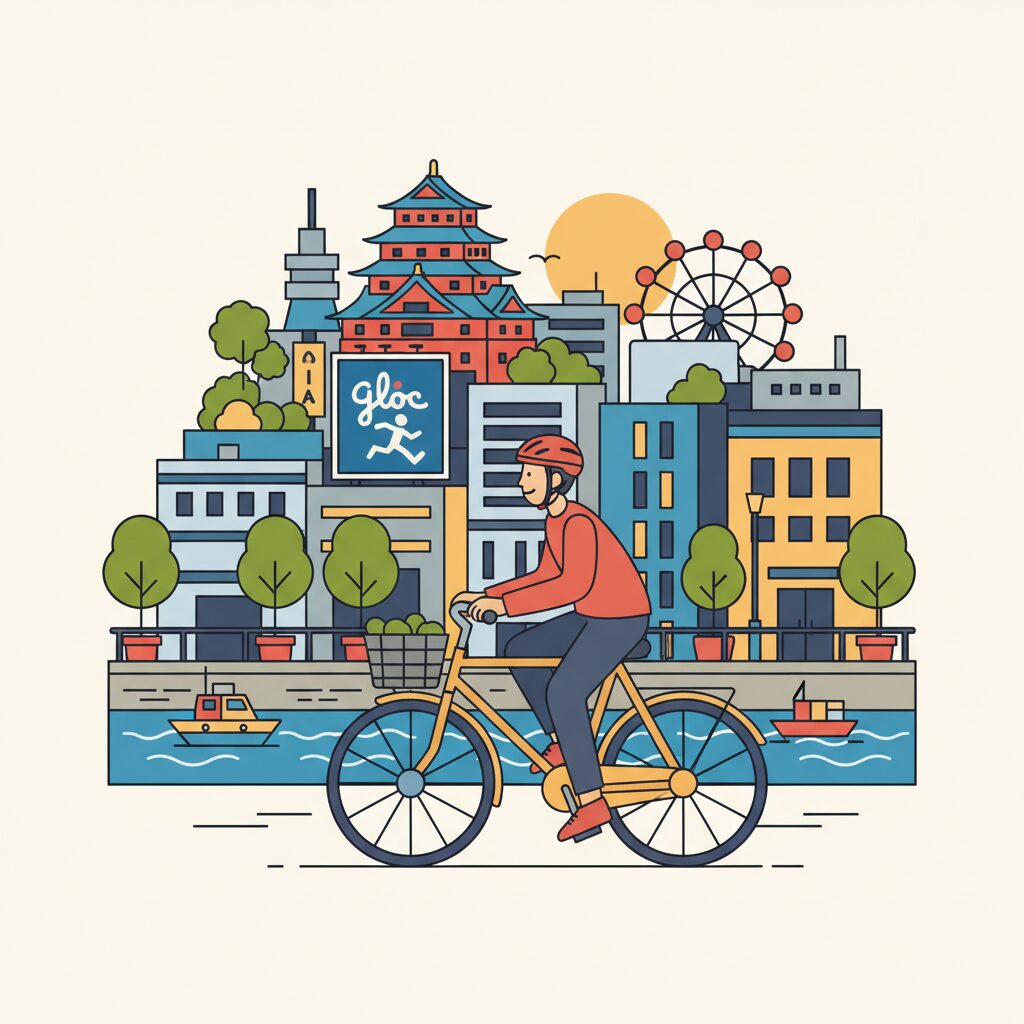
When you first arrive in Japan, the train system feels like the country’s circulatory system. It’s a marvel of engineering, a testament to precision and punctuality that moves millions with breathtaking efficiency. Tourists clutch their Japan Rail Passes like sacred texts, planning their journeys along the arteries of the Shinkansen and the intricate capillary networks of local JR and subway lines. For many foreigners setting up a life here, the first major purchase after an apartment lease is the teiki, the commuter pass, a monthly subscription to this metallic, humming, perfectly on-time world. It seems logical. It seems essential. In Tokyo, for the most part, it is. But this is Osaka. And in Osaka, the true pulse of the city isn’t found in the rhythmic clatter of the Midosuji Line, but in the soft whir of a million bicycle chains and the gentle chime of handlebar bells.
To truly understand how Osaka works, how its people think, and how they manage their lives with a sharp eye on value, you have to look past the station gates. You have to look at the sprawling, chaotic, and beautiful ecosystem of the bicycle. The question isn’t just why so many people ride bikes here. The real question is how this simple machine fundamentally alters the economic and social landscape of Japan’s third-largest city. It’s not a hobby. It’s not a fitness trend. It’s a deeply ingrained cultural and economic strategy, a two-wheeled declaration of independence from the fixed routes and fixed costs that define life in other metropolises. The bicycle is the key to unlocking a more affordable, more flexible, and, frankly, a more intimate version of Osaka. It’s a reflection of a mindset that prizes pragmatism over prestige, and direct action over structured procedure. Before we delve into the mechanics of this culture, let’s get a lay of the land—a city whose very geography seems to encourage life on two wheels.
This pragmatic, direct-action mindset is a hallmark of the city, much like the legendary work ethic and craftsmanship found in Osaka’s manufacturing hubs.
The Geography of Practicality: Why Osaka is a Cyclist’s City
Osaka’s affinity for bicycles isn’t merely a cultural quirk; it’s a result of its geography. The city developed on a flood plain, a flat stretch of land where rivers met and merchants congregated. This landscape, which made Osaka a prime hub for commerce and logistics for centuries, also makes it incredibly easy to cycle around. It’s no surprise that you don’t see the same level of bicycle reliance in hilly cities like Kobe or parts of Yokohama. Osaka is, for the most part, beautifully flat.
The Flat Reality of the Osaka Plain
Unlike Tokyo, with its slopes and valleys that can turn a casual bike ride into a strenuous workout, Osaka’s terrain offers very few obstacles. The main geological feature is the Uemachi Daichi, a small plateau running north to south through the city center, home to landmarks such as Osaka Castle and Shitennoji Temple. Even this rise is gentle—a slow, gradual incline rather than a steep hill. For the majority of daily trips and commutes, cycling is an effortless glide. This physical simplicity removes a significant barrier to cycling; here, it’s not a sport but a mode of transit as straightforward as walking, but faster. This ease is embedded in the city’s character. Osaka’s historical grid layout, designed for efficient movement of goods by cart and foot, suits modern bicycles perfectly. The streets, especially the smaller ones weaving through residential areas, feel designed for human-scale movement—a pace that bicycles match perfectly.
A City of “Just Far Enough”
Osaka’s urban form further reinforces the bicycle’s popularity. The city is dense and compact, with major commercial and entertainment districts clustered within a relatively small space. The distance between Umeda in the north and Namba in the south is about four kilometers. By train on the Midosuji Line, it’s a quick, efficient eight-minute ride. But factoring in the walk to stations, navigating underground passages, waiting for trains, and walking from the station to the final destination, the total time often stretches to 20 or 25 minutes. By bicycle, the same trip is a direct ride down the main boulevard, taking about 15 to 20 minutes door to door. This calculation is key for Osakans. The main points in the city are just far enough that walking feels inconvenient, but close enough that cycling is often faster and always more direct than the train. This compact layout shapes one’s mental image of the city. In Tokyo, traveling between hubs like Shibuya and Ueno feels like a notable journey, involving transfers and station navigation. In Osaka, neighborhoods blend seamlessly. A bike ride from the trendy boutiques of Horie to the vintage electronics shops in Den Den Town isn’t a trip; it’s just a slight shift in scenery. This perception makes a monthly train pass—a significant expense—seem unnecessary for anyone without a long, fixed daily commute.
The Unspoken Math: Deconstructing the “Kechi” Mindset
There is a persistent stereotype about Osakans: they are kechi, a term often translated as “stingy” or “cheap.” This is a fundamental misconception. An Osakan is not cheap; rather, they are relentlessly, almost devoutly, value-conscious. This mindset is shaped by a merchant culture where every transaction was measured, every yen was tracked, and waste was considered the greatest sin. To be kechi means to be a shrewd operator who refuses to pay for inefficiency or poor value. And no symbol captures this philosophy better than the humble bicycle.
Not Cheap, But Smart: The Logic Behind “Kechi”
Choosing to cycle is, at its core, an economic decision. Let’s examine the unspoken calculation that every Osakan intuitively grasps. A monthly train pass, or teikiken, for a relatively short commute—say, from a residential area like Fukushima to an office in Yodoyabashi—can cost anywhere from 5,000 to 10,000 yen per month. That’s 60,000 to 120,000 yen annually. Now consider the bicycle. A basic, sturdy city bike, known as a mamachari, can be purchased new for 15,000 to 25,000 yen. A well-maintained used one is available for under 10,000 yen. The one-time required anti-theft registration (bouhan touroku) is just 600 yen. Right away, the bicycle pays for itself within two to three months of saved train fares. Maintenance costs are minimal: a flat tire repair might cost about 1,500 yen, and replacing the chain or brake pads is similarly affordable. Over the course of a year, the total cost to own and maintain a bicycle frequently amounts to less than a single month’s train pass. This isn’t cheapness; it’s a brilliantly rational financial choice. Why pay a premium for a service when a more efficient, cost-effective, and empowering alternative exists? The kechi mindset is about spotting and cutting unnecessary expenses. For many daily urban trips, the train pass is simply unnecessary overhead.
Resolving the “Last Mile” Problem
Beyond the direct financial benefits, the bicycle addresses the classic urban transit challenge known as the “last mile problem.” Trains excel at moving passengers between stations, but life happens beyond the station doors—at home, the office, the grocery store, or the local clinic. These destinations are often a 10- to 15-minute walk from the nearest station, which means lost, inefficient time. The bicycle eliminates this dead time altogether. Consider a trip to the supermarket: by train, you walk to the station, ride the train, walk from the destination station to the store, shop, and then repeat the entire journey in reverse, now carrying heavy bags. It’s a hassle. By bicycle, you ride directly from your front door to the store entrance, load your groceries into the front basket and rear rack, and cycle home. The entire process is quicker, more direct, and physically less draining. This efficiency of time and effort represents a significant, though intangible, part of the overall value. In the pragmatic calculus of Osaka living, a minute saved is equivalent to a yen earned. The bicycle is a device that creates both time and money.
The Mamachari Brigade: The Unsung Hero of Osaka’s Streets
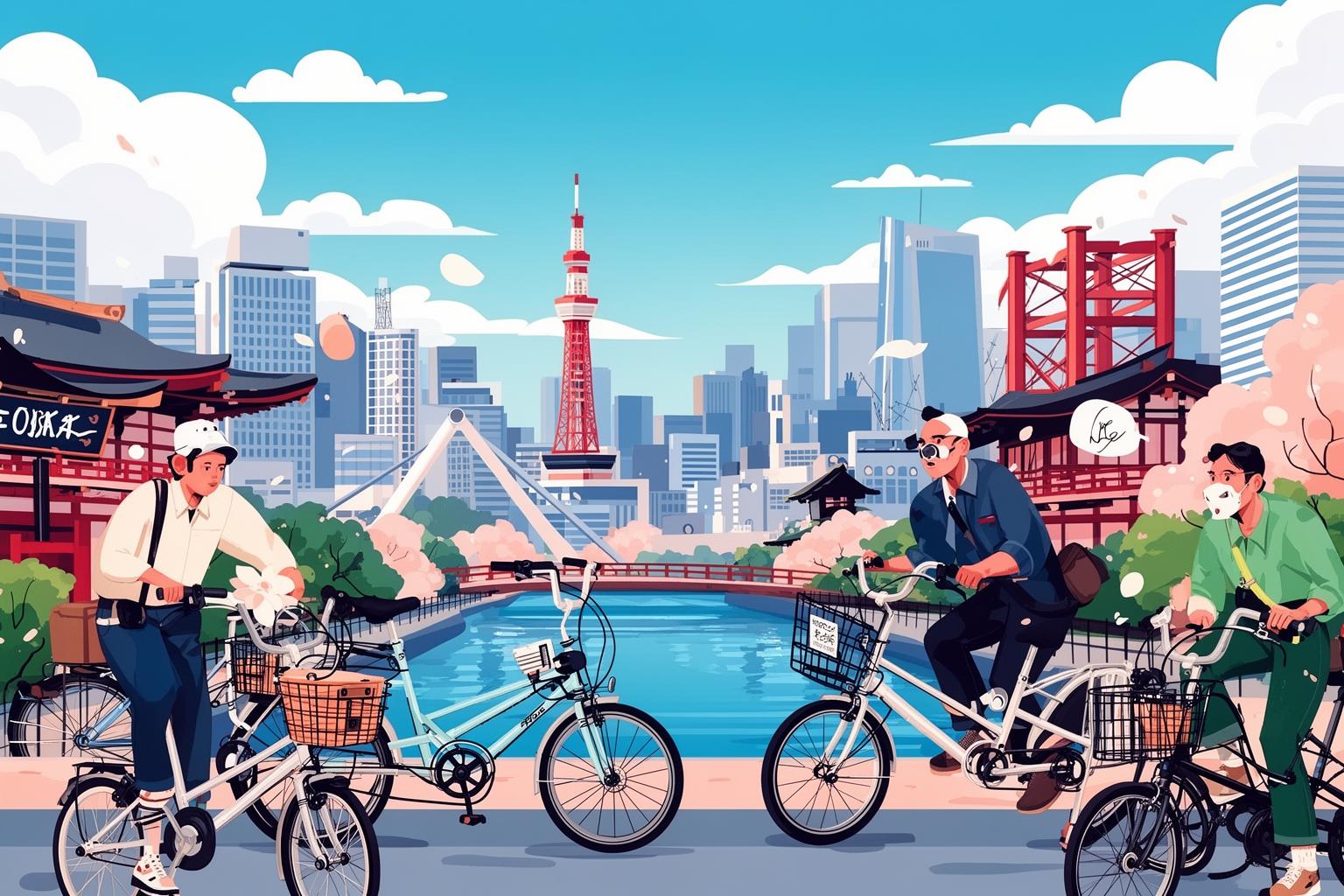
To understand bicycle culture in Osaka, you first need to understand its vehicle of choice: the mamachari. The name literally means “mom’s chariot,” perfectly capturing the bike’s purpose. This is not a sleek, lightweight road bike made for speed or sport. The mamachari is the city’s workhorse, a triumph of practical design that is as indispensable to Osaka households as a rice cooker.
More Than Just a Bicycle: The Anatomy of a “Mamachari”
The typical mamachari showcases a range of functional features. It’s built with a low, step-through frame, allowing easy mounting and dismounting—even when wearing a skirt or business attire. The riding posture is upright and relaxed, emphasizing comfort and visibility rather than aerodynamics. Nearly every mamachari comes equipped with a large front basket, ideal for carrying a handbag, briefcase, or several grocery bags. A sturdy rear rack can hold additional cargo or, more commonly, a child seat. Fenders on both wheels and a chain guard keep your clothes clean from mud and grease. Standard features include a built-in wheel lock, a dynamo hub that powers the front light as you pedal, and a durable kickstand. This is not a bike you customize with accessories; it’s a ready-made transportation solution straight from the factory. You’ll often see them overloaded with groceries, transporting one or even two children (in front and back seats), and with an umbrella clipped to a handlebar holder. They are the unsung champions of domestic errands, the true backbone of the local economy.
The Social Fabric Woven by Two Wheels
The prevalence of the mamachari deeply influences the city’s social fabric. Traveling by train is inherently isolating. You’re enclosed in a metal tube, usually surrounded by people absorbed in their phones, moving from one sterile station to the next. Traveling by bicycle, however, connects you to your community. You move at a human pace. You witness the changing seasons in the trees lining the streets. You smell the aroma of yakitori grilling nearby or coffee brewing at a small kissaten. You nod to the elderly man who always sweeps his storefront. You can pause spontaneously to explore a shop you’ve never noticed or chat with a neighbor you cross paths with. This constant, low-level interaction with your surroundings fosters a strong sense of belonging. It strengthens the gokinjo-tsukiai, the network of neighborly relations that forms the foundation of community life in Japan. The bicycle breaks down the anonymity of the big city, turning a collection of addresses into a vibrant neighborhood. You’re not just passing through; you are part of the street-level scene, an active participant in your community’s daily life.
Navigating the Urban Jungle: The Unwritten Rules of the Road
For newcomers, cycling in Osaka can be a bewildering experience. It may seem like near-anarchy—a chaotic free-for-all where rules are mere suggestions and the sidewalk a contested battlefield. Yet beneath this apparent disorder lies a complex, unspoken system of etiquette and negotiation. Mastering this unwritten code is essential to understanding the fluid, pragmatic character of Osakans themselves.
Sidewalk or Street? The Perpetual Osaka Dilemma
By law, bicycles in Japan are classified as vehicles and should be ridden on the left side of the road, following traffic. However, in practice, nearly everyone in Osaka cycles on the sidewalk. This isn’t an act of rebellion but a practical adaptation to the urban landscape. Many roads in Osaka are narrow, congested, and lack dedicated bike lanes. Sharing space with cars, trucks, and buses is intimidating and often unsafe. As a result, people have collectively agreed that sidewalks are the safer, though more crowded, alternative. This arrangement creates a unique hierarchy of movement: pedestrians remain the unquestioned rulers of the sidewalk, while cyclists are guests in their domain. The unspoken rule is to ride slowly, predictably, and with constant vigilance. Weaving aggressively through crowds is taboo. A wide berth is given to the elderly and children alike. The bell is used sparingly—not as a harsh “move aside” command but a gentle, apologetic “excuse me, I’m passing through.” It’s a delicate dance of subtle adjustments, eye contact, and mutual respect. This flexible, community-driven interpretation of rules exemplifies Osaka’s preference for practical consensus over rigid, top-down enforcement.
The Parking Challenge: From Disorder to (Relative) Organization
With millions of bicycles throughout the city, parking is an ongoing issue. In the past, areas around train stations and popular shopping spots were notorious for piles of illegally parked bikes—chaotic heaps blocking sidewalks and entrances. Though this still occurs, the city has made significant efforts to impose order by increasing the number of chūrinjō—bicycle parking lots. These range from simple outdoor racks to vast, multi-level automated garages. Most operate on a straightforward system: a small daily fee, usually between 100 and 200 yen, secures a full day’s parking. Monthly contracts are also available for commuters. The city enforces these regulations with surprising rigor. Illegally parked bicycles receive warnings and, if not moved, are towed to municipal impound lots. Retrieving a bike requires visiting a remote location and paying a fine of about 2,500 yen—a hefty penalty in Osaka’s cost-conscious culture. Though this system introduces a modest daily expense, it’s part of a social contract that keeps the city moving smoothly and remains far cheaper than alternative parking or transport options. It exemplifies the city’s ongoing efforts to manage the success of its organically grown transportation network.
Rain, Typhoons, and the Indomitable Cyclist
The commitment of Osaka’s cyclists shines brightest when the weather worsens. A little rain doesn’t halt the city. Instead, riders pull out specialized ponchos that cover both themselves and their handlebars, creating a mobile shelter. You’ll spot cyclists holding umbrellas with one hand while steering with the other—a balancing act technically against the law but widely accepted. They navigate wet, slippery streets with practiced ease bordering on defiance. Whether enduring sweltering, oppressive summer humidity or biting winter winds, the mamachari brigade presses on relentlessly. This is not just about saving money; it reflects a certain resilience—a gritty resolve to keep life’s rhythm steady despite inconvenience. In Tokyo, a heavy downpour can cripple the train system as fair-weather cyclists swarm platforms. In Osaka, many simply don rain gear and keep riding. For them, the bicycle is not a leisure choice reserved for perfect weather; it’s an indispensable tool, and they adapt themselves and their gear to make it work come rain or shine.
The Bicycle’s Ripple Effect on Lifestyle and Local Economy
The impact of the bicycle goes far beyond saving on transportation costs. It fundamentally changes how residents engage with the city’s economy, providing them with a level of financial and logistical freedom that train-dependent citizens in other cities can only admire. It opens up a more detailed, neighborhood-based economy that exists beyond the expensive districts surrounding major stations.
The “Super Tamade” Run: How Bicycles Unlock Savings
Think about the geography of grocery shopping. The most convenient supermarkets are usually located inside or right next to train stations. They pay premium rents for these locations, and that cost is passed on to shoppers. However, Osaka is renowned for its fiercely competitive and often incredibly cheap local supermarkets. The most iconic of these is Super Tamade, a chain famed for its bright neon lights, chaotic atmosphere, and rock-bottom prices. These stores are seldom found in prime station-front locations. Instead, they are nestled within residential neighborhoods, a considerable walk from the nearest station. Yet, they are easily reachable by bicycle. A bike frees you from being a captive shopper at the expensive station-side stores. It allows you the freedom to search for better deals. You can plan a “Tamade run,” filling your basket with produce, meat, and other essentials at a fraction of the cost. You can also purchase heavier items—bags of rice, bottles of soy sauce, cartons of drinks—without worrying about carrying them. This ability to access cheaper, less obvious stores and buy in bulk can yield significant savings on a household’s monthly food expenses, one of the largest costs for anyone living in Japan.
Redefining Your “Neighborhood”
For someone reliant on trains, their world is often shaped by the lines and stations on a subway map. Their “neighborhood” is generally considered the area within a 10-minute walk from their local station. A bicycle breaks these linear limits. It reshapes your personal geography based on a radius of time rather than fixed routes. Suddenly, an area that was two inconvenient train stops away becomes a pleasant 15-minute ride through quiet backstreets. This creates a more fluid and interconnected experience of the city. You might live in Nishi-ku, but the amazing bakeries in Utsubo Park and the trendy cafes in Kitahorie become part of your extended home area. You don’t think, “I need to take the train to Tenma to eat.” You simply hop on your bike and go. This encourages a culture of exploration and discovery. You stumble upon hidden temples, small parks, family-run restaurants, and unique shops that you would never find by sticking solely to the main train lines. It offers a deeper, more personal connection to the city, building a mental map made up of experiences rather than just a diagram on a wall.
A Tale of Two Cities: Bicycle Culture in Osaka vs. Tokyo
The contrast between Osaka and Tokyo’s cycling cultures perfectly illustrates their deeper cultural differences. While Tokyo residents certainly ride bicycles, the culture, equipment, and underlying purpose often differ significantly. It’s a story of function versus form, pragmatism versus presentation.
Speed and Status in Tokyo
In Tokyo, bicycle culture often feels more segmented. On one side, there’s the high-end commuter and hobbyist crowd, with salarymen in suits riding sleek, expensive crossover or carbon-fiber road bikes, treating cycling as both exercise and a status symbol. Lycra-clad enthusiasts are commonly seen on weekends, focusing on speed and performance. Conversely, utilitarian and temporary options like bike-sharing services have grown popular for short, point-to-point trips in the city center. The mamachari is present, especially in quieter residential suburbs, but it doesn’t dominate the streets with the same all-purpose authority as in Osaka. Due to Tokyo’s vast distances and hillier terrain, trains remain the undisputed primary mode of transportation. Bicycles tend to supplement rather than replace train travel.
Pragmatism and People in Osaka
In Osaka, the bicycle serves as a great equalizer — profoundly democratic. Everyone rides a mamachari, from university students to corporate executives and grandmothers fetching daikon. There is no status attached to it. A worn, slightly rusty bike equipped with a child seat and a basket full of groceries is a mark of pride, signifying savvy participation in the city’s real economy. The iconic Osaka image is a woman in a stylish dress and high heels skillfully navigating an electric-assist mamachari with a child in the back through a crowded shotengai (shopping arcade), phone cradled between ear and shoulder (a practice now discouraged by police). It’s a vision of pure, straightforward functionality. This mirrors a broader cultural ethos: Tokyo life emphasizes following the system, projecting a polished image, and valuing form; Osaka life focuses on achieving practical results as efficiently as possible, even if it means bending the rules and prioritizing function over flawless aesthetics. The train embodies Tokyo’s system, while the bicycle represents Osaka’s brilliant, chaotic, and highly effective workaround.
The Future on Two Wheels: Challenges and Evolution
The bicycle culture in Osaka is far from static. It is a dynamic system that continuously adapts to new technologies, shifting demographics, and increasing regulatory pressures. The future of cycling in the city will likely involve balancing its organic, freewheeling past with a more structured and orderly approach.
The Rise of the Electric Assist
The most notable technological development in recent years has been the surge in popularity of dendo-ashisuto jitensha, or electric-assist bicycles. These are neither scooters nor motorcycles; riders still pedal, but a small electric motor provides a helpful boost, making it easier to start from a stop, carry heavy loads, and handle the few inclines the city has, such as bridges over its many rivers or the gentle slope of the Uemachi plateau. For parents transporting children, they are transformative. This technology perfectly embodies the Osaka mindset: a readiness to invest more upfront (electric-assist bikes cost considerably more than standard ones) for a significant boost in daily convenience and long-term utility. It extends the practical range of a bicycle, making longer commutes more realistic and further challenging the train’s dominance.
The Regulatory Creep and the Push for Infrastructure
As the number of cyclists has increased, so have the challenges linked to it. The city and prefectural governments are gradually tightening regulations on some of the riskier aspects of Osaka’s freewheeling bike culture. Police are more frequently issuing tickets for offenses like riding with headphones, using a smartphone while cycling, or riding under the influence. There is mounting pressure to introduce mandatory bicycle liability insurance. Concurrently, the city is cautiously—very cautiously—investing in improved infrastructure. New roads are more often designed with painted bike lanes, and efforts are underway to develop safer cycling routes. This highlights the central tension for the future: Can Osaka formalize and regulate its bicycle culture without extinguishing the very spirit of freedom and pragmatism that created it? It’s a delicate act of balancing public order with preserving the organic efficiency that makes the system so effective.
Living in Osaka without owning a bicycle is to accept a higher cost of living and a more restricted experience of the city. The bicycle is far more than a mere vehicle for travel; it is a moving symbol of the city’s soul: fiercely independent, relentlessly practical, and deeply embedded in the economics of everyday life. It is the tool that enables bypassing formal, costly systems to connect directly with the vibrant, local, value-driven economy of the neighborhoods. Understanding the central role of the bicycle is to grasp the fundamental logic of the Osakan mindset. This logic views a train not as a key to the city, but as an unnecessary subscription fee. The true key, as any local will tell you, has two wheels, a basket, and offers the freedom to find the best deal on your own terms. In the end, that is the most Osaka thing of all.