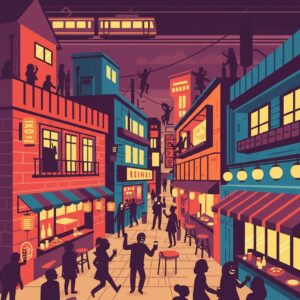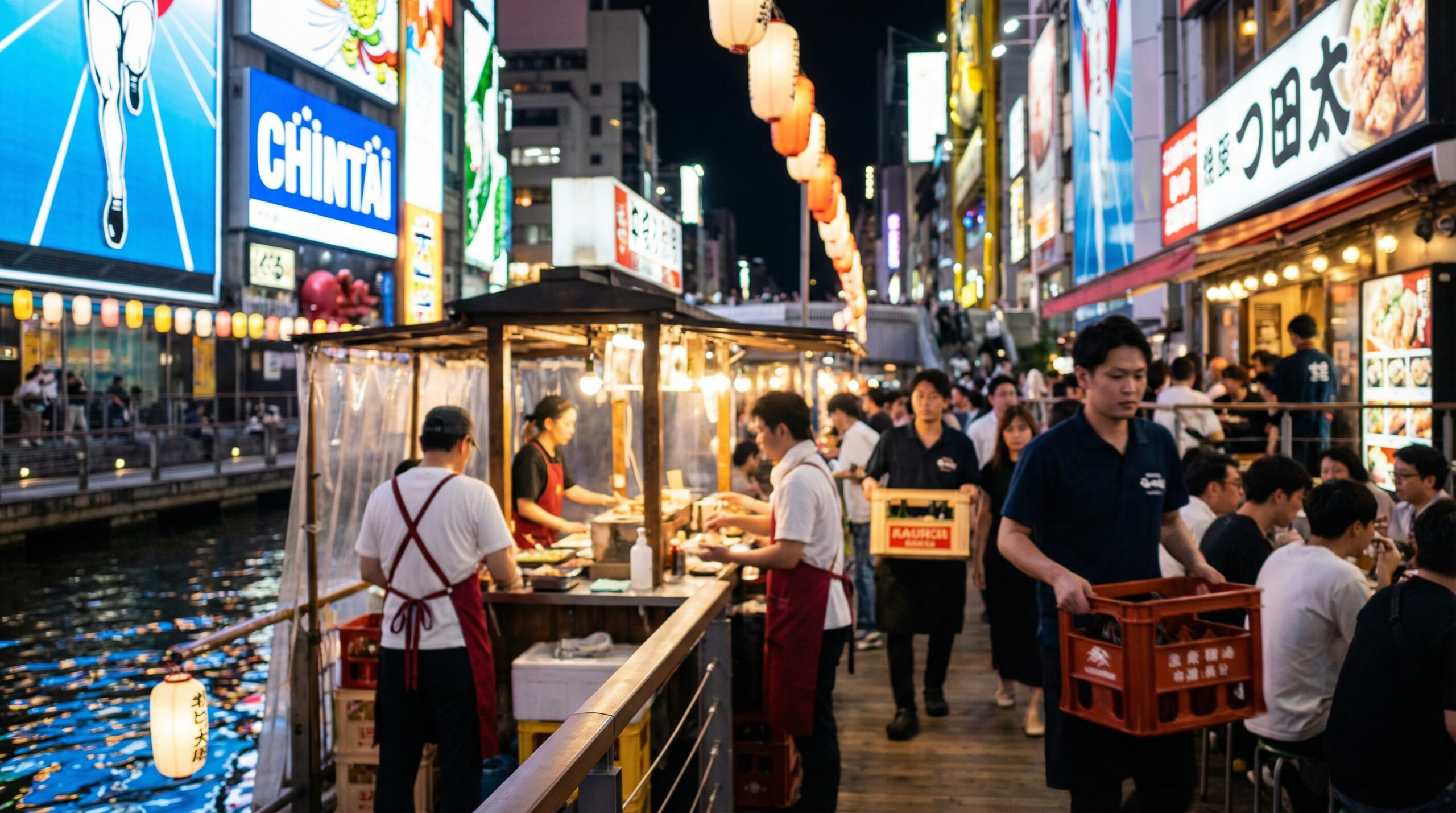
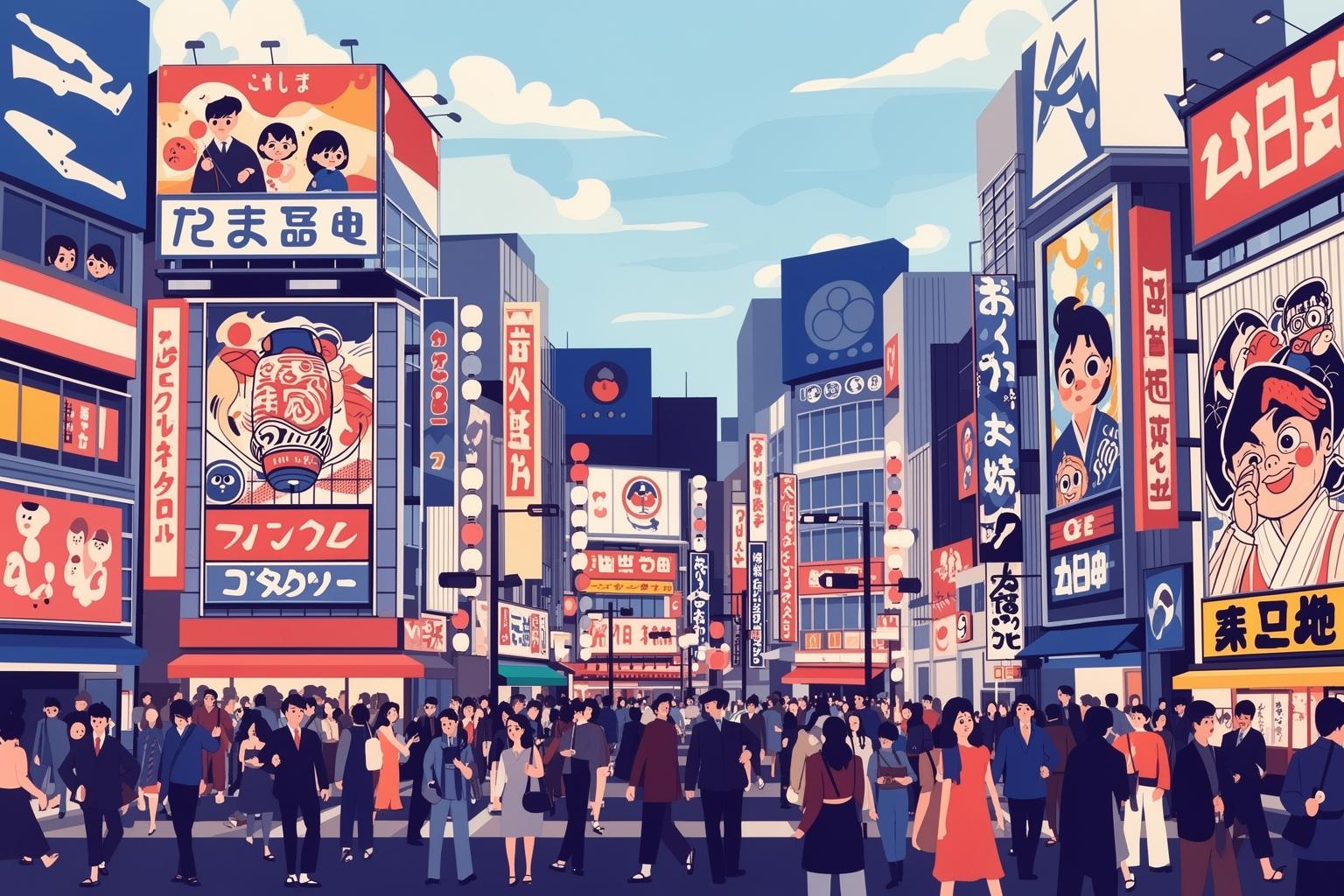
Welcome to the electric heart of Osaka, a place where neon dreams paint the night sky and the sizzle of a hot grill sings a constant, alluring song. This is Dotonbori. It’s more than just a tourist spot; it’s the city’s vibrant, beating soul, a canal-side theater of life where the philosophy of kuidaore—to eat until you drop—is not just a motto, but a sacred creed. From the triumphant pose of the Glico Running Man to the mechanical swagger of the Kani Doraku crab, the district is a sensory explosion. But beneath the dazzling chaos, behind the steam-filled windows and the crimson theater curtains, lies a deeper story. It’s a narrative woven by the hands and hearts of the people who fuel this magnificent machine day in and day out. They are the keepers of recipes passed down through generations, the silent guardians of ancient stagecraft, the guides who navigate the river of light. Today, we peel back the curtain and step into their world, to spend a day in their shoes and understand the rhythm of life that makes Dotonbori not just a place to visit, but a phenomenon to experience. This is the story of the pulse behind the spectacle, the humanity beneath the neon glow.
For a different kind of Osaka experience that offers a serene escape from the city’s neon energy, consider planning a spiritual weekend trip to Koyasan.
The Morning Ritual: A Breath Before the Frenzy
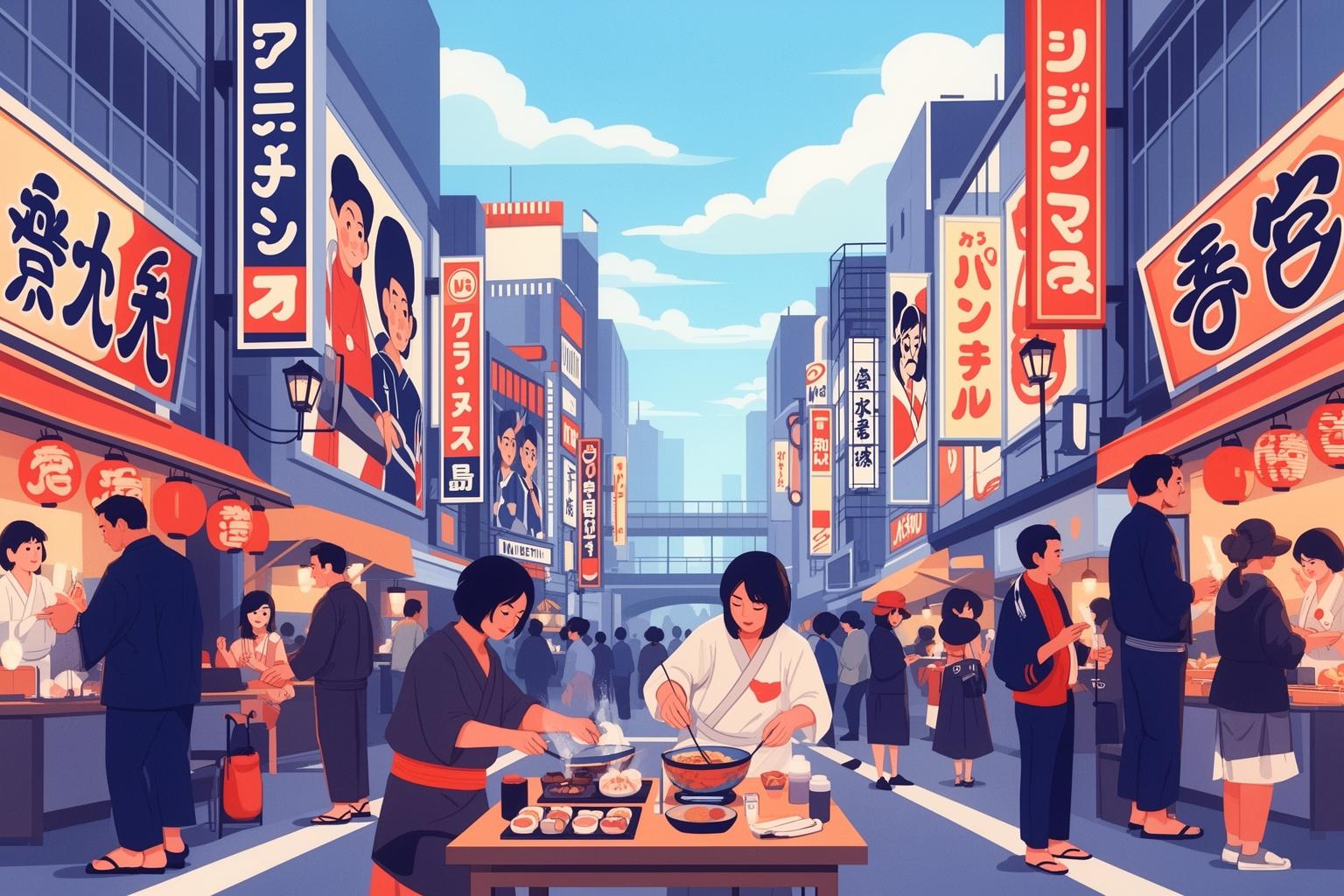
The Dotonbori that most people recognize is absent at 6:00 AM. In the soft, pearly gray light of dawn, the canal reflects a calm, dark mirror. The Glico Man statue remains motionless, his race yet to commence. The air, which later becomes thick with the irresistible aroma of grilled octopus and sweet soy sauce, currently carries only the fresh, damp scent of the nearby river and the distant hum of a city waking up. This is a sacred, quiet moment. It’s when the gentle swish of a street cleaner’s broom can be heard—a rhythmic sound that erases the memories of the previous night’s festivities. Delivery trucks skillfully navigate the narrow streets, their drivers unloading fresh cabbage crates, beer kegs, and bags of flour—the essential ingredients for the day’s upcoming feast.
This is when Kenji Tanaka begins his day. At sixty-eight, his hands tell the story of his life, marked by fine lines from four decades spent over a hot takoyaki grill. His stall, a modest corner just off the main promenade, may not be the biggest or flashiest, but for those familiar with the area, it is a landmark. He moves with a practiced economy of motion that is nearly meditative. First comes the ceremonious unlocking of the shutters, their metallic rattle serving as the neighborhood’s first true alarm clock. Then, he lights his custom-made cast-iron grills. He bows his head briefly, a silent tribute to his tools and the day ahead.
“The batter,” he says in a low rumble while whisking a golden mixture in a large stainless-steel bowl, “is everything. Anyone can pour batter and drop in octopus. But the soul of Osaka takoyaki lies in the dashi.” He describes the subtle art behind his broth—a secret blend of kombu seaweed and dried bonito flakes simmered for hours to develop a deep, umami-rich flavor. This recipe, perfected by his grandfather, makes Kenji-san see himself not as a mere cook, but as a guardian of that legacy. He carefully chops the boiled octopus into perfectly tender pieces and arranges his other ingredients with precision: bright red pickled ginger, vibrant green onions, and crunchy, savory tempura scraps known as tenkasu.
As the first office workers and early tourists begin to pass by, the performance starts. Kenji-san pours the dashi-infused batter into rows of hemispherical molds. Sizzle. He drops in the octopus and sprinkles the other ingredients with a flourish. Using two long metal picks, he swiftly turns the half-cooked spheres with incredible speed and skill. It’s a dance. His wrists flick and his body sways to an internal rhythm, transforming the liquid batter into perfectly round, golden-brown balls. The air fills with the day’s first mouthwatering scent—a savory, steamy cloud that promises comfort and delight. “The first batch is for the neighborhood,” he says, offering a paper boat of piping hot takoyaki to a passing security guard. “Here, we all look out for each other. Before the crowds arrive, we are simply neighbors.” In this quiet morning hour, Kenji-san is not just preparing food; he is setting the stage, creating the opening note in Dotonbori’s symphony.
The Midday Crescendo: Where Culture Takes Center Stage
By noon, the quiet intimacy of the morning has faded, replaced by a growing flood of people. The volume in Dotonbori rises. The murmur of conversations swells into a roar, interrupted by the lively calls of vendors—“Irasshaimase!”—and the sizzling sound of countless grills. This is when the district’s dual identity becomes strikingly clear. While the street level pulses with the vibrant energy of food, the majestic buildings above hide another treasure: the theater.
Dotonbori’s history is deeply intertwined with the performing arts. Long before the giant neon signs, the canal was lined with shibai-goya, traditional Edo-period playhouses. It was the entertainment hub, the Broadway of its day, where Kabuki and Bunraku puppet theater thrived. Today, that heritage lives on within the stately Osaka Shochikuza Theatre, a grand European-inspired structure hosting some of Japan’s finest Kabuki performances.
Inside, away from the culinary bustle, lies a world of profound discipline and beauty. Here we meet Akiko Sato, a stagehand in her late twenties. In a field still largely dominated by men, she moves with a quiet confidence that commands respect. Her day begins hours before the first matinee. While audiences admire the lavish costumes and dramatic poses on stage, Akiko’s realm is the shadowy backstage, a maze of ropes, pulleys, and wooden sets.
“My job is to make the magic seamless,” she says softly during a break, careful not to disturb actors rehearsing nearby. “Kabuki depends heavily on stagecraft. The mawari-butai (revolving stage) for scene shifts, the seri (trapdoors) for dramatic entrances and exits… these mechanisms are centuries old. My role is to be part of that machine, to anticipate every cue, to remain invisible.” She shows me the intricate prop room, a museum of finely crafted fans, swords, and masks. The air is tinged with aged wood, camphor, and the faint, sweet scent of rice-powder makeup worn by the actors. “On stage, there’s an explosion of color and sound. Back here,” she gestures to the dark, vast space, “it’s a world of silent communication. A nod, a hand signal, the quiet creak of a rope… that’s our language.” For Akiko, Dotonbori isn’t about the takoyaki; it’s about preserving a 400-year-old art, being a vital, unseen part of a spectacle of breathtaking artistry. She is the silent partner in the drama, a guardian of the magic that unfolds when the lights dim.
A few blocks away, at the National Bunraku Theatre, another ancient art is carefully maintained. Here, 20-year-old Hiroki Ito is beginning a long, demanding journey. An apprentice puppeteer, his current role is the ashi-zukai, the operator of the puppet’s feet. In Bunraku, three people manipulate one large, ornate puppet: the master puppeteer controls the head and right arm, a second puppeteer the left arm, and the apprentice the feet. Clad in black from head to toe, the puppeteers are meant to blend seamlessly into the puppet.
“They say it takes ten years on the feet, then another ten on the left arm, before you can even dream of handling the head,” Hiroki says, his young face serious with the weight of his path. His training is grueling, a constant effort to suppress his presence and give life to an inanimate figure. He spends hours perfecting the puppet’s walk, kneel, and run in ways that express emotion—despair in a slow shuffle, joy in a light-footed skip. “The goal is for the audience to forget we’re here. They should see only the puppet’s story, feel its heart. It’s an incredible feeling when you sense that shift in the theater, when a thousand people cry for a character made of wood and silk. That’s the power of this art.” Hiroki embodies the future of Dotonbori’s cultural heart, the next generation dedicating their lives to ensuring these profound stories endure, a quiet counterpoint to the vibrant energy just outside the theater doors.
The Neon Bloom: An Electric Evening Feast
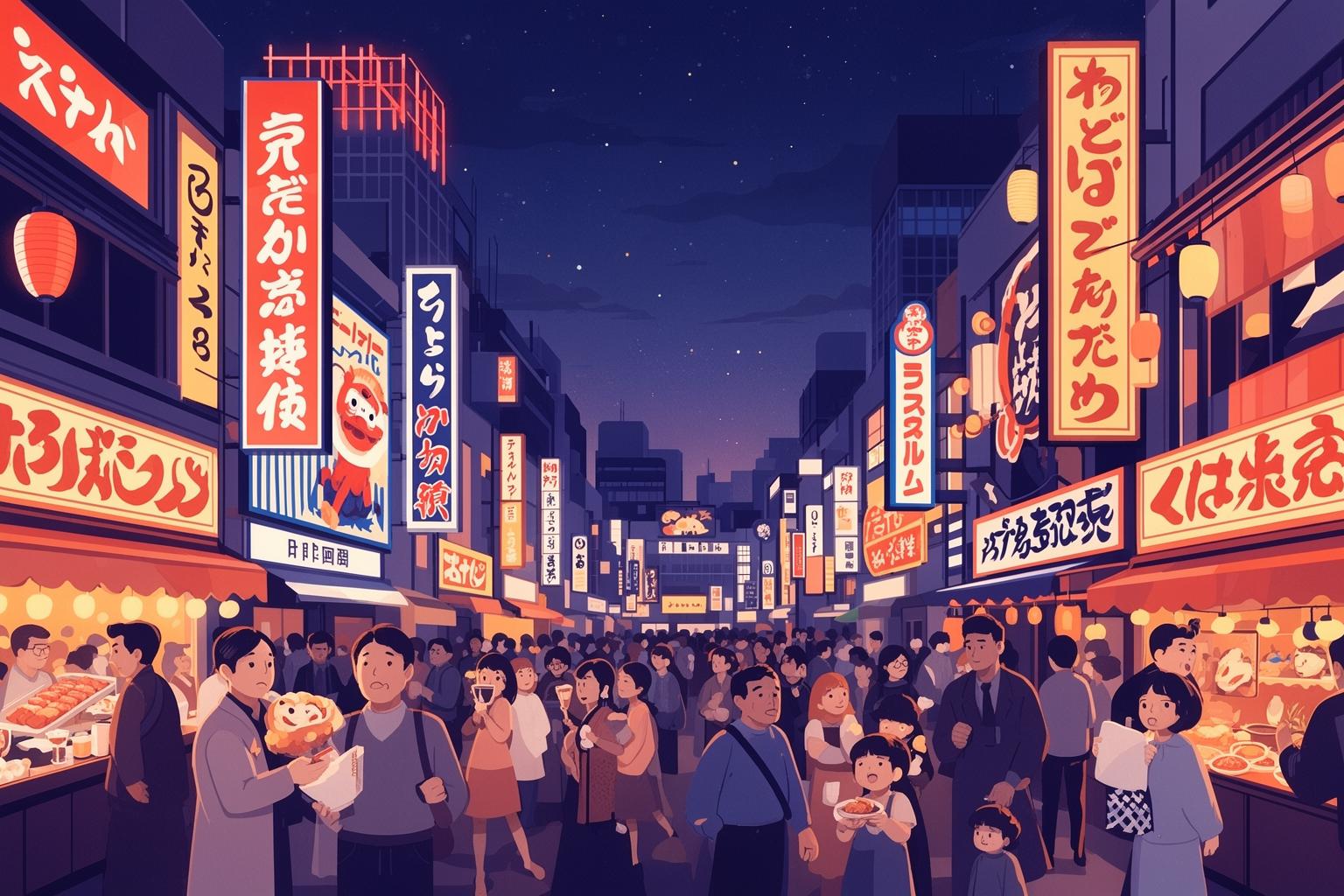
As dusk falls, Dotonbori undergoes its most dazzling transformation. One by one, the landmarks come to life. A switch is flipped, and suddenly the Glico Man is running again, a symbol of endless motion against the darkening sky. The giant pufferfish lantern of Zuboraya begins to glow, its cheerful face promising a culinary adventure. The mechanized crab at Kani Doraku waves its claws with renewed energy. The calm canal turns into a shimmering canvas of reflected light, a liquid rainbow of reds, blues, and greens. The street buzzes with a palpable electric hum. This is Dotonbori at its peak, a full sensory assault in the most splendid way possible.
The symphony of sizzling grows louder. At a lively okonomiyaki restaurant, Yumi Tanaka plays the role of conductor. Positioned before a massive teppan grill that serves as her stage, she moves with dynamic charisma. With two metal spatulas in hand, she chops, mixes, and flips with a rhythmic precision that draws a crowd. Okonomiyaki, the savory pancake often translated as “grilled as you like it,” is a quintessential Osaka comfort food, and Yumi is its devoted high priestess.
“Osaka people take their food seriously, but not themselves!” she shouts over the noise, flashing a wide, infectious smile. Her performance is as integral to the meal as the ingredients. She ladles the cabbage-filled batter onto the grill, shaping perfect circles. She adds pork belly, squid, and shrimp, the ingredients sizzling with a satisfying hiss. She chats with customers, remembers regulars’ orders, and moves with a grace that belies the fast pace. The climax arrives after she flips the massive pancake. With a squeeze bottle, she drizzles it with sweet, dark okonomiyaki sauce, then finishes with a crisscross of Japanese mayonnaise, creating a true work of art. The final touch is a generous sprinkle of paper-thin katsuobushi (bonito flakes), which writhe and dance in the heat as if alive. “This is the spirit of kuidaore!” she declares, sliding the finished masterpiece onto a customer’s plate. “Good food, good fun, no holding back!” Her energy encapsulates Dotonbori at night—warm, generous, and utterly captivating.
To experience this vibrant scene from another perspective, one must take to the water. The Tombori River Cruise offers a break from the packed promenade, providing a moving panorama of the neon canyon. The guide on our boat tonight is Takeda-san, a retired history teacher with a playful sparkle in his eye. His commentary is a rapid blend of historical facts, dad jokes, and insider insights.
“On your left, the famous Glico sign! First installed in 1935! He’s been running for a very long time, but never gets tired!” he announces into his microphone. As the boat glides under the Ebisubashi Bridge, he lowers his voice conspiratorially. “This is the bridge where everyone celebrates when the Hanshin Tigers win the championship. Many fans jump into the river! Very cold, very dirty, but very happy!” He points out various architectural styles, explains the history of the Don Quijote store with its giant Ferris wheel, and shares stories about filming locations for famous movies. From Takeda-san’s vantage on the water, the chaos of Dotonbori transforms into a coherent, stunning spectacle. The jumble of signs and sounds arranges itself into a breathtaking urban masterpiece. He is not just a guide but a narrator, giving context and character to the flashing lights and helping visitors read the story written in neon across the Osaka skyline.
The Afterglow: Late Night Whispers and Hidden Alleys
As midnight draws near, the main thoroughfare begins to exhale. The large tour groups have left, and the families have returned home. Yet Dotonbori is far from asleep. The energy simply shifts, becoming more intimate, more local. It retreats from the wide, brightly lit canal and seeps into the narrow, lantern-lit alleyways that branch off from the main street. This is the moment to explore a different side of the district, and there’s no better place to do so than Hozenji Yokocho.
Entering this stone-paved alley feels like stepping back in time. The neon glare is replaced by the soft, warm glow of paper lanterns. The roar of the crowd diminishes, giving way to the gentle clatter of dishes from tiny restaurants and the murmur of quiet conversation. At the heart of the alley stands Hozenji Temple, home to a famous moss-covered statue of the deity Fudo Myoo. Worshippers pour water over the statue as they pray, a ritual that has nurtured the thick, green moss over many decades. It is a pocket of serene spirituality amidst the indulgence.
In a tiny bar just off this alley, marked by a simple wooden sign and seating no more than eight people, Mr. Sato presides. He has been the “Master” of this establishment for fifty years. His movements are slow and deliberate as he polishes a glass until it gleams. His domain is a sanctuary of dark wood, worn leather, and the quiet clinking of ice. He is a listener, a confidant to his patrons—a mix of local business owners, off-duty chefs, and the occasional lost tourist who has stumbled upon his hidden gem.
“Dotonbori shows a different face every hour,” he reflects, pouring a measure of amber Japanese whisky. “I’ve seen it change so much. The buildings grow taller, the signs shine brighter. But the spirit… the Osakan spirit… that remains constant. People still come here to forget their troubles, to celebrate, to feel alive. My job is simply to offer a quiet space for them to do that.” He speaks of the old days, of the jazz cafes and movie theaters long vanished. His bar is a living museum, and he its gentle curator, preserving a calmer, more reflective version of Dotonbori’s character, one perfectly poured drink at a time.
Long after Mr. Sato has served his final customer, another shift begins. As the last trains depart and the streets empty, Dotonbori’s unsung heroes emerge. Mrs. Tanaka, bundled against the cool night air, pushes her cart along the promenade. She is part of the cleaning crew, the team responsible for the nightly reset. With her colleagues, she meticulously sweeps the streets, empties overflowing bins, and hoses down the pavement, washing away the remnants of thousands of meals and moments.
Her work resembles urban archaeology. She finds lost wallets, single earrings, hurriedly dropped photographs, love letters, and countless other fragments of human stories. “You see everything in this job,” she says with a quiet smile. “You witness so much happiness. Sometimes silly things, sometimes sad things. But you realize how much this place means to people.” She takes great pride in her work. She knows that in a few hours, Kenji-san will arrive to set up his takoyaki stall, and the street must be spotless for him, for the first customers, for the new day. Mrs. Tanaka and her team are the silent guardians of Dotonbori’s cycle of life. They perform the final, essential act of the night, ensuring that when the sun rises, the stage is clean and ready for the magnificent, chaotic, delicious performance to begin anew.
A Guide to Navigating the Spectacle
Exploring Dotonbori is an adventure, and like any great journey, a bit of preparation makes all the difference. The area is most conveniently reached from Namba Station, a key hub served by the Midosuji, Yotsubashi, and Sennichimae subway lines, along with JR and Nankai lines. From any station exit, the iconic Ebisubashi bridge is just a five-minute walk away.
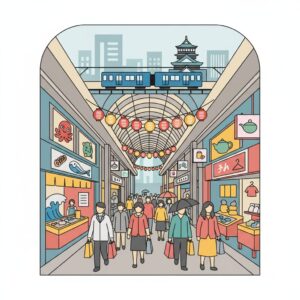
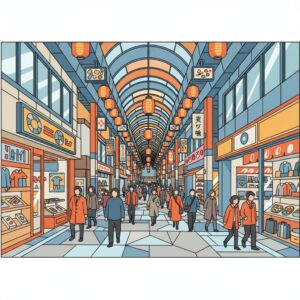
To fully experience the district’s vibrant character, visit at two different times. An afternoon trip lets you browse the shops and enjoy the sights with fewer crowds. You can also stroll through the covered Shinsaibashi-suji shopping arcade, located just north of the canal, for a different shopping vibe. However, to see Dotonbori in its complete, dazzling form, you must visit after sunset. The change is enchanting and captures the essence of Osaka.
While the main canal walk is essential, don’t hesitate to explore beyond it. Hozenji Yokocho, mentioned earlier, offers a peaceful retreat and a window into old Osaka. Wander along the smaller streets parallel to the canal to discover quirky bars, specialty restaurants, and a more local atmosphere. Don’t forget to look upwards—the vertical aspect of Dotonbori adds to its charm, with some of the best spots tucked away on the upper floors of unassuming buildings.
First-time visitors should embrace the lively chaos. It will be busy, especially on weekends and holidays, but the crowd’s energy enhances the experience. Be polite yet confident while navigating through the throngs. Although more places now accept credit cards, it’s wise to carry some cash, as many smaller, older food stalls only take cash. Above all, arrive hungry and open-minded. Sample the takoyaki, okonomiyaki, kushikatsu (deep-fried skewers), and ramen. Let the spirit of kuidaore guide you.
The Enduring Heartbeat of Osaka
Dotonbori is a landmark, a postcard, a dazzling highlight on any travel itinerary. Yet as the day progresses—from the first sizzle on Kenji-san’s grill to the final sweep of Mrs. Tanaka’s broom—it reveals so much more. It is a living, breathing ecosystem, a rich tapestry woven from dedication, tradition, and an unwavering passion for hospitality and performance. It is the disciplined quiet of the theater stagehand, the flamboyant flair of the okonomiyaki chef, the historic stories of the river guide, and the quiet dignity of the late-night bartender.
These individuals, and thousands more like them, are the true heart of Dotonbori. They are the keepers of its past and the driving force of its future. They give the district its unique character—a fusion of the raucous and the refined, the ancient and the ultra-modern. So, the next time you find yourself standing on Ebisubashi Bridge, captivated by the dazzling lights, take a moment. Look beyond the giant crab and the running man. Observe the faces at the food stalls, listen to the rhythms of their work, and know that you are witnessing more than just a spectacle. You are experiencing the beautiful, enduring, and utterly delicious heartbeat of Osaka itself.