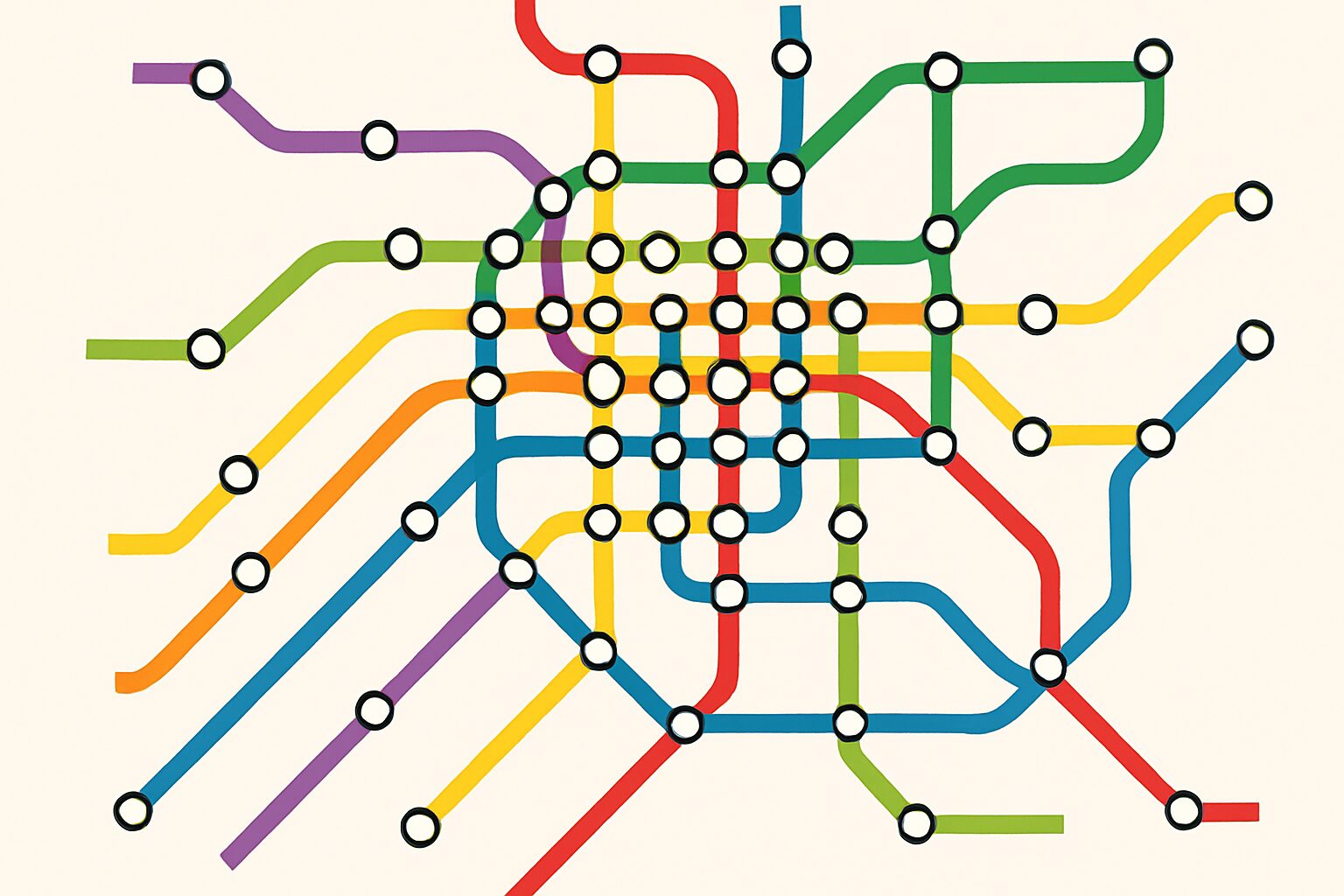
To understand Osaka, one must first understand its pulse. It isn’t found in a single monument or a quiet garden; it’s a thrumming, rhythmic, and powerful beat that courses through the city’s metallic veins. This is the sound of the trains. Stepping into a major station like Umeda or Namba for the first time is an immersion into a kinetic world of controlled chaos. The melodic jingles announcing departures, the river of humanity flowing with purpose, the glow of digital signboards painting a tapestry of destinations—it is the city’s lifeblood made manifest. Osaka’s rail network is more than mere transportation; it is the skeletal structure upon which the metropolis has grown, a complex and sprawling system that dictates the rhythm of daily life for millions. It is a historical marvel, born from fierce competition between private entrepreneurs and the state, resulting in a web of steel that is at once brilliantly efficient and bewilderingly complex. This guide is for those who call Osaka home, or plan to, offering a deeper perspective that goes beyond tourist passes and simple A-to-B directions. We will explore the distinct personalities of the various train lines, weigh the profound advantages against the subtle but significant drawbacks, and ultimately, learn to navigate this urban circulatory system not just as a passenger, but as a seasoned resident who understands the city’s true rhythm.
Once you’ve mastered the city’s rhythm, you might find yourself seeking a more personal connection, perhaps by learning the social rituals of a local sentō (public bath).
The Grand Tapestry: Understanding Osaka’s Rail Operators
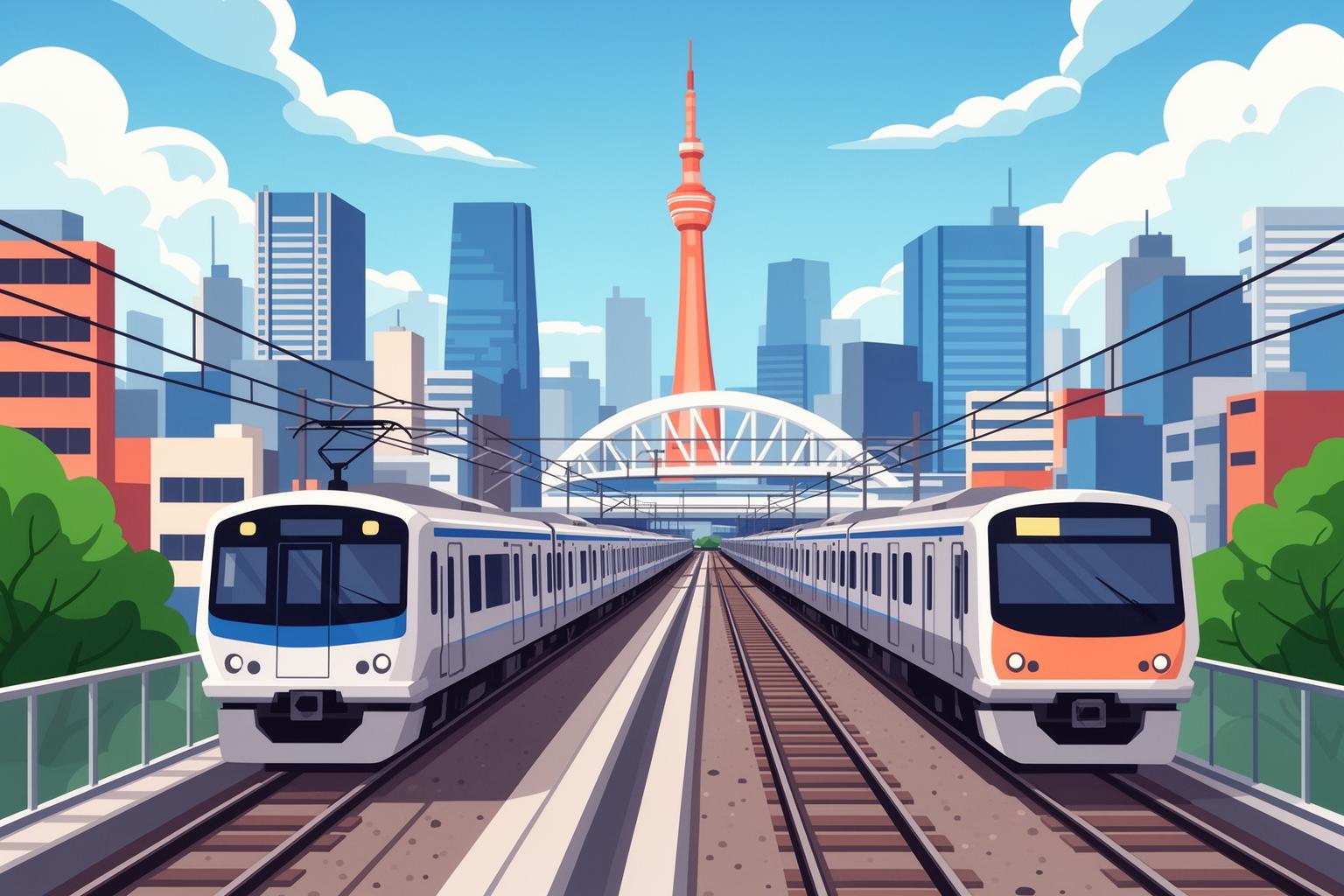
One of the initial and most crucial insights for any newcomer is that “the train” system in Osaka is far from a single unified network. Instead, it is a dynamic, competitive ecosystem comprised of various railway companies, each boasting its own history, operational territory, corporate culture, and distinctive aesthetic. Understanding this layered reality is essential to navigating the city effectively. Knowing which company controls which routes is key to efficient travel, cost management, and appreciating the fabric of urban development in the Kansai region. These companies are more than just transportation providers; they are rail-based empires that shape the communities they serve with a deep and enduring impact.
JR West: Kansai’s Backbone
At the core of the railway network is Japan Railways West, or JR West, the successor to the former national railway system. If the private railways serve as the intricate arteries and capillaries, JR West functions as the strong aorta—the main trunk line linking Osaka to the broader nation. Its most iconic feature within the city is the Osaka Loop Line, an energetic, orange-striped circle of steel that acts as the city’s vital circulatory system. Riding the Loop Line offers a tour through Osaka’s diverse neighborhoods—from the bustling commercial center of Osaka-Umeda to the historic grandeur of Osaka Castle Park, the retro-futuristic vibe of Tennoji, and the lively, gritty atmosphere of Tsuruhashi’s Korean town. Beyond this central ring, JR West’s real strength lies in its regional and national reach. The JR Kobe Line and JR Kyoto Line are speedy expressways ferrying commuters and travelers between Kansai’s three major cities with remarkable speed. For locals, this makes inter-city day trips or commutes not only feasible but effortlessly convenient. The pinnacle of JR’s influence is the Shinkansen, with Shin-Osaka Station serving as the regional gateway to Tokyo, Hiroshima, and beyond. JR’s advantage is its expansive coverage, providing the fastest routes over longer distances and major, well-established hubs. However, this scale poses challenges: stations like the massive Osaka Station in Umeda can feel like labyrinths and be daunting to navigate. Furthermore, for short trips within the city, JR can be a bit pricier than the subway Metro, and its coverage within the dense urban core is less detailed.
Osaka Metro: The City’s Subterranean Core
If JR is the city’s skeleton, the Osaka Metro acts as its central nervous system—a network of color-coded lines running quietly and efficiently beneath Osaka’s busy streets. This is the railway system that truly belongs to the city itself. Its hallmark is a clear, grid-like layout that makes it especially easy for residents to form a mental map of their surroundings. The Midosuji Line, marked by its iconic crimson color, stands as the system’s crown jewel, directly connecting the city’s two major hubs: the northern business and shopping district of Umeda (Kita) and the southern entertainment and cultural center of Namba (Minami). Living near a station on the Midosuji Line is considered the gold standard of convenience in Osaka. Other lines also play vital roles: the green Chuo Line forms an essential east-west axis, while the brown Sakaisuji Line connects directly with the Hankyu Railway, providing a seamless route from southern Osaka all the way to Kyoto. The Metro’s primary strength is its dense coverage and high frequency for travel strictly within Osaka city limits. Trains arrive every few minutes, stations are logically sited, and fares tend to be lower for short trips. It is the city’s workhorse, carrying vast numbers of passengers with quiet efficiency. Its main drawback is its limited range: as a city-focused system, trips to the suburbs or neighboring cities such as Kobe or Nara usually require transferring to JR or a private railway line, often involving walking through extensive underground corridors to reach a different company’s station.
The Private Railway Empires (The “Shitetsu”)
This is where Kansai’s transportation landscape reveals its unique and fascinating character: the private railways, or Shitetsu. These are more than mere transport companies—they are diversified conglomerates responsible for building modern suburbs. In the early 20th century, visionaries like Ichizo Kobayashi of Hankyu Railway pioneered a business model still prevalent today: extend a railway line into undeveloped countryside, develop attractive residential areas along it, and anchor the city terminus with a luxurious department store to encourage residents to travel back into the city. This integrated approach to urban development gives each private railway its distinct personality and a fiercely loyal customer base.
Hankyu Railway: The Embodiment of Elegance
Riding the Hankyu Railway evokes a sense of polished refinement. From its gleaming maroon carriages—so iconic that the color is simply known as “Hankyu Maroon”—to the immaculate condition of its stations, Hankyu cultivates an image of class and sophistication. Its grand terminal at Hankyu Umeda Station is a masterpiece of railway design, featuring nine platforms side-by-side and creating a grand sense of arrival and departure. This station lies directly beneath the flagship Hankyu Department Store, the crown jewel of the company’s retail empire. Hankyu’s territory stretches north and west from Umeda, with three main branches serving Kobe, Takarazuka, and Kyoto. For residents of northern Osaka suburbs like Toyonaka or Nishinomiya, Hankyu isn’t just a train line—it’s a lifestyle brand. The Kobe route is often viewed as more scenic and relaxing than its JR counterpart, and its Kyoto line offers a charming alternative, terminating in the bustling Kawaramachi district. The benefit here is a cultivated atmosphere of comfort alongside seamless integration with upscale commercial facilities. The drawback is its limited geographic focus; it is less useful for travel to southern or eastern Osaka.
Hanshin Railway: The People’s Line
Running alongside its elegant counterpart Hankyu is the Hanshin Electric Railway. If Hankyu represents aristocracy, Hanshin embodies a spirited populism. Its territory also connects Umeda and Kobe, but via a more southerly route, serving vibrant, down-to-earth communities. The atmosphere aboard a Hanshin train is noticeably different—more functional and utilitarian, though no less important. The company is closely tied to one of Japan’s most passionate institutions: the Hanshin Tigers baseball team. Hanshin owns the team and the legendary Koshien Stadium, and on game days its trains flood with yellow-and-black clad fans, chanting and celebrating. This connection gives the railway a deep cultural identity and a palpable local pride. Its main Umeda terminus is deep underground, a stark contrast to Hankyu’s open, airy hall, but offers excellent connectivity. Hanshin’s key advantage is its access to important local spots like Koshien and its often faster or more direct route to parts of Kobe. Like Hankyu, its main limitation is its narrow focus on the Umeda-Kobe corridor, providing little service to other directions.
Kintetsu Railway: The Expansive Giant
In sheer scale, the Kintetsu Railway is Japan’s largest private railway operator. Its sprawling network stretches from Osaka far into Nara, Kyoto, Mie, and even Aichi Prefecture, terminating in Nagoya. Kintetsu serves as the primary gateway to some of Japan’s most sacred and historic sites. Operating from dual Osaka hubs at Namba and Tsuruhashi, it offers the most direct—and often exclusive—rail access to the ancient capital of Nara, famed for its deer park, as well as the Ise Grand Shrine, Shinto’s spiritual heart. Riding Kintetsu means sharing carriages with commuters, students, pilgrims, and tourists alike. Services range from basic local trains to luxurious Limited Express trains like the “Hinotori” to Nagoya and the “Shimakaze” to Ise-Shima, which provide reserved seating and premium comfort for an additional fee. Kintetsu’s strength lies in its vast reach and unique destinations, indispensable for exploring eastern Kansai. Its main drawback is the complexity of Namba station, integrated into an extensive and often confusing underground complex shared with the Metro and Hanshin lines.
Nankai Electric Railway: The Southern Gateway
Nankai commands the southern routes. Its network radiates from the grand, classical-style Nankai Namba Station and extends southward toward Wakayama Prefecture and critically, Kansai International Airport (KIX). For residents in southern Osaka, Nankai is the primary connection to the outside world. The airport service is its hallmark feature, exemplified by the striking deep blue, retro-futuristic “rapi:t” limited express train, whose unique design resembles something out of a science fiction film, offering a comfortable and stylish ride to and from the airport. Beyond this, Nankai provides vital links to Mount Koya (Koyasan), one of Japan’s most sacred mountain temple complexes, accessible via a scenic train ride culminating in a cable car ascent. Nankai’s advantage is its dominance over southern corridors, especially routes to the airport and Mount Koya. Its Namba station itself is a destination, directly connected to the Takashimaya department store and the lively Namba Parks shopping complex. Its geographic limitation is its main drawback; its usefulness diminishes greatly for travel toward northern or eastern Kansai.
Keihan Electric Railway: The Riverside Route to Kyoto
The Keihan Electric Railway offers a unique and often overlooked choice for travel between Osaka and Kyoto. While JR provides the fastest route and Hankyu the more sophisticated alternative, Keihan presents a scenic, culturally rich option. Its Osaka terminals are in the business districts of Yodoyabashi and Kyobashi, with lines running northeast closely following the Yodo River. Traveling by Keihan feels more leisurely and connected with the landscape. Known for innovation, it was among the first to introduce double-decker carriages on its limited express trains, giving upper-level passengers splendid views of the riverside scenery. Keihan’s greatest strength lies in its Kyoto stations. Unlike JR’s somewhat isolated Kyoto Station, Keihan’s line passes through the vibrant heart of historic Kyoto, stopping at famed sites including Fushimi-Inari Shrine, Gion-Shijo (gateway to the geisha district), and Sanjo. This makes it an excellent choice for sightseeing. The trade-off is a slower journey than JR’s Special Rapid service, rendering it less ideal for commuters on tight schedules.
The Daily Rhythm: Navigating the System Like a Local
Grasping the hardware of the train lines is only part of the challenge. To truly master the system, one must understand its software: the daily rhythms, unspoken rules, and practical knowledge that turn a stressful commute into a smooth part of everyday life.
The Symphony of the Commute: Rush Hour Realities
Morning rush hour, typically between 7:30 AM and 9:00 AM, is an impressive spectacle. It demonstrates the system’s remarkable capacity and tests one’s tolerance for crowds. Platforms on major lines like the Midosuji or the JR Loop Line become flowing rivers of people, moving in disciplined, silent currents. Trains often arrive packed to capacity, and boarding becomes a collective, cooperative squeeze. This is the notorious man’in densha, or “full-person train.” For a newcomer, it can feel overwhelming and even claustrophobic. The physical closeness to strangers takes some getting used to. Yet, within this dense crowd, there is an unspoken etiquette. People instinctively shift to create tiny pockets of space, bags are either held in front or placed on overhead racks, and a quiet, stoic resignation fills the air. The advantage is that the system is designed for this; trains run with extraordinary frequency, ensuring platforms clear quickly and everyone reaches their destination on time. The downside is the intense physical and mental strain. The best advice for residents is simple: if your schedule permits, avoid peak times. Even a 30-minute adjustment to your commute can make a significant difference. If you must travel during rush hour, be prepared, stand clear of the doors to let passengers exit, and move toward the center of the car to make room for others.
Reading the Signs: Station Navigation and Etiquette
Japanese station design exemplifies excellent information architecture. Every line is color-coded, and each station is assigned a letter and number (e.g., Namba on the Midosuji Line is M20), forming a universal language that goes beyond language barriers. English signage is widespread and excellent in all major stations. However, becoming familiar with the kanji for your home station, work station, and key hubs like Umeda (梅田) and Namba (難波) is an invaluable skill to accelerate your mastery of the system. Beyond reading signs, following local etiquette is essential for a smooth journey. When waiting for a train, passengers line up neatly and orderly at designated platform points. The cardinal rule is to wait until all disembarking passengers have fully exited before boarding. On the train, conversations are kept to a minimum and at low volume. Phone calls are a major faux pas; phones should be set to silent mode. Priority seats, usually marked with a different color, are reserved for the elderly, pregnant women, people with disabilities, and those accompanied by small children. While you may sit in these seats if empty, you are expected to yield them immediately if someone in need boards.
Fares, Tickets, and IC Cards: The Key to a Smooth Journey
Although paper tickets from machines are still available, this method is rapidly becoming outdated for residents. It requires locating your destination on a large, intricate fare map above the ticket machines, inserting cash, and receiving a paper ticket. This can be cumbersome, especially if you need to transfer between different companies, which means buying a new ticket at the transfer station. The greatest advantage and the essential tool for any resident is the IC card. In the Kansai region, the main card is ICOCA (issued by JR West), but it works seamlessly with cards from other areas, like Suica (from JR East/Tokyo). An IC card is a rechargeable smart card that you simply tap on the ticket gate when entering and again when exiting. The system automatically calculates the correct fare and deducts it from your balance. Its convenience is unmatched. It eliminates the hassle of handling cash, allows smooth transfers between all train companies (JR, Metro, and private lines), and even can be used for transactions at convenience stores, vending machines, and a growing number of shops. For residents, it is the default and only sensible choice.
Express, Local, and Everything In Between
One common error among newcomers is boarding the wrong train type. On many lines, particularly private railways and JR, several service types operate on the same tracks. Understanding this hierarchy is vital. The most basic is the Local (各駅停車 – kakueki-teisha), which stops at every station. Above that, there’s a progression of faster services: Semi-Express (準急 – junkyū), Rapid (快速 – kaisoku), Express (急行 – kyūkō), and at the top, Limited Express (特急 – tokkyū). Each skips a varying number of smaller stations, with the Limited Express often only stopping at major hubs. The benefit is clear: choosing a faster service can drastically reduce travel time. A trip taking 45 minutes on a local train might take only 25 on a Limited Express. The risk is accidentally boarding an Express train and watching it speed past your small, local stop. The key is to carefully check the electronic display boards on the platform, which clearly show the train type, final destination, and usually a list of upcoming stops, often in both Japanese and English. A moment’s attention before boarding can save you the hassle of backtracking from the next main station.
The Labyrinthine Hubs: Conquering Osaka’s Major Stations
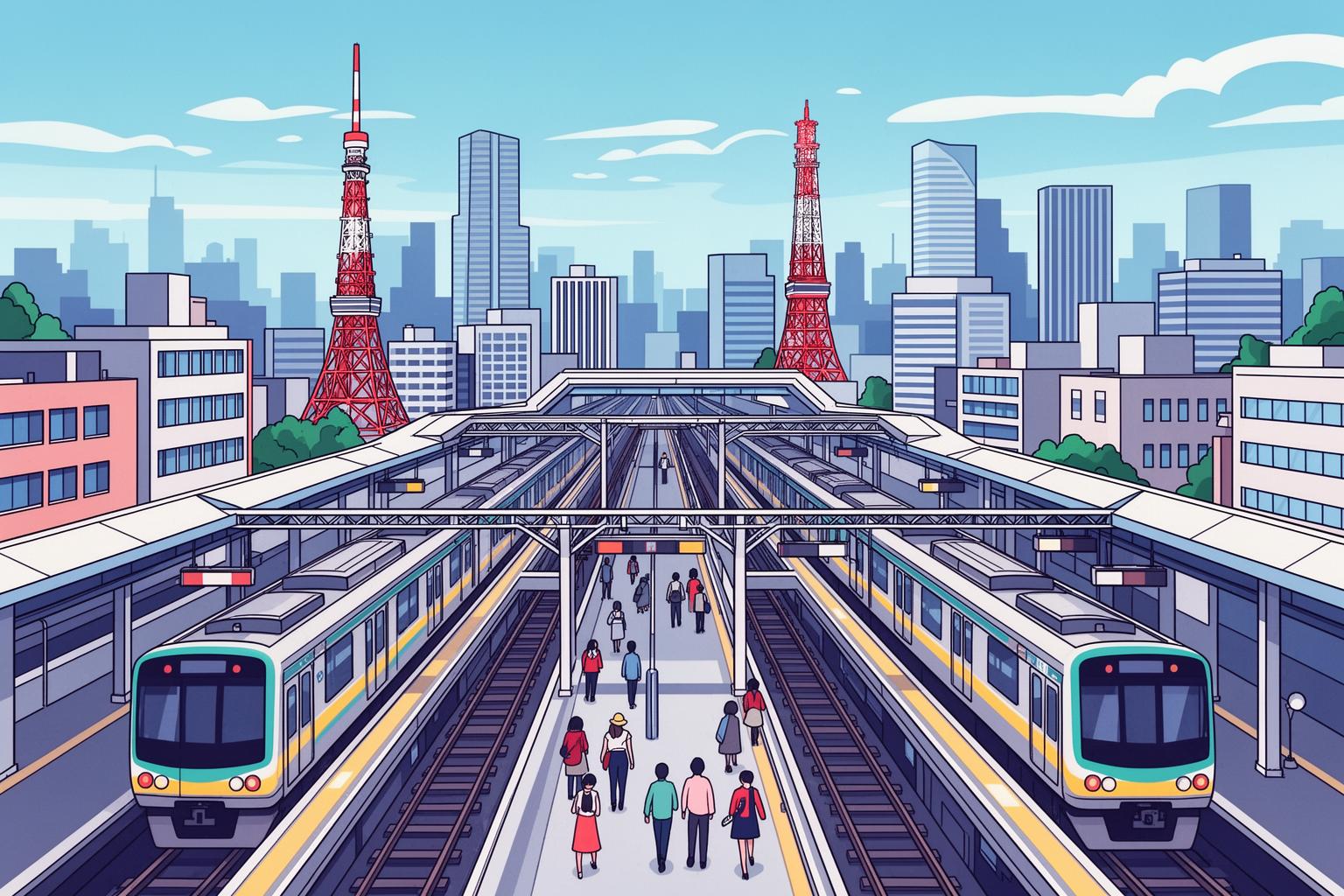
Osaka’s two main railway hubs, Umeda in the north and Namba in the south, are much more than mere stations. They function as subterranean cities, intricate ecosystems of platforms, passageways, department stores, and restaurants. Navigating them is a rite of passage for any local resident.
Umeda/Osaka Station: The Northern Giant
The most perplexing aspect of Umeda is that it is not a single station but a vast conglomerate of several. There is JR Osaka Station, the central hub for the Loop Line and inter-city services. A short distance away lies the grand Hankyu Umeda Station and the underground Hanshin Umeda Station. Additionally, there are three distinct Metro stations: Umeda on the Midosuji Line, Higashi-Umeda (East Umeda) on the Tanimachi Line, and Nishi-Umeda (West Umeda) on the Yotsubashi Line. All these are linked by a maze of underground corridors leading into some of the city’s largest department stores and shopping centers, such as Daimaru, Lucua, Grand Front Osaka, and the Whity Umeda underground mall. The atmosphere is one of constant motion—a stream of commuters, shoppers, and travelers. The benefit is unmatched connectivity; from somewhere within this network, you can reach nearly anywhere in western Japan. The major drawback, however, is how easy it is to become completely lost. Even seasoned locals admit to taking wrong turns. The best approach is to slow down and rely on the overhead signs, following directions for the exact train line you need rather than vague cues. Use major surface landmarks as points of reference before descending into the labyrinth.
Namba Station: The Southern Hub
Namba reflects Umeda’s complexity in the southern part of Osaka. It too is a cluster of stations: the Nankai station, which serves as the gateway to the airport; the Kintetsu-Hanshin station for Nara and Kobe; the somewhat isolated JR Namba station; and the bustling Osaka Metro station serving three different lines. The vibe at Namba is distinctly different from Umeda’s—it’s grittier, louder, and more chaotic, energized by the nearby Dotonbori entertainment district, the Shinsaibashi shopping arcade, and Kuromon Market. Namba’s advantage lies in its position as the heart of Minami culture and its direct, essential connections to KIX airport and Nara. The downside, once again, is the labyrinthine network of underground links. For example, transferring between the Metro Midosuji Line and the Nankai Line for the airport involves a surprisingly long walk through crowded, winding corridors. The key tip for navigating Namba is to be precise. Simply knowing you need to go to “Namba” isn’t enough; you must identify whether you need Nankai Namba, Kintetsu Namba, or Metro Namba, as each is located in a different area within the sprawling complex.
Beyond Convenience: The Cultural Impact of the Rails
The impact of Osaka’s rail system goes well beyond mere transportation logistics. It has fundamentally influenced the city’s culture, social behaviors, and even its perception of time.
Stations as “Machi” (Towns)
The private railway practice of developing department stores at terminal stations has grown into a larger trend where the station itself functions as the heart of the community—a machi, or town. Major stations are no longer simply transit points; they have become destinations. Housing extensive shopping centers, a wide range of eateries from affordable noodle shops to upscale restaurants, bookstores, clinics, and more, these stations offer exceptional convenience. You can do your grocery shopping, dine, and meet friends all without leaving the station complex. However, this can also lead to a certain uniformity, where the distinctiveness of individual neighborhoods is diminished by the familiar corporate environment of the station mall.
The Last Train and the “End of the Line” Culture
One notable drawback compared to 24-hour cities like New York is that Osaka’s rail system shuts down overnight. Trains stop running soon after midnight and resume operations around 5:00 AM. This nightly closure has given rise to a unique social culture centered on the shūden, or last train. The final hour of service sparks a city-wide rush as people hurriedly finish late dinners or drinks to catch the final ride home. Missing the shūden is a common situation, prompting several typical Osaka solutions: an expensive taxi, staying overnight in a capsule or business hotel near the station, or passing the time until the first train in a 24-hour manga café or karaoke box. This nightly cutoff imposes a strict end to social and professional gatherings, creating a pace that residents quickly adapt to.
Punctuality and Precision: A Marvel of Engineering
Japanese trains are famed worldwide for their punctuality, and Osaka is no exception. Timetables are rigid schedules, followed down to the second. This exceptional reliability is a tremendous advantage, enabling residents to organize their days with a precision rarely possible elsewhere. A train arriving even a minute late is regarded as a notable delay, often accompanied by profuse apologies over the PA system. In the uncommon case of a longer delay, station staff distribute paper slips called chien shōmeisho, or delay certificates, for passengers to show their employer or school as evidence that their tardiness was out of their control. Yet, this perfection also brings subtle social pressure. The train system’s exactitude sets a strong expectation of punctuality for everyone, making the dependable train the metronome that governs the city’s work and social rhythms.
Weighing the Journey: A Final Verdict on Osaka’s Rail System

To live in Osaka means having a daily connection with its rail network. Like any profound relationship, it involves both great appreciation and occasional frustration. Ultimately, the system’s benefits far surpass its drawbacks, though its complexities demand respect.
The Unquestionable Advantages
Osaka’s rail system boasts significant strengths. It provides such speed, coverage, and efficiency that most residents find car ownership unnecessary. The network is remarkably safe, impressively clean, and remarkably punctual. The integration of transportation with commercial and residential development, pioneered by private railways, represents a masterclass in smart urban planning, offering unmatched convenience. Traveling effortlessly from the city center to ancient temples in Nara, the bustling port of Kobe, or the sacred peak of Mount Koya is a continual enrichment to life in the region. Without question, the system is the city’s greatest asset.
The Inherent Disadvantages
Yet, challenges do exist. The competition that drove excellent service also resulted in a fragmented system of multiple operators. This can confuse users and sometimes make travel more expensive, as fares are calculated separately by each company, so transferring may cost more than a longer journey on a single line. The crowded rush hours are a daily ordeal for millions. The nightly shutdown places a curfew on the city’s nightlife. Large hub stations like Umeda and Namba can feel overwhelming, turning simple transfers into stressful navigational challenges. These are the necessary trade-offs for the system’s impressive efficiency—the inevitable frictions in a finely tuned machine.
Mastering Osaka’s trains is like learning the city’s secret language. It starts with puzzling over a complex map and ends with the quiet confidence of knowing which carriage to board for the fastest exit. The daily ride is no longer just a commute; it becomes a moving portrait of the city’s soul—the sleepy faces in the early morning, the lively energy of students after school, the weary relief of workers heading home. The rhythmic click-clack of the wheels on the rails is more than background noise; it is the steady, reliable, and powerful heartbeat of Osaka. Embrace its rhythm, learn its routes, and you will have unlocked the true key to this vibrant city.