You see it on your rental agreement, a small, mysterious line item you probably paid without a second thought: 町内会費, the chōnaikai-hi. Or maybe you didn’t. Maybe you first noticed it on a Sunday morning. You wake up, look out your window, and see a dozen of your elderly neighbors, armed with brooms and dustpans, diligently sweeping the street. No one told you this was happening. It’s just… happening. A few weeks later, a small, makeshift stage appears in the local park. Paper lanterns are strung between trees. The air fills with the sizzle of frying noodles and the rhythmic beat of a taiko drum. A festival, out of nowhere. Who’s paying for this? Who’s organizing it? Who are all these people, and why do they suddenly seem to know each other so well?
Welcome to the world of the Jichikai, or Chōnaikai—the Neighborhood Association. This isn’t just some quaint social club for retirees. This is the invisible, hyper-local operating system that manages the daily life of residential Osaka. It’s the powerful, unspoken force that determines how clean your garbage station is, how safe your kids are walking home from school, and whether or not you get to enjoy a summer festival five minutes from your front door. For many foreigners, the Jichikai is a complete mystery, a layer of civic life that exists just below the surface, humming with an energy that is both deeply communal and, at times, intensely demanding. It’s a system built on assumed cooperation, a relic of a more collective era that is grappling with its place in modern, individualistic Japan. And nowhere does this system feel more potent, more pragmatic, and more quintessentially human than in Osaka. Forget the grand pronouncements from City Hall; the real power in your neighborhood might just be wielded by the energetic grandmother who runs the local Jichikai. To truly understand how Osaka works, you have to understand this invisible grid of grassroots governance. It’s the key that unlocks the secrets of your own street.
To truly understand the daily rhythms and economics of life in Osaka, one must also consider the city’s unique bicycle culture.
What Exactly is a Jichikai? The Unspoken Social Contract
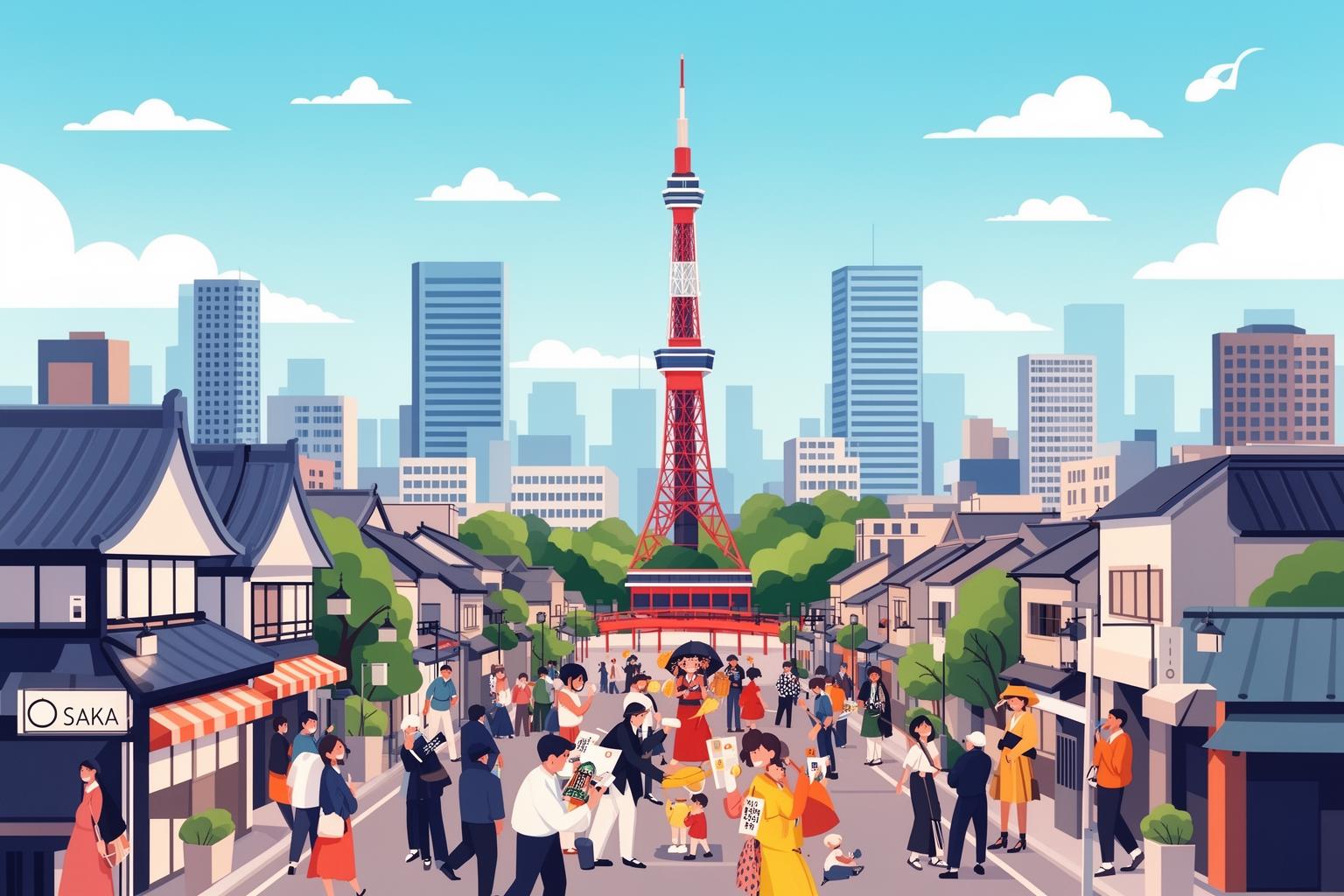
At its essence, a Jichikai is a voluntary group of residents living within a specific, geographically defined area—sometimes just a few blocks, other times a larger sub-district. These are self-governing, self-funded organizations that operate in a gray area between private citizens and official government. While the city handles tasks like paving roads and collecting trash from designated points, the Jichikai takes charge of everything in between. They act as caretakers of communal spaces, organizers of local culture, and guardians of neighborhood harmony. This system of mutual responsibility has deep historical roots in Japan, tracing back to the cooperative village systems of the Edo period.
More Than a Residents’ Committee
If your primary comparison is a Western Homeowners Association (HOA), it’s important to adjust your expectations. An HOA mainly focuses on property values, enforcing aesthetic standards, and managing shared amenities such as pools or clubhouses, with power grounded in legal contracts. In contrast, a Jichikai centers on social cohesion and practical, everyday management. Its influence comes from social pressure and a collective sense of community duty. They won’t fine you for painting your door the wrong color, but they will certainly notice if you repeatedly fail to sort your recycling properly.
Here’s a summary of their key functions:
Cleanliness and Environment: Possibly the most visible role. Jichikai members organize and participate in cleaning local parks, streets, and especially communal garbage collection points. They ensure yellow nets are correctly placed to keep clever crows at bay and maintain the cleaning rota known as the gomi toban, where households take turns washing down the area. Though thankless, this work forms the foundation of Japan’s renowned public cleanliness.
Safety and Crime Prevention: Elderly residents in bright vests patrolling neighborhoods in the evenings or standing at crosswalks to assist children are often Jichikai volunteers, not city employees. They collaborate with local police to share information, report suspicious behavior, and promote a culture of collective vigilance. In emergencies such as earthquakes or typhoons, the Jichikai serves as a vital first-response network, checking on elderly residents and distributing information from ward offices.
Community Building and Festivals: This is the enjoyable aspect. The Jichikai drives most hyper-local events. The summer natsu matsuri with affordable beer and yakisoba, the autumn sports day (undōkai) in the local park, and winter mochi-tsuki (rice-pounding) gatherings are all planned, funded, and staffed by resident volunteers. These events foster neighborly connections, instill a sense of local identity in children, and help combat the isolation common in modern urban life.
Information Distribution: Despite the digital age, the Jichikai frequently relies on a surprisingly analog method: the kairanban. This clipboard carrying neighborhood notices is physically passed from house to house, announcing upcoming construction, pest control reminders, and invitations to community events. Though slow and cumbersome, it ensures everyone—especially elderly residents without internet access—receives essential information. This physical exchange reinforces neighborhood interconnectedness.
To support these activities, members contribute a monthly or annual fee called the jichikai-hi. Usually a modest charge, ranging from a few hundred to a thousand yen per month, it is collected door-to-door by a designated treasurer. These funds cover cleaning supplies for garbage stations, electricity for neighborhood security lights, and prizes for bingo games at summer festivals.
The Osaka Flavor: Pragmatism Laced with Chaos
How does this differ in Osaka? Although Jichikai exist throughout Japan, their operation in Osaka often reflects the city’s distinct personality. Jichikai meetings in Tokyo tend to be quiet, formal affairs characterized by careful consensus-building, where opinions are cautiously expressed and decisions politely deliberated. Osaka’s meetings, in contrast, can resemble lively family arguments.
Imagine a dozen residents gathered in a small community hall. The official agenda is planning the summer festival. Within minutes, the conversation veers off-topic. One man complains that last year’s takoyaki stand was stingy with octopus; a woman loudly claims the ennichi games were rigged; another argues passionately for hiring a professional enka singer instead of the usual karaoke. Voices rise, people speak over each other—it’s direct, a bit chaotic, and might seem unproductive to outsiders.
But this is typical Osaka-style deliberation. It’s a culture that values frankness (honne) over polite pretense (tatemae). People say exactly what they think, often with humor and theatrical flair. The focus is pragmatic, aiming for practical outcomes rather than strict procedural formality. By the meeting’s end, decisions are made: a more generous takoyaki vendor will be hired, the bingo prizes improved, and everyone leaves feeling heard. This preference for effective, if messy, collaboration is emblematic of Osaka’s civic and commercial spirit—and the Jichikai is no exception. It’s less about quiet conformity and more about loud, lively, but ultimately successful teamwork.
This also brings a level of nosiness that can be both beneficial and intrusive. Tokyo neighbors tend to keep a polite but firm distance. In older Osaka neighborhoods, however, your Jichikai representative might know not only your name but also your work schedule, when you last received a package, and that you look tired lately. This isn’t malicious gossip but a byproduct of a community that keeps a close, caring watch on its members. It ensures an elderly woman living alone receives help after a typhoon, though it also means your recycling habits are under constant, silent observation.
The Jichikai in Action: Your Daily Life Under a Microscope
Understanding the Jichikai in theory is one thing; witnessing how its influence seeps into the tiny, seemingly mundane aspects of your daily life is quite another. From the moment you step outside, you’re engaging with the outcomes of the Jichikai’s efforts, whether you notice it or not. The well-kept pavement, the orderly garbage station, the security lights that switch on at dusk—all are tangible expressions of this hyper-local, community-led system.
The Garbage Dilemma: A Jichikai Stronghold
Few things illustrate the Jichikai’s power and purpose better than garbage management. Japan’s waste disposal rules are famously intricate and strict. Burnables, plastics, cans, bottles, oversized items—each requires its own specific day, designated bag, and a set of detailed sorting criteria. While the city handles collection, enforcing these rules at street level is the Jichikai’s responsibility.
Your neighborhood’s garbage station—that particular corner spot often covered by a green or blue net—is sacred territory. It’s the collective duty of the community. The gomi toban (garbage duty) system organizes this responsibility. On a rotating basis, a household takes charge of maintaining the station for one week. This entails unlocking the cage in the morning, making sure nets are secured after collection, sweeping stray litter, and hosing down the concrete pad to prevent odors, especially during Osaka’s hot, humid summers. A rota displayed nearby openly names those responsible at any given time.
For foreign residents, this can feel like a trial by fire. Your first major neighborhood slip-up will almost certainly be related to garbage. Maybe you put plastic bottles out on burnable-waste day. While the city won’t fine you, the Jichikai will apply subtle but firm corrective actions. You could come home to find your improperly sorted trash bag returned to your doorstep, sometimes accompanied by a polite yet pointed note explaining your mistake. Alternatively, a neighbor—usually an older woman—may visit and patiently, but with the firm authority of a drill sergeant, guide you through the correct sorting process. This is not meant to be hostile; it’s community education in action. You have breached a deeply rooted social norm—the idea that personal convenience must not impose burdens on others. Your wrongly sorted bag isn’t only your problem; it’s a burden on whoever is on toban duty, and by extension, the entire neighborhood. In Osaka, known for directness, this correction might come less sugar-coated than in other regions of Japan. You’ll be clearly told what went wrong, with the expectation that it won’t happen again.
Festivals and Drills: The Community’s Pulse
While garbage duty highlights the Jichikai’s role as rule enforcer, local festivals reveal its role as cultural creator. Not the large city-wide events like Tenjin Matsuri, which attract hundreds of thousands of visitors, but the small, intimate festivals held at local Shinto shrines or neighborhood parks. These gatherings are the community’s lifeblood and are almost entirely coordinated by the Jichikai.
Months ahead, committees form. Budgets drawn from Jichikai fees are hashed out. Volunteers take on roles. Retired carpenters come together to build the wooden yagura stage for Bon Odori dances. Women organize food stalls, spending days preparing yakisoba, karaage, and shaved ice. Younger parents are enlisted to run children’s games like goldfish scooping (kingyo-sukui), ring toss, and lucky dips. It’s a massive, collaborative effort.
The festival itself beautifully expresses neighborhood identity. Invisible social bonds become visible. You see the usually reserved salaryman laughing as he flips noodles on the grill. Children who normally interact only at school run around together in summer yukata. Elderly residents, who might otherwise be isolated, sit on benches, fan themselves to the music, and are served tea by younger neighbors. This is the reward for all the dull meetings and the less appealing task of garbage duty. It’s when the neighborhood stops feeling like a random cluster of houses and truly becomes a community.
Equally vital, though less celebrated, is the Jichikai’s role in disaster preparedness. Japan’s long experience with natural disasters is deeply embedded in everyday civic life. Each year, the Jichikai organizes a disaster drill (bōsai kunren). They practice using fire extinguishers, set up a mock evacuation center in the local school gym, and review emergency contact lists. They manage the neighborhood’s emergency supplies—hardtack biscuits, bottled water, portable toilets, blankets. When a real earthquake strikes, it won’t be the fire department that checks on you first; it will be your Jichikai block leader, clipboard in hand, going door-to-door to ensure everyone is safe. This system powerfully reminds residents that in a crisis, their most immediate and vital support comes from their neighbors.
To Join or Not to Join? The Foreigner’s Dilemma
For a Japanese person moving into a house or a family-oriented apartment building, joining the Jichikai is almost automatic. It is considered a natural part of being a responsible community member. However, for a foreign resident, the decision can be filled with uncertainty. Is it mandatory? What benefits does it offer? What are the expectations? The answers are rarely simple and can differ greatly from one neighborhood to another.
The Pressure Cooker: Why ‘Voluntary’ Isn’t Always a Choice
Technically, membership in a Jichikai is voluntary in nearly all cases. There is no legal obligation to join or pay fees. However, the social reality is much more complicated. The pressure to join can be significant and comes from various sources.
When signing a lease, your real estate agent or landlord may present the Jichikai application form as if it were just another standard utility to subscribe to. They treat it as a routine part of living in the building. Declining can feel confrontational right from the start of your tenancy.
Then there are the neighbors. They will be aware if you join or not. Choosing not to join essentially marks you as an outsider. It signals that you plan to use shared resources—the clean garbage area, safe streets, the ambient lighting from security lamps—without contributing to their maintenance. While nobody is likely to confront you aggressively, you may experience a certain social distance. You’ll receive polite but reserved nods instead of warm hellos. You’ll miss out on the informal information exchange among neighbors and might feel invisible.
This often causes confusion for people from more individualistic cultures. The mindset of “I’m paying taxes, so the city should handle this” does not apply here. The Jichikai functions on a more detailed social contract. Refusing to join isn’t viewed as a personal choice about how you spend time or money; it’s seen as rejecting the community itself. In older, close-knit Osaka neighborhoods, the pressure can be so strong that non-participation feels virtually impossible. The unspoken message is clear: to live here, you have to belong here.
The Upside: Unlocking the Secrets of Local Life
Although the pressure can feel overwhelming, seeing the Jichikai only as a burden is a mistake. Joining can be the most effective way to truly integrate into your local community. It’s a backstage pass to the real Osaka, beyond tourist spots and expat circles.
Joining immediately connects you to a network. You’ll learn the names and faces of your neighbors. When you have practical questions—“Where is the best local clinic?” or “Do you know a reliable plumber?”—you have people to turn to. This is invaluable. Taking part in a neighborhood clean-up for just an hour often leads to more friendly exchanges than a year of simply living next door. Helping at a festival, even by selling drinks for a couple of hours, transforms you from a faceless foreigner into “Alex-san from the second floor who helped with the refreshments.”
This change can be profound. Suddenly, the elderly woman who seemed stern might give you tomatoes from her garden. The man running the local rice shop greets you warmly each time you pass. You begin to catch local gossip—the small stories that make a place feel like home. For families with children, membership is even more important. The association is closely linked to the local elementary school, organizing safety patrols and community events. Being outside the Jichikai can mean your child—and by extension, you—are left out of important information.
Joining the Jichikai is essentially a trade: a small investment of your time and money for a large gain in social capital. You’re investing in your sense of belonging. It’s the difference between merely residing in a place and truly living in a community.
Navigating the Jichikai as a Non-Japanese Resident
If you’ve decided to join, how do you navigate this complex social structure as an outsider? First, be proactive. Ask your landlord or a neighbor how to get involved. The process is usually straightforward, involving filling out a form and paying a fee. Your initiative will be noticed and appreciated.
Language can be a barrier. Most Jichikai communications and meetings are conducted entirely in Japanese. Don’t let this discourage you. Attend neighborhood clean-up days—you don’t need fluent Japanese to handle a broom. Your presence and effort will speak louder than words. Use translation apps to understand the kairanban (community bulletin). Volunteer for a simple task during festivals. People are generally patient, kind, and happy to see a foreign resident making an effort.
Expectations are usually modest. Nobody expects you to take on leadership roles (though if you stay long-term, you might be asked!). Primarily, they want you to do your small part: pay the fee, follow garbage rules, fulfill your toban (neighborhood duty), and occasionally offer a hand. It’s about showing a cooperative spirit. By participating, you aren’t just conforming—you’re actively earning your place in the rich, living fabric of your Osaka neighborhood.
The Future of the Jichikai: An Osaka Institution in Flux
Despite its deep-rooted significance, the Jichikai system is confronting an existential crisis throughout Japan, and Osaka is no exception. The social and demographic changes of the 21st century are placing tremendous pressure on this model of community governance, forcing it to evolve or risk becoming obsolete. The very foundations on which the Jichikai was established—a stable, homogeneous population with strong local ties and available time for volunteer work—are gradually eroding.
The most pressing challenge is Japan’s aging population. In many older neighborhoods, the Jichikai is managed almost entirely by retirees. These dedicated and hardworking individuals represent a shrinking segment of the population. The responsibilities of organizing events, handling finances, and conducting patrols are falling on fewer shoulders each year. There is a palpable concern that when this generation can no longer lead, no one will step up to replace them.
Younger generations, especially those living in city centers, relate differently to their neighborhoods. In an era of dual-income households, long working hours, and gig economy jobs, people simply have less time and energy for community duties. Many who reside in large, modern apartment buildings feel disconnected from the street-level community. These buildings often have their own management teams handling cleaning and security, making the Jichikai seem unnecessary. For a young person living alone, attending meetings or participating in a cleaning rota can feel like an outdated burden. Consequently, membership rates are plummeting in many urban areas.
Here, the unique character of Osaka may offer a glimpse of a potential path forward. Osaka has always been a city of merchants and artisans, defined by its adaptability and pragmatic, can-do spirit. It is less tied to tradition for tradition’s sake than other regions. Some Osaka Jichikai are experimenting with ways to modernize and maintain relevance.
Instead of traditional kairanban circulars, some are using group chats on the LINE messaging app to share information quickly and efficiently. Rather than lengthy, formal meetings, they are opting for more casual gatherings. They are focusing on the most popular activities, like the summer festival, while scaling back less-engaging tasks. Some are seeking to professionalize by hiring outside help for accounting or event management, funded by membership fees. Others are reaching out specifically to residents of new high-rise buildings, trying to create a new form of “vertical Jichikai” tailored to the lifestyles of modern apartment dwellers.
This pragmatic openness to change and innovation might be the key to survival. The future Jichikai in Osaka may look very different. Participation might shift from obligation to optional, event-based involvement. It may become more digitally connected. But the core mission—to foster a sense of safety, cleanliness, and neighborly connection—will remain. The decline of the Jichikai is not merely an administrative matter; it raises profound questions about the future of Japanese society. What becomes of a community when its connective tissue dissolves? Who will check on the elderly during a heatwave? Who will keep the park clean? Who will organize the festival that gives a neighborhood its unique spirit? The current struggle of the Jichikai reflects the broader struggle for the future of community itself in a rapidly changing world.
Ultimately, the Jichikai is a perfect microcosm of life in Osaka. It can be noisy, demanding, and sometimes intrusive. It operates through a complex web of unwritten rules and personal relationships. It values practical contribution over polite appearances. At its core, it is driven by a fierce, if sometimes hidden, sense of local pride and collective responsibility. When you first arrive, the monthly Jichikai fee on your rental contract might seem just another tax—an annoying and inexplicable expense. But as you live here, watching your neighbors sweep the streets and hang festival lanterns, you begin to understand. You are not merely paying for a service. You are investing in a community. You are paying for the right to call this small corner of a vast, sprawling city your home.