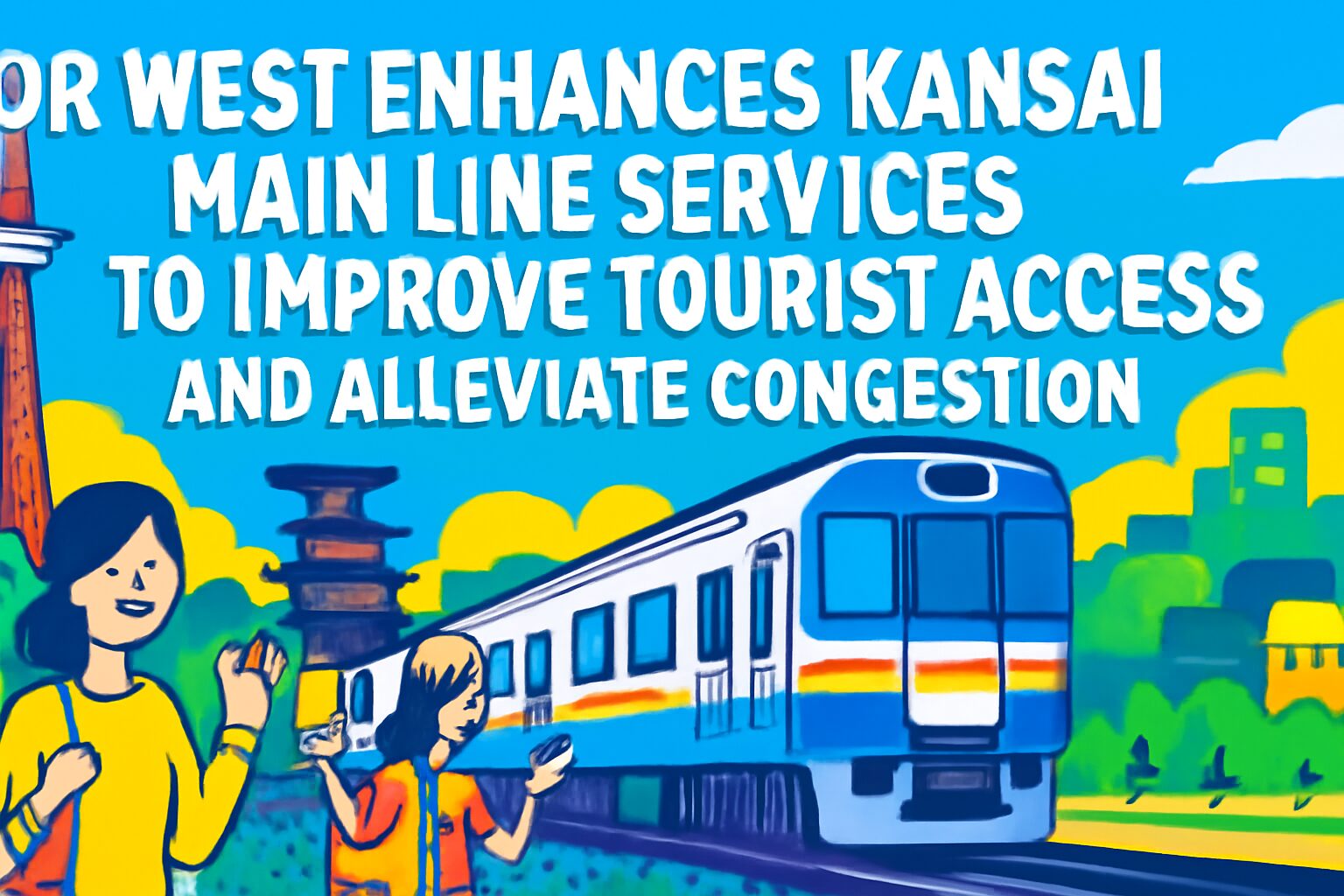
The tourism landscape in the Kansai region is experiencing unprecedented dynamism this year, prompting key infrastructure upgrades to accommodate the influx of visitors. In a significant move to improve the travel experience, JR West implemented a revised timetable for the Kansai Main Line, effective August 1, 2026. This strategic enhancement is designed to improve access for tourists traveling between the region’s most popular destinations while simultaneously addressing the growing issue of train and platform congestion.
Responding to the Kansai Tourism Boom
The necessity for this timetable revision stems from the staggering growth in inbound tourism throughout 2026. Data from the first quarter of this year reveals that spending by international visitors in the Osaka-Kansai region soared to a record-breaking 580 billion yen. This massive influx of travelers, fueled by a favorable exchange rate and Kansai’s elevated global profile following last year’s Expo 2025, has placed immense pressure on the local transit network.
As more international and domestic tourists flock to the golden triangle of Osaka, Kyoto, and Nara, the Kansai Main Line has seen a continuous spike in ridership. During peak hours and weekends, platforms have frequently reached maximum capacity, leading to longer wait times and a less comfortable journey for both visitors and local commuters. JR West recognized that to sustain this economic boom without compromising the quality of life for residents, immediate improvements to railway capacity were essential.
Key Upgrades in the New Timetable
The revised schedule, which officially began yesterday, brings a much-needed increase in the frequency of rapid services. By concentrating these additional train runs during peak tourist hours and heavily traveled weekends, JR West aims to distribute the passenger load more evenly.
Travelers navigating the busy corridors connecting Osaka, Nara, and Kyoto will directly benefit from shortened wait times. The increased number of rapid trains ensures that large groups of tourists can move seamlessly between historical landmarks in Nara, cultural sites in Kyoto, and the bustling urban centers of Osaka. Furthermore, the higher train frequency allows for faster crowd dispersal at major stations, effectively reducing the severe platform congestion that has been a frequent pain point during the busy travel seasons.
Future Outlook: Paving the Way for Sustainable Tourism
Transport authorities emphasize that this proactive measure by JR West is a crucial step toward sustainable tourism growth in the region. By improving transit efficiency, the Kansai area can continue to welcome high volumes of international visitors without straining public resources or disrupting the daily routines of local residents.
Looking ahead, these infrastructure improvements will have a profound ripple effect on the regional economy. Smoother and faster transportation encourages tourists to explore a wider geographic area, distributing tourism revenue beyond the most famous hotspots. Furthermore, as Kansai prepares for future mega-projects, including the highly anticipated Integrated Resort opening in Osaka by 2030, a robust and adaptable public transportation network will be the backbone of the region’s success. The latest enhancements to the Kansai Main Line prove that the region is not just reacting to the current travel boom, but actively shaping a welcoming and sustainable environment for the travelers of tomorrow.