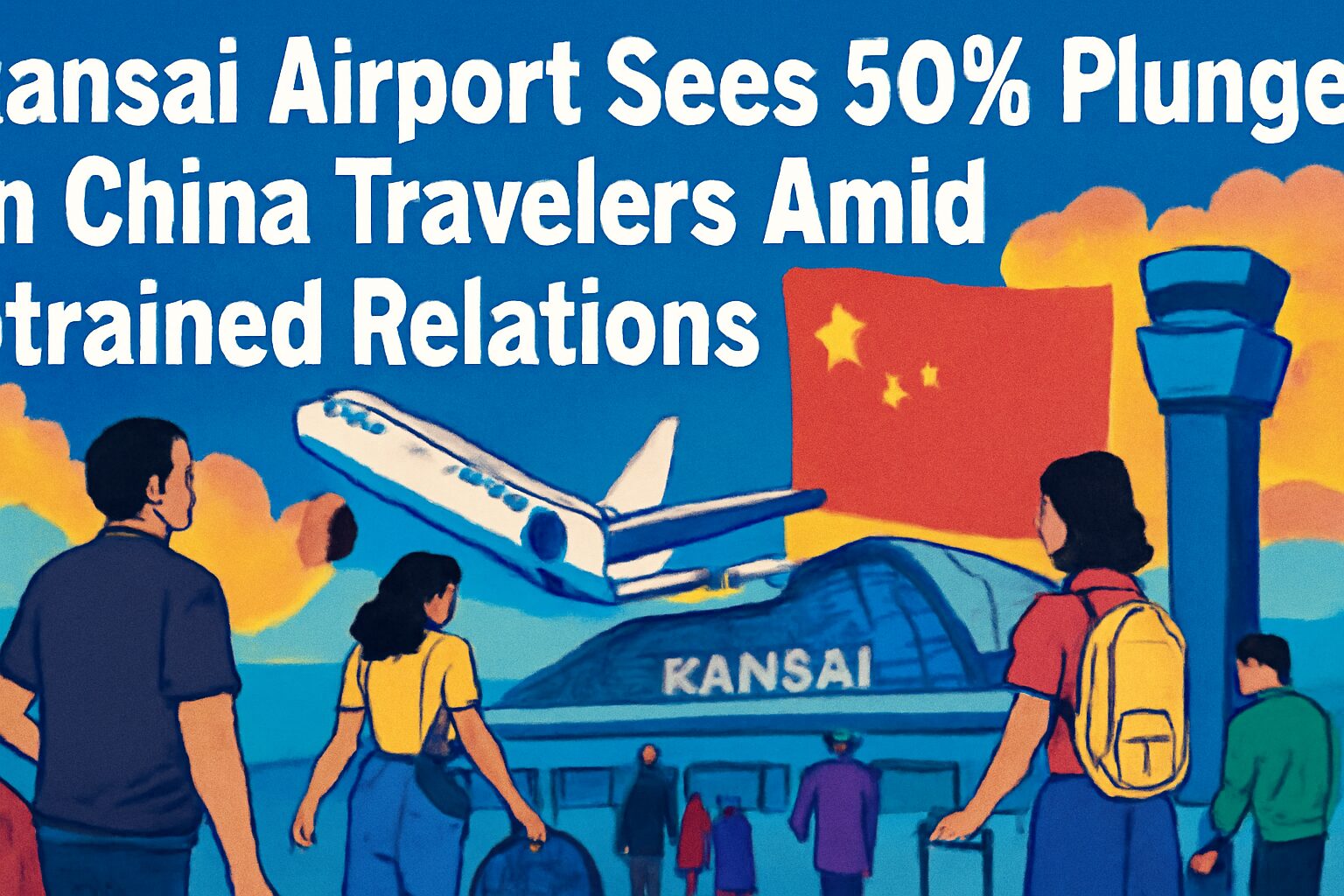
A significant chill in diplomatic relations between Japan and China has cast a long shadow over travel, with Osaka’s Kansai International Airport (KIX) experiencing a dramatic drop in passengers heading to China during the recent New Year holiday season.
The Numbers Tell the Story: A Sharp Decline
According to official immigration data, the number of travelers departing from KIX for China between December 26 and January 4 fell to just 55,170. This figure represents a staggering plunge of nearly 50% compared to the same period in the previous year, highlighting a sudden and severe shift in travel patterns.
Behind the Drop: The Chill in Diplomatic Relations
This sharp decline is not an isolated event but is widely seen as a direct consequence of escalating diplomatic friction between the two nations. The situation was exacerbated after the government in Beijing issued guidance advising its citizens to exercise caution and avoid non-essential travel to Japan. This advisory has had a clear impact on travel sentiment, discouraging not only Chinese tourists from visiting Japan but also affecting travel from Japan to China. The uncertain political climate appears to be making travelers hesitant to book flights and holidays.
Ripple Effects: Airlines and Kansai Airport Adjust
The precipitous fall in demand has forced airlines and airport authorities to make significant adjustments. Kansai Airports, the operator of KIX, reported a direct impact on flight operations. In December, the number of scheduled flights between Kansai and various Chinese cities was reduced to approximately 60% of the level seen just one year prior.
This reduction in services has a ripple effect on the entire travel ecosystem. Airlines are facing reduced revenue and are forced to reallocate aircraft to other routes, while travelers are left with fewer flight options and less flexible schedules.
Looking Ahead: The Future of Travel Between Kansai and China
The future of travel between the Kansai region and China remains uncertain and will likely depend heavily on the evolution of diplomatic talks. For now, the tourism and aviation industries in Osaka are bracing for a period of reduced traffic on what has traditionally been a very busy and profitable corridor.
For travelers planning a trip to or from China via Kansai Airport, the current situation calls for vigilance. It is highly recommended to:
- Check flight schedules frequently, as cancellations and changes can occur with little notice.
- Stay informed about the latest travel advisories from both Japanese and Chinese authorities.
- Consider the potential for further disruptions as the diplomatic situation unfolds.
The travel landscape is in flux, and while the allure of Osaka and the wider Kansai region remains strong, the vital connection to China is facing one of its most significant challenges in recent years.