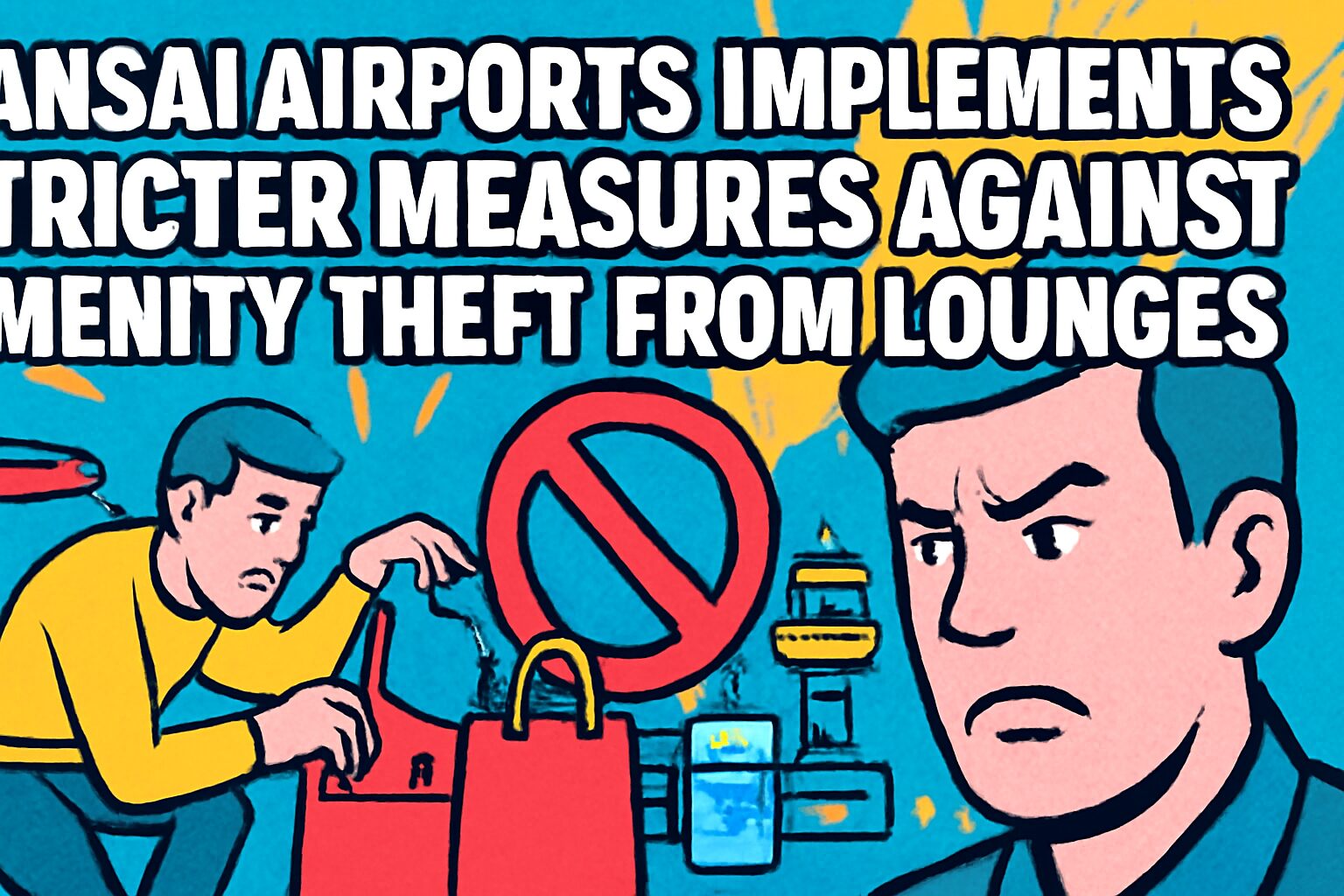
Kansai Airports, the operator managing major aviation hubs including Kansai International Airport (KIX) and Osaka Itami Airport, has officially rolled out stricter measures to combat a growing trend of amenity theft within its airport lounges. Citing hygiene concerns, facility preservation, and the strict legal definition of theft, the operator now explicitly forbids travelers from removing any food, beverages, or complimentary items from the lounge premises. Travelers passing through these international gateways will begin to notice enhanced monitoring and updated service delivery methods designed to ensure the availability of premium amenities for all guests.
Rising Frugality and the Background of Amenity Theft
The phenomenon of passengers taking complimentary items from hospitality venues has seen a noticeable increase recently. Industry experts suggest that global inflation and the rising cost of living have heightened frugality among travelers, leading some to mistakenly treat lounge amenities as free takeaways.
However, Japanese law remains highly strict regarding such behavior. Taking items without explicit permission, regardless of their perceived value, is legally classified as theft. The severity of this issue is underscored by recent domestic cases where individuals were arrested in Japan for taking hotel amenities and tableware valued at merely 1,200 JPY. Against this backdrop, Kansai Airports updated its official guidelines earlier this year to leave no room for ambiguity, explicitly stating that removing any food, drinks, or equipment is strictly prohibited.
Operational Burdens and Hygiene Concerns at Kansai Gateways
For a major operator like Kansai Airports, which manages facilities welcoming tens of millions of passengers annually, minor individual infractions quickly scale into significant operational and financial burdens. The unauthorized removal of exclusive mugs, stainless steel cutlery, and grooming products forces the operator to constantly replenish inventory, driving up maintenance costs and reducing the quality of service for subsequent guests.
Beyond financial losses, hygiene management is a primary driver for the new restrictions. Food items removed from temperature-controlled lounge environments pose serious food safety and sanitation risks. By strictly enforcing these rules, Kansai Airports aims to mitigate health liabilities and maintain a safe environment.
Future Implications for the Passenger Experience
This strict crackdown points to a potentially permanent shift in the lounge experience across the Kansai region. As operators enforce these rules more rigorously, travelers can expect noticeable changes in how lounges operate moving forward.
One immediate impact is enhanced surveillance. Guests will observe more visible staff patrols and an increased presence of security cameras within the lounge areas. Furthermore, the availability of portable or packaged goods will drastically decrease. Lounges are expected to replace individually wrapped snacks and bottled beverages entirely with bulk dispensers to physically prevent removal. While these measures may slightly alter the traditional feel of airport lounges, they are a necessary evolution to protect the long-term sustainability and quality of the passenger experience at Kansai Airports.