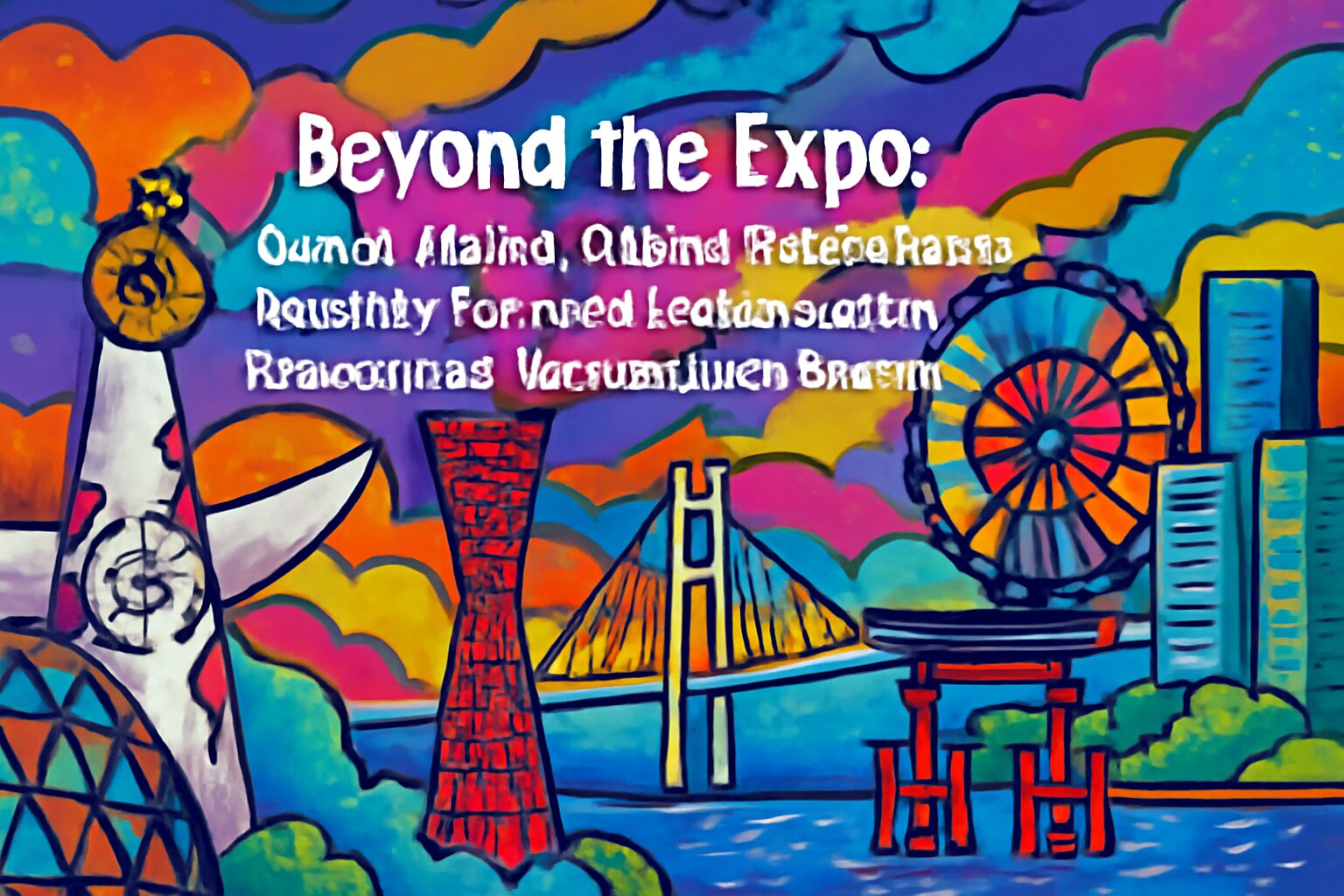
With the eyes of the world turning towards Kansai for the 2025 World Expo, regional leaders are already looking far beyond the six-month event. A recent symposium hosted by the Osaka Bankers Association revealed a clear and ambitious strategy to ensure the region’s economic momentum continues, transforming Kansai into a premier global destination for decades to come. The plan hinges on three core pillars: a landmark Integrated Resort (IR), enhanced international tourism infrastructure, and long-term urban redevelopment.
A Vision for Sustainable Growth Post-Expo
The 2025 Expo is projected to be a massive catalyst for the Kansai economy, but the consensus among economists and business leaders is that its legacy must be sustained through strategic, long-term investments. The focus is on creating permanent attractions and infrastructure that will continue to draw visitors and investment long after the Expo pavilions have closed. This forward-thinking approach aims to leverage the global attention of the Expo to launch Kansai into a new era of growth and international prominence.
The Osaka IR: A New Entertainment and Business Hub on Yumeshima
At the heart of this strategy is the development of Japan’s first Integrated Resort, slated to open on Yumeshima Island—the very site of the 2025 Expo—in the autumn of 2030. This is not just a casino; it’s a colossal project set to redefine entertainment and business tourism in the region.
The project, a joint venture between MGM Resorts International and ORIX, represents a massive investment of approximately 1.27 trillion JPY (around 8.1 billion USD). The facility will feature three luxury hotels, a world-class MICE (Meetings, Incentives, Conferences, and Exhibitions) facility capable of hosting over 6,000 people, a 3,500-seat theater, and a wide array of dining and retail options, in addition to the gaming floor.
Projections estimate the IR will attract around 20 million visitors annually—14 million domestic and 6 million international—generating an economic impact of approximately 1.14 trillion JPY per year for the Kansai region. It is also expected to create around 93,000 jobs, providing a significant and lasting boost to the local economy.
Expanding Gateways: Upgrading Kansai’s Airports
To accommodate the expected surge in international visitors, significant upgrades to the region’s transportation infrastructure are already underway. The goal is to create a seamless and efficient travel experience for visitors from the moment they arrive.
Kansai International Airport (KIX)
Kansai’s primary international gateway, KIX, is in the midst of a large-scale renovation of its Terminal 1. The grand opening of the new international departure area is scheduled for spring 2025, just in time for the Expo. With all renovations slated for completion by autumn 2026, the airport’s capacity for international passengers will be increased to handle 40 million passengers per year.
Kobe Airport
Enhancing regional connectivity, Kobe Airport is also set to expand its role. It will begin accommodating regular international charter flights in 2025, with plans to launch scheduled international routes around 2030. This development will provide another vital entry point for tourists, distributing traffic and improving access to other parts of the Kansai region, including Kobe and Himeji.
The Future Urban Landscape of Kansai
Beyond the headline projects, a wave of urban redevelopment is reshaping Kansai’s cities. In Osaka, the “Umekita 2nd Project” (Grand Green Osaka) is transforming the area north of Osaka Station into a massive urban park and innovation hub, with a partial opening in September 2024. These long-term projects are designed to enhance the quality of life for residents and create a more attractive, vibrant environment for visitors, solidifying Kansai’s reputation as a dynamic center for culture, business, and lifestyle.
What This Means for Travelers
For future travelers to Kansai, this comprehensive strategy promises a richer, more diverse, and more convenient experience. The new Integrated Resort will offer an unparalleled entertainment destination, while improved airport infrastructure will make getting to and around the region easier than ever. The ongoing urban developments will unveil new attractions, green spaces, and cultural facilities. The post-Expo era in Kansai is not just about sustaining growth; it’s about building a more exciting and welcoming destination for the world to discover. The journey is just beginning.