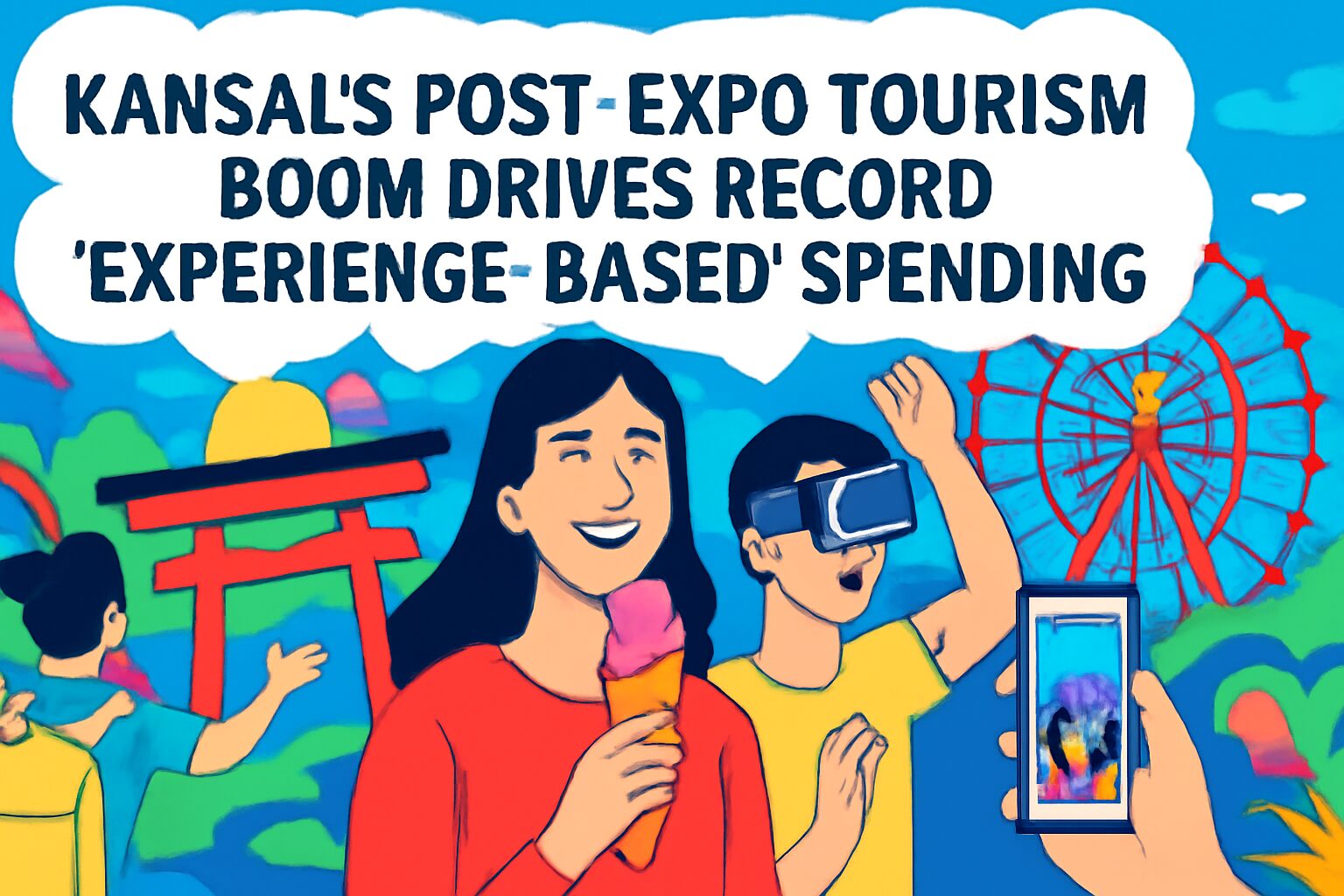
A Transformative Summer for Kansai Tourism
In the wake of the highly successful 2025 World Expo, the Kansai region is witnessing a defining moment in its tourism sector. As of summer 2026, inbound tourist spending has surged by a remarkable 14.6% year-over-year. Yet, the most significant takeaway from this economic uplift is not merely the volume of capital entering Osaka and its neighboring prefectures, but rather the fundamental shift in how international visitors are choosing to spend their money.
The Shift from Retail to Real Experiences
For years, inbound tourism in Japan was heavily characterized by massive retail spending and high-volume shopping. Today, the post-Expo momentum has accelerated a decisive pivot toward intangible cultural value, often referred to as “experience-based” consumption.
Data from the current 2026 summer season reveals that visitors are increasingly prioritizing memorable, immersive engagements over material goods. International travelers are directing their travel budgets toward high-end investments in luxury dining that showcases regional gastronomy, hands-on cultural activities, and highly curated local tours that venture well off the beaten path. Instead of crowded department stores, tourists are seeking out intimate artisan workshops, historic neighborhood walking tours, and authentic culinary experiences unique to the Kansai region.
Direct Economic Injection into Local Communities
This evolution in consumer behavior is proving to be a massive advantage for small businesses and regional communities. When tourists shift their financial focus from large retail conglomerates to independent guides, local craftspeople, and neighborhood restaurants, the capital is injected directly into the grassroots economy.
The 14.6% increase in inbound spending recorded this summer highlights the profitability of this model. It demonstrates that maximizing tourist revenue does not require funneling masses of visitors into centralized shopping hubs. Instead, wealth is distributed far more evenly across the Kansai region. This financial distribution empowers local entrepreneurs, supports family-owned establishments, and provides the necessary funding to sustain and protect regional heritage.
A Sustainable Solution to Overtourism
Looking toward the future, this rising preference for experience-based tourism offers a highly effective strategy for mitigating overtourism, a challenge that has historically strained popular Japanese destinations. By focusing on high-value, quality-driven experiences rather than sheer visitor volume, the Kansai region is successfully modeling a sustainable approach to tourism growth.
As we progress through 2026 and look toward the coming decade, local governments, tourism boards, and the private sector in Osaka are expected to heavily invest in this trend. Future infrastructure and destination marketing campaigns will likely pivot to develop even more niche, premium experiential offerings. This forward-thinking approach ensures continued economic vitality while preserving the cultural integrity, charm, and everyday livability of the Kansai region for both residents and future travelers alike.