
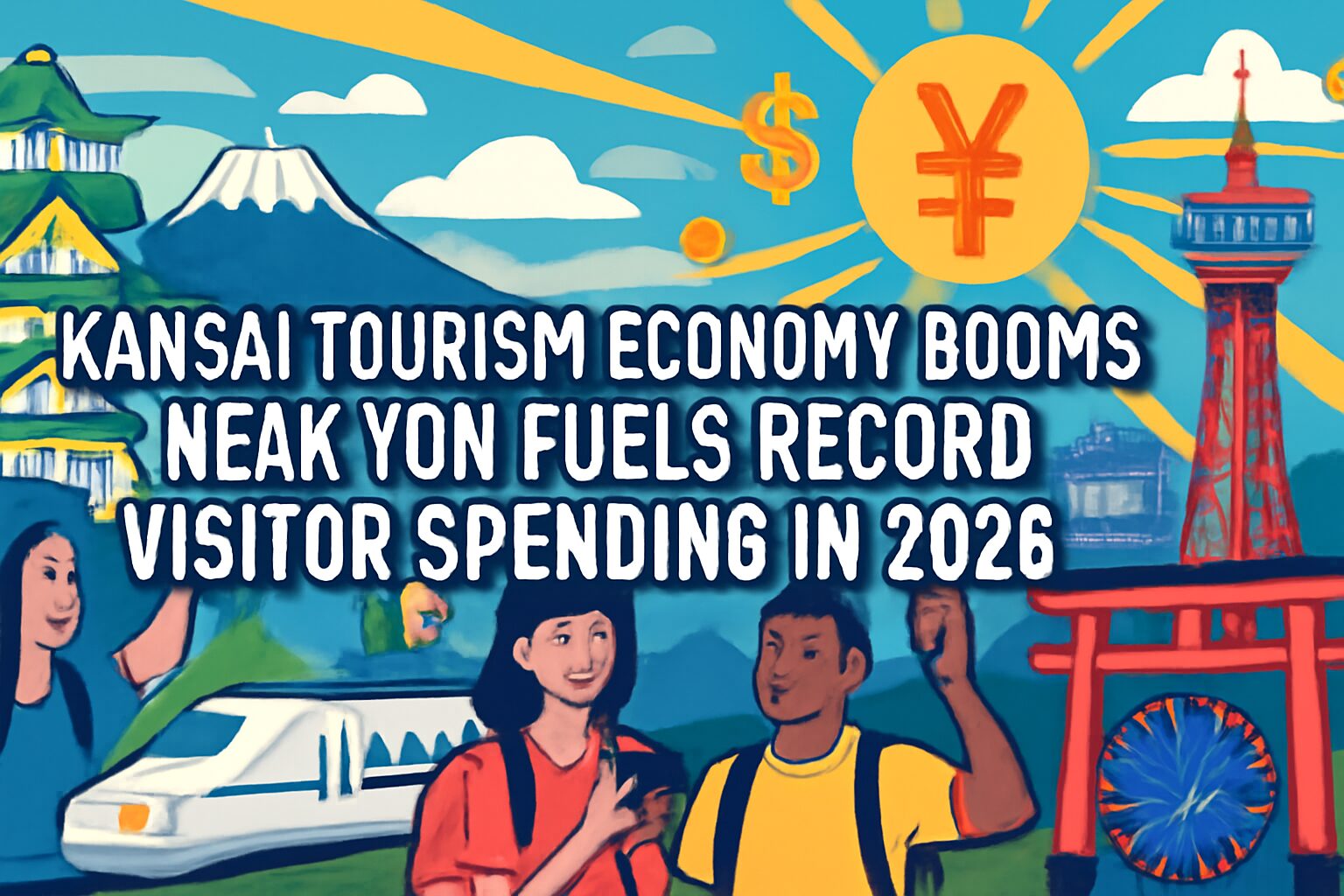
The Kansai region is currently experiencing an unprecedented economic renaissance, driven by a massive influx of international tourists. As we move into the second half of 2026, the local tourism sector is not just recovering; it is completely redefining its historical benchmarks. Fueled by a persistently weak yen and the lasting global spotlight from the 2025 Osaka-Kansai Expo, spending by overseas visitors has shattered pre-pandemic records, injecting vital capital into local businesses across Osaka, Kyoto, and Kobe.
Shattering Pre-Pandemic Records
Preliminary economic data for the first quarter of 2026 reveals a staggering surge in inbound consumption. Total spending by foreign tourists in the Kansai region alone reached approximately 580 billion yen during this three-month period. This figure represents a monumental 30 percent increase compared to the 450 billion yen recorded during the same period in 2019, which had long been considered the absolute peak for the region’s inbound tourism.
This regional boom builds upon the massive momentum generated last year. In 2025, Japan welcomed an all-time high of 42.7 million international visitors nationwide, who collectively spent a record-breaking 9.5 trillion yen. The Kansai region captured a highly disproportionate share of this wealth, establishing a robust baseline for the current year.
The Perfect Storm: Expo Legacy and Currency Advantages
Two primary catalysts are driving this phenomenal growth in 2026. The most immediate factor is the extraordinarily favorable exchange rate. With the Japanese yen continuing to hover around 150 to 155 to the US dollar, international travelers are finding their purchasing power vastly multiplied.
This financial advantage has fundamentally altered consumer behavior. While traditional retail shopping remains popular, today’s visitors are increasingly allocating their expanded budgets toward premium, experience-based activities, a trend known locally as “koto-shohi”. International guests are readily investing in high-end traditional craft workshops, exclusive dining at Michelin-starred restaurants, and extended stays at luxury ryokans.
The second major catalyst is the enduring legacy of last year’s mega-event. The 2025 Osaka-Kansai Expo served as an unparalleled global advertisement for the region. While the Expo brought millions to the artificial island of Yumeshima, it successfully converted one-time event attendees into repeat visitors. Many who came for the World Expo in 2025 have returned in 2026 to explore the broader Kansai area at a much more leisurely pace, eager to dive deeper into the local culture.
Revitalizing the Local Economy
The economic ripple effects of this spending surge are highly visible across major urban centers. Prime commercial districts in Osaka, such as Umeda and Namba, are seeing massive benefits. Regional department store sales in these areas have recently crossed the historic milestone of 1 trillion yen, buoyed significantly by tax-free purchases from overseas visitors.
The hospitality and food service sectors are also reaping extraordinary rewards. Restaurants in Kobe are reporting record reservations from international epicureans seeking authentic Wagyu beef, while heritage sites in Kyoto are seeing sustained demand for premium guided tours and cultural immersion programs.
Future Predictions and Sustainable Impacts
Looking ahead through the remainder of 2026, projections for the summer and autumn travel seasons indicate that advance bookings and visitor numbers will continue to decisively surpass historical benchmarks. The challenge for the Kansai region is no longer about attracting tourists, but rather managing this success sustainably.
As the tourism economy booms, local governments and destination management organizations are prioritizing high-value tourism over sheer volume. Investments are heavily focused on dispersing tourists away from overcrowded hotspots and encouraging exploration of lesser-known prefectures within the Kansai region, such as Wakayama and Shiga.
Furthermore, the surge in revenue is enabling local businesses to upgrade their technological infrastructure and implement smart crowd-management systems. If the region can successfully balance this massive economic windfall with community well-being and infrastructure management, the Kansai area is well-positioned to maintain its status as Asia’s premier travel destination for years to come.








