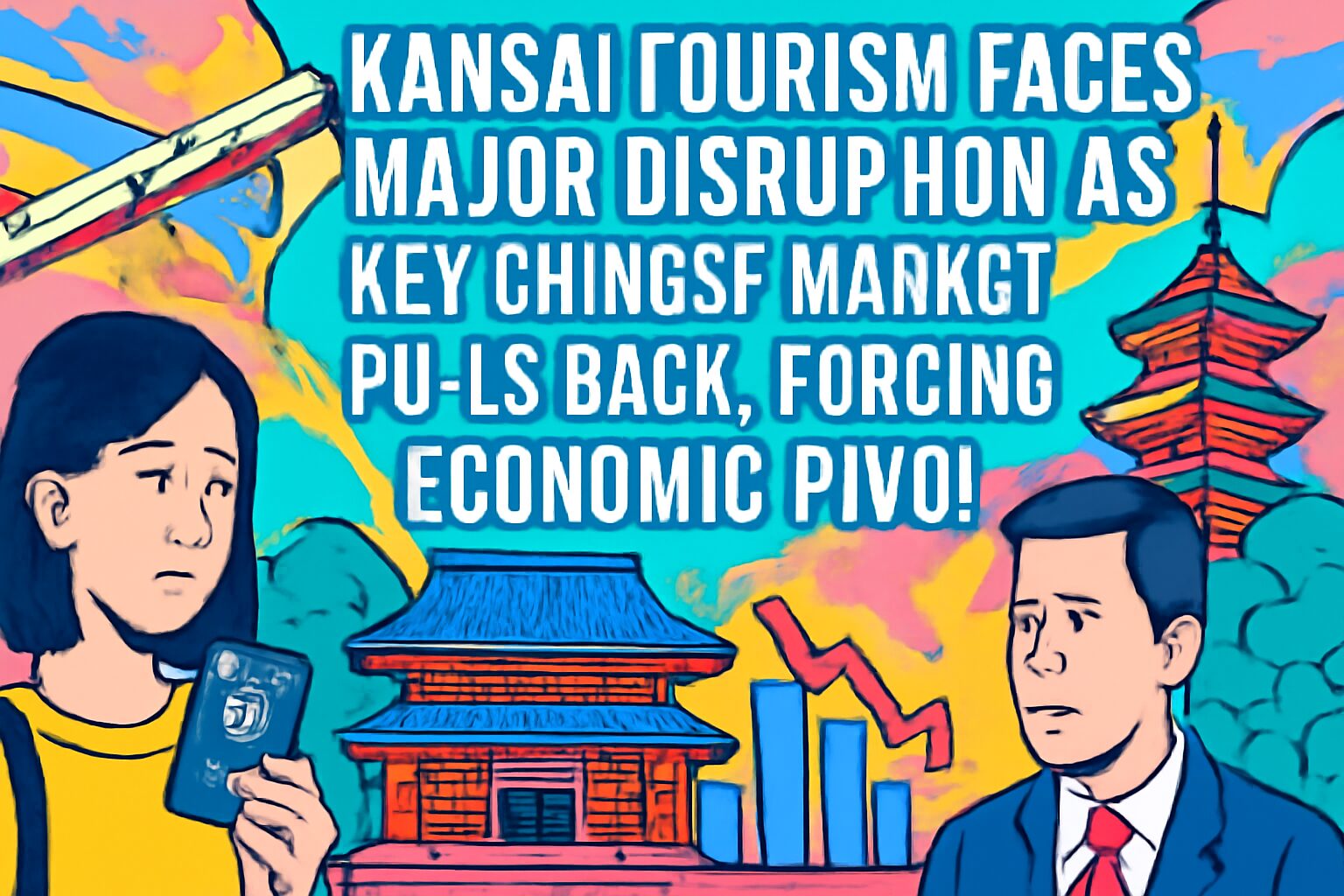
The tourism landscape in Japan’s Kansai region is undergoing a sudden and dramatic transformation. A politically-driven pullback from the Chinese market, historically the region’s largest and highest-spending source of visitors, is sending shockwaves through the local economy, forcing a rapid and critical rethink of its inbound tourism strategy.
The Epicenter of the Impact: Flights and Bookings Plummet
Nowhere is the impact more visible than at Kansai International Airport (KIX), the primary gateway to Osaka, Kyoto, and the wider region. The airport has experienced the most severe cuts to China-bound flights in all of Japan. This sharp reduction in air traffic has been compounded by cruise lines canceling scheduled stops in Osaka and Kobe, effectively erasing a significant channel of visitor arrivals overnight.
The ripple effect has been immediate and widespread. Hotels, tour operators, and restaurants across Osaka and Kyoto are reporting a surge in cancellations. Businesses that had tailored their services specifically for Chinese tourists—from Mandarin-speaking staff to specific payment options—are now facing an abrupt loss of their primary customer base. This sudden void presents a formidable economic challenge for a region that had become heavily reliant on the steady flow of Chinese visitors.
Background: The Power of the Chinese Tourist Dollar
To understand the severity of this situation, it’s crucial to recognize the immense role the Chinese market played in Kansai’s pre-pandemic tourism boom.
In 2019, visitors from mainland China accounted for approximately 9.59 million arrivals in Japan, representing over 30% of all international tourists. Their economic contribution was even more significant. The average Chinese tourist spent over ¥210,000 (approx. $1,400 USD) per trip, far surpassing visitors from other nations. This spending power fueled the growth of duty-free shops, department stores in Shinsaibashi and Umeda, and a vast ecosystem of hospitality services. For years, Kansai’s tourism model was built around catering to this high-volume, high-spending demographic.
The current downturn is largely attributed to political tensions following the release of treated water from the Fukushima Daiichi nuclear power plant, which has led to a cooling of travel sentiment from China towards Japan.
A Forced Pivot: Seeking New Markets
In response to this crisis, the Kansai tourism industry is being forced to accelerate a strategic pivot that was already underway but has now become a matter of survival. The region can no longer depend on a single market for its prosperity.
Local tourism boards and private businesses are rapidly shifting their focus and marketing budgets towards attracting a more diverse range of international visitors. Key target markets now include:
- Southeast Asia: Countries like Thailand, Singapore, Vietnam, and Malaysia are being heavily courted, with promotions focusing on Kansai’s culinary scene, shopping, and unique cultural attractions.
- North America and Europe: Efforts are being intensified to appeal to long-haul travelers from the United States, Canada, and key European nations. This involves highlighting experience-based tourism, such as traditional crafts in Kyoto, nature treks in Wakayama, and deep cultural dives that appeal to Western travel preferences.
- The Middle East: A growing, high-value market is also being targeted, with a focus on luxury accommodation, private tours, and halal-friendly services.
What This Means for Future Travelers to Kansai
This seismic shift will undoubtedly reshape the travel experience in Osaka and the surrounding areas for the foreseeable future.
For travelers from other parts of the world, this period of transition may present a unique opportunity. Popular attractions in Kyoto and Osaka might be less crowded than they have been in years, potentially leading to a more relaxed and enjoyable visit.
However, the industry’s adaptation will take time. The challenge lies in replacing not just the number of visitors, but their massive spending power. While diversifying the market will build a more resilient and sustainable tourism model for Kansai in the long run, the short-term economic pain is real. The coming months will be a critical test of the region’s ability to adapt, innovate, and redefine its appeal to a new global audience.