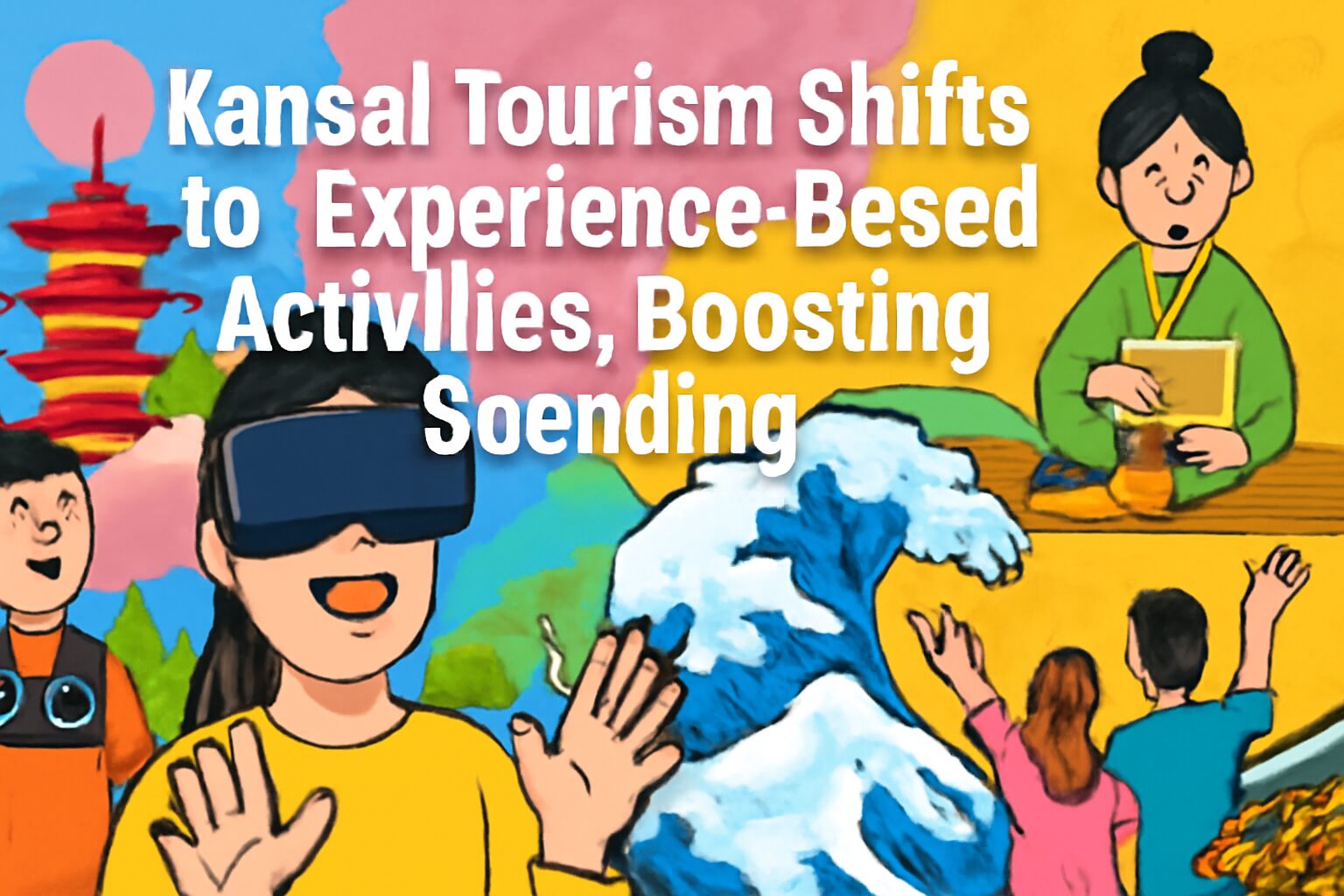
Recent travel patterns in Japan’s Kansai region reveal a significant evolution in how visitors engage with the destination. Rather than simply moving between famous landmarks, a growing number of travelers are seeking out immersive, hands-on activities. According to recent survey data from the Japan Tourism Agency for the April to June 2026 quarter, this shift is already paying off by driving up both overall tourism revenues and individual traveler spending.
The Data Behind the Shift
The move toward experience-based tourism has had a direct and positive impact on the economy. Based on the Japan Tourism Agency’s survey for April-June 2026, domestic travel spending experienced a surge of 11.7% year-on-year, reaching an estimated 7.536 trillion yen nationwide. This broader national trend is distinctly visible in the Kansai region, a major hub for both domestic and international travelers.
Perhaps more importantly, the growth is not solely driven by an increase in the sheer volume of travelers, but rather by visitors willing to spend more on high-quality experiences. The same 2026 data indicates that average per-capita expenditure per trip rose by 8.2% to 50,381 yen compared to the previous year. Travelers are increasingly investing their budgets into unique, memorable activities rather than standard sightseeing tours.
Background: A Demand for Deeper Connections
This transition stems from a shift in traveler priorities. For years, the traditional Kansai itinerary was dominated by quick stops at historical sites and photo opportunities. However, contemporary travelers arriving in Osaka, Kyoto, and surrounding prefectures are looking for authentic engagement. They want to participate in local culture, whether through private cooking classes focusing on Osaka’s vibrant street food scene, guided walking tours through historic artisan districts, or traditional crafts workshops.
Local businesses have quickly recognized this evolving demand. Accommodations, tour operators, and community organizations are expanding their portfolios beyond conventional attractions to offer specialized, localized experiences. By emphasizing engagement over mere observation, they are effectively catering to a new wave of travelers who value quality and personal enrichment.
Future Outlook and Regional Impact
Looking ahead, this focus on experience-based activities is expected to create a more resilient and sustainable tourism ecosystem in the Kansai region. Because experience-driven travelers tend to stay longer and spend more at a local level, the economic benefits are distributed more evenly among small and medium-sized local enterprises, rather than being concentrated on major transportation networks and massive commercial attractions.
Furthermore, immersive tourism can serve as a vital tool for managing tourism density. By promoting distinct, localized experiences in lesser-known neighborhoods or rural outskirts of the Kansai region, destinations can alleviate overcrowding at iconic hotspots. This strategy not only preserves the quality of life for local residents but also ensures that travelers receive a higher quality of service. As we move through the latter half of 2026, the ongoing investment in unique local experiences will likely cement Kansai’s reputation as a top-tier destination for meaningful and high-value travel.