
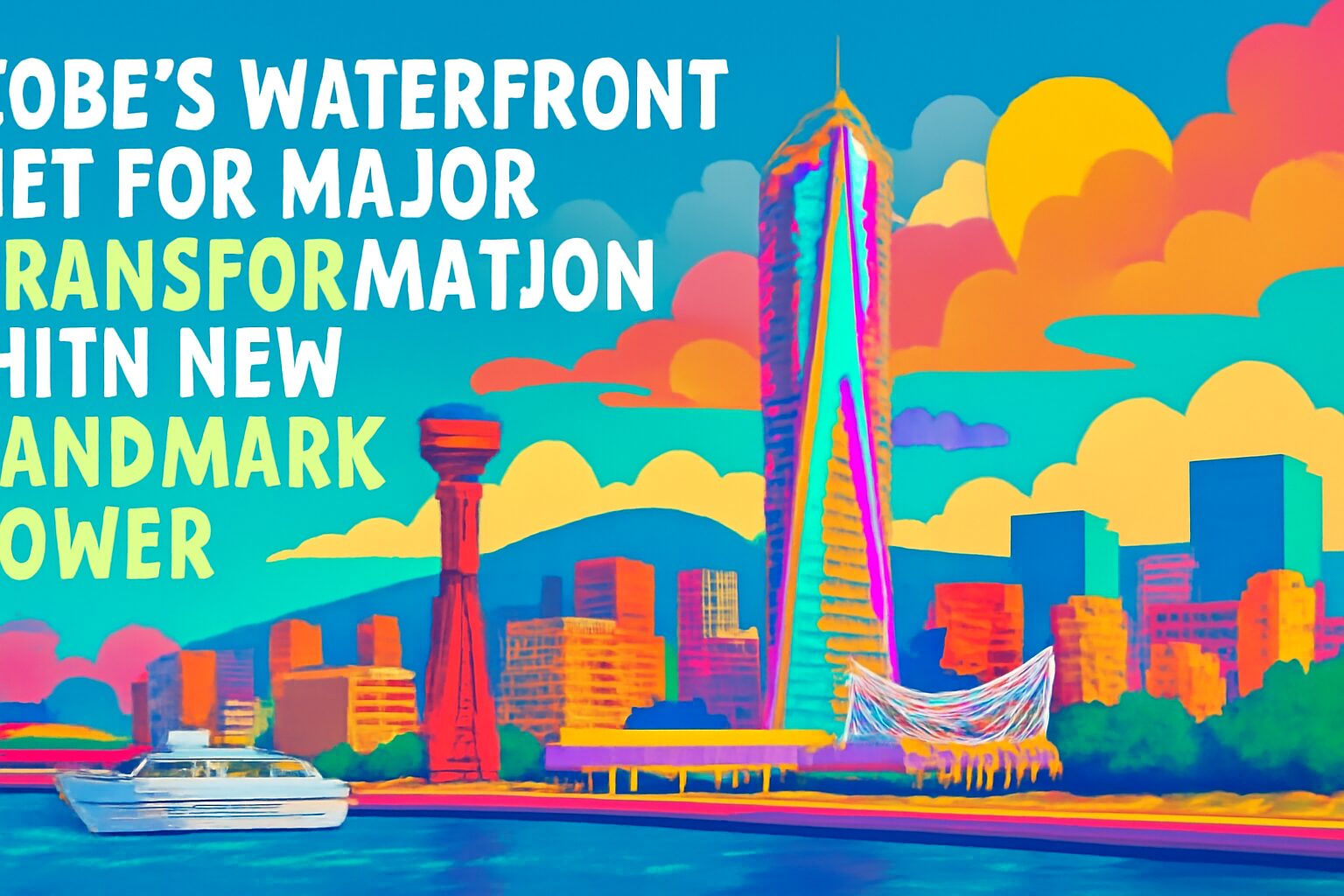
The city of Kobe is poised for a dramatic revitalization as officials have given the green light to the (provisional) Kobe City Hall Building 2 redevelopment plan. This ambitious project will see the birth of a new high-rise complex, integrating government offices, vibrant commercial spaces, and a luxury hotel, promising to reshape the city’s skyline and significantly boost its economy and tourism appeal.
A New Chapter for Kobe’s Sannomiya District
This redevelopment is a cornerstone of Kobe’s broader vision to rejuvenate its central Sannomiya district. The current City Hall Building 2, completed in 1957, suffered significant damage during the 1995 Great Hanshin-Awaji Earthquake and has long been a symbol of both the city’s resilience and the need for modernization. The new tower will replace this aging structure, creating a modern landmark that looks toward the future while honoring the city’s journey of recovery.
The project is strategically located in the heart of the city, near the bustling Sannomiya Station and the picturesque waterfront, making it a pivotal hub connecting transportation, business, and leisure.
Inside the New Landmark: A Fusion of Purpose and Style
The planned complex is more than just an office building; it’s envisioned as a multi-functional destination designed to serve citizens, businesses, and tourists alike.
Key Features of the Complex
- Government Functions: A portion of the building will house essential city government offices, ensuring continued civic service from a state-of-the-art facility.
- Commercial Facilities: The lower floors are designated for retail and dining, creating a new, lively public space that will draw in crowds and energize the surrounding area.
- Luxury Hotel: The upper floors will be occupied by a high-end hotel, expected to feature around 210 guest rooms. This addition will address the growing demand for luxury accommodation in Kobe, attracting affluent travelers and business events.
Project by the Numbers
- Height: The tower is projected to stand at approximately 135 meters (about 443 feet).
- Floors: It will consist of 26 floors above ground and 2 floors below.
- Total Floor Area: The entire complex will span an impressive 88,500 square meters.
Economic and Touristic Impact: A Catalyst for Growth
The redevelopment is expected to be a powerful engine for the local economy and a game-changer for Kobe’s tourism industry.
Bolstering the Economy
The construction phase alone will generate significant employment opportunities. Once complete, the commercial facilities and hotel will create a host of new, permanent jobs. Furthermore, the presence of a new landmark tower is anticipated to attract further private investment into Kobe’s waterfront and central business district, creating a positive cycle of growth.
Enhancing the Tourist Experience
For travelers, the new complex will offer a compelling reason to visit and stay longer in Kobe. The luxury hotel will elevate the city’s hospitality offerings, making it a more attractive destination for international conferences (MICE) and upscale tourism. The new shops and restaurants will provide fresh options for entertainment and dining, complementing existing attractions like the Kobe Harborland and the historic Kitano district.
This project reinforces Kobe’s position as a key city within the Kansai region, creating a stronger tourism corridor alongside Osaka and Kyoto. Visitors arriving at Kansai International Airport will find an even more appealing and sophisticated Kobe, perfect for both day trips and extended stays.
Timeline to the Future
The path to this new future is clearly mapped out. Demolition of the existing City Hall Building 2 is scheduled to begin in fiscal year 2025. Construction of the new tower will follow, with a target completion date set for fiscal year 2029.
As this project moves forward, it signals a confident and forward-looking vision for Kobe. This new landmark is set to become not just a part of the skyline, but a central pillar of the city’s renewed identity as a dynamic hub for international business, culture, and tourism.








