
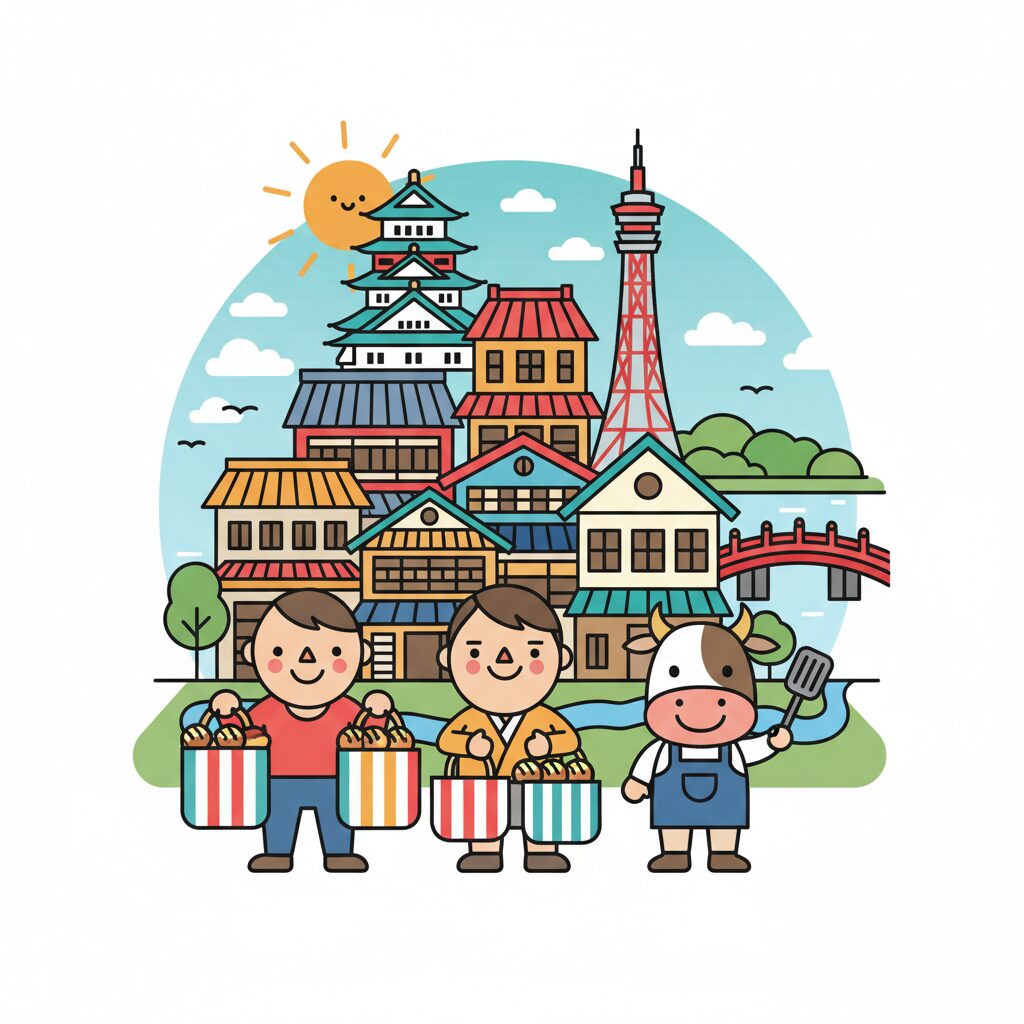
Walk into a shop in Tokyo, and you’ll be met with a crisp, choral cry of “Irasshaimase!” It’s a clean, professional welcome, broadcast to the entire room. It’s the sound of flawless service, polite and practiced. It says, “You are a valued customer.” It is also utterly anonymous. Walk into a small shop in Osaka, a place where you’ve bought your vegetables a few times, and you’ll hear something entirely different. A gruff, single word, shot out not as a broadcast but as a direct address. “Maido!” It might be followed by a nod, or a “Genki ka?” (How ya doin’?). It’s not polished. It’s not for everyone. It’s for you. The first time you hear it, it’s baffling. My-doh. What does that even mean? Is it a question? A command? The literal translation, “every time,” doesn’t help much. It feels like you’ve walked into the middle of a conversation you didn’t know you were having.
And in a way, you have. That single word, “Maido,” is the key that unlocks the fundamental operating system of Osaka. It’s the difference between a transaction and a relationship. While Tokyo’s “Irasshaimase” maintains a respectful distance, Osaka’s “Maido” pulls you in. It’s an acknowledgment, a recognition, and a verbal contract of community. It says, “I see you. I remember you. We have a history.” This isn’t the language of corporate retail; this is the dialect of the neighborhood, the lifeblood of the shotengai, the covered shopping arcades that snake through the city like arteries. Forget the tourist guides and the flashy nightlife of Namba for a second. To truly understand how Osaka works, how its people connect, and why it feels so fundamentally different from the capital, you have to understand the profound social weight packed into this one, short, beautifully functional word. It’s the sound of belonging.
While the intimate call of Maido encapsulates Osaka’s unique community spirit, regional challenges like Kansai measles outbreak concerns continue to shape local dynamics.
From Transaction to Relationship: The Shotengai’s Secret Code
The true stage for “Maido” is the shotengai. These covered shopping streets offer a sensory feast—the aroma of grilled eel from one stall, the steady rhythm of a mochi maker pounding, the vibrant pyramids of seasonal fruit at another. This is where Osaka’s commercial spirit pulses strongest, not in shiny department stores, but within these multi-generational, family-run shops. And it’s here that the transformation from anonymous foreigner to familiar neighborhood regular is marked by a single, pivotal linguistic shift.
Picture this: you’ve just moved into a neighborhood near Tenjinbashisuji, Japan’s longest shotengai. Your initial visits to the local fishmonger—let’s call him Yamamoto-san—are routine. You point to some salmon, maybe some squid. He weighs your purchase, wraps it up, and sends you off with a polite, standard “Arigatou gozaimasu.” His greeting was the usual “Irasshaimase.” At this stage, you are just another face, another transaction.
You keep returning. Once a week, perhaps twice. You buy the same salmon. Yamamoto-san is a man of few words, his hands busy, scaling fish with practiced, mesmerizing skill. He doesn’t engage in small talk. But on your fourth or fifth visit, something shifts. As you approach, even before you order, he catches your eye. He gives a brief, firm nod. “Maido.”
That’s the moment. It’s a rite of passage. The word lingers, heavy with unspoken meaning. It says, “Ah, the salmon person. You’re back.” It breaks down the formal barrier between customer and shopkeeper into something warmer, more familiar. He’s no longer simply welcoming a customer; he’s recognizing a regular. You’ve been recorded in the neighborhood’s mental ledger.
This is the essence of “Maido” in commerce. It turns a simple economic transaction into a social exchange. It’s a remarkably effective social tool. In Tokyo, politeness is shown through elaborate formal language and deep bows. In Osaka, it’s expressed by lowering formality. By greeting you with “Maido,” Yamamoto-san is paying you a compliment. He’s saying you’re no longer an outsider in need of the formal armor of Japanese politeness. You’re now part of the flow of his day, a familiar face, a fixture. You belong.
This simple gesture forges a connection. The next time you visit, you might feel comfortable enough to ask how to cook a particular fish. And because you’re no longer just any customer, he’ll share his knowledge. He might even slip in an extra shrimp, known as omake, a little bonus. This is how community is nurtured in Osaka: not through grand acts, but through a thousand small, repeated, acknowledged interactions, all sparked by that single simple word.
The Many Tones of ‘Maido’: A Practical Guide
Like many things in Japan, context is key. “Maido” is not a single fixed greeting. It’s a versatile expression whose meaning changes significantly depending on tone, delivery, and situation. Grasping its subtleties is like learning to distinguish the different instruments in an orchestra. For anyone navigating daily life in Osaka, deciphering the various forms of “Maido” is an essential skill.
The Booming ‘Maido!’
This is the classic version, the one you’ll hear most often. It’s delivered with enthusiasm by a shopkeeper, the owner of a takoyaki stand, or the chef behind a standing bar’s counter. It’s loud, lively, and unabashedly cheerful. It feels like a firm handshake combined with a friendly pat on the back. This “Maido!” is a pure expression of welcome. It’s often accompanied by a question about your wellbeing, “Maido! Mokatten-makka?” — a traditional Osakan business greeting meaning, “Hey! Making money?” It conveys warmth and vibrant commercial energy. It’s public, performative, and sets a spirited, informal tone for the interaction ahead.
The Mumbled ‘Maido’ Nod
This version is quieter, more personal, and operates on a different wavelength. Imagine two small business owners crossing paths on the street. One is delivering vegetables; the other is sweeping in front of his shop. As they catch each other’s eye, one offers a slight chin lift, a quick nod, and a low, almost swallowed “Maido.” The other returns the gesture. There’s no showiness here. This is a subtle acknowledgment of mutual existence and shared effort. It’s a sign of respect between equals. It means, “I see you. I know you’re working hard, just like me. Keep going.” It’s the understated language of the city’s working class, a recognition of a shared identity grounded in grit and pragmatism.
The Grateful ‘Maido Ookini’
This is the full, formal version, typically used as you leave a shop. “Ookini” is the Osaka-ben equivalent of “arigatou,” or thank you. So, “Maido ookini” literally means “Thank you for your continuous patronage.” This isn’t just thanks for the 500 yen you just spent. It expresses gratitude for all the times you’ve come before and extends an invitation for future visits. It’s a phrase that acknowledges the past and looks ahead to the ongoing relationship. Hearing a hearty “Maido ookini!” as the shop’s noren curtain closes behind you is truly heartwarming. It’s a verbal affirmation that your business, and more importantly, your presence, is genuinely appreciated.
The Pro-Move: The Customer’s ‘Maido’
This is the advanced stage, the highest level of “Maido” usage. In certain settings, usually small, familiar bars or eateries, a regular customer can use “Maido” to greet the owner. Walking into your favorite 8-seat izakaya and saying “Maido!” to the master behind the counter is a bold move. It reverses the usual dynamic. You’re not merely a recipient of the greeting; you’re an active participant in the culture. It’s a declaration of belonging. It says, “I’m not a guest. I’m at home.” For a foreigner, pulling this off requires confidence and, crucially, an established relationship. Attempting it on your first visit will likely earn you a puzzled look. But after you’ve spent time there and know the owner well, a well-timed “Maido” demonstrates a deep understanding and appreciation of Osaka’s social nuances. It’s the ultimate sign that you get it.
Why Osaka? The Merchant City DNA
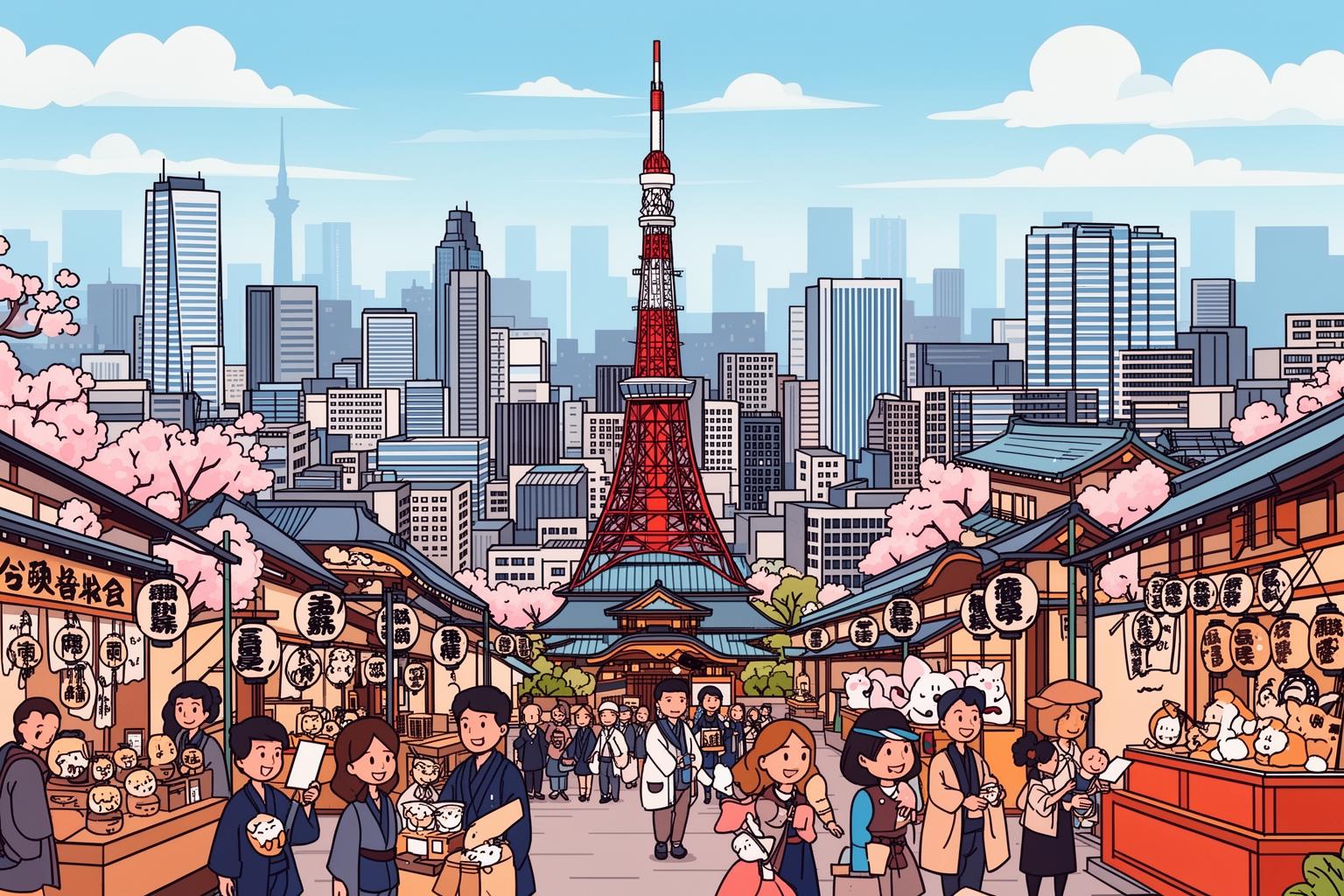
To understand why “Maido” holds such a central place in Osaka, one must explore its history. For centuries, while Tokyo (formerly Edo) served as the shogun’s seat—a city of stoic samurai, strict hierarchy, and political power—Osaka thrived as Japan’s bustling commercial hub. It was the tenka no daidokoro, the “nation’s kitchen,” a vast port city where rice, sake, and goods from across the country were exchanged. Osaka was not founded by warriors but by akindo, or merchants.
In a city dominated by merchants, the rules differ. Success is not determined by birthright or standing within a feudal structure. Instead, it relies on intelligence, the ability to build trust, and maintaining a solid reputation. Repeat business is crucial. While a samurai might prioritize honor and protocol, a merchant values relationships and the bottom line. This commercial practicality is ingrained in the city’s identity and is mirrored in its language.
Formal, honorific Japanese (keigo), with its intricate levels of politeness, was the language of the court and samurai class. It aims to create and uphold distance by recognizing social hierarchy. For an Osaka merchant aiming to close a deal or foster a long-term supplier relationship, such language poses a barrier. It’s inefficient. Instead, communication needs to quickly build rapport, cutting through formalities to get to the core issue. The language must encourage familiarity rather than formality.
“Maido” serves perfectly as a linguistic tool for this. It’s brief, straightforward, and immediately conveys a sense of ongoing connection. It acts as a verbal form of a loyalty program. This merchant mentality sheds light on many unique aspects of Osaka culture. It explains why people are more direct and less concerned with tatemae (public facade) compared to Tokyo. It clarifies their love of bargaining and their obsession with getting a good deal (known as neuchi). It also accounts for why conversations often center on practical financial and business matters, topics typically deemed impolite in more refined parts of Japan.
While Tokyo’s culture was shaped by sword and scroll, Osaka’s was formed by the abacus and ledger. In Tokyo, one’s value is demonstrated by following rules; in Osaka, it’s shown by reliability, intelligence, and business acumen. “Maido” echoes that history, serving as a daily reminder that in this city, relationships are the most precious currency.
What Foreigners Get Wrong (And How to Get It Right)
For many non-Japanese residents, the “Maido” culture can be quite confusing. Its casual, insider nature often leads to common misunderstandings, making it challenging to interpret. Learning to navigate this is essential to truly feel at home in Osaka.
Misunderstanding 1: It’s Just a Quirky ‘Hello’
Many newcomers hear “Maido” and simply categorize it as a quirky way people in Osaka greet each other. This is incorrect. It is not a general greeting you’d hear everywhere. You won’t hear it at Starbucks, the Apple Store, or the information desk at Umeda Station. It’s a specific greeting almost exclusively reserved for commercial interactions with regular customers. Grasping this conditional use is crucial. “Maido” is earned—it signifies a status gained through repeated visits. The first time you hear it directed at you is a milestone: the city’s way of acknowledging you. Don’t take it lightly; see it as a social promotion.
Misunderstanding 2: It Feels Rude or Unprofessional
For those familiar with Tokyo’s polished, almost reverential service culture, Osaka’s straightforwardness can be surprising. A brusque “Maido” from a shopkeeper who doesn’t smile might initially seem like poor service. It can come off as overly familiar or even dismissive. However, this is a cultural misunderstanding. In Osaka, forgoing formal politeness is actually a sign of respect. The shopkeeper treats you like a neighbor, not just a faceless customer. They reserve the more refined, polite language for strangers and first-time visitors. The absence of superficial niceties reflects authenticity and acceptance. They feel at ease enough with you to drop the formal act. It’s a compliment, even if delivered in a gravelly tone.
How to Get It Right
So, how should you respond? The good news is that you’re not required to say “Maido” back. A simple, warm “Konnichiwa” or a friendly nod makes a perfectly acceptable reply. The key is your reaction. When that shopkeeper finally greets you with “Maido,” the right response is to acknowledge it with a smile. Your expression should convey, “I understand the importance of this moment.” That’s all it takes.
I clearly remember my own “Maido” milestone. For weeks, I bought coffee beans from a tiny, one-man roasting shop in my neighborhood. The owner was a serious, intense man who rarely spoke much. Every interaction was a polite but brief “Irasshaimase” and “Arigatou gozaimasu.” Then one rainy Tuesday, I walked in, and without looking up from his roaster, he said, “Maido.” My heart skipped a beat. It was a small gesture, but it felt monumental. I had crossed a threshold. I wasn’t just some random American buying coffee anymore; I was the regular who always chose the Ethiopian blend. In that instant, the city felt a little less vast, and my neighborhood felt much more like home.
Beyond the Shops: ‘Maido’ as a Mindset
The spirit of “Maido” extends well beyond the boundaries of the shotengai. It shapes the entire social framework of the city. This philosophy emphasizes valuing established relationships, focusing on practicality, and nurturing a sense of shared community through frequent, informal interactions.
You can observe it in how neighbors relate to each other. While a Tokyo apartment building might be a place of silent nods in the elevator, an Osaka building often feels more open and communal. People are familiar with each other’s lives. They exchange small gifts (osusowake). Greetings are less formal and more intimate. This is the “Maido” principle in everyday life: since we see each other regularly, let’s drop the formality.
This attitude also explains why Osaka can sometimes seem cliquey or hard for newcomers to break into. The city operates on networks of trust cultivated over time. People prefer to do business with those they know personally or who come recommended through someone they trust. It’s a society built on warm introductions rather than cold calls. This can be frustrating for outsiders, but it naturally follows from a culture that values the “Maido” relationship above all else. Loyalty is treasured, and being a familiar presence is a significant advantage.
This stands in sharp contrast to the Tokyo model, where anonymity can be comforting. In Tokyo, you can conveniently live without anyone knowing your name, and for some, that represents a form of freedom. In Osaka, such anonymity is less common and often less desirable. Here, being recognized is a form of social capital. Being greeted with “Maido” by your local butcher, tofu maker, and bartender signals that you are successfully integrated. You are part of the social fabric. For many who choose to settle here, the ultimate aim is not just to live in the city but to be of the city.
The Sound of Belonging
“Irasshaimase” is a broadcast. It’s a signal sent out into the void, hoping to reach a customer. “Maido” is a handshake. It’s a direct connection between two specific people, built on even the smallest shared experience. It’s the difference between a one-night stand and a long-term relationship.
For anyone living in Osaka, or considering a move there, this single word offers a profound lesson. Don’t be misled by the city’s loud, sometimes brash exterior. Beneath the surface lies a culture deeply devoted to nurturing human relationships. It’s a city that remembers your face, your order, and your loyalty. Here, commerce and community are not separate realms but are woven so tightly together they become indistinguishable.
Listen for it as you stroll through your neighborhood. Hear it shouted from a vegetable stand or mumbled between two delivery guys. Each time you do, you’re witnessing Osaka’s social fabric being knit together in real time. And when the day comes that the word is finally directed at you—when the shopkeeper’s greeting changes from formal to familiar—take a moment to savor it. It’s more than just a word. It’s an invitation. It’s a recognition. It’s the city looking you in the eye and saying, “Welcome back. We’re glad you’re here.”








