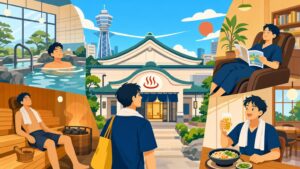
Your first encounter with a neighborhood sentō, or public bath, in Osaka probably won’t be the serene, Zen-like experience you’ve seen in travel brochures. Forget the image of silent contemplation amidst rising steam and the gentle trickle of water. The reality is often a riot of sound and life. It’s the clatter of plastic stools on tiled floors, the boisterous laughter of old men debating the Hanshin Tigers’ latest game, and the high-pitched shrieks of children splashing with abandon. It’s a place that feels less like a spa and more like a bustling, slightly humid, communal living room. For many foreigners, the initial reaction is a mix of confusion and intimidation. Is this a place for quiet relaxation or a social club? In Osaka, the answer is unequivocally: why not both?
This isn’t a throwback or a quaint tourist trap; it’s a vital, breathing organ of the city’s social body. While public baths exist all over Japan, their function and feel in Osaka are distinct. They are a raw, unfiltered reflection of the city’s character—pragmatic, communal, and unapologetically direct. To understand the Osaka sentō is to understand the unspoken social contract of its people. It’s where the city’s famous friendliness sheds its clichés and reveals its true form: a messy, hands-on, and deeply human form of connection that you won’t find anywhere else. Forget what you think you know about Japanese reserve. Step inside, and you’ll find the warm, beating heart of Osaka’s daily life, stripped bare.
Osaka’s vibrant atmosphere invites visitors not only to soak in its public baths but also to experience its unique community vibe through spontaneous informal chats with locals that reveal the city’s truly unfiltered character.
Beyond the Steam: The Sentō as Osaka’s Social Glue
There’s a well-known Japanese concept called hadaka no tsukiai, which loosely translates to “naked fellowship” or “naked communion.” The idea is that by removing clothes and social status, people can interact on a more basic, honest level. Throughout most of Japan, this is seen as a beautiful, subtle ideal. In Osaka, however, it’s a full-contact sport. Here, vulnerability isn’t merely about quiet acceptance; it’s an active invitation to connect. The absence of barriers, both physical and social, speeds up the process of bonding from zero to sixty.
Picture this scene, which unfolds daily in numerous sentō across the city. You’re soaking in a bath that’s a bit too hot, trying to mind your own business. Suddenly, the elderly man beside you, with a towel folded neatly on his head, turns and asks, “Hey, you’re not from around here, are ya?” There’s no formal introduction or polite hesitation. It’s a straightforward question, born from simple curiosity. Before long, you’re engaged in a three-way conversation with him and another man about the best spot to get okonomiyaki in the neighborhood. This is classic Osaka. The social space is not just shared; it’s actively co-created in the moment. The steam doesn’t just warm your body; it seems to loosen tongues, dissolving the usual social distance that can feel so pronounced in other Japanese cities.
The Unspoken Rules of the Neighborhood Living Room
The written rules of the sentō are straightforward and universal: wash thoroughly before entering the tubs, don’t put your towel in the water, and don’t run. However, the unwritten social rules are where the true culture resides, and in Osaka, they depict a society built on mutual, if occasionally nosy, support.
Information Exchange Central
Long before social media existed, the Osaka sentō served as the neighborhood’s main information network. It continues to do so. The changing room, or datsuijo, buzzes with real-time, hyperlocal news. As you dry off, you absorb a steady stream of valuable information. You might hear which butcher in the local shotengai (shopping arcade) has a sale on pork today, catch a debate about the merits of two nearby clinics, and find out that the city plans to repave the street next month. It’s gossip, advice, and civic news combined.
For a foreign resident, this resource is invaluable. You can learn more about the practical realities of your neighborhood in thirty minutes of eavesdropping at the sentō than in a week of online research. This ongoing, low-pressure exchange of information fosters a sense of shared destiny. Everyone is involved, and a good deal for one person is good news for all. It’s a pragmatic, communal approach to daily life that values collective well-being over individual privacy.
The Generational Bridge
Step into any neighborhood bath, and you’ll see the full range of community members. There are the obāchan (grandmas) who have frequented the same sentō for sixty years, their movements slow and practiced. There are young parents carefully washing their toddlers, teaching them the bath’s rituals. University students and salarymen unwind after a long day. This isn’t a curated demographic; it’s simply the neighborhood in all its diversity.
This is where the sentō truly shines as a community hub. It remains one of the few public spaces where generations interact so freely and naturally. An elderly woman might offer a friendly, unsolicited tip to a new mother about calming her baby’s cries. A group of longtime locals might share stories with a younger man about what the neighborhood was like after the war. These interactions aren’t forced; they arise naturally from a shared space and shared routine. In a world often divided by age and interests, the Osaka sentō acts as a strong social glue, binding the community together across generations.
A Foreigner’s Place in the Picture
So where does a non-Japanese person fit into this intimate setting? The initial experience can be intimidating. You might worry about your tattoos, unintentionally breaking a rule, or the language barrier. Yet the typical Osaka reaction is often disarmingly straightforward. Yes, people may glance at you briefly, but that glance is usually one of open curiosity, not judgment. It’s often followed by a question or a friendly nod.
An Osakan is much more likely to approach you and ask where you’re from and what brings you to their city than to politely ignore you. They operate on a principle of engagement. If you’re in their space, you’re part of their world, and they want to know about you. This can feel startling if you’re used to Tokyo’s more reserved politeness, where the norm is to give others space and avoid intrusion. In Osaka, friendly intrusion is a form of welcome: they see you, and they make sure you know it.
The Sentō Economy: More Than Just a Bath Fee
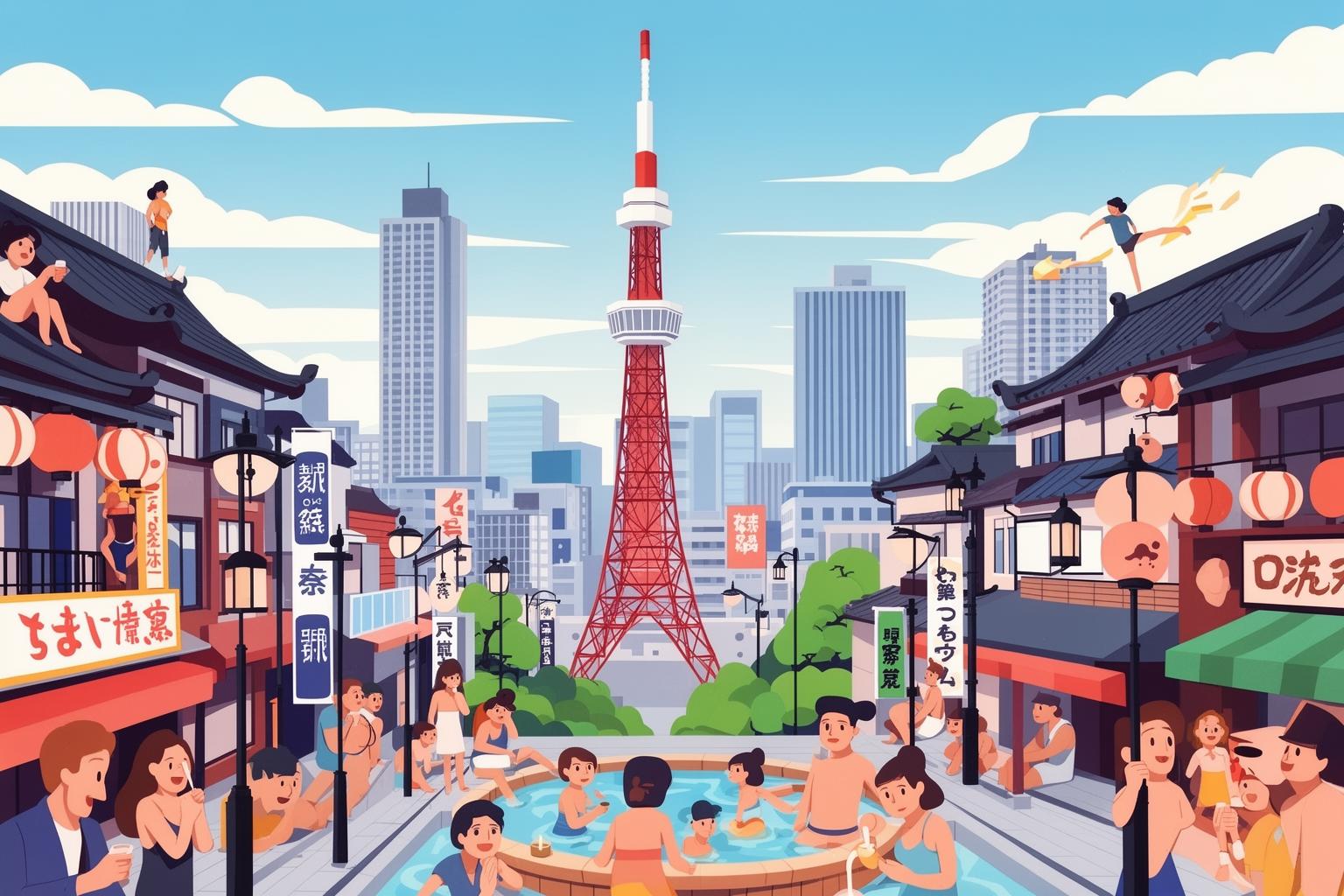
The sentō experience extends beyond the moment you step out of the water. In fact, some of the most significant social rituals occur in the moments before and after the bath itself. This surrounding ecosystem is vital to the sentō’s role as a neighborhood anchor.
The Post-Bath Ritual
The datsuijo serves as more than just a changing area. It’s the community lounge. The air is thick with the scent of soap and the gentle hum of old fans or heaters. People tend to linger here. You’ll see men standing in front of mirrors, carefully styling their hair and chatting with the person beside them. Friends sit together on benches, sharing a cold bottle of Ramune or a small carton of fruit milk from the vending machine. This post-bath cool-down is an indispensable part of the experience.
It’s where conversations that began in the bath continue and deepen. It’s where you might be invited to a local festival or finally learn the name of the person you’ve been nodding to for weeks. Paying the bath fee (typically a very reasonable 520 yen) grants you access not only to the hot water but to this entire social sphere. It’s a ticket to partake in the life of the neighborhood for an hour or two.
The Neighborhood Network
The sentō often serves as the gravitational center of the local micro-economy. Its location, usually tucked away in a residential area or just off a main shopping street, is no accident. People build their daily routines around it. They might stop at the tofu shop on the way, pick up groceries after their bath, and then grab a beer and some yakitori at a small izakaya nearby. The sentō drives foot traffic to other small, independent businesses, helping to keep the neighborhood lively.
The owner, or bantō, who sits at the high desk separating the men’s and women’s sides, is often a pillar of the community. They know everyone’s name, hold onto spare keys for residents, and act as the neighborhood’s unofficial watchdogs. They are keepers of local history and purveyors of local news. Their presence reinforces the sentō as a stable, reliable institution in a rapidly changing world.
Osaka vs. Tokyo: A Tale of Two Baths
To truly understand the distinct role of the sentō in Osaka, it’s useful to compare it with the experience in Tokyo. Although both cities offer public baths, their atmospheres differ greatly, reflecting the profound cultural contrasts between Japan’s two largest urban centers.
The Wall of Silence vs. The Wall of Sound
A typical Tokyo sentō, especially the more modern or designer ones, often fosters a quiet urban refuge. It’s clean, peaceful, and efficient. Visitors come to unwind in solitude, with minimal, hushed conversations. The primary aim is personal relaxation, a brief escape from city stresses. You could visit a Tokyo sentō daily for a year without ever learning the name of the person bathing next to you. There is a tangible, yet polite, wall of silence.
In Osaka, however, you encounter a wall of sound. The background is filled with a lively, continuous hum of conversation, laughter, and splashing. It’s not a place for quiet escape but for noisy, communal interaction. Relaxation arises not from being alone but from social immersion, from feeling connected to the vibrant, chaotic rhythm of the neighborhood. The notion of sitting in silence while the person next to you could be a conversation partner seems odd to many Osakans. Why be alone when you can be together?
“Osekkai” Culture in the Buff
This contrast stems from one of Osaka’s most defining cultural traits: osekkai. It’s a term difficult to translate, roughly meaning meddlesome, nosy, or interfering, but usually with an affectionate intent. It embodies the spirit of unsolicited gestures. And the sentō serves as the perfect stage for osekkai.
If you’re awkwardly scrubbing your back, someone might silently take your washcloth to help. If you’re a foreigner looking uncertain, someone will almost certainly step in to explain how things work. They might warn you that the water in a particular tub is too hot or advise you that you’ve been too long in the sauna. In Tokyo, this level of involvement might be seen as intrusive, guided by the rule of not bothering others. In Osaka, failing to help would be perceived as cold and uncaring. This osekkai spirit—the impulse to engage—is fundamental to Osaka’s community-centered mindset. It may feel brusque initially, but it’s the city’s way of saying, “I see you. You’re part of this. We take care of one another here.”
Navigating Your First Osaka Sentō
With this cultural background in mind, your first visit to an Osaka sentō can shift from anxiety to exploration. Consider it a cultural immersion, both in the literal and figurative sense.
Tattoos, Towels, and Talk
The “no tattoos” policy often causes concern for foreigners. Although many large super-sentō complexes enforce it strictly, smaller neighborhood sentō in Osaka tend to be more lenient. This reflects Osaka’s well-known pragmatism. The owner might recognize that you’re not affiliated with the yakuza and treat you simply as a paying customer. It’s always wise to check in advance, but don’t be surprised if the rule is relaxed. Each case is judged individually, prioritizing personal discretion over strict rule-following.
Respect towel etiquette. The small towel is for washing your body and for modesty when walking around, but it must never be placed in the bath water. This practice maintains hygiene and shows respect for the shared water. Regarding conversation, a simple greeting like “Konnichiwa” upon entry and “Arigatou gozaimashita” when leaving is appreciated. If someone starts chatting, don’t be startled—consider it a friendly invitation.
What to Bring, What to Expect
Many sentō expect you to bring your own toiletries. A basic set includes a small towel, a large towel, soap, and shampoo. If you forget, you can usually purchase or rent these from the bantō for a nominal fee. The layout tends to be simple and practical: lockers for clothing, a row of washing stations with stools and faucets, and several baths with different temperatures and features—perhaps a jet bath (denki buro) or a cold plunge pool.
Most importantly, manage your expectations. This is not a luxury spa. The facilities may be aged and the decor outdated, but where it lacks modern comforts, it makes up with soul. The sentō is a living piece of history and a lively center of contemporary neighborhood life. Embrace the noise, the energy, and the genuine humanity of the experience.
The Sentō is Osaka in Miniature
Ultimately, the local sentō serves as perhaps the most honest and revealing microcosm of Osaka itself. It’s a place where the city’s defining traits are fully visible. The pragmatism shows in the straightforward functionality and the adaptable approach to rules. The directness is evident in how easily and freely people start conversations with complete strangers. The communal spirit emerges in the constant exchange of information and the natural inclination to look out for one another through osekkai.
Living in Osaka can sometimes feel like a puzzle, especially for those from more reserved cultures. Why are people so straightforward? Why do they involve themselves in your affairs? The sentō provides the explanation. It reveals a social model based on active participation rather than passive observation. It’s a community continuously woven together through small, everyday interactions in shared spaces. To truly grasp why Osaka feels so different from Tokyo, you need to understand that its social fabric is fostered in places like these. You have to sit in that hot water, listen to the lively chorus around you, and, for a moment, feel like you belong too.