Walk into any major electronics store in Osaka, navigate past the sleek displays of the latest smartphones and impossibly thin televisions, and you’ll find it: an entire section, sometimes an entire aisle, dedicated to a single, peculiar appliance. It’s not a high-tech air purifier or a multi-functional rice cooker. It’s the takoyaki grill. Rows upon rows of them, from simple electric hotplates to heavy-duty gas-powered rigs, their cast-iron surfaces dimpled with perfect hemispherical molds. A visitor from Tokyo might raise an eyebrow, confused by this retail dedication. A foreigner new to the city might dismiss it as a novelty item. But for anyone trying to understand what makes Osaka tick, this is ground zero. This isn’t just about cooking. It’s about a philosophy. Here, the humble mixture of flour and water, known as konamon, isn’t just food; it’s the social glue of Japan’s most boisterous city. And the takoyaki grill? That’s your passport. It’s the key to unlocking the real, everyday life of Osaka, far from the polished tourist trails and deep in the heart of its warm, chaotic, and wonderfully human communities. To understand Osaka, you must first understand the sizzle of batter on a hot griddle.
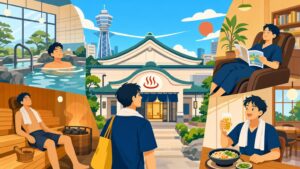
Beyond the sizzling spectacle of takoyaki grilling, experiencing a local sentō community hub reveals another facet of the deep-rooted community spirit that defines Osaka.
Flour, Water, and the Heart of a City
Konamon. The word itself is refreshingly simple, composed of the characters for flour (粉) and things (物). It represents a broad category in cuisine that includes anything made mainly from a flour-based batter. The holy trinity of Osaka Konamon features takoyaki (diced octopus encased in a spherical batter shell), okonomiyaki (a savory pancake packed with cabbage and your choice of protein), and ikayaki (a straightforward squid pancake). However, it goes beyond a mere list of dishes. Konamon embodies a mindset shaped by history and necessity. In the post-war era, as the city rebuilt from ruins, flour was inexpensive, water accessible, and a few bits of cabbage or ginger could extend a meal. It was food for survival. Yet, true to Osaka’s spirit, survival food was never going to be dull. The city’s merchants and mothers transformed this modest base into a platform for creativity, flavor, and above all, community.
This marks a key contrast with the culinary scene in Tokyo. While Tokyo offers a world of refined, exquisite cuisine, often steeped in generations of expertise and commanding high prices, Osaka’s comfort food is boldly and proudly democratic. It’s yasute umai—affordable and delicious. The best okonomiyaki might not be found in a Ginza skyscraper but rather in a cramped, family-run spot tucked beneath the train tracks in Tsuruhashi. The city’s pride is measured not by Michelin stars but by the length of the line in front of a street vendor’s takoyaki stand. This mindset permeates the city’s character. Osaka values practicality, ingenuity, and humility. A good meal doesn’t have to be expensive; it must be crafted with heart and enjoyed with enthusiasm. Konamon is the ultimate embodiment of this philosophy: maximum satisfaction from minimal ingredients, reflecting the city’s commercial spirit and its unwavering belief that a good time should be for everyone.
The Takoyaki Grill: Your Most Important Household Purchase
So, regarding the appliance aisle: the widespread presence of the takoyaki grill in Osaka households is neither a myth nor an exaggeration. It’s a statistical fact. People often say, “Ichi-ka ni ichi-dai,” meaning one per household. It’s as essential as a rice cooker and as indispensable as a kettle. When a young person moves into their first apartment, they will likely receive one as a housewarming present. Families upgrade their grills over time. Enthusiasts own several: a small electric model for weeknights and a powerful gas version for bigger gatherings. Walk through the covered shopping arcades, the shotengai, and you’ll find them sold alongside socks and vegetables. This goes beyond a simple love for a particular snack. The takoyaki grill is a key piece of social infrastructure.
For a foreigner establishing a life in Osaka, purchasing one is a rite of passage—a declaration of intent. It says, “I’m not just a short-term visitor; I want to be involved.” It’s a tool for integration, far more effective than a language textbook or a business card. Owning a takoyaki grill shows you grasp something fundamental about how social bonds are created here. It’s not through formal invitations to quiet dinners, but through casual, messy, collaborative cooking. When you buy that grill, you are investing in a potential party, an instant icebreaker, a reason to invite new neighbors and colleagues into your home. You’re not just buying a kitchen appliance; you’re securing your ticket into the warm, slightly chaotic heart of Osaka life.
Decoding the ‘Takopa’: The Ultimate Social Ritual
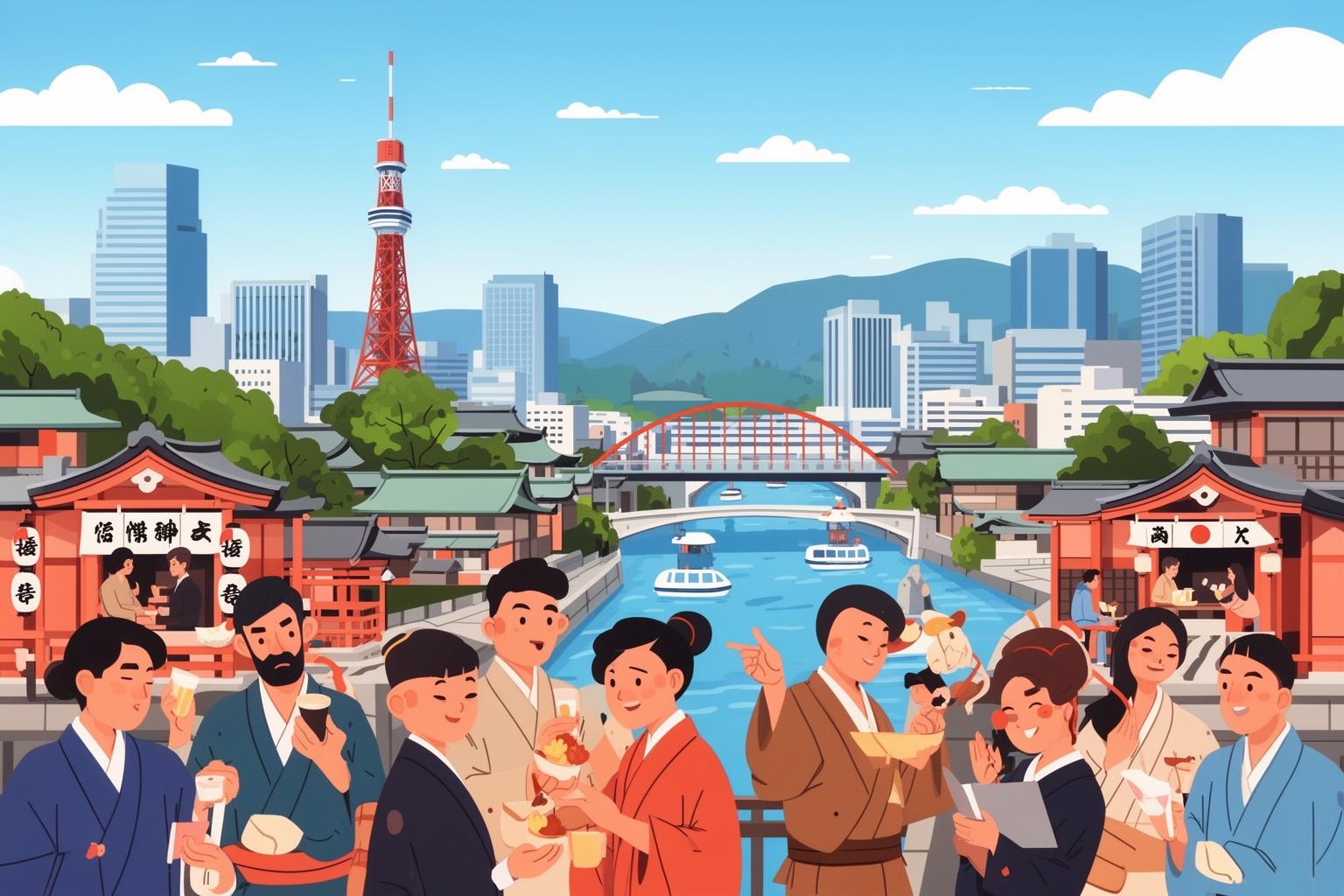
A ‘Takopa’—short for Takoyaki Party—is where the spirit of Osaka comes alive. If you get invited, drop everything and go. This is your hands-on learning, your cultural immersion, your quick course in Osakan social dynamics. The invitation itself reflects the city’s easygoing vibe. It won’t be a formal invite sent weeks ahead. Instead, expect a casual Friday afternoon text: “Doing a takopa tonight, you in?” The entry barrier is low, and the atmosphere is laid-back.
The host usually provides the basics: the grill, a pitcher of batter (either a closely guarded family recipe or, more often, a store-bought mix), and the main ingredients—diced octopus, crunchy tempura scraps (tenkasu), and pickled red ginger (beni shoga). Guests pitch in by bringing beer, a bottle of shochu, or most importantly, an adventurous spirit and maybe some unconventional fillings. The gathering happens not around a dining table but around the takoyaki grill, which becomes the sizzling, crackling heart of the room.
The Sacred Art of the Flip
This is where the real fun begins. A takopa isn’t a passive occasion. The host doesn’t do all the cooking. Everyone participates. Each person is equipped with a kushi, a small, sharp metal pick. The process begins with filling the molds with batter and adding the ingredients. Then comes the critical, skill-testing moment: the flip. As the bottom cooks, you use the pick to score the edges and, with a flick of the wrist, turn the ball ninety degrees, folding the uncooked batter underneath. Repeat this a few times, and you should have a perfect, golden-brown sphere. At least, that’s the goal.
For beginners, early attempts are often disasters. You end up with misshapen blobs, exploded messes, or burnt shells with raw centers. And that’s exactly the point. The shared struggle acts as a strong social glue. A more experienced friend will lean over, guide your hand, and cheer when you finally nail a half-decent flip. Laughter follows every failure. The typical social reserve and polite distance common in initial Japanese encounters melt away by the warmth of the griddle. You’re not aiming to impress with witty banter; you’re bonded by the simple, clumsy, and hilarious challenge of not ruining the food. This shared vulnerability accelerates friendship. In a culture that can seem reserved, takopa offers a sanctioned space for joyful disorder.
The ‘My Rule’ Philosophy of Fillings
Octopus is the classic, traditional choice. But at a home takopa, tradition is more of a guideline. This is where Osaka’s playful, irreverent side bursts out. The inevitable question arises: “What else can we put in here?” The answer: anything. Cheese, popular for its gooey core; kimchi, adding a spicy, funky twist; mochi rice cake, creating a chewy surprise; sausages, corn, shrimp—everything goes. Some takopa even turn into dessert rounds, replacing octopus with chocolate and marshmallows.
This “my rule” approach is characteristically Osaka. It rejects strict formality in favor of experimentation and fun. It embodies a mindset that doesn’t take itself too seriously—just try it and see what happens (toriaezu yattemiyo). This playful spirit contrasts sharply with the often-perceived rigidity of Japanese culture. In Tokyo, there is usually a “correct” way to do things, a proper form to respect. In Osaka, the “right” way is simply the most enjoyable one. Takopa becomes a flavor laboratory where every guest is a co-creator. It’s not just about eating a finished dish; it’s about joining the messy, creative process.
How the Takopa Explains the Osaka Mindset
The modest takoyaki party serves as a microcosm of Osaka culture. By observing its customs, you can grasp the unspoken rules that shape social life in the city. It acts as a key that unlocks a deeper understanding of why Osaka feels so distinct from the rest of Japan.
Obliterating the ‘Uchi-Soto’ Barrier
Japanese society is based on the principle of uchi-soto, the division between the “inside” group and the “outside” world. Gaining entry into an uchi group—whether a company, circle of friends, or neighborhood association—can be lengthy and delicate, especially in more formal environments like Tokyo. The takopa is a social device crafted to break down that barrier with remarkable effectiveness. When everyone gathers around the same hot griddle, sharing ingredients and bumping elbows, the lines between host and guest, senior and junior, newcomer and local begin to fade. You cease to be an outsider looking in; instead, you become an active participant in a shared, somewhat chaotic endeavor. For that evening, you are uchi. This dynamic helps explain the renowned “friendliness” of Osaka’s people. It’s not merely a personality trait; it’s a culture that has devised rituals and tools to rapidly welcome people into the group.
Communication Beyond Words
Communication at a takopa is direct, physical, and multi-sensory. It’s the sizzle of batter, the aroma of savory dashi, the collective groan when a flip goes wrong, and the triumphant cheer for a perfect batch. It focuses less on carefully selected words and more on shared actions and reactions. This reflects the broader communication style of Osaka, where people tend to be more direct, expressive, and comfortable with physical closeness than in other regions. The stereotype of the loud, boisterous Osakan arises from this preference for a more embodied, less filtered mode of interaction. A takopa teaches you this language—you learn to communicate not only with your words but through your hands, your laughter, and your readiness to engage.
Value in the Experience, Not the Expense
A takopa is an exceptionally economical form of entertainment. A bag of flour, some vegetables, and a bit of octopus can feed a large group for very little cost. This reinforces a core Osaka value: a good time isn’t measured by its price. Social capital here isn’t earned by taking friends to expensive, exclusive restaurants; it’s gained by opening your home, being a generous host, and creating a fun, memorable experience. This distinction is crucial for anyone coming from a major global city, where socializing often revolves around spending money. In Osaka, the richness of social life depends on your willingness to participate and share, not on your financial means. The takopa perfectly embodies this belief—a celebration of community over consumption.
Your Konamon Survival Guide

Embracing konamon culture is a quick way to feel at home in Osaka. It’s a tasty adventure that will satisfy both your appetite and your social life.
Your First Takopa Invitation
When you get the invite, say yes. On your way, stop by a convenience store or supermarket. Pick up a six-pack of beer or a bottle of affordable and cheerful chu-hai. If you’re feeling adventurous, bring a potential filling. A block of cheese or a small bag of kimchi are safe and appreciated choices. When you arrive, don’t be shy. Grab a pick and claim a spot by the grill. Your enthusiastic, awkward attempts to flip the takoyaki will be met with laughter and encouragement. This is your chance to connect. Your willingness to try—and fail—means more than any rigid sense of politeness.
Investing in Your Social Future: The Grill
Ready to dive in? For your first grill, a simple electric model from Yodobashi Camera or Bic Camera in Umeda or Namba is ideal. They are affordable and user-friendly. For the true enthusiast, a visit to Sennichimae Doguyasuji Shotengai, Osaka’s renowned kitchenware street, is essential. There, you can find durable cast-iron plates that fit onto a portable gas cassette stove, offering excellent heat control for achieving that perfect crispy-on-the-outside, molten-on-the-inside texture. Whichever you pick, place it in your kitchen with pride.
Hosting Your Own Takopa: The Final Frontier
This is the ultimate sign of Osaka assimilation. It’s you telling the city, “I get it. I’m one of you now.” Don’t overthink it. Buy a bag of takoyaki mix, which includes all the dashi and seasonings. Get some octopus, tenkasu, and beni shoga. Text a few friends, colleagues, or neighbors you want to get to know better. Ask them to bring drinks and a wild filling idea. Then, fire up the griddle. It doesn’t matter if the takoyaki aren’t perfectly round or if you spill batter on the floor. What counts is opening your home and sharing a meal made together.
Living in Osaka is an invitation to take part. It’s a city that rewards involvement. That mountain of takoyaki grills in the electronics store isn’t just a quirky local tradition; it’s an open offer. It’s a promise of community, laughter, and connections formed around a hot griddle. So buy the grill. Make a mess. Create something delicious and imperfect with new friends. In Osaka, you’ll find that the road to truly belonging is dusted with flour—and it’s always sizzling hot.