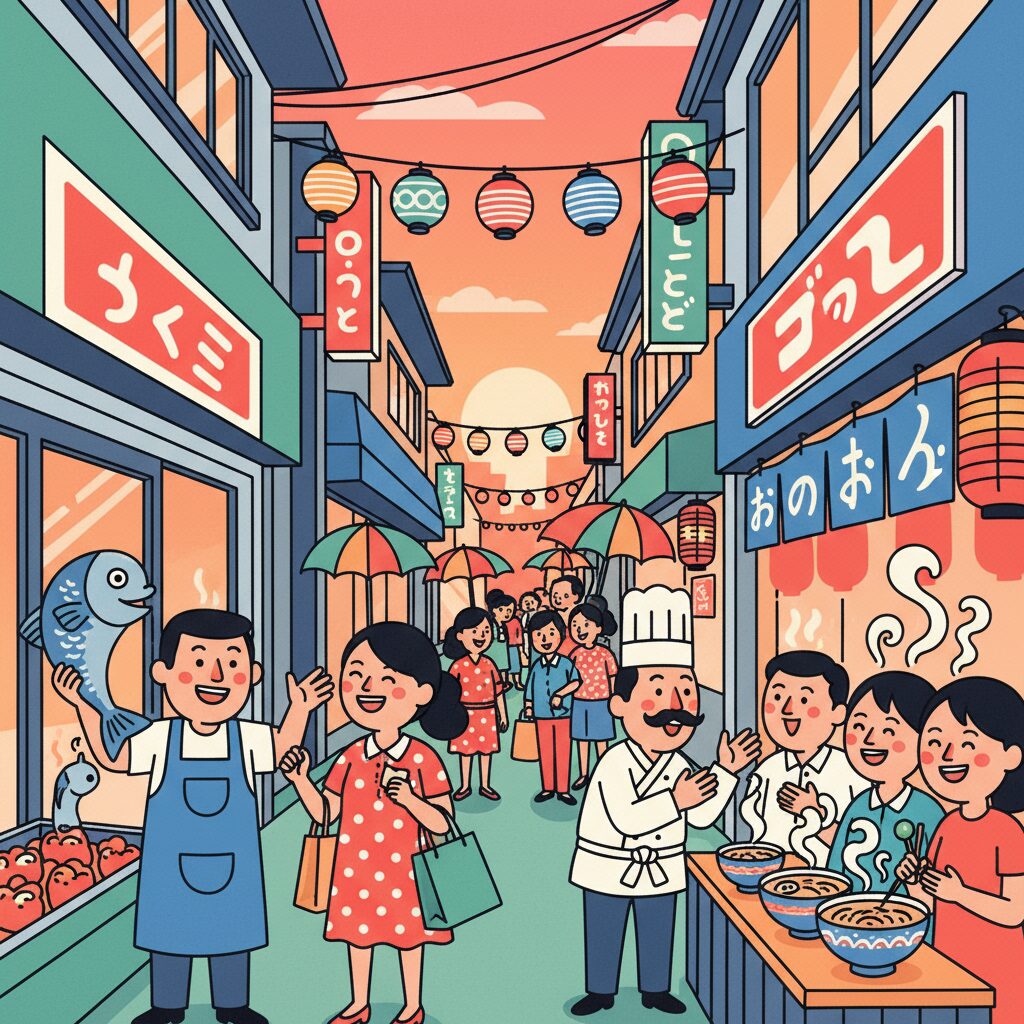
The first time it happened, I was utterly bewildered. I was standing in a small fruit shop in the Nakazakicho neighborhood, trying to decide between a bag of mikan oranges and a single, perfect-looking persimmon. In Tokyo, where I’d lived previously, this would have been a silent, personal deliberation. The shopkeeper would have stood by, patiently waiting, maybe offering a polite, almost whispered, “May I help you?” But this was Osaka. The elderly woman behind the counter, her arms folded and her eyes sharp, wasn’t waiting. She watched me for about ten seconds before letting out a sigh that seemed to carry the weight of generations. “Nee-chan,” she called out, using the familiar term for a young woman, “You gonna stare at that persimmon all day or are you gonna buy it? It ain’t gonna get any sweeter just by looking at it.” I was momentarily stunned. Was she scolding me? Rushing me? In the hyper-polite landscape of Japan I’d grown accustomed to, this felt like a record-scratch moment. I stammered an apology and quickly bought both the mikan and the persimmon. As she bagged them, she winked and added, “Good choice. You looked like you needed the vitamins.” And just like that, the tension was gone, replaced by a strange sense of warmth. I hadn’t just completed a transaction; I had participated in a micro-drama, a uniquely Osakan form of communication. This wasn’t rudeness. This was an invitation. This was my first real lesson in the art of shotengai banter, the lifeblood of Osaka’s local shopping arcades. These covered streets are more than just places to buy groceries; they are community living rooms, daily stages where the rhythm of Osaka life plays out in a symphony of friendly jabs, unsolicited advice, and shared laughter. To understand this banter is to understand the very heart of the city.
This vibrant introduction only hints at the deeper dynamics at play, and exploring shotengai rules further illuminates the artful, unspoken interactions that shape everyday life in Osaka’s arcades.
What is ‘Shotengai Banter’ Anyway? Deconstructing Osaka’s Favorite Pastime
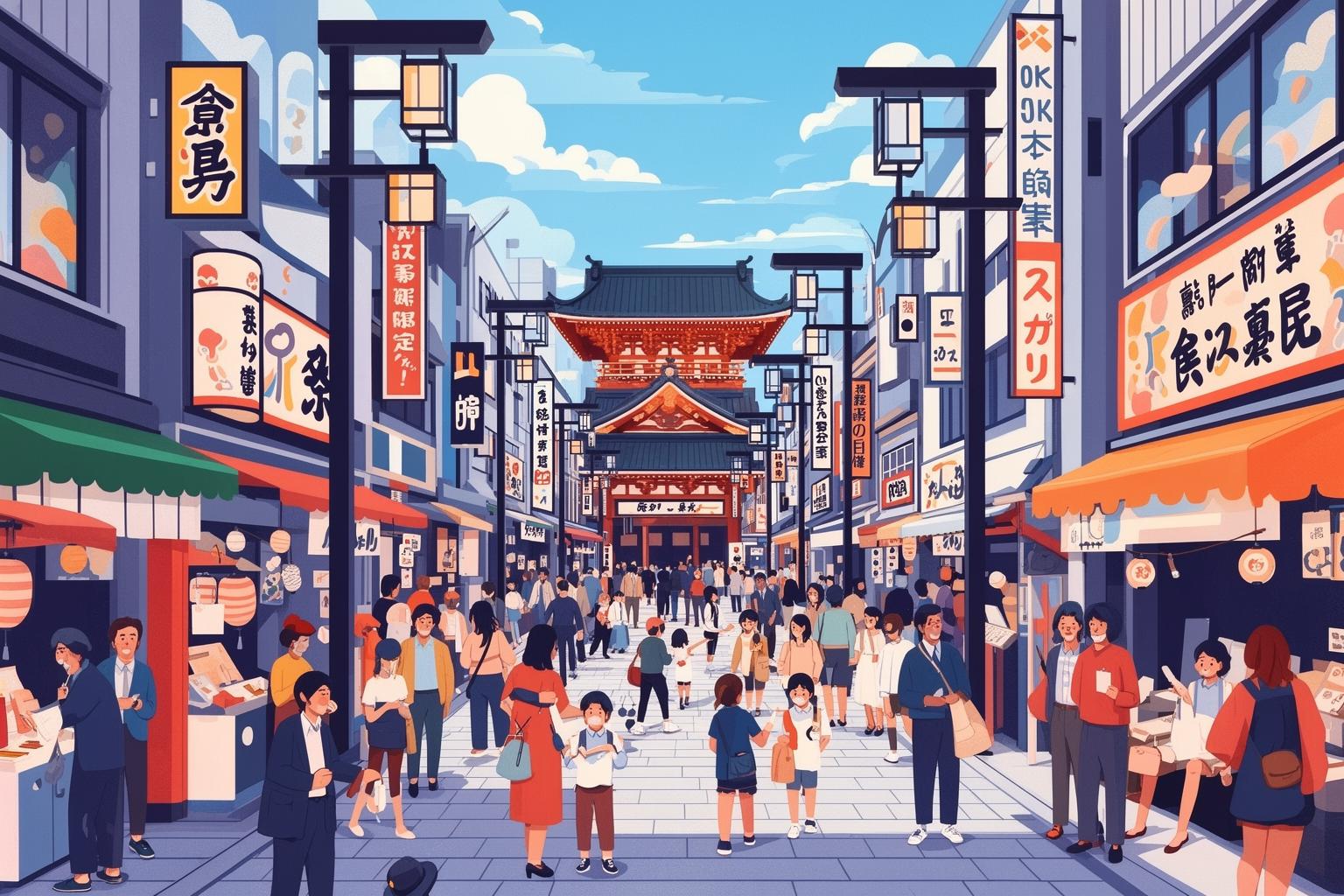
Before you can join in, you need to understand what you’re seeing. Shotengai banter isn’t merely “being friendly.” It’s a nuanced social dance, a mode of communication that blends commerce, humor, and community. It’s the verbal equivalent of a firm, friendly slap on the back, while a typical Tokyo interaction is a delicate, precise bow. This highlights a fundamental difference in how public space is viewed. In many areas of Japan, the space between customer and clerk is formal, governed by strict rules of politeness and respect. In an Osaka shotengai, that space becomes a shared playground. The aim isn’t just selling a product; it’s about affirming a relationship, checking in, evoking laughter, and making the simple act of buying potatoes a memorable experience. The butcher at my local arcade doesn’t just ask what I want. He’ll glance at the ground pork I’m pointing to and say, “Oh, making hamburgers tonight? Don’t burn ‘em like last time!” He has no clue if I burned them previously, but that’s not the point. He’s crafting a shared, fictional history with me. He treats me not as a customer, but as a character in the ongoing daily drama of the shotengai. The vegetable lady will hold up two daikon radishes and say, “This one’s a little prettier, but this one has a better personality. Which one are you?” The conversation is laced with this kind of playful absurdity. It’s a performance, where the currency is not just yen, but wit and warmth. They blur the line between public service and personal connection, weaving a network of relationships that transforms a simple shopping street into a true neighborhood.
The Unspoken Rules of the Game: How to Play Along (and Not Offend Anyone)
Navigating this world can be daunting. It might seem like there are no rules, but there are—they’re just unwritten, passed down through generations of quick-witted fishmongers and sociable greengrocers. Learning them is essential to truly experiencing life in Osaka. It’s about shifting your mindset from that of a passive consumer to an active participant.
Rule #1: Don’t Be a Ghost
In the anonymous, hyper-efficient environment of a Tokyo convenience store, you can complete a transaction without making eye contact or saying more than a muffled “arigato.” Trying this in an Osaka shotengai is a social faux pas. You’ll come across as cold, aloof, or simply strange. The first rule is presence. When you approach a stall, make yourself known. A clear, cheerful “Konnichiwa!” or “Maido!” (a classic Osaka merchant greeting) is your entry ticket. Make eye contact. Smile. Shopkeepers are always scanning, not just for potential customers but for familiar faces and chances to connect. If you approach with your head down, focused only on the produce, you signal that you don’t want to engage. You’re essentially putting up a “do not disturb” sign. By being open, looking them in the eye, and offering a genuine greeting, you signal that the channel is open. You’re saying, “I’m here, I see you, let’s talk.” This simple gesture transforms the interaction from a cold transaction into a warm human connection from the very first moment. It’s the foundation upon which all good banter is built.
Rule #2: The Opener is Your Cue
An Osaka shopkeeper’s opening line is rarely just a simple “Irasshaimase” (Welcome). It’s a hook, an invitation, a conversation starter wrapped in a sales pitch. It requires active listening, not just waiting for your turn to place an order. When the tofu maker says, “Ojou-san, kyou no yatsu wa purun purun ya de!” (Miss, today’s batch is extra jiggly!), he’s not just describing the tofu. He’s tossing you a conversational ball. The wrong response is a quiet nod. The right one is to play along. “Honma? Purun purun?” (Really? Extra jiggly?). You’re showing you heard him, appreciate the performance, and are willing to engage. Other common openers might be personal: “Ah, anata! Hisashiburi ya na! Genkiやった?” (Ah, it’s you! It’s been a while! Have you been well?). This tests your status as a regular. They remember you. Your task is to respond in kind, sharing a small, trivial detail about your life. “Genki desu yo! Chotto isogashikute…” (I’m well! Just been a bit busy…). This exchange forms the fabric of neighborhood life. It reaffirms your place in the community. The shopkeeper’s opener sets the scene; your response decides whether the curtain rises.
Rule #3: The Art of the ‘Tsukkomi’ (The Retort)
This is the pinnacle of Osaka conversation, the feature that most distinguishes it from the rest of Japan. The local comedy style, Manzai, revolves around a two-person act: the ‘boke’ (the silly, air-headed one) and the ‘tsukkomi’ (the sharp-tongued straight man who corrects them). In the shotengai, the shopkeeper often plays the ‘boke,’ and you, the customer, are invited to be the ‘tsukkomi.’ It’s a playful, low-stakes form of verbal sparring. For example, the butcher might hold up a piece of steak and dramatically declare, “This steak is so delicious, it will change your life!” A typical non-Osakan response would be, “Wow, it looks great. I’ll take it.” An Osakan ‘tsukkomi’ reply would be a laughing retort like, “Nande ya nen!” (which loosely means “Why would you say that?!” or “Get out of here!”). Or perhaps a skeptical, “Mata mata, o-chan you iu wa,” (There you go again, old man, saying wild things). This isn’t rude—it’s expected. You’re completing the comedic circuit. By playfully pushing back, you show you understand the joke and are on the same wavelength. Mastering a simple ‘tsukkomi’ is like learning a secret handshake. It signals that you’re not just a tourist or a transient resident; you’re someone who gets Osaka.
Rule #4: It’s Not Always About the Discount
The stereotype of Osakans constantly haggling, repeating “chotto ma-kete,” (gimme a little discount) is an exaggeration. While playful negotiation can be part of the routine, especially at the end of the day, the real prize of shotengai banter is rarely a few yen off your total. The true reward is the ‘omake’ – the extra little something. It’s a sign of favor, a symbol of the relationship. Engage in friendly back-and-forth with the vegetable seller, make her laugh, and you might receive an extra potato or a handful of green onions for free. This is the shopkeeper’s way of saying, “I like you. You’re a good customer. Come back again.” The ‘omake’ is never demanded; it’s earned through good conversation. It’s a physical sign of the social capital you’ve built. Focusing only on lowering the price misses the point entirely. The goal is to build a relationship where the shopkeeper wants to give you something extra, not because you pressured them, but because they genuinely enjoy your daily five-minute interaction.
Osaka vs. Tokyo: A Tale of Two Shopping Carts
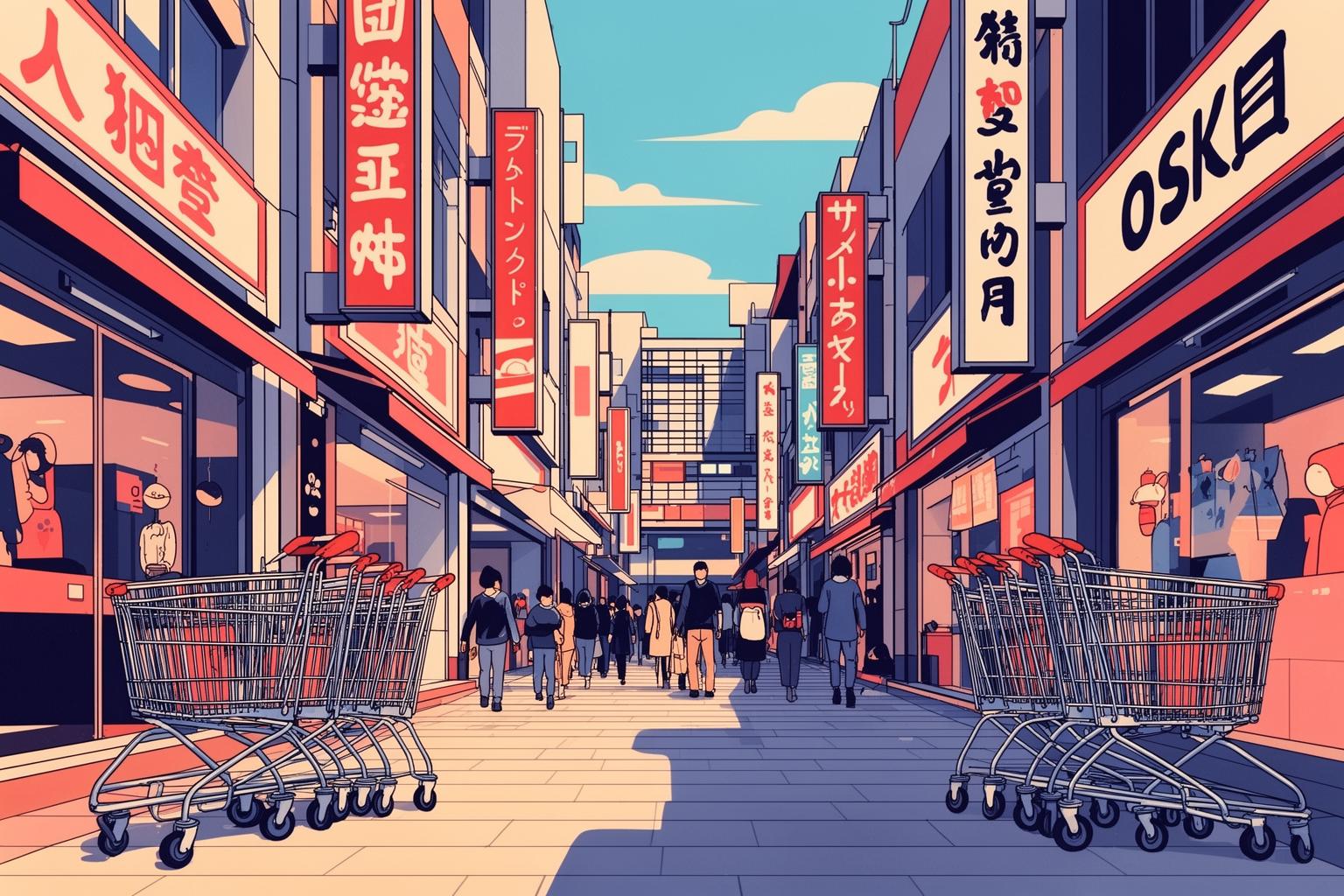
To fully appreciate the uniqueness of the shotengai experience, it’s helpful to compare it with its counterpart in the capital. Shopping in Tokyo, whether at a luxury department store or a local greengrocer, is often a showcase of quiet efficiency. The service is impeccable, politeness is absolute, yet there is a noticeable distance. The customer is treated as ‘o-kyaku-sama’ (honored customer), placed on a pedestal. The interaction is flawlessly performed but essentially impersonal. The aim is to deliver a seamless, frictionless transaction that respects the customer’s time and privacy. A clear, untouchable boundary separates the service provider from the consumer. In Tokyo, efficiency is a form of respect.
In Osaka, that boundary is joyfully and deliberately blurred. An Osaka shopkeeper views efficiency as a missed chance for human connection. The transaction is the pretext, not the goal. The aim is not smooth service, but memorable interaction. If a Tokyo shopkeeper is a silent butler, an Osaka shopkeeper is a lively host at a dinner party. They will ask questions, offer unsolicited opinions, and tease you. They see you not as ‘o-kyaku-sama’ but as ‘uchi no o-kyaku-san’ (one of our customers), a subtle yet profound shift that conveys belonging and familiarity. This difference reflects deep cultural contrasts. Tokyo’s social fabric is often woven with discretion and restraint. Harmony is maintained by respecting distance. In Osaka, harmony comes through direct, vocal, and often humorous engagement. It’s about drawing people in, not keeping them at arm’s length. The Tokyo experience is smooth and predictable; the Osaka experience is gloriously, wonderfully messy.
Common Pitfalls and Foreigner Misunderstandings
Because this communication style is so distinct, it’s easy for foreign residents to misread the cues and feel overwhelmed or even offended. Navigating this requires adjusting your social expectations.
Misunderstanding #1: “Are they being rude?”
An Osaka shopkeeper might remark on your appearance, your shopping basket, or your assumed dinner plans with a bluntness that can feel startling. “Just buying instant noodles again? You’re young; you should be eating properly!” or “Eh, that shirt is very… yellow.” In many Western cultures, and certainly in other parts of Japan, such personal comments from a stranger would be seen as intrusive or rude. In the shotengai, however, it’s a form of intimacy. It signals that they see you as an individual, not just an anonymous customer. They treat you like a slightly annoying but cherished family member. The comments aren’t intended as insults; they’re conversational openers. The intent behind the words is connection, not judgment. They’re trying to find common ground and show that they’re paying attention. The right response isn’t to take offense, but to engage and banter back: “This yellow shirt brings me joy!” or “Don’t worry, I’m eating a salad with these noodles!”
Misunderstanding #2: “Do I have to talk to them?”
The short answer is no. You’re not required to perform comedy just to buy a fish. You can, if you prefer, remain silent, point at what you want, pay, and leave. The shopkeeper will still serve you. However, you’ll miss out on about 90% of the experience. It’s like going to New Orleans and refusing to listen to jazz. By staying silent, you position yourself as an outsider looking in. You remain simply a customer, a transient figure. Osakans generally dislike emotional distance. A refusal to engage, even politely, can be read as coldness or disinterest. You don’t have to be a comedian, but making a small effort—a comment about the weather, a question about the produce—demonstrates you’re willing to meet them halfway. It shows respect for their culture and a desire to be part of the community, not just a consumer within it.
Misunderstanding #3: “Is this just for tourists?”
This is perhaps the most important misunderstanding. It’s easy to see the lively merchants in a well-known arcade like Kuromon Market and assume it’s a performance for tourists. While the show might be amplified in such places, the fundamental style of interaction is completely authentic. This is how people in Osaka communicate. Visit any small, neighborhood shotengai far from the tourist path—in Tenma, in Fukushima, in the deep suburbs—and you’ll see the exact same dynamic. You’ll see two elderly women playfully arguing with the pickle vendor. You’ll see the man from the croquette shop calling out a friendly greeting to a salaryman across the street. This banter isn’t a performance for outsiders; it’s the city’s default way of operating. It’s the background music of daily life, the way neighbors and local merchants have strengthened their bonds for centuries. As a resident, you’re not being sold a fake “Osaka experience”; you’re being invited into the real thing.
How Shotengai Banter Shapes Daily Life in Osaka
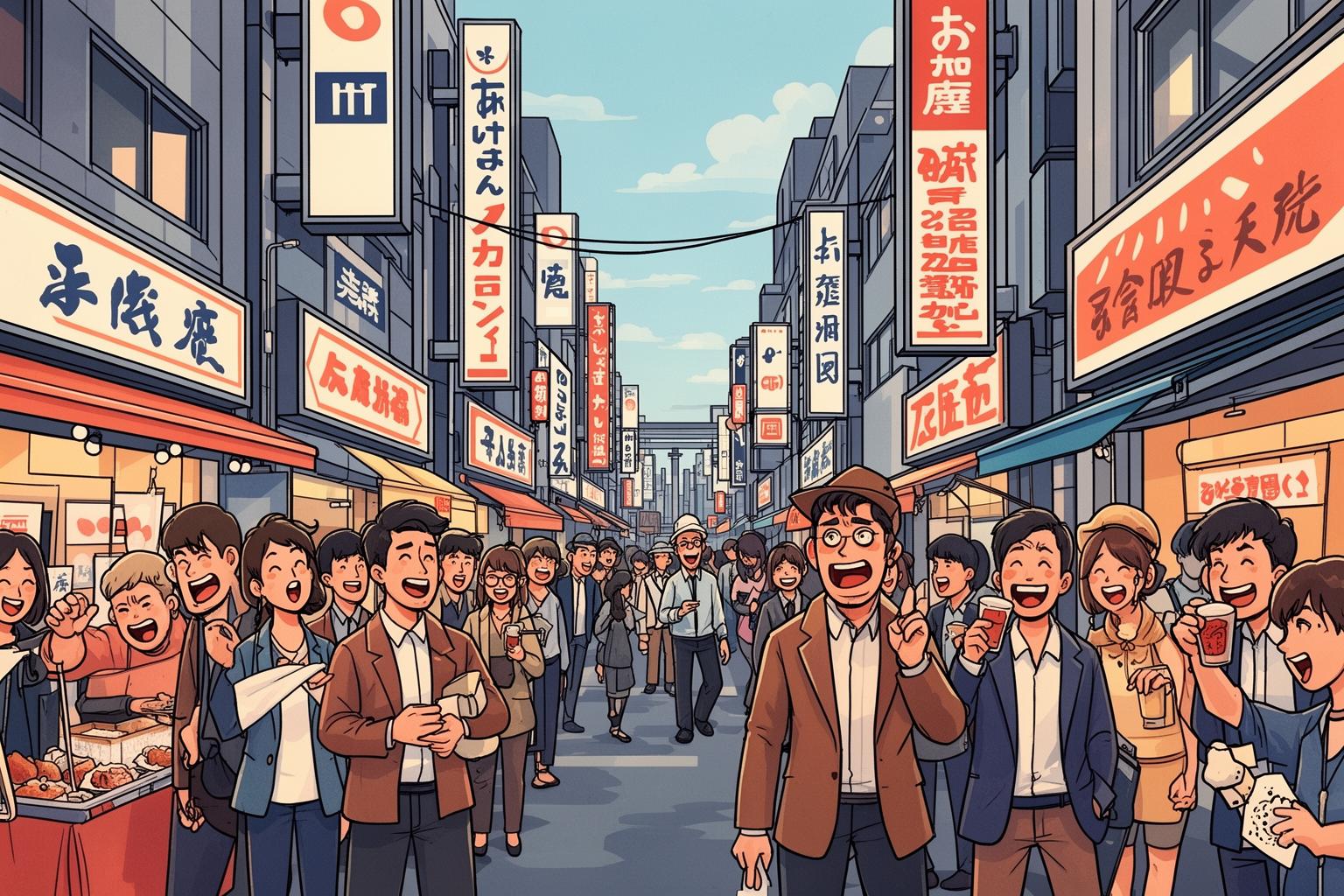
This style of communication is more than just an endearing habit; it serves as a cornerstone of civic life that profoundly shapes the city. It cultivates a sense of safety, dismantles social hierarchies, and brings a daily infusion of humanity to the urban experience.
A Network of Neighborhood Watchdogs (in a Good Way)
Because the shopkeepers engage with everyone, they know everything. They act as the central hubs of the neighborhood’s information network. They know when the Tanaka family’s daughter is taking her university entrance exams because they’ve been wishing her luck every day for a week. They know Mrs. Sato is feeling under the weather because she hasn’t stopped by to buy her usual tofu for two days. This steady, low-level chatter creates a strong, informal safety net. If an elderly person doesn’t show up for their daily purchase, someone notices. If a child is walking home from school looking upset, someone will ask what’s wrong. This isn’t nosiness for its own sake; it’s a deeply rooted system of mutual surveillance based on genuine care. Living in such a neighborhood provides a deep sense of security. You are not an anonymous face in a sprawling metropolis; you are a known individual, someone whose presence and absence are observed.
The Equalizer: Breaking Down Social Barriers
Japanese society is often known for its hierarchical nature. Age, job title, and company frequently dictate how people interact. The shotengai is a wonderfully egalitarian space where these rules are temporarily set aside. In the eyes of the butcher, the bank president and the part-time student are both simply “the guy who likes the fatty pork.” The banter is the great equalizer. Everyone is fair game for teasing. A sharp-witted grandmother selling fish can deliver a witty remark to a corporate executive, and everyone shares a good laugh. This environment encourages a raw, unfiltered form of human connection that is incredibly refreshing. It removes the pretense and formality of professional life and reminds everyone that, at the end of the day, they are just people deciding what to have for dinner.
A Daily Dose of Entertainment and Humanity
Let’s be honest: daily errands can be boring to the point of soul-crushing. The shotengai turns this monotony into a source of daily amusement. A trip to buy milk can spark a hilarious five-minute conversation that leaves you smiling for hours. These small, positive interactions add up. They’re micro-doses of social connection that fight the loneliness and anonymity often found in big-city life. This is a major reason why Osaka often feels so vibrant and “friendly.” It’s not an abstract feeling; it’s the tangible outcome of thousands of these tiny, funny, and humanizing conversations happening every minute in every neighborhood. It is the active, ongoing, vocal creation of community—one ridiculous comment about a daikon radish at a time.
Your Field Guide to Getting Started
Alright, you’re convinced. You want to swap your quiet shopper role for a black belt in banter. It’s less daunting than it seems. It’s a skill you can develop gradually, and Osakans are patient teachers who value any genuine effort.
Step 1: Find Your ‘Home’ Shotengai
Consistency is key. You can’t build rapport as a random visitor. Choose a shotengai near your home or workplace and make it your own. Pick a few specific shops—a butcher, a tofu maker, a fruit stand—and become a regular customer. Visit once or twice a week, even if just for one small item. Let them recognize your face repeatedly. Familiarity is the fertile ground where the seeds of banter take root.
Step 2: Start Small
No need for a knockout opening line. Begin with the basics. Offer a warm greeting and make a simple, sincere comment. “Kono tomato, makka de oishisou desu ne!” (These tomatoes are so red, they look delicious!). Or a classic remark about the weather: “Kyou wa mushiatsui desu ne~” (It’s humid today, isn’t it?). These are simple, safe ways to start. They show you’re paying attention and open to chat, giving the shopkeeper an easy chance to reply and keep the conversation going.
Step 3: Learn a Few Key Osaka-ben Phrases
Adding a bit of local dialect to your speech is a strong sign you’re trying to blend in. You don’t have to be fluent. Just a few key phrases can work wonders. “Honma?” (Really?) is a versatile expression for surprise or disbelief. “Meccha suki ya nen” (I really love it) is a great compliment. And, of course, the classic ‘tsukkomi,’ “Nande ya nen!” (What the heck!). Using these, even if a bit awkwardly, will almost certainly bring a smile and show you’re making a sincere effort.
Step 4: Embrace the Awkwardness
You will make mistakes. You’ll miss a joke. You’ll say the wrong thing at the wrong moment. You might accidentally use a rude phrase when you meant to be funny. This is not just okay; it’s part of learning. The goal is connection, not perfection. Laugh at yourself. Osakans respect someone who doesn’t take themselves too seriously. Your clumsy attempts at banter are far more charming than a polite, silent retreat. Each awkward exchange is a lesson and a stepping stone from being a visitor in Osaka to truly living here.