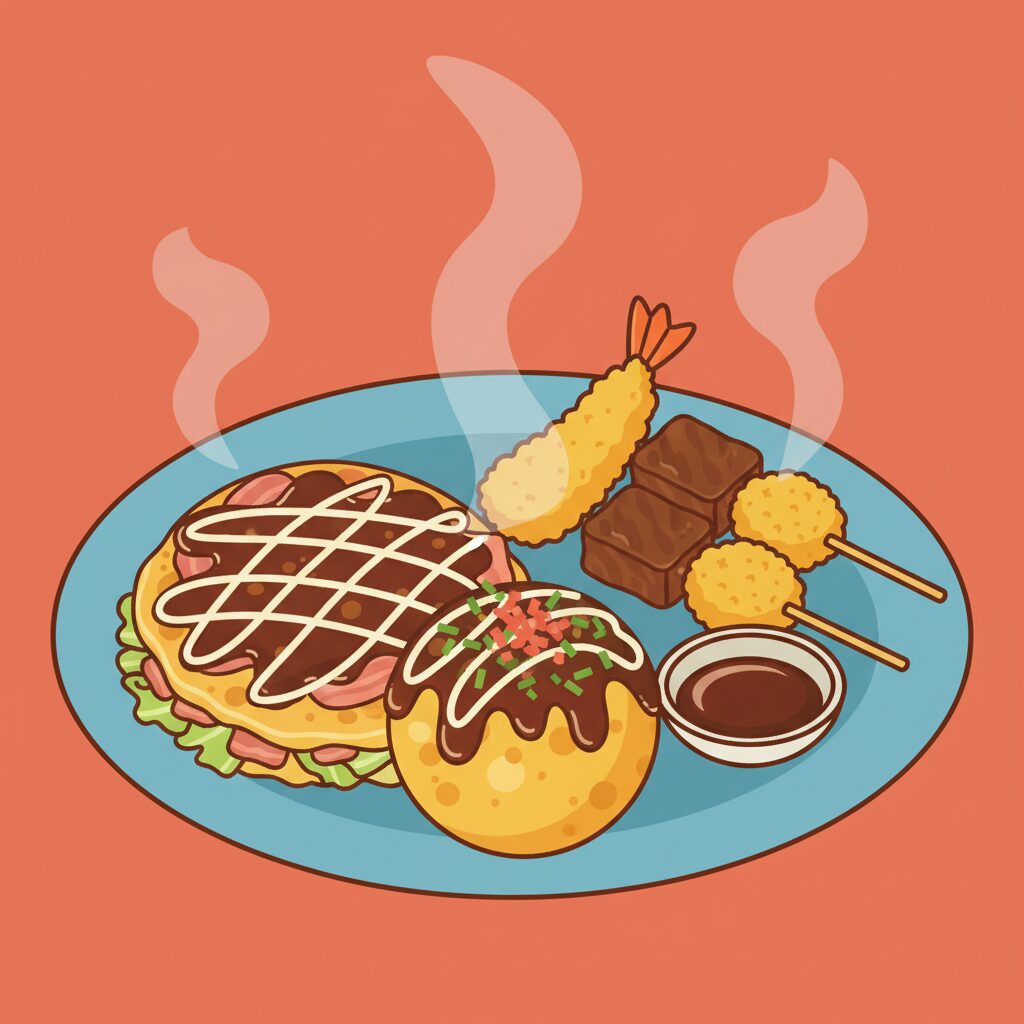
When you picture Osaka, what flashes through your mind? Chances are, it’s a sizzling street stall in Dotonbori. The rhythmic clack-clack of metal picks expertly flipping dark-gold spheres of takoyaki. The sweet, smoky aroma of okonomiyaki grilling on a massive teppan, its surface shimmering with dancing bonito flakes. These images are iconic, plastered across travel guides and Instagram feeds, and for good reason. They are the delicious, accessible entry point to Osaka’s vibrant culinary soul. But they are just that—an entry point. To truly understand the rhythm of life in this city, to grasp the mindset of its people, you have to look past the neon-lit food stalls and into the kitchens of its endlessly sprawling neighborhoods. Because here, in Osaka, ‘konamon’—that humble category of flour-based dishes—is not just a tourist snack. It’s the bedrock of family life, the glue of community, and the edible expression of a culture built on pragmatism, humor, and a whole lot of heart.
Living here, you quickly learn that the clichés hold a surprising amount of truth. The idea that every Osaka household owns a takoyaki pan isn’t an exaggeration; it’s a social and domestic reality, as fundamental as a rice cooker or a kettle. It’s a tool, yes, but it’s also a symbol. It represents a readiness for impromptu celebration, a commitment to communal eating, and a belief that the best meals are the ones you make together, with a little bit of mess and a lot of laughter. This isn’t Tokyo, where culinary arts often ascend to a level of untouchable, formal perfection. This is Osaka, where food is boisterous, adaptable, and deeply woven into the fabric of everyday interactions. It’s in the flour-dusted apron of a grandmother teaching her grandkids how to flip their first okonomiyaki, in the boisterous ‘tako-pa’ (takoyaki party) that turns a simple Saturday night into a cherished memory. To live in Osaka is to understand that flour and water, mixed with whatever you have on hand, can create something far more profound than just a meal.
This deep-seated culture of sharing and community, where food becomes a medium for connection, mirrors another unique social phenomenon in Osaka: the practice of giving candy to children.
The ‘Konamon’ Trinity: Beyond the Tourist Trail
To begin understanding this flour-based universe, you need to know the three pillars that support it: Okonomiyaki, Takoyaki, and Yakisoba. While they may appear to be simple street foods, within the context of an Osaka home, each holds a distinct and essential role, revealing different aspects of the local character.
Okonomiyaki: The Philosophy of ‘Whatever You Like’
Foreigners are often told that okonomiyaki is a ‘Japanese savory pancake,’ a description that is both technically accurate and culturally insufficient. It overlooks the whole point. The name itself is the key: ‘okonomi’ means ‘as you like it,’ and ‘yaki’ means ‘grilled.’ It’s not a pancake; it’s a philosophy served on a hot plate. At its essence, okonomiyaki is a batter of flour, water, egg, and grated nagaimo (a type of mountain yam that gives it a fluffy texture), mixed with a mound of shredded cabbage. From there, anything goes. Whatever you have in the fridge is fair game. Thin slices of pork belly are classic, but leftover chicken, squid, shrimp, cheese, corn, mochi, kimchi—all can be included. This isn’t about following a strict recipe; it’s about resourceful, delicious pragmatism.
This ‘use what you have’ mindset is directly connected to Osaka’s past. As a bustling merchant hub and industrial center, especially in the post-war years, the city was rebuilt on grit and practicality. Flour was inexpensive, cabbage was abundant, and protein was whatever was available. Okonomiyaki emerged from this necessity as a way to create a filling, nutritious, and satisfying meal from humble ingredients. This heritage sharply contrasts with the refined culinary traditions of Tokyo, where something like Edo-mae sushi is defined by strict rules, precise techniques, and reverence for pristine, singular ingredients. In Osaka, the genius lies not in perfection but in brilliant, delicious adaptation. An Osaka home cook views a nearly empty fridge not as a problem but as an okonomiyaki challenge. That, in a nutshell, is the spirit of the city.
Takoyaki: The Communal Heartbeat
If okonomiyaki is the philosophy, takoyaki is the ritual. On the streets, it’s a quick, piping-hot snack. At home, it serves as the centerpiece of the ‘tako-pa,’ the takoyaki party, a key event in Osaka social life. This is where the ubiquitous takoyaki pan comes into play. It’s an electric griddle dotted with hemispherical molds, and making takoyaki is an inherently communal and interactive experience.
Picture a typical weekend evening: the family gathers around the dining table with the hot plate at the center. One person pours thin, dashi-infused batter into the molds. Someone else adds the essential ingredients: a piece of boiled octopus (‘tako’), some tenkasu (crispy tempura scraps), and a sprinkle of beni shōga (red pickled ginger). Then comes the most crucial part: turning. Armed with small metal picks, everyone takes turns poking and prodding, carefully coaxing the batter into perfect spheres. It demands surprising skill and timing. The kids get impatient and try turning them too soon, creating messy crescents. The dad, a self-proclaimed takoyaki master, demonstrates his flawless wrist-flick technique, a source of great and slightly comical pride. The air fills with the sizzle of the batter, rising steam, and the sounds of friendly debates, instructions, and laughter. This is a meal that cannot be passively consumed. You are part of its creation. You have to be present, engaged, and communicating with those around you. It’s a beautifully simple, analog way to bring a family together in a digital age.
Yakisoba: The Dependable Workhorse
Completing the trio is yakisoba. Although its name means ‘grilled soba,’ the noodles are actually wheat-based, making it a proud member of the konamon family. Yakisoba is the reliable, everyday hero of the Osaka kitchen. It’s the quick weeknight dinner for when you’re too tired to think, the go-to dish for a school lunch bento because it tastes good even cold, and the undisputed champion of community gatherings.
At any local summer festival (‘matsuri’), school sports day (‘undōkai’), or neighborhood cleanup, you’ll find it. Groups of local dads or PTA moms huddle around massive industrial-sized teppan grills, wielding oversized spatulas like seasoned warriors. They stir-fry huge piles of noodles with sliced pork, cabbage, and carrots, coating it all in a tangy, sweet yakisoba sauce. The air is thick with its savory smoke. This is konamon as social infrastructure. It’s inexpensive to make in large quantities, easy to serve in disposable containers, and universally loved. It’s the food that fuels community spirit, cooked and served by the very people in that community. It’s not fancy or glamorous, but it’s the dependable, delicious glue that holds countless local events together.
Flour Power: The Economic and Psychological Roots of Konamon Culture
To truly understand why konamon dominates in Osaka, you need to look beyond the ingredients and into the city’s commercial heart. Osaka has long been known as Japan’s kitchen, but it has also served as its financial hub. This city of merchants, traders, and entrepreneurs carries a pragmatic, bottom-line-focused attitude that influences every part of life, including the dining table.
The Merchant’s Mindset: ‘Mōkarimakka?’ and ‘Bochi Bochi Denna’
The traditional Osaka greeting, though less common among younger people, is famously ‘Mōkarimakka?’ meaning ‘Are you making a profit?’ The usual, automatic response is ‘Bochi bochi denna,’ which means ‘So-so’ or ‘Little by little.’ This exchange embodies a worldview rooted in business, practicality, and grounded realism. It’s this very spirit that lifts konamon from simply food to a cultural symbol. Flour has always been inexpensive—a bulk commodity. With just a little water, some cabbage, and a few bits of meat or seafood, you can make a meal that is both filling and satisfying. The cost performance—‘cospa’—is exceptional.
This is a source of great pride in Osaka. While someone from Tokyo might boast about a refined, eye-wateringly expensive meal at a Ginza sushi bar, an Osakan finds deeper, more authentic satisfaction in a delicious, perfectly crafted 500-yen okonomiyaki. It’s not about being cheap; it’s about being clever. It’s about recognizing and valuing worth. Wastefulness is considered a cardinal sin, and securing a good bargain is viewed as a fine art. Konamon perfectly embodies this merchant’s philosophy. It’s hearty, adaptable, affordable, and tasty. What better deal could there be?
‘Kona’ as a Canvas: The Art of Personalization
The merchant’s mindset isn’t solely about saving money; it’s also about ingenuity and flexibility. The ‘okonomi’ (meaning ‘as you like it’) principle is central to Osaka’s way of thinking. This culture does not stand on ceremony or strictly follow tradition for tradition’s sake. Instead, it asks, ‘What works best right now?’ and ‘How can we improve this, make it more enjoyable, or more efficient?’
Konamon serves as the ideal canvas for this approach. Okonomiyaki exemplifies this, as a dish that encourages experimentation and resists standardization. Every family and neighborhood shop has its own unique twist. Some add a bit of dashi powder to the batter for extra umami. Others swear by using only pork belly. Some insist on an artistic drizzle of mayonnaise as the finishing touch. This freedom to personalize and make a dish your own is deeply valued. It reflects a broader cultural tendency: a preference for flexible, informal approaches over rigid, hierarchical structures. In many respects, Tokyo represents the latter—the seat of government, hierarchy, and doing things ‘the right way.’ Osaka has long defined itself in contrast as a place of creative, sometimes chaotic, individualism. The anything-goes character of konamon perfectly symbolizes this spirit. The best way to make okonomiyaki is your way.
The Takoyaki Pan in Every Kitchen: A Symbol of Family and Communication
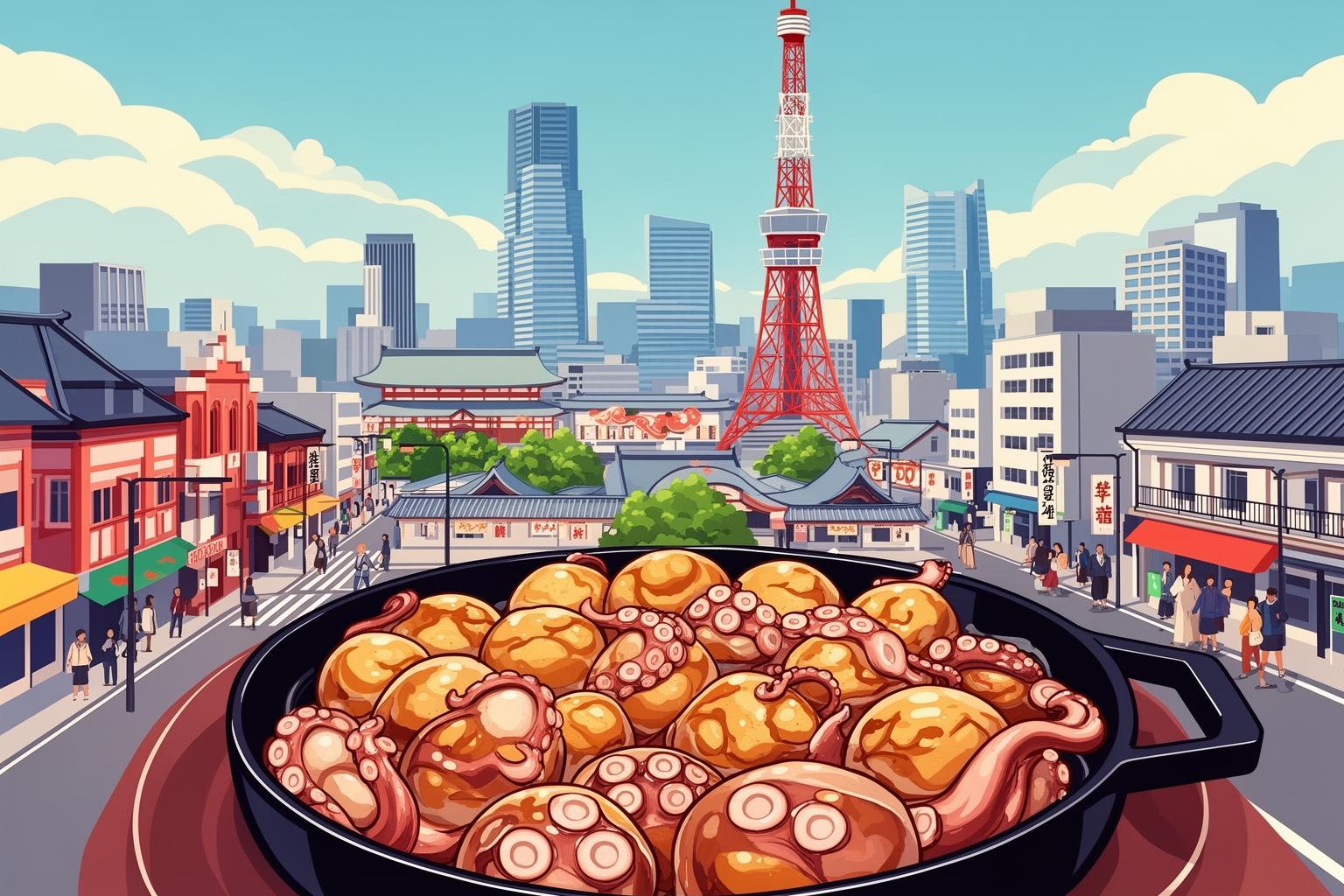
Having a takoyaki pan at home is one of the clearest signs of the Osaka lifestyle. It is much more than just a kitchen tool; it serves as social equipment, a trigger for interaction, and a silent promise of future family gatherings.
More Than a Meal, It’s an Occasion
A ‘tako-pa’ isn’t a quick dinner; it’s an evening’s entertainment. The process is naturally slow and collaborative, encouraging a pause in the hectic rhythm of modern life. Unlike a typical meal where one person cooks alone while others watch TV or scroll through their phones, a takoyaki party requires everyone’s involvement. All gather around the table, focused on a shared activity.
Roles are flexible and casual. A teenager who usually responds with monosyllables may suddenly become the precise ‘batter pourer.’ A younger child might be given the important task of distributing the octopus pieces. The activity naturally sparks conversation and teamwork. ‘Hey, you missed a spot.’ ‘Is this one ready to flip yet?’ ‘Don’t hog all the tenkasu!’ It dissolves the usual family hierarchy, bringing everyone to an equal level around the hot plate. Everyone becomes a cook, a critic, and a comedian. In an age when families can feel increasingly fragmented, the ‘tako-pa’ acts as a meaningful, low-tech way to reconnect.
Teaching Life Skills, Osaka-Style
Beyond the fun, the takoyaki party serves as an informal classroom for key life skills, all taught with typical Osaka flair. Turning the takoyaki balls with two metal picks demands fine motor skills and a gentle touch. It can’t be rushed. This cultivates patience. Cooking together teaches sharing space and ingredients. Most importantly, it teaches how to handle gentle teasing.
Osaka’s communication style is known for the dynamic between ‘boke’ (the fool) and ‘tsukkomi’ (the straight man who points out absurdities). A ‘tako-pa’ is a live workshop of this interplay. When someone inevitably makes a misshapen, burnt takoyaki, they’ll be mercilessly but lovingly teased. ‘What is that, a piece of charcoal?’ ‘Looks like you’re making monjayaki by accident!’ This teasing isn’t mean-spirited; it’s a form of affection and closeness. Learning to laugh at your own small failures and to playfully highlight others’ mistakes helps one fit into the local social fabric. It builds resilience and humor around life’s imperfections, beginning with a lopsided ball of grilled batter.
The Great Sauce Debate: A Family’s Signature
The final layer of personalization uncovers another aspect of family identity: the toppings. While the batter is the base, the sauces and toppings are the heart and soul. In Osaka, people have strong, unyielding loyalties. The main debate centers on the thick, sweet-and-savory okonomiyaki/takoyaki sauce. Are you an Otafuku household, representing the Hiroshima-based brand known for its fruity sweetness? Or do you side with a local Kansai brand like Ikari, which brings a spicier kick? Some aficionados might even break out the Doro Sauce, a heavily concentrated, spicy variant for the truly daring.
Then there’s the mayonnaise—it must be Kewpie, prized for its rich flavor and often applied in a lattice design from a special squeeze bottle. Finally, the toppings: a generous dusting of ‘aonori’ (green seaweed powder) and a handful of ‘katsuobushi’ (dried, smoked bonito flakes) that curl and ‘dance’ in the heat rising from the takoyaki. A family’s particular blend of brands and combinations forms a part of their household tradition, a subtle statement of culinary identity. These seemingly small preferences are defended with mock seriousness, sparking endless, lighthearted domestic debates that become a form of family bonding in their own right.
Konamon Beyond the Home: Weaving the Community Fabric
While konamon is the heart of the Osaka home, its influence extends outward, shaping neighborhood social life and uniting communities. It’s the flavor of casual gatherings, the aroma of local celebrations, and the comfort food that defines the character of a neighborhood.
The Neighborhood Okonomiyaki-ya: An Extension of the Living Room
In almost every residential area of Osaka, hidden on a quiet side street or nestled in a small ‘shōtengai’ (shopping arcade), you’ll find a local ‘okonomiyaki-ya.’ These are not tourist spots but humble, often family-run establishments serving as the community’s informal dining room. The setup is typically simple: a few tables and a long counter facing a large ‘teppan’ grill, where the owner oversees the sizzling action.
These spots act as an extension of the local living room. This is where you go on a Tuesday night when you’re too tired to cook. It’s where construction workers on their lunch break sit beside elderly couples enjoying a quiet meal. It’s where you’re likely to bump into a neighbor and exchange greetings over the sizzle of the grill. The ‘Okā-san’ (motherly figure) or ‘Taishō’ (boss) running the place is a neighborhood fixture. They know their regulars by name, recall their children’s ages, and remember their usual orders. The atmosphere is lively, filled with the clang of spatulas and cheerful conversation, while the air is rich with the smoky, delicious scent of grilling batter and savory sauce. These shops serve as vital ‘third places’—neither home nor work—where social ties are built and strengthened, one okonomiyaki at a time.
School Festivals and Local Matsuri: Flour as Social Glue
Konamon’s role as a social binder is most apparent during community events. At a school sports day, the PTA’s food stall becomes the social hub, with yakisoba almost always taking center stage. Parents who might otherwise only exchange polite nods find themselves working side-by-side, chopping cabbage, frying noodles, and serving hundreds of portions. This shared, somewhat hectic experience fosters camaraderie and turns acquaintances into friends.
Likewise, at a local summer festival, the smell of konamon embodies the spirit of the community. Volunteers from the ‘chōnaikai’ (neighborhood association) grill yakisoba and okonomiyaki, with all proceeds supporting the event. Taking part—whether cooking or simply buying and eating—is a form of civic engagement, a concrete way to back your local community. The choice of konamon for these gatherings is intentional. Its affordability ensures everyone can join in, and its simple, universally loved nature bridges generations and social divides. It is, in the truest sense, the people’s food: for the people, by the people.
Misunderstandings and Realities: What Foreigners Get Wrong
Like any deeply rooted cultural phenomenon, konamon is often perceived through a simplistic lens by outsiders. Grasping the nuances behind common perceptions is essential to understanding the Osaka mindset.
It’s Not ‘Junk Food’
Due to its ties with street stalls and savory sauces, konamon is frequently dismissed by foreigners as ‘junk food’ or an unhealthy indulgence. This is a fundamental misconception. A well-made okonomiyaki is, above all, a vessel for cabbage. A single serving can contain a quarter of a cabbage head, along with other vegetables, egg, and a source of protein. It’s surprisingly balanced and complete in one dish.
Moreover, the local concept of ‘B-kyū gurume’ (B-class gourmet), to which konamon proudly belongs, is often misunderstood. ‘B-class’ is not a critique of quality; it celebrates food that is unpretentious, affordable, and loved by the masses. It’s a populist culinary movement that rejects the elitism and high costs often linked to ‘A-class’ gourmet dining. In Osaka, calling a dish ‘B-kyū’ is a compliment. It means it’s delicious, satisfying, and accessible to all—the ultimate democratic food.
The Tokyo-Osaka Konamon Divide
The strong regional pride of Osakans is most evident in their defense of konamon. People from Osaka often speak with playful disdain about Tokyo’s flour-based dish, ‘monjayaki.’ With its gooey, semi-cooked texture, it’s frequently mockingly called ‘okonomiyaki that went wrong.’ This isn’t merely about food preference; it represents a proxy battle in the centuries-old rivalry between the two cities. Osaka regards its okonomiyaki as hearty, substantial, and straightforward, reflecting its own self-image. Monjayaki, to Osakans, seems indecisive and wishy-washy.
Even within okonomiyaki, regional differences spark intense debate. Hiroshima-style okonomiyaki is a layered creation, with ingredients cooked separately and stacked atop yakisoba and a thin crepe. Osakans, who mix all their ingredients together before grilling, see the Hiroshima style as overly intricate and fussy. For an Osakan, their method is original, authentic, and superior. This culinary chauvinism is a defining trait—not meant to be hostile but a passionate, humorous expression of deep love for their city and unique culture.
The ‘One Takoyaki Pan Per Household’ Myth
To clarify, it’s not a myth—it’s a fact. Walk into any major electronics store like Yodobashi Camera or Bic Camera in Osaka, and you’ll find entire sections dedicated to various takoyaki pan models. There are simple electric versions, cast-iron plates for gas stoves, and even interchangeable plates for elaborate hot pots. Their widespread presence testifies to their role in domestic life. A home without one feels incomplete, as if not fully prepared for the spontaneous social rituals that define this city’s life. Owning a takoyaki pan signals a household’s readiness to host, share, and partake in the casual, food-centered fun that is the heart of Osaka.
Bringing Konamon into Your Osaka Life
For any foreigner aiming to genuinely settle in and connect with the local culture, embracing konamon isn’t merely recommended—it’s essential. It offers a direct, delicious gateway into the heart of the city.
Your First ‘Tako-Pa’: A Practical Guide
Hosting your own takoyaki party is one of the best icebreakers you can imagine. It’s a distinctly Osaka way to invite new friends or neighbors into your home. Don’t be intimidated. Start by purchasing a simple electric takoyaki pan, which can be found at a reasonable price in any home goods store or even a large supermarket. For your first try, buy a pre-made takoyaki flour mix. All you need to do is add egg and water. The key fillings are boiled octopus (often pre-cut and available at any supermarket), tenkasu, and beni shōga.
The important thing is not to aim for perfection. Your first batch will almost certainly be a disaster. Some will burn, others will be misshapen, and you’ll likely send batter flying across the table. This is all part of the fun. The goal is the shared experience of trying, failing, and laughing together. Invite your Japanese colleagues or neighbors—they will almost certainly be delighted and impressed by your effort. They’ll gladly take over, show you the “right” way to do it, and a bond will form around the sizzling hot plate.
Decoding the Supermarket Aisle
A visit to a typical Osaka supermarket like Mandai or Life offers an instant lesson in the depth of konamon culture. Head to the flour aisle, and you’ll be met with a bewildering variety of options. There won’t be just one type of okonomiyaki flour; there will be a dozen, each promising different textures—fluffier, crispier, more savory. You’ll find specialized takoyaki mixes, bags of tenkasu in various sizes, different cuts of katsuobushi, and a wall of sauces that would make a Western supermarket’s ketchup section look paltry. The sheer range and volume of these products clearly show this isn’t novelty food. This is what people cook and eat every single week. This is daily life, packaged and stacked on a shelf.
Ultimately, konamon is a perfect metaphor for Osaka itself. It might not be as polished or refined as the specialties of other cities. It can be a bit messy, a bit loud, and it doesn’t stand on ceremony. But it is warm, generous, endlessly adaptable, and made to be shared. It’s a culture that finds joy not in quiet contemplation, but in the lively, collaborative act of creating something delicious together. To truly understand Osaka, look beyond the gleaming skyscrapers and ancient castles. Attend a local festival and share a plate of yakisoba. Visit a tiny neighborhood shop and watch the master at the teppan. Better yet, get a takoyaki pan, invite some friends over, and make a glorious, delicious mess. That’s when you’ll truly taste the soul of the city.