Osaka breathes at a different tempo. It’s a city that thrums with a relentless, percussive energy, a rhythm pounded out on the pavement by a million hurried footsteps, the sizzle of oil hitting a hot takoyaki griddle, and the hearty, unfiltered laughter that erupts from cramped izakayas. Life here is a full-contact sport, a constant, swirling dance of commerce, conversation, and consumption. You feel it the moment you step off the Shinkansen at Shin-Osaka, a wave of humanity and purpose that sweeps you along whether you’re ready or not. It’s a city that’s unapologetically itself—loud, pragmatic, and pulsing with a raw, infectious vitality. As a foreigner making a life here, you learn to ride this wave, to find your own rhythm within the city’s chaotic symphony. You learn to love the directness, the lack of pretense, the feeling that you’re part of something real and constantly in motion.
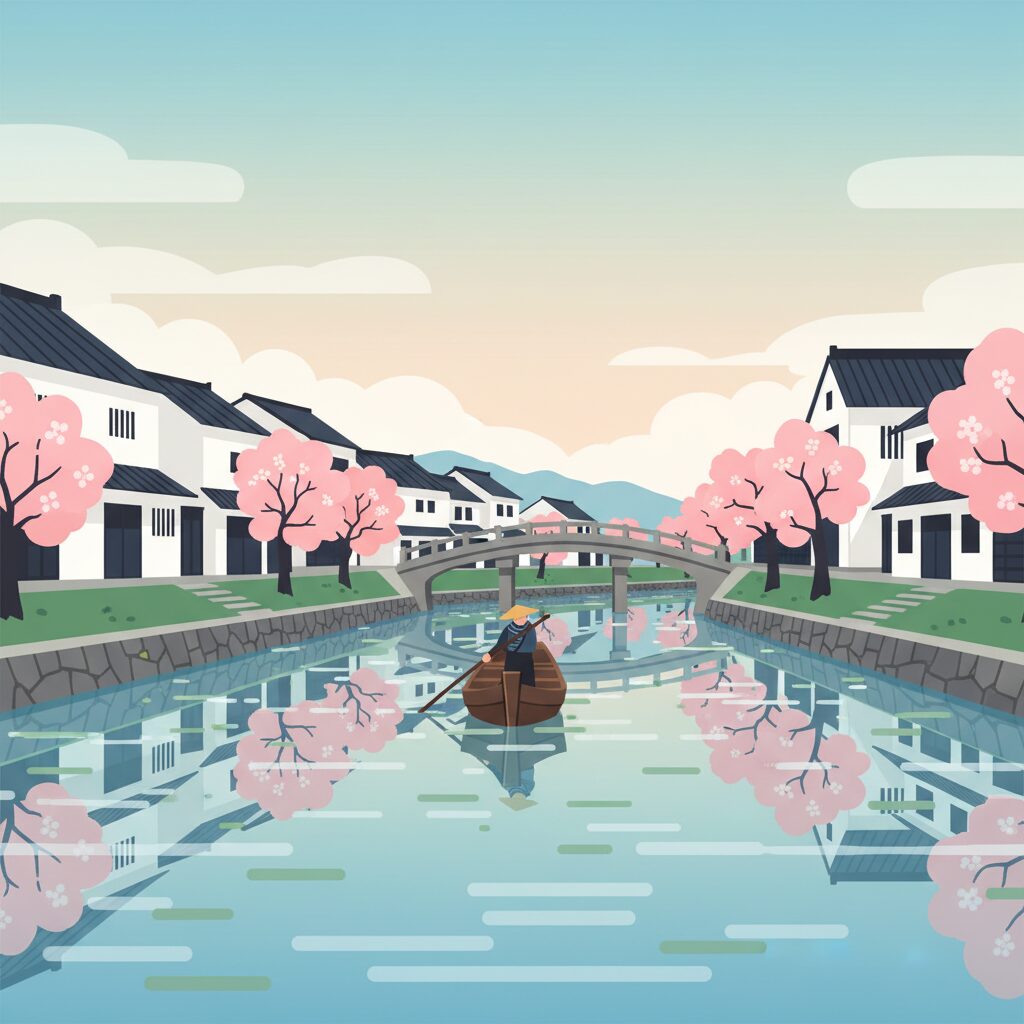
But even the most dedicated Osakan, born and bred in the merchant capital’s beautiful chaos, knows the value of a breath. Not an escape, exactly. That’s not the right word. An escape implies you’re running from something. This is different. It’s a recalibration. It’s a strategic retreat to a place where the volume is turned down, where the rhythm slows to a gentle lapping of water against stone, if only to remember what the noise back home truly means. This is why a place like Kurashiki exists in the Osakan consciousness. It’s not just a postcard-perfect town in neighboring Okayama Prefecture; it’s a cultural antagonist, a beautiful, serene counterpoint that, by its very stillness, helps you understand the magnificent motion of Osaka. Spending 48 hours in its historic canal area isn’t about a simple vacation. It’s an exercise in contrast, a weekend-long lesson in why Osaka feels, sounds, and acts the way it does. It’s a journey to a quiet place that, paradoxically, makes the glorious noise of home resonate even more profoundly.
To truly appreciate the city’s unique rhythm upon your return, consider immersing yourself in the vibrant world of Osaka’s tachinomi culture.
The Sonic Shift: From Urban Roar to Canal’s Whisper
The journey doesn’t start with a quiet departure but with the distinctively Osakan ballet of efficiency. You navigate the managed chaos of Osaka Station or Shin-Osaka, a realm of interwoven train lines and streams of people moving with practiced intent. Travel in Osaka, as with much else here, is fundamentally practical—a balance of time against cost. Do you choose the sleek, futuristic Shinkansen that whisks you to Okayama in under an hour, a marvel of Japanese engineering? Or do you take the local lines, a slower, meandering route that saves a few thousand yen—money better spent, an Osakan might say, on a memorable meal later? This internal negotiation, this ongoing quest for the best value, is the city’s quiet mantra. There’s no judgment, only a shared understanding that time is money, and money is for savoring life to the fullest, ideally with great food.
Once underway, the city’s soundtrack begins to fade, though its echoes linger. The steady clatter of the train on the tracks remains constant, but the human voices shift. The lively Kansai dialect conversations, ending with playful “yanen” or inquisitive “honma?”, give way to the softer tones of other passengers. The journey becomes a decompression chamber. As Osaka’s dense urban sprawl—its tightly packed homes and towering apartment blocks—slides into the flatter, more open landscapes westward, you feel your shoulders relax. The transition completes on the short local train from Okayama to Kurashiki, where the pace noticeably slows. The train moves more gently, stops come more often, and the passengers appear less rushed, their destinations less pressing.
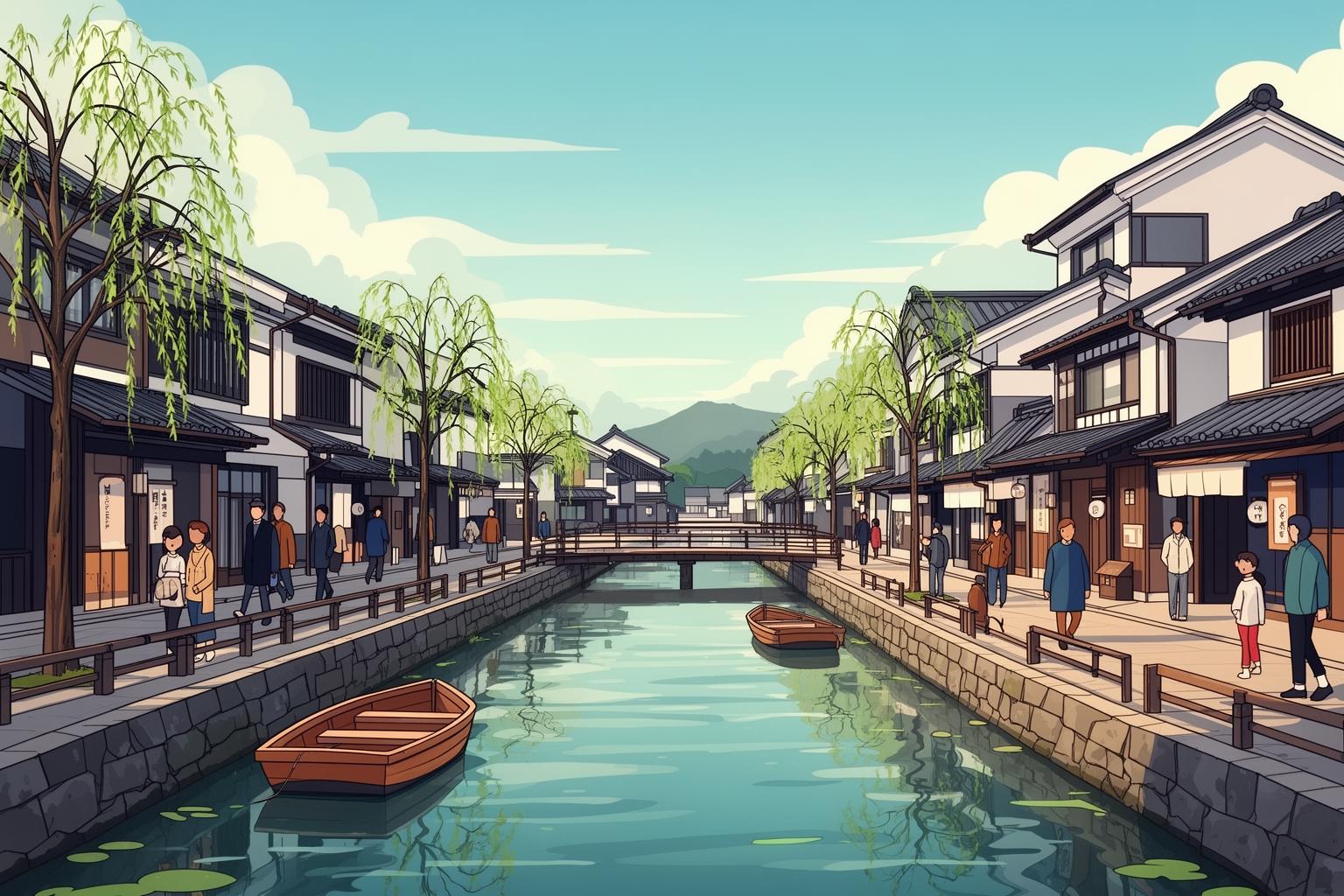
Step out of Kurashiki Station and walk toward the Bikan Historical Quarter, and you enter a different auditory world. The constant low hum of Osaka—a mix of traffic, construction, distant sirens, and the energy of millions living close together—is completely gone. In its place is a silence so deep it startles. The dominant sounds are subtle and natural: the gentle dip of a pole as a boatman guides a traditional gondola down the canal; the rustle of weeping willow branches in the breeze; the gravelly crunch of your footsteps on stone paths; the distant, cheerful chatter of a school group, briefly drifting before fading. This absence of urban noise is the first and most striking contrast. In Osaka, sound is lifeblood—the call of a street vendor, the subway rumbling beneath, layered conversations in packed restaurants. The city is in constant vocal presence. Kurashiki, by contrast, whispers. For someone used to Osaka’s full-volume existence, this quiet isn’t just relaxing; it’s revelatory. It compels you to listen differently, to notice the delicate sounds usually drowned out. It serves as a mental reset, a cleansing of the auditory palette that readies you to experience a different way of being.
A Tale of Two Architectures: Function vs. Preservation
Osaka’s cityscape tells a chaotic yet captivating story of its history, especially its modern era. It is a city founded on pragmatism, continuously destroyed and rebuilt with a focus on the future and the flow of commerce. Stroll through Umeda, and you are surrounded by towering glass and steel skyscrapers—symbols of corporate power and modern architecture. In contrast, wander into a residential area like Nakazakicho, where you’ll find a charming, intricate maze of pre-war wooden houses that have survived against the backdrop of stark post-war concrete apartment buildings. Osaka’s architecture is a patchwork collage, where functionality often outweighs beauty. Osaka Castle stands prominently, but it is a concrete reconstruction, more symbolic than a genuine artifact. Notably, parts of the original castle walls were dismantled during the Meiji era because they hindered development. This reflects the Osakan ethos etched in concrete and steel: progress never waits for preservation. Osaka’s appeal lies not in immaculate facades but in its vibrant, sometimes jarring, blend of old and new, of utility and temporary aesthetics. It is a living city, not a museum, and it wears its scars and renovations with gritty pride.
Kurashiki’s Bikan Historical Quarter embodies the opposite philosophy. Here, time has been deliberately, lovingly, and painstakingly halted. The district is a breathtakingly cohesive landscape of preserved Edo-period buildings. Its iconic style centers on the kura — traditional storehouses of wealthy merchants — with their distinctive white-washed walls (shirokabe) and black, charcoal-fired tiles (namako-kabe) arranged in a unique diamond pattern. These structures were not merely for storage but also symbols of wealth and status, designed to be fireproof and secure. Today, they form the architectural heart of the area. Walking along the canal feels like stepping into a perfectly framed photograph. Every building, every stone bridge, every carefully pruned tree seems intentional, forming a unified whole. The city has consciously prioritized preservation above all else. There are no glaring neon signs or towering modern buildings disrupting the skyline. Even utility poles are buried underground to maintain the historical integrity of the view. Kurashiki is a city that functions as a work of art, where architecture’s main purpose is to narrate its own history.
This stark architectural contrast reveals a fundamental difference in civic values. Osaka’s identity is shaped by its relentless drive forward. Its history lives on in the enduring spirit of its people—the merchants, comedians, innovators—rather than being enshrined in its buildings. The city’s soul is kinetic. Kurashiki, conversely, anchors its identity in its physical form. Its soul is static, preserved like amber in its architecture. For someone from Osaka, visiting Kurashiki can feel slightly surreal. It highlights what their city has sacrificed in the name of progress. It cultivates an appreciation for the rare pockets of old Osaka still surviving but also clarifies why Osaka is the city it is. Osaka does not look back with nostalgia; it is always searching for the next deal, the next opportunity, the next chapter. While Kurashiki’s preserved beauty makes it a wonderful destination, the spirit of Osaka is one of building rather than merely maintaining.
The Merchant’s Spirit, Then and Now
At their core, both Osaka and Kurashiki are merchant towns, founded on the wealth generated through trade and logistics. Osaka was known as the “Nation’s Kitchen” (tenka no daidokoro), the central hub for Japan’s rice trade and distribution network during the Edo period. Kurashiki, located on a vital canal system connected to the Seto Inland Sea, served as a major center for storing and shipping rice and other goods for the shogunate. This shared commercial heritage forms the foundation of both cities, yet the expression of this spirit today is strikingly different.
In Kurashiki, the merchant past is a beautifully curated exhibit. History is tangible but presented as a story to admire. Visitors can tour the Ohara family residence, home to a fabulously wealthy textile magnate, to glimpse the luxurious lifestyle their success afforded. The Ohara Museum of Art, Japan’s first museum of Western art, was founded by the same family as an act of philanthropy and cultural enrichment. The former storehouses have been transformed into elegant boutiques selling high-quality artisanal goods. Kurashiki is renowned for its denim, and shops offer exquisitely crafted jeans at premium prices, sold with reverence for the craft and material. Canalside cafes serve carefully prepared parfaits featuring the famous local Muscat grapes and Okayama white peaches. The commercial spirit here is refined, aestheticized, and embedded in a narrative of quality and heritage. It is about selling a piece of Kurashiki’s elegant history. The atmosphere is calm, sophisticated, and courteous, with smooth and respectful transactions.
Back in Osaka, the merchant spirit is a lively, vocal presence. It is not a museum story but the headline of today’s news. At Kuromon Ichiba Market, vendors shout, laugh, and beckon you to sample their products. They sell more than fish—they sell an experience, a connection. The famous Osaka greeting, “Mokari makka?” (“Are you profiting?”), with its traditional response, “Bochi bochi denna” (“So-so”), reflects how deeply commerce is woven into social interaction. It is not an intrusive question but a gesture of solidarity, acknowledging the shared hustle. The spirit thrives in endless shopping arcades (shōtengai) like Tenjinbashisuji, where anything can be bought and bargaining is part of the ritual. The fiercely competitive restaurant scene prizes value for money (kosupa, a Japanese portmanteau of “cost performance”) and relentless innovation to win discerning, budget-conscious customers. Osaka’s merchant spirit is raw, immediate, and intensely human. It focuses less on heritage and more on the hustle of the present. Visiting Kurashiki, with its dignified historical commerce, makes it clear that in Osaka, business is not just a transaction—it is a form of communication, a daily performance fueled by passion and theatricality.
The Rhythm of Conversation: Tsukkomi vs. Quiet Courtesy
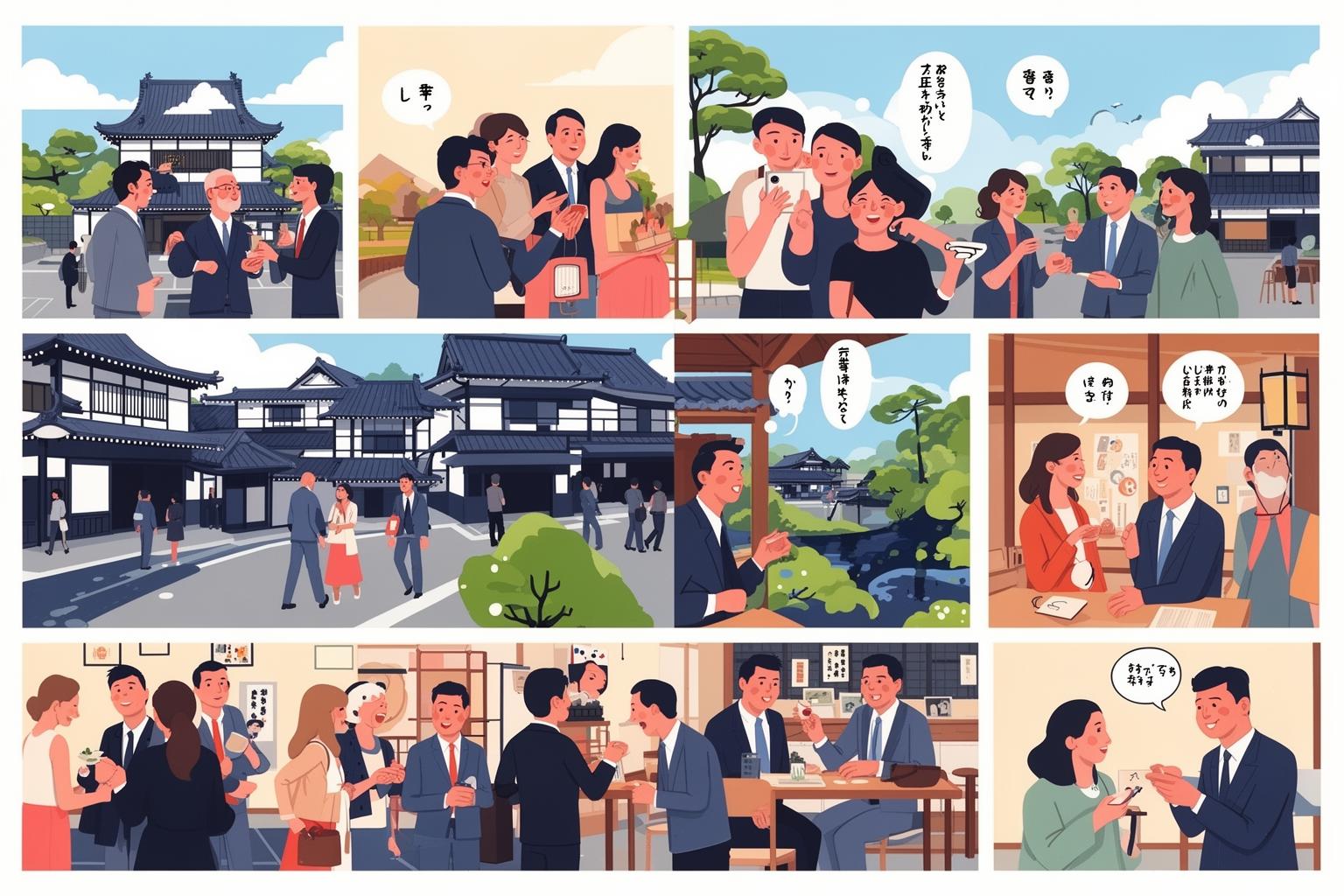
Perhaps the most immediate and striking difference for any foreigner living in Japan is the style of communication. The journey from Osaka to Kurashiki crosses a significant conversational divide. In Osaka, communication is dynamic, interactive, and often comedic. It’s rooted in manzai, the traditional Japanese stand-up comedy featuring a funny man (boke) and a straight man (tsukkomi). This rhythm extends beyond the stage, shaping everyday interactions. People in Osaka engage actively: they tease, banter, and challenge what you say—not out of hostility but to show they’re listening and participating. If you say something slightly silly or obvious, expect a quick-witted tsukkomi retort, a playful jab to keep you on your toes. A shopkeeper might comment on your outfit; an elderly woman at the bus stop might ask your origin and then offer unsolicited but kindly advice. There’s a warmth and immediacy that can be startling at first but quickly becomes endearing, breaking the stereotype of reserved, indirect Japanese communication.
What foreigners often miss is that this isn’t just generic “friendliness.” It’s a specific, participatory kind of friendliness. It invites—and nearly demands—a response. You’re expected to play along, have a comeback, and be part of the performance. Silence or a simple polite nod can sometimes be mistaken for coldness or disinterest. The aim of the conversation is not just to exchange information but to create a shared human connection, often eased by humor.
In Kurashiki, you return to a world of more standard Japanese politeness—a realm of immense courtesy, grace, and respect, but on a different wavelength. When entering a shop, you’re greeted with a sincere and polite “Irasshaimase.” The shopkeeper is helpful, professional, and maintains a respectful distance. Transactions proceed with quiet efficiency and multiple bows. The conversation is pleasant but follows a predictable, formal script. There is no teasing, no personal prodding, no expectation of witty banter. The interaction is smooth, frictionless, and perfectly agreeable—this is the Japan frequently portrayed in guidebooks.
Experiencing these two styles within a 24-hour span is deeply revealing. Kurashiki’s quiet courtesy can feel wonderfully calming and civilized, but after months or years in Osaka, it may also feel somewhat distant. The absence of playful tsukkomi feels like a missing beat in conversational rhythm. This contrast deepens appreciation for Osaka’s unique social fabric. The city’s so-called “loudness” is actually a sign of social engagement. The ongoing back-and-forth builds community, breaks down barriers between strangers, and makes daily life more entertaining. The trip to Kurashiki highlights that Osaka’s way isn’t the universal Japanese way; it’s a distinct regional culture, and learning to enjoy its unique conversational dance is key to feeling at home there.
Dining Philosophies: Kuidaore vs. Curated Cuisine
Osaka’s identity is deeply intertwined with food. The city’s unofficial motto is kuidaore, roughly meaning “eat until you drop” or “eat yourself into ruin.” This is not merely a slogan; it’s a life philosophy. Food in Osaka represents abundance, flavor, and above all, community. It’s about gathering with friends around a teppan grill, flipping your own okonomiyaki—a savory pancake packed with cabbage and your favorite ingredients. It’s about standing on the street in Dotonbori, sharing a boat of freshly made takoyaki, hot octopus balls smothered in sauce and mayonnaise. It’s about digging into a platter of kushikatsu—deep-fried skewers of meat and vegetables—in a lively, no-frills Shinsekai restaurant, abiding by the one rule: “no double-dipping” in the communal sauce. Osakan cuisine is often hearty, unpretentious, and meant to be enjoyed enthusiastically. The atmosphere is as vital as the food, lively, slightly loud, filled with the joyous noise of people savoring an affordable, delicious meal.
In Kurashiki, dining mirrors the town’s overall aesthetic: refined, curated, and visually focused. Within beautifully preserved merchant houses are charming cafes and restaurants emphasizing presentation and local ingredients. Okayama Prefecture, known as the “Fruit Kingdom of Japan,” is showcased beautifully here. You’ll find cafes serving breathtaking fruit parfaits with perfectly sliced white peaches or gleaming Shine Muscat grapes arranged like jewels in a tall glass. The experience is first visual; you eat with your eyes. Lunch might be a teishoku set meal, served on elegant lacquer trays with multiple small bowls, each featuring a delicately prepared local specialty. Dining rooms are often quiet, with soft music encouraging hushed conversation and mindful eating. The focus is on savoring each bite, appreciating ingredient quality and culinary artistry. It’s a meal as a moment of calm reflection.
This is not a judgment of superiority but a difference in culinary language expressing distinct cultural values. Osaka’s kuidaore embodies its personality: generous, bold, direct, and centered on shared experience. It fulfills a primal hunger for both food and connection. Kurashiki’s culinary scene reflects its preserved beauty: elegant, restrained, and focused on aesthetic appreciation. A weekend in Kurashiki offers a delightful palate respite—a chance to indulge in a more delicate dining style—but it also sharpens your appreciation for Osaka’s food culture. Returning to the boisterous izakaya welcome, the aroma of grilling meat, and the simple, profound pleasure of a cheap, delicious, and messy okonomiyaki feels like a soulful homecoming.
The Return Journey: Re-entry into the Osaka Orbit
The final hours of a weekend getaway are just as significant as the beginning. The return journey is a gradual re-acclimation, a slow rise from the peaceful depths of Kurashiki back to the bustling surface of Osaka. The local train from Kurashiki to Okayama feels slightly more crowded and hurried this time. At Okayama Station, the calm gives way to the controlled chaos of a major Shinkansen hub. You hear the sleek hiss of bullet trains arriving and departing, clear and commanding announcements over the PA system, and the rolling of countless suitcases. You’re re-entering the main artery of Japan’s transport network, and the pace quickens at once.
Stepping off the Shinkansen at Shin-Osaka Station is the moment of truth. It’s a full sensory onslaught, but after 48 hours of quiet, it’s an onslaught you’re uniquely ready to assess. The first thing that strikes you is the sheer density of people. Not merely a crowd, but a river, a torrent of humanity moving in multiple directions simultaneously, each person with a destination and purpose. Then comes the sound. It’s not just noise; it’s a rich mosaic of urban life. The rumble of the Midosuji subway line below, the chorus of various train jingles, the cacophony of voices—businesspeople talking on their phones, teenagers laughing, station staff making announcements in the distinctively energetic Kansai accent. Finally, the scents. The faint, sweet aroma of butter and red bean from the waffle stand, the savory scent of dashi broth from a standing noodle bar, the ever-present delicious fragrance of grilled takoyaki from a nearby vendor. It’s all there, a sensory welcome mat declaring clearly: you are back in Osaka.
This re-entry is a crucial moment of insight. The weekend in Kurashiki acts like a tuning fork. It cleanses your sensory palate, so upon return, you experience Osaka with renewed clarity. You notice details to which you had grown numb. You perceive the incredible energy not as chaos, but as vitality. You hear overlapping conversations not as noise, but as the city’s vibrant, beating heart. The very things that may have felt overwhelming before now seem signs of life, evidence of a city that is awake and engaged. The trip wasn’t an escape from Osaka; it was a way to deepen your appreciation for it. The serene, beautiful silence of Kurashiki was the perfect preparation for once again embracing and understanding the glorious, beautiful noise of home.
Why a Quiet Canal Explains a Loud City
Living in Osaka is an immersive experience. The city exerts a magnetic pull, with a unique culture so strong that its contours can be hard to discern when you’re immersed in it. To truly grasp what drives Osaka, you need to step away. You have to stand on a quiet stone bridge in a town like Kurashiki, watching swans glide by, and feel the sharp contrast deep within you. A weekend escape like this is more than just tourism; it’s an ethnographic exploration. It’s a field study in what makes your adopted home stand apart from the rest of Japan.
You need the meticulously preserved architecture of the Bikan district to understand Osaka’s relentless, pragmatic drive for development defining its landscape. You need to experience the quiet, respectful courtesy of a Kurashiki shopkeeper to truly appreciate the interactive, comedic, and deeply human engagement of an Osaka merchant. You need the elegant, carefully crafted flavors of an Okayama fruit parfait to comprehend the philosophy of kuidaore, the joyous, communal, and unpretentious celebration of food that sustains Osaka.
The trip reveals that Osaka’s character is neither accidental nor default. It is a deliberate cultural choice. It’s a city that has consistently favored forward momentum over nostalgic preservation, direct engagement over formal distance, and robust substance over delicate aesthetics. It prizes a good deal, a good laugh, and a good meal shared with others above all else. Kurashiki offers a glimpse into a different version of Japan, one that is beautiful, serene, and deeply admirable. But for those of us who have made our lives in the Kansai metropolis, the return journey is always a confirmation. As the train pulls into the city and the familiar, chaotic energy surrounds you, there is a profound sense of relief and recognition. After 48 hours of picturesque calm, the glorious, messy, vibrant, and endlessly alive city of Osaka truly feels like home.