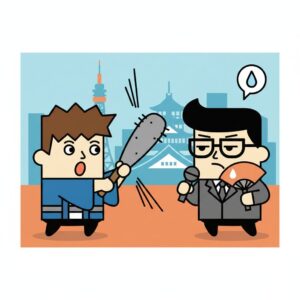
So you’ve decided to dive into Osaka. You’ve read the guides, you’ve watched the YouTube videos, and you’ve probably stumbled upon a phrase that’s presented as the secret handshake of this vibrant, unapologetic city: “Mokari-makka?” It rolls off the tongue with a certain rhythm, a friendly punch of sound that seems to capture the essence of Osaka’s commercial spirit. It translates, quite literally, to “Are you making a profit?” or more casually, “Making money?” The equally famous reply, you’re told, is a self-deprecating shrug in verbal form: “Bochi-bochi denna,” meaning “Well, so-so,” or “Just getting by.” It’s a perfect little theatrical exchange, a piece of cultural shorthand that promises a world of charming, money-minded merchants who greet each other with a directness that would make a Tokyoite blush. It paints a picture of a city where business isn’t just business; it’s the very fabric of social interaction. This is the legend of Osaka, the story sold to outsiders and, to some extent, the story Osakans tell about themselves. But you’re not here for the legend. You’re here for the reality. You’re thinking of building a life here, navigating its subways, finding your local supermarket, and making actual friends. And so the real question, the one that matters for your day-to-day existence, is this: does anyone, in the 21st century, actually say this? Is this a phrase you’ll hear while grabbing a coffee in Umeda or shopping for groceries in Tenma? Or is it a cultural artifact, a fossil preserved in comedy routines and tourist pamphlets? The answer, like Osaka itself, is more complex, more nuanced, and infinitely more interesting than a simple yes or no. Unpacking this one phrase is like pulling a thread that unravels the city’s entire history, its unique social psychology, and the subtle codes of its modern-day communication. It’s a journey into the heart of what separates Osaka from Tokyo, and what it truly feels like to live in a city built on deals, laughter, and a healthy dose of realism. Before we dive deep, let’s get our bearings.
To truly understand the conversational fabric of Osaka, it’s also worth exploring how locals use phrases like the signature ‘shiran kedo’ to soften assertions and build rapport.
The Legend of “Mokari-makka?”: The Merchant’s DNA
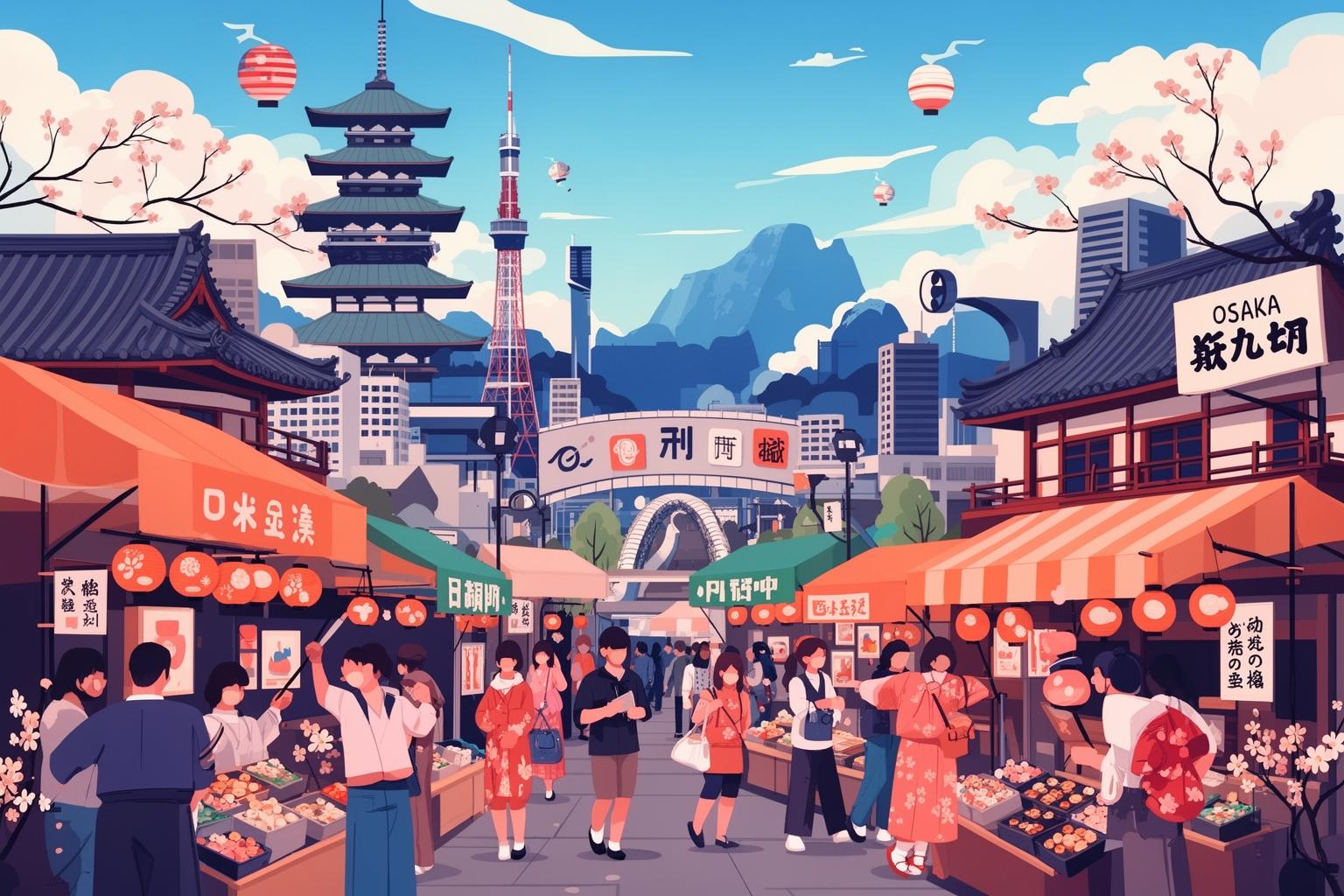
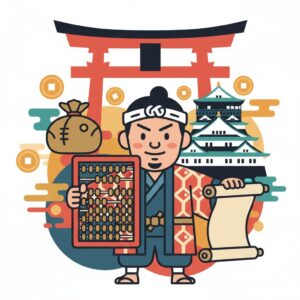
To understand why this phrase exists, you need to look back—way back. You have to rewind past the neon lights of Dotonbori and the towering skyscrapers of Umeda, to a time when Osaka was called Tenka no Daidokoro, the Nation’s Kitchen. During the Edo period, while Tokyo (then Edo) was the political center and seat of the samurai government, Osaka was the undisputed hub of commerce. It was a city of merchants, artisans, and financiers. Rice, the era’s currency, was traded here. Fortunes were made and lost in its markets. This wasn’t a city ruled by the rigid, honor-bound samurai codes; it was driven by the practical, results-focused mindset of the shonin, the merchants.
A Greeting Born from Commerce
In a city where a neighbor’s success could directly affect your own, business was never a private matter. It was the community’s lifeblood. A greeting like “Mokari-makka?” arose from this environment, not as nosy interference, but as a deeply practical and empathetic form of communication. It functioned on multiple levels. On one hand, it was a simple check-in: “How are things?” But it carried a deeper meaning—it was a way of saying, “I see you, I acknowledge your effort, and I hope it’s paying off.” It expressed a shared identity: you are a merchant, I am a merchant, and our mutual prosperity sustains this city. Think of it less as asking for a bank statement and more as a doctor asking, “How are you feeling?” The health of one’s business reflected the health of the individual, and by extension, the neighborhood. This sharply contrasts with the samurai culture of Edo, where money talk was often deemed inappropriate or beneath a warrior’s status. In Osaka, commerce was not shameful; it was a source of pride, identity, and community.
The Philosophy Behind the Phrase
The brilliance of the greeting lies in its straightforwardness, often mistaken for bluntness by outsiders. It cuts through the formalities that define much of Japanese communication. It is a direct connection to what truly matters in a practical, working community. It fostered solidarity. If someone was struggling, this greeting invited them to share their difficulties. If they were thriving, it was a subtle moment of shared celebration. The phrase itself embodies a worldview where life is fundamentally connected to work and economic well-being. This pragmatism is central to the Osaka identity. While a Tokyoite might break the ice by talking about the weather or changing seasons, an old-school Osakan would get straight to the point: How’s the flow of life—that is, the flow of business?
The Expected Response: “Bochi-bochi denna”
Equally important as the question is the response. The customary reply, “Bochi-bochi denna,” is a masterclass in social navigation. Saying, “Yes, I’m making a fortune!” would be seen as tacky. It would upset social harmony, spark jealousy, and come across as arrogant— in a word, uncool. The charm of “bochi-bochi” is its subtlety. It serves as a gentle deflection that preserves humility. It means “so-so,” but can cover a broad range of realities. If business is truly poor, it allows one to say so without complaint. If business is great, it acknowledges it without boasting. It keeps the conversation balanced. This verbal dance is quintessentially Osaka—honest but not boastful, direct but not intrusive. It’s a communication style that values both practicality and social grace, a balance that can be challenging for outsiders—and even other Japanese—to grasp immediately. It’s the first sign that in Osaka, not just what is said but how it’s said, along with the unspoken rules, matters most.
The Reality on the Streets: Who Says It, and Where?
Now, let’s fast forward to the present. You’re strolling through Shinsaibashi, surrounded by trendy shops and young people glued to their phones. Will you hear this legendary greeting? First, let’s address the most important reality check.
The Short Answer: Almost Nobody… in Everyday Life
If you’re under 50 and interacting with peers, coworkers in a modern office, or staff in a typical café or department store, the likelihood of hearing “Mokari-makka?” is virtually nonexistent. It’s not a standard greeting anymore. It has been replaced by the usual Japanese greetings like “Ohayo gozaimasu,” “Konnichiwa,” and “Otsukaresama desu.” Using “Mokari-makka?” in a contemporary, everyday setting would be as odd as walking into a coffee shop in New York and saying to the barista, “How art thou, good sir?” It’s antiquated. For most young professionals, students, or foreign residents, the phrase exists more as a piece of local folklore than part of daily conversation. To many young Osakans, it’s something their grandparents might have said or something they hear on TV. This is the first and most important misconception to clear up. Do not, under any circumstances, adopt this as your standard greeting. You won’t sound like a local; you’ll sound like you’re putting on a caricature.
The Long Answer: It Survives in Certain Circles
So, is the phrase extinct? Not entirely. It has faded from the mainstream but persists in specific cultural niches, like a rare species found only in a particular type of forest. To encounter it, you need to know where to look and, importantly, who to listen to.
The Old Guard of Shotengai
This is the primary domain of the authentic “Mokari-makka?” Visit a shotengai, one of Japan’s traditional covered shopping arcades. Not just the tourist-heavy ones, but the smaller, more local streets serving nearby neighborhoods. Places like the sprawling Tenjinbashisuji Shotengai, or many smaller ones winding away from local train stations. Here, the community is different. Many shops are family-owned and have been passed down for generations. The owners, often in their 60s, 70s, or 80s, have known each other for decades. They embody the old merchant culture. Listen closely as the fishmonger, rubber boots on, calls out to the woman running the vegetable stall across the way, or as the tofu maker delivers morning supplies to the local diner. In these moments, among these specific people, you might catch the greeting. It’s theirs—a sign of shared history, a nod to their trade, and a comfortable, familiar ritual. It’s not meant for outsiders. It forms part of their world, a verbal relic that still holds meaning within their close-knit circle.
The World of Small and Medium-Sized Enterprises (SMEs)
Osaka’s economy is still famous for its concentration of small and medium-sized enterprises (SMEs). This is not the corporate monolith world of Marunouchi in Tokyo. It’s a landscape of small factories, workshops, and family-run businesses. The business culture here is often more intimate and less formal. Among older business owners or presidents of small companies who have known each other for years, the phrase can still surface. It may be used at the start of a phone call or during a casual meeting, often with a wry, knowing smile. Here, it works as both an icebreaker and a sincere inquiry. It means, “We’re both working hard—how’s it going?” It reinforces a shared identity as Osaka entrepreneurs who value grit, pragmatism, and a straightforward approach. The phrase is a linguistic badge of honor distinguishing them from their more reserved Tokyo counterparts.
Comedians and Performers
This is perhaps the biggest reason the phrase remains famous nationally and internationally: television. Osaka is the undisputed capital of Japanese comedy. The entertainment powerhouse Yoshimoto Kogyo, based in Osaka, has produced generations of manzai (stand-up comedy) duos. For these comedians, the Osaka dialect (Osaka-ben) and its iconic phrases are integral to their act. They heavily emphasize the stereotype of the money-minded, fast-talking, witty Osakan. On stage and on screen, “Mokari-makka?” and “Bochi-bochi denna” are used repeatedly, guaranteed to get laughs. This has had a dual effect. It has immortalized the phrase, making it widely known across Japan. But it has also turned it into a performance, a caricature. It has cemented the stereotype in the public mind while marking the phrase as something you say when you’re “playing” an Osakan, not simply being one. For most Japanese outside Osaka, their exposure to the phrase comes through comedy, which further entrenches its status as a cliché rather than a living expression.
The Modern “Mokari-makka?”: How the Spirit Survives
The literal words may have fallen out of everyday use, but the essence of the phrase remains vibrant. It has simply transformed. To truly grasp modern Osaka, you need to learn to identify the spirit of “Mokari-makka?” in its contemporary forms. The merchant DNA still exists, only expressed differently in the 21st century.
From “Making Money?” to “How’s It Going?”: The Evolution of Pragmatism
Though people may no longer directly ask if you’re making a profit, the fundamental straightforwardness and concern for practical well-being persist. Even casual conversations in Osaka tend to revolve around real-life matters—work, business, and the daily grind. A friend from Osaka is more likely to ask, “How’s work? Busy?” or “How’s that project you mentioned going?” than a friend from Tokyo. There’s a sincere interest in understanding each other’s everyday realities. This pragmatism can be refreshing for foreigners used to lighter small talk. People openly discuss their jobs and side hustles without hesitation. Work is not a taboo topic but a key means of connection and understanding. The underlying message echoes the old phrase: your work is a significant part of your life, and its state reflects on you. So, how’s it going?
The Love of a Good Deal: The Consumer’s “Mokari-makka?”
The merchant spirit has shifted. If producers once asked “Mokari-makka?”, consumers now embrace the ethos of getting the best value for their money. This is the clearest and most everyday expression of Osaka’s commercial DNA. The concept of kosupa (cost performance) is almost sacred here. Osakans take great pride in their skill at scoring bargains and value for money. Conversations often include where to find the cheapest beer, which supermarket offers the best vegetable deals today, or how much was paid for new shoes (and how much was saved). The other iconic Osaka phrase, “Nambo?” (“How much?”), is the consumer’s rallying cry. It’s playfully shouted at shopkeepers and frequently discussed among friends. This isn’t about stinginess; it’s about savvy smartness. The hunt for a good deal is a game, and winning it brings genuine satisfaction. In Osaka, spending lavishly isn’t impressive—getting a great deal is. This mindset influences everything from lunch choices to clothing purchases. It’s a practical, streetwise philosophy that values cleverness over status.
Humor as Social Glue
The original phrase was often said with a playful, teasing tone. That same playful irreverence is fundamental to communication in Osaka. People break down social walls through humor and light-hearted banter. The spirit of “Mokari-makka?” lives on in how friends tease one another about work and money. For example, if a friend mentions working a lot of overtime, the typical Osaka reply isn’t just sympathy but a teasing jab: “Wow, you must be rolling in it! Dinner’s on you next time!” This isn’t a serious request for money; it’s affectionate teasing. It acknowledges their hard work while keeping the mood light. This style of dialogue—casual, humorous back-and-forth on everyday struggles and successes—is the modern evolution of the merchant’s greeting. It’s about connecting on a genuine, human level; in Osaka, a bit of humor and talk about money is often the quickest way to do that.
The Tokyo Contrast: Why This Phrase Screams “Not Tokyo”
Understanding why “Mokari-makka?” is so distinctly Osakan becomes even clearer when contrasted with the cultural backdrop of Tokyo. The phrase and the mindset it embodies illustrate a fundamental divergence in the social frameworks of Japan’s two largest cities.
Formality vs. Familiarity
In a typical Tokyo business environment, communication is governed by layers of formality and established phrases. The standard greeting, “Osewa ni natte orimasu” (“Thank you for your continuous support”), exemplifies this perfectly. It is polite, respectful, and maintains a professional distance, creating a smooth, frictionless surface for interaction. Now, imagine a Tokyo businessman greeting a client with “Mokari-makka?” It would be unthinkable—an alarming breach of etiquette, perceived as rude, intrusive, and deeply unprofessional. This underscores the core difference. Tokyo culture often emphasizes tatemae, the public facade that preserves harmony through propriety and adherence to established rules. In contrast, Osaka culture tends to value honne, the expression of one’s true feelings and intentions. The Osaka approach strives to foster harmony not by maintaining distance, but by bridging it, rapidly establishing a familiar, human-to-human connection. The phrase, in its straightforwardness, serves as a tool for this.
The Public and Private Sphere
In Tokyo, the boundary between the public/professional sphere and the private sphere is far clearer and more rigid. Work life and personal life are generally kept separate, with conversations among colleagues largely confined to safe, work-related topics. In Osaka, these distinctions are much more fluid. Because the city’s identity is deeply intertwined with work and commerce, discussing your business is tantamount to discussing your life. It is not uncommon for business relationships to feel more like personal friendships, complete with teasing and banter. For foreigners, this can be one of the most striking differences between the two cities. An Osaka workplace might feel more intrusive or chaotic to someone accustomed to Tokyo’s structured professionalism, but it can also seem warmer, more familial, and more authentic. It is a trade-off between predictable formality and unpredictable familiarity.
Money as a Taboo Topic
Throughout most of Japan, money is a highly private and often taboo subject in casual conversation. You don’t ask people what they do for a living immediately upon meeting, nor do you inquire about their financial situation. Osaka is the notable exception. While it remains rude to ask someone’s exact salary, discussing business success and financial well-being is far less fraught. The legacy of “Mokari-makka?” fosters a culture where the economic aspect of life is acknowledged openly and without shame. It is regarded as a natural and important part of human experience—something to be talked about, joked about, and empathized with. This open, pragmatic attitude toward the material realities of life is perhaps the most enduring legacy of Osaka’s merchant heritage, continuing to shape the city’s unique character today.
A Foreigner’s Guide to “Mokari-makka?”
So, you’ve taken in the history, the context, and the modern reality. What does this all mean for you, a foreigner navigating daily life in Osaka? How can you apply this knowledge in real-life situations?
Should You Ever Use It?
Let’s be perfectly clear: as a general rule, no, you shouldn’t use this phrase. It belongs to a specific generation and subculture. When a foreigner uses it, it almost always comes across as a parody. It sounds like you’re imitating a stereotype seen on TV. At best, it might earn a surprised laugh, but it could just as easily be taken as slightly mocking or, at worst, simply odd. It’s a high-risk, low-reward conversational move. Your aim is to connect genuinely, not to act out a cultural caricature. Therefore, it’s a phrase to understand, appreciate, and store away as a fascinating cultural artifact. It’s a tool for observation, not for personal use.
What to Listen For Instead
Your real task is to attune your ear to the spirit of “Mokari-makka?” that runs through modern conversation. Listen for the practical, straightforward questions your friends and colleagues ask. Notice how often conversations revolve around work—not in a complaining tone, but as a genuine point of connection. Observe the city’s fascination with kosupa. Notice the excited buzz about a great sale at the local department store or a new lunch spot offering excellent value. Feel the rhythm of playful teasing, the way humor bridges gaps and expresses affection. When you start noticing these things—the directness, the pragmatism, the focus on value, and the ever-present humor—you’ll realize you’re hearing the real, living language of Osaka. You’re hearing the echo of “Mokari-makka?” in countless modern forms.
How to Respond if You Hear It
On the off chance you find yourself in the perfect moment—maybe you’ve become a regular at a small, family-run shop in a traditional neighborhood, and the elderly owner finally feels comfortable enough to greet you with a classic “Mokari-makka?”—what should you do? First, smile. Understand that this is a sign of acceptance, a playful invitation into their world. Don’t be embarrassed. The correct, and indeed the only, response is to deliver the other half of the ritual. With a slight smile and perhaps a small shrug, say, “Bochi-bochi denna.” By doing this, you’re not only giving the right answer; you’re showing a deep cultural understanding. You’re signaling that you’re in on the joke and fully grasp the exchange. You’re closing the loop on a form of communication passed down through generations. In that one brief interaction, you’ll have crossed from simply living there to truly connecting with the heart of Osaka.