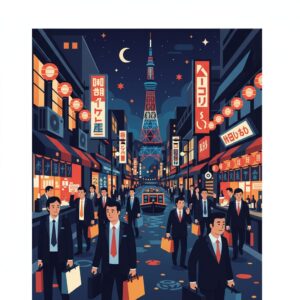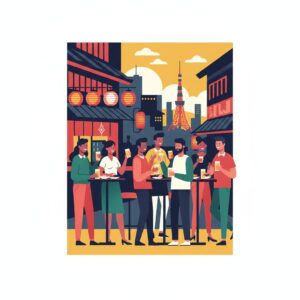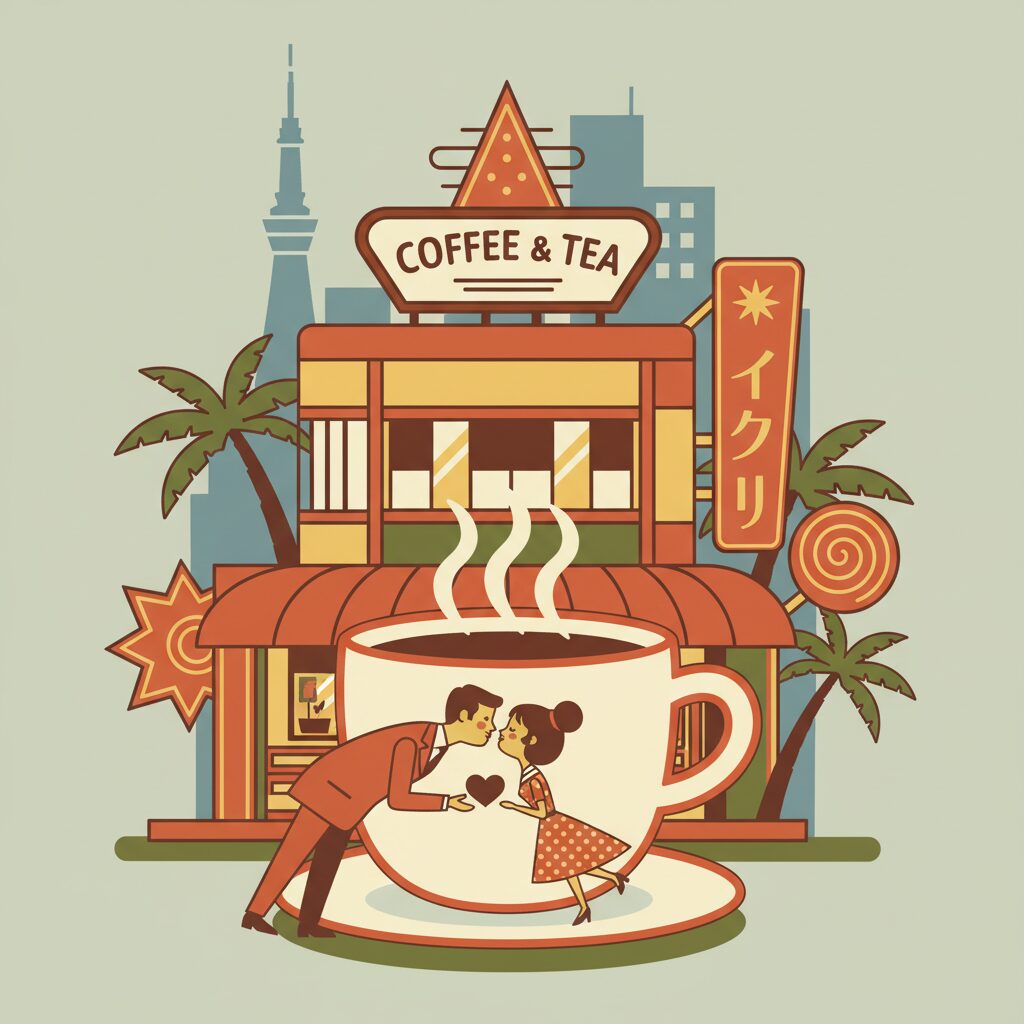
Step off the train at Umeda Station during the morning rush, and you’ll be swept into a human river, a torrent of dark suits and determined faces flowing towards the gleaming office towers that pierce the sky. It’s a scene you could find in any major global city, a universal tableau of modern capitalism. Tokyo, of course, has perfected this ballet of efficiency. The trains are silent, the commuters are synchronized, and the goal is singular: get to your desk, plug in, and produce. You might grab a plastic-wrapped onigiri and a canned coffee from a convenience store, consumed while speed-walking, a fuel stop in the race of the day. From the outside, Osaka’s morning rush can look deceptively similar. The crowds are there, the energy is palpable. But look closer, just off the main thoroughfares, down a quiet side street or tucked beneath the elevated train tracks, and you’ll find the entrance to another world. It’s a world where the clock slows down, where the frantic energy of the commute dissipates like steam from a kettle. This is the world of the kissaten, the classic Japanese coffee shop, and its most sacred daily ritual: mōningu sābisu, or ‘Morning Service’.
To a newcomer, the term ‘Morning Service’ is baffling. Is it a religious ceremony? A special kind of delivery? The reality is both simpler and far more profound. It’s a breakfast deal, an economic anomaly that has survived decades of change. Buy a cup of coffee, and for a pittance more—or sometimes, for nothing at all—you receive a small meal. Typically, this involves a slice of thick, fluffy toast, a hard-boiled egg, and perhaps a tiny salad. It’s not gourmet, and it’s not meant to be. This ritual, however, is one of the most revealing windows into the soul of Osaka. It’s a daily practice that decodes the city’s DNA, explaining its unique blend of pragmatism, community, and stubborn independence far better than any travel guide ever could. It’s where you learn that in Osaka, value is more than just a price tag, a conversation with a stranger is not an intrusion, and the best things in life are often the ones that refuse to change. To understand why Osaka feels so fundamentally different from Tokyo, you don’t need to visit a castle or a famous temple. You just need to push open the heavy door of a neighborhood kissaten at eight in the morning, find a worn-out velvet seat, and order a ‘Morning’. What you’ll discover is not just a cheap breakfast, but the very heartbeat of the city.
After experiencing the soul of Osaka through its morning kissaten ritual, you might find yourself craving a slower pace, perhaps by planning a relaxing onsen-hopping weekend getaway to Kinosaki.
Deconstructing ‘Morning’: The Anatomy of a Deal

More Than Just Coffee: The Unspoken Agreement
Let’s be perfectly clear about what ‘Morning Service’ really is. It’s a business transaction, but one that feels like a gift. Between roughly 7 AM and 11 AM, when you order a single beverage—almost always coffee or tea, priced around 400 to 550 yen—you qualify for the ‘Morning Set’. The most classic, iconic version of this set includes three items: coffee, toast, and egg. This isn’t just any toast; it’s atsugiri toast—a thick slice, often over an inch, of soft, white shokupan (milk bread), toasted to a golden brown and generously spread with butter or margarine that melts into its spongy surface. Alongside it is a single hard-boiled egg, or yude tamago, sometimes still warm, served in a small porcelain cup with a shaker of salt. The coffee itself is rarely a trendy, third-wave, single-origin brew. Instead, it’s typically a dark, robust blend, brewed using a siphon or flannel drip method, preserving a flavor profile largely unchanged for fifty years. It’s strong, straightforward, and unapologetically old-fashioned.
This basic format serves as the foundation, but variations are common. Some places offer a choice: a boiled egg, a small portion of scrambled eggs, or ogura toast with a spread of sweet red bean paste. Another popular inclusion is a small salad, usually a simple mix of shredded cabbage and lettuce dressed with sesame. The focus isn’t culinary innovation; it’s about principle. For the price of a single drink, you receive a legitimate, albeit modest, meal. This is the unspoken contract of Osaka mornings. You, as the customer, give your patronage to a local business. In return, the business gives you something extra—a tangible token of appreciation. It’s a gesture that says, “Thanks for starting your day with us. Here, have some toast.” This concept is deeply rooted in Osakan values of otoku, the joy of getting a good deal, more than what you actually paid for. It’s not about being cheap. An Osakan will gladly spend money on quality goods, but won’t tolerate paying for something that isn’t worth it. The ‘Morning Service’ epitomizes this mindset: maximum value, a smart and sensible way to start the day that satisfies both stomach and wallet.
The Price is Right: An Economic Time Capsule
The most remarkable thing about ‘Morning Service’ is its price. Even today, you can easily find a complete set for under 500 yen. Consider that—for the cost of a single latte at a modern Tokyo café or even a Starbucks in Osaka, often more than that, you get coffee plus a meal. This pricing model is a living relic from a different economic era. It dates back to the post-war Showa Period, a time of rapid growth when these kissaten first became community hubs. Prices have risen over the decades, naturally, but very slowly, seemingly disconnected from inflation and economic changes happening beyond their walls.
How is this sustainable? The answer lies in their business model, which fundamentally differs from that of modern chain cafés. A kissaten is not designed to maximize profit from each customer. Instead, it relies on loyalty, volume, and low overhead. The owners, often an older couple known as the ‘Master’ and ‘Mama-san,’ usually own the premises, so they aren’t weighed down by high rents typical of prime commercial locations. Ingredients for the ‘Morning Set’—bread, eggs, coffee beans—are purchased in bulk at wholesale prices from longtime local suppliers. Profit margins on a 450-yen ‘Morning’ are razor-thin. But the Master isn’t aiming to make a huge profit from a single customer; they want to fill every seat every morning with regulars who come day after day, week after week. It’s a business built on rhythm and repetition. This reflects Osaka’s history as shōnin no machi, the “city of merchants.” In a merchant town, reputation is everything. A good deal builds trust, and trust creates a loyal customer base that sustains you for life. The ‘Morning’ isn’t just a loss leader to lure you in; it’s the foundation of a long-term relationship, a daily reaffirmation of a pact between shopkeeper and community. It’s a model focused on stability and mutual benefit rather than aggressive expansion—a concept that can seem foreign in today’s hyper-capitalist world.
The Kissaten Itself: A Living Room for the Neighborhood
Velvet Chairs and the Scent of Stale Smoke
To grasp the ‘Morning’ ritual, you first need to understand the space where it unfolds. A traditional kissaten is not just a ‘cafe’—labeling it as such feels like a mistranslation. Step inside, and you are instantly transported back in time. The color scheme consistently consists of browns, ochres, and burgundy. The lighting is dim, provided by ornate, low-hanging lamps featuring stained-glass or frosted shades. The furniture is substantial and sturdy: dark, polished wood tables; chairs upholstered in cracked vinyl or plush velvet; and deep, inviting booths that encourage you to sink in and linger. The air is heavy with the rich aroma of dark-roasted coffee, yet often another scent lingers in the upholstery and curtains—the ghost of cigarette smoke. Until recently, smoking was common in these venues, and despite modern bans, the smell remains ingrained in the building’s very essence. While this detail may be off-putting to some, it is an authentic part of the sensory experience.
This space is not meant for productivity. Laptops are rare, if present at all. Power outlets are scarce and not freely available. The Wi-Fi, when it exists, is often password-protected deliberately. This environment is purposefully created as an escape from the pressures of modern life. It is truly a ‘third place’—neither home nor work—where you can simply be. You can read the newspaper, provided on a wooden rack. You can browse shelves of worn manga volumes. You can gaze out the window. Or you can indulge in the lost art of quiet contemplation. The contrast with a typical Tokyo coffee shop couldn’t be sharper. A Tokyo cafe is usually bright, minimalist, and functional—designed for efficiency: get your coffee, maybe work for an hour, then leave to make room for the next customer. The seating is often hard and uncomfortable, subtly encouraging turnover. In an Osaka kissaten, the message is reversed. The plush chairs, the soft lighting, and the unhurried service all say, “Take your time. No rush here. This space is yours for as long as you need it.”
The ‘Master’ and the Regulars: An Unspoken Social Network
At the heart of every kissaten is the ‘Master’ (masutā). He (and it is almost always a he, often alongside his wife) embodies the spirit of the establishment. He is more than a barista or manager; he is the curator of the space, the keeper of its history, and the steady anchor of its community. He has likely stood behind the same wooden counter for thirty, forty, or even fifty years. He knows his regulars not only by name, but by their life stories, achievements, and hardships. Their relationship is one of quiet, respectful familiarity.
The social dynamics of a kissaten are captivating to observe. A familiar cast of characters appears every morning like clockwork. There’s the elderly gentleman in his flat cap, who claims the same window seat daily to read the horse racing section of the sports paper. A group of neighborhood obachan (older ladies) gather in a booth, their conversation a lively, cheerful hum filling the room. There’s the local small business owner who stops for coffee and a chat with the Master before opening his shop. There’s the salaryman, silently fortifying himself with toast and coffee before heading into the corporate battlefield. These people aren’t necessarily friends in the Western sense, but they form a community. They nod greetings to each other, exchange small talk about the weather or the Hanshin Tigers baseball team. The Master moves among them, refilling water glasses, delivering orders without needing to ask, and occasionally adding a comment to the conversation. This is Osaka’s invisible social fabric at work—a low-stakes, high-comfort social network operating offline. In the more anonymous, transient environment of Tokyo, forming such casual, neighborhood-based connections can be much harder. In an Osaka kissaten, it’s the most natural thing in the world. It’s a living room for those who may have no one to talk to at home—a place where you can be alone, but not lonely.
The Osaka Mindset on Display: Pragmatism, Community, and a Touch of Stubbornness

‘Kospa’ Culture: The Art of Maximizing Value
To grasp one of the core driving forces behind the Osaka mindset, you need to understand the term kosupa. It’s a blend of the English words ‘cost performance’, and Osakans have elevated it to an art form. Kosupa isn’t about buying the cheapest option available; it’s about getting the absolute maximum return on any investment, whether that’s time, money, or effort. It’s about being efficient, clever, and securing the best possible deal. The ‘Morning Service’ is considered the ultimate expression of kosupa. Let’s analyze its value from an Osakan viewpoint. For 500 yen, you’re not merely buying coffee and some food. You’re renting a comfortable seat in a calm, pleasant setting for an hour or more. You gain access to complimentary reading materials like newspapers, magazines, and manga. You’re served by a familiar face in a place where you feel a sense of belonging. Plus, you get a meal that will sustain you until lunchtime. Put all these factors together, and the value is remarkable. Why would anyone pay 600 yen for a single paper cup of coffee to-go when this alternative exists?
This fixation on kosupa stems directly from Osaka’s merchant heritage. For centuries, this city was Japan’s commercial center, where fortunes were built and lost on thin margins. Merchants had to be savvy, innovative, and always focused on delivering value to survive. This mindset has permeated the city’s culture. Osakans are famously straightforward about money, openly discussing prices, engaging in good-natured bargaining, and celebrating a great deal. In Tokyo, openly talking about money can be seen as rude or inappropriate. In Osaka, it’s simply common sense. The kissaten’s ‘Morning Service’ daily embodies this philosophy. It’s a practical, logical, and deeply satisfying transaction for all involved. The customer receives exceptional value, and the owner secures a steady, dependable income. It’s a perfect, self-sustaining cycle of sensible pragmatism.
The Ritual of Regulars: Beyond a Simple Morning Meal
For many customers, the daily visit to the kissaten is much more than just an affordable breakfast. It’s an essential part of their day, a ritual that offers structure, comfort, and human connection. This is especially true for the city’s large retiree population. For many elderly people living alone, the morning trip to the kissaten may be the most meaningful social interaction of their day. It gives them a reason to leave the house, a place to see familiar faces, and a way for the community to keep watch over one another. If a regular doesn’t appear for several days, the Master will notice. Someone might even call or visit their home to check in. In this way, the kissaten acts as an informal, grassroots social welfare network—a safety net woven from coffee and conversation.
A foreigner might stroll past a kissaten, glance inside, and see only a room of older people smoking and reading newspapers. It might look outdated, irrelevant, or even a little sad. But such a view misses the deeper reality. What they are witnessing is the quiet, vital work of community upkeep. They see a space actively countering the loneliness and isolation that are often part of modern urban life. The connections formed here aren’t intense or dramatic, but they are genuine and consistent. This daily ritual provides a feeling of stability amid rapid change. It’s a reminder that you belong somewhere, that you’re known, and that your absence would be noticed. It’s a powerful antidote to the anonymity of a megacity—something that chain cafés, with their transient staff and focus on speed, can never truly replicate.
Why Your Local Kissaten Has Stayed the Same Since 1975
One of the most notable traits of a classic kissaten is its complete disregard for contemporary trends. The décor, the menu, the music (often soft jazz or classical), and even the shape of the coffee cups all seem frozen in time, back to the peak of the Showa Era. This isn’t a deliberately crafted ‘retro’ style aimed at hipsters. It’s authentic. The owners haven’t renovated because, in their view, there’s nothing to fix. The velvet seats remain comfortable. The siphon coffee maker still brews excellent coffee. The customers keep coming. So why change?
This reflects a certain Osakan stubbornness, a practical resistance to change for the sake of change. While Tokyo constantly reinvents itself, tearing down the old to build the new and chasing every global trend, Osaka moves at a slower, more measured pace. There is a deeply held belief here that if something works, you maintain it. This isn’t laziness or a lack of ambition; it’s wisdom. A confidence in knowing who you are and not feeling the need to constantly apologize for it or pretend to be something else. This authenticity is what gives these places their unique charm. They aren’t putting on a retro act—they are retro. They are living museums of a past era, not because they’ve been preserved intentionally, but because they have been continuously lived in. This attitude is evident throughout Osaka—in its old shopping arcades (shōtengai), family-run restaurants, and resilient neighborhood businesses. It’s a city that values continuity and character over novelty and gloss, a quality that makes it feel more grounded, more human, and more real than many other modern metropolises.
How to Navigate the Kissaten Like a Local
Reading the Room: Kissaten Etiquette
Visiting a traditional kissaten for the first time can feel daunting, but the rules are simple and mostly unspoken. The most important rule is to grasp the purpose of the space. This is not a Starbucks, nor is it a co-working space or a place for loud conversations. Think of it more like a library that serves coffee. Keep your voice low. If you need to take a phone call, step outside. Under no circumstances should you pull out your laptop and plan to stay for hours. While you are welcome to relax and linger, treating it as your personal office breaks the unwritten social contract. The space is meant for quiet enjoyment and relaxation.
When you enter, the Master will usually greet you and indicate an open seat. Ordering is simple. Between opening and around 11 AM, all you need to say is ‘Mōningu, kudasai‘ (‘Morning, please’). If there are different sets (e.g., A, B, C), they will be shown on a small sign on the table or a blackboard on the wall. Just point to the one you want. Your coffee will arrive first, followed shortly by your food. Feel free to browse the newspaper rack or manga shelf; these are shared resources for all customers. When finished, take the bill, which will be waiting at your table, to the cash register by the entrance to pay. There’s no need to rush, but during busy morning hours, lingering too long after finishing can be inconsiderate if others are waiting. The key is to be observant, quiet, and respectful of the tranquil atmosphere that the Master and regulars have nurtured.
Finding Your Own Spot: From Namba to the Shotengai
The best kissaten won’t be listed in glossy guidebooks or trending on social media. Their charm comes from their everyday nature and deep integration into the neighborhood. To find them, you need to explore. The richest areas to search are outside the main tourist hubs. Wander down side streets in business districts like Yodoyabashi or Honmachi, and you’ll find spots that have been serving local office workers for generations. Explore the seemingly endless covered shopping arcades, or shōtengai, such as the famous Tenjinbashisuji. These arcades are the lifeblood of Osaka’s neighborhoods and are always dotted with classic kissaten. Look for modest entrances, faded plastic food models in display cases, and hand-painted signs advertising ‘モーニングサービス’. Don’t hesitate to venture into residential areas near local train stations. Nearly every station, no matter how small, will have one or two beloved local kissaten nearby. The surest sign of a good one is the presence of regulars. If you see a steady flow of locals coming and going, you’ve likely found a place with a good Master, great coffee, and a welcoming atmosphere.
When Morning Ends: The Lunch Set and Beyond
The kissaten’s role as a community hub doesn’t end when ‘Morning Service’ finishes. Around 11:30 AM, the menu board switches to advertise the ‘Lunch Set’ (ranchi setto). Sticking to the principle of kosupa, this is a simple, hearty, and very reasonably priced meal. Classic kissaten lunch options include dishes like Napolitan spaghetti (a nostalgic ketchup-based pasta), curry rice, or omu-raisu (omelette rice), usually served with a small salad and coffee or tea, all for under 1,000 yen. Afternoons are quieter. The lunch rush fades, and the kissaten returns to being a peaceful refuge for those seeking to escape the heat or noise of the city. You might spot quiet business meetings, friends catching up over cake, or individuals enjoying solitude with a book. The kissaten is a versatile institution, adapting throughout the day to serve the needs of the community, always a reliable and comforting presence.
The Kissaten as a Mirror: Reflecting Osaka’s Soul
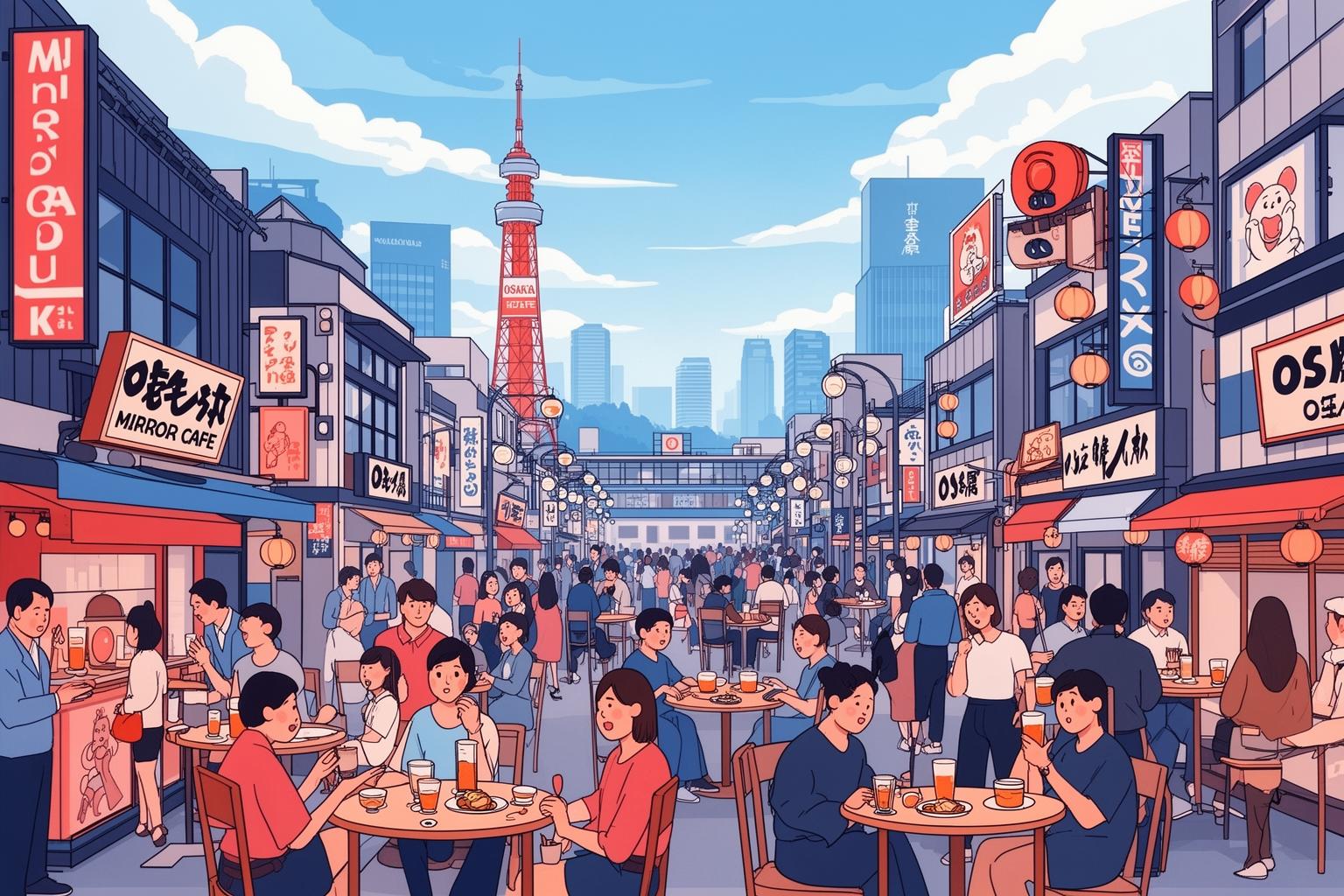
A Counterpoint to Tokyo’s Efficiency Obsession
The lasting appeal of the kissaten and its ‘Morning Service’ ritual vividly illustrates the cultural divide between Osaka and Tokyo. Tokyo is a city devoted to efficiency. Its entire infrastructure—from the astonishingly punctual train system to ubiquitous convenience stores—is designed to eliminate friction and save time. In Tokyo, time is treated as a resource to be maximized. The culture emphasizes individualism, where people navigate the crowded urban environment with polite but firm personal boundaries and a focus on their tasks. The chain coffee shop perfectly embodies the Tokyo mindset: fast, predictable, and anonymous. You receive exactly what you expect, with minimal human interaction, enabling you to move through your day quickly.
Osaka, as represented through the kissaten, offers a powerful alternative narrative. It implies that not all time must be optimized. It celebrates the value of the ‘unproductive’ moment—the leisurely coffee, casual conversation, the time spent simply observing the world. By Tokyo standards, the kissaten is gloriously inefficient. Service is not immediate. The ordering process is personal rather than automated. The aim is comfort, not quick turnover. This intentional slowing of time resists the relentless pace of modern life. It declares that community and human connection are as important, if not more so, than speed and productivity. It serves as a daily reminder that a city is not merely an engine of commerce but a home for its people.
The Misconception of ‘Friendliness’
One common cliché about Osaka is that its people are ‘friendly’. While not inaccurate, this term does not fully capture the social nuance. The friendliness of an Osakan is not the polished customer-service friendliness found elsewhere. It is something more raw, direct, and deeply rooted in the city’s merchant tradition. In a trade-centered city, communication is essential. You must be able to talk, negotiate, and quickly build relationships. This has created a culture that is more open, more curious, and less formal than Tokyo’s.
The kissaten serves as a training ground for this interaction. It’s a place where chatting with strangers is normal. The Master might ask where you’re from or what brings you to the neighborhood. This isn’t nosiness; it’s a way of weaving you into the social fabric, acknowledging your presence. This daily practice of casual, low-stakes communication in shared spaces creates the city’s sense of ‘friendliness’. It’s not a personality trait but the visible outcome of a society that values community over privacy and directness over formality. Foreigners accustomed to the more reserved etiquette of other Japanese cities may be surprised, but once they understand its roots, they see it as a form of inclusion rather than intrusion.
The Future of the Kissaten: An Endangered Tradition?
Despite their enduring charm, the future of traditional kissaten is uncertain. The Masters are aging, and their children, often pursuing different careers in a changing Japan, are not always willing to inherit the demanding, low-margin family business. Competition from sleek, modern chain cafes is fierce. The old buildings that house these establishments are frequent targets for developers. Each closure creates a small tear in the city’s social fabric. When a neighborhood kissaten shuts down, it’s not just a business lost; a community loses its living room, regulars lose their daily gathering spot, and the city loses a piece of its soul.
Yet, the ritual endures. For now, thousands of these time capsules remain across Osaka, each bearing witness to a different way of life. To truly understand this city—to go beyond its famous cuisine and vibrant nightlife—you must participate in this ritual. Find a local kissaten, push open the heavy wooden door, and let the warm, coffee-scented air surround you. Order the ‘Morning’. Sit back and observe. Listen to the hum of conversations, the clinking of cups, the rustle of newspapers. In this simple, unpretentious scene, you will discover the true, beating heart of Osaka—a city that recognizes the profound value of a good deal, a comfortable chair, and a place where someone knows your name. It’s a wisdom served daily, accompanied by thick toast and a perfectly boiled egg.