When I first moved from Tokyo, I thought I understood Japan. I understood the quiet ballet of the convenience store, the precise, unspoken rules of the train, the serene formality that pads the edges of daily life. I thought commerce was a settled affair, a matter of fixed prices and polite, predictable exchanges. Then I came to Osaka, and I realized I didn’t understand the half of it. My first trip to a local ‘shotengai,’ one of those covered shopping arcades that pulse like the city’s arteries, was a complete system shock. A fishmonger with a voice like gravel and a laugh like a thunderclap wasn’t just selling me fish; he was performing a one-act play about the virtues of his mackerel, grilling me about my dinner plans, and, in a whirlwind of gestures and mock indignation, seemingly inventing a price on the spot based on my reaction. In Tokyo, a transaction is a quiet transfer. In Osaka, a transaction is a conversation, a negotiation, a relationship born in the space of a few minutes. It’s a dance. And the music it moves to is the ‘Akindo’ spirit—the soul of the merchant.
This isn’t something you’ll find in a guidebook, neatly filed between castle visiting hours and recommendations for takoyaki stands. This is the city’s operating system, the code running beneath the surface of every purchase, every interaction, every loud, life-affirming argument over the price of a bundle of spring onions. It’s the reason Osaka feels so fundamentally different, so kinetically charged compared to the polished composure of Tokyo. To live here, to truly understand the rhythm of this magnificent, chaotic city, you have to understand the heart of the ‘Akindo’. It’s a philosophy that has shaped everything from the way people talk to the way they eat to the way they build their communities. Forget what you think you know about Japanese retail etiquette. We’re in Osaka now. And here, the price tag is just a suggestion, a starting point for the real business of connection.
This vibrant, community-focused approach to commerce is deeply intertwined with the city’s unique social fabric, which you can explore further by understanding the role of the local neighborhood associations, or ‘chonaikai’.
What is the ‘Akindo’ Spirit, Really?
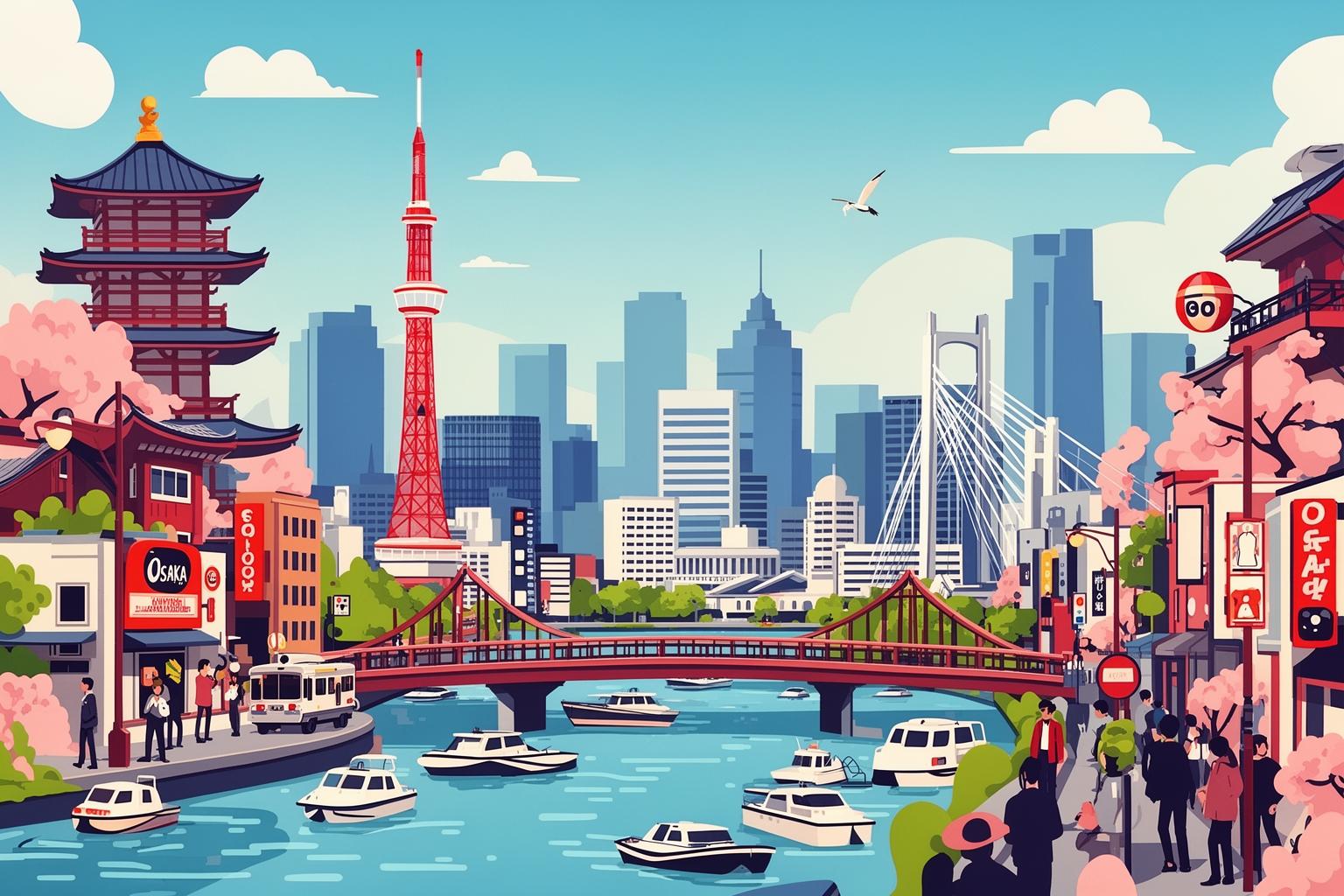
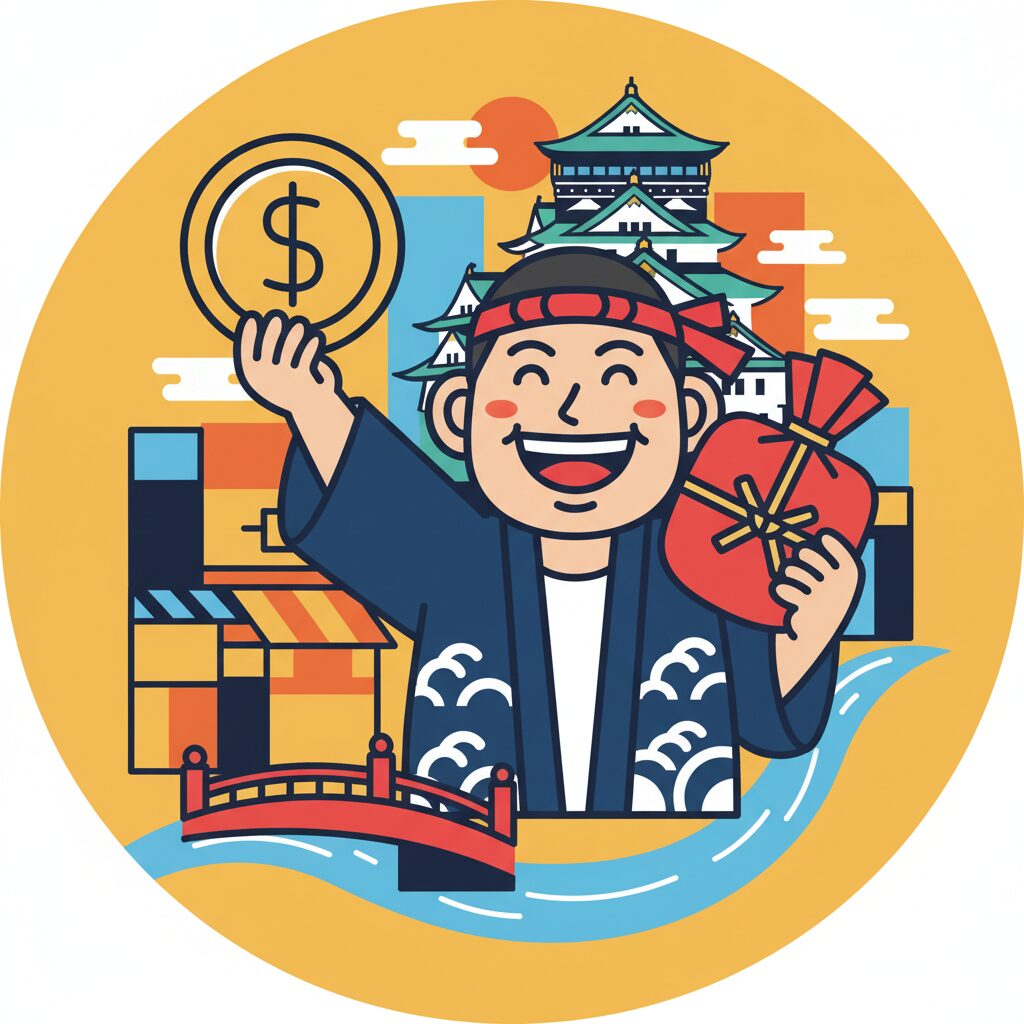
To understand Osaka, you first need to break down the word ‘Akindo’ (商人). While it simply translates to ‘merchant’ or ‘shopkeeper,’ that’s like calling a symphony merely a collection of notes. In Osaka, ‘Akindo’ represents an identity, a philosophy, and a worldview. It’s a spirit shaped over centuries in Japan’s commercial heartland—a city built not by samurai lords or imperial courts, but by rice brokers, textile traders, and determined entrepreneurs. This history is not just a museum footnote; it is a living, breathing force driving the city’s social dynamics. The spirit of the ‘Akindo’ extends beyond profit. It embodies the craft of business itself, known to Osakans as ‘shobai’ (商売). ‘Shobai’ encompasses the entire performance: the art of attracting customers, the skill of showcasing products, the joy of a mutually satisfying deal, and the vital effort to ensure customers return tomorrow. It’s a comprehensive approach to commerce that places human interaction and value at its core.
Beyond the Balance Sheet: A Philosophy of Commerce
In Tokyo, service is often defined by its perfection and invisibility. A department store clerk exemplifies flawless, frictionless efficiency, facilitating transactions with minimal departure from a scripted protocol. The experience is smooth, elegant, and deeply impersonal. In contrast, the ‘Akindo’ philosophy in Osaka fosters a very different ideal. Here, good service is personal, memorable, and often loud. It’s about engagement. A shopkeeper’s value is measured not only in sales but in the ability to build rapport. They take great pride in their expertise, thoroughly knowing their products, and matching the right item to the right person. There’s a strong belief that a good deal leaves both buyer and seller feeling a bit clever and a bit victorious. The ‘Akindo’ isn’t just moving inventory; they’re curating an experience. They believe value lies not only in the item itself but in the entire process of acquiring it. This is why a simple vegetable purchase can turn into a ten-minute chat about the weather, neighborhood gossip, and the best way to pickle radishes. The radishes are merely an excuse for the interaction—the real product is the connection being fostered.
The Language of Transaction: Communication as Currency
The most striking difference for newcomers, especially from more reserved cultures or other parts of Japan, is the role of language. In Osaka, conversation lubricates commerce. Silence breeds suspicion, and a quiet customer is a puzzle to be cracked. The ‘Akindo’ deploys a flood of friendly, informal language to break the ice. Expect a hearty ‘Maido!’ (‘Thanks for your business,’ used as a general greeting) instead of a formal ‘Irasshaimase.’ They’ll ask where you’re from, what you’re cooking, and for whom. These aren’t idle questions; they are data points in the complex algorithm of ‘shobai.’ They build a profile, establish a connection, and warm you up for the main event: the negotiation. The dialogue is peppered with humor and exaggeration. A shopkeeper won’t just say his tomatoes are fresh; he’ll claim they were personally serenaded by songbirds this very morning. This playful, theatrical banter is essential. It transforms a sterile transaction into a human exchange, setting a foundation of goodwill that makes haggling feel less confrontational and more like a friendly game. Here, the currency isn’t just yen—it’s wit, charm, and shared laughter.
The Everyday Arena: Shopping as a Sport
If the spirit of ‘Akindo’ is the philosophy, then the city’s countless ‘shotengai’ are its grand arenas. These covered shopping arcades, some stretching for kilometers, form the vibrant heart of community life. Here, the abstract principles of Osaka commerce come alive as a loud, chaotic, and utterly thrilling experience. Shopping isn’t just a task to be finished; it’s a competitive sport, a daily ritual, and a key source of entertainment. Foreigners often see these places as mere tourist spots, especially renowned ones like Kuromon Ichiba Market or Shinsaibashi-suji. But for Osakans, they are the true centers of the universe. They serve as the community’s living rooms, where life unfolds publicly and exuberantly. Living in Osaka means having a relationship with your local shotengai; it’s where you learn the city’s rhythm, one bargain at a time.
The Shotengai: Living Corridors of Commerce
Entering a shotengai like Tenjinbashi-suji, Japan’s longest, is stepping into a sensory flood. The air is rich with the aroma of grilled eel, sweet soy sauce, freshly fried croquettes, and sharp pickles. The soundscape is a continuous wave of shopkeepers calling out their goods in distinctive, melodic voices, the clatter of pachinko parlors, bicycles weaving through the crowds, and neighbors chatting endlessly. Unlike Umeda’s sleek, curated malls, the shotengai is a jumble of raw, unfiltered life. Here, a tiny, centuries-old stall selling handmade tofu sits beside a flashy drugstore blasting J-pop, next to a quiet tea merchant who’s been in the same place for three generations. This isn’t a planned retail zone; it’s an ecosystem that evolved organically over decades. Old and new, traditional and modern collide and coexist in vibrant, noisy harmony. For Osaka’s residents, this is the default shopping mode. Supermarkets serve convenience and emergencies; the shotengai offers quality, value, and crucially, human connection.
The Art of ‘Negiri’: More Than Just Haggling
This aspect often intimidates outsiders. ‘Negiri’ (値切り), or bargaining, is deeply embedded in ‘Akindo’ culture but commonly misunderstood. It isn’t the aggressive haggling found elsewhere. In Osaka, ‘negiri’ is a subtle art, a delicate dance with unspoken rules. It’s certainly not about disrespecting the seller or diminishing their product’s worth. Quite the opposite: the right sort of ‘negiri’ shows you are an engaged, informed customer who values the item. Bargaining doesn’t occur at department stores, chain retailers, or convenience shops, nor over cheap items. It happens with independent sellers, market stalls, small electronics shops in Den Den Town, or family-run greengrocers. The key is the process. You don’t simply demand a lower price. First, you build rapport by admiring the product, asking questions, and showing genuine interest. Only then might you subtly suggest a discount with a phrase like ‘Chotto makete kureru?’ meaning ‘Can you make it a little cheaper for me?’ This is said with a smile, not as a command. The seller typically responds with a mock sigh, shares a playful hardship story, and then offers a small discount or more commonly, a counter-offer.
‘Omake’ Culture: The Power of the Little Extra
The most beloved counter-offer in this ‘negiri’ dance is the ‘omake’ (おまけ), meaning ‘a little extra’ or ‘a bonus.’ Instead of slashing 50 yen off your three apples, the shopkeeper may toss in a fourth, slightly bruised apple for free. Rather than discounting fish, the fishmonger might add a handful of clams for the soup you mentioned making. ‘Omake’ is pure ‘Akindo’ ingenuity. It lets sellers keep their official prices, preserving their ‘face’ and product value, while still giving customers the joyful sense of a special deal. This small gesture costs the seller little but earns immense loyalty. It transforms a simple transaction into the start of a long-term relationship. An ‘omake’ says, “I see you. I appreciate your business. Please come again.” For Osaka shoppers, receiving a good ‘omake’ is often more satisfying than a price cut. It’s a tangible mark of a successful exchange, a trophy from the sport of shopping. This contrasts sharply with Tokyo’s impersonal loyalty point cards. A point card is an algorithm; an ‘omake’ is a human connection.
Building a ‘Kao’: The Face-to-Face Economy
In Osaka’s ‘Akindo’ world, the ultimate currency isn’t money; it’s your ‘kao’ (顔), your face. Having a ‘kao’ means being recognized and known. It involves building a reputation and cultivating a network of personal relationships within your community’s commercial ecosystem. In an anonymous city like Tokyo, it’s possible to live for years as nothing more than a faceless consumer. In Osaka, however, that’s seen as a failure. The aim is to progress from being an ordinary customer to becoming a ‘joren-san,’ a valued regular. This status is earned gradually through steady patronage and friendly engagement. It represents the peak of the Osaka shopping experience, signaling successful integration into the local way of life. This face-to-face economy acts as the social glue that binds neighborhoods, fostering a sense of belonging often missing in larger, more impersonal cities.
Becoming a ‘Joren-san’: The Coveted Regular
Reaching ‘joren-san’ status is transformative. It is when the true magic of the ‘Akindo’ spirit comes alive. Once you become a ‘joren-san’ at your neighborhood butcher, tofu shop, or fruit stand, the dynamic changes completely. The ritual of ‘negiri’ often becomes unnecessary because the deals come to you. The butcher will see you and set aside the best cut of meat. The fruit seller will wink and say, “These melons are for tourists, but for you, I’ve got the really good one in the back.” They know your preferences, recall what you purchased last week, and might ask if your daughter enjoyed the strawberries they recommended. You’ll regularly receive ‘omake’ without asking. You’ll be privy to information about when the freshest fish arrives. Essentially, you become part of an inner circle. This isn’t just about better bargains; it’s about community and mutual trust. It’s the feeling of being cared for and belonging. This web of ‘joren-san’ relationships forms the invisible framework of Osaka neighborhood life—a system of mutual support and recognition that counters the anonymity of modern urban living.
The Shopkeeper as a Neighborhood Fixture
The ‘Akindo’ in Osaka is more than just a seller. In many neighborhoods, local shopkeepers are central community pillars. The woman running the corner cigarette and candy shop knows every child’s name and will chide them for not wearing a hat in the sun. The man at the rice shop watches out for elderly residents on his block and notices when someone hasn’t stopped by for days. They serve as repositories of local knowledge, keepers of gossip, and unofficial neighborhood watch. They provide a level of social cohesion increasingly rare today. This deep community integration stems directly from Osaka’s merchant heritage. Historically, the city was divided into trade-based districts where business and daily life were inseparable. That legacy lives on, as shopkeepers see themselves not just as proprietors, but as guardians of their neighborhood’s well-being. This creates a strong sense of place and stability—a feeling of living among people invested in the community, not just passing through. This stands in stark contrast to many parts of Tokyo, where rapid resident turnover and the prevalence of chain stores often leave neighborhoods feeling transient and disconnected.
The Psychological Impact: How ‘Akindo’ Shapes the Osakan Mindset
The ‘Akindo’ spirit extends far beyond the marketplace. It permeates every facet of life in Osaka, shaping the mindset of its people. This spirit has fostered a city full of pragmatists, humorists, and straightforward individuals. The foundational principles of ‘shobai’—valuing worth, embracing direct communication, and utilizing humor—are employed in everything from work and relationships to managing personal finances. Grasping this mindset is essential for understanding Osakan behavior, which might otherwise appear puzzling or even harsh to outsiders. What can be perceived as bluntness is simply directness. What might seem like a fixation on money is actually a refined appreciation for value. The city’s renowned passion for food and laughter is not mere indulgence; rather, it reflects this deeply rooted merchant culture.
A Practical Perspective on Life and Money
There is a common stereotype that Osakans are stingy or overly focused on money, but this is a fundamental misunderstanding. Osakans are not cheap; they are passionate about ‘cos-pa,’ a Japanese-English blend of ‘cost performance.’ They excel at finding value. An Osakan takes great pride in securing a good deal and maximizing the return on every yen spent. This skill is a survival trait passed down from their merchant ancestors. They will gladly splurge on an exceptional meal but will also willingly walk an extra ten minutes to save 30 yen on soy sauce. The issue isn’t the amount of money spent but the principle behind the choice. This pragmatic outlook underpins the city’s famous ‘kuidaore’ (食い倒れ) culture, often translated as ‘to eat oneself into bankruptcy.’ However, it isn’t about overindulgence. Rather, it’s a relentless, city-wide pursuit of the finest food at the best price. Osakans are discerning consumers who won’t pay premium prices for luxury, ambiance, or brand names unless they provide real value. This practical, straightforward consumer mindset embodies the ‘Akindo’ spirit in everyday life—being smart, savvy, and not allowing oneself to be fooled.
Directness, Humor, and the Rejection of ‘Tatemae’
Arguably the most prominent cultural product of the ‘Akindo’ spirit is a communication style that prioritizes ‘honne’ (本音), or sincere feelings, over ‘tatemae’ (建前), the socially polite facade common in Japan. In business, especially in the fast-moving marketplace, there’s no room for ambiguity. Deals must be made efficiently. This necessity for clear and direct communication has become the norm in Osaka’s social interactions. People tend to speak their minds plainly and without much softening. To someone from Tokyo, accustomed to indirectness and layered politeness, this frankness can seem startlingly blunt or even aggressive. However, in Osaka, it is regarded as honesty and sincerity. This directness is almost always moderated by a strong sense of humor. Humor acts as the social glue that makes such bluntness easier to accept. Osakans use jokes, teasing, and self-deprecation to establish rapport and ease potentially tense conversations. This is why Osaka has produced so many of Japan’s most celebrated comedians. Comedy is a vital means of communication. An Osakan might candidly say your new haircut looks terrible, but they’ll deliver it with a smile and a punchline that makes you laugh alongside them. It’s a disarming, effective, and deeply human way of engaging that stems directly from the lively, back-and-forth banter of the marketplace.
Practical Advice for the Foreign Resident
Grasping the ‘Akindo’ spirit is one thing; actively participating in it is quite another. For foreigners, navigating this unique culture can feel daunting. The fear of offending someone or looking foolish is very real. However, the charm of Osaka lies in the fact that the city rewards genuine effort. Even a clumsy attempt to engage with the local culture is usually met with warmth and encouragement. You don’t need to become an expert negotiator overnight. The key is to start small, observe carefully, and approach the experience with curiosity and playfulness. Dipping your toes into the world of the ‘Akindo’ is one of the most fulfilling experiences you can enjoy as a resident, opening doors to a side of Japan you won’t discover from afar.
How to Engage (and How Not To)
Begin your journey at the nearest shotengai. Avoid the large, famous ones at the start; instead, seek out the small, local arcade in your neighborhood. Start by simply being present. Become a regular. Purchase your vegetables from the same stall two or three times a week. Learn the shopkeeper’s name. Greet them with a cheerful ‘Konnichiwa’ or, if you’re feeling adventurous, a ‘Maido!’. The first rule is to build a relationship before you even consider negotiating. Don’t open with a request for a discount; that’s seen as rude and pushy. Instead, make small talk. Compliment their products. Say something like, ‘Kono daikon, oishisou desu ne!’ (‘This daikon looks delicious!’). Let them get to know you and your habits. Once you’ve established some familiarity, you can gently test the waters. A great way to start isn’t by asking for a price cut but by requesting an ‘omake’—a little bonus. When buying several items, you can nod to something small, like a single onion or a sprig of ginger, and ask with a smile, ‘Kore, omake dekiru?’ (‘Could you throw this in as a bonus?’). This is a low-pressure, friendly way to start the interaction. The worst they can do is laugh and say no. Yet, more often than not, they’ll appreciate your effort and join in the fun. Observe and listen to the local oba-chans (a colloquial term for middle-aged and older women), who are the undisputed experts of this practice. Imitate their tone, timing, and playful spirit.
Where the Spirit Thrives and Where It Doesn’t
Understanding the context is absolutely crucial. The ‘Akindo’ culture isn’t universal throughout Osaka. Trying to haggle in the wrong place will, at best, cause confusion and, at worst, serious offense. The rules are unwritten yet strict. This culture is alive in independent, typically family-run businesses—think market stalls, shotengai vendors, small fishmongers, butchers, fruit stands, and some tiny electronics shops in areas like Den Den Town. The more personal and less corporate the setting, the more likely the ‘Akindo’ spirit is at play. You definitely do not negotiate prices at department stores like Hankyu or Daimaru. Nor do you bargain at chain stores like Uniqlo, Muji, or Daiso. Convenience stores and supermarkets are also off-limits. In these places, the Tokyo-style rules of fixed prices and formal service prevail. The price on the tag is final. A helpful guideline is to look at the seller—is it a uniformed employee following a corporate script, or the owner, with their name on the sign and flour on their apron? If it’s the latter, you’re in ‘Akindo’ territory. Recognizing this distinction is the most important skill for navigating Osaka’s commercial scene successfully.
The Future of the ‘Akindo’ Spirit
In an era of seamless online shopping, expansive Aeon malls, and the quiet anonymity of self-checkout counters, one might question whether the ‘Akindo’ spirit is merely a relic—a charming but fading piece of cultural heritage. It is true that shotengai face challenges. Younger generations tend to prefer the convenience of larger stores, and some small family businesses close when the older generation retires. The pandemic also hastened the move toward less personal, more sanitized forms of commerce. However, to declare the ‘Akindo’ spirit dead or dying would be to fundamentally misunderstand its resilience. It is more than a retail method; it is part of the city’s cultural DNA.
A Fading Art or an Enduring Identity?
Although some of the traditional arcades may be quieter than in their prime, the core principles of the ‘Akindo’ spirit are simply evolving. This can be seen in the passionate young chefs who open tiny 10-seat restaurants and build loyal followings through personality and quality alone. It is evident in the craftspeople and designers who sell their creations at local markets, sharing the story behind every item. While the form may change, the essence remains: a deep appreciation for value, a love for human connection, and a belief that business should be personal. The shotengai themselves are fighting back, too, as younger shopkeepers and community organizers find new ways to keep them relevant—hosting festivals and creating unique shopping experiences that sterile malls cannot replicate. The ‘Akindo’ spirit endures because it offers something that Amazon and big-box retailers cannot: a sense of place, a point of human contact, a laugh, and occasionally an extra little something—a perfect, unexpected ‘omake.’ It is the stubborn, joyful, human heartbeat of a city that has always known, and will never forget, the true value of a good deal.