The first time it happened, I was completely thrown. I was picking up some vegetables from the friendly man at the corner stall in our local shotengai, one of those wonderfully chaotic covered shopping arcades that feel like the city’s beating heart. We’d established a nice rhythm over the past few weeks: a nod, a smile, a comment on the weather. But on this particular Tuesday, as he handed me my change, he grinned and said, with a distinct, gravelly Osakan accent, “Mokari-makka?”
My Japanese was functional, but this phrase sent my brain into a tailspin. Mokari… that means profit, or making money. Makka… that’s the Kansai-ben question form. He was asking me, “Making money?” My mind raced. Was he asking about my husband’s job? My freelance writing? Was this a joke? A strangely invasive question? I mumbled a confused “Ee, ma-ma desu” (“Uh, it’s okay”), which earned a hearty laugh. I walked away feeling like I had fundamentally failed a crucial cultural test I didn’t even know I was taking. It felt worlds away from the polite, predictable, and deeply impersonal greetings I had grown accustomed to in other parts of Japan. There was no talk of the weather, no seasonal platitudes. This was direct, personal, and utterly baffling.
That single, two-word question, however, is not an anomaly. It’s a key that unlocks the city’s entire operating system. It’s a direct line into the pragmatic, unpretentious, and deeply commercial soul of Osaka. To understand this phrase is to move beyond the tourist-friendly images of takoyaki and glittering signs and to begin to grasp the real, everyday rhythm of life here. It’s a world where business isn’t just a nine-to-five activity; it’s the very language of life, community, and connection itself. Forget what you think you know about Japanese greetings; in Osaka, the rules are written in a different currency.
The same unapologetically straightforward business attitude can be witnessed on the city’s transit, where the intensity of Midosuji Line rush hour mirrors the spirit found in every local interaction.
The Merchant’s Handshake: Deconstructing ‘Mokari-makka?’
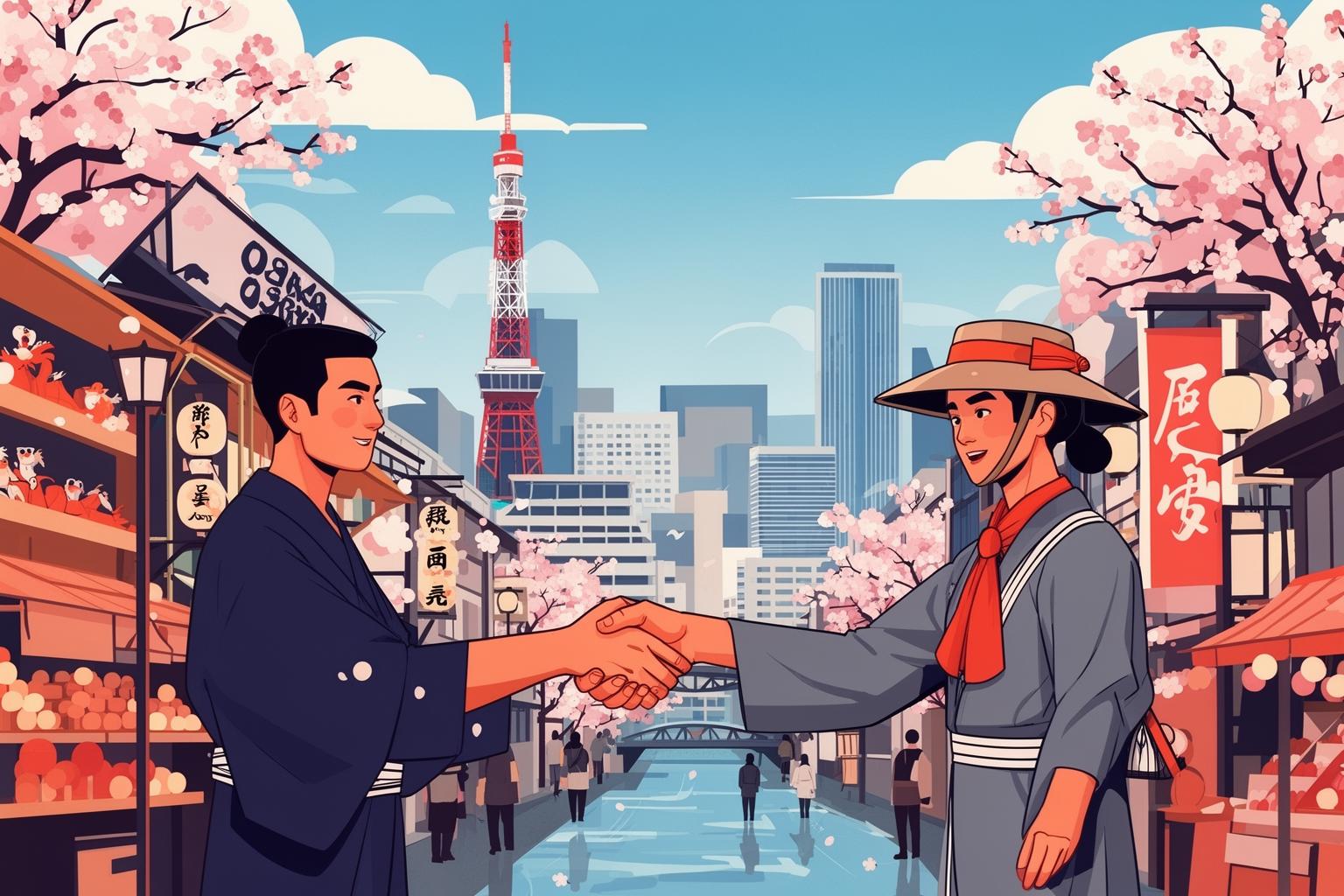
At first glance, “Mokari-makka?” (儲かりまっか?) appears bold. In a country known for its indirectness and careful respect for personal boundaries, asking about someone’s financial success can seem like a social landmine. However, in Osaka, it functions less as a question and more as a handshake. It’s the verbal equivalent of a friendly pat on the back, a way to check in that is deeply rooted in centuries of history and a distinct local identity. Exploring this phrase is like conducting an archaeological dig into the very foundation of the city.
More Than Just Money
The key misunderstanding for any outsider, whether Japanese or foreign, is taking the question at face value. The person asking isn’t genuinely interested in your profit and loss statement. They’re not seeking a loan nor evaluating you for a business opportunity. The question acts as a form of social shorthand. It’s a ritual. Its implied meaning is closer to “How are you?” or “How’s life treating you?” or “Is everything going well?” What makes it uniquely Osakan is that it frames this universal concern through the prism of commerce. It assumes your well-being is inherently tied to the health of your livelihood. In a city founded by merchants, this viewpoint is practical and sincere, not cynical. If your business is thriving, then you and your family are likely doing well, too. It’s a straightforward, no-nonsense way of checking on someone’s welfare.
The Historical Roots in Shonin Culture
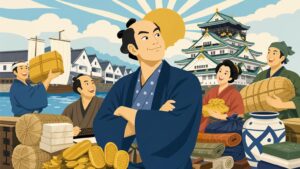
To truly understand, you have to look back in history. During the Edo Period (1603-1868), while Tokyo (then Edo) was the center of the samurai government and Kyoto was the imperial capital of the aristocracy, Osaka was known as the Tenka no Daidokoro, or the “Nation’s Kitchen.” It served as the commercial hub where rice and goods from across the country were gathered, stored, and traded. The city’s power didn’t derive from swords or noble titles but from commerce, trade, and the savvy of its shonin, or merchant class. A merchant’s identity, status, and survival were directly linked to their business skill. Success in business meant success in life. This spirit endures. It’s embedded in the city’s fabric and pulses through its veins. While much of Japan’s culture stems from samurai or farmers and their respective codes of honor and ties to the land, Osaka’s culture is proudly and defiantly mercantile. So, when one shopkeeper greets another with “Mokari-makka?”, they speak a language of legacy, affirming a shared identity rooted in the belief that a thriving business is the foundation of a healthy community.
The Art of the Reply: ‘Bochi-bochi Denna’ and the Unspoken Rules
If “Mokari-makka?” is the question, then the answer plays an equally important role in the cultural puzzle. You can’t simply respond with “Yes, I am!” or “No, things are terrible.” There is a script to follow, and knowing it distinguishes insiders from outsiders. This exchange is a performance, a subtle dance of humility and resilience, with the star being a wonderfully ambiguous and handy phrase: “Bochi-bochi denna.”
The Perfect Non-Answer
“Bochi-bochi denna” (ぼちぼちでんな) is the universally accepted, gold-standard reply. It roughly means “So-so,” “Getting by,” or “Plodding along.” The phrase “bochi-bochi” itself carries a gentle, unhurried, onomatopoeic quality, suggesting steady progress without rushing. It’s the ultimate non-committal answer, indicating that things aren’t catastrophic, but you’re not exactly rolling in cash either. It strikes the perfect balance—a modest expression of contentment and endurance. Saying “Bochi-bochi denna” signals you know the rules of the exchange. You acknowledge the question not as a financial inquiry but as a social ritual, responding accordingly. It’s a way of saying, “Thanks for asking, friend. We’re still here, still making an effort, and that’s good enough for now.”
Why Bragging and Complaining are Off-Limits
The cultural necessity of sticking to the “bochi-bochi” script reveals much about the local mindset. Two major taboos exist in this exchange. The first is bragging. Responding with something like “Gappo-gappo儲かってますわ!” (“I’m making a killing!”) would be met with awkward silence or a forced laugh. It’s seen as arrogant, in poor taste, and may even be considered tempting fate. Among a community of small business owners, flaunting success can alienate those who are struggling. The second taboo is excessive complaining. While a little gallows humor is tolerated, a genuinely bleak response like “Akimahen wa, zenzeng dame desu” (“It’s terrible, completely hopeless”) places an uncomfortable burden on the asker. They intended a friendly exchange, not a heavy, distressing conversation. This breaks the light and breezy nature of the greeting. “Bochi-bochi” skillfully avoids both extremes. It’s a verbal nod to the community’s collective effort and avoids singling yourself out, whether for better or worse.
Reading the Room: When and Where You’ll Hear It
This is not a greeting you’ll hear in a sleek, glass-walled office in Umeda during a meeting with a multinational corporation. “Mokari-makka?” belongs to a particular ecosystem, thriving in the shotengai—the local shopping streets—among owners of nearby ramen shops, electricians, and independent hardware stores. It’s a greeting between peers in the trenches of small-to-medium enterprises, signifying a certain degree of familiarity and shared context. It represents blue-collar and small-business-owner solidarity. A landlord might say it to a tenant running a shop in their building, or a regular customer to a beloved shop owner. It’s a sign that you are part of the local fabric, not merely a passing presence.
A Tale of Two Cities: How Osaka’s Greeting Defines the Tokyo Contrast
Nothing underscores Osaka’s distinct character quite like comparing it to Tokyo. These two cities represent the main pillars of Japanese culture, and their styles of communication, particularly in professional settings, are strikingly different. Even a simple greeting reveals this contrast vividly. Using “Mokari-makka?” in a Tokyo business environment would not only raise eyebrows but could actually risk damaging a professional relationship.
The Sound of Silence in Tokyo
Picture a similar situation in Tokyo: a supplier visiting a client’s office. The interaction would be a study in formality and protocol. Deep, precise bows would be exchanged. The ritualistic presentation of meishi (business cards) would be conducted with both hands and handled with respectful attention. The conversation would start with neutral, safe topics—weather, the seasons, or a polite compliment about the office. Beginning with a question about the client’s profitability would be unthinkable, deemed shockingly rude, overly familiar, and highly unprofessional. Such a move would cross a boundary regarded as sacrosanct in Tokyo. Personal and professional matters, especially finances, remain strictly separate. The greeting serves to reinforce hierarchy and preserve a smooth, frictionless interaction.
Efficiency vs. Relationship
This contrast stems from a fundamental philosophical difference. Broadly speaking, Tokyo’s professional culture emphasizes efficiency, propriety, and a clear, unspoken hierarchy. The aim of any interaction is to accomplish the task with the utmost politeness and minimal personal friction. The system is paramount. In Osaka, particularly in traditional commercial sectors, the focus often shifts. Establishing a human relationship comes first, with business following. The banter, jokes, teasing, and indeed the “Mokari-makka?” are all methods for breaking down formal barriers between people. They signal, “Before we are client and supplier, we are two people trying to make a living. Let’s start there.” This approach seeks to build trust on a personal level, believing that strong business arises from strong relationships, not just solid contracts. It’s a lively, messy, and profoundly human process compared to the quiet, orderly dance of Tokyo business encounters.
Navigating the Banter: A Foreigner’s Practical Guide
So, as a foreign resident finding your way in Osaka, how do you handle this? Hearing “Mokari-makka?” for the first time can feel like being pulled on stage during a play where you don’t know the lines. But with a little understanding, it can become an incredibly rewarding experience—a sign that you’re beginning to be recognized as part of the local community.
Should You Use It?
The short answer is: probably not, at least not right away. This greeting carries the weight of context and familiarity. As a foreigner, using it prematurely can come off as performative or even somewhat odd, like you’re trying too hard. The best approach is to be a patient observer. Listen for it. Notice who says it to whom. Wait for someone to say it to you. When the local grocer or the man running the bike shop finally asks, “Mokari-makka?”, you’ll know you’ve moved from “anonymous foreigner” to “neighborhood regular.” It’s a milestone.
How to Respond if You’re Asked
This is your chance to shine. When the moment comes, don’t panic or overthink it. The perfect response is simple. Offer a relaxed smile, perhaps a little laugh to show you’re in on the joke, and reply with your best “Bochi-bochi denna.” That’s all. By using this simple phrase, you convey a lot. You’re saying: “I understand this isn’t a real question. I know the rules of this exchange. I get Osaka.” This small gesture can create a great deal of goodwill. It often brings out a big, approving laugh or a nod—a sign of respect for the foreigner who took the time to learn the local custom.
Beyond ‘Mokari-makka?’: Other Forms of Osakan Directness
This greeting is just the beginning. It’s part of a broader Osakan style of communication that values directness and humor. Don’t be surprised if an obachan (an older lady) playfully criticizes your fashion sense (“That’s a very flashy shirt!”) or if a taxi driver asks how much you pay in rent. In many cultures, this would feel intrusive. In Osaka, it’s often a way of quickly bridging the gap between strangers, treating you more like a neighbor than a formal acquaintance. It’s all part of that tendency to skip formalities and get straight to genuine, human connection. It takes some getting used to, but it’s rarely meant unkindly. It’s simply the Osakan way of fast-tracking friendship.
More Than a Phrase, It’s a Philosophy
In the end, “Mokari-makka?” is far more than just a quirky local greeting. It’s a concise expression of a city’s history, values, and overall outlook on life. It serves as a daily reminder that Osaka was, and remains, a city of makers and sellers—where pragmatism prevails and community is forged not through rigid formality but through shared experiences and good-natured teasing. It reflects a culture that is straightforward, unpretentious, humorous, and deeply committed to the well-being of its people—even if that care is conveyed through the language of the balance sheet.
That day in the shotengai, I left feeling confused. Today, when the same vegetable seller greets me with a hearty “Mokari-makka?,” I smile back without hesitation and reply, “Bochi-bochi denna!” We both laugh. In that moment, I’m not just buying carrots. I’m taking part in a ritual that connects the neighborhood. I’m speaking the local language—not only the words, but the sentiment behind them. And I feel, even if only briefly, less like a foreigner and more like I truly belong.