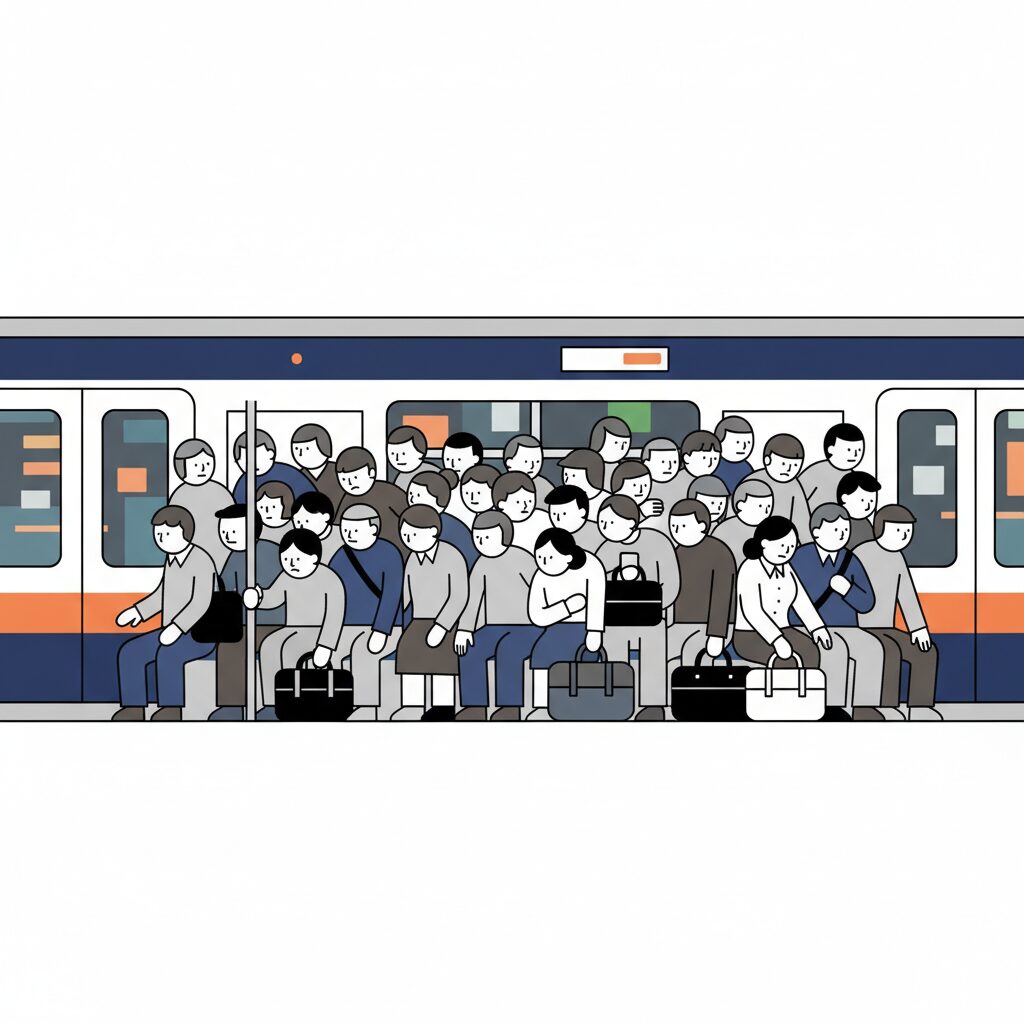
Welcome to the belly of the beast. If you want to understand a city, forget the observation decks and the curated museum tours. Go deep. Go underground. Ride the rails during the morning crush, that daily migration where a city’s true character is squeezed out into the open. In Japan, the train commute is a national rite of passage, a synchronized ballet of millions. But here’s a secret Tokyo won’t tell you: not all ballets are choreographed the same. I’d spent my time packed into Tokyo’s infamous JR Yamanote Line, a human Tetris game played on a loop, and I thought I understood the rules. It was a silent, orderly system of shared endurance. Then I moved to Osaka and met its crimson artery, the Midosuji Line. Riding it from Umeda to Namba at 8:15 AM is a different kind of education. It’s louder, a little messier, and infinitely more revealing. This isn’t just a comparison of two subway lines; it’s a deep dive into the divergent souls of Japan’s two greatest cities, all played out in the space between two closing doors.
Beyond the scramble of the morning rush on the Midosuji Line, exploring Osaka’s Ame-chan culture reveals another layer of the city’s unique social fabric.
The Yamanote Method: A Symphony of Silent Submission
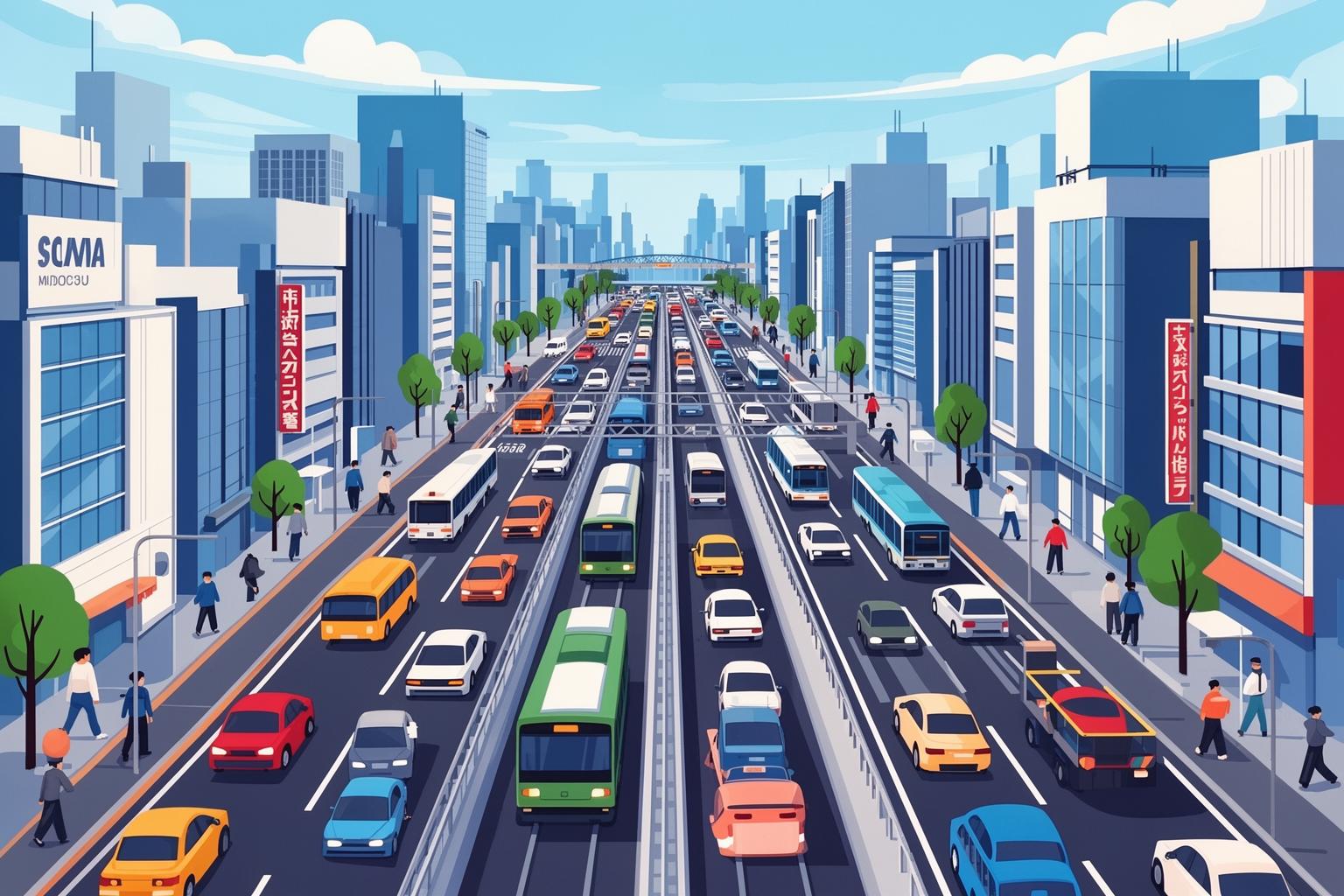
Before we delve into the vibrant chaos of Osaka, let’s first set the scene with its counterpart in the capital. Riding the JR Yamanote Line during Tokyo’s rush hour offers a masterclass in collective self-discipline. The experience is defined by what isn’t present: noise, overt interaction, unnecessary movement. The entire system is designed for maximum efficiency, reducing friction among millions of anonymous commuters.
It starts on the platform. Yellow lines are painted on the ground, marking exactly where the train doors will open. People form flawless, single-file lines behind these markers. There’s no confusion, no scrambling for a better spot. You find your line, stand in it, and wait. When the train arrives, a wave of passengers exits, and the waiting lines part like the Red Sea to let them through. Then, in a fluid, orderly manner, the new passengers file in. It’s a mesmerizing, almost mechanical process.
Once inside, the silence is profound. It isn’t an awkward silence; it’s a deeply ingrained social agreement. Making a phone call is a serious breach of etiquette. Conversations are rare and spoken in hushed tones. The soundtrack of the Yamanote is the rhythmic clatter of the train on the tracks, occasional automated announcements, and the subtle symphony of countless fingers tapping on smartphone screens. The atmosphere is charged with a shared understanding: we are all in this together, and the best way to endure it is to pretend no one else exists. You minimize yourself, both physically and audibly, to take up as little space as possible in the collective consciousness. Personal space is a forgotten luxury, yet there’s an art to managing inevitable physical contact. People press close but contort their bodies to reduce intrusion, shifting a shoulder, angling a hip. It’s an intimate experience stripped of intimacy, a shared burden carried in stoic silence. This is the pinnacle of functional, systematic, and impersonal public transportation.
Enter the Midosuji Line: Osaka’s Living Room on Wheels
Now, let’s step off the platform at Shinjuku and onto the one at Umeda. The Midosuji Line serves as the backbone of Osaka, linking the city’s two main hubs, Kita (Umeda) and Minami (Namba), along with everything in between. It is just as crowded as the Yamanote, with the physical crush equally intense. But the atmosphere? It’s entirely different. If the Yamanote is like a silent monastery, the Midosuji feels more like a bustling marketplace.
The first thing you notice is the sound. It isn’t loud or party-like, but there’s a steady, low hum of human activity absent in Tokyo. Friends discuss their evening plans, coworkers finalize presentation details, and couples decide on dinner. The strict taboo against talking is relaxed here. The rule isn’t “absolute silence”; it’s more a practical “don’t be a nuisance.” As long as your conversation isn’t shouting across the carriage, it blends seamlessly into the city’s ambient noise. People here don’t shrink into themselves; they remain themselves, just traveling by train.
This change in atmosphere is tangible. The sea of black and navy suits typical in Tokyo is complemented by more color and individual style in Osaka. There’s a sense that personal identity isn’t something to leave at the ticket gate. That’s not to say it’s a free-for-all—the core principles of Japanese train etiquette are still respected. You allow people to exit before boarding, you give up your seat to the elderly, and you avoid eating or drinking. But applying these rules is filtered through Osaka’s characteristic pragmatism and a more flexible approach to public space. The Midosuji Line isn’t merely a means to get from Point A to Point B; it’s a moving extension of the city itself—slightly loud, a bit chaotic, yet undeniably vibrant.
The Art of the Queue: A Tale of Two Cities
Nowhere is the cultural difference clearer than in the simple act of waiting for the train. The precise, perfect lines on the Yamanote platform are impressive to behold, a tribute to order and discipline. In Osaka, the queue is more of a suggestion—an initial guideline open to adjustment.
People begin by forming lines behind the markings on the Midosuji platform, which appears orderly at first. But as the train’s arrival is announced, the lines gradually soften at the edges, turning into dense clusters. It’s a fluid, amoeba-like entity that expands and contracts. There’s no aggressive line-cutting, but an unspoken collective understanding that the main goal is simply to board the train. The purity of the lineup takes a backseat to its function. This is Osaka’s celebrated pragmatism in action. Why stick rigidly to a perfect line if a little shuffle speeds up boarding by a few seconds? It’s not about rudeness; it’s about efficiency with a different flavor—results-oriented rather than process-oriented.
When the doors open, it’s not the graceful parting of the crowd seen in Tokyo. Instead, it’s a dynamic scramble. Exiting passengers push through those waiting to board, and the crowd pressing to get on moves in at the slightest opening. It’s a dance of shoulders and bags, a negotiation unfolding in real time. It feels more assertive, more direct, but it works. There’s a raw, unpolished energy that is quintessentially Osaka.
Personal Space: An Elastic Concept
On a crowded train, personal space is the first to vanish. But how it disappears differs significantly. In Tokyo, the compression is a slow, steady squeeze. People fit their bodies with precision, occupying every available cubic centimeter with a kind of resigned grace. You are packed in, but it’s a systematic compacting.
The Midosuji experience is more… kinetic. The pushing feels deliberate and direct. It’s not hostile, but unapologetic. You’ll feel an elbow in your back. A shoulder will firmly nudge you further into the carriage. This happens because Osakans negotiate space with you as an individual, not as an anonymous part of a crowd. In Tokyo, eye contact is avoided at all costs to maintain the illusion of privacy. In Osaka, that shove might be paired with a quick glance or a gentle “gomen” (sorry). It acknowledges the shared struggle—a brief moment of human connection amid the crush.
The well-known rule of wearing backpacks on the front is observed in both cities, though enforcement differs. In Tokyo, you just know it’s expected. In Osaka, if you forget, someone—often a sharp-eyed obachan (older woman)—is more likely to give you a gentle but firm tap, accompanied by a pointed look at your offending bag. It’s direct, corrective, and done. There’s less passive-aggressive tension and more straightforward problem-solving.
The Sound of the Commute: Silence vs. The Human Hum
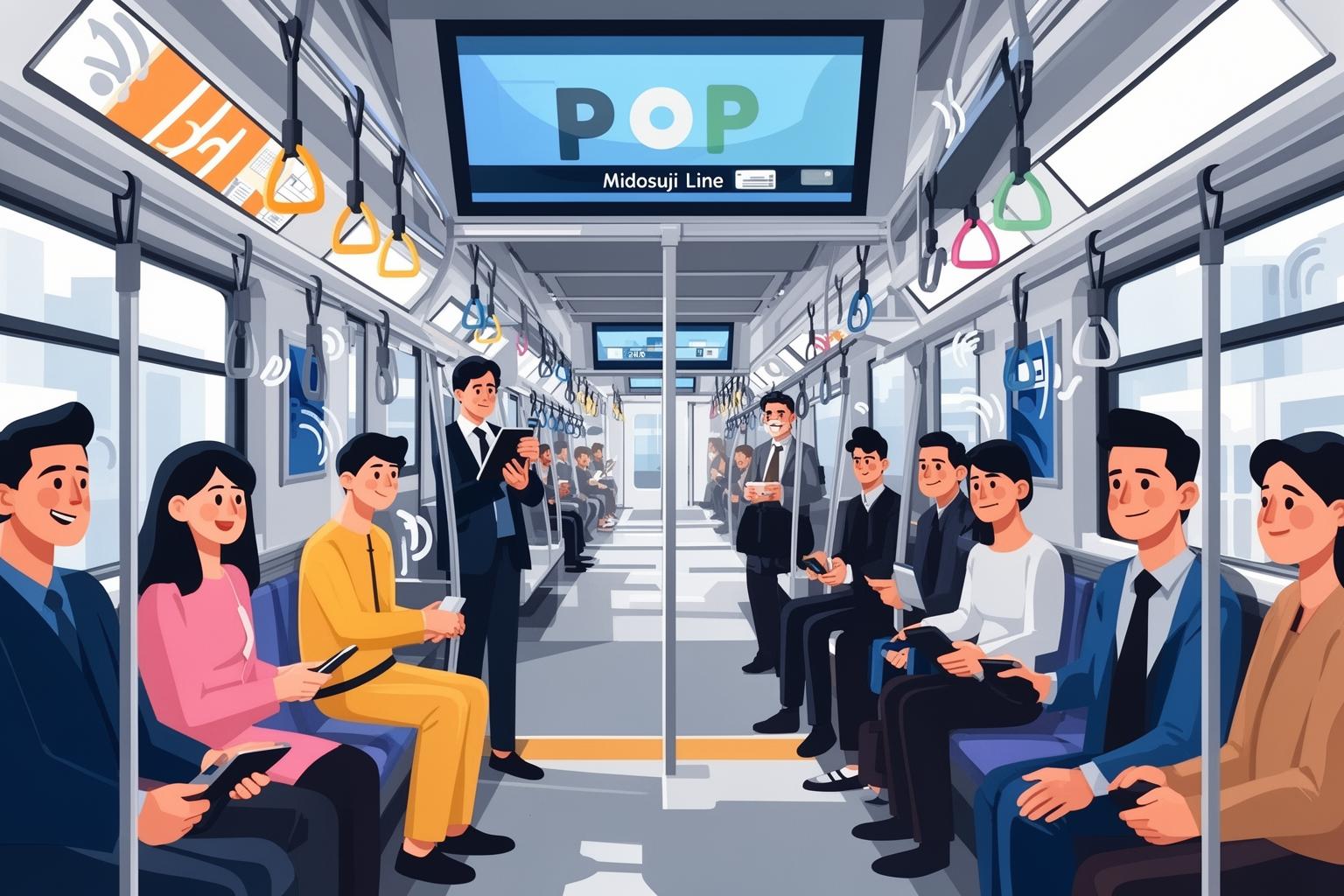
The clearest contrast is found in the soundscape. Tokyo’s trains are sanctuaries of silence, founded on the principle of not disturbing others. This concept is central to wa (和), or social harmony, where the group’s comfort takes priority over individual expression. A phone ringing on the Yamanote line is considered a social faux pas, met with a barrage of silent, icy stares capable of chilling fire. The user, embarrassed, will quickly silence it amid frantic panic, their face flushed with shame.
On the Midosuji Line, the notion of public harmony is understood differently. It’s not about erasing individual presence but about managing it. Conversations are heard at a reasonable volume. Phones ring, and the owner will probably answer with a brief, hushed, “I’m on the train, I’ll call you back.” The issue isn’t the noise itself, but whether it is disruptive. There’s a higher tolerance for what’s deemed acceptable. This highlights a fundamental difference in how Osakans view public space. It’s not a sterile, neutral zone; it’s a shared community space where life unfolds. This can be surprising for those used to Tokyo’s quiet, but it’s also refreshingly human — the sound of a city unafraid to be heard.
Etiquette Enforcement: The Glare vs. The Grumble
So what occurs when someone truly breaks the rules? In Tokyo, the enforcement method is the notorious “Tokyo Death Stare.” It’s a potent, non-verbal form of social correction. No words need to be exchanged, yet the message is conveyed with laser-like precision through a withering, judgmental gaze. It is both supremely effective and utterly chilling.
Osaka is less inclined toward such subtlety. Here, correction tends to be verbal and straightforward. It might be a quiet grumble, a pointed sigh, or even a direct comment: “Your music is too loud.” “Could you move your bag, please?” It’s less about public shaming and more about resolving the issue at hand. This aligns with the stereotype of Osakans as blunt and candid. They value honesty and directness, even if it sometimes sacrifices the polished politeness prized in Tokyo. To outsiders, it may come across as gruff, but to Osakans, it’s simply clear communication. It’s a city that prefers to address things openly, even if it’s just a muttered complaint on a crowded train.
Practical Survival Guide for the Midosuji Warrior
Navigating the Midosuji Line during rush hour is an art. It demands that you unlearn the passive, receptive mindset of the Yamanote Line and adopt a more active, fluid approach. It’s less about silent endurance and more about engaging actively.
First, secure your position. The areas near the stairs and escalators on the platform are always a whirlwind of chaos. Move toward either the very front or the very back of the platform, where the train cars tend to be slightly less crowded. Keep an eye on the women-only cars during peak morning hours; if you qualify, they can offer a somewhat less intense, though still busy, experience.
Second, get familiar with the boarding shuffle. The custom of letting passengers exit first is sacred. Yet on the Midosuji Line, you’ll often need to step off the train briefly to allow a surge of people behind you to get out, then quickly pivot and jump back in. It’s a dynamic in-and-out dance. Be ready to move with the human tide, not against it.
Finally, and most importantly, go with the flow. Don’t be like a rigid rock in a flowing river. If the crowd pushes, let it carry you. Stiffness will only make the trip more uncomfortable for you and those around you. Remember, the pushing and shuffling aren’t personal attacks—they’re the city’s collective, unspoken answer to a math problem: too many people, not enough space. It’s organized chaos with a clear purpose.
What It All Means: The Soul of a City on the Rails
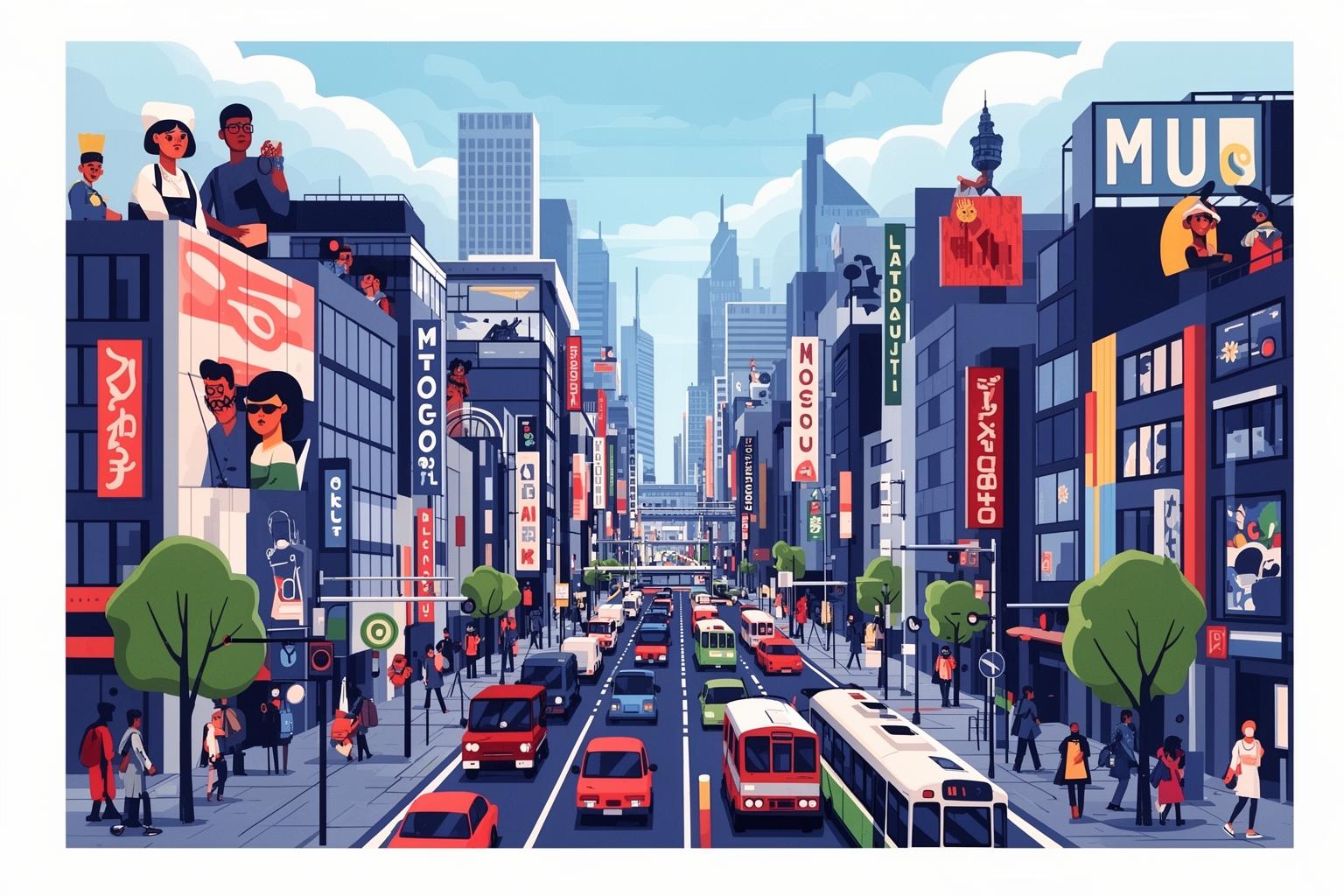
A daily commute is never merely a commute. It reflects a city’s values, its priorities, its very essence. The sleek, silent, and systematic crush of the Yamanote Line perfectly embodies Tokyo: a megacity driven by precision, discipline, and a quiet respect for complex, unspoken social codes. It’s a marvel of both mechanical and social engineering.
The Midosuji Line represents Osaka. It’s somewhat rougher, louder, and much more straightforward. It prioritizes function over form, results over process. It operates on a pragmatic and resilient humanism. People are not cogs in a machine; they are individuals sharing an unbelievably small space, negotiating that reality with grumbles, shoves, and occasional shared laughter. The common Western misconception of Japan is one of uniform politeness and order. Osaka joyfully disrupts that stereotype. Here, friendliness isn’t silent deference; it’s direct engagement. Harmony isn’t about avoiding friction; it’s about resolving it quickly and moving on. The Midosuji Line rush hour isn’t an ordeal to be silently endured. It’s a daily, full-contact immersion into the vibrant, pragmatic, and unapologetically human heart of Osaka.