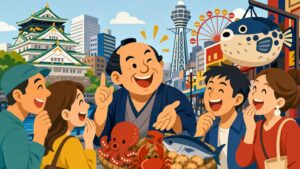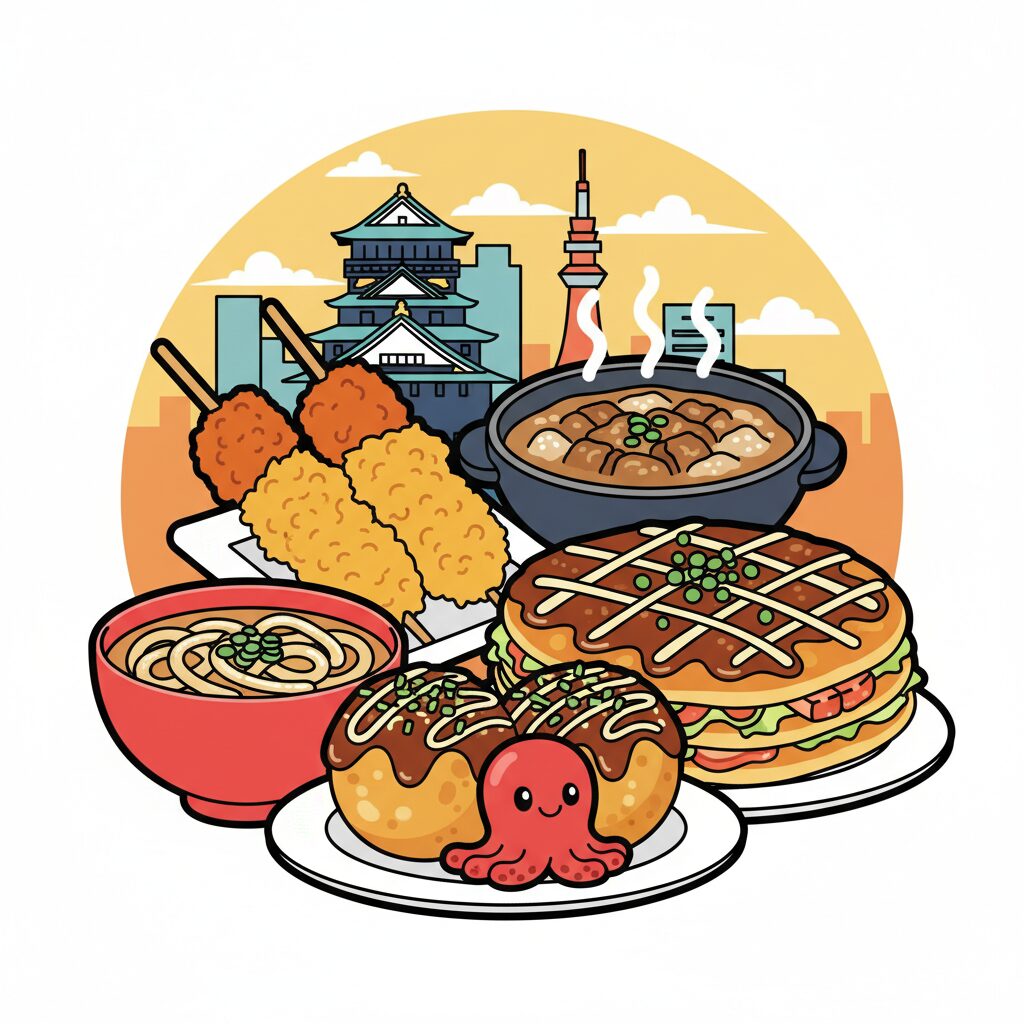
Walk out of Namba Station on any given evening, and Osaka hits you like a sensory tidal wave. A riot of neon signs, a cacophony of pachinko parlors and barkers, the sizzle of oil hitting a thousand hotplates. This is Dotonbori, the city’s glittering, gluttonous heart. It’s the image plastered on every travel brochure: the giant mechanical crab, the pufferfish lantern, the triumphant Glico Running Man. And it’s here that you’ll hear the word that supposedly defines this city: Kuidaore. The standard translation is something like “to eat until you drop,” or more dramatically, “to eat yourself into bankruptcy.” It paints a picture of a city singularly obsessed with food, a place where life’s greatest ambition is to sample every last skewer of kushikatsu and every octopus-filled ball of takoyaki. But as someone who has spent years observing Japan’s cultural currents from a Tokyo perspective, I’ve come to understand that this simple, almost comical phrase is a profound misreading. For anyone truly living here, Kuidaore isn’t just about food. It’s the city’s entire operating system. It’s a philosophy that dictates how people shop, how they talk, how they build relationships, and why Osaka feels so fundamentally different from the polished, reserved capital I call home. To understand Kuidaore is to understand the soul of daily life in Osaka, far beyond the food stalls.
This immersive culinary philosophy is just one facet of Osaka living, as exploring its bustling tachinomi culture provides even deeper insight into the city’s vibrant daily rhythm.
The Merchant’s Mentality: Value Over Luxury
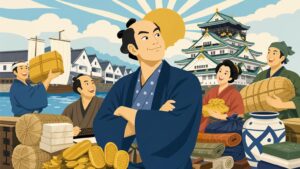
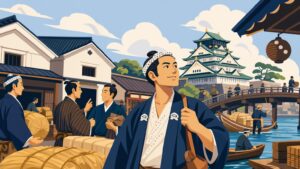
First, you need to grasp Osaka’s history. It was never the seat of the emperor or the shogun. Instead, it was tenka no daidokoro—the nation’s kitchen. This was Japan’s great merchant city, a center of commerce where rice, sake, and goods from across the country were traded. This mercantile spirit runs deep. A Tokyoite might indulge in a beautifully packaged, brand-name box of sweets from a Ginza department store, paying as much for the experience and the elegant bag as for what’s inside. An Osakan would consider that foolish. Kuidaore doesn’t mean spending lavishly; it means relentlessly seeking the absolute best value for your yen. It’s an economic philosophy applied to every aspect of life, starting with the stomach.
“Kospa” as a Way of Life
The focus here is on kospa, short for “cost performance.” In Tokyo, a high price might symbolize quality, exclusivity, or status. In Osaka, a high price is simply a challenge: is it truly worth it? The question driving the city isn’t “What is the best?” but “What is the best for the price?” This is evident everywhere. You’ll find long lines winding out of an unassuming eatery at lunchtime, not because it’s trendy, but because its 700-yen teishoku (set meal) serves an impressive amount of delicious, carefully prepared food. People waiting will passionately discuss this very point. This isn’t just about being frugal; it’s a shared cultural pastime, a collective quest for the smartest deal. Your neighbor won’t be impressed by the logo on your handbag; they’ll admire you if you tell them you scored a high-quality leather bag at a bargain in the Tenjinbashisuji Shotengai. Bragging here isn’t about what you own, but about the cleverness you used to get it. This attitude can be surprising to newcomers. A simple question like, “Oh, a new bike? How much was it?” isn’t a rude probe into your finances; it’s a way of collecting data and joining the city-wide passion for judging value.
The Art of the Deal in Daily Interactions
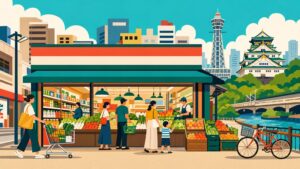
This value-driven mindset extends directly into communication. The merchant’s spirit lives on in the city’s many shotengai, or covered shopping arcades. While haggling isn’t as common in Japan as in other places, in these lively streets, playful negotiation often adds to the charm. Buying fruit from a vendor might include some back-and-forth, a joke, and perhaps an extra orange thrown in as a bonus. This is commerce as performance, as human connection. The aim isn’t simply to complete a purchase, but to feel like you’ve taken part in a mutually rewarding and genuinely enjoyable exchange. This sharply contrasts with the silent, almost reverential efficiency of a Tokyo department store. In Osaka, business is personal, lively, and relational. The unwritten rule is that a good deal leaves both parties satisfied—not just due to money saved, but because of the gratifying dance that brought it about.
A Culture of Pragmatism: Substance Over Style
Because Kuidaore centers on the satisfaction of consumption, it fosters a culture that values substance over superficiality. The pleasure lies in the eating itself, not in the presentation of the dish or the minimalist design of the restaurant. This practical perspective goes well beyond dining, influencing the city’s social customs, architecture, and overall look. Osaka is a city that operates efficiently and gets things done without being overly concerned with appearances.
The Rejection of “Tatemae”
One of the most striking culture shocks for foreigners—and even for Japanese from other regions—is the noticeable lack of tatemae in Osaka. Tatemae is the public façade, the polite pretense that sustains social harmony throughout much of Japan. People say things they don’t truly mean to avoid conflict. In contrast, honne reflects one’s genuine feelings. In Tokyo, navigating tatemae is an essential social skill, whereas in Osaka, people lead with their honne. An Osakan shopkeeper, seeing you try on a jacket that obviously doesn’t fit, won’t say, “It’s a very interesting style.” They’ll say, “Nah, that’s not for you. The shoulders are all wrong. Try this one.” To outsiders, this bluntness can seem rude. But locally, it’s considered profound honesty and excellent customer service. Why let you spend money on something that doesn’t suit you? This straightforwardness is viewed as a way to cut through pretense and achieve a practical, satisfying result. It’s the conversational equivalent of a hearty, no-frills meal: simple, yet deeply nourishing.
Functional Fashion and Unpretentious Neighborhoods
This pragmatism is evident in the city itself. Stroll through neighborhoods like Tennoji or Kyobashi, and you’ll witness a chaotic yet functional urban environment. Buildings are constructed for utility, not for architectural accolades. Signage is large, bright, and intended to catch your eye, not to blend seamlessly into a coordinated streetscape. There’s a raw, unfiltered honesty to it all. In contrast, Tokyo’s Marunouchi or Omotesando are meticulously curated and aesthetically refined. Every detail there feels deliberate, polished, and controlled. Osaka, on the other hand, feels authentic—lived-in, messy, and gloriously real. This extends to personal style as well. While Osaka has fashion hubs, everyday attire is practical. People care less about the latest runway trends and more about comfort, function, and of course, affordability. Flashiness is reserved for nightlife districts; daily life favors a more grounded approach. The city values the experience of a good life over merely its appearance.
Social Currency and Community: Eating as Connection
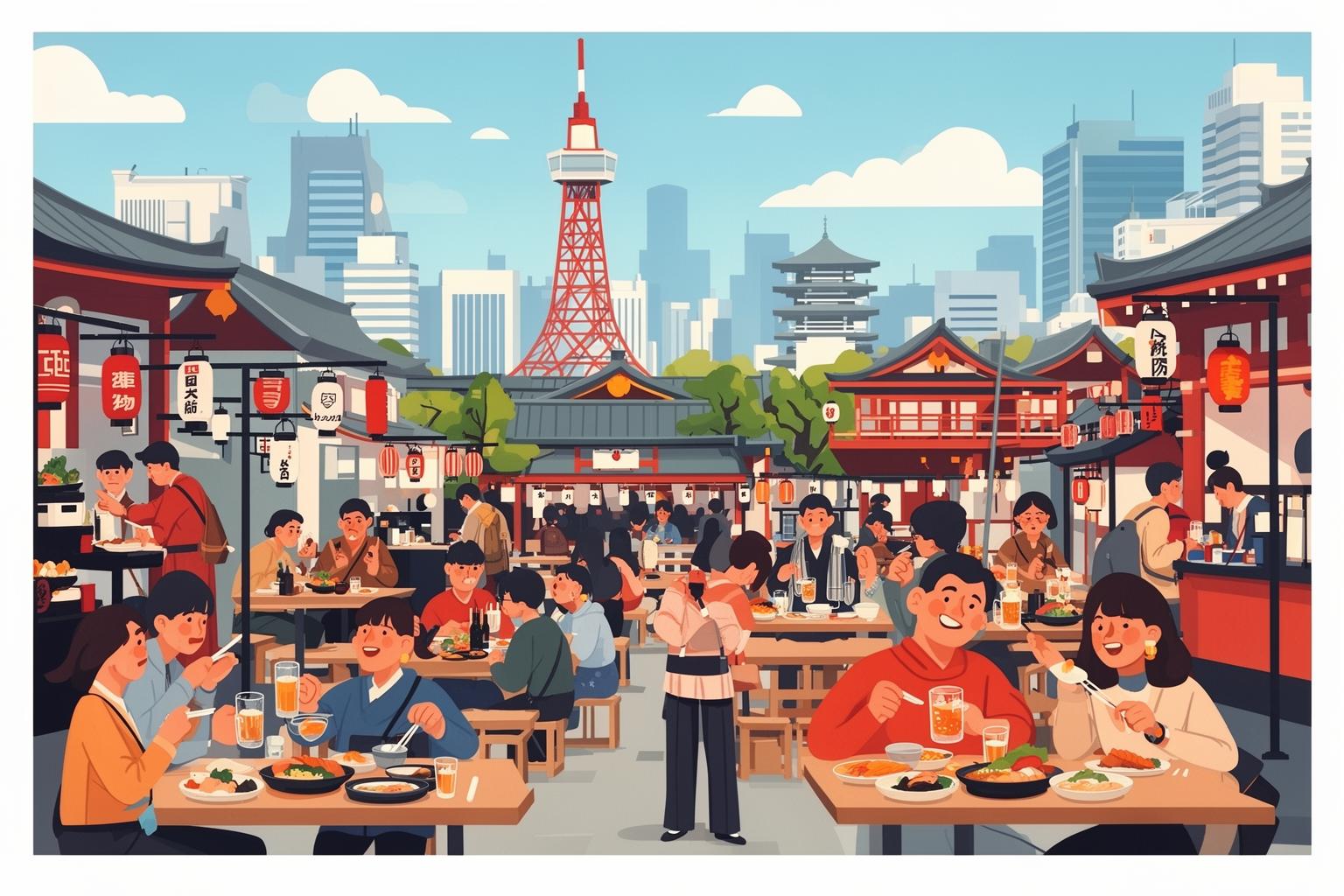
Perhaps the most commonly misunderstood aspect of Kuidaore is that it is fundamentally a social, rather than a solitary, activity. You don’t eat yourself into debt alone in your apartment. Instead, you do it surrounded by friends, colleagues, and even strangers who become friends over the course of a meal and a few drinks. Food serves as the medium, but the true message is community. It’s the adhesive that holds the city’s social fabric together.
The “Tachinomi” and the Shotengai as Social Hubs
To witness this in practice, simply step into a tachinomi (standing bar) after work. These small, often cramped venues host people from all walks of life standing shoulder-to-shoulder, enjoying an inexpensive drink and some quick bites. The close physical proximity breaks down social barriers. Conversations ignite effortlessly between strangers. You might spot a construction worker, an office manager, and a university student all laughing at the same joke, grumbling about the Hanshin Tigers baseball team, or exchanging dish recommendations. The shotengai plays a similar role during the day. It’s more than just a place to shop for groceries; it’s a communal living room. Shopkeepers know their customers by name and inquire about their families. Neighbors run into each other and pause for lengthy conversations. This is why Osaka is described as “friendly.” It’s not an abstract notion but a tangible, observable reality rooted in a culture that uses the shared, practical pursuit of eating and drinking as a platform for ongoing, low-pressure social interaction.
“Osekkai”: The Nosy Kindness
This strong social fabric gives rise to a uniquely Osakan trait: osekkai. The term is hard to translate directly. It roughly means being meddlesome, nosy, or interfering, but it is almost always motivated by a sincere, if sometimes overbearing, sense of kindness. It’s the elderly woman (obachan) who notices you struggling with a map and not only gives you directions but walks you to your destination while asking where you are from, what you’re doing in Japan, and if you’ve eaten yet. It’s the person behind you in line who corrects your Japanese, not out of criticism, but because they genuinely want to help you communicate better. In Tokyo, a stranger’s problem is usually their own. People prioritize privacy and personal space above all else. In Osaka, your problem is an opportunity for the community to step in. For those used to anonymity, osekkai can feel intrusive. But once you understand it, you recognize it as the social expression of Kuidaore: an abundant generosity of spirit that, like a good meal, is meant to be shared, whether you explicitly asked for it or not.
The Underbelly of Kuidaore: A City That Never Rests
Certainly, this unyielding energy has its downside. A philosophy centered on continuous consumption, interaction, and the pursuit of value can become completely exhausting. Living in Osaka means adjusting to a pace and pressure that contrast sharply with the more orderly rhythm found in other Japanese cities.
The Unceasing Pace and Sensory Overload
The same vitality that energizes the city can also cause sensory fatigue. The noise seems endless. The streets present a chaotic mix of advertisements, power lines, and crowds. The focus on kospa turns life into a constant series of small calculations and negotiations. This fosters a restless, forward-driving momentum that can feel overwhelming. It’s a city that demands your full attention and engagement. Finding moments of quiet reflection requires intentional effort, a deliberate withdrawal from the vibrant energy of the streets. It is a city that is always “on,” which can be exhausting for those who need time to recharge in calm.
The Expectation to Perform
The straightforward, boisterous style of communication also brings its own pressures. Osaka’s culture, known for its humor and love of comedy, carries an implicit expectation to be omoroi—funny, interesting, or witty. Conversations often take the form of rapid-fire exchanges filled with banter, jokes, and playful teasing. For introverts or individuals from cultures where dialogue is more measured and serious, this can feel like a constant act. A quiet person might be misunderstood as bored, unhappy, or even arrogant. While Tokyo conversations may comfortably include meaningful silences, in Osaka, silence often creates a void that must be filled, usually with laughter. Mastering this verbal back-and-forth is an essential part of integrating into daily life here, and it’s a skill that doesn’t come easily to everyone.
Living the Kuidaore Philosophy: A Practical Guide for Residents
So, what does all this mean for someone considering making a life in Osaka? It means understanding that Kuidaore is a key to unlocking the city. It’s a mindset you can adopt not just to survive, but to truly thrive.
Embrace the “Kospa” Mindset
Shift your attention from brands to value. Don’t just settle for the most convenient supermarket; explore several to discover which offers the best produce for the price. Ask your colleagues where they prefer to eat lunch. When you make a purchase, take pride in the deal you’ve found. This isn’t about being cheap; it’s about engaging in the local culture of smart consumption. It’s a way to show you grasp what the city is all about.
Learn to Read the Air Differently
When someone is direct with you, try not to take it personally. Often, it’s a sign of respect for your time and intelligence, and a shortcut to honest communication. Learn to appreciate the refreshing straightforwardness. And don’t hesitate to be a bit more direct yourself. Speaking your mind clearly is more likely to earn respect here than in other parts of Japan.
Find Your Third Place
Osaka more than anywhere else in Japan is a city of third places—the spaces between home and work where community forms. Find a small izakaya, coffee shop, or food stall in your local shotengai and become a regular. This is where you transition from being an anonymous foreigner to a member of the local community. It’s in these places that you’ll experience the true social spirit of Kuidaore firsthand.
A Final Thought: More Than a Motto
Ultimately, Kuidaore is far more than a catchphrase for tourists. It reveals the city’s pragmatic, unpretentious, and deeply humanistic core. It explains the obsession with value, the direct communication, the chaotic yet vibrant streets, and the fierce, nosy loyalty of its people. It’s a philosophy that values satisfying substance over elegant style, and warm community over cold efficiency. To live in Osaka is to live in a city that constantly invites you to engage, participate, laugh, and share a meal. It’s a city that nourishes you, in every sense, until you are full to bursting. For those who can embrace its rhythm, there’s no more rewarding place to be.