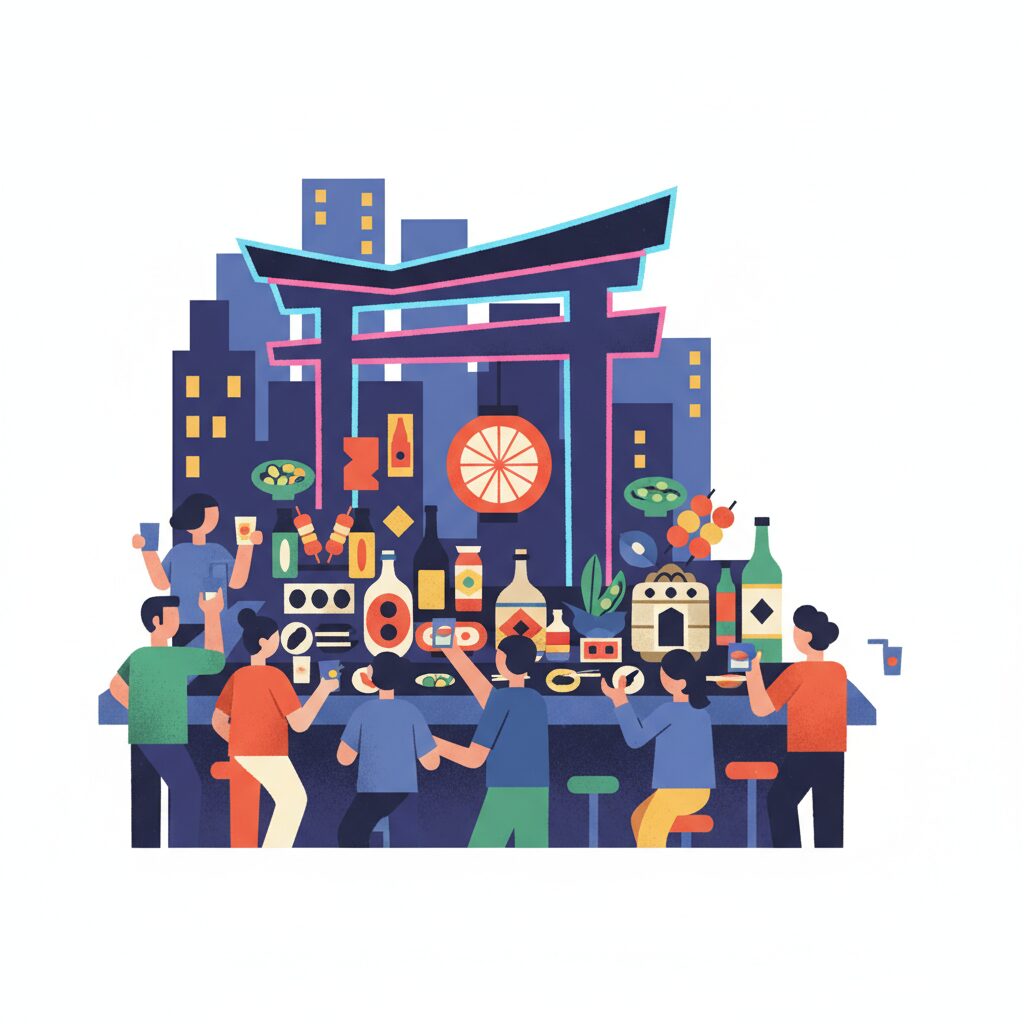
Walk down any bustling street in Osaka after 5 PM, and you’ll see them. Small storefronts, glowing with the warm light of lanterns and fluorescent bulbs, spilling noise and steam onto the pavement. Inside, there are no chairs. Just a counter, worn smooth by a thousand elbows, and a crowd of people standing shoulder-to-shoulder. To the uninitiated, these places—tachinomi, or standing bars—can look intimidating. They seem like private clubs, impenetrable gatherings of regulars who all know each other. You might think it’s just about cheap, fast drinking. But you’d be missing the point entirely.
I’m Ami. By day, I work in apparel, but my real passion is exploring the fabric of cities, one neighborhood at a time. When I first moved to Osaka, I saw these tachinomi and felt that same hesitation. But I soon learned they aren’t just bars. They are the living, breathing heart of Osaka’s daily grind. They are a solution to a problem, an economic statement, and a social hub all rolled into one. For a solo diner, they are nothing short of a revelation. This isn’t about getting drunk on a Tuesday. It’s about grabbing a delicious, incredibly affordable meal in a space that perfectly embodies the city’s spirit: practical, unpretentious, and surprisingly communal. Forget formal restaurants. If you want to understand how Osaka really works, you need to find a small gap at the counter, step in, and stand tall.
Embracing Osaka’s spontaneous way of life isn’t limited to its tachinomi culture—discovering details like Osaka bike etiquette can further deepen your connection with the city’s vibrant everyday rhythm.
What Exactly is Tachinomi? More Than Just Standing and Drinking
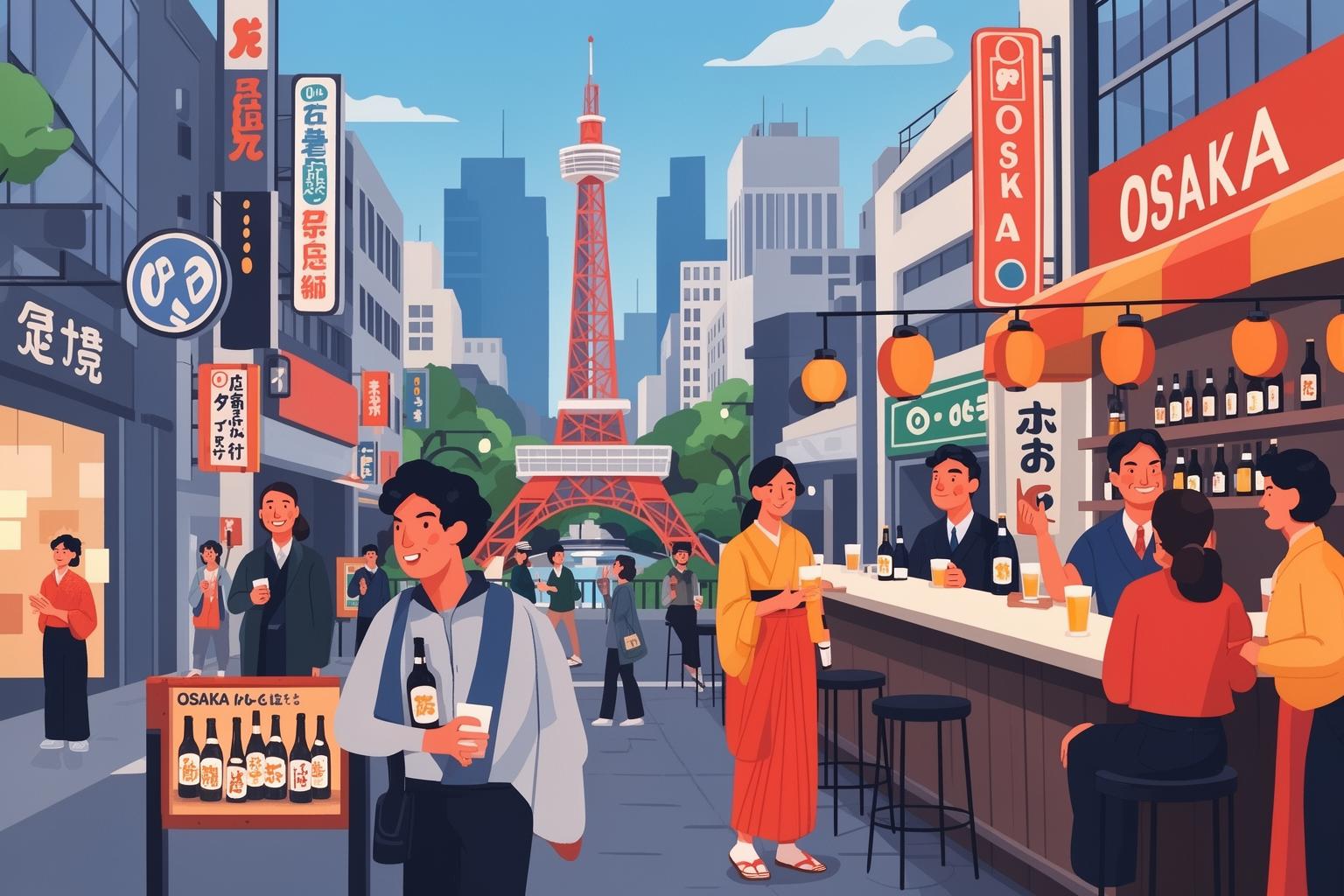
The name is quite literal: tachi means stand, and nomi means drink. Yet, the concept goes far beyond what the name implies. At its heart, a tachinomi is a place for fast, low-cost consumption. There are no seats because seating encourages lingering, which slows customer turnover and increases costs. An Osakan’s internal calculator is always active, and the reasoning is flawless: remove chairs, lower prices, serve customers more quickly. It’s an elegantly efficient system rooted in the city’s merchant tradition, where time is money and a good deal reigns supreme.
The menu reflects this philosophy. You won’t find elaborate courses here. Instead, there is a selection of small, quickly prepared dishes. Think kushi-katsu (deep-fried skewers), doteyaki (beef sinew stewed in miso), glistening sashimi slices, or comforting bowls of oden. Each item is inexpensive, usually just a few hundred yen, letting you create a custom meal that suits your appetite and budget. Drinks are equally straightforward: draft beer, highballs, sake, and shochu. No complicated cocktails or extensive wine lists. The aim is satisfaction, not sophistication.
This stands in stark contrast to solo dining in Tokyo. There, eating alone often means withdrawing into an anonymous bubble. You might sit in an Ichiran Ramen booth with privacy dividers or find a quiet corner in a chain restaurant, interacting with staff only through a ticket machine. It’s efficient, but can feel isolating. Osaka’s tachinomi offers a different experience. It’s solo dining, but not lonely. You are alone yet also part of a temporary, ever-changing community. The shared counter functions as a communal table. While Tokyo might have sleek, specialized standing bars focusing on high-end sushi or wine, Osaka’s classic tachinomi is grittier and more democratic. It’s not a novelty—it’s a practical, essential part of the city’s social fabric.
The Unspoken Rules of the Standing Bar
For a newcomer, the biggest challenge isn’t the language but the unspoken etiquette. Entering a crowded tachinomi can feel like stepping onto a stage without a script. However, once you grasp the basic rhythm, it soon becomes second nature. These unwritten rules exist to ensure harmony and efficiency within the limited space.
Finding Your Spot
First, take a look inside. Is it completely packed, with no room between people? Then try the next place. If you notice a small opening, that’s your cue. Don’t wait to be seated, because there aren’t any seats. Just slide into the gap. A slight nod to the person standing next to you is a considerate gesture, silently saying, “Hello, I’m now sharing this tiny space with you.”
Once you’re settled, make yourself small. This is the golden rule. Your personal space shrinks drastically here. If you have a bag, avoid placing it on the counter. Instead, hang it on the hooks underneath, or tuck it between your feet on the floor. The counter is sacred territory, meant only for food, drinks, and elbows. Spreading out is a major faux pas. The system depends on everyone staying compact and mindful of their neighbors.
The Art of Ordering
Don’t expect a glossy menu. Usually, the menu is displayed on wooden slats or paper strips posted on the wall, often entirely in Japanese. This is where your smartphone’s camera translation feature proves useful, but pointing works just fine too. The staff are busy, so be ready to order when you catch their eye.
A classic opening line is “Toriaezu biru,” meaning “Beer for now.” It’s a magic phrase that gets things started. While enjoying your beer, observe what others are eating and decide on your food. Order one or two dishes at a time. Tachinomi is a marathon of small plates, not a race to the main course. Just call out your order confidently: “Doteyaki, hitotsu!” (One doteyaki!).
Payment methods vary. At some traditional spots, it’s “cash on,” where you place a 1,000 yen bill in a small tray on the counter, and the staff subtract costs as you order. Others keep a running tab, which you settle at the end. Just follow what your neighbors do. When you’re ready to leave, simply say “Okanjo, onegaishimasu” (Check, please).
To Talk or Not to Talk? The Social Contract
This is where the biggest cultural difference lies. In many places, starting a conversation with a stranger at a bar is a deliberate act. But in an Osaka tachinomi, it often happens naturally due to the close quarters. Don’t be surprised if the elderly man beside you comments on your sake choice or asks where you’re from. It’s not an intrusion; it’s part of the social fabric.
This is what people mean when they say Osaka is “friendly.” It’s less about deep connections and more about the easy flow of casual, brief interactions. The conversation might last thirty seconds or ten minutes before your neighbor leaves and someone new takes their place. You’re not obliged to talk. A simple smile and nod are perfectly fine. Yet if you’re open to it, these brief exchanges are a great way to practice your Japanese and glimpse the local mindset.
The key is to read the atmosphere. If someone is quietly focused on their food or phone, respect their space. But if they make eye contact and smile, they might welcome a chat. It’s a subtle social dance with very low stakes. Everyone is there for the same reason: a good, cheap, quick bite. This shared experience creates a temporary bond.
Why Tachinomi is the Ultimate Osaka Experience for Everyday Life
To truly appreciate tachinomi, you need to understand the Osakan mindset. It’s a culture rooted in pragmatism, value, and a certain disdain for pretension. The standing bar perfectly embodies these fundamental principles.
Cost Performance and the “Kechi” Spirit
There’s a word in the Osaka dialect, kechi, often translated as “stingy.” But that’s not quite accurate. It’s more about being a savvy, value-conscious consumer. An Osakan doesn’t just want something cheap; they want high quality at a low price. This obsession with kosupa (cost performance) is a city-wide passion, with tachinomi as its prime stage.
You can enjoy a couple of beers and three or four delicious skewers and still have change from 2,000 yen. It’s a complete, satisfying meal for the cost of a fancy coffee in Tokyo. This is how people afford to eat out multiple times a week. It’s not a luxury; it’s a practical dinner solution. It’s a way to socialize without overspending. Tachinomi democratizes dining, making a night out accessible to everyone, from students to company presidents.
A Cross-Section of Osaka Society
Stand at the counter for an hour, and you’ll witness the city’s diversity pass through the door. A young woman in a fashionable outfit sipping wine beside a construction worker in his work clothes, chatting with a salaryman who’s just loosened his tie after a long day. Age, profession, and status dissolve in the shared, cramped space. Everyone is equal when standing.
This is a powerful social leveler. In a society that can be quite hierarchical, tachinomi offers a space of casual equality. You hear the real Osaka dialect, see how people unwind, and feel the authentic rhythm of the city. It’s a far more genuine cultural experience than any tourist trap. You’re not just observing local life; you’re part of it.
A Note for Solo Women
As a woman in her twenties, I understand the hesitation. The image of a standing bar can seem male-dominated and a bit rough around the edges. While some old-school spots still have that vibe, the scene has dramatically changed. Many tachinomi today are bright, clean, and openly welcoming to women.
My advice is to start with the “new wave” places or visit during earlier hours, between 5 and 7 PM, when the atmosphere is more relaxed. Look for spots with large windows and diverse crowds. The presence of other women is always a good sign. Safety is seldom an issue. These are neighborhood venues. The taisho (owner) and staff keep a careful eye, and regulars form an informal neighborhood watch. Tachinomi is a public, visible space. In my experience, I’ve felt safer and more comfortable there than in many traditional bars. It’s a space marked by mutual, unspoken respect.
Where to Find Your First Tachinomi
Osaka is filled with tachinomi, but they tend to concentrate in specific areas. Knowing where to look is the key first step. Your experience can vary greatly depending on whether you’re in a busy commuter hub or a dedicated drinking district.
The Station-Side Warriors: Umeda and Namba
The neighborhoods surrounding Osaka’s main train stations are ideal tachinomi hotspots. Beneath the train tracks and within the maze-like underground malls of Umeda, or tucked away in the back alleys of Namba, you’ll find bars focused on speed. These cater to commuters grabbing a quick drink and snack before their long train journey home. The atmosphere is frantic and fast-paced, with a high turnover. These spots are perfect for a quick, anonymous drink on the go, delivering a concentrated burst of Osaka’s hurried energy.
The Neighborhood Gems: Tenma and Kyobashi
For a deeper experience, visit districts like Tenma or Kyobashi. These are more than just places with bars; they’re entire bar neighborhoods. The mood here is more social and somewhat relaxed. People come intending to stay a while, often hopping from one tachinomi to another. Tenma, with its remarkably long covered shopping arcade and numerous side streets, is a haven for bar crawlers. Kyobashi offers a grittier, more local Showa-era atmosphere. In these areas, tachinomi bars are the main attraction, forming the social heart of the neighborhood.
The New Wave: Fukushima and Ura-Namba
Recently, a new style of tachinomi has appeared in trendy neighborhoods such as Fukushima and the district behind Namba station, known as Ura-Namba. These are chic standing bars. You might find spots specializing in craft beer, natural wine, or Italian-inspired small plates. They maintain the core elements—no chairs, low prices, small portions—but package them in a modern, design-focused way. These venues often serve as excellent entry points for newcomers, attracting a younger, more diverse crowd and explicitly welcoming solo diners and women.
Final Thoughts: Beyond the Food and Drink
A tachinomi is more than just the sum of its parts. It’s not only about the beer, the skewers, or the absence of chairs. It embodies Osaka’s entire cultural spirit. It reflects the city’s commitment to practicality, its strong appreciation for a good deal, and its distinctively casual, low-pressure style of socializing.
Standing at that counter, you realize that community doesn’t always depend on deep connections; it can be as simple as sharing a small space for twenty minutes. You understand that a satisfying meal doesn’t have to be elaborate or costly. And you discover that being alone doesn’t necessarily mean feeling lonely. The tachinomi addresses a daily challenge—what to have for dinner—but in doing so, it unveils the essence of the city. So next time you see one of those glowing, bustling storefronts, don’t hesitate. Take a deep breath, find your spot, and order a beer. You’re not just having dinner; you’re experiencing what it truly means to live in Osaka.