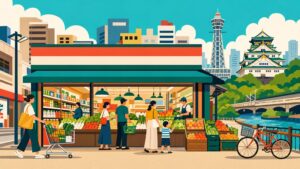
Welcome to Osaka, the nation’s kitchen. You’ve heard the term—kuidaore, to eat yourself into ruin. It’s a phrase that conjures images of takoyaki sizzling on cast-iron grills, mountains of okonomiyaki slathered in sweet sauce, and steaming bowls of udon. It’s a city that wears its love for food on its sleeve, loud and proud. But what happens when that food doesn’t love you back? What if you’re vegan, gluten-intolerant, or navigating a minefield of food allergies? The immediate panic is real. You’ve landed in a culinary paradise that seems, at first glance, to be built on a foundation of fish stock, eggs, and mysterious sauces. The question isn’t just what to eat, but how to even begin shopping for yourself without accidentally ingesting a sea creature.
This isn’t a guide to the handful of chic vegan cafes that have popped up to cater to tourists and the Instagram crowd. This is a guide to the trenches. It’s about plunging your hands into the real, beating heart of Osaka’s food culture: the chaotic aisles of a local supermarket and the vibrant, noisy corridors of a shotengai, or traditional shopping arcade. This is where you’ll learn the unspoken rules, decode the city’s practical mindset, and discover that surviving with dietary needs here isn’t about finding a special, curated corner. It’s about learning the rhythm of the city itself. In Tokyo, you might find a pristine, well-lit “Natural Foods” section in a department store basement, a quiet sanctuary where everything is clearly labeled and reassuringly expensive. Osaka, in true Osaka fashion, just kind of throws it all in together and trusts you’ll figure it out. It’s less curated, more chaotic, but infinitely more rewarding once you crack the code. This guide is your key to that code, a map to navigating the glorious, frustrating, and ultimately delicious labyrinth of daily life in Osaka’s kitchen.
By familiarizing yourself with Osaka’s vibrant market scene, you can ease your journey by exploring hyper-local supermarket savings tips that help reduce your overall grocery expenses.
The Osaka Supermarket Mindset: Practicality Over Polish

Step into a typical Osaka supermarket, and the first thing that strikes you is the noise. It’s a blend of lively jingles, loud announcements about today’s tuna sale, and the steady beeping of checkout scanners. It’s not the calm temple of consumption you might expect in an upscale Tokyo neighborhood. Stores like Super Tamade, with their neon lights and almost humorously low prices, perfectly embody the Osaka shopping spirit: value reigns supreme. The focus here isn’t on aesthetic finesse or catering to niche lifestyles; it’s about nourishing families well while spending as little yen as possible. This practical mindset forms the core of Osaka’s merchant culture.
This stands in sharp contrast to the shopping experience in other big cities. A visitor from Tokyo might feel confused. Where is the beautifully arranged organic produce section? Where is the dedicated gluten-free aisle? The common misconception is to view this absence as a lack of choices. In reality, the options exist, but they aren’t showcased on a silver platter. They’re woven into the store’s layout, scattered according to a logic that prioritizes category over dietary restrictions. You won’t find a “vegan corner.” Instead, soy milk is placed alongside cow’s milk, konnyaku jelly sits next to fish cakes, and rice flour is quietly shelved near wheat flour. This reflects the Osaka mentality: what you need is here, but you have to put in the effort to find it. It’s a treasure hunt, not a guided tour.
For shoppers with dietary needs, daily life in Osaka becomes a game of pattern recognition. You learn that the second shelf from the bottom in the dairy aisle at your local LIFE supermarket holds the two lone brands of almond milk. You discover that the corner of the produce section, often near the mushrooms, is where fresh yuba (tofu skins) is found. This active searching, the necessity of scanning every shelf, encourages a deeper engagement with your surroundings. You’re not just a consumer choosing from a pre-selected “healthy” menu. You are a forager in a concrete jungle, with your prize being a carton of oat milk or a gluten-free soy sauce free from fish extract. This process, while initially frustrating, fundamentally transforms your relationship with food. It makes you a more conscious, intentional shopper—a skill essential for thriving in this city.
Decoding the Labels: A Crash Course in Culinary Kanji
If the supermarket feels like a maze, then the Japanese food label is your cryptic map. At first glance, it appears as an impenetrable wall of characters. Your phone, equipped with a live translation app, will become an extension of your hand. You’ll find yourself standing in the aisle, holding your phone over a bag of rice crackers, waiting for the digital text to transform into English, silently hoping to avoid the dreaded symbols for “bonito extract.” But technology can be an unreliable ally. It might misread characters or fail to recognize stylized fonts, leaving you confused and uncertain. To gain true independence, you must learn to identify the enemy at a glance. Mastering a few essential kanji is not only helpful; it’s a rite of passage.
Think of it as learning the sigils of culinary houses in a fantasy novel. Each character tells its own story. Here are the key ones you need to know.
For the Vegan Vanguard
You need to become a detective, searching for traces of animal products hidden in the most unexpected places. Your chief suspects are:
- 乳 (nyuu): Milk. Look for it in compounds like 乳製品 (nyuuseihin – dairy products) or 全粉乳 (zenfunnyuu – whole milk powder). It can be found in bread, crackers, and even some vegetable juices.
- 卵 (tamago): Egg. This one is fairly straightforward but often disguised, showing up in everything from mayonnaise and ramen noodles to glazes on sweet buns.
- 魚 (sakana): Fish. This character is your greatest adversary. It often appears as part of だし (dashi – soup stock), the fundamental flavor base of Japanese cuisine. A related and equally important term is 鰹 (katsuo – bonito), a type of tuna that is dried, fermented, and shaved into flakes (鰹節 – katsuobushi) to make the most common type of dashi. Assume any savory liquid, from soup bases to dipping sauces, contains it unless clearly stated otherwise.
- 肉 (niku): Meat. This includes pork (豚肉 – butaniku), chicken (鶏肉 – toriniku), and beef (牛肉 – gyuuniku). Extracts and powders can be present in instant noodle flavor packets, curry roux, and savory snacks.
- 蜂蜜 (hachimitsu): Honey. A common sweetener found in drinks, sauces, and desserts that might otherwise appear vegan.
- ゼラチン (zerachin): Gelatin. Written in katakana, this is easy to spot. It’s derived from animal collagen and used as a gelling agent in jellies, puddings, and gummy candies.
For the Allergy-Aware
Japan mandates labeling the top seven allergens, often highlighted in a box on the packaging. This is incredibly useful, but you still need to recognize them:
- 小麦 (komugi): Wheat. The primary source of gluten, found in soy sauce (醤油 – shoyu), bread (パン – pan), noodles, and countless other processed foods.
- そば (soba): Buckwheat. A common and serious allergen that must be identified by those with sensitivities.
- 落花生 (rakkasei): Peanuts. Sometimes written as ピーナッツ (piinattsu).
- えび (ebi): Shrimp.
- かに (kani): Crab.
Learning these characters is your key to freedom. But what happens when you’re truly stumped? This is where the Osaka spirit comes into play. In Tokyo, you might hesitate to bother a store employee, worried about a formal, possibly unhelpful response. In Osaka, people tend to be refreshingly direct. Ask a staff member or even a fellow shopper a simple question like, 「すみません、これに魚は入っていますか?」(Sumimasen, kore ni sakana wa haittemasu ka? – Excuse me, is there fish in this?). You’re less likely to be politely dismissed and more likely to get a curious look, a grab of the package, and a quick, thorough reading of the ingredients list. An older woman, an obachan, might even offer her unsolicited but knowledgeable opinion. This isn’t rudeness; it’s practical, communal problem-solving in action. It’s the city’s spirit of mutual assistance, playing out in the sauce aisle.
The Shotengai: The Heartbeat of Osaka’s Kitchen
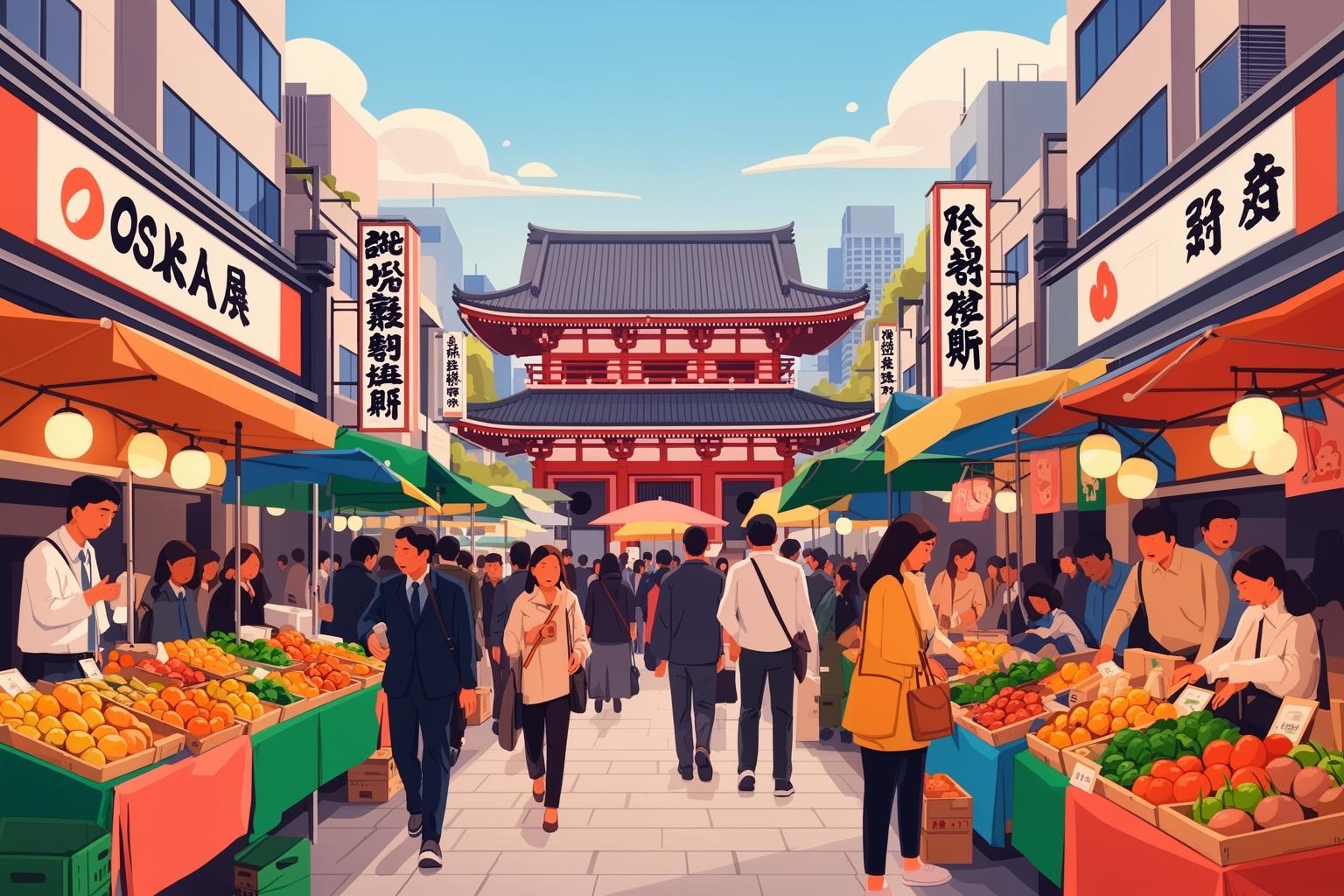
If supermarkets serve as the functional framework of Osaka’s food supply, the shotengai act as its vibrant, pulsating heart. These covered shopping arcades, some extending for kilometers like the renowned Tenjinbashisuji, offer a sensory feast in the best sense. They are noisy, bustling, and filled with an energy that is unmistakably Osakan. Here, commerce drops its corporate formality and transforms into a lively, human interaction. Forget quiet aisles and pre-packaged convenience; the shotengai focuses on freshness, specialization, and direct engagement with the people who sell your food.
For those with dietary restrictions, the shotengai is a haven of control. Most items sold here are beautifully simple: raw ingredients. Here, you become the chef, the master of your own culinary journey. You can bypass confusing labels on processed foods and return to basics. The arcade is made up of small, specialized shops, each excelling in its craft.
- The Yaoya (八百屋): This is the greengrocer. You won’t find perfectly uniform, plastic-wrapped vegetables here. Instead, expect heaps of seasonal produce, often irregularly shaped, sometimes still carrying a bit of dirt, and always bursting with flavor. Bundles of deep green komatsuna, feathery shungiku, and a dozen types of mushrooms beckon. The owner, likely with hands stained from the soil, can tell you exactly where those tomatoes were grown and which daikon radish is the sweetest. This is where you connect with the seasons and the earth.
- The Tofuya (豆腐屋): For vegans, the local tofu shop is almost a pilgrimage site. Supermarket tofu is decent, but tofu from a dedicated shop is in another league. You’ll find varieties you never knew existed. There’s dense, firm momen tofu perfect for stir-fries; silky, delicate kinu that melts in your mouth; thick slabs of fried atsuage ready to soak up sauces; and creamy, fresh oboro-dofu, almost like a savory pudding. Many shops produce their tofu on-site, and you can sometimes buy it while it’s still warm. This is more than just a product; it’s a craft, an expression of the shokunin (artisan) spirit thriving in these traditional marketplaces.
- The Tsukemono-ya (漬物屋): The pickle shop is a dazzling, colorful realm of fermented delights. It’s both an opportunity and a challenge. Giant wooden barrels hold every kind of pickled vegetable imaginable. Many traditional pickles, such as those simply preserved in salt (塩漬け – shiozuke) or rice bran mash (糠漬け – nukazuke), are perfectly vegan. However, many others are pickled in brines containing dashi (fish stock) or sweetened with honey. This is the perfect place to hone your communication skills. The shopkeeper will almost certainly be a friendly, talkative expert. Ask them directly: 「これは、だしが入っていますか?」(Kore wa, dashi ga haittemasu ka? – Does this have dashi in it?). They’ll appreciate your curiosity and guide you to the safe, tasty options. The interaction itself—the pointing, the questioning, the tasting—is at the heart of the shotengai experience.
The overall atmosphere is unlike that of a supermarket. Shopkeepers call out to you, promoting their best deals of the day. There’s a lively sense of friendly competition in the air. You’ll hear the Osakan dialect, with its unique rhythm and intonation, all around you. It’s a community space where shopping is not a sterile transaction but a dynamic social ritual.
Building Your Pantry: Key Players and Where to Find Them
Once you’ve adopted the local mindset, a strategy becomes essential. You need to identify which stores will be your allies in this culinary adventure. Osaka’s retail landscape is filled with various supermarket chains, each boasting its own character and strengths. Knowing where to shop for specific items is crucial to creating a safe and delicious pantry.
The Supermarket Roster
- Gyomu Super (業務スーパー): Meaning “Business Supermarket,” Gyomu is a treasure for those on a budget or seeking international products. It epitomizes Osaka’s love for bargains. These no-frills warehouse-style stores often have products still in their cardboard shipping boxes. Yet, within these utilitarian spaces, you’ll discover gems: large bags of frozen vegetables, affordable Southeast Asian coconut milk, huge tubs of spices, oats, lentils, and a rotating variety of imported items. Their freezer section surprisingly includes a good selection of vegan-friendly foods like hash browns, falafel, and occasionally vegan mock meats. It’s not glamorous, but extremely practical.
- LIFE (ライフ): A dependable, mid-range Japanese supermarket, LIFE is clean, well-organized, and serves as a reliable option for weekly shopping. Larger LIFE stores typically stock soy and almond milk, along with staples like firm tofu, natto, and miso paste. They’re also beginning to feature more health-conscious choices, so you might find soy meat crumbles or gluten-free pasta if you’re lucky.
- AEON (イオン) / MaxValu: One of Japan’s largest retail groups, AEON is known for consistency. Their house brand “Topvalu” includes a “Free From” line, offering products free from specific allergens, usually labeled clearly in English. Bigger AEON Malls or MaxValu supermarkets often have the most extensive international food sections outside of specialty import shops, making them good places to find peanut butter, canned beans, and tortillas.
- Ikari, Seijo Ishii, and Hankyu Oasis: These are the premium options. For imported vegan cheese, organic German rye bread, or a particular brand of American almond butter—provided you’re ready to pay a premium—these stores deliver. They offer a polished, curated shopping experience reminiscent of Tokyo’s upscale supermarkets. Ideal for special occasions or when you’re craving something specific, they aren’t typically where most people do their daily shopping. They illustrate Osaka’s economic diversity, where the city embraces both bargains and luxury.
Specialty and Health Food Stores
Unlike Tokyo, which boasts a growing number of vegan convenience stores and organic markets, Osaka is more dispersed. Specialty health food stores exist but require intentional seeking out rather than casual discovery. For example, Crayon House in Suita offers a wonderful range of organic produce and vegan items, but such stores are the exception, not the norm. This underlines the core reality of living in Osaka: adapting to the mainstream environment is necessary rather than expecting it to cater to your niche needs. Your kitchen will be stocked from finds at Gyomu, LIFE, and local shotengai, rather than a single perfect vegan grocery store.
The Unspoken Rules of Survival

Navigating daily life here with dietary restrictions means adopting a new set of internal rules. These are lessons you learn through trial and error—often after the unpleasant experience of biting into something you believed was safe, only to taste the unmistakable umami of fish.
Assume Nothing, Question Everything
This is the golden rule. Never assume a product is safe based solely on its appearance. That seemingly innocent vegetable side dish from the supermarket deli? Its marinade is likely dashi-based. That simple bowl of miso soup? Ninety-nine percent of the time, it contains bonito flakes. The bread from the local bakery? It probably contains milk or eggs. Salad dressings, sauces, crackers, and even some vegetable chips may hide animal products. Approach every new packaged food with a healthy dose of skepticism until you have personally checked the ingredient list. Your vigilance is your only true defense.
Embrace the Power of Simplicity
When processed foods become a minefield, the safest choice is to cook from scratch. This is where living in Osaka truly shines. The shotengai offers an incredible range of fresh, high-quality, single-ingredient foods. Befriend rice, vegetables, tofu, beans, and seaweeds. Learn to prepare your own kombu dashi (kelp-based stock), a deeply flavorful and completely vegan alternative to fish-based dashi. Simplifying your diet and focusing on whole foods not only helps you avoid allergens and animal products but also connects you with the healthier, traditional aspects of Japanese cuisine. Your kitchen becomes your laboratory and your sanctuary.
Master the Art of Communication
Although the word “vegan” (ビーガン – biigan) is becoming more recognized, it can still be a vague concept for many, especially in smaller, family-run places. It’s often misunderstood as simply “vegetarian” or a general “healthy diet.” Being specific about what you don’t eat is usually more effective. A straightforward, polite statement works wonders: 「肉、魚、卵、乳製品を食べません。」(Niku, sakana, tamago, nyuuseihin o tabemasen – I don’t eat meat, fish, eggs, or dairy products). For allergies, clarity is crucial. Carry a translated allergy card that clearly states your needs. Also, pay attention to the response. The Osaka reaction to such requests is often earnest and sometimes flustered problem-solving. A restaurant owner might scratch their head, disappear into the kitchen, then return with a plate of specially prepared pickles and steamed vegetables, proud to accommodate you. This direct, human-to-human interaction, bypassing rigid formality for a more compassionate and practical solution, is the heart of this city.
Shopping and eating with dietary restrictions in Osaka is more than a logistical challenge; it’s a cultural education. It pushes you to abandon passive consumption and become an active participant in your own nourishment. It encourages you to communicate, to learn, and to look beneath the surface. While Tokyo may offer clearly marked paths, Osaka provides the tools to forge your own way. It requires more effort, but the result is a deeper understanding of the city’s food, its people, and its wonderfully pragmatic spirit. Mastering your kitchen here isn’t just about survival; it’s about connection. It’s how you move from being a visitor who merely samples the city’s highlights to truly living its rhythm, one carefully chosen daikon radish at a time. You’ll not only eat well; you’ll understand Osaka in a way no tourist guide ever could.