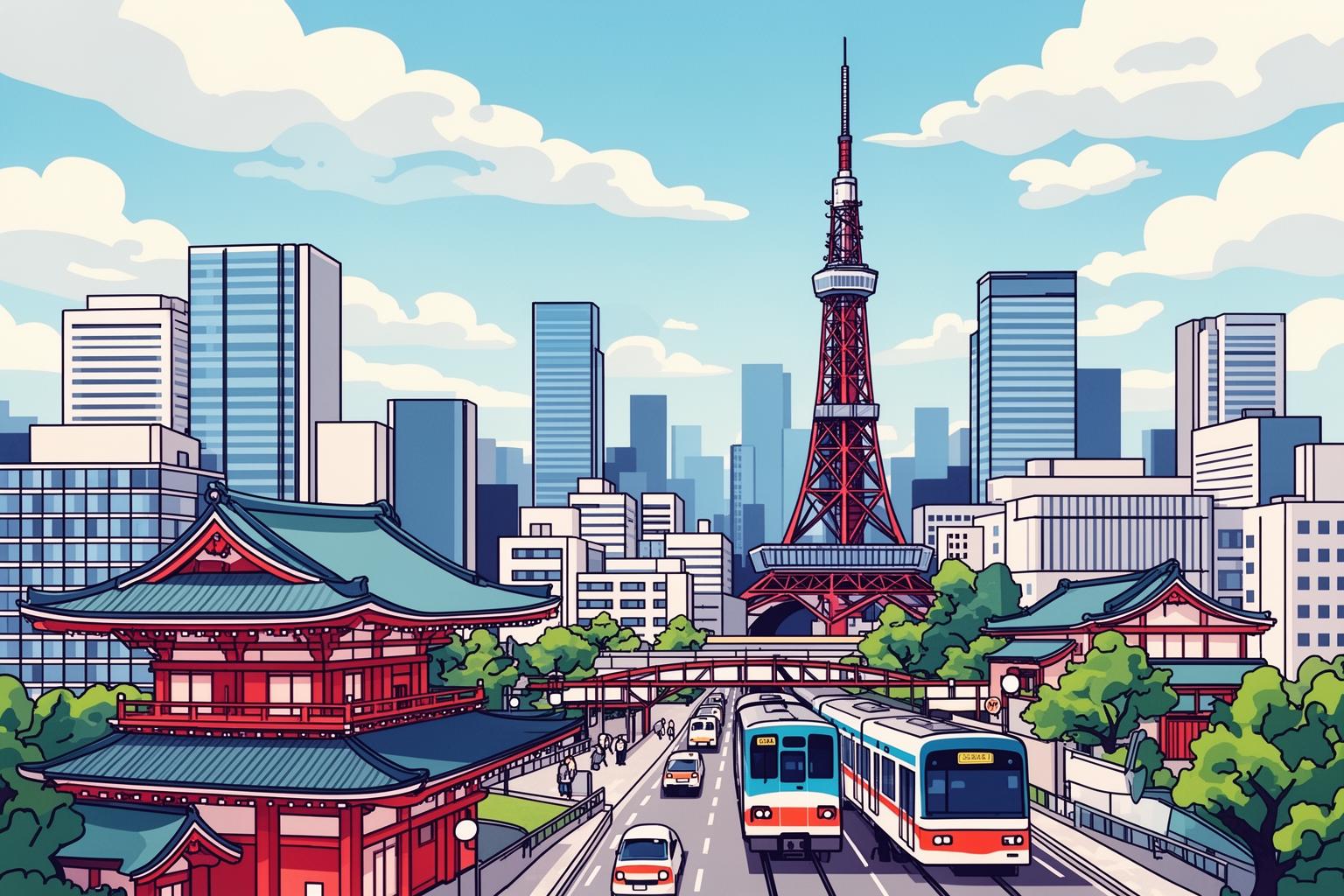
In Japan, the symphony of the city has a distinct rhythm. It’s the gentle chime of the train station, the polite murmur of the crowd, and the constant, percussive beat of IC cards tapping against ticket gates. Beep. Beep. Beep. It’s a sound of seamless efficiency, a river of humanity flowing effortlessly from home to work, from neighborhood to neighborhood. In Tokyo, this is the whole song. Convenience is king, and speed is his crown. You load up your Suica or Pasmo, and you don’t think twice. The system is designed to make your journey frictionless, to shave seconds off your commute, to keep the massive, sprawling metropolis in constant, fluid motion.
But here in Osaka, there’s a counter-rhythm. A scratch in the record. Just as you’re about to join that smooth, flowing river toward the Hankyu or Hanshin line gates in Umeda, you’ll see it. An eddy in the current. A small crowd clustered around a tiny, brightly lit storefront, crammed between a noodle shop and a pharmacy. The windows are plastered with handwritten signs, numbers, and destinations, a chaotic collage of red and yellow paper. Inside, a single employee works at lightning speed behind a counter, exchanging cash for small paper tickets. These are the kinken shops, Osaka’s discount ticket hubs, and they are the first, and perhaps most important, lesson in understanding the city’s soul. For the newcomer, the question is immediate and obvious: Why would anyone break the seamless flow, stand in a line, and deal with a paper ticket just to save a few yen? The answer isn’t just about money. It’s about a mindset. It’s about participating in a city-wide game that values cleverness over passive convenience, a game that’s played every single day by salarymen, students, grandmothers, and executives alike. This is where you learn that in Osaka, value isn’t just something you pay for; it’s something you create.
Embracing the unique, resourceful spirit of Osaka means not only saving yen with discount train tickets but also appreciating how Osaka bicycle habits capture the city’s fast-paced, dynamic energy.
The Kinken Shop: Osaka’s Unofficial Financial Advisor
First, let’s clear one thing up. A kinken shop is not a sleek, modern establishment. Forget the minimalist style so often seen in Japanese design. These places are the purest expression of function over form. They are usually tiny, tucked into leftover corners of a station building or a shopping arcade. The lighting is harsh and fluorescent. The walls are invisible, completely covered with a patchwork of signs advertising deals on everything imaginable. Train tickets take center stage, but you’ll also find discounted movie passes, department store gift certificates, stamps, baseball tickets, and even shares of corporate stock that come with shareholder benefits. It’s a microcosm of the city’s commerce, condensed into a mere ten-square-meter space.
To outsiders, it may look intimidating, even a bit sketchy. It feels like a place only locals understand, with its own secret language and unspoken rules. But this couldn’t be further from the truth. These shops are not tourist traps or fringe operations. They are a deeply integrated, fundamental part of Osaka‘s daily infrastructure, as essential as a convenience store or post office. They embody a core Osaka philosophy: ee mon, yasukau—buy good things, cheap. Why pay full price when a smarter, more resourceful option is just a few steps away? The kinken shop acts as the city’s collective financial advisor, whispering the same advice to everyone who passes by: “There’s a better deal. You just have to look for it.”
Deconstructing the Deal: How It Actually Works
So how does this system thrive in the age of the IC card? It all comes down to straightforward, undeniable math and a deep understanding of the railway companies’ own systems. Shops buy tickets in bulk, mainly the coupon books called kaisuken, which provide a discount when purchasing ten or more tickets at once. They then divide these books and sell the tickets individually, passing part of the savings to you while earning a small commission for themselves. It’s a clever, simple model that benefits everyone.
The Commuter’s Calculation
Let’s consider a real-world, everyday example. You live near Namba and work near Umeda, taking the Midosuji subway line daily. The standard one-way fare with your ICOCA card is ¥290. You walk past a kinken shop and see a ticket for the same route priced at ¥270. You save ¥20. Twenty yen. It might seem trivial—a rounding difference, a coin you wouldn’t even bother to pick up. The Tokyo mindset of pure efficiency would tell you to just tap your card and move on. Time is money, and the seconds saved are worth more than this tiny discount.
But the Osaka mindset works on a different scale. An Osakan doesn’t just see ¥20. They see a pattern. They see the long game. Let’s do the math. You save ¥20 on your trip to work and ¥20 on the way back. That’s ¥40 per day. It doesn’t sound like much, but you work, say, 22 days a month. That adds up to ¥880 saved per month. Not a fortune, but enough for a nice lunch. Now multiply that by twelve months, and you have ¥10,560 annually. Suddenly, that’s a very nice dinner, a new pair of shoes, or a weekend trip you thought you couldn’t afford. All from the “effort” of stopping for thirty seconds at a shop you pass by regularly. This is the commuter’s calculation: the art of turning pocket change into meaningful savings through consistency and habit. Your IC card offers convenience, but it quietly drains over ten thousand yen from your bank account every year. The Osakan notices this, and they choose to keep the savings.
Hirutoku vs. Tokiwaken: Mastering the Timing
Once you’re involved, you start discovering deeper layers of strategy. It’s not just about one kind of discount ticket. There are different tiers, and mastering them is essential for maximizing savings. The two most common types you’ll find for private railway lines like Hankyu, Hanshin, and Kintetsu are tokiwaken and hirutoku.
Tokiwaken (時わ券) literally means “anytime ticket.” These are all-purpose discount tickets valid every day of the week, at any time, from the first to the last train. They provide a solid, reliable discount and serve as the workhorse of the kinken world.
But the real prize—the holy grail for savvy commuters—is the hirumatoku (昼間特) or hirutoku ticket. This translates to “daytime special ticket.” These tickets come with a condition: they are typically valid only on weekdays between 10:00 AM and 4:00 PM. Because they encourage travel during less crowded, off-peak hours, railway companies offer them at a much steeper discount. Savings on a hirutoku ticket can be significant, sometimes 20-30% off the regular fare.
This single ticket type fundamentally shapes the daily rhythm of many people. Students with late classes, retirees visiting department stores, freelancers meeting clients, and anyone with a flexible schedule plan their day around the hirutoku hours. A trip to Kobe or Kyoto for lunch isn’t just a casual choice; it’s a strategic move timed to start after 10 AM to secure the best possible fare. This system rewards flexibility and planning, turning a simple train ride into a small but satisfying economic victory.
More Than Money: The Psychology of the Kinken

Understanding the financial logic is one thing, but to truly comprehend the role of the kinken shop, you need to understand the psychology behind it. This behavior is deeply embedded in the city’s identity, a place shaped by merchants who knew that success lay in the margins—in the small advantages gained through cleverness and negotiation.
A Game of Inches
Using a kinken shop isn’t just a transaction; it’s participation in a game. The opponent is the idea of paying full price—the sticker price, the default choice. Every time you buy a discount ticket, you earn a point. You’ve outsmarted the system, if only slightly. You’ve taken an active part in managing your expenses instead of passively accepting the listed cost. There’s a quiet pride in this. It’s the feeling of being a savvy operator, someone who knows the city’s secrets and isn’t a bonbon—a naive person who simply throws money around.
This contrasts sharply with the prevailing attitude in Tokyo. There, status is often shown through effortless consumption. The goal is to appear as if time is your most valuable asset—so much so that stopping to save a few hundred yen would seem an inefficient use of your precious minutes. A Tokyoite might see the kinken shop user as someone wasting time or perhaps struggling financially. An Osakan sees the exact same person and thinks, “Now there’s a smart cookie.” In Osaka, the two minutes spent at the shop isn’t a waste of time; it’s a high-return investment.
The Social Fabric of Frugality
This mindset acts as a powerful social glue. Because everyone participates, there’s no stigma attached. In fact, it’s quite the opposite. It’s a shared value that spans all demographics. You might find yourself standing in line at a kinken shop behind a sharply dressed executive from a major corporation and in front of a university student heading to a part-time job. The pursuit of a good deal is a great equalizer.
It also becomes a source of practical everyday conversation and community knowledge. People exchange tips: “The Koushin shop in the Dai-san building has the best price for the Kyoto line hirutoku this week.” “Don’t buy your Shinkansen ticket there; the place across the street is ¥50 cheaper.” This isn’t gossip; it’s essential economic intelligence freely shared among citizens. It reinforces the sense that everyone is in this together—a community of smart consumers navigating the city. This collective savvy defines Osaka’s character. It’s not cold or transactional; it’s a shared, celebrated way of life.
Your Practical Guide to the Kinken Lifestyle
Ready to get started? Incorporating this habit into your daily routine is simpler than it seems. It’s a three-step process that quickly becomes second nature.
Step 1: Find Your Hubs
Kinken shops flourish by catching foot traffic. You’ll always find them concentrated in and around major train station complexes. The basements of station buildings in Umeda (such as the Osaka Ekimae Dai-ichi, Dai-ni, Dai-san, and Dai-yon buildings) are famous for their dense clusters of competing shops. The areas around Namba, Tennoji, and Kyobashi are also popular spots. Locate the shops along your usual commute route. There will be at least one — or, more likely, five. Sometimes their prices for the same ticket vary by a few yen, creating a small market of competition.
Step 2: Know Your Route and Price
This is not a place for casual browsing. You need to know exactly what you want. The transaction is famously swift. You approach the counter and provide three key details: the train line, the route, and the number of tickets. For example: “Hankyu, Umeda kara Sannomiya, ichi-mai, kudasai.” (Hankyu line, from Umeda to Sannomiya, one ticket, please). Prices are clearly posted on the wall, so you can often just point. Hand over your cash, receive your ticket and change, and you’re done in under a minute.
Step 3: Accept the Paper Ticket
Here’s the one trade-off. You give up the convenience of tapping your IC card. Instead, you get a physical paper ticket. You must insert it into the slot at the ticket gate when entering and remember to retrieve it when it comes out. At your destination, you insert it one last time, and the gate keeps it. This small physical action serves as a constant, tangible reminder of your choice. It’s the feeling of the money saved, right there in your hand.
The Ticket Vending Machine Hack
For those who prefer to avoid face-to-face interaction or travel at odd hours, the kinken system has adapted. Many shops now have automated vending machines outside. These machines offer the same tickets at the same discounted prices, 24/7. They resemble old cigarette machines, with rows of buttons next to route and price information. Just insert your cash, press the button for your ticket, and it drops into the tray. It’s a perfect blend of Osaka thriftiness and Japanese automation.
The Kinken Shop as a Mirror of Osaka
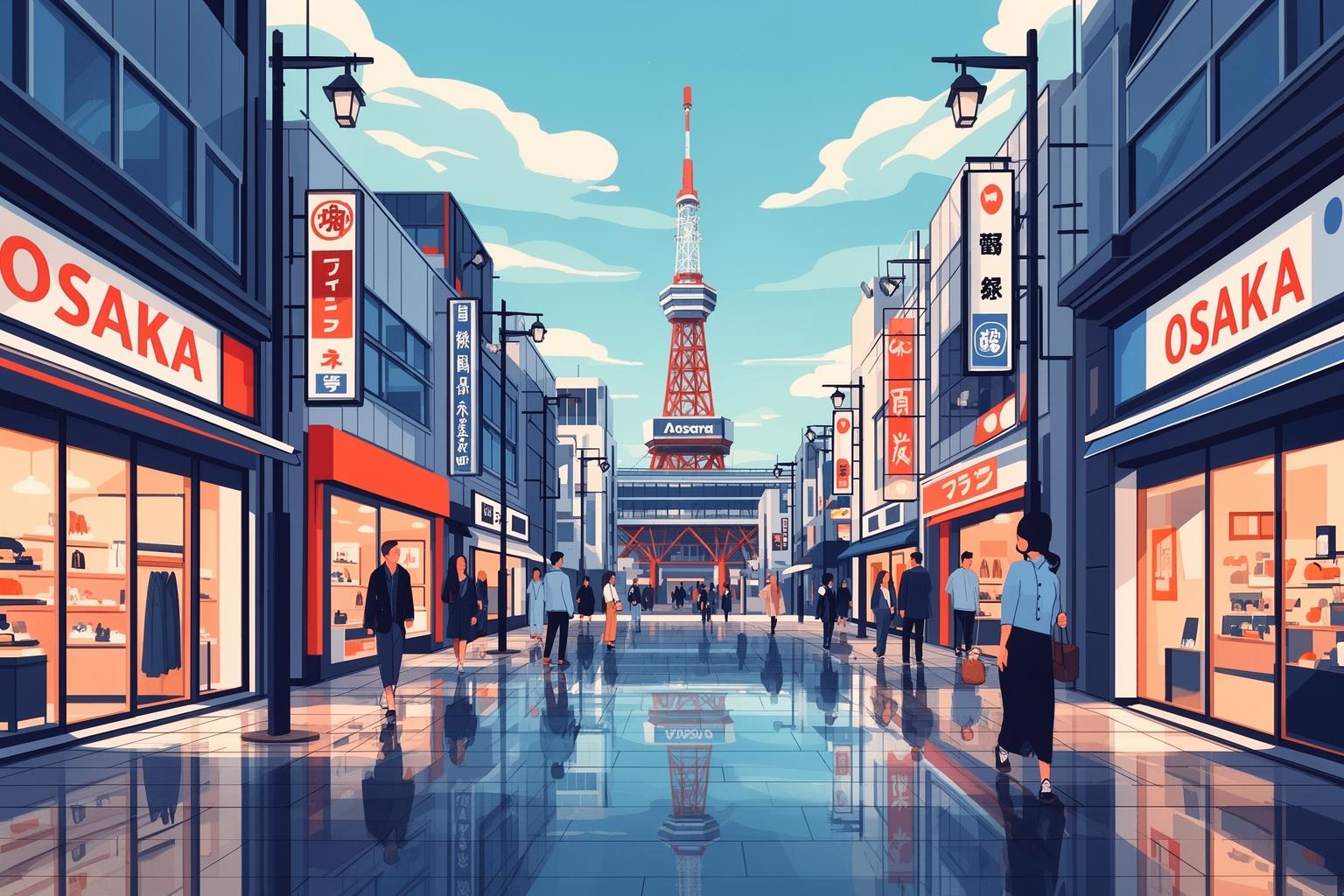
Ultimately, these crowded, chaotic, fluorescent-lit shops are more than just places to save a bit of money. They serve as a perfect reflection of Osaka itself. The city is known for being direct, pragmatic, and unpretentious, sometimes to the point of bluntness. It prioritizes substance, results, and the bottom line over spotless surfaces and elegant appearances. While Tokyo might build a sleek, minimalist boutique, Osaka will create a cluttered store offering a 10% discount.
This represents the city’s merchant DNA manifesting in the 21st century. It’s a deeply rooted cultural belief that you are an active participant in your own life. You don’t simply accept the world as it is; you seek out angles, opportunities, and smarter ways. You engage with the system. Using a kinken shop is a small, everyday expression of this engagement. It’s a declaration that you are paying attention.
So next time you’re in Osaka, standing before the ticket gates, take a moment. Spot the swirling crowd, follow it. Step into that chaotic little shop, buy a paper ticket, and enjoy the satisfying click as you slide it into the gate. You won’t just be saving a few yen—you’ll be tapping into the true, relentless, and beautifully practical rhythm of daily life in Osaka.