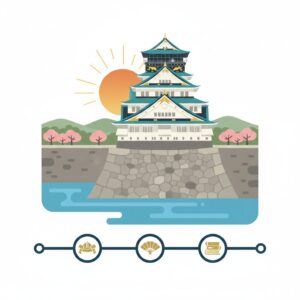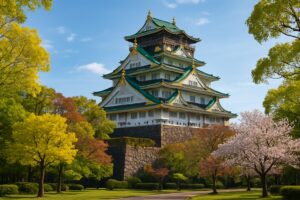
Standing proud against the glittering skyline of a city that never sleeps, Osaka Castle is more than a monument. It’s a saga etched in stone, gold, and steel, a silent witness to the grandest ambitions and most devastating conflicts in Japanese history. Its story isn’t one of placid preservation but of relentless cycles—a phoenix-like epic of construction, annihilation, and defiant reconstruction. To walk its grounds is to stride through the heart of a nation’s turbulent past, to feel the echoes of warlords who dreamed of unifying a country under one banner, and to understand how a symbol of feudal power was reborn as an emblem of civic pride. This isn’t just a castle; it’s the very soul of Osaka, a testament to resilience that rises from a foundation of epic tales. Before we delve into the sieges and splendor, let’s pinpoint this cornerstone of Japanese history on the map.
After exploring its historic grounds, you can continue the experience with a modern culinary feast at a nearby teppanyaki restaurant offering stunning castle views.
The Age of Unification: Toyotomi Hideyoshi’s Grand Vision
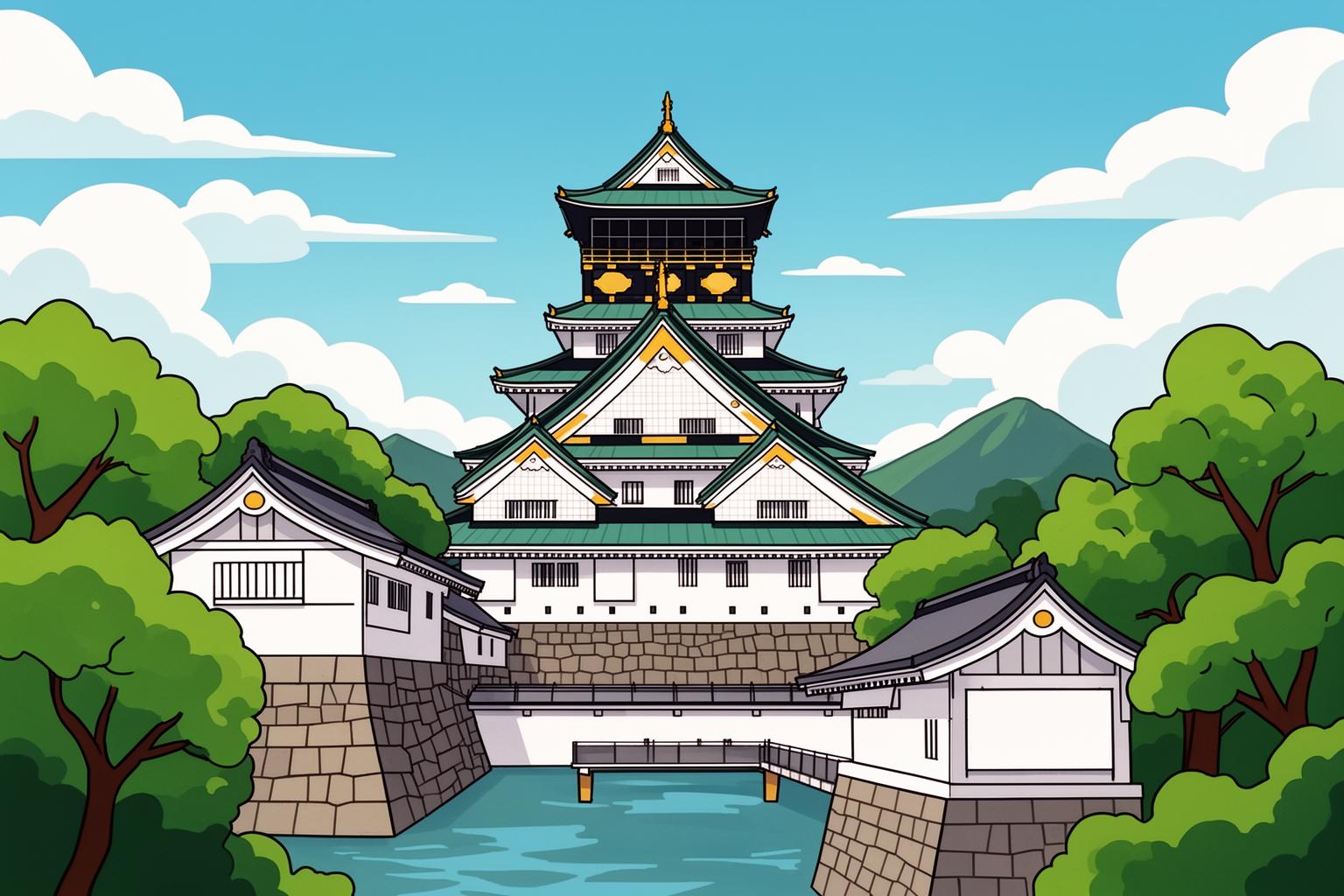
The story of Osaka Castle begins with a man whose life reads like legend: Toyotomi Hideyoshi. Born the son of a peasant, he ascended the social ladder through unmatched wit, strategic brilliance, and relentless ambition to become the de facto ruler of Japan in the late 16th century, completing the unification initiated by his predecessor, Oda Nobunaga. To consolidate his power and establish a political and military hub for his new regime, Hideyoshi needed more than just a fortress; he required an unequivocal symbol of authority—a castle so grand it would overshadow all others and stand as the eternal capital of his dynasty. In 1583, on the site of the former Ishiyama Hongan-ji Temple, itself a formidable fortified complex, he ordered the construction of Osaka Castle.
A Fortress Like No Other
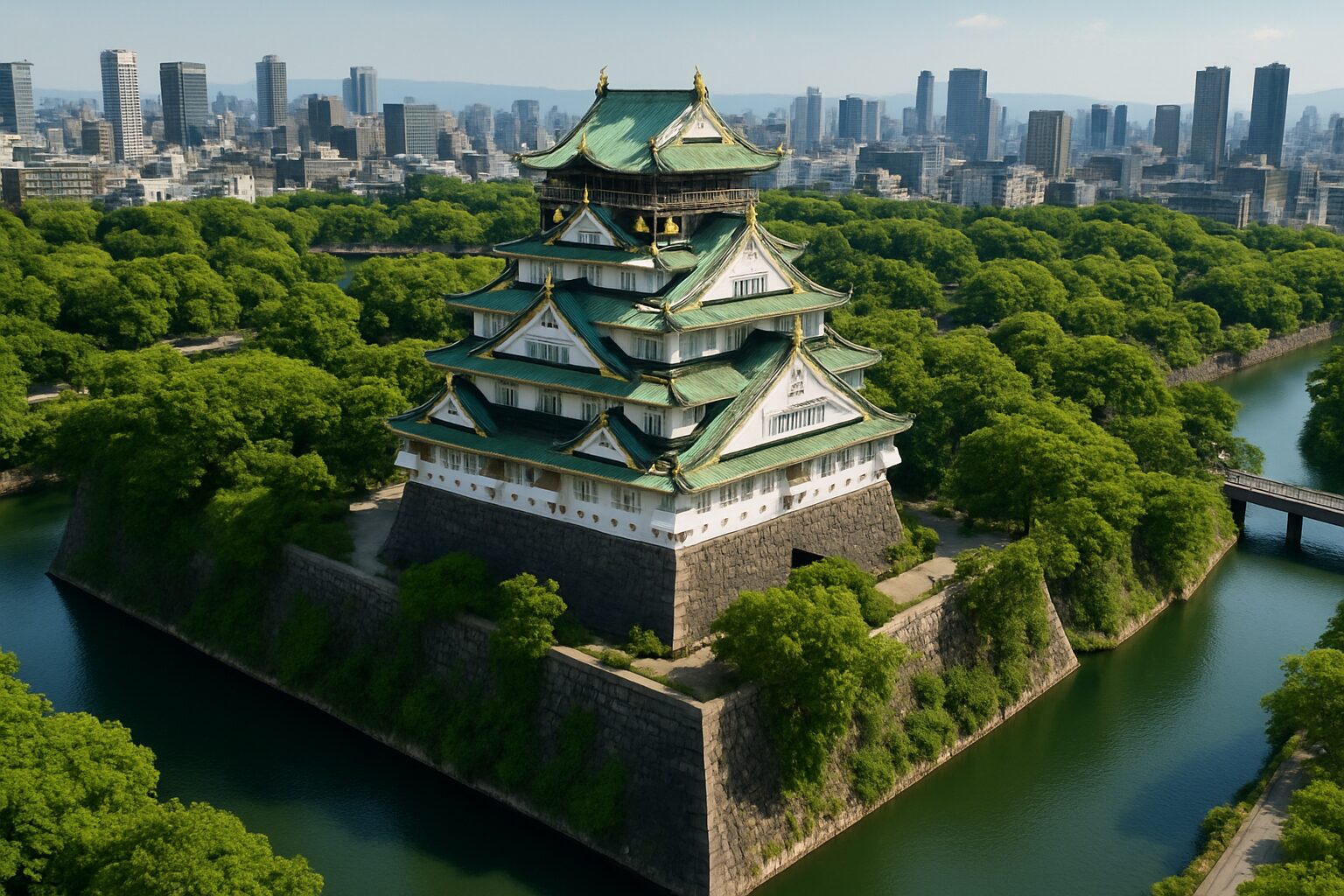
The scale of the project was immense, reflecting Hideyoshi’s vast power and resources. Tens of thousands of laborers were conscripted, and feudal lords from across the unified domains were compelled to provide resources, manpower, and massive stones for its walls. The ambition was to create an impregnable fortress, utilizing the most advanced castle-building techniques of the Azuchi-Momoyama period. The defensive design was a masterpiece of concentric circles. A series of deep, wide moats—outer, middle, and inner—formed strong water barriers, while the grounds were a maze of gates, turrets, and winding paths meant to confuse and ensnare invading forces. The stone walls themselves were engineering marvels. Built using a technique known as burdock piling (gobo-zumi), enormous granite stones, some over one hundred tons, were fitted together without mortar, their sheer weight and precision providing exceptional stability against earthquakes and cannon fire. These walls were not just barriers; they were cliffs of granite, carefully crafted to intimidate and defend.
At the center of this complex stood the original Main Tower, or Tenshukaku. It was a symbol of lavish power, five stories tall on the outside but eight stories internally. Its walls were coated in striking black lacquer, providing a bold and elegant backdrop for the radiant gold leaf that adorned every beam, rafter, and ornament. Intricate carvings of cranes, tigers, and mythical creatures shimmered in the sunlight, projecting an aura of divine authority. Crowning the tower was a golden shachihoko, a mythical fish believed to ward off fire. This tower was not merely a military headquarters; it was Hideyoshi’s palace in the sky—a venue for extravagant entertainment and political spectacle, visible for miles and a constant reminder of who governed Japan.
The Golden Age of Momoyama
Surrounding this magnificent fortress, a vibrant and prosperous castle town flourished. Osaka rapidly became Japan’s commercial heart, a bustling center where merchants, artisans, and samurai converged. The wealth flowing through the city fueled a cultural renaissance known as the Momoyama period, marked by bold, luxurious, and dynamic aesthetics. This culture directly mirrored Hideyoshi’s own personality. Grand tea ceremonies, hosted by the legendary tea master Sen no Rikyu, took place within the castle’s golden tea room. Lavish Noh theater performances were staged for the aristocracy. Artists from the Kano school adorned palace walls with stunning screen paintings set on gold-leaf backgrounds. Osaka Castle was the radiant heart of this golden age, where martial strength and refined culture merged in a spectacular testament to national unity and prosperity. For a brief, dazzling moment, it was the undisputed center of the world for the people of Japan.
The Siege and the Fall: The Tokugawa Shogunate Rises
The golden age was destined to be short-lived. After Hideyoshi’s death in 1598, the fragile power balance he had created began to disintegrate. His heir, Toyotomi Hideyori, was only a child, so a council of five powerful regents was appointed to govern in his place. Among them, one man distinguished himself through ambition, patience, and political savvy: Tokugawa Ieyasu. While Hideyoshi was a charismatic and flamboyant leader, Ieyasu was a master strategist, playing the long game and patiently waiting for his moment. The inevitable conflict between the entrenched Toyotomi clan, secure in their seemingly impregnable Osaka Castle, and the rising Tokugawa power set the stage for one of the most dramatic clashes in samurai history.
The Winter Siege of 1614
Having solidified his power at the decisive Battle of Sekigahara in 1600, Ieyasu established his shogunate in Edo (modern-day Tokyo). However, Osaka Castle remained a stronghold of Toyotomi loyalty and a potent symbol of a rival legacy. Ieyasu recognized that for his family’s rule to be absolute, this final threat had to be eliminated. In the winter of 1614, seizing on a minor incident as a pretext, he led an overwhelming force of roughly 200,000 troops against Osaka’s gates. The defenders, numbering about 100,000, consisted of devoted Toyotomi retainers and ronin (masterless samurai) drawn to their cause, including the brilliant and legendary warrior Sanada Yukimura.
Despite being outnumbered, the castle’s defenses were formidable. The Tokugawa army struggled to breach the massive walls and deep moats. Their assaults were repeatedly repelled, most notably at the fortress’s southeastern corner where Sanada Yukimura had built an independent barbican known as the Sanada-maru. This earthwork fortification, defended with tactical brilliance, inflicted heavy losses on the Tokugawa forces and became a symbol of the Toyotomi’s fierce resistance. Frustrated by the stalemate and with a harsh winter approaching, Ieyasu shifted from brute force to cunning diplomacy. He brought in heavy artillery and began bombarding the castle, focusing on the residential quarters where Hideyori’s mother, Yodo-dono, lived. The psychological pressure worked, and the unnerved Toyotomi clan agreed to negotiate a peace treaty.
A Deceptive Peace
The truce terms were a masterstroke of deception by Ieyasu. He proposed to end hostilities and withdraw his army, on the condition that the castle’s outer defenses be dismantled as a goodwill gesture. The Toyotomi leaders, desperate for relief, agreed to fill in the outer moat. However, under the pretense of honoring this agreement, Ieyasu’s forces acted with ruthless efficiency, filling not only the outer moat but also, to the defenders’ horror, the vital inner moat. Before the Toyotomi could respond, their greatest defensive advantage—the concentric rings of water that rendered the castle nearly impregnable—was gone. Osaka Castle was left exposed and vulnerable, a gilded cage awaiting its final destruction.
The Summer Siege of 1615
With the moats filled and the castle’s defenses fatally weakened, the peace proved brief. In the summer of 1615, Ieyasu returned with his army for the final, decisive assault. This time, the fighting was not a drawn-out siege but a series of brutal, desperate battles fought on open ground and in the castle’s outer baileys. The Toyotomi forces, led by courageous commanders like Sanada Yukimura, fought with extraordinary valor. Yukimura himself led a legendary, fierce charge that broke through the Tokugawa lines and came dangerously close to reaching Ieyasu’s own command post. Yet, the Tokugawa’s numerical superiority was overwhelming. One by one, the Toyotomi commanders fell. The outer defenses were breached, and Tokugawa troops poured into the castle grounds. As flames consumed the magnificent Main Tower built by Hideyoshi, Toyotomi Hideyori and his mother Yodo-dono committed ritual suicide, ending the Toyotomi line in tragedy and definitiveness. The fall of Osaka Castle marked the true beginning of the Tokugawa shogunate’s undisputed rule—an era of peace lasting over 250 years, founded on the ashes of Hideyoshi’s dream.
Rebirth and Redefinition: The Tokugawa Era
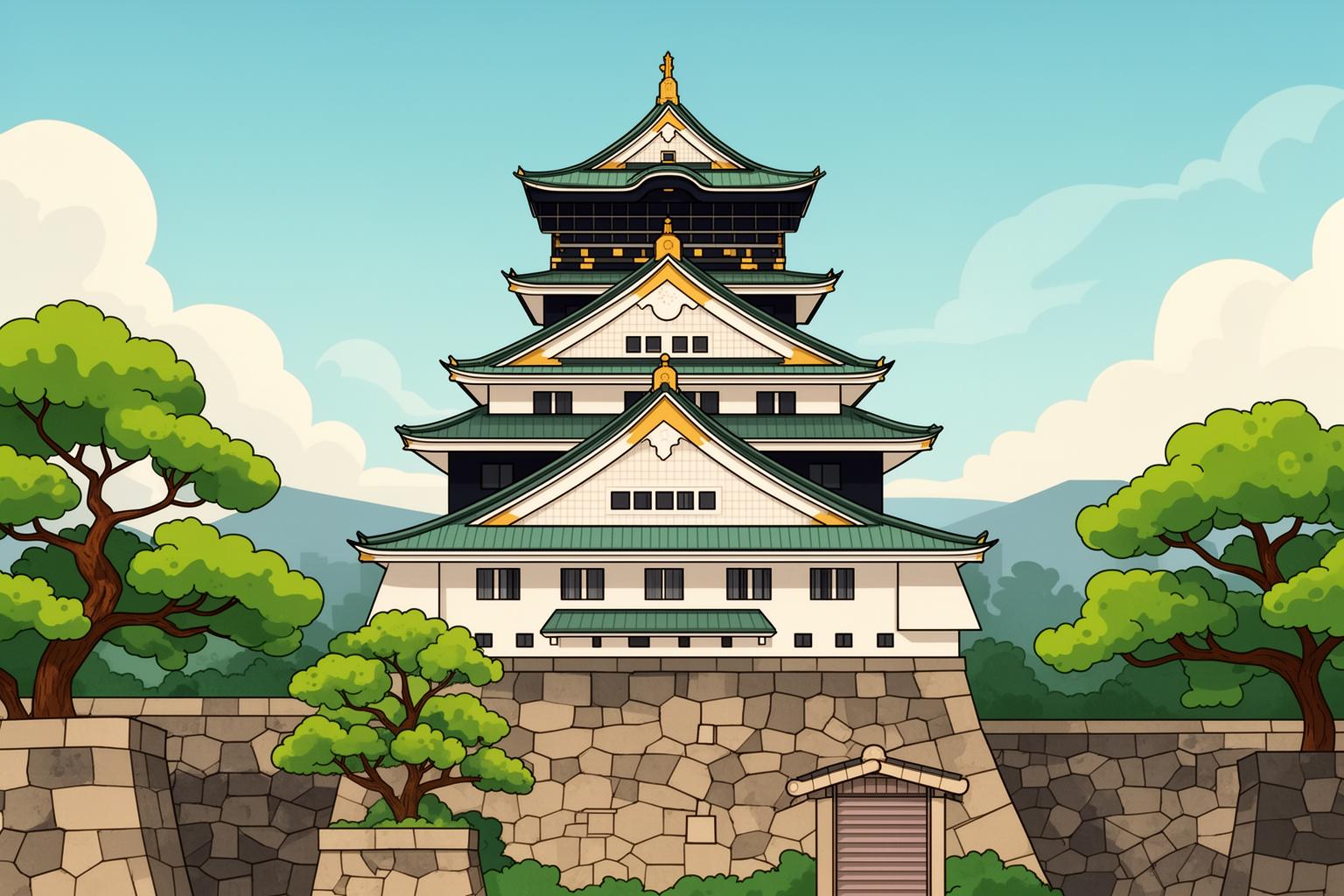
The Tokugawa shogunate could not permit the ruins of Osaka Castle to remain as a lingering reminder of their defeated rivals. Allowing this would have invited nostalgia for the Toyotomi and potentially sparked future rebellions. The castle needed to be transformed—not as a restoration of Hideyoshi’s legacy, but as a definitive assertion of Tokugawa supremacy. Reconstruction, which began in 1620 under the second shogun, Tokugawa Hidetada, was both a political and architectural declaration aimed at erasing the memory of the Toyotomi and replacing it with the undeniable power of the new regime.
A Symbol Reimagined
The Tokugawa reconstruction was even more ambitious in scale than the original. Feudal lords from across Japan were once again commanded to contribute, this time to the new rulers. The project was a calculated act of rewriting history. The new stone walls were erected atop the original Toyotomi foundations, completely burying them. These Tokugawa walls were taller, steeper, and built with larger, more precisely cut stones, demonstrating superior engineering and a greater control of resources. The castle’s layout was also modified to strengthen its function as a military garrison for the shogunate’s control over western Japan.
Tokugawa’s Architectural Manifesto
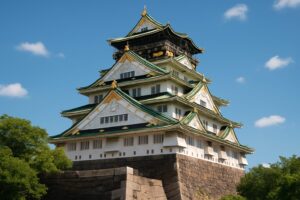
The most striking change was the new Main Tower, completed in 1626. In stark contrast to the Toyotomi’s lavish black-and-gold design, the Tokugawa tower embodied austere, martial power. It soared even higher than its predecessor, with a five-story exterior featuring elegant white plaster walls—a hallmark of Tokugawa castle architecture. This clean, imposing design was a conscious rejection of the flamboyant Momoyama style associated with Hideyoshi. It symbolized a new era of order, control, and sober authority. Though strategically crucial, the shogun himself never lived there; his seat of power remained firmly in Edo. Osaka Castle served as the headquarters for a jodai, a castle keeper appointed by the shogun, and functioned as a vast warehouse for rice, gold, and weaponry, supporting the shogunate’s economic and military dominance of the region.
A Tragic End
Despite its impressive construction, the Tokugawa-era Main Tower was destined to be short-lived. Its demise came not from war, but from nature’s fury. In 1665, a powerful lightning strike ignited the vast gunpowder stores inside the tower. The resulting explosion was devastating, completely obliterating the tower in a fiery blast that reportedly shook the entire city. The shogunate, perhaps viewing it as a bad omen or an unnecessary burden, never rebuilt it. For 260 years thereafter, the massive walls and turrets of Osaka Castle stood guard over the city without their iconic centerpiece. The castle’s core remained an empty space, a silent reminder of the fleeting nature of even the most formidable symbols of power.
The Meiji Restoration and Beyond: A Castle in the Modern Age
As Japan emerged from centuries of feudal isolation in the mid-19th century, Osaka Castle once again found itself at the heart of a historic upheaval. The decline of the Tokugawa shogunate and the rise of pro-Imperial forces set the stage for the Boshin War, a conflict that would herald the modern Meiji era. The castle, a powerful symbol of shogunal authority in western Japan, became a key prize in this struggle over the nation’s future.
From Shogunate Stronghold to Imperial Ground
In 1868, as the war’s momentum shifted against the shogunate, the castle was peacefully surrendered to the pro-Imperial forces. However, the transition was not entirely smooth. Amid the ensuing chaos, a mysterious fire broke out, devastating many remaining palace buildings and structures within the main bailey, including the magnificent Nishinomaru Palace. With the establishment of the Meiji government, the samurai era came to an end. The castle grounds were repurposed to meet the needs of a modernizing Japan, becoming the headquarters and main arsenal for the Imperial Japanese Army’s 4th Division. Barracks, administrative buildings, and factories producing weapons and ammunition were constructed throughout the historic site, transforming the former feudal stronghold into a center of modern military activity.
The Showa Era Reconstruction: A Symbol for the People
The absence of the Main Tower for over two and a half centuries was deeply mourned by the people of Osaka. As the city grew into a major industrial metropolis in the early 20th century, a strong civic movement arose to restore its most famous landmark. In 1928, Osaka’s mayor, Hajime Seki, launched a public fundraising campaign to rebuild the Tenshukaku. The response from citizens was overwhelming. Donations poured in, and within a few years, a substantial sum was collected. This effort marked a significant shift in the castle’s identity. For the first time, its reconstruction was driven not by a warlord or shogun to assert power but by ordinary citizens expressing their love for Osaka and its history.
Architectural Choices and Historical Layers
Completed in 1931, the new Main Tower was a marvel of its era. Built with a ferroconcrete frame for resilience against earthquakes and fire, it was a thoroughly modern structure housing a museum dedicated to the castle’s history. The architectural design thoughtfully blended its past. The first four floors were modeled on the white-plastered walls of the Tokugawa-era tower, acknowledging its legacy as a shogunal fortress. The fifth and final floor was a triumphant return to the style of the original founder, Toyotomi Hideyoshi, featuring black lacquered walls adorned with gleaming golden tigers and cranes. This hybrid design was a deliberate tribute to both of the castle’s most significant historical chapters. In a nod to modern convenience, it was also among the first restored Japanese castles equipped with an elevator, making its history accessible to all.
Scars of the 20th Century
The castle’s trials were not yet over. Its role as a major military arsenal made it a prime strategic target during World War II. From 1944 to 1945, the grounds suffered numerous Allied bombing raids. While the 1931 ferroconcrete Main Tower miraculously survived the attacks with only minor damage, many surviving original Tokugawa-era structures were not as fortunate. Several turrets, gates, and storehouses were destroyed, adding another layer of loss to the castle’s long and tragic history. The war’s end marked the final demilitarization of the grounds, and after extensive repairs and restoration efforts, the entire area was officially designated as a public park, completing its transformation into a beloved historical and recreational space for the people of Osaka and visitors from around the world.
Exploring Osaka Castle Today: A Journey Through Time
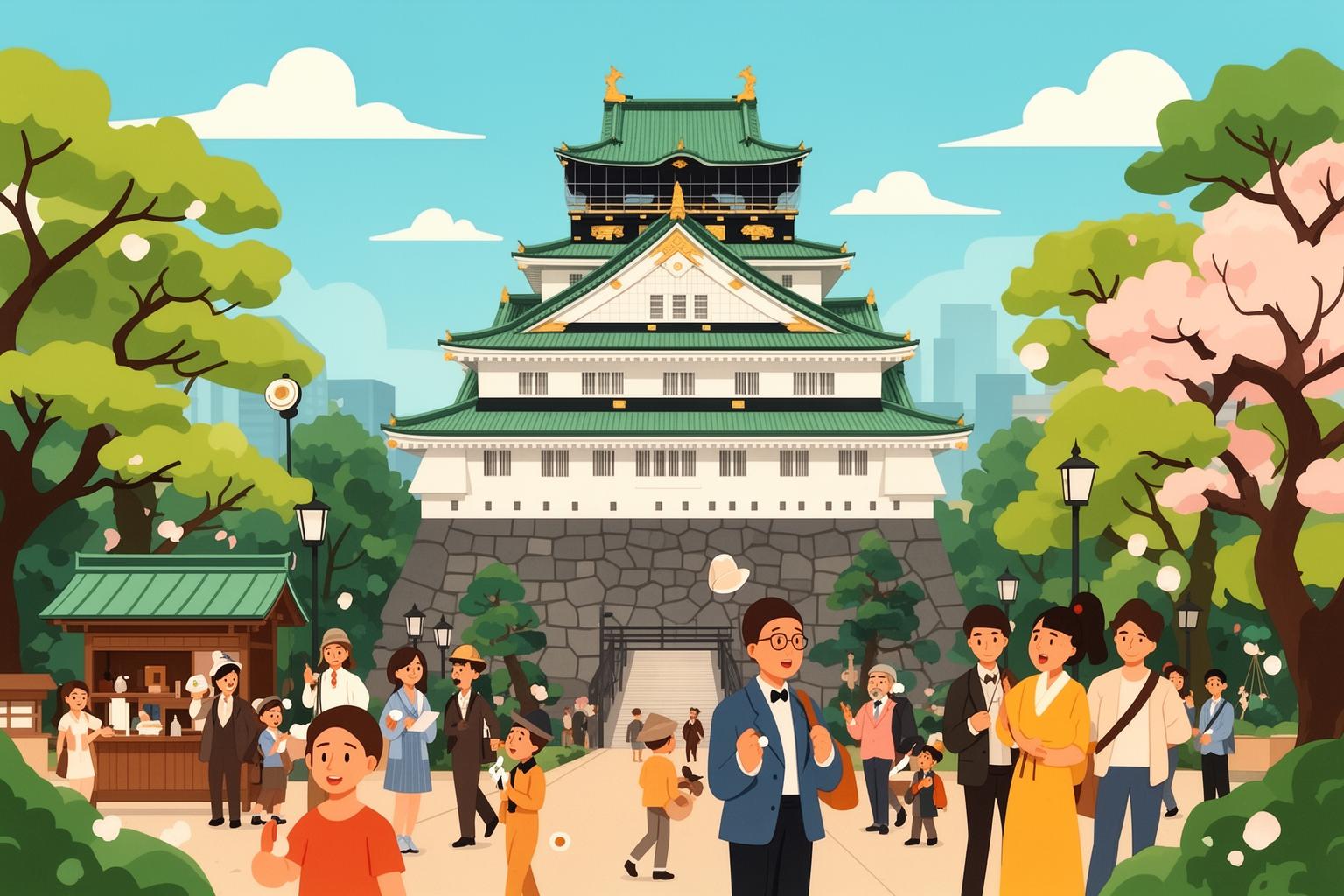
A visit to Osaka Castle today offers an immersive experience, a journey through layers of history that can be felt in the very atmosphere. The expansive grounds, now a tranquil park, still echo with the memories of epic battles and feudal splendor. Transitioning from the bustling modern city into this historic sanctuary feels like traveling through time, beginning the moment you catch your first sight of the outer moats and towering stone walls.
The Approach: Moats, Walls, and Gates
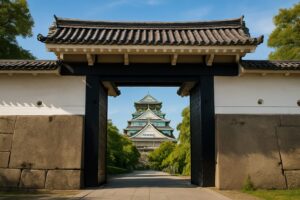
The true scale of the castle’s defenses is best appreciated on foot. Approaching from nearby stations such as Osakajokouen or Morinomiya, you first come upon the expansive outer moat. Crossing one of the bridges, you pass through imposing gates like the Aoyamon or the main Ote-mon Gate. These formidable entrances, flanked by multi-story turrets, were designed to create deadly choke points against attackers. However, it is the stone walls that truly command admiration. These sloping granite cliffs, rising up to 30 meters from the moat below, stand as a testament to the shogunate’s raw power. Take a moment to examine the individual stones. Some are enormous, like the famous Tako-ishi (Octopus Stone) near the Sakura-mon Gate, estimated to weigh around 130 tons. The precision with which these massive stones were transported and fitted without modern machinery is simply astonishing. Here, you sense the immense human effort and unbreakable determination of the castle’s builders.
Inside the Main Tower (Tenshukaku)
The beautifully reconstructed Main Tower is the park’s centerpiece and an essential stop. Inside, this eight-story structure functions as a modern and engaging museum. Each floor highlights a different aspect of the castle’s history, with special focus on its founder, Toyotomi Hideyoshi. Visitors will find a fascinating collection of historical artifacts, including authentic samurai armor, gleaming katana swords, personal items of Hideyoshi, and intricately painted folding screens depicting famous battles. Many visitors are especially captivated by the detailed dioramas and video displays that vividly recreate the dramatic Winter and Summer Sieges of Osaka. After ascending through centuries of history, you reach the observation deck on the top floor, where a spectacular 360-degree view awaits. From here, you can see the entire castle grounds, the surrounding moats, and the vast urban landscape of modern Osaka beyond. This breathtaking vista creates a striking contrast between past and present, connecting the feudal fortress to the vibrant city it helped shape.
Beyond the Tower: Secrets of the Castle Grounds
While the Main Tower is the highlight, the expansive castle park contains many other treasures worth discovering. Rushing directly to the tower and back means missing the full depth and beauty of the site.
Nishinomaru Garden
Situated in the western bailey, this expansive lawn garden serves as a peaceful retreat. It requires a separate admission fee but is well worth it, especially during cherry blossom season. Home to over 300 cherry trees, the garden transforms into a stunning sea of pink in early spring, offering one of the most iconic photo opportunities of the Main Tower framed by delicate sakura blossoms. Historically, the garden was the site of Hideyoshi’s wife Nene’s residence and later the Nishinomaru Palace. Today, it also includes the former Osaka Guest House, a beautiful building used for hosting dignitaries, enhancing its serene and elegant ambiance.
The Hokoku Shrine
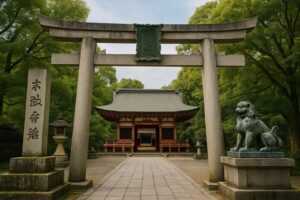
Tucked away in a quieter corner of the park is the Hokoku Shrine, dedicated to the spirit of Toyotomi Hideyoshi, along with his son Hideyori and brother Hidenaga. Originally established by Emperor Meiji, the shrine was later relocated to the castle grounds. It is a peaceful and poignant place to honor the man whose grand ambition began this entire saga. Nearby, you’ll find a bronze statue of Hideyoshi and charming gourd-shaped ema (votive plaques), referencing his personal banner.
Miraiza Osaka-jo
In striking contrast to the surrounding Japanese architecture stands the impressive European-style building right in front of the Main Tower. This is Miraiza Osaka-jo, formerly the headquarters of the Imperial Army’s 4th Division, built in 1931. Rather than being demolished, this historic structure has been wonderfully repurposed. Today, it hosts a collection of stylish restaurants, cafés, and souvenir shops, providing an ideal place to rest and recharge while enjoying a unique piece of 20th-century history within this 16th-century fortress.
Important Cultural Properties
Although many structures were lost to fires and war, several original Tokugawa-era buildings survived and are now designated Important Cultural Properties. As you explore, be sure to seek out the Sengan Turret, the Tamon Turret, the impressive Ote-mon Gate, and the gunpowder magazine. These authentic, centuries-old structures have withstood the test of time, offering a direct and tangible connection to the castle’s shogunal heritage.
Practical Guidance for the Modern Explorer
Navigating a site as expansive and historically rich as Osaka Castle Park is best approached with some planning. A few practical tips can help you maximize your visit, ensuring a smooth and enjoyable experience as you explore this iconic landmark.
Getting There
Osaka Castle is very well connected by public transportation, with multiple stations surrounding the park. Your best option depends on which part of the park you intend to enter.
- JR Lines: If you have a Japan Rail Pass, the JR Loop Line is the most convenient choice. Osakajokouen Station on the northeastern side offers a pleasant walk to the Main Tower. Morinomiya Station on the southeastern side is also an excellent option.
- Osaka Metro: The city’s subway system provides excellent access. Tanimachi Yonchome Station (on the Tanimachi and Chuo lines) is closest to the main Ote-mon Gate on the western side, while Morinomiya Station (on the Chuo and Nagahori Tsurumi-ryokuchi lines) provides access from the south.
From any of these stations, expect a 15- to 20-minute walk to the Main Tower at the park’s center. This walk is part of the experience, allowing you to take in the scale of the outer defenses.
Best Times to Visit
Osaka Castle is a beautiful destination year-round, with each season offering its own unique appeal.
- Spring (late March to early April): Perhaps the most popular time to visit, when the grounds—especially Nishinomaru Garden—are transformed by hundreds of blooming cherry trees, creating a magical, quintessentially Japanese setting.
- Autumn (mid-November to early December): Ginkgo and maple trees turn vibrant shades of gold, orange, and red, providing a stunning backdrop to the stone walls and Main Tower.
- Summer (June to August): Although it can be hot and humid, the park’s lush greenery is at its peak. The castle often features evening illuminations and other events during this period.
- Winter (December to February): With fewer crowds and crisp, clear air, visibility from the observation deck is excellent. The bare tree branches give the castle a more dramatic, somber atmosphere that emphasizes its martial history. Plum blossoms also start blooming in late winter, signaling the arrival of spring.
To avoid the largest crowds, try to visit on weekday mornings, as weekends and national holidays can be very busy.
Tickets and Hours
The Osaka Castle Park grounds are open 24 hours daily with free entry. However, admission fees apply for the Main Tower and Nishinomaru Garden.
- Osaka Castle Main Tower: Generally open from 9:00 AM to 5:00 PM (last admission at 4:30 PM). Operating hours may be extended during holidays or special events.
- Nishinomaru Garden: Typically open from 9:00 AM to 5:00 PM, closing slightly earlier in winter. It is usually closed on Mondays.
It’s advisable to check the official Osaka Castle website for the latest information on opening hours and admission fees before your visit.
Local Tips
- Wear Comfortable Shoes: The castle grounds are vast, and you’ll be doing a fair amount of walking, much of it on uneven terrain and stairs. Comfortable footwear is essential.
- Consider the Gozabune Boat: For a unique experience, take a ride on the Osaka Castle Gozabune Boat. This golden, traditionally styled boat offers a 20-minute tour of the inner moat, allowing you to admire the towering stone walls from the water, just as an approaching army would have centuries ago.
- Explore the Surroundings: A short walk from the Ote-mon Gate leads to the Osaka Museum of History, whose upper floors offer some of the best views and photo opportunities of the castle complex. A combined ticket for the museum and castle tower is often available.
- Stay Hydrated: Especially during warmer months, be sure to bring water. Vending machines are scattered throughout the park, but having your own bottle is always a good idea.
A Living Legacy: The Enduring Spirit of Osaka Castle
Osaka Castle is much more than just a museum or a beautifully preserved architectural marvel. It serves as a living chronicle of Japan’s history, a site where ambition, warfare, and resilience have intersected and evolved over more than four centuries. Its narrative mirrors that of the nation itself—a saga of unification achieved through conflict, power asserted through grand displays, and a modern identity shaped from the remnants of a feudal past.
More Than a Relic
The castle standing today is not a singular, fixed monument but a rich blend of various eras. Its foundations hold the buried dreams of Toyotomi Hideyoshi. Its formidable stone walls represent the steadfast authority of the Tokugawa clan. Its ferroconcrete core symbolizes the civic pride of 20th-century Osakans. Each layer reveals a segment of this epic story, and visiting the castle is like peeling back these layers one at a time. The tension between the competing legacies—the lavish elegance of the Toyotomi and the stern control of the Tokugawa—is palpable in the very design of the reconstructed tower.
A Connection to the Present
The view from the top floor of the Tenshukaku perfectly captures this enduring legacy. Below, the ancient moats and ramparts stand strong, reminders of an age of samurai and shoguns. Beyond them, the gleaming glass skyscrapers and busy highways of modern Osaka extend to the horizon. This is not a contradiction but a continuum. The city’s current commercial vitality and spirited character have their roots in the thriving castle town that first blossomed in the shadow of these walls. The castle is not separate from the city; it is its anchor, its historical heart, and its most powerful symbol.
Final Inspiring Thought
Visiting Osaka Castle is a journey through the very soul of Japan’s history. It invites you to stand where great armies clashed, to marvel at the ambition of those who sought to unify a nation, and to appreciate the resilient spirit of a city that has rebuilt its most cherished landmark time and again. It is a story of dreams, ashes, and renewal—a narrative that continues to captivate, inspire, and resonate with all who walk its sacred grounds.