There’s a question that hangs in the humid Osaka air for any foreigner trying to plant their laptop and their life here: Am I doing this right? You arrive with visions of neon-drenched nights and soul-warming takoyaki, but the reality of a nine-to-five, even a remote one, quickly sets in. The initial weeks can feel like a frantic scramble, a disjointed collage of productive hours chained to a desk and fleeting tourist moments grabbed on a weekend. You feel the city’s pulse, a thrumming, chaotic beat, but you can’t seem to find the rhythm. You’re in Osaka, but you’re not of Osaka. This was my world. I was tethered to my Wi-Fi, treating the city like a beautiful backdrop I could only look at, not live in. The problem wasn’t a lack of time, but a misunderstanding of flow. I was trying to impose a rigid, Western-style work-life balance on a city that doesn’t just blur the lines; it erases them with a confident, hearty laugh. The key to unlocking it all, I discovered, wasn’t a new productivity app or a stricter schedule. It was a simple, flimsy piece of plastic: the Osaka Metro Pass. This pass is more than a ticket. It’s a philosophical tool. It’s your license to embrace the city’s logic of pragmatic fluidity, to weave your work into the very fabric of daily life until the two are indistinguishable. It’s how you stop being a visitor with a laptop and start becoming a participant in the grand, ongoing performance of Osaka. This isn’t a guide about seeing the sights; it’s a guide to adopting a mindset, to learning the city’s internal language of efficiency, community, and unapologetic joy, one subway stop at a time.
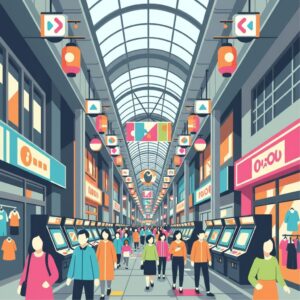
To truly become a participant in Osaka’s grand performance, start by exploring its vibrant local culture, such as the community hubs found in Osaka’s lively shotengai.
The Osaka Mindset: Efficiency Isn’t a Buzzword, It’s a Bargain
To navigate Osaka effectively, you first need to grasp the city’s underlying software—shaped by centuries of merchant history—that influences everything from its dialect and architecture to the way people cross the street. In Tokyo, you feel the heavy presence of government, empire, and established order, where rules dominate and efficiency comes from strict adherence to a beautifully crafted yet rigid system. Osaka, the ancient commercial capital, operates differently. Here, the emphasis is on the deal—the hustle—the pragmatic, streetwise calculation of securing the best possible return on any investment, whether it’s yen, time, or energy.
“Mokkari-makka?”: The Philosophy of Profit in Daily Life
This ethos is most evident in the city’s classic greeting, a phrase that can unsettle outsiders: “Mokkari-makka?”—roughly translating to “Are you making a profit?” or “Business good?” To Westerners or even Tokyo residents, it can sound blunt or intrusive, like asking to see someone’s bank statement as a form of hello. But this is the first key misconception to overcome. In Osaka, it’s not about finances; it’s a philosophical expression. It means, “Are you thriving? Are you making things happen? Are you winning at life?” It reflects a shared understanding that everyone here is hustling, striving to succeed, and serves as a recognition and respect of that effort. It’s a cheer, not a probe.
For remote workers, adopting this mindset is a secret advantage. Once embraced, the city reveals itself not just as a place to get work done, but as an environment to do so in the smartest, most valuable way. This is where the Osaka Metro Pass becomes more than just convenient—it becomes central to your strategy. Its value isn’t merely in unlimited rides; it’s in the mental freedom it offers. It prompts a distinctly Osaka-style thought process: rapid opportunity cost analysis. Why pay 600 yen for mediocre coffee at a sterile chain café nearby when a 230-yen subway ride (already covered by your pass) can take you to a legendary kissaten with superior coffee, a better vibe, and a story to tell? The Osaka mindset makes this calculation instantly. The pass does more than save money; it empowers you to continuously elevate your experience and maximize the value of your day. This quest for otoku, or a great deal, is a collective obsession throughout the city—it’s the thrill of discovery and the satisfaction of savvy choice. People will queue for a limited-time lunch special or walk ten extra minutes for cheaper eggs. For remote workers, this logic applies to managing your environment and time. Your pass transforms the whole city into your office, and the challenge becomes finding the best “deal” for your workspace.
The Art of the “Chotto Soko Made” (Just Popping Out for a Bit)
In many work cultures, boundaries are clear: you’re either working or you’re not, with the day divided into large blocks of time. Osaka rejects this rigidity. Its local rhythm embraces “chotto soko made,” meaning literally “just there for a bit.” This phrase captures the fluid shift between work, errands, and leisure. An office worker might step out for a 15-minute ramen break, a shop owner might dash to the bank, or a grandmother might pop into the shotengai for a single daikon. The city is built for these micro-journeys, with the Metro as its circulatory system.
For remote workers, this principle is liberating. The Metro Pass frees you from one fixed place and encourages seeing your day as a blend of tasks woven into the city’s life. For instance, you could begin your morning focused on deep work at a quiet café near home. When creativity wanes, you don’t just stare at your screen—you declare a “chotto soko made.” You hop on the Midosuji Line, Osaka’s main artery, travel three stops to Shinsaibashi, find a bench in Amerikamura, absorb the eclectic street fashion and youthful energy for twenty minutes, perhaps enjoy a cone of outrageously tall soft-serve ice cream, and then return. This brief change of scenery performs a mental reset. The trip costs no extra and takes less than an hour but might save you three hours of frustration.
This is the Osaka way of life. Your workday can be a three-part composition: Morning spent drafting in a sunlit café in the upscale Kitahama neighborhood overlooking the river; lunchtime aboard the Sakaisuji Line heading down to Kuromon Market in Nippombashi, not as a tourist but as a local grabbing an incredibly fresh seafood bowl at a fraction of the usual price; and afternoon calls at a co-working space near Namba Parks, with the city’s hum as your soundtrack. The Metro Pass knits these diverse moments into a productive, fulfilling day. It’s not about balancing work and life; it’s about blending them seamlessly into a rich, textured experience—the way of Osaka.
Deconstructing the “Work-Life Blend”: A Neighborhood-by-Neighborhood Approach
Osaka isn’t a single entity. It’s an expansive collection of neighborhoods, each with its own unique character, pace, and function. The brilliance of the Metro system lies in how it links these vastly different areas, letting you shift your surroundings as effortlessly as you change your thoughts. For a remote worker, this is the ultimate toolkit. You can tailor your day by selecting a neighborhood that offers the precise energy you need for your tasks. Your pass turns into a key to a citywide array of offices, each boasting a distinct view and atmosphere.
Umeda & Kita: The Corporate Facade and the Hidden Soul
At first sight, Umeda seems like Osaka’s attempt to mimic Tokyo. It’s a dazzling, somewhat overwhelming maze of gleaming skyscrapers, vast underground malls, and endless streams of well-dressed commuters moving with determined purpose. This is the city’s corporate core. Here, you’ll find top co-working spaces with ergonomic chairs and fiber-optic internet, quiet hotel lobbies ideal for discreet meetings, and department store cafes where the silence is as refined as the coffee. This is your spot for “deep work” days. The anonymity of Umeda can be a relief when deadlines are tight. You can blend into the crowd, find a secluded corner, and focus on a project without distractions.
But believing this is the true face of Umeda misses what Osaka is all about. The city dons its corporate attire, but just beneath it, its quirky soul always shines through. The Metro is the key to discovering it. A five-minute walk from the frenzy of Hankyu Umeda Station and a one-stop ride on the Tanimachi Line (or a ten-minute walk if you know the shortcuts) brings you to Nakazakicho. It’s like stepping into another era. The skyscrapers disappear, replaced by a maze of narrow alleys lined with Showa-era wooden houses. These aren’t recreations; they’re originals, survivors of wartime bombings. Today, they shelter a lively community of independent artists, vintage clothing shops, and, crucially for us, some of the city’s most charming and distinctive cafes. Here, you can work for hours at a wobbly wooden table, surrounded by handmade pottery and the aroma of dark roast coffee. The Wi-Fi is just as speedy as in Umeda, but the vibe is worlds apart. This duality defines Osaka. The city embraces modern efficiency but refuses to lose its intimate, historical character. It keeps its soul hidden in these small pockets, easily reachable to those who know where to look. The Metro doesn’t just move you across geography; it transports you culturally, letting you shift between the sleek corporate world and the warm, bohemian enclave in minutes.
Namba & Minami: The Theater of Hustle
If Umeda is the brain, Namba is the gut. It’s a cacophony of sights, sounds, and smells. It’s the Dotonbori canal with its gaudy, flashing Glico Running Man, the deafening pachinko parlors, touts shouting to passersby, and endless arcades in Shinsaibashi. On paper, it’s the absolute worst place to try any serious work. It’s noisy, crowded, and a sensory overload incarnate. And yet, for precisely that reason, it’s a tremendous source of energy and inspiration.
Attempting focused, detail-driven work in the heart of Namba is a fool’s errand. But for creative brainstorming, breaking out of a rut, or pure, unfiltered people-watching, it’s unmatched. Find a second-floor café with a window seat overlooking the Ebisubashi bridge. Put on your headphones—not to block the noise, but to channel it into a productive buzz. Watch the human theater unfold: tourists snapping selfies, couples on dates, school kids in uniform, fast-talking shopkeepers hawking their goods. This is the pulsating core of Osaka’s merchant culture. The energy is transactional, yet joyful and intensely alive. You can’t help but soak some of it in. The sheer density of human stories playing out every second is a powerful creative spark.
Practically speaking, the Metro Pass lets you use Namba strategically. You don’t have to spend the whole day in the chaos. Work in a quieter neighborhood like nearby Horie, known for trendy boutiques and laid-back cafes, and then when your energy flags, make a targeted strike. A one-stop ride on the Yotsubashi Line deposits you right in Namba’s center. You can dive in for a fast, cheap, and delicious lunch at a standing-only udon shop, shoulder-to-shoulder with salarymen. Stroll through Doguyasuji, the kitchenware street, just to soak in the commercial energy. Then, once recharged, retreat. The pass makes these quick, inspiring “raids” on the city’s energetic hubs not only possible but a smart workflow strategy.
Tennoji & Shinsekai: Where Time Warps and Workflows Adapt
South of Namba lies an Osaka that seems frozen in time, deliberately preserved. Around Tennoji Station and the iconic Tsutenkaku Tower in Shinsekai, you find a living museum of the Showa Period (1926-1989). This isn’t a polished tourist attraction; it’s gritty, unpretentious, and authentically real. The atmosphere changes here—the pace slows, the buildings age gracefully, and the people carry history with them.
Working here feels different. You trade trendy, minimalist cafes for local kissaten. These old-school coffee shops are often run by elderly couples who have kept them going for decades. The decor is dark wood, vinyl booths, and perhaps a gently humming fish tank in the corner. The coffee is thick and strong, served with a small packet of crackers. Here, you aren’t an anonymous remote worker but a customer, likely soon a regular. This is the heart of Osaka’s “maido” culture. “Maido” is a greeting meaning roughly “thank you for your continued business.” It suggests a relationship, a bond of familiarity and mutual respect. After a few visits, the owner will greet you by name, remember your order, maybe ask about your work. This contrasts sharply with the cold anonymity of global coffee chains. It’s community in a quiet, everyday form.
This setting is ideal for contemplative work—writing, editing, long-term planning. The slower tempo and lack of pretense are soothing. The soft murmur of other regulars—old men reading newspapers, friends chatting—is a comforting, living soundtrack. This neighborhood reveals a fundamental truth about Osaka’s character: despite its love for modernity and commerce, there is a deep respect for history, community, and enduring values. The Metro operates like a time machine. From the hyper-modern Umeda Station on the Midosuji Line, just fifteen minutes later, you can step off at Dobutsuen-mae into a world that feels half a century old. This ability to travel not only through space but also through time and ambiance is a remarkable asset for keeping your workday varied and your mind refreshed.
A Practical Example: The Tanimachi Line Workday
To illustrate how this all fits together, let’s sketch a hypothetical workday using only the Tanimachi Line, one of Osaka’s longest and most diverse routes. This is how you make the most of your Metro Pass.
Your day begins south, at Tennoji. You skip the big-name chains in the station and head to a classic kissaten tucked in a backstreet for a morning set: thick toast, a boiled egg, and a strong cup of coffee. You sit in a worn vinyl booth and plan your day, the quiet chatter of locals a gentle background hum. It’s calm, focused, and grounding.
Next, you board the purple Tanimachi Line heading north a few stops to Tanimachi Yonchome. You emerge near Osaka Castle—not for sightseeing, but to find a bench in the expansive castle park with a view of the majestic main keep. You tether your phone for Wi-Fi and spend an hour answering emails and making calls, surrounded by feudal history. The fresh air and open space serve as a perfect antidote to the morning’s cozy cafe setting.
When hunger calls, you hop back on the line to Minami-morimachi, home to Tenjinbashisuji Shotengai, Japan’s longest covered shopping arcade. This is where real Osakans shop and, importantly, eat. The options are vast and delicious. You grab crispy korokke (croquettes) from a butcher, takoyaki from a street vendor, and maybe a fresh fruit juice. Eating on the move, you soak in the arcade’s vibrant, chaotic atmosphere. It’s not a relaxing lunch, but a 30-minute deep dive into local life, costing less than a thousand yen.
For the afternoon’s main work session, you travel one stop further to Nakazakicho. As mentioned, this is the city’s bohemian heart. You find a quiet, artsy café down a side street, order a hojicha latte, and settle in for three hours of focused work. The neighborhood’s creative, independent spirit fuels your productive flow.
As the day ends, you take one last ride on the Tanimachi Line to Higashi-Umeda. You surface into the evening buzz of Osaka’s largest business district. You meet a friend for a well-earned beer and yakitori at a cozy izakaya tucked beneath the train tracks. In a single day, on a single metro line, you’ve worked across four very different environments, experienced four unique flavors of Osaka culture, and journeyed from the Showa era to the cutting-edge present. This isn’t sightseeing—this is living and working, seamlessly intertwined.
The Unspoken Rules of the Osaka Commute (Even When You Don’t Have One)
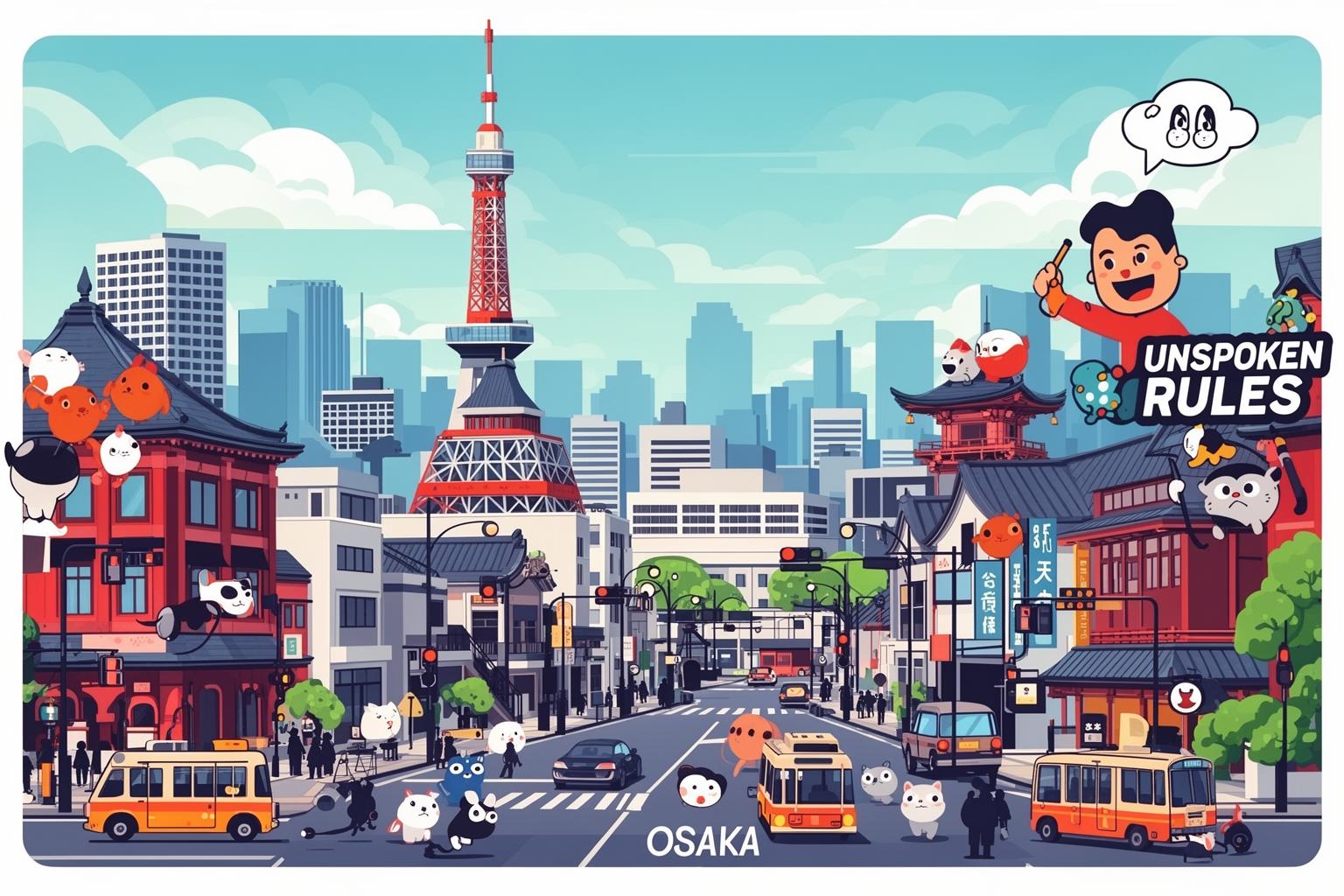
Using the Metro like a local goes beyond simply knowing the routes; it involves grasping the unwritten social codes of the system. This is where the contrasting mindsets of Osaka and Tokyo become clearly visible. For a remote worker relying on the Metro as a mobile office connector, blending into this flow is essential to feeling like a resident rather than a tourist. It means reading the city’s unspoken cues.
Escalator Etiquette and the Flow of People
This is the most famous and revealing difference. In Osaka, you stand on the right side of the escalator to allow others to pass on the left. In Tokyo, as well as most other parts of Japan, it’s the reverse. This isn’t just a quirky, arbitrary rule; it’s a glimpse into the city’s character. Tokyo’s rule feels like a top-down mandate, a national standard implemented for order’s sake. Osaka’s rule feels like a grassroots understanding born from pure, practical pragmatism.
The reasoning is that Osaka, as a merchant city, adopted a London-style “keep right” system to align with international port standards. But the atmosphere on the ground is different. The movement of people in Osaka’s subway is more assertive, more… negotiated. Individuals are in a hurry, but it’s a personal rush, not a collective march. They weave, duck, and seek the path of least resistance. If you stand on the left, blocking the fast lane, expect a series of quiet but firm “sumimasen” (excuse me) and perhaps a gentle nudge. It’s never hostile—just a correction, a reminder that the collective aim is to keep things flowing efficiently. For the remote worker, observing this rule is the first step toward assimilation. It’s a small sign saying, “I understand. I respect the local rhythm.” In Osaka, efficiency is a shared, practical responsibility, not merely a rule to follow blindly.
The Sound of the City: Conversations on the Train
Step onto a train in Tokyo, and you encounter a profound, almost sacred silence. People are absorbed in their phones, books, or thoughts. Conversations are rare and hushed. The atmosphere is one of private reflection, even when packed tightly. Now, board a train on Osaka’s Midosuji Line during off-peak hours. The contrast is immediate. You’ll hear laughter and talk. Friends animatedly discuss evening plans. A mother chats with her child. It’s not noisy—Osakans remain considerate—but the ambient sound is noticeably livelier. Life doesn’t pause for the commute.
This highlights a fundamental difference in how public space is perceived. In Tokyo, the train is a neutral zone where individuality is subdued for collective harmony. In Osaka, the train feels more like a shared living room, with a more permeable boundary between self and community. This may initially be jarring if you’re used to Tokyo’s model, but it soon becomes comforting. It serves as a constant reminder that you’re in a city full of people, stories, and connections. For a remote worker spending long hours focused alone, overheard snippets of life on the Metro can act as a vital, humanizing link beyond the laptop screen, making travel time feel less like sterile transit and more like a genuine part of city life.
The “Obachan” Network: Your Unofficial Information Kiosk
Finally, we must mention the most iconic figure in Osaka’s social ecosystem: the obachan, or middle-aged/older woman. These women are the guardians of the city’s social norms, known for their directness, love of good bargains (often loudly proclaimed), and unstoppable urge to get involved. The Metro is their territory. An Osaka obachan won’t hesitate to tell you your bag is open. She might start chatting about the weather, your clothes, or dinner plans. Most famously, she’ll likely carry a small stash of candy, or ame-chan, in her purse, which she may offer you unexpectedly. This classic Osaka gesture is a small act of connection and warmth.
To outsiders, this can feel intrusive, breaking the unspoken urban rule of anonymity. But misunderstanding the obachan means missing Osaka’s kindness. This isn’t nosiness; it’s sewa-zuki, a culture of caring for others. It reflects a community spirit that recognizes we’re all in this together. In Tokyo, strangers might hesitate to point out mistakes for fear of causing embarrassment. In Osaka, an obachan sees it as her civic duty to help you avoid looking foolish. For foreigners, embracing these interactions becomes a rite of passage. A smile, a thank you, accepting the candy—these small gestures weave you into the city’s social fabric. This network is the true safety net. If you ever feel lost or confused on the Metro, don’t seek an official. Seek an obachan. She will know the answer and ensure you reach your destination, likely adding a story and a piece of candy along the way.
Fueling the Hustle: How the Metro Pass Becomes a Foodie Passport
Life in Osaka cannot be discussed without mentioning its food culture. The city’s unofficial motto is kuidaore, meaning “eat until you drop,” or more precisely, “eat yourself into bankruptcy.” Here, food is far more than mere sustenance; it stands as the primary art form, the main subject of conversation, and the central organizing principle of everyday life. For the remote worker, grasping this culture is crucial, and the Metro Pass serves as the perfect tool to engage with it. It evolves from a simple transportation card into a passport granting access to a city-wide, all-you-can-eat buffet.
The 500-Yen Lunch Circuit
The idea of an extravagant, expensive business lunch is unfamiliar in Osaka. In this merchant city, status is measured not by how much you spend on lunch, but by how little you pay for outstanding quality. The quest for the ideal, delicious, and remarkably affordable lunch is a daily sport. The ultimate prize is the “one coin” lunch—a fulfilling meal costing just a single 500-yen coin. These gems are abundant if you know where to seek them out.
Here, the Metro Pass becomes a culinary weapon. A remote worker confined to one neighborhood is limited to nearby lunch options. But with the pass, the entire city’s lunch circuit opens up. You might be working in Kitahama and learn about a legendary curry shop in Honmachi, just four stops away on the Sakaisuji Line. While a non-Osakan might see traveling 20 minutes for lunch as inefficient, locals find it perfectly logical. Why settle for a 700-yen mediocre pasta nearby when a 500-yen bowl of unforgettable ramen is just a short, prepaid train ride away? This is the mokkari-makka mindset applied to your appetite—maximizing the value of your lunch hour. The pass encourages this exploration, making the journey an integral part of the adventure. One day, you could find yourself in a tiny, crowded shop near Yodoyabashi, surrounded by salarymen quietly slurping katsudon. The next, sampling a special bento from a vendor in Sakaisuji-Honmachi’s business district. Following the food leads you to the city’s authentic, non-touristy neighborhoods.
From Depachika Feasts to Shotengai Snacking
Osaka’s food scene operates on two parallel tracks: the polished and the pragmatic. The Metro is the switch that lets you jump between them. On one end are the depachika, the dazzling, expansive food halls in the basements of department stores like Hankyu in Umeda or Takashimaya in Namba. These are immaculate gourmet wonderlands, offering everything from high-end sushi bento boxes to delicate French pastries and artisanal pickles. For a remote worker, visiting the depachika is an excellent way to enjoy a somewhat luxurious lunch in a nearby park or back at your workspace.
On the other end lies the shotengai, local covered shopping arcades—the lifeblood of neighborhoods, bustling with small, family-run shops. These are the heart of Osaka’s soul food. It’s where you find street-style snacks and experience tachigui (standing-eating). The Metro connects you to the best of these arcades. You can get off at Tenjinbashisuji 6-chome and graze along Japan’s longest shotengai, savoring freshly grilled takoyaki, savory okonomiyaki, and deep-fried kushikatsu skewers. Or head to Senbayashi on the Tanimachi line for a quieter, more local arcade experience. This isn’t just about eating; it’s about participating in the community’s daily rhythm. Grocery shopping, grabbing a snack, and chatting with shop owners form one seamless experience.
The Metro Pass lets you live in both worlds. Start your day with a premium coffee from a depachika café, then end it with affordable, tasty street food in a shotengai. This constant shifting between the refined and the raw, the modern and the traditional, captures the essence of Osaka. It’s a city of many layers, and with the Metro Pass in hand, you can access every one of them.
Your relationship with Osaka, especially as a remote worker, is dynamic. It’s not about finding one perfect café or neighborhood and staying put; it’s about movement and fluidity. It’s about recognizing the city as a resource to be tapped, a puzzle to solve, and a feast to savor. The Osaka Metro Pass is more than a means of transportation—it’s a subscription to the city’s operating system, the key to unlocking its pragmatic efficiency, joyful hustle, and genuine, unpretentious community.
Mastering the Metro’s rhythm means seeing Osaka not as a map of tourist sites, but as a network of interconnected villages, each with its own energy, flavor, and way to work and live. It reveals that Osaka’s famed friendliness is not an empty stereotype. It is a practical, straightforward, and deeply human camaraderie rooted in commerce and mutual support. It’s found in the obachan’s unsolicited tips, the shopkeeper’s hearty “maido,” and the shared joy in scoring a good deal—whether on ramen or daily travel. By embracing this flow, you stop fighting the city’s chaotic energy and learn to ride its current. You cease to be simply a foreigner working remotely in Osaka; you become an active participant in its noisy, vibrant, and wonderfully efficient dance.