A new survey reveals that the anticipated economic impact of the 2025 Osaka-Kansai World Expo has been revised upwards to a staggering ¥3.05 trillion. This significant increase surpasses earlier forecasts, with the surge largely credited to the unexpected commercial success of the Expo’s official mascot, Myaku-Myaku.
A Closer Look at the Economic Boom
The latest estimate of ¥3.05 trillion represents a major boost for the regional economy, encompassing everything from construction and operational costs to visitor spending on accommodation, food, and transport. This revised figure indicates stronger-than-expected economic activity directly linked to the event.
The driving force behind this impressive new forecast is the phenomenal popularity of official merchandise. The report highlights that strong and sustained sales of goods featuring the Expo’s quirky and beloved mascot, Myaku-Myaku, have become a primary revenue stream. This commercial success is proving powerful enough to offset projections of slightly lower-than-anticipated visitor numbers, ensuring the event’s overall financial health.
The “Myaku-Myaku” Effect
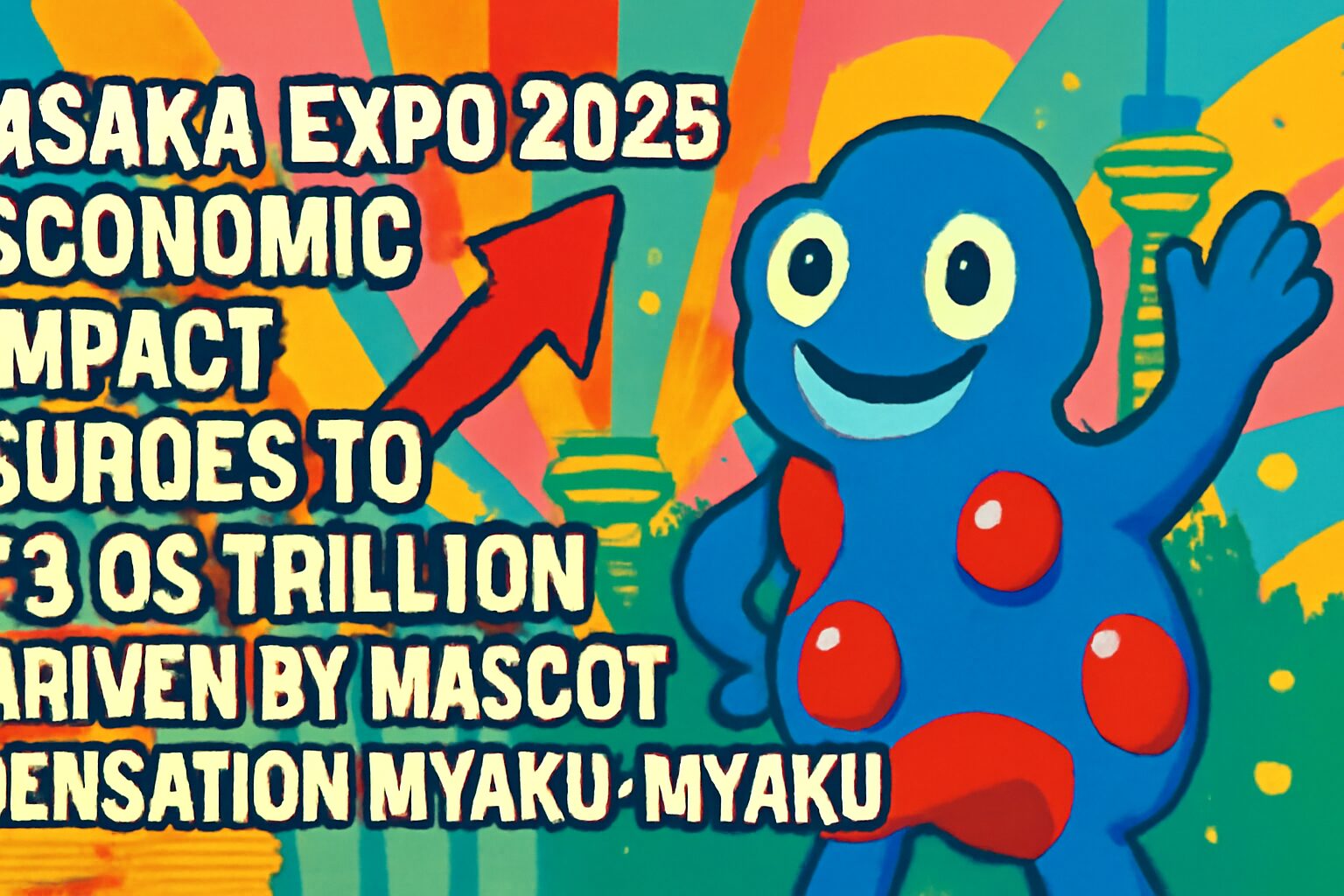
Myaku-Myaku, with its unique design of a blue, cell-like creature with multiple red eyes, has captured the public’s imagination both in Japan and internationally. What began as a distinctive and somewhat controversial design has evolved into a pop culture icon, driving demand for a wide array of products from plush toys to stationery. This “Myaku-Myaku Effect” demonstrates the immense power a well-marketed character can have in boosting an event’s financial performance, turning merchandise into a cornerstone of its economic success.
Future Challenges: Spreading the Benefit Beyond Osaka
While the headline figure is cause for celebration, the report also points to a significant challenge: a limited spillover effect on tourism throughout the wider Kansai region. Currently, the economic benefits appear heavily concentrated in Osaka, where the Expo will be held.
The concern is that visitors may attend the Expo but not venture further to explore the rich cultural and historical attractions in neighboring prefectures like Kyoto, Hyogo (home to Kobe), Nara, and Wakayama. Realizing the full potential of the Expo hinges on encouraging attendees to extend their trips and discover the diversity of the entire Kansai area.
What This Means for Travelers
For those planning to visit the Expo, this news suggests a vibrant and bustling atmosphere at the event site, with Myaku-Myaku merchandise likely to be a must-have souvenir.
However, it also presents an opportunity for savvy travelers. While Osaka is expected to be crowded, the limited tourism spillover means that other parts of the Kansai region may offer a more relaxed yet equally rewarding travel experience. This could be the perfect chance to combine a visit to the futuristic Expo with a trip to the timeless temples of Kyoto, the stylish port city of Kobe, or the sacred deer parks of Nara.
Organizers and regional tourism bodies are now expected to focus on promoting multi-destination travel itineraries to ensure the legacy of the 2025 Expo benefits all of Kansai for years to come.