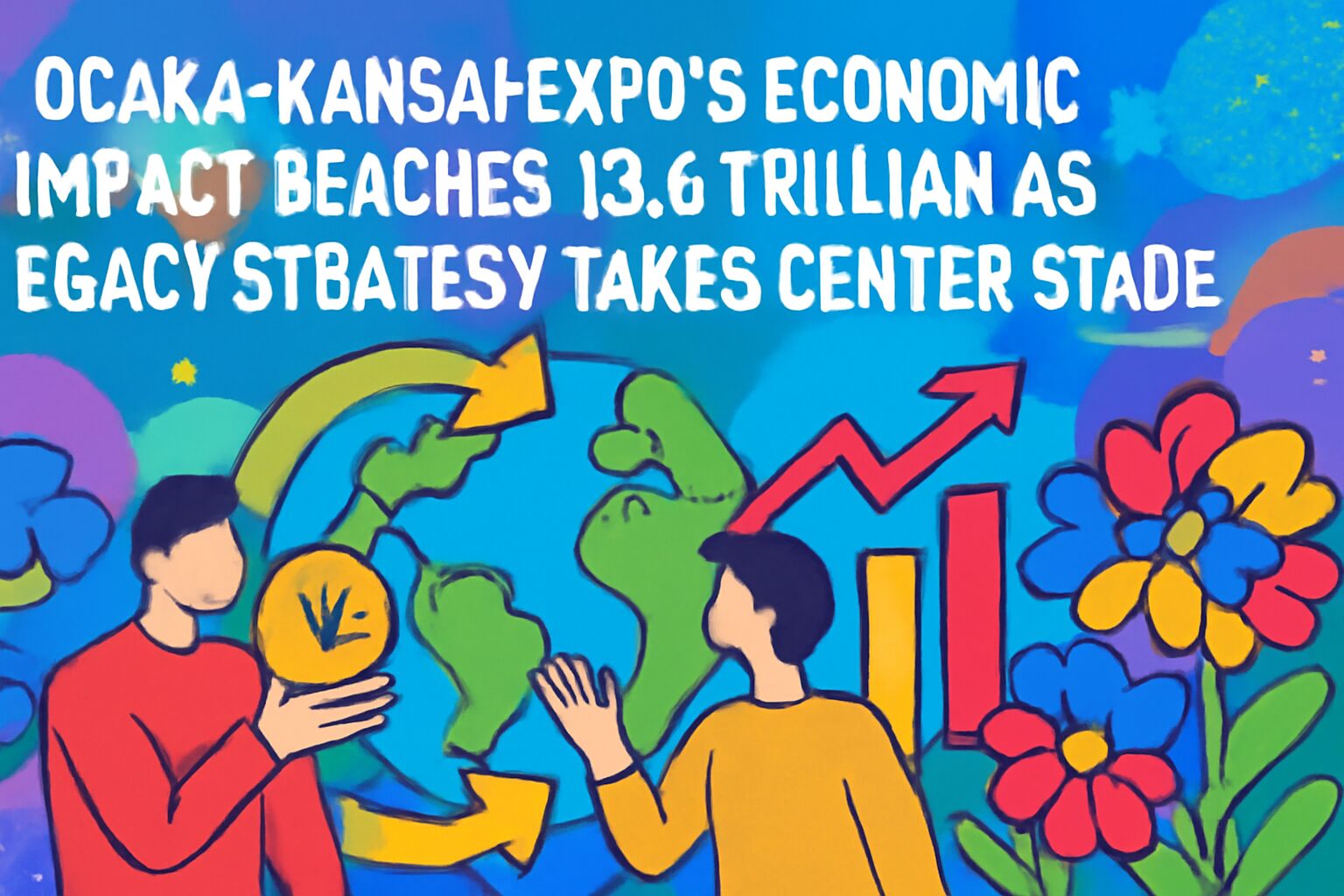
Following the conclusion of the Expo 2025 Osaka, Kansai, Japan, recent final reports have revealed a monumental economic achievement for the region. As of mid-2026, the comprehensive assessment shows that the global event generated a staggering economic ripple effect estimated at approximately 3.6 trillion yen. With the immediate financial successes now fully tallied, public and private sectors are pivoting toward an ambitious legacy strategy designed to ensure long-term growth for Osaka and the wider Kansai economy.
A Historic Financial and Attendance Success
When the Osaka-Kansai Expo closed its doors in October 2025, it left behind a trail of record-breaking figures. Defying early domestic skepticism and international hurdles, the event welcomed approximately 29.02 million visitors over its six-month run. This immense influx of domestic and international travelers not only revitalized the local tourism sector but also fueled consumption across retail, hospitality, and transportation.
The financial performance of the Expo has been equally impressive. The organizing bodies have confirmed an operating surplus reaching up to 37 billion yen, a testament to robust ticket sales, successful merchandise campaigns, and operational efficiency. The 3.6 trillion yen economic impact significantly surpasses initial expectations, proving the event’s viability as a massive catalyst for economic stimulation in western Japan.
Background: Overcoming Headwinds to Design Future Society
Operating under the theme “Designing Future Society for Our Lives,” the 2025 Expo was conceived as a testing ground for next-generation technologies and sustainable living. Preparation for the mega-event faced unique challenges, including global geopolitical tensions, rising construction costs, and a shortened preparation window following delays from previous global events.
However, the commitment to leveraging technological demonstrations, advanced infrastructure investments, and international cooperation prevailed. The Expo facilitated participation from over 150 countries and regions, creating an unprecedented melting pot of cultures, business leaders, and innovators right in the heart of Osaka.
The Post-Expo Legacy: Turning Innovation into Regional Growth
With the pavilions dismantled and the massive crowds dispersed, the focus for 2026 and beyond is firmly fixed on the post-Expo legacy. Local governments and business coalitions are determined not to let the Expo be remembered merely as a temporary festival. Instead, it is being positioned as a long-term investment in Japan’s economic expansion.
The legacy strategy is built on key pillars aimed at fostering regional growth. Foremost is the continued development of new industries sparked by the Expo’s technological demonstrations, such as advanced mobility solutions, clean energy, and life sciences. Additionally, there is a strong push to maintain and expand the international networks established during the event, ensuring that Kansai remains a premier destination for global business and diplomatic exchanges. The strategy also heavily emphasizes human resource exchanges, utilizing the relationships forged between domestic talent and international participants to cultivate a globally competitive workforce in the region.
What This Means for Kansai Tourism and Beyond
For the tourism and hospitality industries operating under the Osakaa umbrella, the future looks exceptionally bright. The infrastructure upgrades completed for the Expo, including enhanced transit lines, modernized airport facilities, and new commercial zones, continue to serve the region today. These improvements have permanently elevated Kansai’s capacity to host large-scale international conferences, exhibitions, and a continuous flow of global tourists.
Furthermore, the 37 billion yen surplus and the momentum from the 3.6 trillion yen ripple effect are expected to act as a springboard for ongoing regional development and urban regeneration projects. By turning the localized experiences of 2025 into tangible business and innovation opportunities, Osaka is cementing its reputation not just as Japan’s traditional merchant city, but as a modern hub for future-focused industries and world-class travel experiences. The success of the Expo has laid a powerful new foundation for Kansai’s economic expansion well into the next decade.