First timers in Osaka hear the word kuidaore and picture a cartoonish feeding frenzy. The guidebooks translate it as “to eat until you drop,” or more dramatically, “eat yourself into bankruptcy.” You see the flashing neon signs of Dotonbori, the steaming trays of takoyaki, the endless lines for okonomiyaki, and you think, “Ah, this is a city of pure, unadulterated indulgence.” A place where people throw caution, and their wallets, to the wind for a good meal. And you wouldn’t be entirely wrong about the passion for food. But you’d be missing the entire point. After years of living here, navigating the backstreet eateries and the cutthroat supermarket aisles, I’ve learned that kuidaore isn’t about gluttony. It’s not about luxury. It’s about a cold, hard, and brilliant calculation. It’s a city-wide obsession with one thing: value. In Osaka, you don’t just eat. You strategize. You hunt. You conquer. Kuidaore isn’t a path to bankruptcy; it’s a masterclass in financial wizardry, where every yen is squeezed for maximum deliciousness. This isn’t a city that eats extravagantly; it’s a city that eats smart. Forget the tourist traps. The real kuidaore spirit lives in the 500-yen lunch sets, the half-price sashimi after 7 PM, and the fierce, unspoken pride of finding the best gyoza for the absolute lowest price. This is the real Osaka, a culinary landscape built not on gold leaf and celebrity chefs, but on the bedrock of unshakeable, uncompromising value.
Embracing the savvy spirit of Osaka means not only indulging in smart eating but also mastering effective haggling techniques that can help you secure unbeatable deals at every turn.
The Gospel of ‘Umai, Yasui, Hayai’

In Tokyo, you often pay for the story—the minimalist decor, the chef’s prestigious training in France, or the view from the 30th floor. The meal is part of a broader package of sophistication and status. In Osaka, that package is torn apart and discarded. Here, the core of dining isn’t ambiance, prestige, or presentation. It’s umai, yasui, hayai—delicious, cheap, and fast. This isn’t simply a catchy slogan for a beef bowl chain; it’s a fundamental philosophy that guides both the city’s taste and its spending.
The Primal Judgment of Taste
The judgment begins and ends with what’s on the plate. An Osakan will stand shoulder-to-shoulder in a cramped, steamy stall, eating life-changing udon from a chipped bowl for 400 yen and regard it as a five-star experience. That same person might sit in a beautifully designed café, pay 1,200 yen for a pancake that’s more air than substance, and feel cheated. The question is never “Was it a nice place?” but always “Was it worth it?” This concept of kosupa—cost performance—is the invisible arbiter in every restaurant. A high price tag isn’t a mark of quality; it’s a challenge. It’s the restaurant daring you, “Try to find this level of deliciousness for less.” And believe me, the people of Osaka accept that challenge. They’ll walk three blocks further, down a sketchy alley, to a place with no sign, just to get a superior bowl of ramen for 100 yen less. It’s not about stinginess. It’s a matter of principle. Paying for a name or fancy lighting is considered foolish, a sign you don’t truly know your food. True status comes from knowing where to find the magic—the sublime flavor tucked away in the humblest of places.
Speed as a Sign of Respect
The “fast” aspect is often misunderstood. It’s not about rushing; it’s about efficiency and respect for people’s time and hunger. A standing-room-only sushi bar that gets you in and out in fifteen minutes with a belly full of fresh, expertly prepared fish embodies Osakan values. The chef isn’t being rude; he’s a master of his craft. The system is flawless. You order, eat, pay, and leave satisfied. No fluff. This efficiency enables high turnover, which keeps prices low, which in turn keeps customers happy and loyal. It’s a perfect, self-sustaining ecosystem of value. In Tokyo, a long, leisurely lunch can be a status symbol. In Osaka, a quick, delicious, and cheap meal shows you’re savvy, with places to be and the smartest way to refuel.
The Supermarket: A Gladiator’s Arena
The kuidaore mindset doesn’t switch off once you leave a restaurant. It follows you home, and nowhere is the fight for value fiercer than in the aisles of an Osaka supermarket. This isn’t the calm, carefully curated experience of a high-end Tokyo grocer—it’s a blood sport. And the undisputed champion, the king of this chaotic value jungle, is Super Tamade.
A Symphony of Neon and Discounts
Entering a Super Tamade assaults the senses. Blinking neon lights, piercingly loud jingles, and hand-drawn signs shouting about “explosive bargains” create a pachinko-parlor-meets-pantry atmosphere. Yet beneath the chaos lies a ruthlessly logical system. Tamade is renowned for its “1 yen sales.” Buy a certain amount, and you can get a carton of eggs, a block of tofu, or a bag of bean sprouts for just one yen. This isn’t merely a discount; it’s theater. It’s a game. It draws you in, and while you shop, you’re surrounded by prices that make you question the economic logic of the entire country. How can they sell a bento box for 250 yen? Who profits from an 80-yen pack of noodles? You don’t ask many questions. You just fill your basket, feeling like you’ve outsmarted the system. Rivaling Tamade are chains like Gyomu Super (業務用スーパー, “Business Supermarket”), which sells industrial-sized portions for a fraction of the price, alongside local markets, each with their own specialty. An Osakan household doesn’t rely on a single supermarket; they maintain a portfolio. They know Tamade is for cheap produce and wild deals, Gyomu for frozen goods and sauces, and the local butcher in the shotengai has the best ground pork on Wednesdays. It’s a strategic, multi-stop mission, not a casual outing.
The Art of the ‘Waribiki’ Sticker
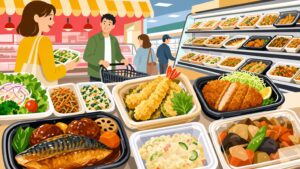
The real high-stakes game kicks off in the evening. Around 7 PM, a silent, coordinated ritual sweeps the city. This is the hour of the waribiki shiru—the discount sticker. An employee appears with a roll of stickers: 20% off, 30% off, and the coveted 50% off (hangaku). Shoppers who’d seemed to be browsing leisurely suddenly move with keen focus. They know the routes. They know which items get marked down first. Lingering near the sushi and sashimi section is a classic tactic. It’s a quiet, polite, yet fiercely competitive standoff. Snagging a beautiful tray of tuna for half price isn’t a sign of need—it’s a trophy. It’s a victory you’ll proudly show your spouse when you get home. “Look what I scored!” In other cities, this might feel embarrassing; in Osaka, it’s a badge of honor. You didn’t just buy food; you won. You played the game and emerged triumphant, securing a delicious meal while defending your budget like a fortress.
Deconstructing the Lunch Special: The Unspoken ‘One Coin’ Mandate
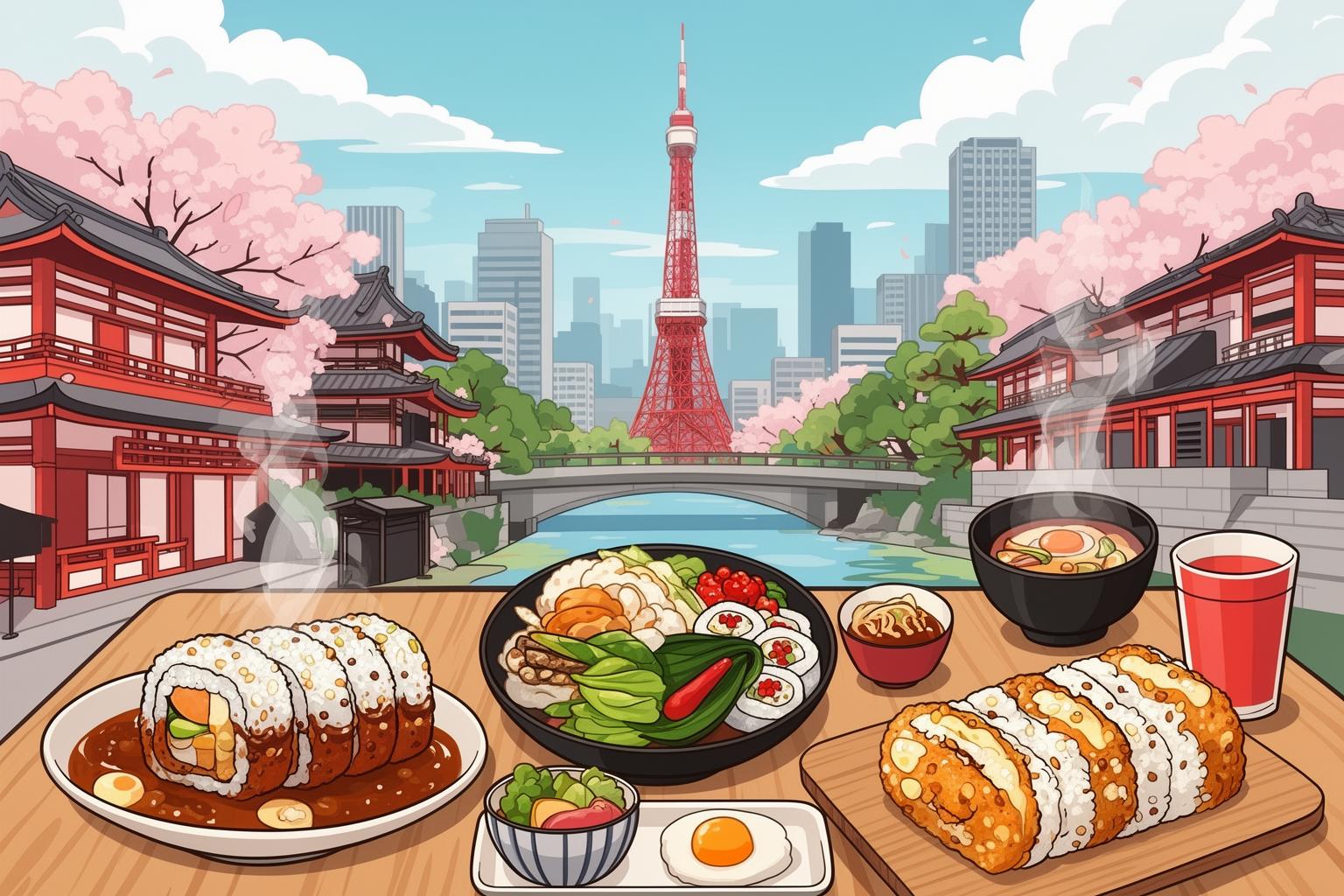
Nowhere is the obsession with cost-performance more evident than during the weekday lunch rush. For a large segment of Osaka’s working population, lunch follows an unspoken rule: the “one coin” guideline. This refers to the modest 500-yen coin. While not every lunch costs exactly 500 yen, it acts as a strong psychological benchmark. A lunch exceeding the 800-yen mark must provide an exceptional experience. Anything above 1,000 yen is reserved for special occasions.
The Anatomy of a Value Lunch
What does a 500-yen lunch in Osaka look like? It’s not a simple sandwich or a light salad. It’s a complete meal, a proper teishoku (set meal). Imagine a small counter restaurant tucked away in a business district like Honmachi or Yodoyabashi. For 500 or 600 yen, you receive a main dish—perhaps a crispy chicken nanban topped with tartar sauce, a perfectly grilled mackerel glistening with oil, or a generous serving of ginger pork. This is accompanied by a mound of glistening white rice (often with free refills), a bowl of steaming miso soup, and a small dish of pickled vegetables, or tsukemono. It’s balanced, satisfying, and tasty. The business model relies on volume and efficiency. The menu is limited, ingredients are purchased in bulk, and turnover is extremely fast. While profit margins are slim, the steady flow of loyal customers keeps it viable.
The Tokyo Contrast
This sharply contrasts with central Tokyo. In neighborhoods like Marunouchi or Ginza, finding a comparable set lunch under 1,000 yen is a real challenge. The usual price point often falls between 1,200 and 1,500 yen. The difference isn’t solely due to rent, although that plays a role. It’s about expectations. In Tokyo, lunch often serves as part of corporate image, a chance to dine in a somewhat upscale setting. In Osaka, lunch is simply fuel. Its main purpose is to be tasty, filling, and economical so you can return to work quickly. Spending 1,500 yen on a regular Tuesday lunch would be met with disbelief by Osakan coworkers. “For what?” they’d ask, genuinely puzzled. The notion of paying twice as much for a meal that isn’t clearly twice as good strikes Osaka residents as fundamentally illogical. This everyday economic reality is a key part of what makes life in Osaka feel so distinct. Your daily food budget stretches further, supported by a culture that demands it.
The Social Currency of a Good Deal
In many cultures, discussing money, especially how little you spent, can be considered impolite. In Osaka, however, it serves as a language of connection, a form of social currency. The pursuit of value is a collective cultural activity, and celebrating a successful find is a way to bond.
‘Ikura Datta?’: A Question of Camaraderie
When a friend asks, “How much was it?” (Ikura datta?) after you show them a new purchase or tell them about a great meal, it’s not an intrusive question. It’s an invitation to share knowledge. It’s like a wolf returning to the pack with news of a caribou herd’s location. If your friend tells you they found an amazing bento for 400 yen, the proper response isn’t to belittle the low price but to be genuinely impressed. “Yassu!” (“So cheap!”) is actually a sincere compliment. You then follow up with, “Where?” (Doko de?)—and knowledge is exchanged. The group’s collective wisdom grows stronger. Conversely, admitting you were ripped off—paying too much for a disappointing meal—results in sympathy, not praise for being able to afford it. The sentiment is, “Ah, you poor thing, you got taken for a ride.” The failure lies not in spending money, but in not getting proper value for it. This reverses the common mindset that equates high price with high status. Here, it is intelligence that grants status.
Bragging Rights and Bargain Hunting
The best stories shared at casual gatherings aren’t about extravagant splurges—they’re about the amazing deals people have found. Someone might proudly announce scoring a kilogram of chicken from Gyomu Super at an unbelievable price. Another might share a tip about a new tachinomi (standing bar) where three skewers and a beer cost less than a coffee at Starbucks. This isn’t just conversation; it’s a performance. It demonstrates your street smarts, your connection to the city’s rhythm, your skill in living well without overspending. A foreigner who joins in, sharing their own bargain discoveries, will be warmly welcomed. You’re no longer just a resident; you’re one of them. You get it. You understand that the thrill lies not in the spending, but in the saving. You value the value.
The Shotengai: Where Community and Commerce Collide
If the supermarket is the stage, the shotengai (local covered shopping arcade) represents the heartland of the kuidaore spirit. These expansive, bustling passageways are the lifeblood of Osaka’s neighborhoods and serve as the epicenter of value-driven, community-oriented commerce. They stand in stark contrast to the sterile, impersonal department store food hall.
An Ecosystem of Specialization
Stroll through any major shotengai, such as Tenjinbashisuji (the longest in Japan) or Kuromon Market (though it has become more tourist-oriented), and you’ll witness a finely tuned ecosystem in action. There isn’t just “a butcher.” There’s the butcher famous for his freshly made korokke (croquettes) priced at 80 yen each, so beloved that people line up for them at 4 PM. There’s the fishmonger who greets you warmly and points out the best catch of the day. There’s the vegetable stand run by an elderly couple selling slightly bruised but perfectly edible tomatoes in a large bag for 100 yen. Each shop has its specialty, its reputation, and a loyal customer base. Shopping here goes beyond the transaction; it’s about building relationships. The shopkeeper knows you, your preferences, and might even add a free spring onion or two. This commerce is built on trust and mutual respect. Customers rely on owners to provide good quality at fair prices, and owners depend on the community’s continued support.
Daily Rituals and Delicious Discoveries
Living near a vibrant shotengai changes your daily habits. Grocery shopping turns into a delightful treasure hunt. You stop by the tofu shop for freshly made tofu, which tastes worlds apart from the vacuum-packed kind. You pick up a few sticks of yakitori from a tiny stall, with smoke streaming into the arcade, as a pre-dinner treat. You spot a special on pickled daikon and decide to alter your dinner plans. The shotengai perfectly embodies the principle of yasui (cheap) and umai (delicious). It’s where food is both remarkably affordable and packed with flavor, often crafted by families who have been at it for generations. This dense web of small, independent, high-value shops forms the backbone of Osaka’s food culture, enabling people to eat exceptionally well on a modest budget and reinforcing the belief that good food should be a daily right, not a rare indulgence.
The Calculated Splurge: When Osakans Do Spend Big
This relentless focus on value might suggest a city that only eats cheap food. That, however, is a crucial misconception. Osakans will definitely spend money on food. They are willing to invest a significant amount in a single meal, but the reasoning remains consistent. The cost-performance evaluation is still at play; it’s just factoring in different variables.
Paying for Mastery, Not Marketing
An Osakan will gladly pay 20,000 yen for a meal if they believe they are getting 20,000 yen worth of skill, quality, and experience. This is where the city’s appreciation for genuine craftsmanship stands out. They will pay for the melt-in-your-mouth texture of top-grade Kobe beef at a premier yakiniku restaurant. They will pay for a multi-course kappo meal where a master chef prepares seasonal ingredients right before their eyes. They will pay for the life-threatening thrill and exquisite flavor of perfectly prepared fugu (pufferfish). In these cases, the price is warranted by the undeniable substance of the meal. The ingredients are rare, the technique impeccable, the experience memorable. What they won’t pay for is a flashy logo, a celebrity endorsement, or a convoluted story about the restaurant’s “concept.” The value must be tangible, something you can taste directly. The splurge is an investment in a guaranteed, high-return culinary experience.
The Bottom Line is Satisfaction
In the end, the goal of every meal in Osaka, whether it’s a 100-yen croquette from the shotengai or a 30,000-yen sushi omakase, is the same: to leave feeling you received more than you paid for. Satisfaction should outweigh the sting in your wallet. An Osakan who spends a lot on a truly magnificent meal feels just as smart and savvy as one who grabbed a half-price bento. Both have successfully maximized their satisfaction-to-yen ratio. They embody the spirit of kuidaore by refusing to settle for mediocrity at any price. This is the nuanced truth behind the city’s lively, food-obsessed reputation. It’s not just about eating a lot, but a deep, enduring, and city-wide respect for the profound connection between a full belly and a well-managed wallet.