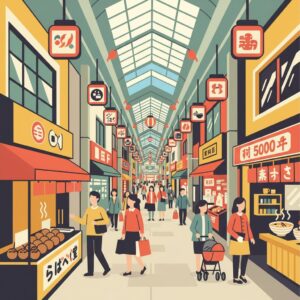
Walk into a small shop in a covered shotengai arcade, maybe somewhere in Tenma or near Shinsaibashi. The owner, an older woman with a permanent smile and a quick wit, might greet you not with the standard “Irasshaimase!” (Welcome!), but with a cheerful, almost conspiratorial, “Mokkari-makka?” If you’re new here, this question can throw you for a loop. Literally, it means, “Are you making a profit?” It feels intensely personal, like a stranger asking to see your bank statement. Is this a joke? A test? Are you supposed to answer honestly? This single phrase, however, is your first lesson in understanding the soul of Osaka. It’s not an interrogation; it’s a handshake, a cultural password that unlocks a worldview forged over centuries in the bustling markets of Japan’s commercial heartland. This isn’t Tokyo, where transactions are often silent, swift, and standardized. Here in Osaka, business is life, and life is a constant, friendly negotiation for the best possible value. This merchant spirit doesn’t just live in the markets; it permeates every aspect of daily existence, from how you buy your groceries to how you talk to your neighbors. To live here, to truly get Osaka, you have to learn to think less like a consumer and more like a trader, always keeping an eye out for a good deal, a fair price, and a human connection wrapped up in the exchange. It’s a mindset that prioritizes practicality, cleverness, and a healthy dose of humor in all financial matters, big and small.
Osaka’s enduring spirit of shrewd negotiation seamlessly extends into modern developments such as MIMARU apartment hotels designed to meet the evolving needs of families and groups.
The Merchant’s DNA: “Shobai” as a Way of Life
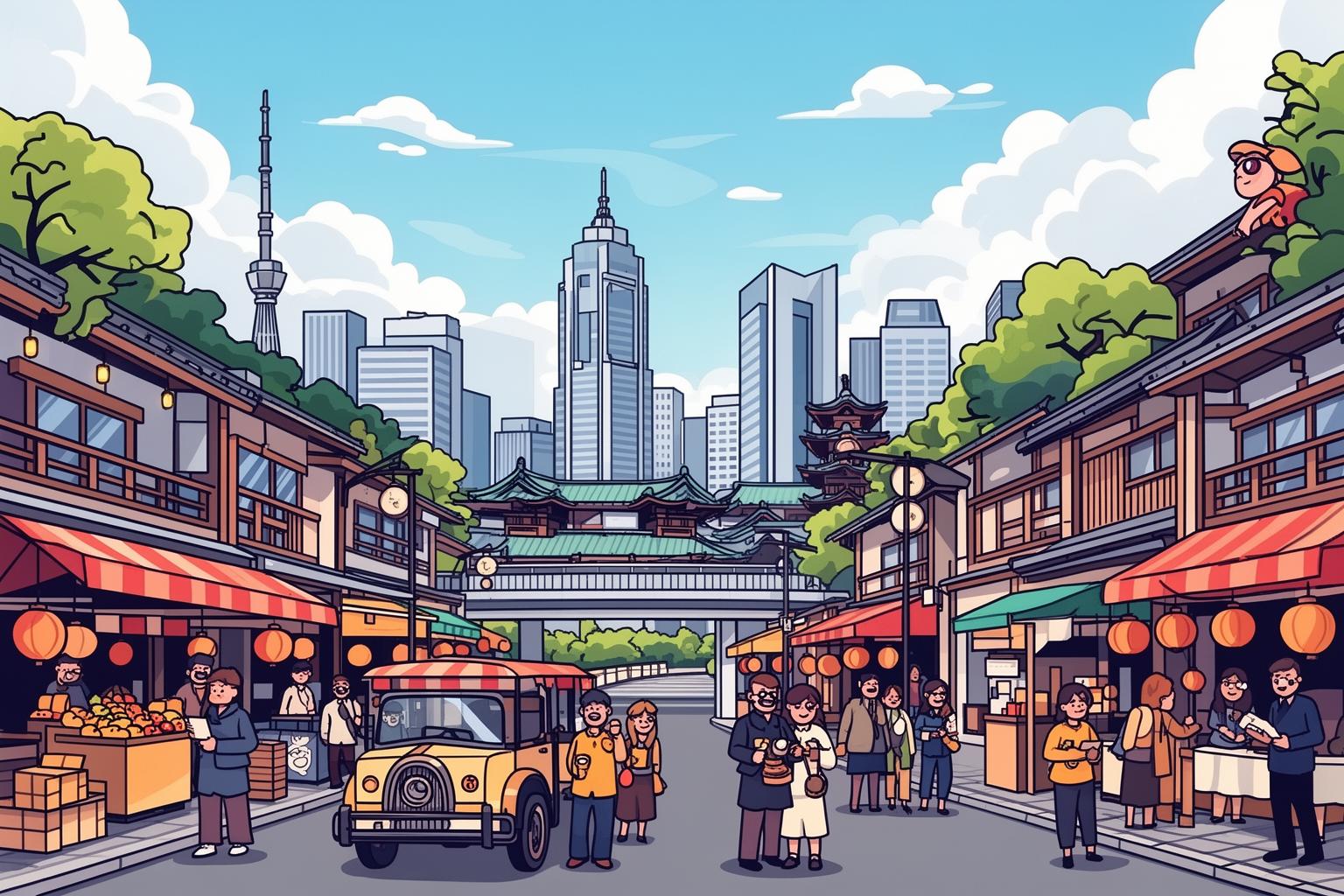
To understand why an Osakan might inquire about your profits, you need to look back in history. For centuries, Osaka was known as Tenka no Daidokoro—the Nation’s Kitchen. During the Edo period, it served as the central hub where rice, the currency of that era, along with goods from all over Japan, were gathered, stored, and traded. This wasn’t just a city with a market; the entire city was a market. Everything and everyone were connected to shobai, or business. This history isn’t just found in textbooks; it’s embedded in the city’s very layout and the mindset of its people. The merchant class, often looked down upon in the strict samurai-led hierarchy, prospered here, fostering a culture that prized pragmatism, negotiation, and financial savvy above all else. Success wasn’t about inherited status; it was about your ability to strike a good deal. This legacy is why Osaka feels so fundamentally different from Tokyo, the city of bureaucrats and samurai. In Tokyo, there’s an emphasis on form, procedure, and maintaining a polished appearance. In Osaka, the focus is on substance—the result, the deal, the bottom line.
From “Tenka no Daidokoro” to Today’s Shotengai
This historical identity is most vividly alive today in the city’s extensive shotengai, the covered shopping arcades serving as the lifelines of local neighborhoods. Forget the sterile, quiet aisles of a Tokyo department store. A stroll along Tenjinbashisuji, Japan’s longest shotengai, offers a full sensory immersion into the Osakan merchant spirit. You’ll hear the rhythmic calls of fishmongers advertising their morning catch, the sizzle of takoyaki cooking on a hot griddle, and the lively, constant chatter of shopkeepers and customers haggling over prices of everything from pickled vegetables to household items. It’s loud, somewhat chaotic, and deeply human. The shopkeepers aren’t passive clerks; they are performers, entrepreneurs, and community fixtures. They engage you, ask where you’re from, comment on your shopping, and are always ready to start a conversation that might lead to a better price. This is where the shobai spirit thrives. A transaction is rarely just money exchanged for goods; it’s an interaction, a performance, and a brief relationship-building moment. This stands in stark contrast to the often anonymous and efficient shopping experience in other major Japanese cities, where politeness is expressed through quiet deference rather than energetic engagement.
“Mokkari-makka?” and “Bochi-bochi denna”: The Unspoken Financial Check-in
The phrase “Mokkari-makka?” opens a classic Osakan conversational exchange. The usual reply isn’t a detailed financial update, but a humble, somewhat vague “Bochi-bochi denna.” This roughly translates to “So-so, can’t complain,” or “Getting by.” It’s a finely tuned piece of social nuance. You never want to boast about doing too well, as that comes across as arrogant. But you also don’t want to complain about doing poorly, which might worry your conversational partner or make you seem inept. “Bochi-bochi” strikes the perfect balance—it suggests you’re competent enough to stay afloat but modest enough not to flaunt success. This exchange is a ritual that reinforces a shared identity. It acknowledges that everyone is navigating the same commercial waters, whether running a huge corporation or a tiny fruit stand. For a non-Japanese resident, mastering this exchange is a powerful way to connect. When the local grocer asks, “Mokkari-makka?” as you buy your dinner ingredients, he’s not truly asking about your income. He’s welcoming you into the community’s mindset, treating you like an insider who understands that life, at its core, is a business we’re all trying to manage.
The Art of the Deal: Bargaining in Modern Osaka
One of the biggest culture shocks for those moving from Tokyo or abroad is the practice of bargaining. In most parts of Japan, the price on the tag is fixed. Trying to negotiate in a Tokyo department store would lead to confusion and a polite refusal. However, in Osaka, the price tag is often considered an initial offer, the beginning of a negotiation. That doesn’t mean the entire city operates like a giant flea market, so knowing where and how to haggle is an essential skill for any resident. This tradition is a direct legacy of the merchant culture, where reaching a mutually satisfactory price was the key to a successful deal. It’s not about cheating or getting something for nothing; it’s about engaging in a long-respected commercial ritual. For Osakans, obtaining a discount is not just about saving a few hundred yen — it’s the satisfaction of a successful negotiation, a small triumph in the game of value. It’s proof of being a sharp, savvy shopper, a trait highly valued in this city.
Where and How to Haggle (and Where Not To)
First, the ground rules. You cannot and should not try to haggle at places like 7-Eleven, Uniqlo, Starbucks, or any major chain store. The employees have no authority to alter prices, and attempting to do so will only create an awkward situation. The same applies to most restaurants and supermarkets. So, where is bargaining possible? The prime spots are independent electronics shops in Den Den Town, family-run furniture stores, second-hand shops, and market stalls in less touristy shotengai. The key is to find places where the owner is present and actively involved in the sale. The manner of approach is crucial. Aggressive or demanding haggling won’t work. The Osakan style is a delicate art. Begin with a friendly conversation. Ask questions about the product and show sincere interest. Then, use the magic phrase with a polite, almost shy smile: “Chotto makete kuremasen ka?” (Could you give me a little discount?). This phrasing matters—you’re requesting a favor, not issuing a demand. Offering to pay in cash, which saves the seller credit card fees, or purchasing several items at once can give you bargaining power. The goal is to create a win-win outcome: the seller feels generous for assisting you, and you leave with a better deal. It serves as both a social lubricant and a financial tactic.
It’s Not Just About Price, It’s About “Omake”
Often, the best part of an Osakan bargain isn’t the reduced price but the omake—the little extra the shopkeeper adds for free. This is where the relationship-building aspect of Osaka’s commercial culture truly stands out. You might be negotiating for a used camera in Den Den Town. The seller may hold firm on the price but, after a friendly chat, might throw in a free memory card and camera bag. At a local market, the vegetable vendor might give you a few extra potatoes or a spring onion after you’ve paid. This is omake. It’s a gesture of goodwill, a thank you for your business, and a way to ensure you return. For buyers, receiving an omake often feels even more rewarding than a discount. It serves as a tangible symbol of a positive, successful interaction. It turns a simple purchase into a memorable experience and reinforces the idea that in Osaka, a good deal benefits everyone. Foreigners often misunderstand this, focusing solely on the sticker price, but Osakans evaluate the total value — the price, quality, service, and the possibility of a little something extra. The omake is a vital part of that equation.
Value Beyond the Price Tag: The “Cost Performance” Obsession
If Osaka were to have an official city religion, it would undoubtedly be the worship of good cos-pa. This Japanese-English term, short for “cost performance,” serves as the ultimate benchmark of value for nearly everything. It’s a concept that extends well beyond simply being inexpensive. Something cheap but low in quality is considered poor cos-pa. Conversely, something costly but boasting exceptional features, durability, and service is regarded as good cos-pa. The aim for an Osakan consumer is to pinpoint the perfect balance: the highest achievable quality at the lowest possible price. This mindset shapes countless everyday decisions and is a common topic of discussion. Friends enthusiastically share tips about a new lunch spot offering excellent cos-pa, or debate which brand of home appliances provides the best cos-pa over time. This fixation is a modern manifestation of the merchant’s desire to maximize returns on every expenditure, whether it’s a 500-yen lunch or a 50,000-yen washing machine.
“Cos-Pa”: Osaka’s Unofficial Religion
Let’s examine cos-pa in practice. Take the humble lunch set as an example. In Tokyo, a trendy café might charge 1,200 yen for a small, elegantly presented plate of pasta. An Osakan might scoff at that. For 700 yen in a business area like Honmachi, they expect a teishoku (set meal) that includes a main dish (such as grilled fish or pork cutlet), a bowl of rice (with free refills), a steaming bowl of miso soup, a side of pickled vegetables, and perhaps even a small tofu dish. The presentation may be simpler and the restaurant a bit louder, but the quantity and quality of the meal for the price delivers exceptional cos-pa. This reasoning applies across the board. When purchasing a train pass, an Osakan will carefully calculate the break-even point to determine if it’s worthwhile. When selecting an apartment, rent is evaluated not only by size but also by distance to the station, proximity to affordable supermarkets, and the building’s age. It’s a continuous, nearly instinctive process of optimization. It’s not about austerity; it’s about the intellectual satisfaction of making the smartest choice with one’s money.
The Supermarket Showdown: Recognizing a Genuine Bargain
The pursuit of cos-pa is nowhere more visible than in the everyday ritual of grocery shopping. While Tokyo has its share of upscale, meticulously curated supermarkets, Osaka is renowned for its straightforward, value-driven chains. The most iconic is Super Tamade, a local chain famous for its flashy neon lights, chaotic vibe, and astonishingly low prices, including its legendary 1-yen sales on select items. Shopping at Tamade is an experience. It may not be refined, but it is unquestionably effective. A savvy Osakan shopper knows the supermarket’s rhythms. They know which days bring the best discounts on meat or vegetables. Most importantly, they know about the magic hour in the evening when staff start applying hangaku (half-price) stickers to bento boxes, sushi, and other prepared dishes. In many cultures, buying discounted near-expiration food might indicate financial hardship. In Osaka, it’s seen as cleverness. Scoring a high-quality bento at half price is a victory. It’s a story worth sharing with family. This practical approach to everyday needs is deeply embedded in local life. Neighbors exchange tips on where to find the cheapest eggs that week, and a sudden drop in cabbage prices can become genuine local news. It’s a communal effort to maximize value collectively.
What Foreigners Often Misunderstand
This deeply rooted merchant culture can cause considerable misunderstandings for newcomers. The Osakan attitude toward money, conversation, and value is straightforward and pragmatic, which can feel startling when contrasted with the more indirect and formal customs common in other regions of Japan. What may be interpreted as rudeness or stinginess is often just a different set of cultural priorities at work. Understanding the reasons behind these behaviors is essential to appreciating—and even enjoying—the city’s unique social environment. It calls for a shift from a mindset of fixed rules and politeness to one embracing flexibility, humor, and a shared appreciation for a good bargain.
“Cheap” vs. “Smart”
The most frequent stereotype about people from Osaka is that they are kechi—stingy or cheap. This, however, is a fundamental misunderstanding of the culture. Osakans are not reluctant to spend money; rather, they are unwilling to waste it. There is a significant difference. They will gladly invest heavily in something they truly value, exemplified by the concept of kuidaore, or “eating oneself into bankruptcy” on extravagant food. They respect high-quality craftsmanship and will pay for durable products. In the Osakan perspective, the mistake is not spending money but overpaying. It’s about being fooled. Paying full price for something that could have been purchased for less with a bit of research or negotiation is seen as a failure in shrewdness. That’s why they proudly talk about their bargains. It isn’t simply money saved; it’s proof of their consumer savvy. They are not cheap; they are expert value-seekers who take great pride in their skill.
Personal Questions or Business Banter?
For many foreigners, the frankness of conversations in Osaka can feel intrusive. Questions such as “How much did you pay for that?”, “What does your company do?”, or the classic “Mokkari-makka?” might seem to cross personal boundaries. In the West, and even in much of Japan, money is considered a private matter. In Osaka, however, it often serves as a social topic. These questions are usually not intended as invasive probes but rather as efforts to find common ground and build rapport through the shared language of trade and value. When someone inquires about your rent, they’re often comparing it to their own, gauging the market, and engaging in a subject that everyone understands and cares about in the city: securing a good deal. It functions as a kind of banter—a practical, economic way to size up the world and your place within it. Offering a vague but friendly response, such as the “bochi-bochi denna” principle, typically suffices. The focus is less on the exact answer and more on joining the exchange.
Beyond the Yen: Embracing the “Mokkari-makka?” Lifestyle
To live and thrive in Osaka means learning to view the world through a distinctive lens of value, pragmatism, and human connection. The merchant spirit is not some relic of the past; it remains a vibrant, integral part of the city’s identity that influences interactions at every level. It’s found in the lively, friendly bustle of the shotengai, the shared excitement of scoring a half-price bento, and the subtle art of polite negotiation. It teaches you to become a more mindful consumer, to question price tags, and to seek the hidden worth in every exchange. This city fosters a financial savvy that quickly becomes second nature. It’s a culture that replaces formal, rigid politeness with a practical, results-driven style of communication, where a good-natured price debate can forge a stronger connection than a quiet, formal interaction. So next time a shopkeeper welcomes you with a hearty “Mokkari-makka?”, don’t hesitate. Recognize it for what it is: an invitation. It’s a chance to engage, connect, and join the lively, ongoing dialogue that fuels Osaka’s spirit. Just smile, reply with a confident “Bochi-bochi denna,” and know that you’re no longer just a resident; you’re beginning to think like a local.