Step off the train in Osaka any weekday before 10 AM, and you’ll feel it. It’s not a frantic rush, not the silent, high-speed shuffle you see in Tokyo. It’s a different kind of energy, a city waking up on its own terms. You’ll see salarymen striding with purpose, shopkeepers rolling up their metal shutters with a loud clang that echoes down the shotengai, and groups of older folks, the neighborhood elders, ambling towards an invisible but universally understood destination. That destination is often a local coffee shop, a kissaten, and they’re not just going for a caffeine fix. They’re participating in a daily ritual, a cornerstone of Osaka life that tells you more about this city’s soul than any guidebook ever could. It’s the culture of ‘Morning Service’.
You might have stumbled upon it by accident. You walk into a cozy, wood-paneled cafe, the air thick with the smell of dark roast coffee and toasted bread. You order a “ko-hii,” and a few minutes later, the master places your cup on the table. But it’s not alone. Next to it, unbidden, is a plate with a thick slice of golden-brown toast, glistening with melted butter, and a perfectly boiled egg, still warm in its little porcelain cup. You didn’t order this. You check the menu, confused, thinking there’s been a mistake. There’s no mistake. You’ve just received your first lesson in Osaka economics and community. This isn’t just a freebie; it’s a social contract, an unspoken agreement that for the price of a single cup of coffee, your day will start right. It’s a simple act that unpacks the complex, pragmatic, and deeply human heart of Osaka. To understand this city, you need to understand why your coffee comes with an egg.
The subtle exchanges of Osaka’s morning scene also invite you to discover how Osaka-ben banter colors everyday interactions in the city.
The Unspoken Deal: What Exactly is ‘Morning Service’?
Let’s clarify the basics. ‘Morning Service’, commonly known as ‘Morning Setto’ (モーニングセット), is a breakfast special offered by numerous independent coffee shops, or kissaten, throughout Osaka and the broader Kansai region. The idea is wonderfully straightforward: order a drink—typically coffee or tea—between opening time and around 11 AM, and you receive a complimentary or significantly discounted breakfast set. This tradition is less about marketing and more about cultural heritage.
The classic ‘Morning’ features three essential components. First, the coffee. This isn’t your trendy third-wave, single-origin pour-over. It’s traditional Japanese coffee: dark, rich, frequently brewed using a flannel drip method, served in a thick ceramic cup that retains heat. It’s coffee meant to be enjoyed slowly, not gulped down on the commute. Second, the toast. This isn’t a mere thin slice of bread. It’s atsugiri toast, a thick slice of soft Japanese milk bread called shokupan, toasted just right and generously spread with butter or margarine. It’s filling and comforting. Third, the boiled egg, or yude tamago, providing a simple, essential protein boost.
Naturally, variations exist. Some shops might add a small dollop of red bean paste (anko) or jam alongside the toast. Others may replace the boiled egg with a small serving of scrambled eggs or a lightly dressed salad. You might encounter a ‘B Set’ including a sandwich or a ‘C Set’ featuring a hot dog. But the core idea stays the same: for about the cost of a single coffee at a modern chain café, you get a complete, albeit simple, meal. It’s such a good deal that outsiders might find it almost too good to be true. Yet in Osaka, it’s not unusual; it’s simply expected. It’s the standard of morning hospitality.
The Economics of Generosity: An Osaka Mindset
Why does this culture thrive so strongly here? The answer goes straight to the core of the Osaka mindset. This city was built by merchants—it’s the akindo no machi, the town of traders. For centuries, its identity has been shaped by commerce and the art of the deal. Central to this identity is the concept of kosupa, or cost performance. This isn’t merely about being ‘cheap.’ That’s a common misconception. A Tokyoite might view it as stinginess, but an Osakan sees it as smart thinking. Kosupa is about maximizing value—it’s the thrill of getting more than you paid for, the satisfaction of a savvy transaction. And ‘Morning Service’ is the ultimate embodiment of kosupa.
The shop owner isn’t losing money; they’re making a strategic investment. By providing this exceptional value, they ensure a steady flow of regular customers. The person who comes in for the 400 yen ‘Morning Set’ isn’t just a one-time customer. They’re the one who will return for lunch, bring their friends, and have been visiting the same shop, sitting in the same seat, for thirty years. This is the culture of omake, the tradition of giving a little extra. It fosters loyalty, builds relationships, and turns a simple coffee shop into a community hub. It’s a business model rooted in long-term connections, not short-term profits.
This feels fundamentally different from the cafe scene in Tokyo. In Tokyo, particularly in trendy areas like Shibuya or Omotesando, the cafe experience often centers on aesthetics and branding. It’s about minimalist design, perfectly crafted latte art for Instagram, and premium beans sourced from a specific farm in Ethiopia. It’s polished, stylish, and often transactional—you pay for the experience, the ambiance, the brand. In Osaka, the kissaten experience prioritizes substance over style. It’s about routine, comfort, and the unmistakable value of the deal itself. An Osakan doesn’t just want to pay for coffee; they want to pay for a smart start to their day. The ‘Morning Service’ isn’t a bonus—it’s the whole point.
The Kissaten: A Living Room for the Neighborhood
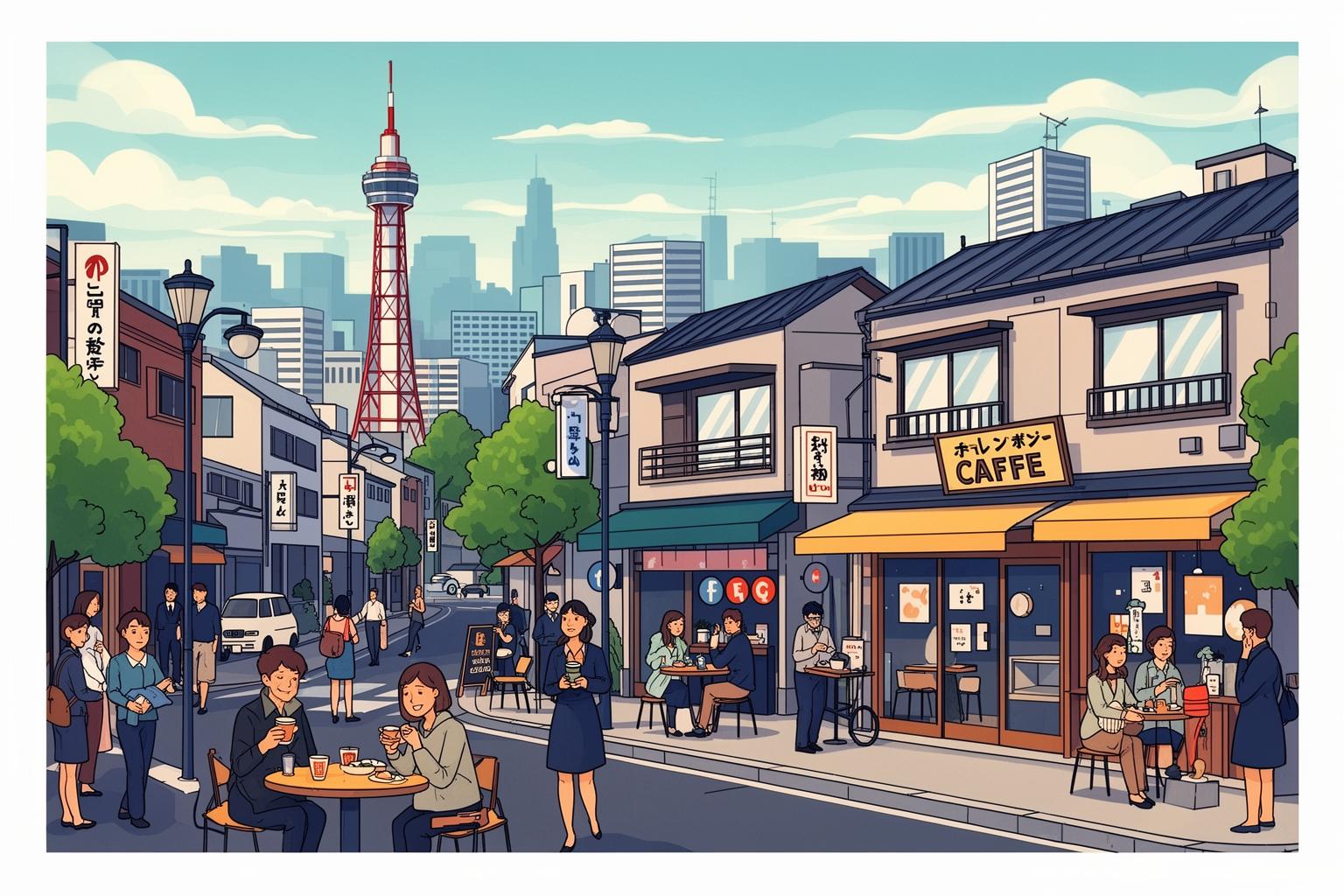
To fully understand the culture, you need to appreciate the setting. ‘Morning Service’ is seldom found in bright, generic, cookie-cutter chain cafes. Its natural environment is the kissaten, a uniquely Japanese style of coffee house that feels like a time capsule from the Showa era. Stepping inside one is like stepping back into another decade. The lighting is typically dim and warm. The furniture is heavy and dark—worn velvet armchairs in shades of burgundy or forest green, polished dark wood tables, and countertops marked by the stains of countless coffee cups.
The air has its own texture. It’s a comforting blend of brewing coffee, melting butter, and, in many classic locations, the faint, lingering scent of tobacco from an era when indoor smoking was common. The soundtrack isn’t a carefully selected indie-pop playlist. Instead, it’s the gentle clinking of spoons against porcelain, the rustling of broadsheet newspaper pages being turned, the low murmur of conversation from a corner booth, and the soft hiss of the siphon coffee maker behind the counter. This is not a place for laptops or loud phone calls. It’s a sanctuary, a spot to disconnect from the digital world and reconnect with the analog rhythm of the neighborhood. It serves as a public living room, a neutral space where people can simply be for a while.
The Cast of Characters
Each kissaten has its own ecosystem, a cast of characters who play their parts day after day. Understanding them is essential to grasping the social role of the space.
First, there is the ‘Master.’ This is the owner, the proprietor, often an older man or woman who has run the establishment for decades. The Master is the heart and soul of the kissaten. They move with economy of motion, expertly brewing coffee, toasting bread, and managing the flow of customers. Though not typically chatty, they are keen observers. They know who drinks their coffee black, who prefers milk, and who likes an extra moment with the sports section of the newspaper. A nod from the Master is a sign of acceptance. They are the silent curators of the neighborhood’s morning atmosphere.
Then there are the jōren-san, the regulars. They are the lifeblood of the kissaten. There’s the elderly gentleman in the corner seat by the window, meticulously reading his newspaper from front to back, a ritual unchanged for twenty or thirty years. There’s the group of middle-aged women, the obachan, who meet every Tuesday to catch up on family news and local gossip over their toast and tea. There’s the local business owner who stops in for a quick coffee and a moment of calm before opening his own shop. These people don’t need to talk to each other to share a sense of connection. They are part of an unspoken routine. Their presence creates a stable, comforting atmosphere. For a newcomer, this may feel intimidating, but it’s actually quite the opposite. It’s a quiet form of friendliness, a sense of community built on shared space and time rather than forced interaction.
Navigating Your First ‘Morning’ Experience
So, you’re ready to give it a try. You’ve discovered a promising kissaten with a weathered sign and the aroma of coffee drifting from the door. How do you experience it like a local? It’s easier than you might think.
How to Order
First, check for the signs. Outside the shop, you’ll often find a small, handwritten blackboard or a classic plastic food model in a display case promoting the ‘Morning Setto’ (モーニングセット). This is your signal to go inside. The hours for the ‘Morning Service’ are usually limited, typically from opening until about 10:30 or 11:00 AM. Don’t expect to get it at noon.
Once you’re seated, the process is simple. In many traditional spots, you don’t even have to specifically order the ‘Morning Service’. It’s so standard that if you order a drink during the designated hours, the food set comes automatically. Just say, “Ko-hii, onegai shimasu” (Coffee, please). If there are different choices, like an ‘A Set’ (basic toast and egg) and a ‘B Set’ (maybe a small sandwich), the Master or server will indicate the menu and ask which you prefer. It’s a low-pressure interaction. Just order your beverage, and the magic takes care of the rest.
The Unspoken Etiquette
While the kissaten is a welcoming place, there are a few unspoken rules that preserve its unique atmosphere. This isn’t a Starbucks where you can camp out for hours with your laptop. The business model relies on a steady, yet relaxed, turnover. The understanding is that you enjoy your coffee and breakfast, perhaps read a bit, then move on. An hour is perfectly fine; three hours is a stretch.
Keep your voice low. The kissaten offers a refuge from the city noise. Conversations should be quiet. If your phone rings, it’s best to take the call outside. It’s a place for calm reflection or intimate chat, not for sharing your life story to the whole room. When you’re done, usually you take the check (left on your table) up to the register by the door to pay. There’s no need to call over the Master. It’s a smooth, efficient departure.
A Tip for Beginners
If you’re unsure whether a place offers ‘Morning Service’, just look for the magic word on a sign or menu: モーニング. Often it’s that simple. These characters are your key to unlocking one of the best deals and most authentic daily experiences Osaka has to offer. Don’t hesitate to enter a spot that looks a bit old or worn. Those places often have the most character and truly reflect this culture. The slightly faded upholstery and vintage sugar dispensers aren’t signs of neglect; they’re badges of honor, proof of a long and proud history serving the community.
Beyond the Toast: What ‘Morning Service’ Really Tells You About Osaka
At its core, the ‘Morning Service’ is far more than just an affordable breakfast. It serves as a daily affirmation of the values that drive Osaka. It embodies the city’s practical, straightforward lifestyle, paired with a strong belief in community and mutual support.
It reflects a pragmatic perspective on value. Why spend 500 yen on only a coffee when you can get coffee, toast, and an egg for the same price? It’s simply smart and efficient. This mindset extends to many facets of life in Osaka, from shopping habits to business operations. It’s an ongoing, subtle calculation of maximizing every yen and every interaction.
It also highlights the significance of routine and community in a city that can sometimes feel vast and impersonal. Amid the sprawling anonymity of a large city, the kissaten serves as a constant. It’s a place where you are recognized, where your presence is acknowledged, even if just with a nod. This stands in sharp contrast to the sometimes isolating atmosphere of other major cities. While Tokyo can feel like a collection of individuals each following their own path nearby, Osaka often resembles a patchwork of overlapping villages, with the kissaten acting as the village square.
So next time you’re searching for breakfast, bypass the convenience store with its plastic-wrapped onigiri. Skip the global coffee chains with their paper cups and frenetic pace. Find a local kissaten. Sit down, order a coffee, and wait for the simple, perfect plate of toast and egg to be served. You’re not merely eating breakfast; you’re participating in a ritual. You’re experiencing the true Osaka: a city that’s savvy, generous, and understands that the best way to start the day is with a good deal and a sense of belonging.