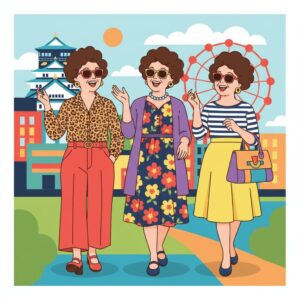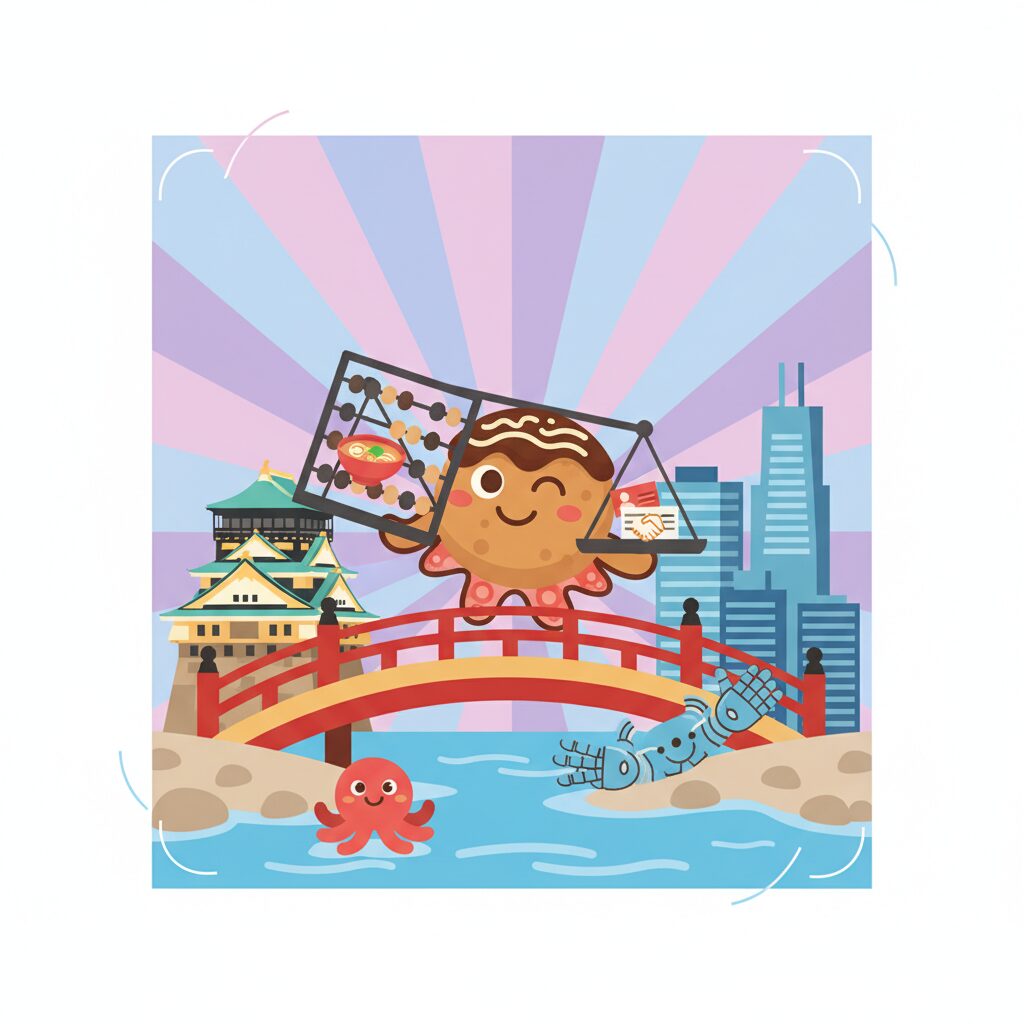
So you’ve landed in Osaka. You’re standing on the Midosuji line platform at Umeda Station, a place that feels less like a transit hub and more like a subterranean labyrinth designed by a trickster god. You’re squinting at the route map, a chaotic spiderweb of colored lines, trying to figure out if you need to be on the train currently screaming into the station or the one after it. You feel a tap on your shoulder. You turn to find a woman, probably in her late sixties, with a perm so tight it could deflect rain and a leopard-print blouse that seems to vibrate with its own energy. Before you can even manage a ‘sumimasen,’ she unleashes a torrent of rapid-fire, heavily accented Japanese. She’s pointing at your map, then at the train, then at your shoes for some reason, her words a rhythmic, percussive wave of Kansai-ben. You catch maybe one word in five. She grabs your elbow, steers you two feet to the left, and points emphatically at a specific spot on the platform, all while continuing her monologue. You’re not sure if you’ve just been helped, scolded, or adopted. Welcome to Osaka. You’ve just had your first encounter with ‘osekkai.’
For many non-Japanese residents, this is one of the first and most profound culture shocks of living in this city. We’re often taught that Japan is a land of quiet reserve, of polite distance and unspoken rules. That might be true in the sterile, orderly world of Tokyo’s Yamanote Line, but here in Osaka, the social contract feels like it was written on a napkin, laughed at, and then used to wipe up some spilled takoyaki sauce. ‘Osekkai’ is a word that defies easy translation. The dictionary might tell you it means ‘meddlesome’ or ‘officious,’ which sounds entirely negative. But that’s not it. It’s not simple kindness, or ‘shinsetsu,’ either. ‘Osekkai’ is a unique, baffling, and deeply ingrained cultural phenomenon. It’s a form of proactive, unsolicited, sometimes invasive, but almost always well-intentioned intervention in a stranger’s life. It’s the human embodiment of the city itself: loud, direct, a little chaotic, and possessing a massive, sometimes clumsy, heart. Understanding ‘osekkai’ isn’t just a fun cultural quirk to observe; it is fundamental to navigating daily life, building relationships, and truly grasping the soul of Osaka. It’s the invisible energy that animates the streets and separates this city from any other place in Japan.
To fully immerse yourself in this unique culture, consider staying at one of the Kansai’s hyper-local luxury hotels that embody the region’s character.
What Exactly is ‘Osekkai’? Deconstructing the Meddlesome Heart
To truly grasp what it means to live in Osaka, you need to break down this concept. It’s a social behavior guided by a logic entirely different from what you might expect if you come from Boston, Berlin, or Beijing. It’s not merely about people’s actions; it’s about the philosophy motivating those actions. It’s a worldview where the boundary between personal and community affairs is constantly blurred, like a chalk line smudged on a rainy day.
Beyond Simple ‘Shinsetsu’ (Kindness)
In standard Japanese, ‘shinsetsu’ refers to kindness. This is the type of kindness found throughout Japan—the department store clerk who walks your purchase around the counter to hand it to you with a bow or the station attendant who patiently explains the train schedule. ‘Shinsetsu’ is polite, expected, and confined within clear social limits. It’s reactive: you ask for help, and you receive it. At its core, it aims to preserve harmony, or ‘wa,’ by facilitating smooth, frictionless interactions.
‘Osekkai’ discards that rulebook entirely. It is proactive, not waiting for your request. It assumes you need help, assumes it knows what kind of help you require, and delivers it with the subtlety of a freight train. It’s the difference between politely alerting someone who dropped a glove and noticing someone shivering and trying to wrap your own scarf around their neck while lecturing them on catching a cold. ‘Shinsetsu’ is helping when you look lost. ‘Osekkai’ is seeing you buy a single bento for dinner and immediately asking if you’re lonely, if you know how to cook, and if you’re eating enough fiber, all at once. The intent isn’t politeness; it’s to fix a problem they believe exists in your life, whether you see it that way or not. It springs from genuine, if sometimes misplaced, concern. It’s an unfiltered form of care that sidesteps social formalities in favor of direct action.
The Historical Roots in a Merchant City
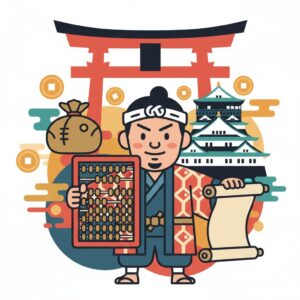
This is no mere oddity. ‘Osekkai’ is deeply embedded in Osaka’s DNA, a product of its history. While Tokyo (then Edo) was a samurai city with a rigid, hierarchical society rooted in formality and stoic respect, Osaka was the city of merchants. Known as the ‘Tenka no Daidokoro’—the Nation’s Kitchen—for centuries, rice, sake, and goods from across Japan passed through its ports and warehouses. Life wasn’t about obeying a daimyo’s orders; it was about bargaining, negotiating, building trust, and moving products. In a crowded market, silence meant going broke. You had to shout, engage, joke, and build rapport with the person beside you. Your neighbor was more than a neighbor; they were a potential customer, supplier, and source of information.
This environment fostered a culture where communication was vital and community was essential for survival. People’s lives were deeply connected. You knew your neighbor’s affairs, their family’s health, their financial struggles because it affected the delicate balance of the marketplace. That mindset—the habit of communal living and mutual involvement—never truly disappeared. The bustling shotengai (shopping arcades) today are direct descendants of those lively markets. The ‘osekkai’ obachan is the modern version of the merchant’s wife who knew everyone’s business and wasn’t afraid to voice her opinions. In Tokyo, social currency was built on propriety and maintaining distance. In Osaka, it was built on engagement and bridging that distance, often quite forcefully.
The Daily Manifestations of Osekkai: Where You’ll Encounter It
‘Osekkai’ isn’t an abstract idea discussed in sociology classes; it’s a tangible force you will encounter almost daily. It occurs in predictable settings—certain areas where the city’s meddlesome spirit is most concentrated. Recognizing these zones is the first step toward learning how to navigate them.
The Shotengai (Shopping Arcade): The Ideal Osekkai Zone
If Osaka has a natural home for ‘osekkai,’ it is the covered shopping arcade, the shotengai. These arteries of local life, such as the expansive Tenjinbashisuji or the more rugged Sennichimae Doguyasuji, are where the merchant spirit thrives. Here, a simple trip to buy groceries can quickly turn into a social maze.
The Butcher’s Inquiry
You approach a butcher’s shop, a traditional mom-and-pop outfit staffed by a gruff man in a blood-stained apron. You point to some sliced pork. This is not merely a transaction. The butcher examines the pork, then looks at you and asks, “Nani tsukurun?” (What are you making?). If you reply ‘shogayaki,’ he might nod approvingly. But if you say ‘tonkatsu,’ he might shake his head, suck air through his teeth, and insist you’ve chosen the wrong cut. “This one’s too thin! It’ll be dry! You need this thicker one over here. It’s pricier but much better. Trust me.” He’s not just upselling; in his mind, he’s saving you from culinary failure. He takes personal responsibility to ensure the pork leaving his shop is used to its fullest potential. Letting you walk away with the ‘wrong’ cut would be a neglect of his duty.
The Fruit Stand Commentary
Further along, you stop at a fruit stand. The woman running it, with a bandana in her hair and a booming voice, is chatting with another customer. As you select some apples, she turns to you. “Anata, sono ringo yori, kocchi no hou ga amai de!” (Hey, this one is sweeter than that apple you have!). She picks up one and almost insists you take it. If you have a child with you, all bets are off. She’ll coo at the child, comment on their clothes (“Aren’t they cold in that?”), and inevitably press a free mikan (mandarin orange) into their hand, all while offering unsolicited parenting advice. This isn’t just business; it’s a performance. It’s about building a bond, however brief, and reinforcing the sense that everyone is part of this lively, chaotic community together.
Public Transportation: Your Commute, Their Commentary
In many cities worldwide, public transport is a realm of enforced anonymity. You put on headphones, stare at your phone, and ignore the other hundred people packed with you. In Osaka, the invisible barriers are much more permeable. The train, bus, and especially the station platform are fertile grounds for ‘osekkai’ interventions.
The Ticket Machine Takeover
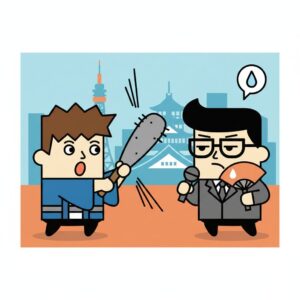
Imagine you’re a tourist or new resident, trying to buy a ticket for a complex journey on a private railway line. You struggle at the machine. In Tokyo, people might notice, sympathize silently, and deliberately look away to avoid intrusion. In Osaka, it’s an open invitation. A salaryman heading home, an elderly man with a fishing rod, or a group of high school girls might approach. They won’t just point to the right button. One will likely take over, expertly tapping the screen, feeding your money in, and handing you the correct ticket and change before you even realize what happened. They’ll give a nod, say “Douzo,” and vanish into the crowd, their good deed done.
The ‘Ame-chan’ Gesture
One of the most iconic and heartwarming forms of Osaka ‘osekkai’ is the ‘ame-chan’ culture. ‘Ame-chan’ is a cute, affectionate term for candy, and many Osakan ‘obachan’ (older women, a formidable social force) are known for carrying candy in their purses. This isn’t solely for their grandchildren. The candy serves as a social lubricant, a tool for instant connection. If a child cries on the train, an ‘obachan’ might appear and offer them an ‘ame-chan.’ If she strikes up a conversation with you, she might extend one as a gesture of goodwill. It’s a small, sweet symbol that says, “I see you. We share this space.” It’s the physical embodiment of ‘osekkai’: an unsolicited offering meant to bridge strangers and make the world a slightly kinder—or at least sweeter—place. Refusing an ‘ame-chan’ is possible but feels much like declining a grandmother’s hug—done without feeling a little guilty.
Osaka vs. Tokyo: A Tale of Two Social Contracts
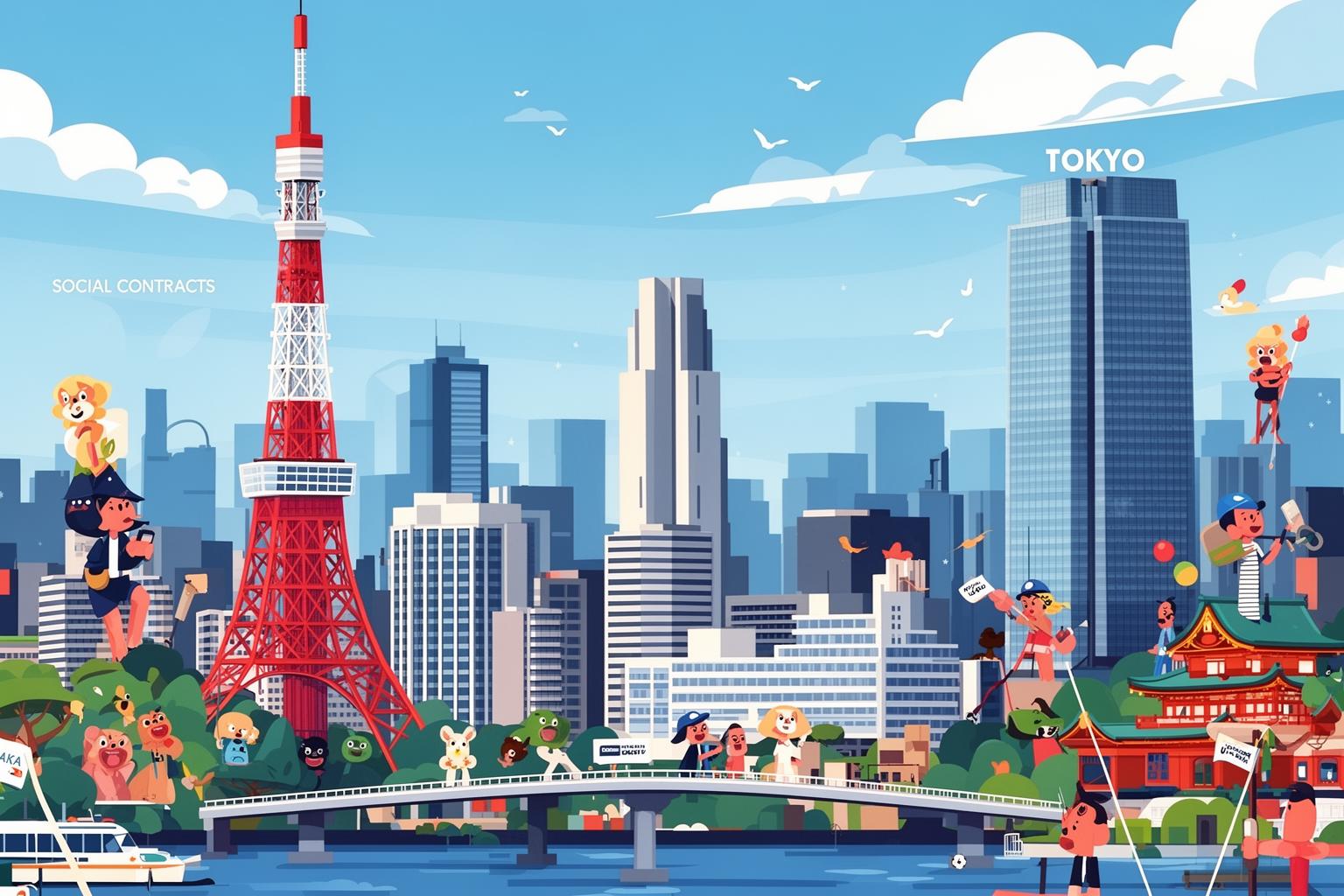
To truly grasp the essence of Osaka’s distinctive social environment, the most helpful comparison is always Tokyo. Although they are only a couple of hours apart by bullet train, their social dynamics feel worlds apart. Living in Osaka after spending time in Tokyo is like shifting from a black-and-white film to vibrant, loud Technicolor.
The Unspoken Rule of Engagement
In Tokyo, the fundamental unspoken rule of public life is non-interference. You occupy your space, I’ll occupy mine, and we won’t acknowledge each other unless absolutely necessary. This results in a city that is highly efficient, clean, and polite on the surface, but it can also feel cold, anonymous, and isolating. It’s possible to live in a Tokyo apartment building for years without ever learning a neighbor’s name. The social fabric is woven from strong, invisible threads of privacy and personal space, and crossing these boundaries is a serious faux pas.
In Osaka, the default mindset is reversed. The unspoken rule is that everyone is potentially part of your conversation, based on a shared sense of experience. That guy muttering about the Hanshin Tigers’ poor season? Feel free to join in. That woman struggling with a stroller on the stairs? It’s not a matter of whether someone will help, but who will get there first. This makes the city feel more chaotic and messy, but also much more human and connected. The social fabric resembles a tangled ball of yarn rather than a neat grid. It’s confusing, but it’s warm. The analogy of gardens versus a park fits well: Tokyo is a collection of perfectly manicured, private Japanese gardens surrounded by high bamboo fences—beautiful to admire, but you stay on the path. Osaka is a sprawling public park on a sunny Sunday, where everyone’s barbecuing, music is playing, balls are flying, and you might get invited to join a stranger’s picnic.
Language as a Vehicle for Osekkai
The dialect itself, Kansai-ben, perfectly complements the ‘osekkai’ mindset. Standard Japanese, as spoken in Tokyo, is a marvel of indirectness and politeness, with many levels of formality. Kansai-ben, by contrast, is direct, expressive, and playful. It’s a language made for teasing, joking, and getting straight to the point. Its tone is more musical and emotional, which can be disarming. For example, the phrase “Chanto shina-asai” in standard Japanese is a firm, formal command to ‘do it properly.’ In Kansai-ben, this becomes “Chanto shi-ya!” which might sound like an aggressive order or a friendly, encouraging push, depending on the warm intonation accompanying it. This linguistic style allows Osakans to express their ‘osekkai’ with a charming disarmament impossible in the stricter standard dialect. They can comment on your life choices with laughter and a slap on the back, making it feel less like judgment and more like rough-and-tumble affection.
The Foreigner’s Dilemma: How to Receive Osekkai
For someone not raised in this environment, ‘osekkai’ can be a minefield. It might come across as intrusive, rude, or condescending. Your first reaction could be to withdraw or put up defensive barriers. However, this can lead to misunderstandings and missed opportunities for connection. Learning how to accept ‘osekkai’ is an essential skill for any foreigner hoping to feel at home here.
Misinterpreting the Intent
The main issue lies in cultural differences. In many Western cultures, individuality and personal autonomy are highly prioritized. Unsolicited advice from a stranger is often perceived as a challenge to one’s competence. “Why is this person showing me how to use a ticket machine? Do they think I’m incompetent?” Or it’s viewed as an invasion of privacy. “Why is the shopkeeper asking if I’m married? That’s none of their business.” The key is to realize that within the Osaka context, these behaviors are rarely, if ever, intended as personal attacks. The person offering help doesn’t see you as incapable; they see a fellow person facing a situation that could be improved. The shopkeeper isn’t prying; they’re trying to place you within a social context, to recognize you as a person, not merely a customer. It’s a form of community-building, however awkward it may seem. They are showing that they notice you, that you’re not invisible, and that they care enough to engage.
A Practical Approach to Receiving ‘Osekkai’
So, when you find yourself on the receiving end, what can you do? You have several options depending on the situation and your comfort level.
Level 1: The Smile, Nod, and Polite Agreement
This is your default, all-purpose response. It’s non-confrontational and effective in about ninety percent of cases. When the woman on the bus remarks that your jacket isn’t warm enough for the weather, there’s no need to defend your layering choices. Just smile, nod, and say, “Ah, sou desu ne!” (Ah, that’s right!). This acknowledges their input without necessarily agreeing. You validate their act of ‘osekkai’ and can both move on with your day. It’s the easiest course and maintains social harmony, Osaka-style.
Level 2: The Playful Pushback (Advanced)
Once you’re more comfortable with the culture and language, you can engage in some lighthearted banter. This is highly valued in Osaka. It shows you’re not just a passive recipient but an active player in the social dance. If the butcher tells you you’re buying the wrong meat, you could laugh and say, “Daijoubu, daijoubu! Watashi, tensai ryourinin ya kara!” (It’s fine, it’s fine! I’m a genius chef, you know!). This kind of playful back-and-forth, or ‘nori-tsukkomi,’ is central to communication in Osaka. You’re not being rude; you’re joining in. This often earns a genuine laugh and maybe even a little extra something on the house. You’ve passed the test.
Level 3: The Genuine ‘Okini!’
Sometimes, ‘osekkai’ is simply sincere and unambiguously helpful. Someone might chase you down the street to return a dropped wallet, or walk you all the way to the restaurant you sought instead of just pointing. In moments like these, a simple ‘arigatou gozaimasu’ works fine, but if you want to truly connect, use the Kansai dialect version: “Okini!” Said warmly, it expresses a deeper gratitude. It shows you appreciate not only the help but the uniquely local way it’s given.
Gracefully Setting Boundaries
Of course, ‘osekkai’ isn’t always benign. Sometimes it crosses into genuinely uncomfortable territory, with questions about your salary, visa status, or other overly personal details. In such cases, setting a boundary is necessary. But doing so with the bluntness typical of a Tokyoite or New Yorker can come off as harsh. The Osaka way is to deflect using humor or vagueness. If someone asks too personal a question, you might laugh and say, “Sore wa himitsu desu!” (That’s a secret!), or give a non-committal, vague answer and quickly shift the topic. The goal is to gently steer the conversation away from the edge, not to erect a wall at the cliff’s brink.
Living with Osekkai: From Annoyance to Appreciation
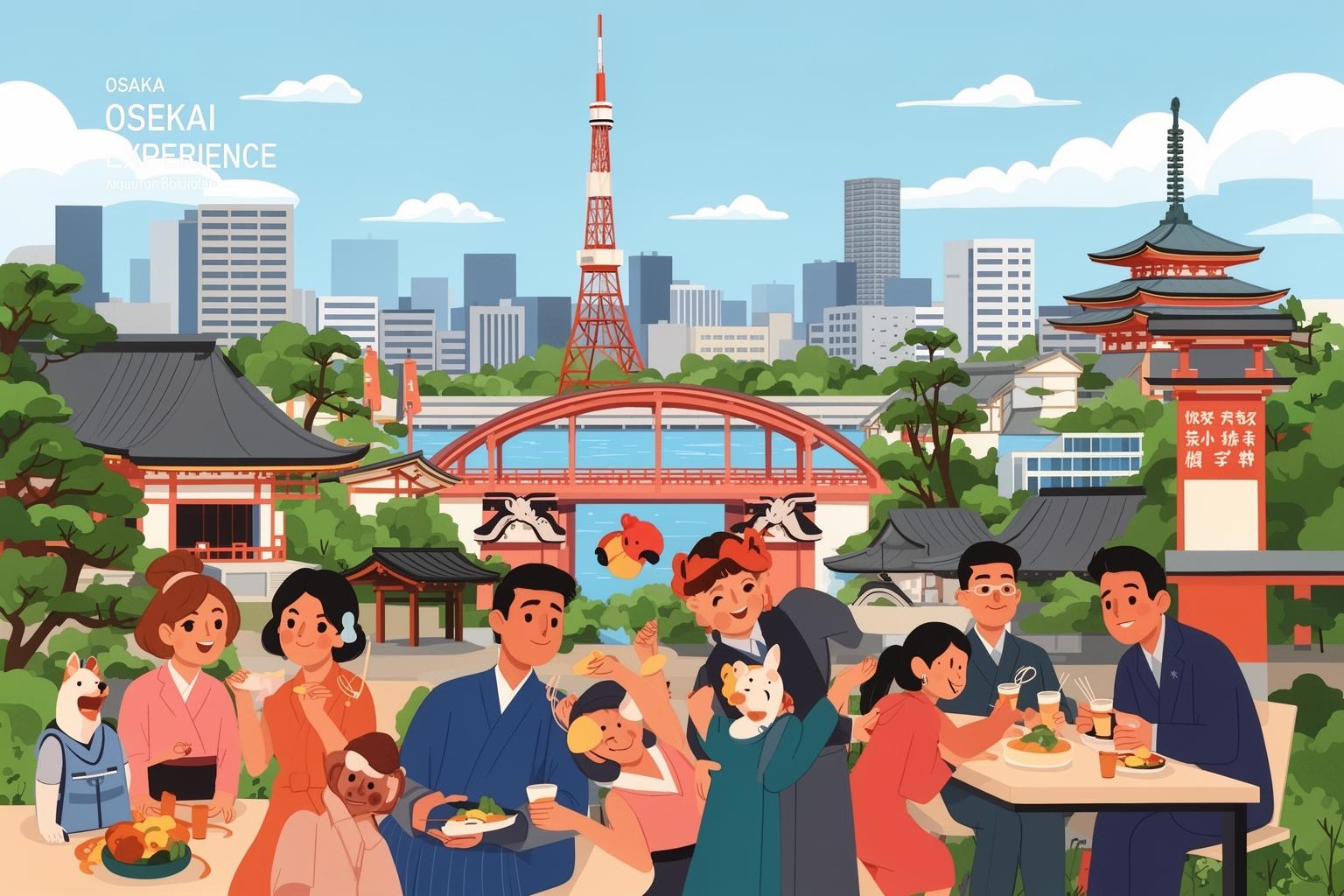
For many foreigners, the experience with ‘osekkai’ is a rollercoaster. It begins with confusion, often shifts to frustration, but for those who stay, it often leads to a peculiar, profound appreciation. You start to recognize the other side of the meddling coin.
The Safety Net You Never Knew Existed
In the isolating anonymity of a large city, this culture of nosiness forms a strong, informal social safety net. If you sprain your ankle on the street, you won’t be left lying there for long. In a Tokyo neighborhood, neighbors might not notice if you’ve been away for a week. In an Osaka neighborhood, however, the lady from the tobacco shop will likely be knocking on your door by the third day to check if you’re okay. This constant, low-level vigilance, while sometimes intrusive, also means people genuinely look out for one another. It cultivates a true sense of community that is increasingly rare in today’s world. When you’re far from home and family, that unspoken feeling of being cared for can be a tremendous comfort.
It’s Not Personal, It’s a Cultural Performance
One of the biggest mindset shifts is learning not to take ‘osekkai’ personally. Don’t see it as a critique of your character or skills. Instead, try to view it as what it really is: a cultural performance. The ‘obachan’ correcting your posture on the train is playing a role passed down through generations. She’s fulfilling her part of the social contract by acting as the community’s caretaker. You are simply another actor who has wandered onto her stage. When you approach these interactions with the detached curiosity of an anthropologist, they change from personal irritations into fascinating—often hilarious—daily scenes of life in Osaka.
The Day You Become the ‘Osekkai’ Person
The clearest sign you’ve truly embraced Osaka life is the day you catch yourself doing it. It will happen without you noticing. You see a group of tourists utterly confused by the ticket machine at Namba station, and before you realize it, you’re stepping in, explaining in your broken Japanese or clear English which buttons to press. You spot someone about to board the express train who clearly needs the local train instead, and you find yourself shouting, “Chigau, chigau!” (Wrong, wrong!). You might even carry a small stash of candy just in case. When that day arrives, don’t be alarmed. It simply means you’ve absorbed the city’s chaotic, meddling, wonderful spirit. You’ve learned that in Osaka, kindness isn’t a quiet, polite suggestion—it’s a loud, active, heartfelt intervention. You’re no longer just living in the city; the city now lives within you.