In the sprawling, energetic metropolis of Osaka, a city defined by its towering commercial hubs and dazzling neon rivers, there exists a parallel universe, a quieter, more intimate world steeped in steam and tradition. This is the world of the neighborhood sentō, the Japanese public bathhouse. Far more than a mere place to wash, the sentō is a living, breathing institution, a cornerstone of community life, and a portal into the very soul of the city. It’s a place where the clamor of the streets fades into the gentle lapping of hot water, where social barriers dissolve with the steam, and where the simple act of bathing is elevated to a cherished ritual. For the foreigner living in Osaka, stepping through the short, cloth noren curtain of a local sentō is to cross a threshold not just into a building, but into a deeper understanding of Japanese culture, a shared human experience that has cleansed and connected generations of Osakans. It is here, in the warm embrace of the communal tub, that the true rhythm of neighborhood life can be felt, a rhythm as steady and comforting as a heartbeat. This guide is an invitation to immerse yourself, quite literally, in one of Osaka’s most authentic and rewarding cultural experiences.
To fully embrace the local lifestyle, consider how other daily routines, like finding the perfect co-working space in Osaka, can also connect you to the city’s unique rhythm.
The Historical Steam: A Scholar’s Dip into the Past
To understand the sentō is to grasp an important thread woven into the fabric of Japanese history. Communal bathing is an ancient practice, its roots connected to Buddhist ideals of purity and cleansing. During the Nara period (710-794), temples often featured bathhouses called yuya for monks, which were gradually opened to the sick and poor as acts of charity. However, the sentō as a commercial and social institution truly flourished during the Edo period (1603-1868). In growing cities like Edo (modern Tokyo) and Osaka, where dense urban planning and the constant threat of fire in wooden homes made private baths a luxury few could afford and a risk many wished to avoid, public bathhouses became an essential necessity.
But the sentō quickly evolved beyond mere practicality. In the Edo period, it became the neighborhood’s social center, a lively hub of communication and community. It was a place where people from various non-samurai classes could interact with a level of equality uncommon in that era’s rigid social hierarchy. News was exchanged, gossip circulated, and informal business deals were often struck amid the relaxing atmosphere of the bath. It was the original social network, where information flowed as freely as water. In Osaka, known as the ‘Kitchen of the Nation,’ this vibrant commercial and communal spirit was especially strong. The sentō was where merchants, artisans, and laborers shed the day’s stresses, their conversations bouncing off tiled walls and creating a lively soundscape reflective of the city’s industrious core. Ukiyo-e artists of the time frequently captured scenes within these bustling bathhouses, portraying their energy and central role in urban life.
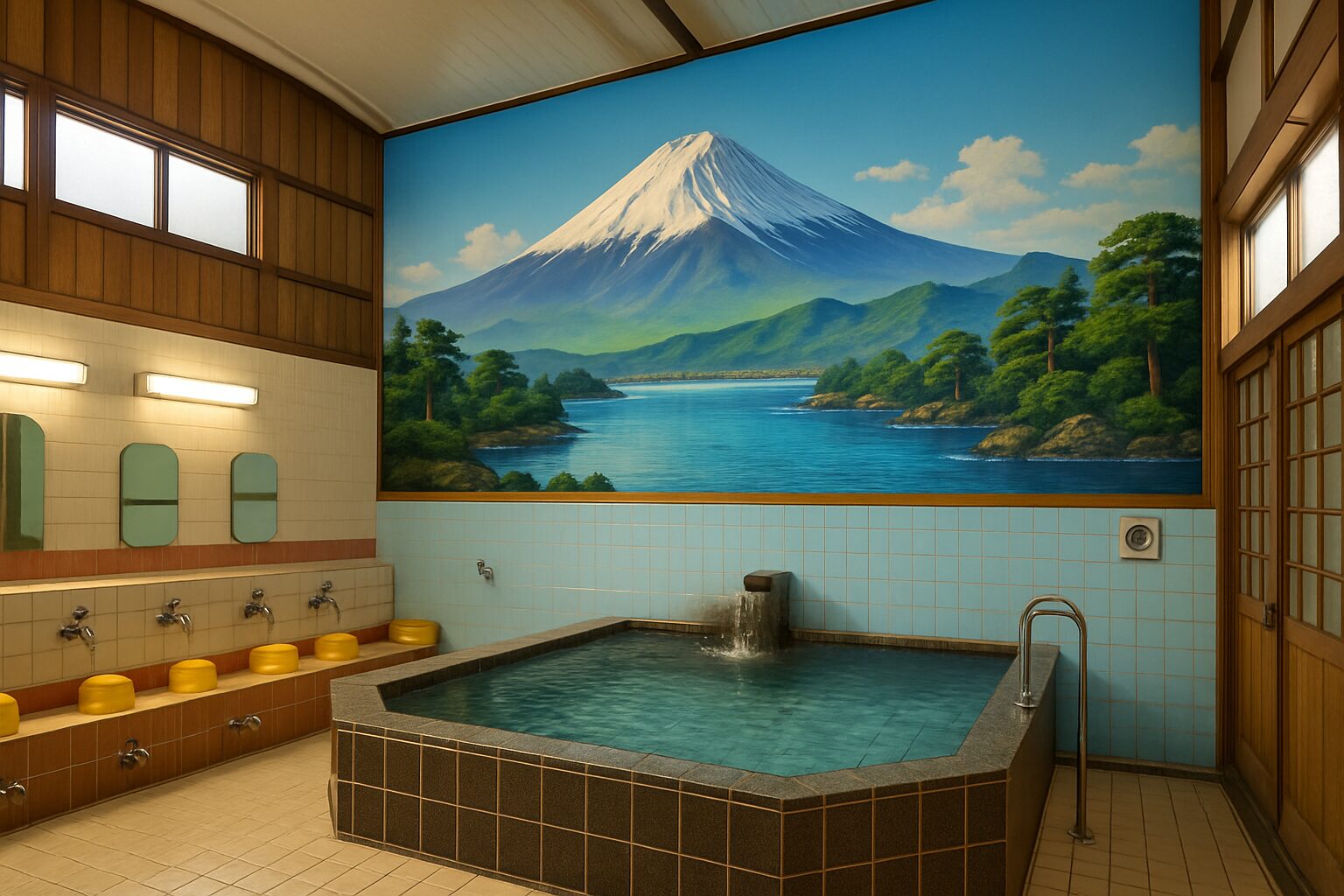
The Meiji Restoration (1868) ushered in a wave of Westernization, yet sentō culture endured and adapted. Early bathhouses were often dark, steamy, and co-ed—a practice that shocked Western visitors and was eventually banned by government order. The Meiji era brought improvements in design and hygiene, introducing tiled walls and floors, brighter lighting, and the iconic Mount Fuji mural, a symbol of enduring national identity. The high vaulted ceilings represented an ingenious architectural solution, allowing steam to rise and circulate, preventing the bathing area from becoming oppressively foggy.
The 20th century, especially the post-war years, marked the golden age of the sentō. As Japan rebuilt and millions lived without private bathing facilities, the sentō became more vital than ever—a symbol of recovery and normalcy, offering affordable comfort and warmth. For children, it was a place of wonder and play; for adults, a moment of respite and social connection amid hardship. Sentō numbers peaked in the late 1960s, with thousands scattered across cities like Osaka. Since then, with the advent of modern housing featuring private baths, their numbers have drastically declined. Yet the sentō that remain are not merely relics; they stand as treasured symbols of a culture that values community, ritual, and the profound, simple joy of a shared hot bath.
The Architecture of Ablution: Reading the Sentō Building
Before you even enter, the sentō makes an impression. Its traditional architecture is a thoughtful and elegant blend of form and function, crafted to welcome and awe visitors. Many older sentō showcase a miya-zukuri (shrine-style) design, most famously the stunning karahafu gable, an undulating, ornate curve that arches over the main entrance. This architectural detail, usually found on temples, shrines, and castles, imparted a sense of grandeur and significance to the modest bathhouse, elevating it from mere utility to a local palace. It announced that this was a special place, a refuge from the ordinary.
As you draw near, you pass beneath the noren, the split cloth curtain hanging at the doorway, typically dyed deep blue or purple and adorned with the character for hot water, ゆ (yu), or the establishment’s name. Parting it feels like a symbolic gesture of leaving the outside world behind. Inside, the first area you reach is the entrance hall, where you remove your shoes and place them in small wooden lockers. Here you’ll often find the bandai, a high, throne-like seat where the owner, often an elderly man or woman, collects the entrance fee and watches over both the male (otoko-yu) and female (onna-yu) changing rooms. The bandai is a hallmark feature, underscoring the sentō’s role as a family-run, community-centered business. In more modern or renovated sentō, the bandai has been replaced by a front desk or an automated ticket machine, but the sound of coins clinking on a wooden counter remains a vivid emblem of sentō nostalgia.
The changing room, or datsui-jo, is filled with fascinating details. Look up to the high, often wood-paneled ceiling, another design element for ventilation. The lockers may be traditional wooden ones with intricate keys or simple metal ones. Often large wicker baskets (kago) are provided for clothing, a more traditional and communal option. The air feels warm and slightly humid, scented with soap and wood, accompanied by the soft sounds of people preparing to bathe. This space marks a transition, where you shed not only your clothes but also the persona you carry from the outside world.
Finally, entering the bathing area is a sensory marvel. The vast, lofty ceiling arches overhead, creating an impressive sense of openness and preventing steam from becoming stifling. The walls are tiled, while the floor, usually slightly textured to prevent slipping, slopes gently toward drains. The acoustics are striking; every splash, trickle of water, and quiet murmur echoes and amplifies, forming a distinctive soundscape. Central to many classic sentō is the giant mural painted or tiled above the main tubs. Although Mount Fuji is the most iconic image, symbolizing a shared national landscape visible to all bathers, Osaka sentō often feature local scenes, legendary stories, or vibrant, colorful mosaics of carp (koi), symbols of strength and perseverance. This artwork transforms the space from a simple washroom into a gallery, offering a focal point for contemplation and relaxation.
A Symphony of Senses: The Sentō Experience from Entry to Exit
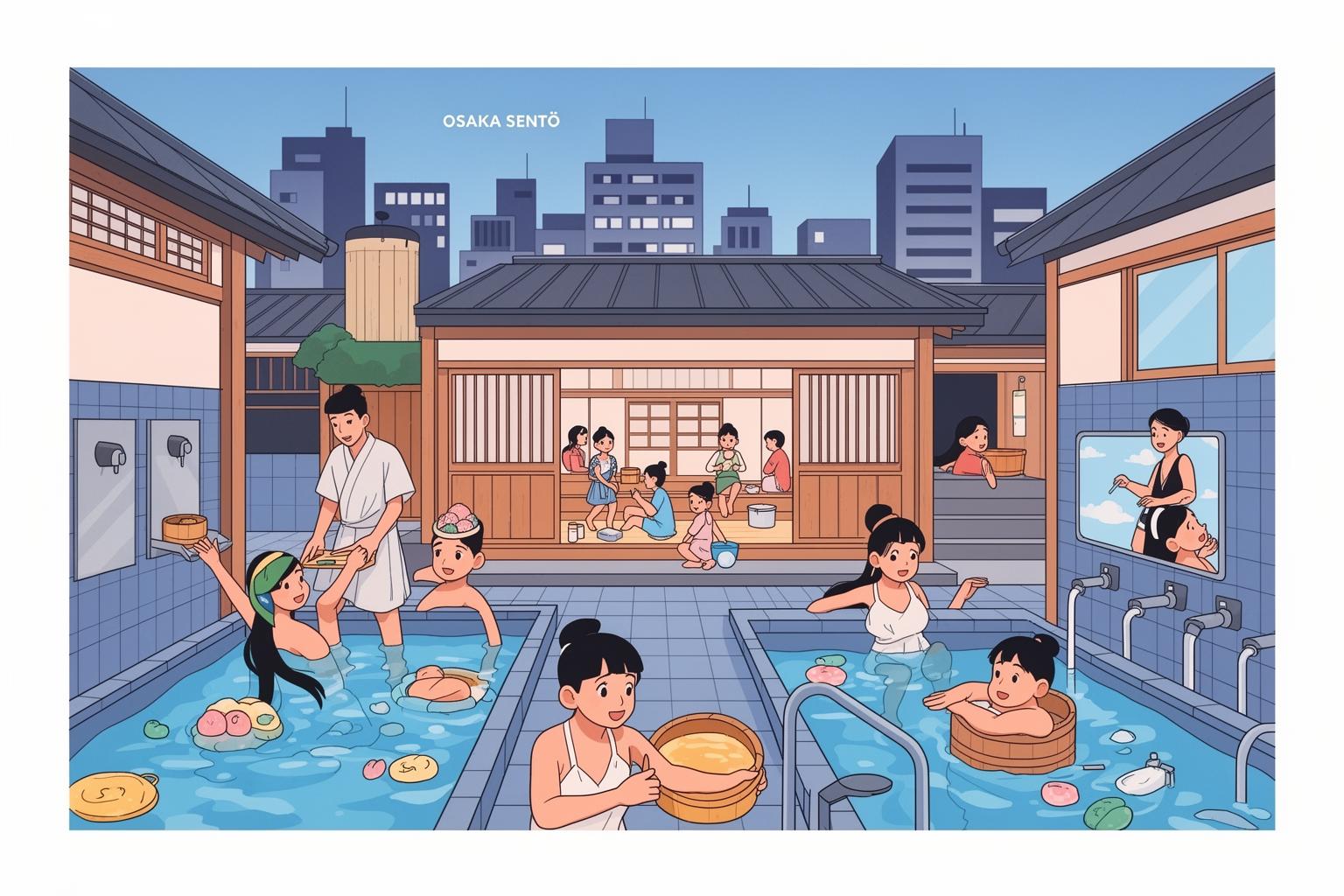
Your journey into the world of the sentō begins with a simple transaction. You’ll either pay the fee directly to the attendant at the bandai or buy a ticket from a vending machine near the entrance. The fee is typically very modest, a fixed rate set by the local government, making it one of the most accessible cultural experiences around. If you’re unprepared, this is also the place to rent a small towel or purchase single-use packets of shampoo and soap, often called a tebura set, meaning “empty-handed.”
After passing through the appropriate curtain—男 for men, 女 for women—you enter the datsui-jo. Find a locker or basket for your belongings and undress completely. This initial moment of vulnerability may feel intimidating for first-timers, but it is the great equalizer of the sentō. Here, stripped of external signs of status or profession, everyone is simply a fellow bather. Fold your clothes neatly in the basket and bring only your small wash towel (and toiletries if you brought your own) with you into the bathing area.
The very first and most essential step upon entering the tiled bathing room is the kake-yu. Using one of the basins near the entrance or at a washing station, you must thoroughly rinse your body with hot water. This serves two purposes: it cleanses away surface dirt before entering the communal tubs and helps your body acclimate to the bathwater’s temperature, which is often quite hot, typically between 40 and 44 degrees Celsius. It is a fundamental gesture of respect for the shared water and fellow bathers.
Next, find an open washing station. These are usually arranged along the walls and include a low stool, a faucet with hot and cold taps, and a handheld shower head. This is where the real washing takes place. Sitting on the small stool—a posture that may feel unusual at first but is designed to minimize water splashing on others—you must lather up and scrub yourself carefully. Take your time with this stage of the ritual. This is not a quick rinse; it is a purposeful cleansing. The sound of many people quietly and methodically washing forms a key part of the sentō’s ambient atmosphere.
Only once you are completely clean are you ready to enter the baths themselves. Ease yourself in slowly. The heat can feel intense initially, but allow your body to relax into it. The sensation of a deep, penetrating warmth soaking into your muscles and bones is deeply soothing. Most sentō have several tubs with varying temperatures and types. You may find a standard hot bath, a deeper tub for full-body soaking, and often modern additions. The denki-buro, or electric bath, has a low-voltage current passing through the water between two plates, creating a tingling, muscle-stimulating effect—approach with caution, as it can be quite a shock! Jet baths, or jetto-buro, offer powerful hydro-massage jets for your back and legs. Some sentō even provide medicinal baths, kusuri-yu, infused with seasonal herbs, minerals, or traditional remedies, tinting the water and filling the air with fragrant steam.
The proper way to enjoy the baths is to alternate between soaking and resting. Spend time in a hot tub, then exit to cool down at your washing station or a designated rest area before trying another bath. Watch the locals; you’ll observe a practiced rhythm of soaking, scrubbing, and socializing. Your small towel should never go into the bathwater. Most people place it on their head (which also helps prevent dizziness from the heat) or leave it on the side of the tub.
After soaking to your satisfaction, the ritual continues. Before returning to the changing room, give your body a final rinse. Dry yourself off as much as possible with your small, damp towel before stepping onto the datsui-jo floor, a courteous gesture to keep the changing area dry. Back at your locker, you can use a larger bath towel if you brought one for a final drying. The post-bath sensation is one of supreme cleanliness and deep relaxation, a state the Japanese call yu-agari. Your skin will glow, your body will feel light, and your mind will be calm. To complete the experience, many Osakans enjoy a post-bath drink. The classic choice is cold milk—plain or coffee-flavored—from a glass bottle, purchased from a vintage-style refrigerator in the lobby. There is a certain nostalgic perfection to this simple pleasure, a cool, creamy reward that caps off the ritual. Take a seat on a bench in the common area, sip your milk, and bask in the afterglow. This is the sentō experience in its purest form.
Sentō Etiquette: Navigating the Naked Truth with Grace
For those unfamiliar with communal bathing, it often brings a range of anxieties, mostly centered around unspoken rules and etiquette. Yet, the guidelines for sentō conduct are straightforward, reasonable, and fundamentally based on maintaining a clean, comfortable, and respectful shared environment. Learning these rules isn’t about memorizing a strict list of do’s and don’ts, but about grasping the spirit of consideration that underlies the entire experience.
The most essential rule, as noted, is to wash your body thoroughly before entering the main baths. These baths are meant for soaking and relaxing, not for cleansing. This is the key rule, and following it demonstrates respect for the facility and everyone present. When at your washing station, be courteous to your neighbors—avoid splashing them with soap or water. After finishing, it’s polite to quickly rinse your stool and the surrounding area.
Your small wash towel, called a tenugui, has its own etiquette. Its main uses are scrubbing yourself at the washing station and drying off lightly before re-entering the changing room. Importantly, it should never go into the bathwater. The tubs are meant only for soaking bodies, and the towel is considered unclean. You’ll often see people folding it neatly and placing it on their heads or resting it on the tiled edge of the bath. This small detail is important.
Once inside the bath, maintain a calm demeanor. The sentō is a place for relaxation, not play. Running, jumping, splashing, or swimming are strictly prohibited. Speak softly and respectfully. While conversations are a natural part of the social atmosphere, loud or boisterous talk disrupts the peace. Move slowly and carefully in and out of the water, as the floors are wet and slippery.
Respect for personal space is also vital. Although the tubs are communal, try to keep a polite distance from others whenever possible. If the bath is crowded, simply find a spot and settle without unnecessary physical contact. The undressed environment encourages a unique form of non-verbal communication and spatial sensitivity.
One significant concern for many foreigners is tattoos. Traditionally in Japan, tattoos have been linked to the yakuza, or organized crime, leading many public baths—including onsen and fitness clubs—to ban them. However, neighborhood sentō in cosmopolitan cities like Osaka tend to be more accepting. Attitudes are evolving, influenced by more young Japanese people having tattoos and increased international tourism. Although there isn’t a universal rule, many local sentō adopt a ‘don’t ask, don’t tell’ approach or simply do not mind, especially if tattoos are not overly large or intimidating. The best course of action is to check for any posted signs at the entrance (which often use pictograms indicating ‘no tattoos’) or ask politely. If your tattoos are small, consider covering them with a waterproof bandage as a gesture of respect. Generally, you will find Osaka’s local sentō far more welcoming than expected. The focus is on considerate behavior, and as long as you respect the customs, you are likely to be accepted as just another bather.
Osaka’s Unique Flavor: The Naniwa Sentō Spirit
While the fundamental principles of the sentō remain consistent throughout Japan, each region imparts its own local flavor. The sentō of Osaka, the historic land of Naniwa, embody a spirit that is uniquely their own—a spirit characterized by openness, practicality, and warm, unpretentious sociability. This captures the essence of hadaka no tsukiai, or ‘naked communion’, a concept that truly flourishes in Osaka’s bathhouses. It reflects the idea that once clothes are removed, so too are the hierarchies and pretenses of the outside world, allowing for a more direct and sincere form of communication.
Osakans are well-known for being friendly, outgoing, and fond of a good conversation, and the sentō is one of the prime places to express this social nature. Don’t be surprised if an elderly woman or man starts a conversation with you, asking where you’re from or simply commenting on the comforting warmth of the water. This is not an intrusion; it’s a gesture of hospitality. Participating in these simple, friendly exchanges is one of the great pleasures of the Osaka sentō experience. It offers a chance to practice your Japanese in a relaxed setting and to feel, even if briefly, like a genuine member of the local community.
The remarkable variety of bathhouses in Osaka is another hallmark. The city functions as a living museum of sentō evolution. You can discover majestic, Showa-era bathhouses that have remained largely unchanged for decades, featuring grand architecture, vintage massage chairs, and traditional Fuji murals. These places serve as genuine time capsules, evoking a strong sense of nostalgia. At the other end are modern, renovated ‘designer sentō’, where young owners have maintained the traditional role of the bathhouse while modernizing the aesthetic with stylish, minimalist designs, craft beer on tap, and even live music events. Then there are ‘super sentō’, larger, resort-style complexes offering a vast array of baths, saunas, restaurants, and relaxation rooms for a slightly higher price. These provide a more entertainment-focused experience, but the humble neighborhood sentō remains the true heart of the city’s bathing culture.
In Osaka’s shitamachi, or older downtown districts, clusters of these traditional bathhouses still serve as vital community hubs. Areas like Nishinari, Taisho, and the backstreets of Tennoji are rich grounds for sentō exploration. Finding them can be an adventure in itself. Look for the tall chimneys, a distinctive sign of a sentō, or watch for the ゆ symbol on maps and signs. Each has its own distinct character, its own regular patrons, and its own story to tell. Visiting an Osaka sentō is to experience the city at its most grounded, most human, and most welcoming. It’s a culture that embraces the simple, profound truth that a hot bath and a friendly word can wash away the worries of the day.