Step off the neon-drenched, bicycle-cluttered streets of Osaka, where the sizzle of takoyaki and the rumble of the Midosuji line form the city’s relentless soundtrack. Push past a simple, often indigo-dyed curtain, a noren bearing a single, elegant character: ゆ (yu), the symbol for hot water. The air instantly changes. The humidity climbs, carrying with it the clean scent of soap and the faint, mineral tang of heated water. The city’s chaotic symphony fades, replaced by a softer, more intimate score: the gentle clatter of plastic buckets on tiled floors, the steady rush of water from chrome faucets, and the low, contented murmur of neighbors sharing the day’s news. You’ve just entered a neighborhood sento, Osaka’s public bathhouse. This isn’t a tourist attraction; it’s a living, breathing institution, a weekly ritual, and perhaps the most authentic window into the soul of this vibrant city. It’s more than a place to get clean; it’s a place to get connected, to dissolve the stresses of the day, and to participate in a tradition that binds generations together in a ritual of steam and solidarity. This is where the real Osaka lives, shedding its daily armor and simply being.
To further immerse yourself in the daily rhythms of local life, consider starting your morning with the cherished ritual of a neighborhood kissaten.
The Rhythm of the Week: A Ritual in Steam
For many locals, visiting the sento isn’t a spur-of-the-moment choice; it’s a scheduled appointment with tranquility, intricately woven into their weekly routine. It’s the Tuesday night ritual for a salaryman to wash away corporate fatigue, the Thursday afternoon gathering where a group of elderly women share laughter echoing off the high ceilings, or the weekend treat for a father and his young son, a bonding experience handed down through generations. This differs from a trip to a fancy mountain onsen resort. There’s no grand sense of occasion here. Instead, there’s a comforting, well-worn familiarity. It’s the urban equivalent of a backyard garden or a favorite armchair—a personal space that just happens to be public. You’ll find regulars with their designated lockers, preferred washing stations, and a specific sequence of baths they follow with the precision of a choreographed dance. They might not speak every time, but a silent nod acknowledges their shared membership in this unspoken club. This routine transforms bathing from a mere chore into a mindful practice. It’s a moment to pause the relentless passage of time, check in with one’s body, and feel the gentle rhythm of a community at ease. For foreigners living in Osaka, immersing in this weekly rhythm offers a powerful way to feel less like a visitor and more like part of the neighborhood’s heartbeat.
An Overture of Senses: The Sento Atmosphere
To truly grasp the essence of the sento, you need to engage all your senses. From the moment you step into the datsuijo, or changing room, the sensory experience begins. The first sensation is the humidity—a warm, damp embrace that immediately relaxes your muscles and signals a departure from the outside world. The floor might feel cool underfoot, made of worn wood or practical linoleum, creating a tactile contrast to the ascending heat. You’ll hear the snap of locker keys turning, the soft rustle of clothes being folded and tucked into wicker baskets, and the hum of large, vintage fans working to circulate the dense air.
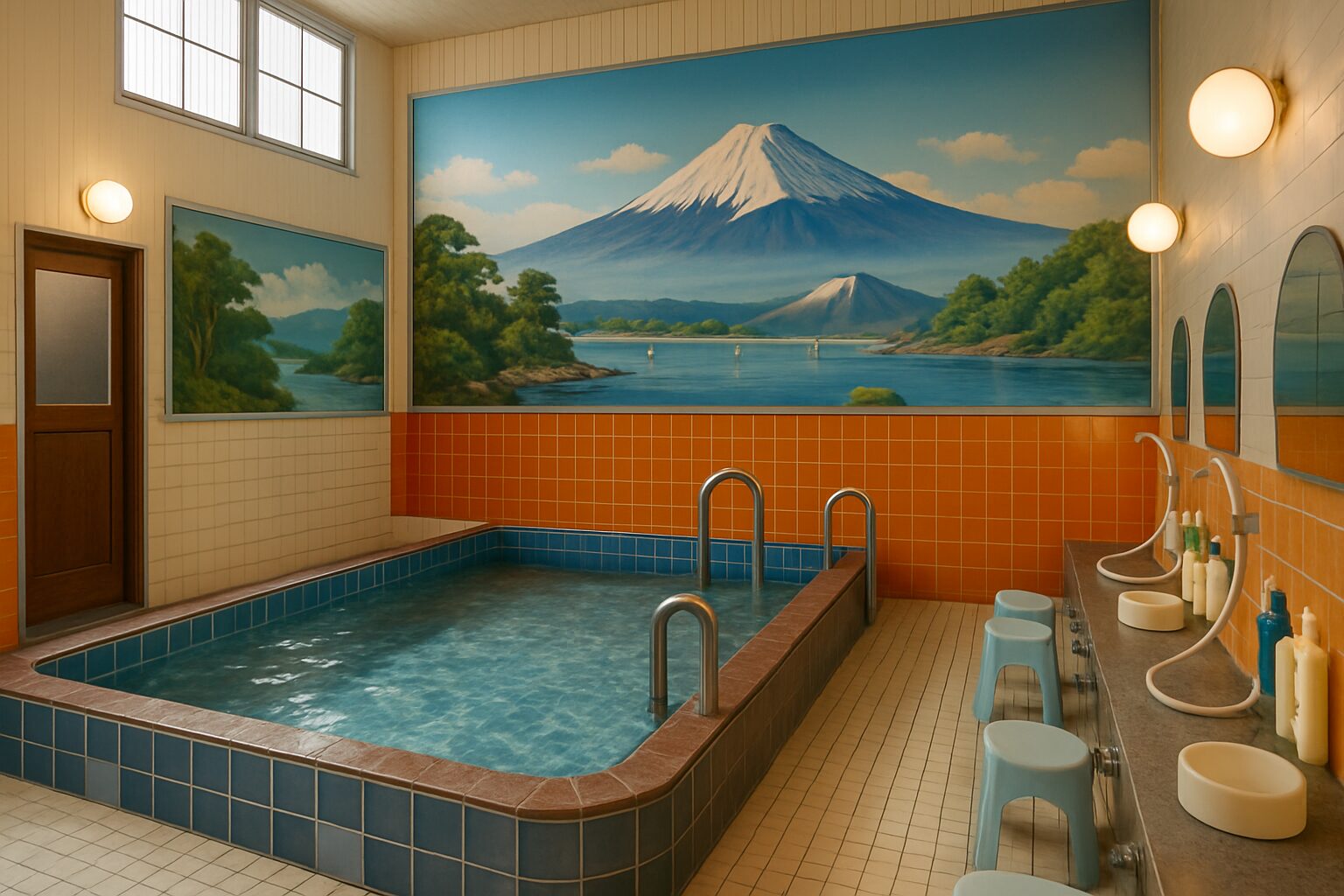
As you slide open the glass door to the bathing area, the full sensory symphony envelops you. Visually, it’s a realm of steam and tile. The steam gently softens the surroundings, blurring the room’s edges and giving it an ethereal, dreamlike aura. Daylight filtering through high windows diffuses through the haze, illuminating the detailed tile work that often decorates the walls—geometric designs, elegant koi fish, or even exquisite majolica tiles imported from Europe a century ago. Above it all, often spanning the entire back wall, stands the iconic mural. While Mount Fuji is the traditional choice, Osaka sento may showcase a local castle, a famous Japanese landscape, or a more abstract mosaic. This mural acts as a centerpiece for reflection, a grand scene to admire as you soak.
The soundscape resonates uniquely. The high ceilings, designed to let steam rise and escape, create a cavernous acoustic. Every noise is amplified and echoed: the sharp clack-clack of a plastic stool being shifted, the hollow thump of a wooden bucket, the constant hiss of showers, and the deep, bubbling sound of fresh hot water filling the tubs. Layered atop this aquatic orchestra is the soft murmur of human presence—not loud or boisterous, but a gentle tapestry of quiet conversations, occasional splashes from children, and long, comfortable silences. The scent is a complex blend of cleanliness—the crisp aroma of bar soap, floral hints of shampoo—and the earthy, mineral-rich warmth of the hot water itself. On special occasions, this may be enhanced by the fragrant citrus of yuzu in the winter bath or the fresh, green scent of iris leaves in spring. It’s an environment crafted for complete sensory surrender—a place where the demands of the outside world cannot reach.
The Silent Language: Mastering Sento Etiquette
For those unfamiliar, the sento may appear to be a place filled with potential social pitfalls. However, the rules are straightforward and all revolve around a single core value: consideration for others. This mutual understanding enables a room full of naked strangers to share the space in perfect, clean harmony. Learning this unspoken code is your gateway to a genuinely local experience.
Before the Plunge: The Sacred Art of Washing
This is the golden rule—the absolute, non-negotiable first step of any sento visit. The large communal tubs are meant for soaking and relaxing, not for cleaning. Before you even think about dipping a toe into the pristine water, you must thoroughly wash your entire body. Locate an empty washing station, which includes a low plastic stool, a bucket, and a faucet with a handheld shower head. Sit on the stool—standing and splashing your neighbors is a major faux pas. Using your small towel (more on that later), soap, and shampoo, scrub yourself clean from head to toe. This act is both practical and symbolic: it keeps the bathwater pure for everyone and signifies washing away the outside world’s dirt and worries before entering the communal sanctuary of the bath. Once you’re completely clean, be sure to rinse off all the soap suds. A final, quick rinse with hot water from the bucket, called kakeyu, just before entering the tub, is the customary finishing touch to acclimate your body to the heat.
In the Waters: Rules of the Tub
After you have thoroughly washed, you may enter the baths. Do so slowly and gently, without splashing. The main rule here concerns your small towel—the one used during washing. This towel must never, under any circumstances, enter the bathwater, as it is considered unclean. Regulars handle this with practiced ease: they either place it on the edge of the tub or, in a classic sento move, fold it neatly and balance it on top of their head. It may look a bit humorous at first, but it is the correct practice. The bath is a place for quiet reflection or subdued conversation. Avoid loud talking, roughhousing, or swimming. Find your spot, ease in, and release that universal sigh of contentment. Be mindful of your personal space, especially during busy times. There’s an unspoken etiquette as people enter and exit the tubs. When moving to another bath, leave carefully, and it is common courtesy to do a quick rinse at your station if you plan to enter a different tub afterward, especially after visiting the sauna.
The Tattoo Taboo: Navigating Ink in the Neighborhood Bath
This issue concerns many foreigners. In Japan, tattoos carry a long and complex history, often linked to the yakuza, or organized crime. Because of this, many places—such as high-end onsen, private gyms, and swimming pools—enforce strict “no tattoo” policies. However, the neighborhood sento often offers a different experience. These community-oriented spaces tend to be more relaxed. Many, if not most, sento have no explicit tattoo bans or quietly permit small, unobtrusive ones. The overall attitude is evolving, especially in cosmopolitan cities like Osaka. That said, this is not a universal rule. If you have extensive tattoos, it’s best to check the sento’s website beforehand—look for terms like 入れ墨 or タトゥー followed by OK or 可 for allowed, or NG or 禁止 for prohibited. If no information is available online, try calling or discreetly asking at the front desk. For smaller tattoos, using waterproof “tattoo cover stickers,” which are sold at drugstores, is a considerate and widely accepted solution. Generally, the atmosphere in a local sento is much more “live and let live” than in more formal settings. Show respect, follow the rules, and you will nearly always be welcome.
Charting the Course: A Journey Through the Sento
A visit to the sento unfolds as a multi-stage journey, with each section presenting a unique experience. Knowing the layout will make your first time feel like your hundredth.
The Threshold: The Bandai and Datsuijo
Your journey starts at the entrance. You’ll pay your fee—a standardized, surprisingly affordable price set by the local prefecture—at the front counter, called the bandai. In older sento, this is a high, seated platform where an attendant (often a kindly grandmother) oversees both the men’s and women’s changing rooms. In more modern designs, the entrances are completely separate. You’ll pass through the noren curtain—typically blue for men (男) and red for women (女)—into the datsuijo, the changing room. Here, you’ll find a wall of lockers, some free and some requiring a 100-yen coin deposit that is returned after use. Alternatively, many sento still use traditional open shelves with wicker or plastic baskets. This system is based on trust and reflects the neighborhood’s safety and community spirit. In the datsuijo, you’ll also find mirrors, hair dryers (which may need a 20-yen coin), and almost always an old-fashioned mechanical weighing scale, a nostalgic artifact from times past. Strip down completely—bathing suits are not worn in a sento—store your belongings in a locker or basket, and bring only your small towel and washing supplies into the bathing area.
The Main Event: A Symphony of Baths
The bathing room is where the magic truly occurs. Most sento offer a variety of tubs, each with distinct temperatures, purposes, and sensations. Exploring them is part of the pleasure.
- Atsuyu (Hot Bath): This is the main, standard bath, usually maintained at a steaming 40-43°C (104-109°F). The first entry can be a shock, but as you gradually immerse yourself, your body adjusts, and a deep relaxation follows. This is the core of the sento experience.
- Mizuburo (Cold Plunge): Found adjacent to the sauna, this is a deep tub filled with shockingly cold water. Not for the faint-hearted, it’s mainly used to cool down quickly after a sauna session. The health benefits of this hot-cold hydrotherapy are said to be vast, enhancing circulation and energizing the body. The initial gasp soon transitions to a clarifying, electrifying tingle.
- Denki-buro (Electric Bath): Possibly the most unusual and uniquely Japanese bath. This tub sends low-voltage electric currents between two plates on opposite walls. Sitting between them, you’ll feel a distinct buzzing or tingling that gently contracts your muscles. It is reputed to ease muscle aches and stiffness. Approach with care and find a distance from the plates that feels comfortable. It’s a strange yet memorable experience worth trying at least once.
- Jet Baths & Bubble Baths: These offer a more playful experience. Powerful water jets (sometimes called “jet baths” or “dream baths”) provide deep tissue massage for your back and legs. Bubble baths (awa-buro) are milder, with air bubbles creating a soft, effervescent sensation over your skin.
- Yakuyu (Herbal/Medicinal Bath): Many sento include a special bath infused with seasonal or medicinal ingredients. The water may be milky white, bright green, or deep purple, and the air fragrant with the bath’s aromatic contents. Common infusions include lavender for relaxation, mugwort for circulation, and, famously, whole yuzu citrus fruits floating in the tub around the winter solstice, releasing their wonderful aroma and oils.
The Chamber of Heat: Sauna and Steam
Most modern sento and nearly all “super sento” feature a sauna, which is a popular part of the ritual. Japanese saunas are usually dry and very hot. You’ll often find a small television inside, quietly broadcasting news or a baseball game, which sauna-goers watch with quiet focus. Small mats or towels are typically provided for hygiene when sitting. The aim is endurance—to sweat out impurities. Once you reach your limit, the proper routine is to exit, rinse off your sweat in the shower, then plunge into the invigorating, icy shock of the mizuburo before resting for a few minutes and repeating the cycle. It’s an intense but thoroughly cleansing and rewarding process.
Beyond the Bubbles: The Sento as a Social Sanctuary
The most profound aspect of the sento extends far beyond the water itself. It serves as a vital community hub and social sanctuary, playing an essential role within Osaka’s urban fabric. It embodies the spirit of hadaka no tsukiai, which means “naked communion” or “naked friendship.”
Hadaka no Tsukiai: The Great Equalizer
In a society often marked by formality and hierarchy, the sento acts as the great equalizer. Once you shed suits, uniforms, and designer brands, everyone stands on equal footing. The company president sits beside the part-time convenience store clerk. The university professor converses with the local carpenter about the latest Hanshin Tigers game. Status, wealth, and age lose their significance. This shared vulnerability cultivates a unique, open, honest, and unguarded form of communication rarely found elsewhere. It’s a place where friendships are born, community news is shared, and a collective identity is strengthened. It’s a space where you can be truly anonymous while also fully part of a community.
The Post-Soak Ritual: Milk, Beer, and Manga
The sento experience doesn’t conclude upon drying off. The post-bath ritual, often carried out in the datsuijo or a dedicated relaxation lounge, is equally important. After a long, hot soak, your body feels warm, relaxed, and thirsty. The classic post-sento drink is ice-cold milk, served in a vintage glass bottle sealed with a paper cap. Small refrigerators are stocked with plain milk, coffee-flavored milk, and fruity mixed-milk varieties. The traditional way is to place one hand on your hip and down the milk in one smooth gulp. For adults, many sento also offer vending machines with frosty mugs of draft beer—a perfect reward after a sauna session. Relaxation areas often feature tatami mats, massage chairs, and shelves filled with manga. Here, people linger—reading, chatting quietly, or simply drifting into a blissful, post-bath haze. This final, gentle unwinding marks the slow return to everyday life and is a beloved part of the overall cultural experience.
Finding Your Flow: Practical Steps for Your First Sento Adventure
Ready to take the plunge? A bit of preparation will ensure your first visit is smooth, relaxing, and enjoyable.
The Essential Kit: What to Bring (and What to Buy)
Many regular visitors bring their own carefully packed baskets, but as a first-timer, you have choices. The simplest option is the tebura setto, or “empty-handed set.” For a small additional fee, the sento provides a rental towel set and basic toiletries. However, if you plan to visit often, it’s more cost-effective and personal to bring your own kit.
- A Small Towel: This is the most important item. It’s a thin, washcloth-sized towel used for scrubbing your body and for modesty when moving between the changing room and baths. Remember, this towel should never go into the water.
- A Large Towel: This standard bath towel is for drying off completely in the changing room before getting dressed.
- Toiletries: Soap or body wash, shampoo, and conditioner. It’s customary to transfer these into smaller, travel-sized bottles.
- A Plastic Bag or Pouch: To carry your wet towel home.
- Change: For the entrance fee, locker rental, hair dryer, and that all-important post-bath drink from the vending machine.
Timing is Everything: When to Go
Sento usually open mid-afternoon, around 2 or 3 PM, and stay open late, often until midnight or 1 AM. The busiest period is the evening rush, from about 7 PM to 10 PM, when people come after work. This lively time can be fun to experience the sento at its peak. For a more tranquil, reflective soak, try visiting in the late afternoon on a weekday. The baths will be less crowded, offering more space and freedom to explore. Keep in mind that every sento has a teikyubi, a regular closing day, usually a specific weekday (e.g., every Wednesday). It’s always wise to check their schedule online or on the sign outside before you go.
Osaka’s Living History: The Enduring Soul of the Sento
Although the number of sento has decreased since its post-war peak, when private bathrooms were a rarity in Japanese homes, these establishments remain very much alive. They hold a treasured place in Osaka’s living history, adapting to the needs of a new generation while preserving their nostalgic essence.
From Necessity to Nostalgia
What was once an everyday necessity has now become an affordable indulgence, a conscious choice for relaxation and social connection. The sento serves as a source of nostalgia for older generations and a trendy retro discovery for younger people seeking genuine, analog experiences in a digital age. Some older sento have been carefully restored by new owners dedicated to preserving this unique culture, while others have been reinvented as modern “designer sento” featuring minimalist design, craft beer bars, and even co-working spaces.
Architectural Wonders: More Than Just a Building
Notice the building itself. Many traditional sento are architectural treasures. Look for the grand, temple-like miyazukuri facade with its sweeping tiled roof. Inside, the practical design is impressive. The extra-high ceilings in the bathing area are not merely for grandeur; they serve a functional purpose by allowing steam and heat to rise and escape, preventing the space from becoming stifling. The tilework can delight art enthusiasts, with some sento showcasing rare, beautiful tiles from the early 20th century. The mural of Mount Fuji—present even here in Osaka, hundreds of kilometers away—is a nostalgic tradition linking this local bathhouse to a shared national identity, symbolizing a grand, beautiful world just beyond the steamy walls.
Stepping into an Osaka sento is more than just taking a bath. It is entering a stream of living culture—an inviting space that has cleansed and connected communities for centuries. It’s a chance to experience the city’s true warmth, not only from the water but from the quiet camaraderie of its people. So leave your phone in the locker, shed your clothes along with your inhibitions, and simply soak. Amid the steam and silence, the clatter of buckets, and the taste of cold coffee milk, you’ll discover a side of Osaka that is authentic, restorative, and utterly unforgettable. It’s an invitation to pause, breathe, and, for a brief time, become part of the city’s gentle, weekly rhythm.