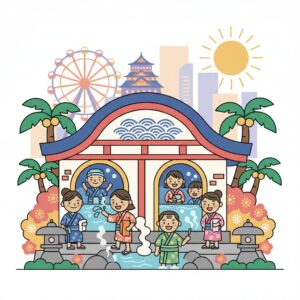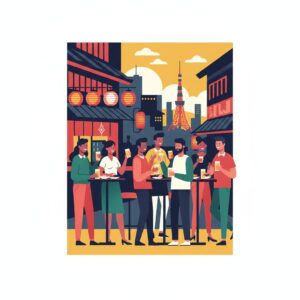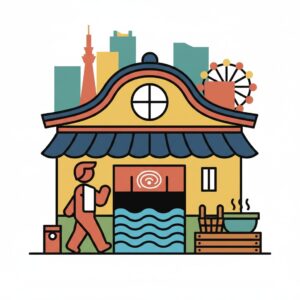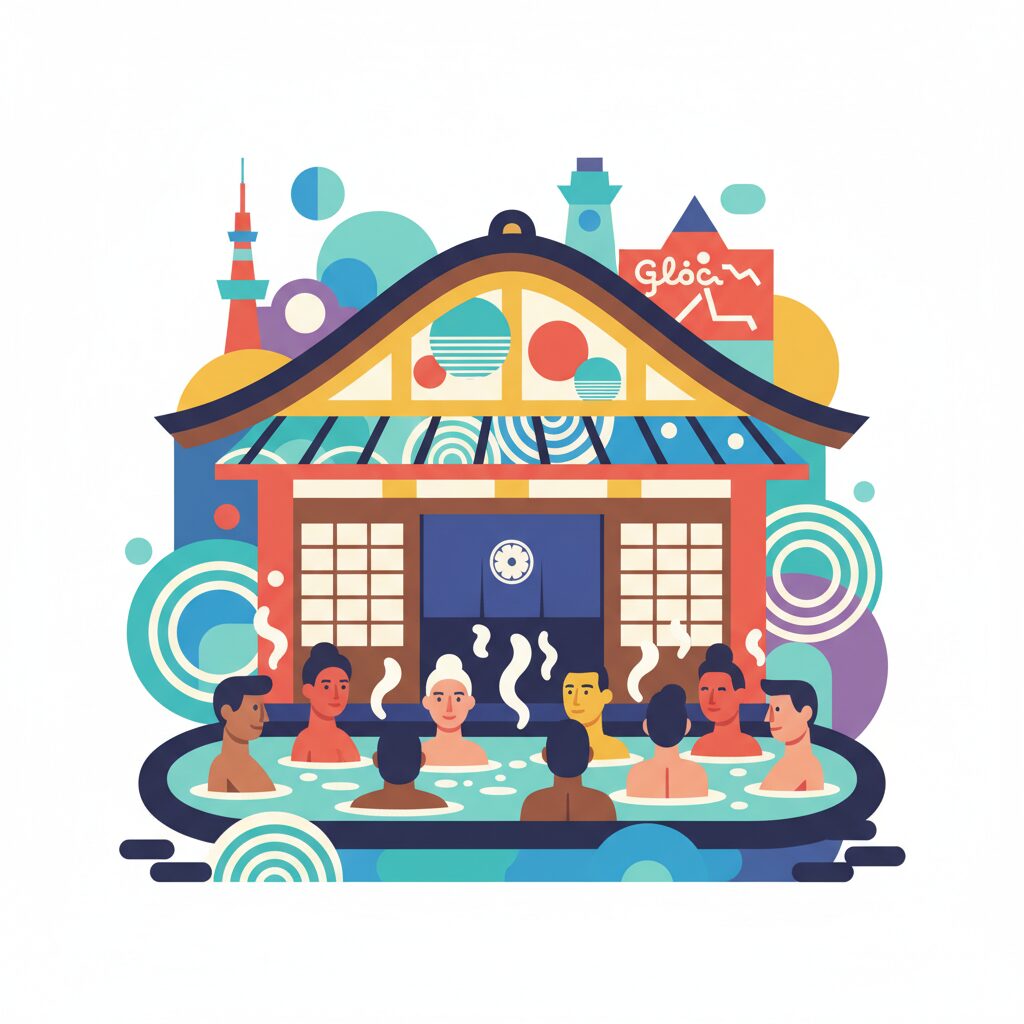
When I first moved to Osaka, I was struck by a simple, nagging question. Every modern apartment, from the shoebox studios to the sprawling family homes, comes equipped with a perfectly functional bathroom. A deep tub, a high-pressure shower, instant hot water—all the modern conveniences you could ask for. Yet, on any given evening, as dusk settles over the city’s endless grid of residential neighborhoods, you’ll see them: silhouettes on bicycles, small towels and soap baskets in tow, heading towards the soft glow of a lantern hanging under a curved temple-style roof. They are heading to the local sentō, the neighborhood public bathhouse. Why, in an age of private comfort, does this communal ritual persist so fiercely here? It’s a question that cuts to the very heart of life in this city. This isn’t about getting clean. It’s about getting sane. The sentō isn’t just a place to wash away the day’s grime; it’s where Osaka goes to rinse its soul, to decompress its mind, and to quietly, communally, hit the reset button. It is the city’s shared living room, its unofficial wellness center, and a vital bulwark against the anonymous churn of modern urban life.
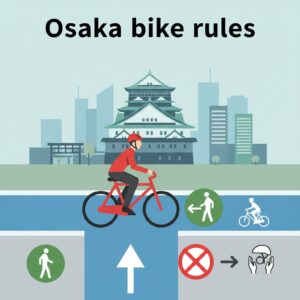
Yet, beyond the restorative ritual of the local sentō, Osaka residents navigate a vibrant urban tapestry where even the nuances of Osaka’s chari culture reveal subtle, unwritten rules that bind the community together.
More Than a Bath: The Sentō as Osaka’s Living Room
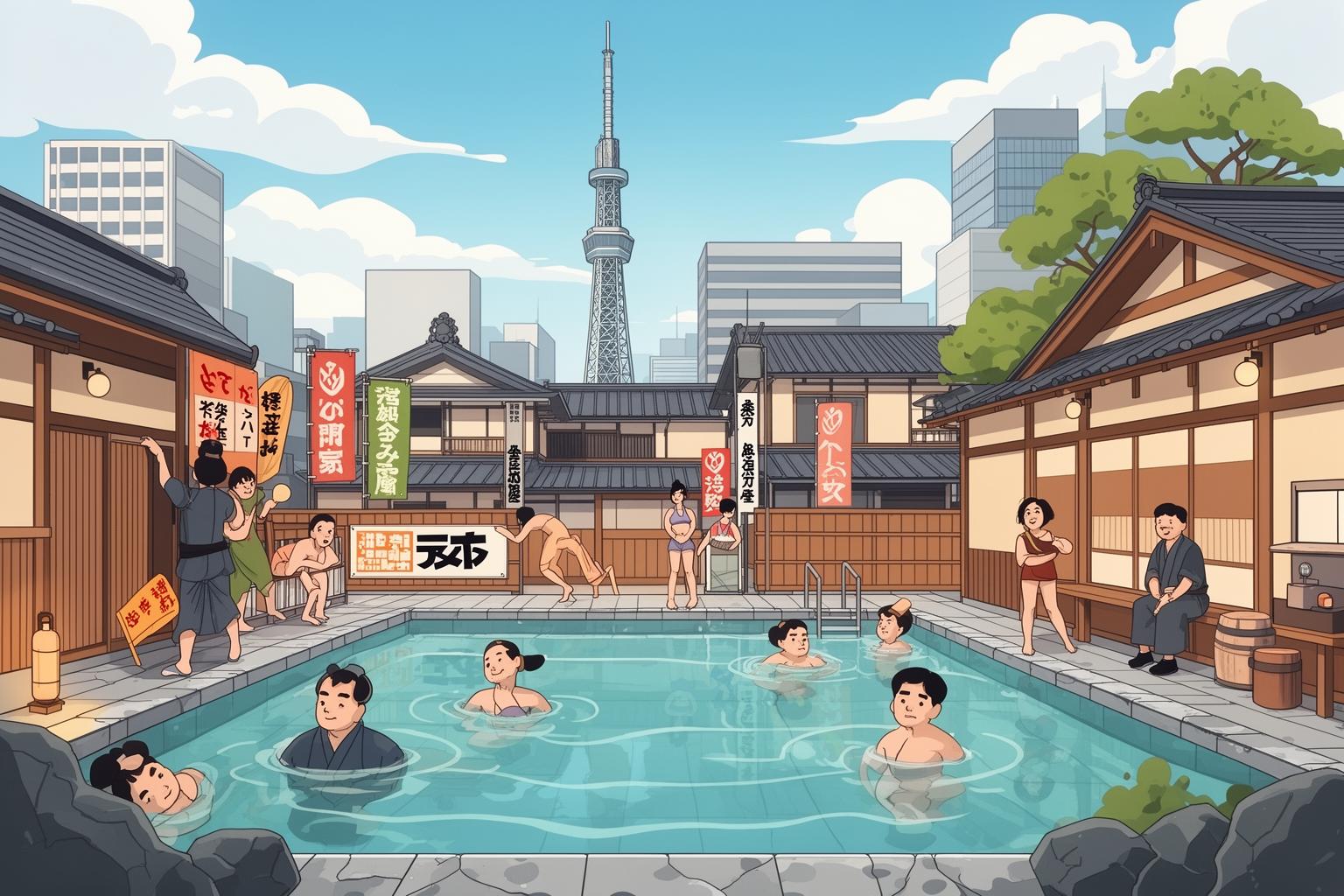
Step through the sliding doors of a place like Asahi Onsen in Sumiyoshi or one of the hundreds of similar spots tucked away on quiet side streets, and you leave the 21st century behind. The air is thick with steam and the subtle, clean aroma of cedar. The soundtrack includes the rhythmic splash of water, the clatter of plastic stools on tiled floors, and the low hum of conversations. This is not the hushed reverence of a Kyoto temple or the sterile silence of a Tokyo spa. An Osaka sentō is vibrant. It hums with a gentle, comfortable energy. It’s the city’s backstage, where the daily performance pauses.
The Unspoken Social Contract
At the heart of the experience is what the Japanese call hadaka no tsukiai, or “naked communion.” Though the phrase may sound a bit startling in English, its meaning is beautiful. When everyone is stripped of their clothes, they shed their social armor—the suit and tie of the salaryman, the uniform of the student, the apron of the shopkeeper. All that melts away in the steam. Here, you are not defined by your job title or bank balance. You are simply another body seeking warmth and relief. This leveling effect is especially embraced in Osaka. While a Tokyo sentō might see patrons maintain a polite, metropolitan distance, the invisible personal space bubble shrinks considerably here. Don’t be surprised if the elderly man bathing next to you starts a conversation about the Hanshin Tigers’ latest game or offers an unsolicited but surprisingly helpful tip for easing back pain. This isn’t intrusion; it’s the local social fabric weaving itself in real time. It’s an unspoken agreement that for these forty-five minutes, we’re all in this together. The water, like the conversation, is for sharing.
A Multi-Generational Melting Pot
Look around, and you’ll see the full spectrum of Osaka life. In one corner, a group of elderly men, their skin pruned from years of soaking, debate the day’s news with the authority of experienced pundits. Across the room, a young father patiently teaches his toddler how to wash properly before entering the main bath, a tiny plastic bucket in hand. University students, seeking refuge from drafty apartments, stretch out their limbs in the hottest pools. Everyone coexists. The sentō serves as a vital point of intergenerational contact, a space where wisdom, stories, and social norms are passed down not through formal instruction but through shared experience. It’s a living museum of local culture where the exhibits talk back, and the primary lesson is how to be part of a community. You see how people care for their elders, how they raise their children, and how they find common ground despite their differences. It’s a deeply human scene you’ll never find in a lonely apartment bathtub.
The Practical Magic of the Daily Ritual
The appeal of the sentō extends beyond sociology. It is a highly practical and physical routine, a thoughtfully arranged sequence of events crafted for optimal decompression. For a fee usually less than the cost of a fancy cup of coffee—around 520 yen in Osaka Prefecture—you gain access to a range of therapeutic amenities that can reset your entire nervous system.
The Anatomy of a Decompression Session
The experience begins in the datsuijo, or changing room, a charmingly retro space featuring wooden lockers, woven baskets for your clothes, and almost always, a television airing a variety show or a baseball game. After storing your belongings, you enter the main bathing area carrying only a small towel. The primary rule is clear and unwavering: wash thoroughly before soaking. You take a small plastic stool and a bucket, find a spot along the rows of faucets, and scrub yourself down. This step is more than hygiene; it’s a ritual cleansing that prepares you for the communal waters. Only then do you approach the baths. A typical neighborhood sentō offers a surprising assortment. There’s the main bath, a deep pool of wonderfully hot water (atsuyu) that instantly eases muscle tension. Often, there’s a jet bath where powerful streams massage your back and legs. Then there’s the infamous denki-buro, or electric bath, where two metal plates carry a gentle current through the water, producing a peculiar tingling, muscle-contracting sensation that devotees praise. For the adventurous, there’s the mizuburo, an ice-cold plunge pool. The true magic unfolds in the cycle: soak in the heat until it feels unbearable, then plunge into the cold. Repeat. This thermal shock stimulates the system, improves circulation, and leaves you feeling profoundly clear-headed and refreshingly calm.
Post-Bath Bliss: The Final Act
The ritual doesn’t conclude when you step out of the water. The changing room serves as a post-bath lounge, where people carefully dry off, weigh themselves on vintage analog scales, and hydrate. But the true finale—the cultural exclamation point—is the post-bath drink. Every sentō has a nostalgic fridge stocked with small glass bottles. The classic trio includes fruit milk, coffee milk, and plain milk. Grabbing an ice-cold bottle, popping the paper cap, and drinking it down—often with one hand on your hip—is an essential part of the ritual. It’s a simple delight, a reward for enduring the heat. It’s the moment relaxation fully settles in: seated on a vinyl-covered bench, cool milk soothing your insides, warmth from the bath lingering on your skin, and the gentle drone of the television creating a comforting ambiance. This is the pinnacle of the experience—a moment of perfect, effortless contentment.
Why This Resonates So Deeply in Osaka
The enduring appeal of the sentō is no coincidence. It connects deeply with the heart of the Osakan psyche, a mindset shaped by merchants, artisans, and entertainers. This culture values pragmatism, community, and a healthy measure of enjoyment.
Pragmatism and Value for Money
Osaka operates on the principle of kosupa, or cost performance. People here possess a sharp sense for a good bargain, and the sentō may be the best kosupa deal in the entire city. For just a few coins, you gain access to abundant hot water (a blessing in winter), a high-temperature sauna, various therapeutic baths, and a social hub. It’s a gym, spa, and community center all in one, at a fraction of the cost of each separately. For many, especially those living in older, smaller apartments, heating a full bath every night is less economical than a trip to the sentō. This combination of practicality and indulgence perfectly suits the straightforward, value-conscious mindset of Osakan residents. Why pay more for less? The sentō is the clear, sensible choice.
A Counterpoint to Modern Isolation
Above all, the sentō serves as an antidote. In a world increasingly dominated by digital screens, remote work, and urban anonymity, the bathhouse provides something refreshingly simple: genuine, face-to-face, low-pressure human interaction. This is particularly important in Osaka, a city that, despite its vast size, often feels like a patchwork of small towns. Here, people actively resist the cold impersonality of the megacity. They chat with the cashier, joke with the butcher, and even converse with the stranger soaking beside them in the bath. The sentō is the ultimate expression of this communal spirit. It’s a place where you are seen, acknowledged, and embraced as part of the neighborhood fabric. It reminds you that you are not alone, but part of a larger community. It’s a regular, sometimes daily, affirmation that community is not an abstract idea, but a real, living experience you can literally immerse yourself in.
Navigating Your First Neighborhood Sentō
For many non-Japanese residents, the concept of the sentō can feel intimidating. The nudity, the unwritten rules, the worry about making a cultural misstep—it’s all quite understandable. However, the reality is much more welcoming than you might expect, especially in the down-to-earth city of Osaka.
Understanding the Etiquette Without Anxiety
Most of the rules are common sense. As noted, be sure to wash before soaking—that’s the main one. Your small washcloth-sized towel can be used for cleaning, but it should never be placed in the bath water itself. Most people rest it on their head or on the tub’s edge. Tattoos can be a sensitive issue in Japan, but local sentō tend to be more lenient than large, resort-like spas. If you have extensive tattoos, it’s courteous to ask at the front desk, but usually, neighborhood spots don’t mind. Nudity isn’t a problem; everyone is in the same situation, and no one is staring. The best advice is simply to observe what the regulars do and follow their example. People are generally kind and will gently correct you if you slip up. A sincere “Sumimasen, wakarimasen” (“Sorry, I don’t understand”) is often well received. The important thing is to approach the experience with humility and respect for the shared space, not as a tourist attraction, but as a participant in a local tradition.
Choosing Your Spot
Every sentō has its own distinct character, its own aji, or flavor. Some are architectural treasures, featuring stunning Mount Fuji murals on the tiles and ornate pre-war touches. Others are purely functional, composed of concrete and tile, focusing on heat and water pressure rather than aesthetics. Some have upgraded to fancy carbonated springs or cutting-edge saunas; others remain unchanged since the 1960s. Part of the pleasure of embracing Osaka life is discovering these places. Don’t just visit the one closest to the station. Explore the side streets. Peek behind the noren curtains. Try a few until you find the one that feels right for you. Finding your sentō is like discovering your favorite coffee shop or go-to bar. It signifies that you’re not just living in the city; you’re beginning to belong to a part of it. You’re no longer merely an observer; you’re a fellow soaker, part of Osaka’s warm, steaming core.